Best Before Date

In Canada, almost half of the food we waste occurs at a household level. To address this, Too Good To Go, a social impact company behind the world’s largest marketplace for surplus food, launched of a new-to-Canada initiative, called Look-Smell-Taste.

According to Too Good To Go research, 92 per cent of Canadians check best-before dates on foods before consuming them. Not consumed before the date is the second most frequent reason people throw away food at home. Forty per cent of Canadians toss past-dated items at least once per week, even though 50 per cent don’t understand what a best-before date means and how it differs from an expiration date.

Reducing food waste is the number one action you can take to help tackle climate change.  The UN Food Waste Index Report 2024 revealed that at least one billion meals are wasted by households globally, every single day.

It is the responsibility of a food business to ensure that the food provided to customers is safe to consume. Different types of date markings on packages are used depending on the product are: –

Best-Before Date.   States when the durable life period of the food ends. According to the Canadian Food Inspection Agency, durable life means the anticipated amount of time that an unopened food product, when stored under appropriate conditions, will retain its freshness, taste, nutritional value, or any other qualities claimed by the manufacturer.  Failure to adhere to the guidelines for handling and storing a particular product will affect its quality by the best-before date. Remember that the best-before date no longer applies if a package is opened.

Packaging Date.  Displayed on retail-packaged foods with a durable life period of 90 days or less. The packaging date must be displayed in combination with the durable life period. The durable life period can either be a best-before date or the number of days that the product will retain its freshness.  The purpose of the packaging date, in combination with the durable life information, is to inform the user of how long the unopened product will retain freshness.

Expiry Date.  This is not the same as a best before date. These dates are required on certain foods that have specific nutritional compositions that could falter after the determined expiration date. In other words, after the expiration date has passed, the food may not have the nutrient content as described on the label.  Expiry dates are required for formulated liquid diets, foods sold by a pharmacist, meal replacements, nutritional supplements and infant formula.
There exists a popular misconception that the best before date signify expiry.  You can buy and eat foods after the best before date has passed. It may have lost some of its freshness, flavour and nutritional value, and its texture may have changed. Best before dates are not indicators of food safety. They apply to unopened products only. Once opened, the shelf life of a food may change.

Too Good To Go, since its launch in 2016 in Denmark, has helped to save over 330 million meals from going to waste, the equivalent to avoiding 891,000 tonnes of CO2, 267 billion litres of unnecessary water use and 924 million m2 of land use per year. With 95 million registered users and 160,000 active partners across 18 countries across Europe and North America, Too Good To Go operates the world’s largest marketplace for surplus food.

The Look-Smell-Taste label, an initiative by Too Good to Go, will be on the packaging of 15 different food brands found at the Canadian grocery stores to remind consumers they may still be able to enjoy their products past the best before date. Cracker Barrel, Epic Tofu, Greenhouse, Kopi Thyme and Ristorante are among the brands slated to begin brandishing the Look-Smell-Taste label.

For generations, people trusted their senses – mostly look, smell and taste – to tell if food was good to eat or not.  Some food items containing seeds, nuts, vegetable oils turn rancid and tastes and smells differently. This rancidity is due to oxidation of fat. Oxygen in the air attacks fat molecules and causes a series of chemical reactions that lead to the formation of new and decidedly smelly molecules. These reactions occur even more quickly in the presence of light and heat. The new molecules that form as oxidation occurs may lead to digestive issues. Rancid foods are also less nutritious because oxidation destroys the good fats and some of the vitamin content.

Our sense of smell in responsible for about 80% of what we taste. Without our sense of smell, our sense of taste is limited to only five distinct sensations: sweet, salty, sour, bitter and the newly discovered “umami” or savory sensation. All other flavours that we experience come from smell. This is why, when our nose is blocked, as by a cold, most foods seem bland or tasteless. Also, our sense of smell becomes stronger when we are hungry.

Researchers have found that when volunteers wore nose plugs, their sense of taste was less accurate and less intense than when they tasted the food without the nose plugs. Smell did appear to make a difference. However, nose plugs did not completely block all ability to taste. Because the nose and throat essentially share the same airway, chewing some foods allows aromas to get the nose through the back of the mouth even when the nostrils are closed.

Peonies – Roses as Big as Cabbages

Peonies are outrageously beautiful in bloom, with lush foliage. They bloom from late May through June in Toronto.

Peony is named after Paeon, a student of Asclepius, the Greek god of medicine and healing. They are also the 12th anniversary flower. The peony symbolises honour, fortune, and a happy relationship. It is the state flower of Indiana.

No wonder Marco Polo described Peonies, when he first saw them, as: Roses as big as Cabbages. Their stems are not strong enough to support the heavy blossoms, hence they need support. Peony cages are placed in spring around the plant as they grow.

Peonies – native to China – Chinese name for the peony is Sho Yu meaning Most Beautiful.

Peonies of three types grow in our garden- Tree Peonies, Herbaceous Peonies and Itoh peonies.

Herbaceous peonies (also known as bush peonies) die to the ground in Winter. They re-emerge in March, or when the snow melts. Many find that they are deer resistant, but not always. Peonies are long lived, minimal care plants.

Tree peonies with their woody stems that t defoliate in the fall, but the woody stems stay intact, above the ground. They tend to bloom earlier and with larger flowers than the bush peony.

Itoh or Intersectional peonies are a cross between the herbaceous (or bush) peony and the tree peony. These crosses have produced new, exciting colors. The plants have the lovely leaf form of the tree peonies, but die to the ground in the Winter.

Itoh Peonies derive its name from Japanese horticulturist, Dr. Toichi Itoh, who successfully created seven peony hybrids from a tree peony bred with an herbaceous peony. Dr. Itoh passed away before ever seeing his creations bloom. Years later, American horticulturist, Louis Smirnow bought some of these original Itoh peonies from Dr. Itoh’s widow and continued Itoh’s work.

Peonies come in yellow, red, pink, and white colours and there are neither blue nor black peonies. Peonies can live up to a hundred years.

The irony with peony flowers is that the flowers last only two weeks and if there is a shower, even lesser.

Fire Fighting

During my military service, we were periodically detailed as Field Officer of the Regiment for the week during which one was required to carryout many checks and procedures. One of the many laid down tasks was to carryout a practice Fire-Fighting drill and record how effective the effort was.  The Regimental Havildar (Sergeant) Major (RHM) lighted a fire and shouted “Fire, Fire, Fire!!” at the top of his voice.  The sentry on duty at the Regimental Quarter Guard rang the bell continuously denoting all ranks to assemble with all fire-fighting equipment they could get hold of. Some soldiers came with buckets filled with sand or water; some with the Soda-Acid/ Foam fire-extinguishers; some with rods; some with hooks; some bare handed.  The RHM dutifully made a list of the number of soldiers present and the equipment they brought. No one ever asked the soldiers whether they knew what to do with the equipment they carried in case it was a real fire.

Although the routine orders for the week specified which sub-unit should carry out the duties of the firefighting party, the cordon party and the salvage party, rarely did the soldiers knew what they were required to do and how they were to execute the task. Theirs is not to question how, theirs is not to make reply and theirs is not to reason why!!I and that’s what the military is all about.

It may be deemed as a catch 22 situation of sorts, yet a rudimentary system was in place to cope with an accidental fire and that was vitally important. In many cases of the infamous Bukhari (Kerosene or Coal fired room heaters) fires during the harsh Himalayan winters, such a system at least occasionally saved lives and prevented damage. Please click to read Fire! Fire! Fire!

In Canada we have an elaborate system to respond to an accidental fire. During the freezing winter months, one of the most common emergencies experienced by Canadians is a fire in their home. They are most likely to occur between December and March. Heating equipment like portable heaters are the leading cause of home fires.  In as little as 30 seconds, a small flame can grow into a dangerous fire. Within minutes, an entire home can be filled with black smoke and large flames. Other common causes of home fires are cooking (leaving the stove unattended,) improperly extinguishing cigarettes and candles left unattended. The recommended way to protect yourself and your family from a home fire is to follow these steps:

  • Know and practice your evacuation plan.
  • Get out and STAY OUT – never return to a burning building.
  • Install smoke alarms and carbon monoxide detectors on every level of your home.
  • Test the alarms every month and replace the batteries twice a year, at Daylight Savings Time (March and November).

Sometimes accidental fires are caused by gas leaks. Sometime back when I compared the sense of sight with that of hearing in my previous post, I couldn’t help but reflect on how vital the sense of smell is to detect such a gas leak.

How do we test the smoke alarms at our home?

We fry fish, meat cutlets, etc. on the deck in our backyard in summer.  In the cold Canadian winters, we got to do it in our kitchen.  At least once a month, this operation triggers the fire alarm.  We got to switch the alarm off in 30 seconds, else the Monitoring Centre will call to check.  In case there is no response, they will activate the emergency centre to dispatch the fire tenders, ambulance and the police cruiser.

A False Alarm is when an alarm call where the emergency services responded and were not required; or where an alarm response cancellation request was received after dispatch from the Monitoring Station, advising the emergency services response was not required. In case of a false alarm, the caller is charged around $175.  The emergency services reserves the right to suspend response at any time at their discretion. Those under such suspension may be subject to cost recovery fees.

When a user dials 9-1-1, the call goes directly to the Regional Police 9-1-1 Communications Center. The caller is connected immediately to an experienced 9-1-1 operator. The operator will dispatch the appropriate emergency service required and will stay on the line to aid you until help arrives.

On the long weekend of February 2024 coinciding with the Family Day, our children were home.  Marina was frying fish for lunch and it triggered the fire alarm.  Our son Nikhil dashed downstairs and switched it off and said, “Why don’t you ensure that the chimney exhaust fan is rung high when you fry fish?

That’s the way we test our smoke alarm!” I replied.

THREE minutes — that is the time people must get out of their home in Canada if it catches fire. It used to be 17 minutes, but because of modern building materials and the proliferation of inexpensive, inflammable products, a home could be destroyed in a few minutes. Quick evacuation therefore becomes vital.

A typical modern Canadian home with newer, synthetic furniture made with chemicals like polyurethane, the backing on the carpets, the drapes, the stuffing in the mattress and pillows, are all highly inflammable and they burn hotter and faster as they contain hydrocarbons. A fire triggered in such homes results in flames raging in less than TWO minutes – what the firefighters call a flash-over.  The old furniture burns more slowly. It takes more than 13 minutes to flash-over. 

The first Christmas we celebrated in Canada was on 24 December 2005.  We had invited all our friends and acquaintances.  The party was planned in our basement with a wood-burning fireplace.  A week before the party, I called the chimney cleaning service and got the chimney cleaned and they tested the safety aspects of the fireplace.

On the eve of the party, I activated the fireplace by burning logs.  A sudden downdraft of wind filled the basement with some fumes, though not much it was sufficient to trigger the fire alarm.  I rushed and before I could deactivate the alarm, the telephone rang.  It was from the Monitoring Centre and I explained the cause of the alarm and confirmed everything to be safe.

Marina advised that I should give up my plans on lighting the basement fireplace.  The soldier in me was not giving it up just as yet.  I tried again and the result was much the same.  I profusely apologised to the Monitoring Centre associate for my gaffe.

Soon the first set of guests arrived and one of them reported “There is a long queue of Fire Tenders, Ambulances and Police Cruisers outside your home with all their lights flashing.  Is Anything serious?”

They might have come to some other home in our vicinity!” I calmed their nerves.

In a minute the doorbell rang and I opened the door to find the Fire Marshal.  My immediate response was “I had informed the Monitoring Centre that we are all safe!!!”

We had that information, but we are here to practice our emergency response drills.  I have listed out the Emergency Vehicles here and you are requested to sign at the bottom,” replied the Fire Marshal. I heaved a sigh of relief. Not much different from signing the Field officers report form.

Signing the document, I asked “How do I know if it is real emergency response or a practice one?”

If it was a real emergency response, the sirens would be blaring.  Now only the flashers are on,” replied the Fire Marshal.

A subtle difference. I was wondering how the boys in the Regiment would know the difference between real and practice. Remember theirs is not to make reply.

Fire marshal gracefully thanked me and departed. We then had a ball. It was time for a different sort of fire…. fire in the belly.

Spring Blues 2024

Any type of plant with blue flowers is always worth a closer look because the color blue is not always easy to find in any garden. Blue is a relatively rare colour in nature. This post is about the blue flowers in our garden that bloomed this spring.

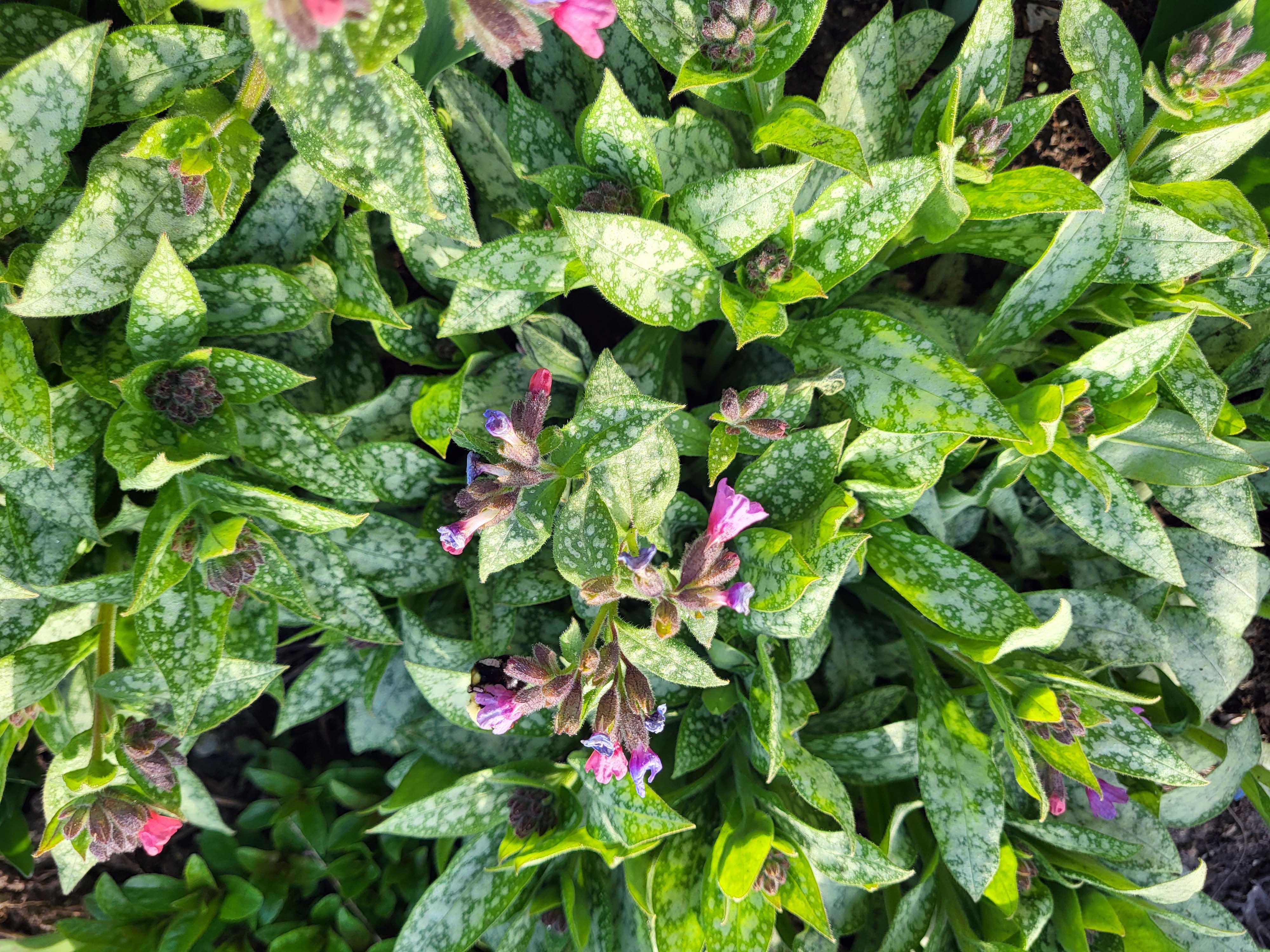
Lungwort with its lung-like leaves, a kind of heart-shaped leaves are slightly hairy on the upper side and marked by several white or pale spots. Any plant whose name refers to a body part, it mostly resembles a human organ and was believed that the plant can be used to treat diseases on that organ. This is the case with the common lungwort, which modern science proved to be a mere myth.

In spring, the little blue flowers appear on elongated stems . Each inflorescence has 5 to 15 flowers with five petals. The flowers start red and as they age, they change color to purple and finally blue. This change in colour occurs because the pigments are affected by pH, being red in acidic environments and blue in alkaline ones.

Brunnera macrophylla ‘Jack Frost’ has hairy heart-shaped frosty silver leaves and sprays of blue flowers in spring.  

Bugloss comes from Greek meaning Ox Tongue with reference to the roughness and shape of the leaves.

The leaves are intricately detailed with narrow green veins.

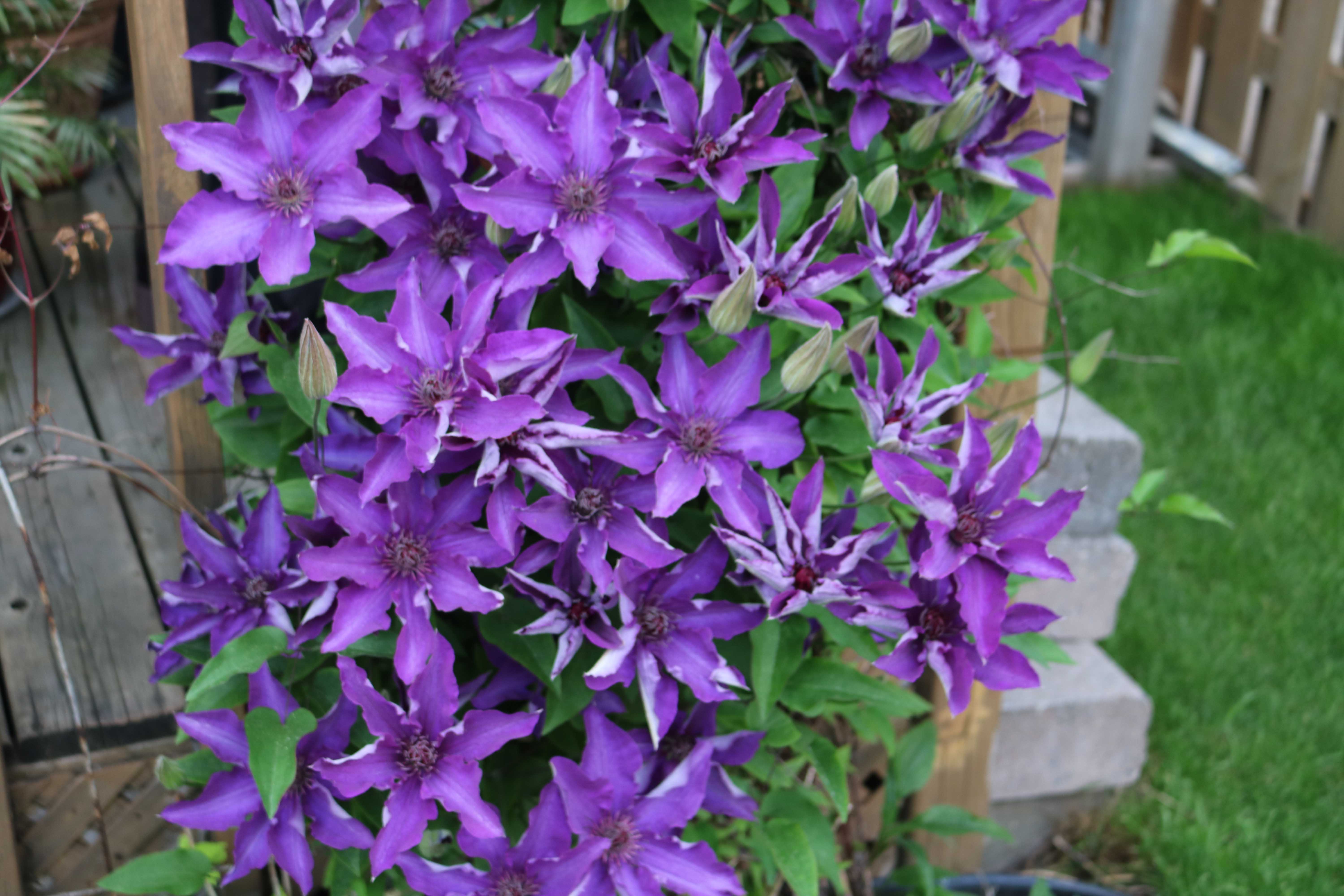
Clematis native to China and Japan, the name Clematis comes from the Greek word klematis, meaning vine, is known as the queen of climbers.

Large double purple-blue flowers adorn our garden in late spring. With the summer setting in, white, pink, red, and purple clematis bloom. The silver center of the petals expands as the flowers open.

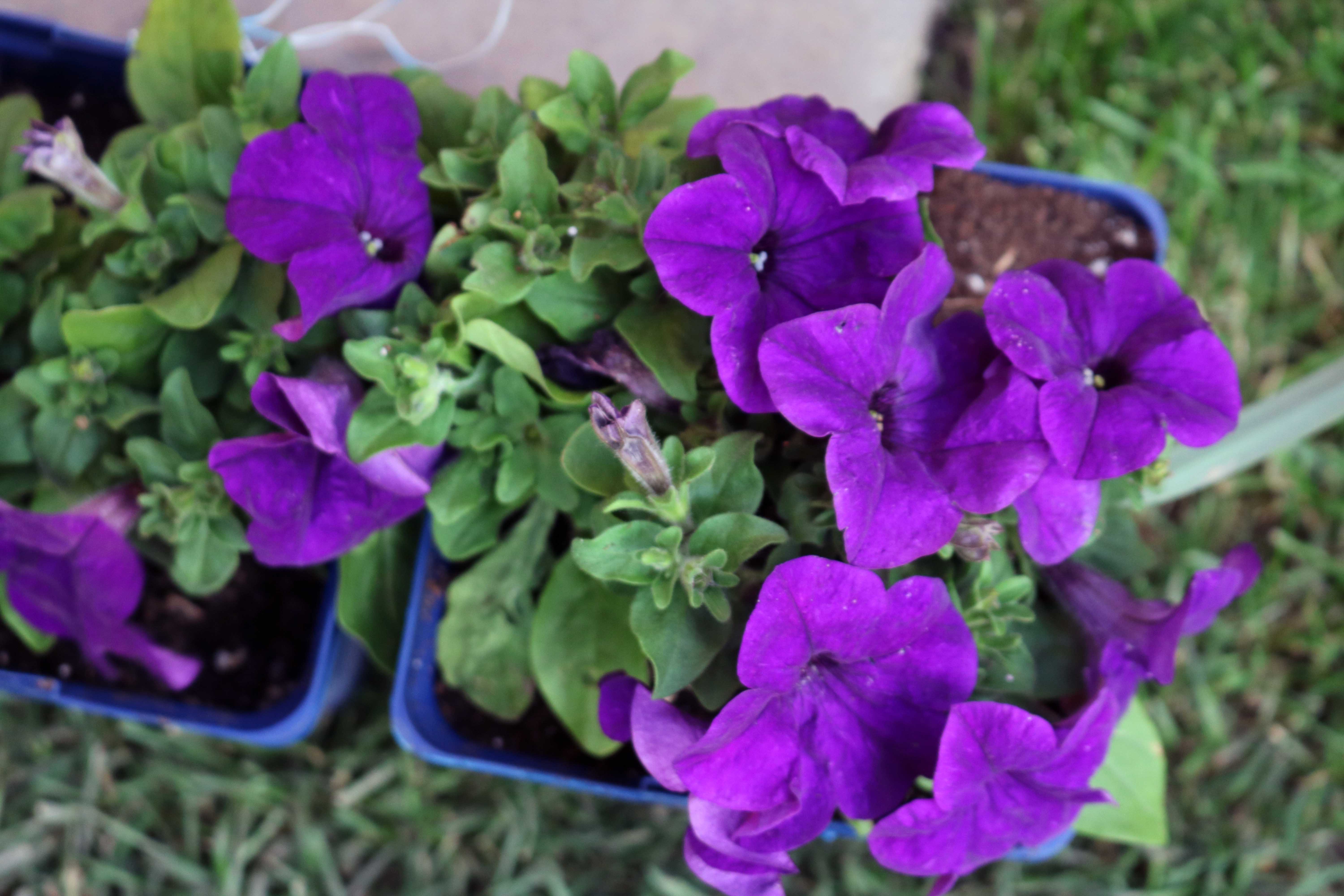
Petunias are from the tomato, potato and tobacco plant family. The name comes from South American word Petun, which is another name for Tobacco. Back in the old days it was a huge insult to gift Petunia’s as it was believed that they carried the message – I don’t like you.

Blue is my faourite colour.