
Getting Home Syndrome

On January 29, 2025, American Airlines Flight and a US Army Black Hawk helicopter collided mid-air over the Potomac River in Washington, DC. The collision occurred at 8:47 PM at an altitude of about 100 m and about 800 m short of the runway. All 67 people aboard both aircrafts perished.

My friend Nandu, who lives in the US, asked me about the cause of the crash and I said Getting Home Syndrome. He now wanted an explanation of an unheard-of syndrome.

Getting Home Syndrome is a feeling of distress or anxiety that some people experience when returning home after being away, whether at work, a short trip, a long journey, or a permanent move. In this collision too, it can be summed up that everyone was in a hurry to return home as it occurred at 8:47 PM.

Getting Home Syndrome can be attributed to: –

  • Homesickness due to a common feeling of sadness or longing for home and loved ones.
  • Separation Anxiety after one has been away from home for a significant period related to the separation from their familiar environment and routines.
  • Change Adjustment because of the stress of being overwhelmed being away from home.
  • Empty Nest Syndrome may be experienced due to a sense of sadness or loss when returning to an empty home. 

Emotional symptoms of the syndrome are sadness, anxiety, irritability, difficulty concentrating, and a general sense of unease. It is coupled with fatigue, headaches, stomach problems, and changes in appetite or sleep patterns.

Now I asked Nandu to compare the number of accidents his friends and coworkers encountered while on the road while going to work or holidays and while returning home.  He confirmed that most accidents he was aware of were while returning home.

During many military moves I was part of, accidents occurred while we were returning home after long operational or exercise deployments. The last military move I carried out was while commanding the Regiment in 2002.  Our Regiment was mobilised from its peace location in Devlali (Maharashtra, near Mumbai) on that year’s New Year Eve.  The entire Indian Army had moved into their operational locations after the attack on the Indian Parliament building by terrorists believed to have come in from Pakistan. 

After ten months, we moved back to Devlali. Our Divisional Headquarters entrusted me with an important and critical task of designing an Aviation Base for operating Unmanned Aerial Vehicles (UAV) two days prior to the move back. I was given a week to complete the task and fly back to Devlali on completion. As the Commanding Officer, I wanted to be part of the move home to ensure that everyone returned home safely. 

I burnt the midnight oil for the next two days, completed the task, handed it over to the Divisional Headquarters. Our Colonel General Staff Azad Sameer asked, “While many Commanding Officers wanted to fly home on some pretext or the other, why were you so adamant about accompanying your soldiers on their journey home?

I quoted the Chetwode Creed, a guiding principle for Indian Army officers, “The safety, honour and welfare of your country come first, always and every time. The honour, welfare and comfort of the men you command come next. Your own ease, comfort and safety come last, always and every time.”

The task was completed in two days only because the Commanding Officer of the Aviation Base was our course mate from NDA – Colonel Kesar Shekhawat.  He provided all technical and aviation inputs and extended all out cooperation in planning the base. The Aviation Base stands testimony of our hard work and it is now the best Aviation Base of the Indian Army today.

It is a common perception that more accidents occur on the way home than to work though it does not have a definitive cause. The contributory factors may be: –

  • Familiarity and overconfidence as drivers feel more relaxed and less attentive on routes they know well, leading to complacency and potentially risky behaviors like speeding or multitasking. 
  • Driver Fatigue due to intensive workday which results in dip in energy levels, resulting in being more prone to drowsiness and slower reaction times. 
  • Increased traffic volume during late afternoon and early evening commute, when many people are returning home, with potentially more aggressive driving, increasing the risk of accidents. 
  • Impaired driving as some drivers are more likely to consume alcohol or become impaired after work, increasing the risk of accidents on their way home. 
  • Multitasking by drivers is more likely while driving home, such as talking on the phone, texting, or eating, which can lead to accidents. 

How to Cope with Getting Home Syndrome

  • Acknowledge and recognise that these feelings are normal and allow oneself to grieve or adjust.
  • Prior to the journey, engage in activities to get back into a routine and engage in activities that bring joy and comfort. Suggested activities are watching a movie, reading, trekking, or any passion or hobby one is interested in.
  • Seek Support by talking to friends, family, or a therapist about your feelings. 
  • Take Care of Yourself: Ensure you are getting enough sleep, eating healthy, and engaging in physical activities. 

If you know you’re going home, the journey is never too hard – Angela Wood

The ache for home lives in all of us – Maya Angelou

If you go anywhere, even paradise, you will miss your home – Malala Yousafzai

Honouring Indian Soldier

Indian Premier League cricket matches were suspended in the wake of the recent standoff between India and Pakistan.  Sunil Gavaskar, legendary Indian cricket player, has suggested that the remaining 17 matches be played without cheerleaders and DJs- as a respect to those who lost their lives in the recent conflict.

What about the soldiers??

On 08 March 2019, during India-Australia One Day Cricket match at Ranchi, the Indian players were wearing  disruptive pattern Indian Army caps with the BCCI logo in front and the manufacture’s Nike logo at the back.  I scurried through the internet to catch the news about the new headgear Indian players were wearing.

It was Lieutenant Colonel MS Dhoni, a legend from Ranchi, the wicket keeper, who came up with the novel idea.  He handed over the cap to Virat kohli, the Indian Captain, and also to all team members and support staff before the start of the match.  Captain Kohli at the toss said “This is a special cap, it’s a tribute to the Armed forces. We’re all donating our match fees of this game to the National Defence Fund. I urge everyone in the country to do the same, donate to the families of our armed forces.”

This must be the first time the Indian Cricket team must have shown such a gesture to the soldiers.  Obviously, it had complete support from BCCI.


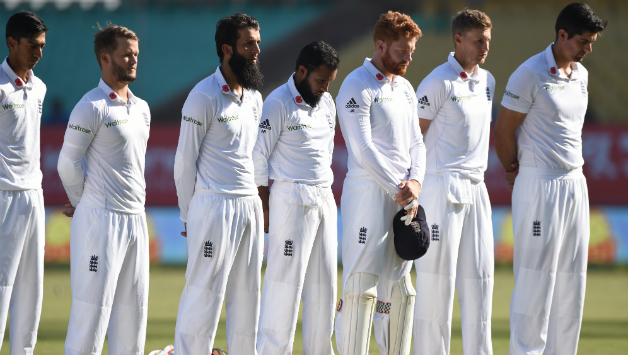
English Cricket Team that played a test match at Rajkot (November 9-13, 2016) were seen wearing the Red Poppy in honour of fallen soldiers to commemorate Remembrance Day (11 November).  Will the Indian Cricket Team ever do so for the Armed Forces Flag Day (07 December)?

Few years ago, we watched a baseball game at Toronto between the Toronto Blue Jays and the Tampa Bay Rays. The Rogers Centre is the home-ground of the Blue Jays. The atmosphere was as electric as that of any cricket matches of the Indian Premier League.

During the  innings interval, a sixty year old Veteran from the Canadian Army who was a Captain and had served in many UN assignments was called on to the centre and the Team Management of the Blue Jays presented him with a team shirt with his name printed at the back and with the team captain’s signature in the front. The entire stadium stood up to give the veteran a standing ovation – no one instructed anyone to do it, but was spontaneous. This is what is called patriotism.

Our son then said that during all the matches, a veteran from the armed forces or the police forces, who is a registered fan of the Blue Jays, is honoured this way.

Can we ever expect such a gesture at Mohali from the Kings XI Punjab or at Chennai from the Chennai Super Kings? Why one veteran, we can always honour a dozen at every match.

Will this ever happen in any Indian city? Will this remain a distant dream?

Mothers’ Day: A Celebration of Love, Gratitude, and Legacy

In Canada and many Western countries, the second Sunday of May is celebrated as Mother’s Day – a day to express gratitude for a mother’s love and sacrifice, to honour her tireless efforts, and to strengthen family bonds.

During my years of service in the Indian military, I often heard a sceptical view: that days like Mother’s Day and Father’s Day were nothing more than a marketing strategy devised by greeting card companies to boost sales. It was easy, in that environment, to dismiss the occasion as commercial and contrived.

A Child’s Simple Truth

Two decades ago, after settling in Canada, our son came home from school with a handmade card. He handed it to his mother and said, with unaffected sincerity, “I am proud of you for taking care of me.”

That moment stopped me cold. For the first time, I reflected: never in my life had I thanked my father or mother for raising me, for their sacrifices, for bringing me to where I stand today. Why? We saw their struggles and efforts as duty – or we simply pretended not to notice. I had never heard anyone express thanks to their parents, nor seen it done.

A Belated Tribute

Ten years ago, at our mother’s 80th birthday celebration, I finally found my voice. “Had our mother received proper guidance, opportunities, and higher education in her time,” I said, “she could have become a Collector.

My younger brother added, “Not just a Collector – she could have become the Prime Minister of India.”

Then our elder brother spoke, with quiet gravity: “With her wisdom, leadership, and skill, she nurtured this family. It is because of her that we, her children, have reached where we are today.” He paused, then added, “More than raising four mischievous sons, her true achievement lies in managing our four wives peacefully and helping raise our children together in unity.”

That day, all four of us sons expressed our love, respect, and gratitude to our mother. It was late – but it was not too late.

I pray that each of you may also receive such an opportunity.

The History Behind the Day

Let us now turn to the origins of Mother’s Day.

In 1868, Ann Jarvis formed a committee to establish Mother’s Friendship Day, aiming to reunite families divided during the American Civil War. The modern observance, however, was championed by her daughter, Anna Jarvis, after Ann Jarvis passed away on May 9, 1905. With the support of Philadelphia merchant John Wanamaker, Anna worked tirelessly to make Mother’s Day a national holiday in the United States – and eventually an international observance.

In 1910, the state government of West Virginia officially recognised Mother’s Day, and other states followed. On May 8, 1914, the U.S. Congress passed a law declaring the second Sunday of May as Mother’s Day.

A Final Thought

The greeting card companies may indeed have found a commercial opportunity. But that does not diminish the truth at the heart of the day: that mothers deserve to be honoured, that gratitude should be spoken, and that no expression of love is ever wasted – no matter how long it takes us to find the words.

नास्ति मातृसमा छाया नास्ति मातृसमा गतिः।
नास्ति मातृसमं त्राणं नास्ति मातृसमा प्रपा।।

There is no shade like a mother, no resort-like a mother,
no security like a mother, no other ever-giving fountain of life.