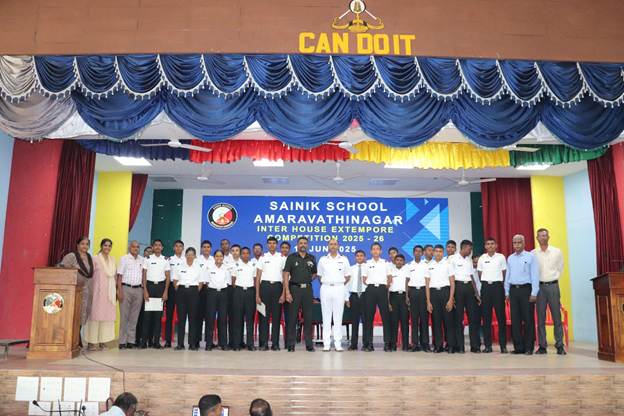
In 1978, during my Services Selection Board (SSB) interview, we were given a slip containing three subjects for a five-minute lecturette. The subject I chose was co-education.
At the time, Sainik School admitted only boys—though today, girls are also cadets. My central argument was simple: imagine the transformation if girls were present in our classrooms.
My central argument was simple: imagine the transformation if girls were present in our classrooms. Our turnout would become impeccable. Haircuts would be crisp, uniforms sharply ironed, brass polished to a mirror shine, and shoes gleaming. Furthermore, our performance on the sports field and in academics would soar to new heights.
Studying and playing together would help cadets interact with the opposite sex naturally and confidently—a quality I personally lacked. It would provide a platform to shatter traditional gender roles, especially within the defence forces, encouraging cadets to pursue their ambitions without limitations.
Classroom discussions would bring out a wider range of opinions, broadening horizons and enhancing critical thinking. Ultimately, co-education would foster a motivating environment where students strive harder.
Every cadet, without exception, would conduct himself like a true gentleman.
The motive? To impress the girls.
A Theory Untested
I cannot say with certainty whether this theory would have worked back then. In my day at Sainik School Amaravathinagar, Tamil Nadu, we had no female cadets to test it.
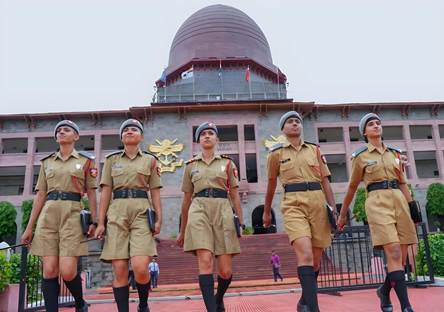
However, with girls now thriving in Sainik Schools across the country, I believe the boys are performing far better than we ever did. As women join various Indian defence academies, the positive ripple effect continues.
I like to think that somewhere, my 1978 lecturette was ahead of its time.
Matthew’s parents had arrived in Canada, and his wife, Alice, had just given birth to their second child. Their eldest son, Chacko, was in sixth grade. Every day, the school bus dropped him at the doorstep precisely at 3:00 PM.
The Panic
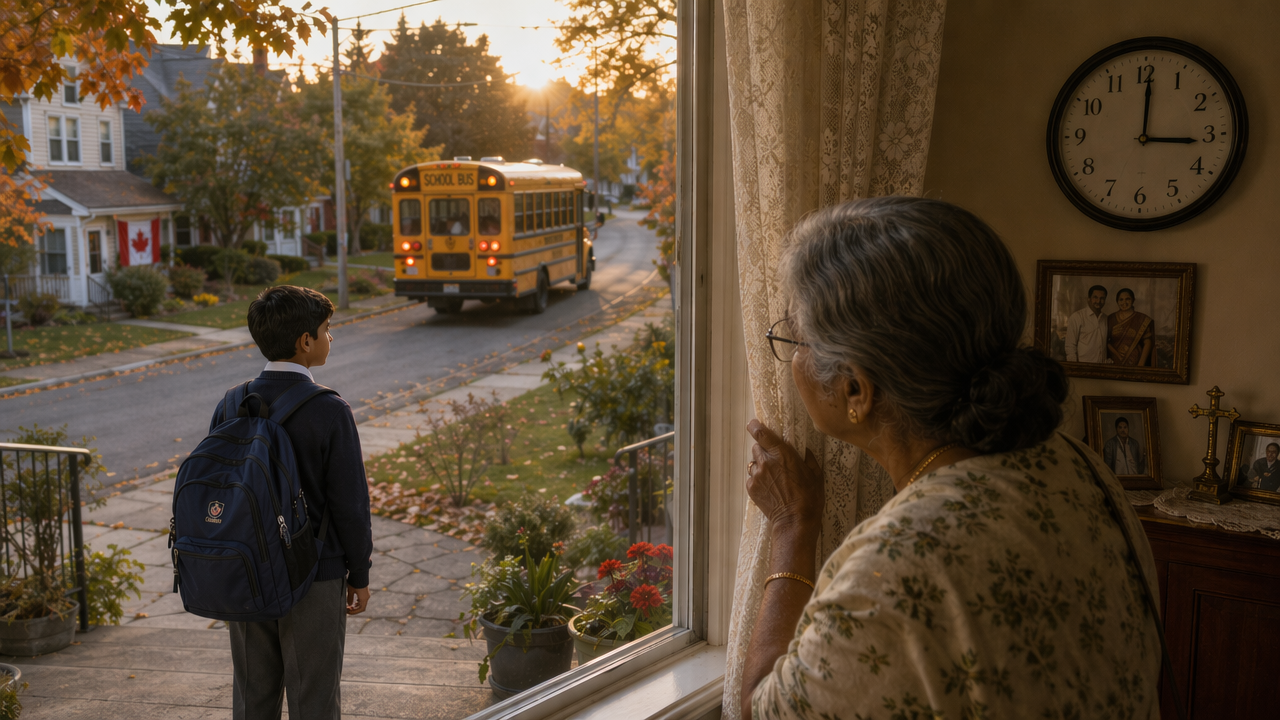
But that day – the second Monday of November – when Ammachi (Grandmother) glanced at the clock, it read 3:20 PM. Chacko had not arrived.
Worried, Ammachi stepped outside to look for her grandson. By the time the clock showed 4:10 PM, Chacko had reached home.
Appachan (Grandfather) asked, “Where is Ammachi? “
Chacko and Appachan went out searching but could not find her.
The Call
Chacko called Matthew and explained what had happened. Matthew immediately dialed emergency services and informed the police. The police officer asked for Ammachi’s details. Matthew provided all the descriptions and added, “She is wearing a nightie.” Somehow, he managed to explain to the officer what a nightie was.
“A 60 year old lady walking on the streets in a nightie,” it was a difficult pill for the Canadian police officer to swallow.
Three police cruisers soon circled the neighbourhood, searching. And there they found her – Ammachi, shivering from the cold, sitting alone in a bus shelter. The officer gently placed her in the warm car and brought her home.
The Explanation
On the first Sunday of November at 2:00 AM, clocks in Canada move back by one hour for Daylight Saving Time. That morning, every clock in the house should have been set back by an hour.
Matthew had forgotten to do this.
Computers, cell phones, and car clocks adjust themselves automatically. But wall clocks with hands and a face do not. They must be turned forward in second Sunday of March and backward in first Sunday of November – by hand, by memory, by care.
That day, the clocks in Matthew’s home were still running on yesterday’s time. Ammachi, trusting the wall clock, had stepped out an hour too early.
The Lesson
The missing grandmother was found. The family was reunited. And Matthew learned, as many have before him, that Daylight Saving Time is not just about changing clocks, but about remembering—because sometimes, the cost of forgetting is far greater than an hour lost.
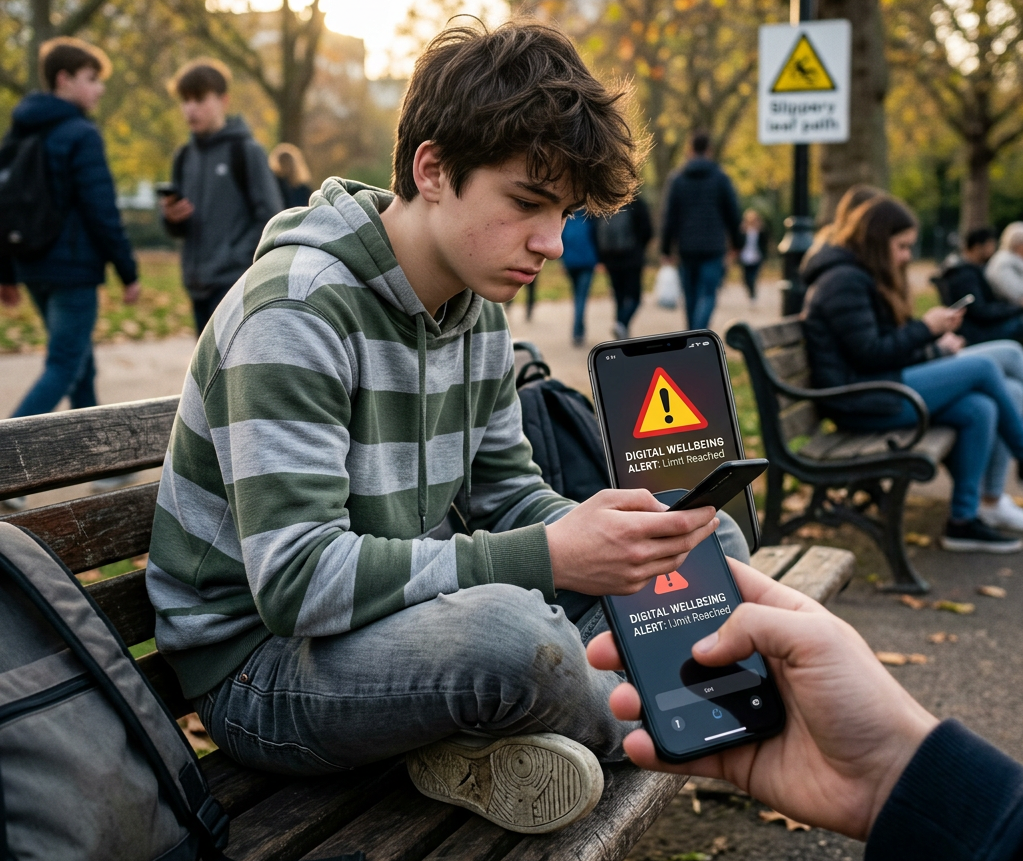
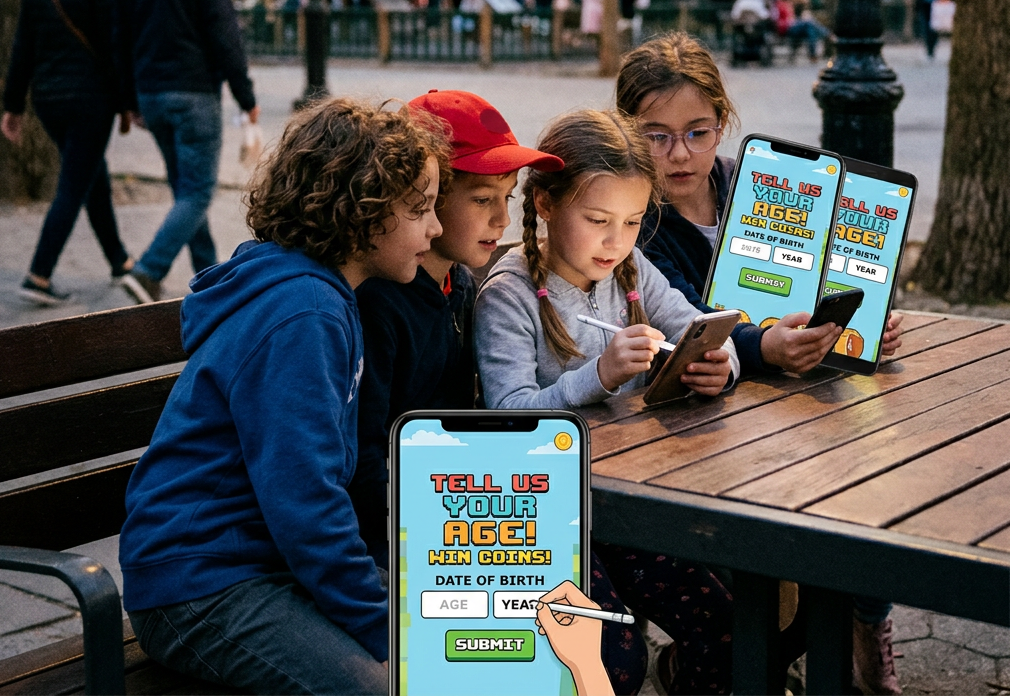
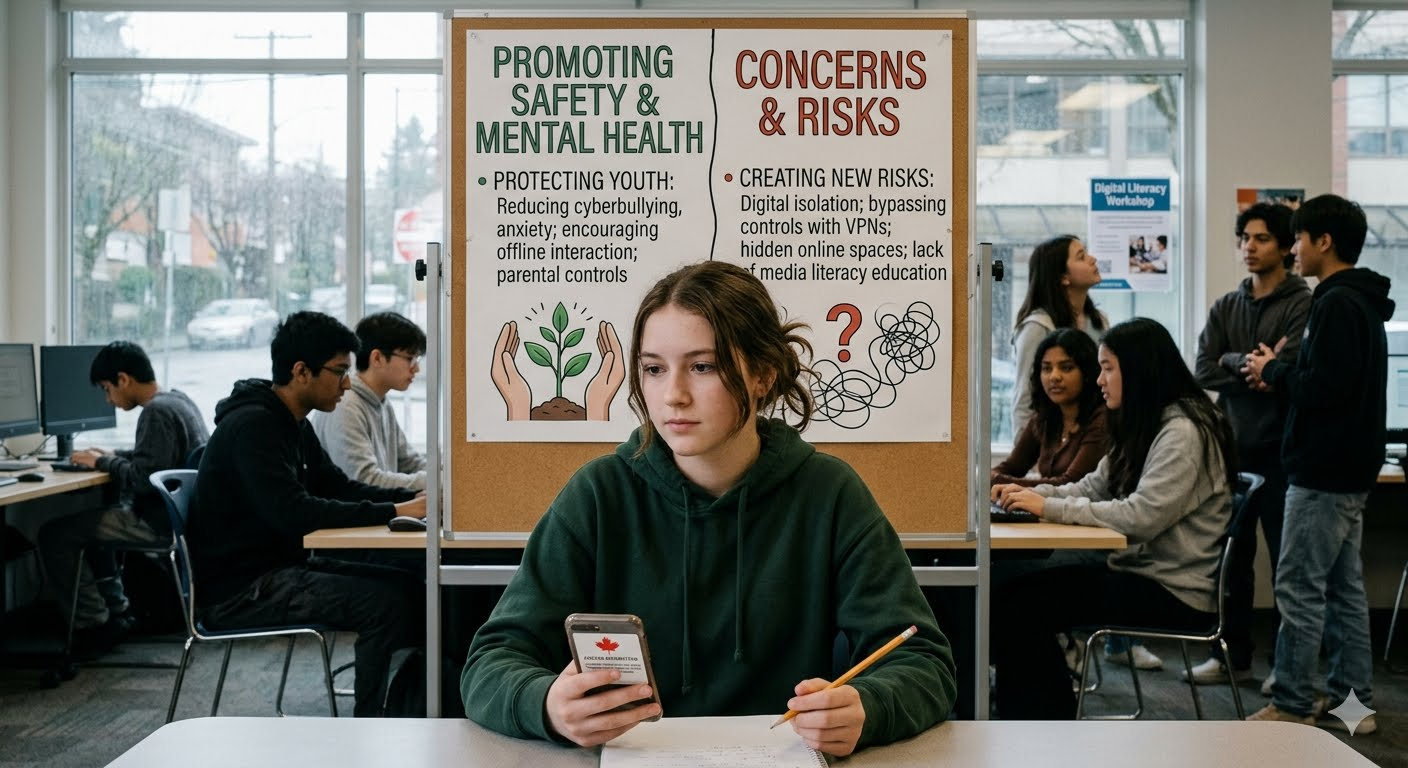
The Canadian government has proposed the long-awaited Safe Social Media Act aimed at online safety, including a ban on social media platforms for children under 16. The measure would create a new Digital Safety Commission of Canada and target different types of harmful online content. This proposed ban follows similar action taken in Australia, where the measure took effect last December.
Other countries are also considering youth social media bans, including the United Kingdom, Spain, and South Korea. Malaysia has enacted a ban on social media accounts for users under 16, while Brazil now requires youth accounts to be linked to those of a legal guardian to ensure supervision. French legislation limiting social media age to 15 was approved by the National Assembly in January, is approaching a final vote, and is likely to be in place for the start of the school year in September.
Proponents argue that such a ban is necessary to rein in social media companies that have resisted regulation, and that it could help combat growing evidence of health impacts from screen use and social media among children.
Unlike Australia’s blanket ban, Canada’s bill features an incentive loop: tech companies can sidestep the ban if they can prove their platforms have built-in safeguards that minimize harm to minors.
How Would a Social Media Ban Work?
Combating online harms for youth is more complicated than simply keeping them off platforms. Regulations must be watertight, and penalties stringent. Social media companies must be held accountable for the harms that exist on their platforms. At the same time, new regulations should not come at the expense of strong privacy protections.
Privacy Risks
Enforcing a ban presents significant privacy risks. Under Australian law, platforms looking to verify a user’s age can either request copies of identification documents, use a third party to apply age estimation technology to an account holder’s face, or make inferences from data already available—such as how long an account has been held.
The potential data collection alone is concerning. To be effective, such measures would need to apply to all social media users regardless of age. It is difficult to discern between a 15-year-old and a 17-year-old by appearance alone—whether in person or online through biometric systems. Platforms would have to increase surveillance to identify user age, resulting in even more privacy concerns.
Evading the Ban
Research suggests many Australian teens are evading that country’s ban, while Australia’s online safety watchdog said in March that social media companies were not fully complying. A Molly Rose Foundation study found that 61 percent of 12-to-15-year-olds in Australia continue to hold social media accounts despite being banned, while 70 percent said it was easy to beat the ban.
Children’s Mental Health: The Case for Intervention
Advocates of the ban argue that restricting access would improve children’s mental and physical health while curbing growing online addiction. They contend that platforms must be required to make their products safer and less addictive for young people—not simply to target children.
The impact of social media on children under 16 involves unique vulnerabilities, as adolescent brains are undergoing a critical period of rapid development. Medical professionals warn that frequent social media use during these formative years can alter parts of the brain responsible for emotional regulation, impulse control, and sensitivity to social rewards.
The Negative Effects
The issues faced by children and youth are also faced by adult social media users. The negative effects generally fall into several categories:
The constant chase for likes makes users hyper-sensitive to peer feedback and social punishment.
Problematic social media use is likely linked to lower life satisfaction.
Body Image and Self-Esteem
Exposure to digitally altered or AI-generated images fosters distorted perception of body shape and lifestyle.
Posts that normalise dangerous dieting habits, restrictive eating, or purging put children at risk.
Cyberbullying leads to depression and body disorders.
Social Skills and Communication
Inability to read body language leads to frequent misunderstandings in real life.
Facing a person directly becomes intimidating when messaging has become the default.
It becomes easier for youth to participate in cyberbullying or exclusion without seeing the immediate damage.
Physical Health and Lifestyle Disruptions
Late-night scrolling causes severe sleep deprivation, eroding daytime cognitive performance and memory.
Screen time frequently replaces essential physical exercise, academic focus, and real-world family interactions.
Exposure to Exploitation and Dangerous Content
Platforms can inadvertently route children toward self-harm tutorials, illegal acts, or dangerous viral challenges.
Privacy risks result from sharing highly personal or explicit photographs.
Lack of robust verification on apps leaves children vulnerable to extortion, blackmail, or sexual grooming.
Education: The Missing Piece
Platforms must be legislated to implement steps for youth education on online dangers before they begin using these platforms. This is akin to mandatory youth driver’s education before putting someone behind the wheel of a car. Education to prepare youth for social media use is already part of Australia’s online safety regime.
A Cautionary Note
There are significant concerns that such a ban could become a band-aid fix for the larger problem of social media regulation—by putting the onus—and the privacy risks—onto ordinary Canadians. A ban, however well-intentioned, is only as good as its enforcement. And enforcement, in the digital age, comes at a cost we may not yet fully understand. The question is not whether we should protect our children. The question is whether we are willing to protect them without sacrificing their privacy—and our own.
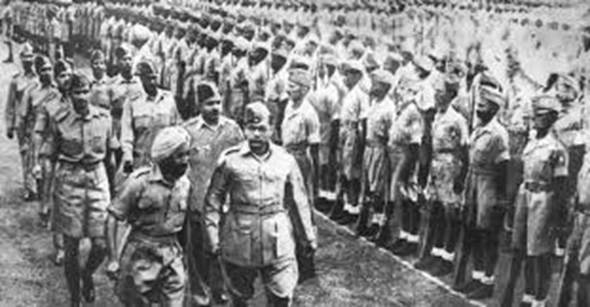
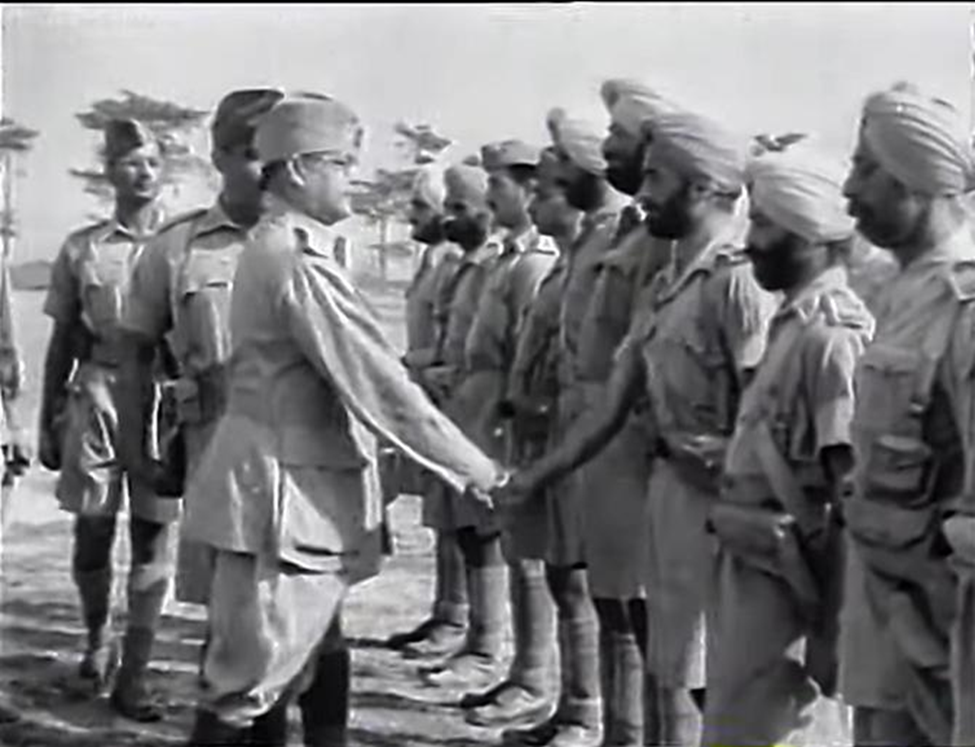
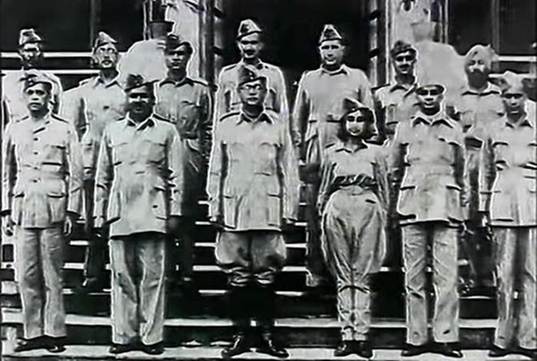
The Indian National Army (INA), or Azad Hind Fauj, led by Subhas Chandra Bose, was deliberately crafted to dismantle the rigid class, caste, and religious divisions that the British colonial military system had engineered. Under Bose’s visionary leadership, the INA established a radically inclusive template – a secular, egalitarian, and united India in miniature.
1. Dismantling the “Martial Races” Class Structure
The British Indian Army was strictly organized around the colonial theory of Martial Races. This pseudo-scientific doctrine held that only certain ethnic groups and castes – Punjabi Muslims, Jat Sikhs, Gurkhas, Rajputs – were biologically and culturally fit for combat. The British grouped these men into segregated, single-class regiments to prevent inter-community mixing and to avoid another unified rebellion like the 1857 uprising. Bose overturned this structure entirely:
Classless Regiments: He abolished segregated, caste-based, and religion-based infantry units. Soldiers from all regions, castes, and social classes lived, trained, and fought side by side in integrated platoons.
Unified Messing: In sharp contrast to British camps, where separate kitchens were maintained for Hindus, Muslims, and Sikhs to respect dietary caste codes, Bose enforced common kitchens. All soldiers ate the same food together – a revolutionary step that directly shattered traditional caste and religious barriers.
2. Dual Streams of Personnel
The workforce of Bose’s INA drew from two distinct socio-economic streams:
The Military Elite (Prisoners of War): Approximately 30,000 to 40,000 professional soldiers captured by the Japanese in North Africa and Southeast Asia formed the INA’s backbone. These were trained, disciplined soldiers from the traditional peasant-martial backgrounds of British India.
The Labour and Civilian Masses: Bose heavily recruited from the Indian diaspora in Southeast Asia – Malaya, Burma, Singapore, and Thailand. This group included wealthy merchants who provided financial backing, English-speaking white-collar clerks, and tens of thousands of impoverished, illiterate Tamil plantation labourers. This massive influx of civilian working-class volunteers democratised the military hierarchy.
3. Religious Composition and Secular Integration
Bose’s INA was a masterful realisation of inter-faith harmony. While Hindus formed the numerical majority (mirroring India’s demographics), Muslims and Sikhs held exceptionally high-profile leadership and combat roles. Key aspects of religious integration included:
Top-Tier Leadership: Bose deliberately placed leaders of different faiths in critical command positions. Notable examples include General Shah Nawaz Khan (Punjabi Muslim, commanding the Subhash Brigade), Colonel Prem Kumar Sahgal (Hindu), and Colonel Gurbaksh Singh Dhillon (Sikh). The British inadvertently cemented this image of inter-faith unity when they tried these three specific officers together during the famous 1945 Red Fort Trials.
Secular Symbology: Official greetings, language, and symbols were stripped of specific religious connotations to ensure universal belonging.
Language: Hindustani – a blend of Hindi and Urdu written in Roman script – was made the official language to bridge cultural gaps.
Greeting: The secular phrase Jai Hind (Victory to India) replaced religious salutations as the universal greeting.
National Anthem: The anthem, Subh Sukh Chain, was a Hindustani adaptation of Rabindranath Tagore’s Jana Gana Mana.
Brigade Names: Brigades were named after prominent secular and national heroes from diverse backgrounds – such as the Gandhi, Nehru, Azad (after Maulana Abul Kalam Azad), and Subhash Brigades.
4. Gender Inclusivity: The Rani of Jhansi Regiment
Under Bose’s visionary leadership, the INA established a radically inclusive template—a secular, egalitarian, and united India in miniature – that gave equal space to women.
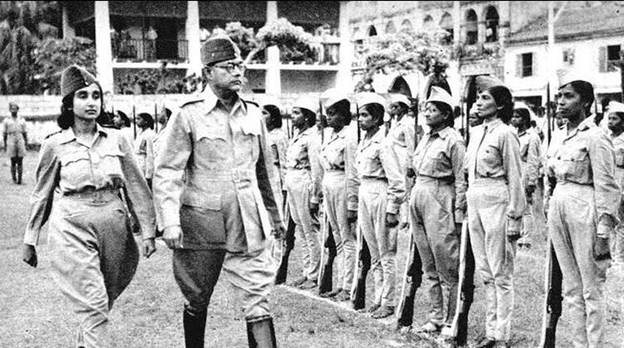
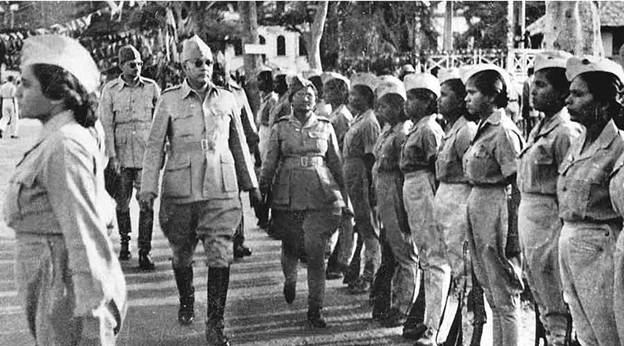
In a pioneering move for any World War II-era military, Bose formed an all-female combat unit: the Rani of Jhansi Regiment. It was led by Captain Lakshmi Swaminathan (later Sahgal), a Malayalee Hindu doctor. The regiment drew hundreds of young civilian Indian women from Malaya and Burma, representing multiple religious backgrounds – Hindus, Muslims, Sikhs, and Christians. These women were trained in advanced combat, firearms, and tactics alongside male soldiers, shattering traditional gender and social roles in one decisive stroke.
Yet, it appears that present generations have largely forgotten the sacrifices, valour, and devotion to duty demonstrated by the INA’s women. Their stories – of marching into battle, of smuggling arms, of enduring imprisonment – deserve not just a footnote in history books, but a prominent place in the nation’s collective memory. Forgetting them is not merely an oversight; it is a disservice to the very idea of India they fought to create.
The present generations appear to have forgotten about the sacrifices, valour and devotion to duty demonstrated by the INA’s women.
5. Summary of Differences
Feature
British Indian Army
Bose’s INA
Recruitment Basis
Martial Races theory (selected castes/ethnicities)
All-inclusive (professionals + civilian labour masses)
Regiment Structure
Segregated by religion, caste, and class
Completely integrated and classless
Dining (Messing)
Separate kitchens to maintain caste/religious purity
Common kitchens (all communities ate together)
Official Language & Motto
English; regimental religious war cries
Hindustani; Jai Hind
Women’s Role
Non-combatant / nursing only
Active combat infantry (Rani of Jhansi Regiment)
Epilogue
Long before independent India’s Constitution enshrined secularism and equality, Bose’s INA had already practised them on the battlefield – with common kitchens, integrated regiments, and women in combat. It was not merely an army; it was a vision of the nation Bose hoped to liberate. And though the INA did not win military victory, its legacy quietly shaped the forces that eventually won India its freedom.
If the women of Rani of Jhansi Regiment could do it then, the Indian women of today can do it better!!!


 REJINCES