The Call That Shook Me
On a Monday morning in October 2023, my phone rang. On the other end was the LKG class teacher of our grandson, James. “James had an accident and is not feeling all that well,” she said. “Can you pick him up from school? I tried calling his grandmother, but there was no answer.”
“I’ll come in half an hour,” I replied, a knot of anxiety forming in my stomach.
“Take your time and drive safely. James is at the reception. You can pick him up and take him home,” the teacher advised calmly.
I hung up, bewildered. What kind of teacher is this? She isn’t worried at all! Our grandson had an accident!
As I neared the school, another call came – this time from Catherine, our daughter Nidhi’s mother-in-law. “Sorry, Reji, for troubling you,” she said. “When the teacher called, I was in the dentist’s chair and couldn’t answer. She said you’re on your way to pick up James. You can bring him home; I’ll be there by then.“
I felt a slight relief, but again, I was struck by the absence of panic in her voice. Her grandson had met with an accident, and she sounded almost… casual.
The Revelation
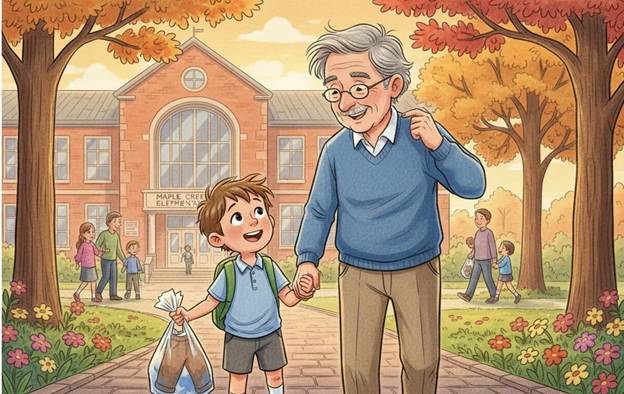
When I reached the school reception, James ran and hugged me. “Grandpa, it was an accident,” he announced. “I told my teacher that my parents are away on a business trip to New York, and that’s why she called you.”
“Are you fine?” I asked, my grandfatherly concern still at full throttle.
“Sorry, Grandpa, I pooped in my pants.” He held up a plastic bag containing his soiled clothes. “Mom had placed a spare set in my bag, so I changed.”
“How are you feeling now?” I pressed.
“My stomach is a bit uneasy. So, I asked my teacher if I could go home. That’s why she called you,” he explained matter-of-factly.
The Cultural Divide
In that moment, the puzzle pieces fell into place. In Canada, children entering LKG are expected to develop self-sufficiency in personal hygiene, feeding, and classroom tasks. Toilet independence is a key milestone. Teachers do not assist with changing; that responsibility falls on the child or, if necessary, a parent. Only children with Individual Education Plans (IEPs) can be changed by a non-parental adult during school hours.
For me, accident meant a collision, an injury, a crisis. For James and his teacher, it meant a minor childhood mishap – a normal, unremarkable event.
During the Canadian winter, children must remove their snow-boots, snow-pants, and heavy jackets and place them in their designated spots before entering the classroom. When it’s time for recess or the end of the day, they are expected to put everything back on—entirely by themselves. This daily ritual teaches far more than just winter preparedness. It builds dexterity, sharpens hand-eye coordination, and fosters organisational skills and self-confidence. I often find it difficult to zip up my own jacket, my ageing eyes struggling with the task – a humbling reminder of how much these young ones accomplish on their own.
Evening Reflections
That evening, I spoke to Nidhi on the phone, still processing the morning’s stress. “I was so anxious when the teacher said James had an accident,” I confessed. “I thought he was hurt.”
“It’s what all kids do,” Nidhi reasoned. “Didn’t we also have accidents in LKG?”
“I thought he had met with an accident and was injured. When you had such accidents, the parents weren’t summoned to the school,” I insisted.
“Kids have a fall. They hurt themselves. They don’t ‘meet with an accident,'” she corrected gently.
“What do you call an accident on the road involving two cars?” I challenged.
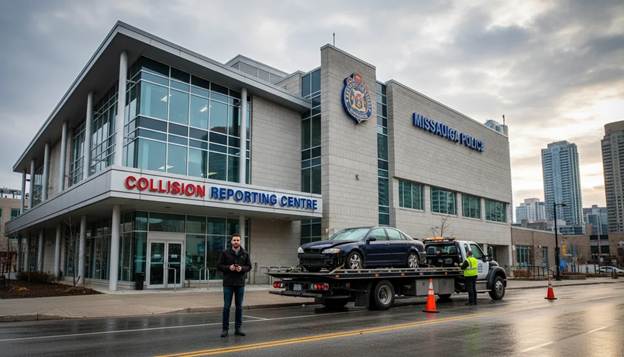
“A crash or a collision” she replied adding with a hint of amusement, “You better familiarise yourself with the terms used in North America.”
A Funny Language Indeed
As I sat in silence after the call, Amitabh Bachan’s famous line echoed in my mind: “English is a funny language.” But North American English, I mused, appeared even funnier.
I was reminded of typical Indian English words and expressions which no one outside India understood; passing out from school, expired, co-brother, revert back, out of station, rubber, dicky, good name, prepone, do the needful, Time pass, cooling glass and several others which would leave anyone outside India thoroughly confused.
Was I now expected to compile a glossary of North American terms to navigate daily life in Canada? Perhaps. But more than words, I realised, I needed to understand the cultural nuances that shaped them – the independence instilled in children, the calm in the face of minor crises, the matter-of-fact handling of life’s little messes.
James’ accident taught me more than just a vocabulary lesson. It reminded me that language is not just about words; it’s about context, expectation, and the invisible cultural scripts we all carry within us. And sometimes, the most profound lessons come wrapped in the most unassuming moments – like that phone call from a LKG teacher on a Monday morning.
 REJINCES
I have been following you for over a year now. Interesting writeups. I am an Army wife. My husband is Brig AKPandey a retired gunner. I am a doctor and a Radiologist by profession.
LikeLiked by 1 person
Hi Dr Asha
Thank You for reading my blogs and for your valuable comment.
You can contact me on Whatsapp @ +1 647 402 1300
LikeLike
Hilarious Sir! In North America, an “accident” isn’t a crash—it’s just a very heavy diaper. A “code red” is actually a “code brown.” 😆English is not our native language. It was thrust on us. Those who can master it make the most of it.
LikeLiked by 1 person
Reji,
Didn’t you have an accident during our BPET run some time in 85-86?
LikeLiked by 1 person
Yes, Desh Raj Sir – I did and I remember it.
Reji
LikeLike