The Senior Subaltern
Back in 1986, I was the Senior Subaltern – the Big Brother to all the Subalterns of the Regiment. The Senior Subaltern as the term suggests is the senior most subaltern or the junior most Captain. He generally must have a PhD in mischief management. He functions as a high-stakes professional translator, skillfully turning the Colonel’s terrifying roars into gentle suggestions that the junior officers can understand and survive.
He is a walking paradox who can enforce iron-clad discipline on the parade ground while simultaneously serving as the mastermind behind every legendary prank in the Officers’ Mess. To the juniors, he is a scary mentor who knows all their secrets; to the seniors, he is the only one who can keep the young pups from accidentally saluting a tree or a lamp post or generally keeping them away from one miscellaneous chaos or the other. Ultimately, he is the regimental glue – one with the heavy responsibility of keeping the youngsters out of harm’s way from the Adjutant’s crosshairs.
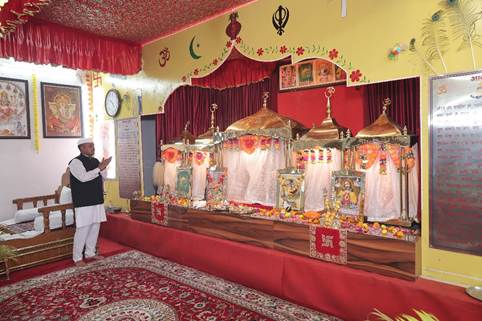
One morning, after the Mandir Parade, a delegation of young officers led by the legendary (late) Captain Pratap Singh, MVC, approached me. They looked like they had just cracked a secret code.
“Sir,” Pratap began, “Our boys say you’re a pro at the Sanskrit aartis and shlokas, though a christian from Kerala. We stood right behind you today to see if you were actually reciting or moving your lips like a Bollywood extra. You were surprisingly good….. But we have one question.”
Then came the trap.
The Ritual Showdown
For those who haven’t been to a Mandir Parade, it ends with a classic call-and-response with the Pandit (the Regiment Chaplain):
- Pandit: प्राणियों में Praniyon Mein… (Among all living beings…)
- Response: सदभावाना हो Sadbhavana Ho! (May there be goodwill!)
- Pandit: विश्व का Vishw Ka (For the universe)
- Response: कल्याण हो Kalyan Ho (may there be Well-being)
- Pandit: भारत माता की Bharat Mata Ki (To Mother India)
- Response: जय हो Jai Ho (Let there be Victory)
The Unexpected Answer
Lieutenant Gulshan Rai Kaushik stepped forward with a smirk. “Sir, what exactly did you say when the Pandit called out ‘Praniyon Mein’?”
Without missing a beat, I replied, “Sambhavana Ho!”
Kaushik froze. “Sir, its Sadbhavana (Goodwill), not Sambhavana.”
I kept a straight face. “Look, Kaushik, for a Mallu like me, it’s Sambhavana. If you don’t believe me, go ask any Malayali soldier in the Regiment. It’s a regional variation.“
Now, what I didn’t tell him was that in Malayalam, Sambhavana (സംഭാവന ) means a donation or contribution. So, while everyone else was praying for universal goodwill, I was essentially praying for a Divine Donation.
Fire Support from Our Second-in-Command (2IC)
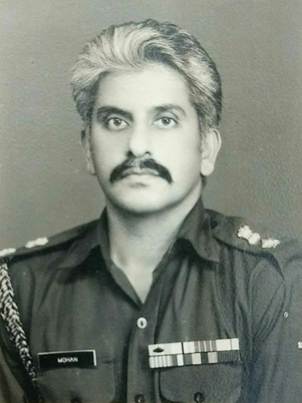
Just then, our 2IC, Major Mohan Krishnan, walked toward us. He was a certified war hero from the 1971 Battle of Jarpal – a man who had stared down enemy tanks and was mentioned in dispatches. He directed the artillery fire, fighting alongside Major Hoshiyar Singh PVC of 3 Grenadiers as the Observation Post Officer. He was also, conveniently, a fellow Mallu, a hard core variety.
“Don’t take my word for it,” I told the youngsters. “Ask our 2IC.”
The juniors gathered their courage. “Sir,” Kaushik asked, “what is the correct response to ‘Praniyon Mein’?“
Major Krishnan didn’t even blink. He barked out: “SAMBHAVANA HO!”
The Verdict
The junior officers were stunned. Two Mallu officers, one a war veteran and the other a Senior Subaltern, both confidently shouting for sambhavna in the middle of a prayer. Now sambhavna in Hindi meant possibility or probability which in the context of the prayer made little sense to us. They couldn’t possibly guess our intended prayer for divine donations. They began to wonder if there was some secret Malayali Sanskrit they hadn’t been taught by their parents.
The Major walked away coolly. I followed him with a smirk.
The best part? The Pandit’s next line: Vishwa ka Kalyan Ho (May the world have well-being). In Malayalam, Kalyanam (കല്യാണം) means Marriage. So, while the rest of the Indian Army was praying for world peace, we Mallus were basically chanting for a World Wedding Festival, (for which divine donations were initially requested.)
The young officers never questioned my Sanskrit again. To this day, I think they’re still wondering if we were genuinely confused – or if the Mallu Mafia has its own hilarious way of keeping faith.
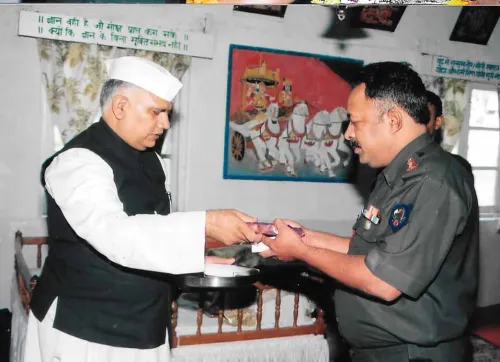
Ultimately, I realised that leadership isn’t about being technically flawless in every prayer; it’s about the unspoken loyalty that connects a Regiment. Because at the end of the day, a soldier doesn’t follow a dictionary – they follow a leader who speaks their language, even if that language is a hilarious Mallu version of the truth.


Loved this piece.
Best Regards,
Sundara Easwar B
(fellow Amaravian ’86 batch)
LikeLiked by 1 person
Nice post, hilarious stuff!
LikeLiked by 1 person