God @ Home

A truly God-centered home appears to be an endangered species today. It is a rare space governed by the spirit of God—a place where people relate to one another with a deep awareness of His presence, and everyone feels that God is part of every activity.

But what exactly turns a physical space into something sacred?
House vs. Home: A Sacred Distinction

There is a profound difference between a house and a home. A house is merely a physical structure, built today out of concrete, wood, and masonry. A home, however, is where a person truly belongs. A home can exist within a house, an apartment, a thatched hut, a tent, a boat, or even a cave.

Consider our soldiers. For them, Coming Home means being reunited with their dearest ones, relaxing with friends and family, and expressing love. Soldiers cannot simply take a vacation whenever they feel like it; their commanding officer must grant them leave. When they finally return from active duty, we call it a Homecoming, not a House-coming. They return to their Hometowns, not just to the grid coordinates where their physical houses stand.

The Threat of Artificial Homes

A real home is anchored by a father and mother who are committed to each other in true love, dedicated to nurturing their children to know and follow the Lord. Sadly, this concept is being actively threatened by modern television serials. Every channel beams stories of artificial homes into our living rooms with a vengeance—featuring characters wearing heavy makeup, permanently over-dressed, and locked in constant conflict.

Tragically, families watch these shows without fail. Even the sacred ritual of family prayer is frequently rescheduled to accommodate TV show timings.

A Cooperative Venture, Not a Corporate Monopoly

A family is not a private limited company run exclusively by the parents. It is a public company where parents and children alike hold equal stakes. Along with those stakes come shared duties and responsibilities.

It is mandatory for parents to do their part and gently ensure that their children do theirs. This means:

  • Involving children in daily household chores.
  • Encouraging active participation in all family activities.
  • Supporting their academic pursuits, hobbies, and sports.
  • Maintaining open communication to tie it all together.

From Matha Pitha Guru Deva to Google Deva

The ancient Vedic philosophy gives us the phrase Matha Pitha Guru Deva (Mother, Father, Teacher, God). This traditional order of reverence is considered one of the greatest truths in Hindu philosophy. However, today’s generation is rapidly replacing it with Matha Pitha Google Deva.

Let us look at the true hierarchy:

  • Matha (Mother): She comes first. She carried us in her womb for ten months, developing us into human beings from a single cell, giving her own essence to bring us into this world.
  • Pitha (Father): He contributed the 23 chromosomes that shape nearly half of our inherited traits.
  • Guru (Teacher): Together, the mother and father hand us over to the teacher, who develops our minds and channels our thinking.

Ultimately, the vital role of these first three pillars is to help us identify our Deva (God) and bring us closer to Him.

Blueprint of a God-Centered Home

How does this God-centeredness play out in practical, everyday life? While every family is a unique poem written by God, genuinely spiritual homes share several common features:

  • Order and Peace: A good home is simple, orderly, and peaceful—never chaotic. The violence and confusion of the outside world must be kept at the doorstep. Deciding what enters the home should be a joint effort, where parents listen to their children’s viewpoints, even if accommodating them causes the parents some temporary discomfort.
  • Deep-Rooted Joy: Joy is different from fleeting happiness; it is deep-rooted. Because every family member faces unique daily obstacles and hardships, a home must be a place where members actively support one another to get through the tough times.
  • A Safe Space to Mess Up: A home is a sanctuary for growth, not a museum of perfection. Children must be allowed to make mistakes. Elders should guide them out of the messes they create, preparing them to face an outside world that is often full of hatred, judgment, and sarcasm.
  • A Sanctuary for Healing: A home must be a retreat where children can return after a failure or a bad day without fear of being rebuked or ridiculed. A scary, stick-wielding parent emanating anger is not someone a child wants to return to—even on a successful day.
  • A Culture of Service: A good home thrives on kindness, humility, and love. Parents set the tone by discovering that serving one another is primary. When parents and children share daily chores like cleaning, cooking, and laundry, the work becomes sacred. This attitude of selflessness starts at home and naturally extends to the outside world.
  • Spiritual Discipline: A God-centered home provides an environment where family members learn how to live by studying scripture, praying, and meditating together.

Living for the Divine Purpose

Finally, a good home honours God’s unique purpose for every individual. Every family member needs the freedom to define their own dreams, aims, and goals.

Parents must guide their children to choose their own educational and career paths based on their natural aptitude, passion, and interests—rather than leading them blindly by the nose. The rigid obsession with forcing children to become only engineers or doctors must be avoided. Above all, parents must ensure they do not try to live their own unfulfilled lives through their children.

As you evaluate your own living space today, always remember this timeless truth:

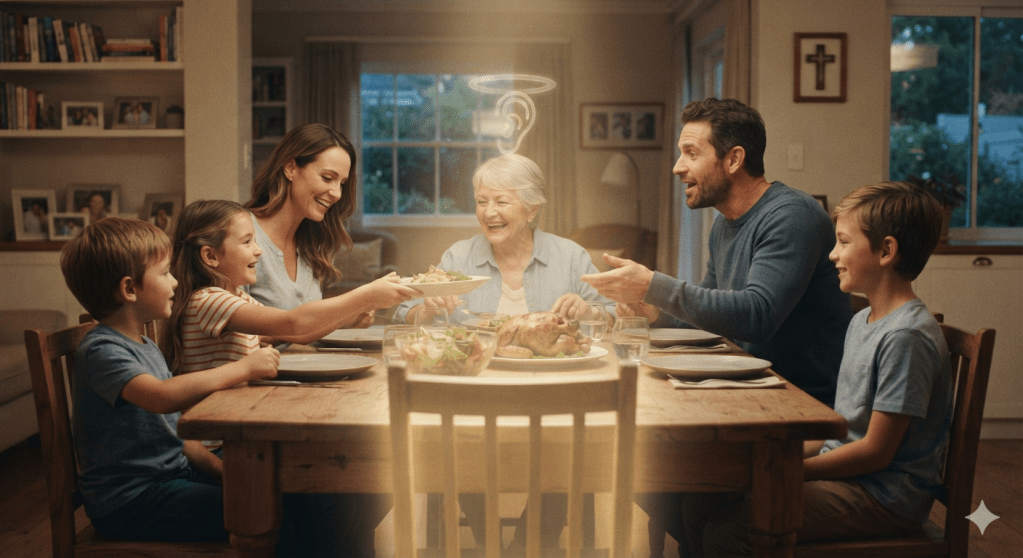
“God is the head of the home, an unseen guest at every meal, and a silent listener to every conversation.”


Military Lounge @ Buffalo Airport


On 04 February 2018, I traveled to Buffalo Airport, USA to pick up Reshma Sameer, daughter of Veteran Brigadier Azad Sameer. To read more about Brigadier Sameer,Please Click Here.

Buffalo Airport is 160 km from our home, about two hours of drive by car.  She was scheduled to land at 2 PM.  It was snowing in the morning and was foggy.  Hence, I left home by 10 AM, catering adequate time for a slow drive,  breaks, and crossing at the Canada-US border.  We generally cater for about 30 minutes for border crossing formalities.


As I pulled up at the US Customs & Border Protection counter, there was hardly anyone waiting there to cross.  I drove up to the counter and the officer manning the post came out.  As I was handing over my passport he asked “Sir, aren’t you watching the Super Bowl?”  “I am off to Buffalo Airport to pick up our family friend”  I answered.  Returning my passport he said “Drive safely, have a nice day, Sir.”  This quick clearance must have been due to the ‘Veteran‘ Licence Plate of my car.

The Super Bowl is the final game of the National Football League (NFL), played on the first Sunday in February.  It is one of the most watched TV event in United States with more than 100 million people from the United States alone watching it.  Every year the TV commercials, known as Super Bowl ads attract a lot of interest and also money.  This year it featured Hollywood stars Cardi B, Tiffany Haddish, Keanu Reeves and Morgan Freeman.

I reached the Airport at noon and was looking for a place to spend two hours at my disposal.  I picked a book I had in the car and my reading glasses after parking the car in the parking lot.  As I entered the arrival area, I read a sign ‘Freedom Lounge – A Courtesy Centre for Military Service Members and Veterans.’

This lounge was setup in 2016 by WNY Freedom Lounge Inc in recognition of  sacrifices by the US Military Service personnel.  It ensures a welcoming environment for traveling Military personnel & Veterans at the Buffalo-Niagara International Airport. The lounge is open to members of the military, veterans and their families free of charge.


WNY Freedom Lounge Inc is a private, non-profit organization, headed by Veteran Lieutenant Colonel Dan Walther of Kenmore, who raised funds and made arrangements for the lounge. The lounge provides morale and recreational services to members of the US Military and their families. The lounge offers comfortable seating, reading material, TV, phone, snacks, and internet access. It is staffed by veteran volunteers, veteran organizations and military supporters.

I was welcomed in by Veteran Chief Petty Officer Ronald of the US Navy.  After exchanging usual pleasantries, he ushered me in and showed me three rooms – a reception area, a kitchenette and a small living room with sofas and chairs.  He opened the fridge, well stocked with beverages and asked “What would you like to have Sir?”  “Black Coffee” I replied.  He brewed a cup for me in the coffee maker and we sat down and talked.

He said that this lounge has been created for transitioning Military personnel, who  often have significant wait times between connecting flights.  Most Military personnel often travel alone and they need a place to rest.  The lounge is staffed and maintained fully by volunteers.  It is generally open from 9 AM to 10 PM and during other times, the Information Desk staff would open it.

We spoke about all matters two Veterans would speak – about our service in the Forces, places served, family, children, aspirations, dreams, et al.  At the end I realised that we Veterans – from US and India – why from world all over – speak the very same language.  The Military is in our blood and it cannot be shed easily.

Wind Can Blow Either Way

Great experiences make military life marvelous – even for the family members of soldiers. It lasts a long time, much after we hang our boots and even after we migrate to another continent.

Marina emigrated to Canada in March 2002 and I took over command of the Surveillance and Target Acquisition (SATA) Battery in June 2002. For someone who served his entire regimental life in a Medium Regiment operating Bofors guns to suddenly land in a Surveillance Regiment equipped with radars, drones and survey gadgets – it was an altogether different experience. I had to learn everything from scratch and had to familiarise with the officers and soldiers.

The regiment was an excellent outfit.  I set off with training on various surveillance equipment, starting with radars.  I had to convert from a Medium Gunner to a Surveillance Gunner. The officers and soldiers helped me to imbibe both the art and the science of surveillance, many a times explaining the procedures and drills repeatedly.  I read all the operator and training manuals of all  equipment and in two weeks time, I was proficient enough to handle them.

(With Santosh the evening I  hung my boots in July 2004)

My Radio Operator Santosh Kodag a Maratha, took charge of the household, but was surprised that my family had not come along.  Commanding Officer living alone in a fabulous peace station like Devlali – Santosh realised something was wrong.

Devlali is one of the most relaxed military stations located near Nasik city – about 150 km from Mumbai.  It has a colonial charm and is clean with fresh air and lots of greenery and open spaces.  The climate is fabulous all through the year.  The schools in the area are well known for their educational standard.  The Cantonment offers all recreational facilities like horse riding, swimming, squash, tennis, golf, club, etc – all that goes with a good military station.  The School of Artillery is located here where all Gunner officers are trained.  Hence, it is always abuzz with Young Officers and also newly married young couples.

A week after landing in Devlali and when Santosh felt that I was well settled, one evening, handing over a glass of whisky to me said “I know your wife is away in Canada and your children are in Kerala. Why don’t you get the children here?

Our daughter is in Grade 4 and our son in LKG. I will not get adequate time to take care of them. My mother is taking care of them well in Kerala,” I replied.

To this Santhosh said “Why don’t you get your mother and your kids here. I will take care of everything. I know your mother is pretty old. You do not have to worry.”

I thought for a while and then called up my mother about my plans to shift her and children to Devlali. She said “I was also thinking about it. My duty is to take care of the children and it would always be better that you are around.

I booked the tickets for my mother and children to travel to Devlali and Santosh went to Kottayam, Kerala to accompany them.

Santosh now took over everything – handing over the medications to my mother and also taking her for her regular medical  appointments with the Military Hospital – getting our son Nikhil ready for school (Nidhi was independent by then)- serving breakfast for all, packing up lunch boxes, etc.

After two years, I relinquished command and also hung up my boots and migrated to Canada.

Now Santosh is married with two kids, serving in the regiment as a Havildar (Sergeant). Every year when we visit India, we send a parcel of gifts for him, his wife and children.

February 2018, we travelled to India to attend the Golden Jubilee celebrations of my parent unit – 75 Medium Regiment. The SATA Regiment  deputed Havildar Santosh to receive us and accompany us to the Medium Regiment.

Marina was busy shopping for gifts for Santosh and his family. Marina had met Santosh only twice – when we traveled to India – and she has been ever thankful to him for taking care of the children in her absence.

I recently asked Nikhil as to whether he remembered anything of Devlali days and he said “The only person I remember is Santosh Bhaiyya – the poor guy, I gave him a difficult time – especially when he tried to feed me and get me ready for school.

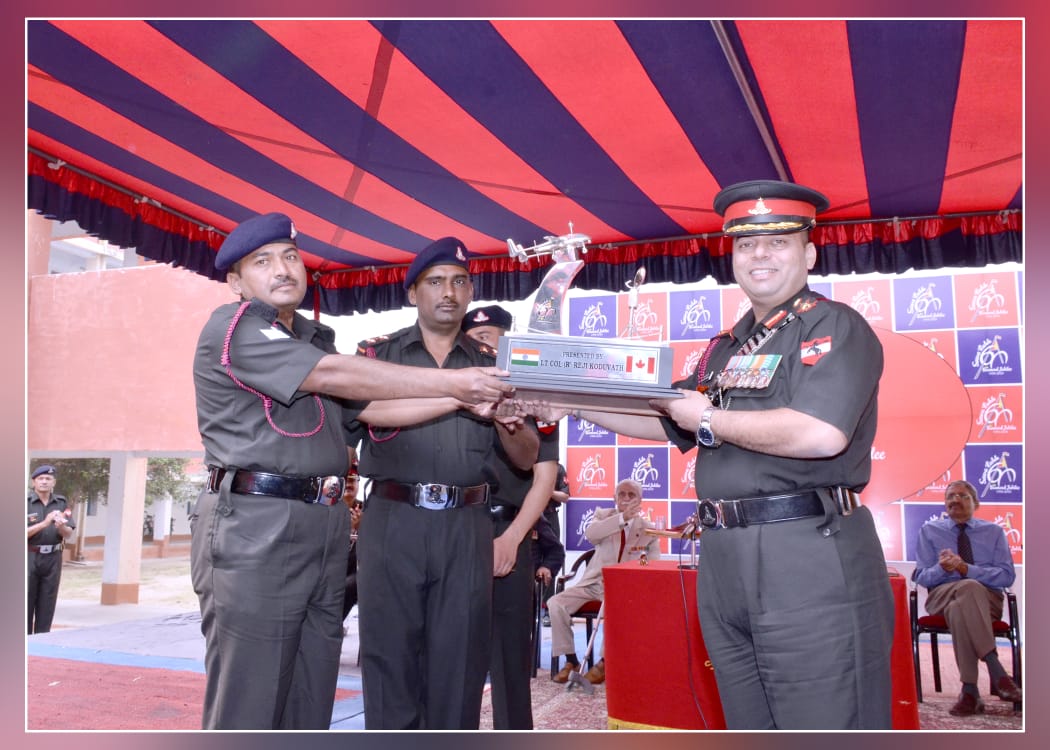
On 01 November 2018, our SATA Regiment celebrated its Diamond Jubilee. We could not travel to India for the occasion as our daughter Nidhi was expecting our grandson’s birth. I got a silver trophy made for the occasion and it was presented to our Regiment on my behalf by Havildar Santosh.

Wind can blow either way in the Indian Army. A soldier can soothe the pains of his Commanding Officer too.