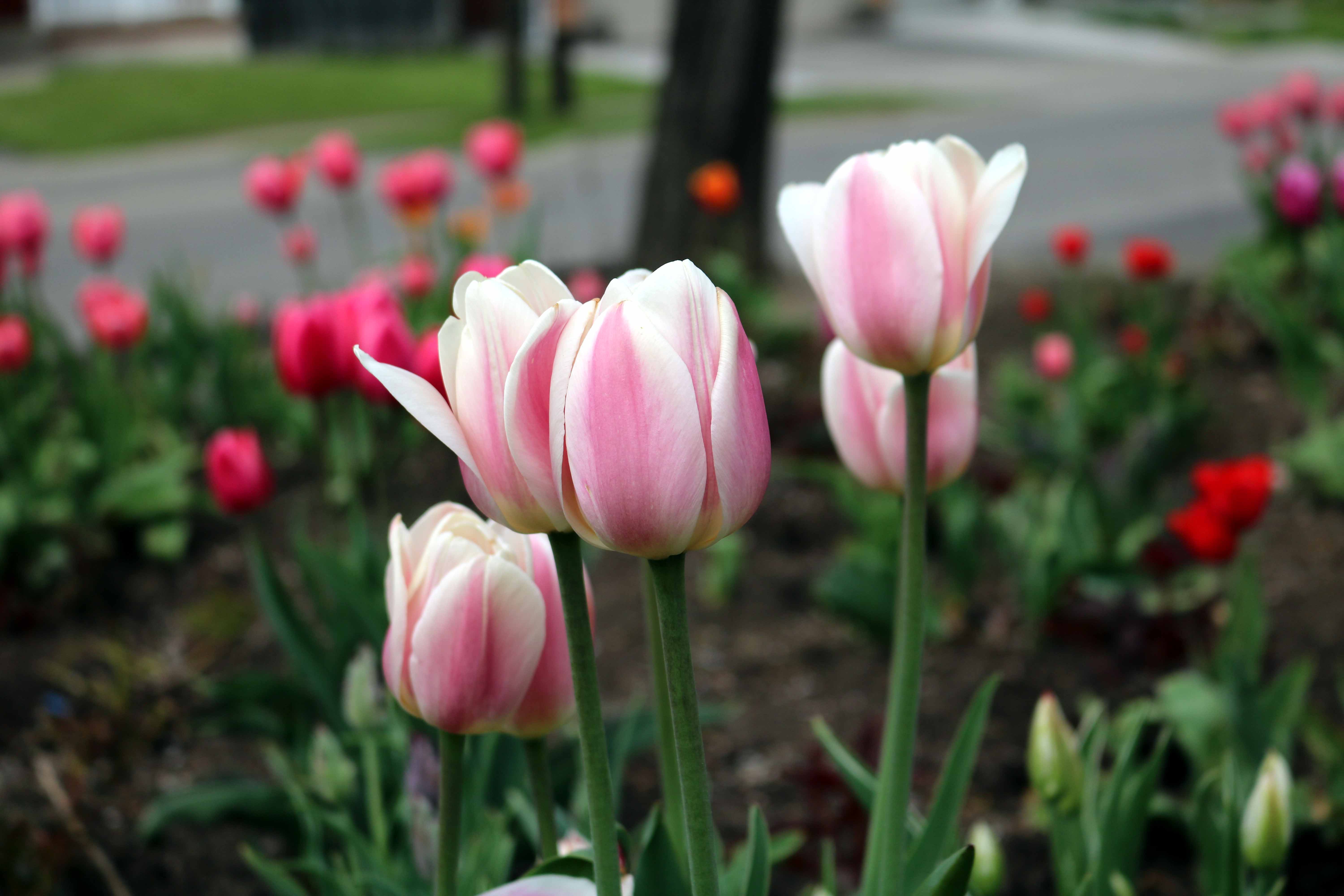
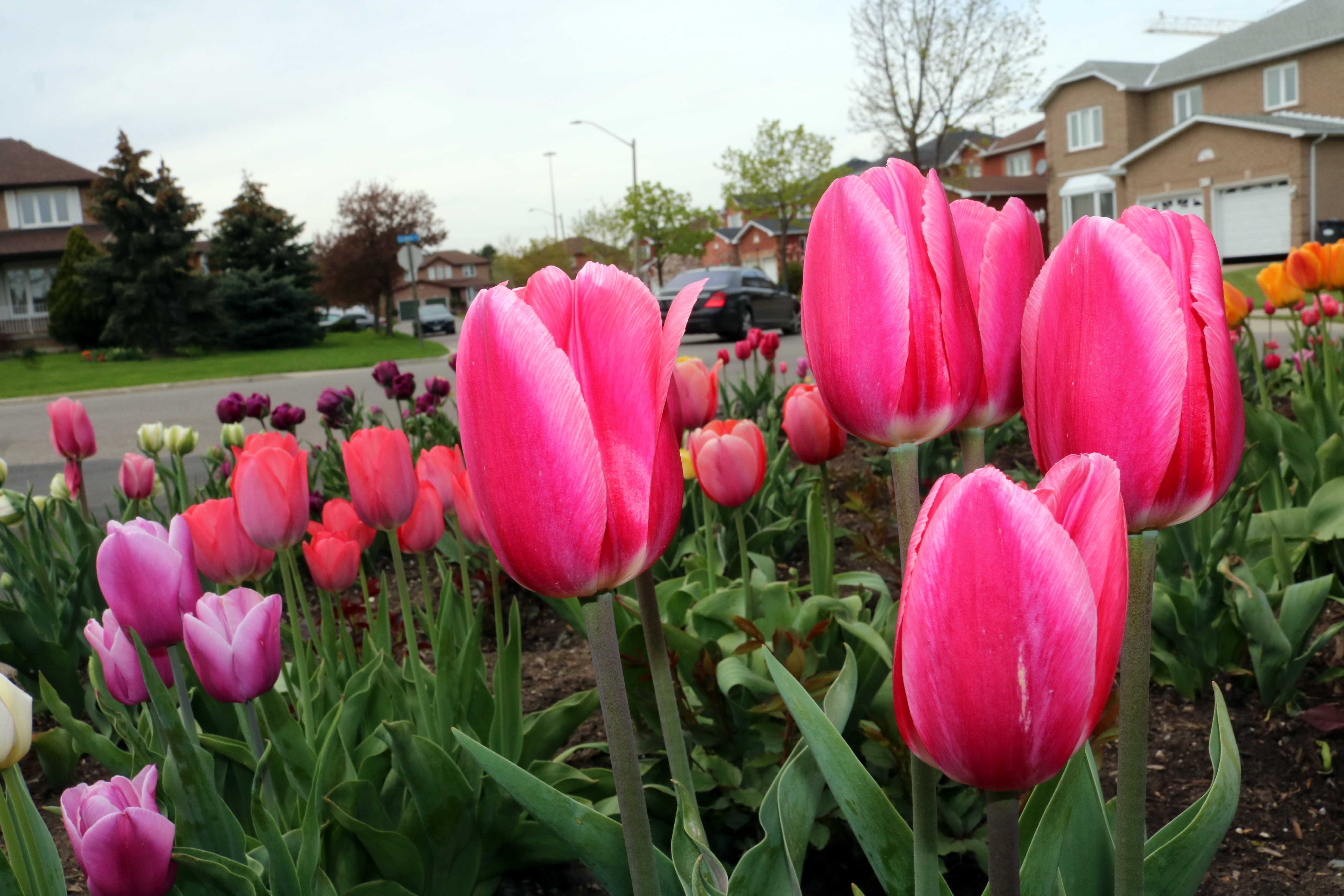
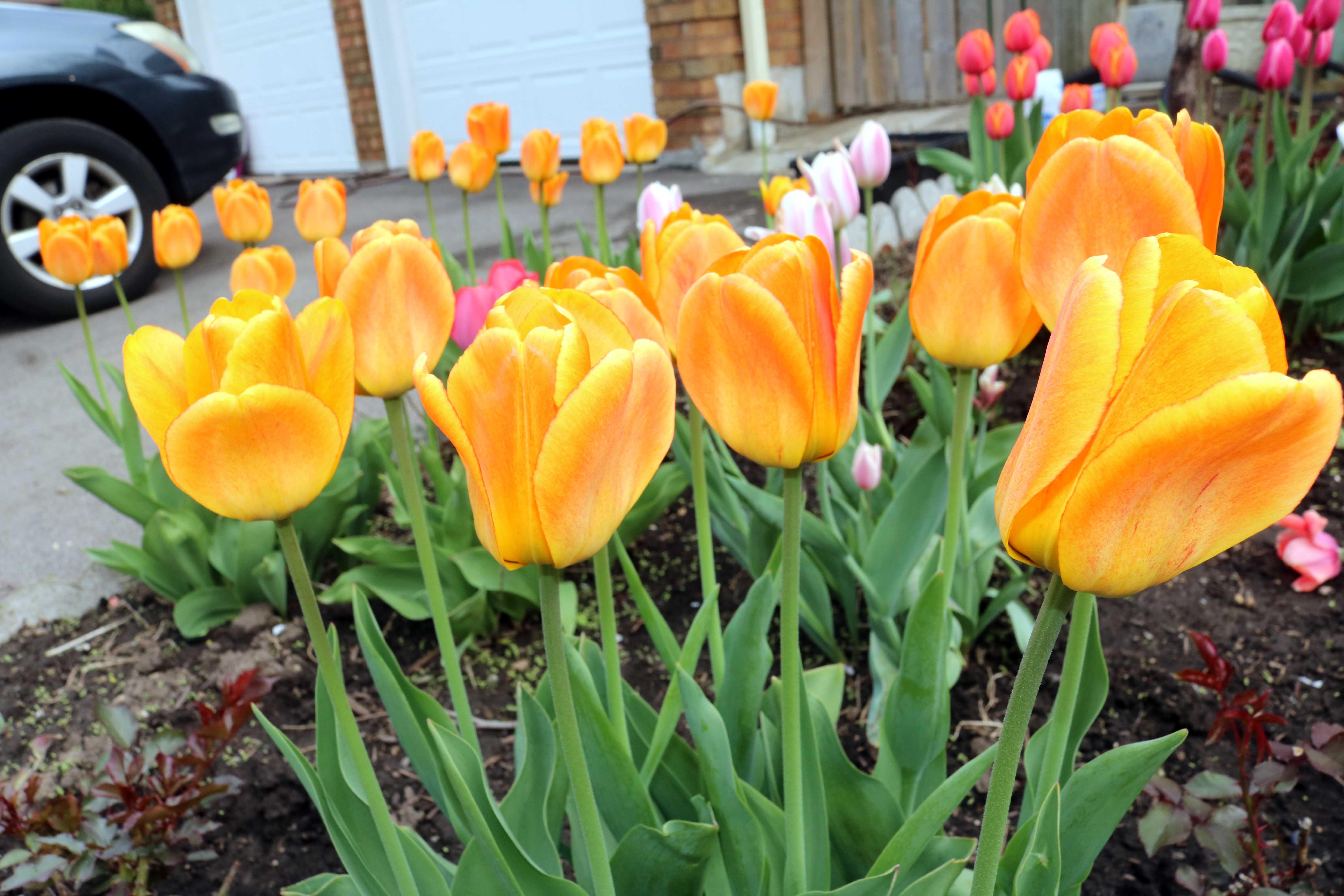
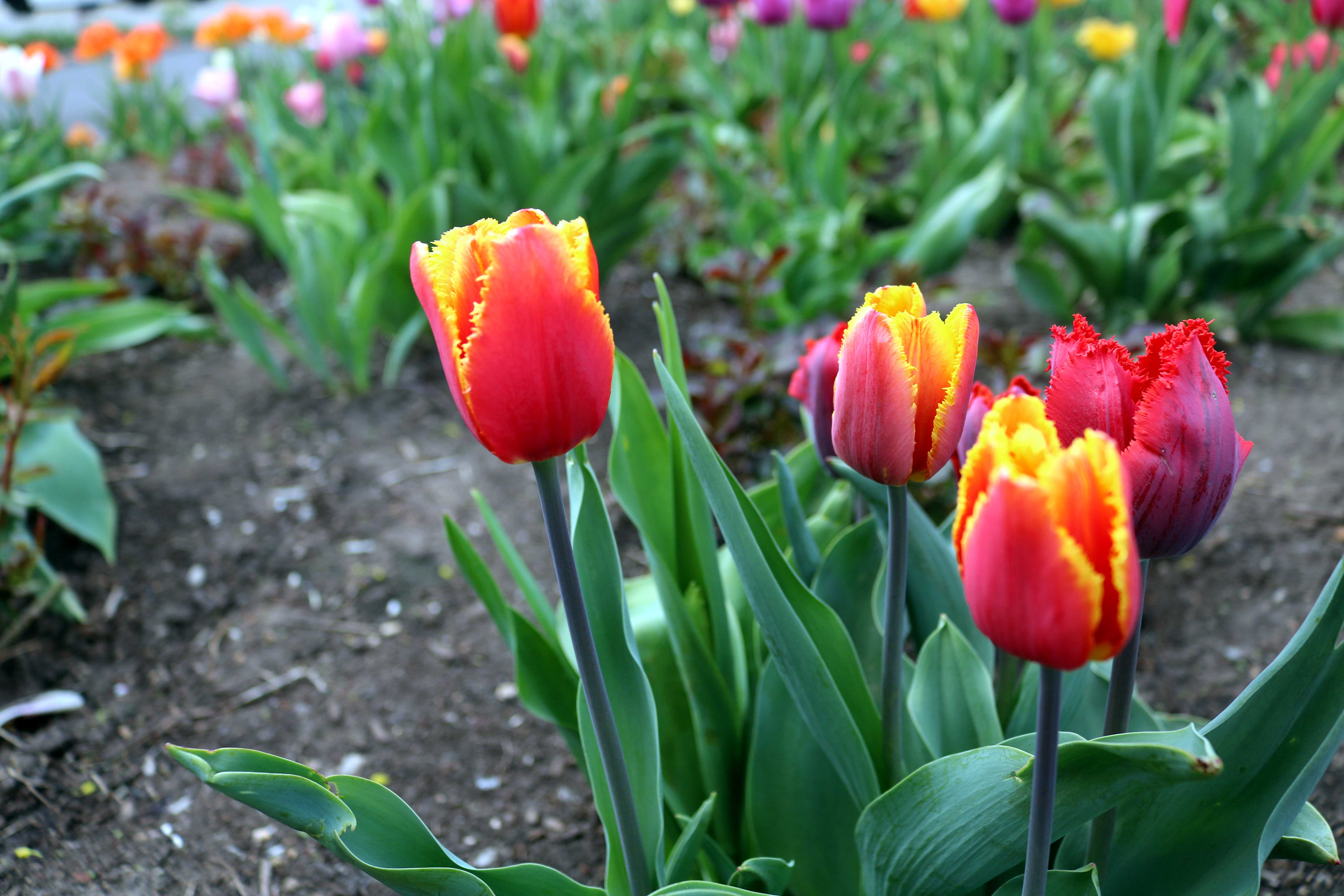
‘April rains bring in May flowers’ is a common saying in Canada. This year, tulips sprouted as the days warmed up in April, but we had two snowfalls thereafter. Many plants either died or did not grow properly, but we still boast of the best Tulip Garden in Town.
Tulips Originated in Persia and Turkey and were brought to Europe in the 16th century.
Cultivated varieties, referred to as ‘Dutch tulips,’ originated in the Netherlands.
They got their common name from the Turkish word for gauze (with which turbans were wrapped) – reflecting the turban-like appearance of a tulip in full bloom.
Yellow tulips symbolises cheerful thoughts.
The brightly colored, upright flowers may be single or double, and vary in shape from simple cups, bowls, and goblets to more complex forms.
Tulips typically bear cup-shaped flowers in almost every shade but true blue. They can be double or single, fringed or twisted, perfumed or non-scented.
Purple symbolises royalty.
The eleventh wedding anniversary flower is also tulip. It conveys forgiveness.
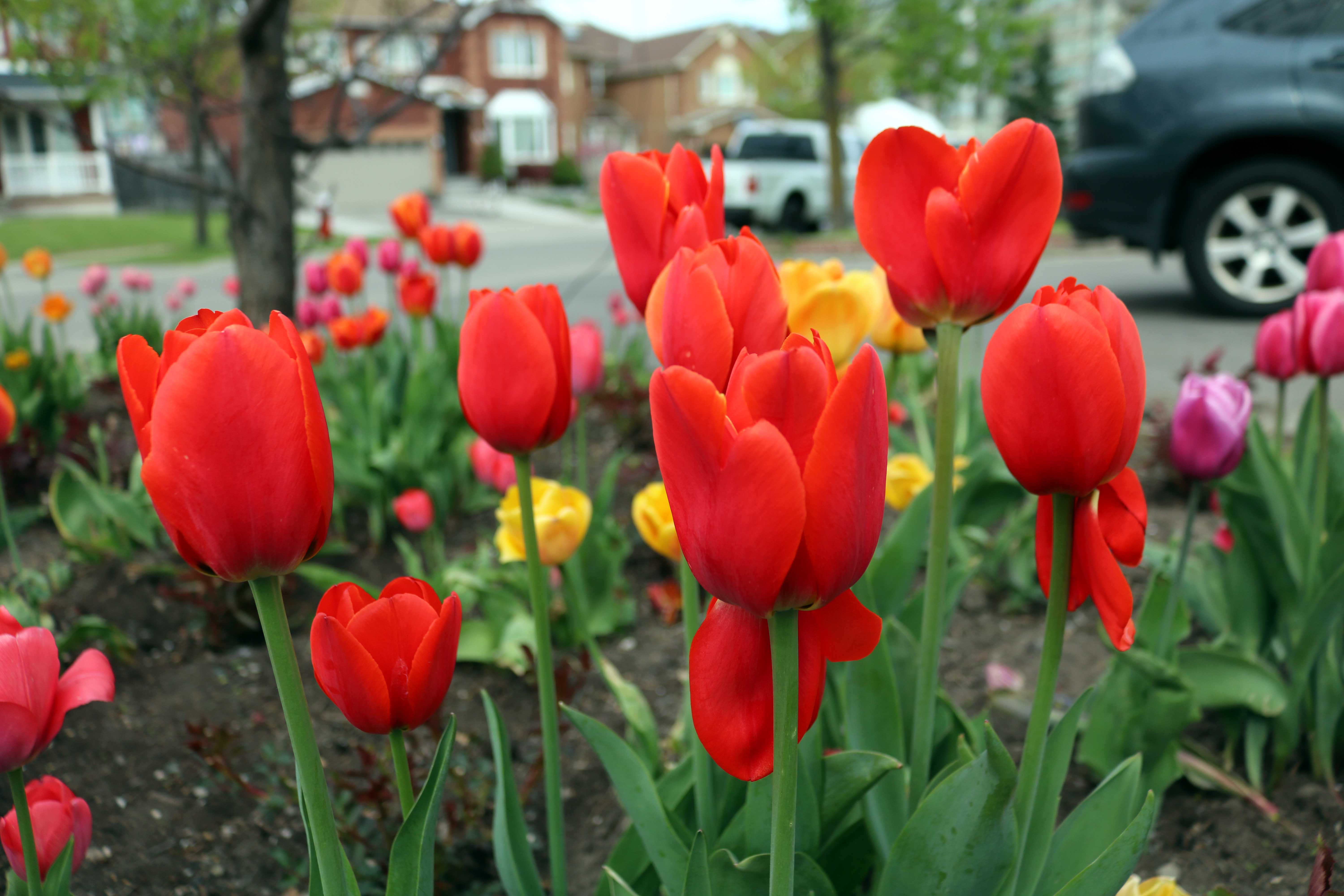
These are different shades of Red Tulips in our garden. Red tulips are most strongly associated with true love.
Tulips are spring flowers and it arrival signals the coming of a new season. Most tulips have six petals, but some can have many more.
Some of the Tulips are still blooming – may be due to the late setting in of spring.
Red tulips are the hue of choice to express that you are deeply in love. The color red evokes passion and romance.
They are gone in two weeks – and that’s the saddest part.
“So God created man in his own image, in the image of God he created him. God blessed them and said to them, ‘Be fruitful and increase in number; fill the earth and subdue it. Rule over the fish in the sea and the birds in the sky and over every living creature that moves on the ground.” (Genesis 1:27–28)
God granted humanity the right to rule over everything on earth. Yet this dominion must not translate into exploitation of nature. Rather, it calls us to be fruitful – to participate in the ongoing work of creation. This is the power of creativity with which we have been blessed. One of the finest ways to honour this divine command is simply to tend to your garden. Whether a few indoor pots, a modest home garden, or a sprawling farm, the act of cultivation connects us to the sacred rhythm of growth and renewal.
Garden Meditation Day
May 3 is Garden Meditation Day—a time to step away from the noise of daily life, to relax, to reflect. If you are fortunate enough to own a garden, spend the day there. If not, visit one. It is a day for hands-on work: digging, planting seeds, pruning, weeding. These simple acts can become a form of meditation, grounding us in the present moment.
The Science of Soil and Soul
Research has shown that physical activities involving creativity, planning, problem-solving, and labour reduce stress, anxiety, and depression. Gardening can even serve as effective exercise for weight loss. The simple acts of tending plants, removing weeds, and nurturing saplings invariably lift the spirit. They make you feel better—and they connect you to the primal experience of being part of creation, close to mother nature.
Even a brief gaze at a garden or a cluster of indoor plants can trigger positive emotional changes. Studies confirm measurable effects on blood pressure, heart activity, muscle tension, and neural activity. Gardening calms the nerves, soothes emotions, and yields genuine happiness.
Going Green, Living Well
Today, we have taken God’s word of ruling over the earth to extremes – often forgetting the stewardship that dominion implies. Gardening is one of the most effective ways to go green and support the natural world. A well-kept garden – or even a few indoor plants – improves indoor air quality, helps keep the home warm in winter and cool in summer, reduces your carbon footprint, and saves you money.
A vegetable garden in your backyard provides fresh, high-quality produce. If you choose organic methods – avoiding artificial fertilisers and pesticides – you will enjoy regular, bountiful harvests of healthy, chemical-free vegetables.
A Real-Estate Perspective
One summer morning, as I tended to my roses, an octogenarian stopped his car and stepped out to compliment my garden. “Your work has increased your home’s property value by a hundred thousand dollars,” he said, “and your neighbour’s by at least fifty thousand. I retired after forty years as a real-estate agent, and I can vouch for this from experience.“
A garden or landscape is an investment in the future. A well-manicured lawn, carefully maintained flowerbeds, and properly pruned trees all enhance your home’s curb appeal. If you ever decide to sell, a beautiful garden is a surefire way to attract buyers – and a higher price.
An Art and a Lifelong Hobby
Gardening and landscaping are truly becoming art forms. Planning, planting, and watching your own garden grow fills you with satisfaction and pride. It is a lifelong hobby: the more you learn, the more proficient you become, and the possibilities are endless.
It all begins with a first step – getting your hands dirty and your shoes soiled. As time passes, you will surely enjoy it, especially after retirement.
So, What’s Stopping You?
Whether you start with a few indoor plants, a balcony container garden, or a full landscape design, the benefits are immediate and lasting. Gardening is not merely a pastime; it is a meditation, a science, an art, and a spiritual practice—all rolled into one.
So take that first step. Dig. Plant. Water. Watch.
You might just find that in tending the earth, you also tend your soul.