A Lesson in Sporting Spirit
Recently, my friend Veteran Colonel Mani Mohan Nehru shared an anecdote that beautifully captures the essence of sporting spirit – a story worth retelling.
In 1990, as a Captain instructor at the National Defence Academy (NDA), he was officiating a hockey match between Echo Squadron and Lima Squadron. The Echo team arrived punctually, ready to play. The Lima team, through no fault of its players, was delayed due to an administrative lapse. By the book, Captain Nehru could have declared Echo Squadron the winners by walkover on technical grounds. The Echo captain, seeing an opportunity, requested just that.
Captain Nehru looked at him and asked, “Your request is legitimate, but as a sportsperson, would you really want to win by a walkover?”
The young Cadet paused, reflected, and then replied, “Sir, we want to play and win.”
I complimented him on his sporting spirit, Colonel Nehru recalled. The match was played. Echo Squadron lost 2-0.
The next morning, Captain Nehru received an angry call from the Echo Squadron Commander – a Major demanding to know why his team had been illegally made to lose. Captain Nehru apologised, not for his decision, but for the Squadron Commander failing to commend the extraordinary sportsmanship displayed by the team captain – a young Cadet who chose the uncertainty of competition over the certainty of an unearned victory. The Squadron Commander, furious over lost championship points, retorted, “I will teach sporting spirit to my team captain!”
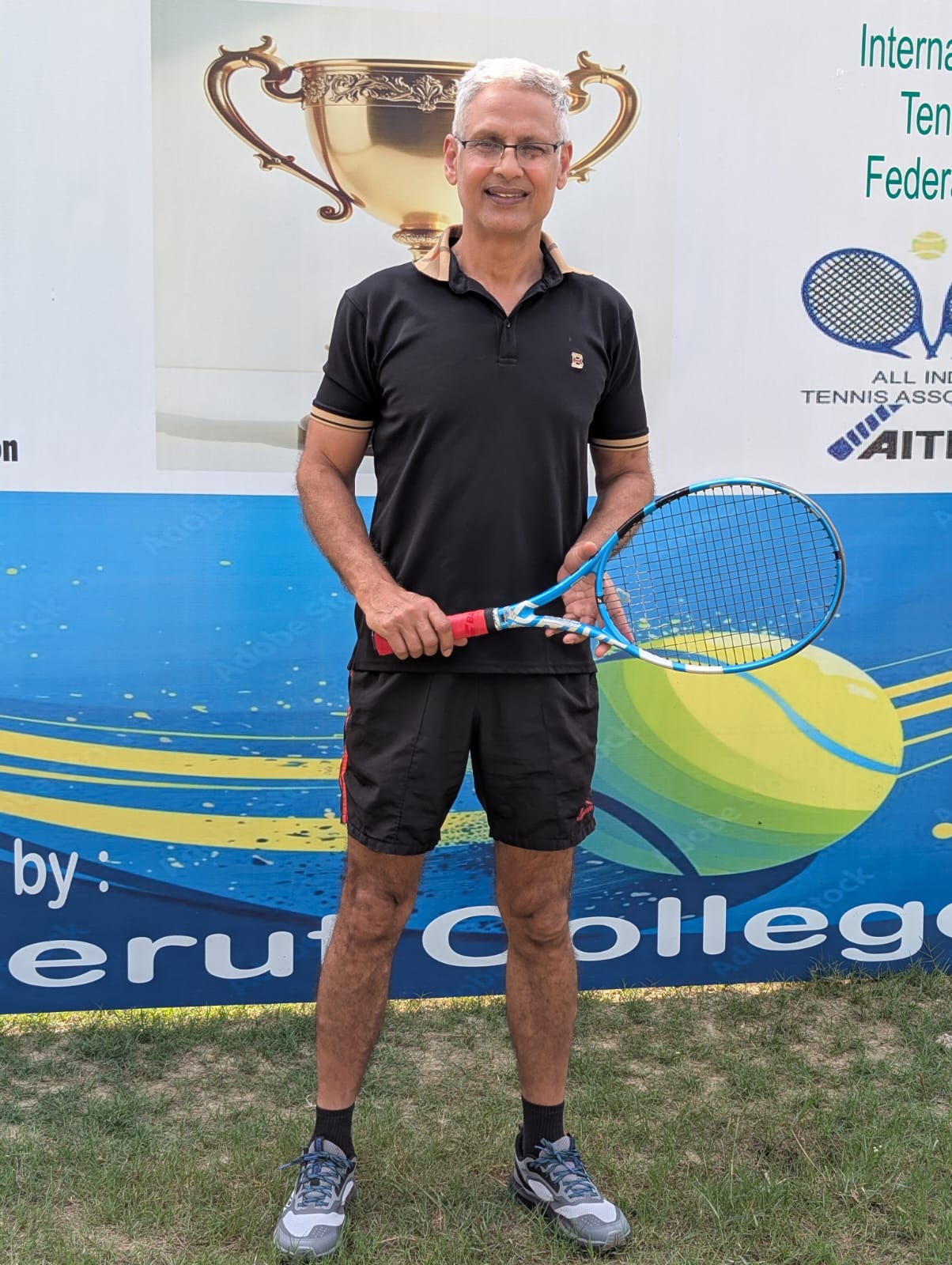
Years later, Colonel Nehru found himself in a strikingly similar position. In an Indian Tennis Federation match, he was scheduled to play his quarterfinal against Ajit, the nation’s number-one-ranked player. Ajit, however, was caught in an unforeseen traffic jam – a casualty of India’s enduring VIP culture. Legally, Colonel Nehru stood to win by walkover. But sporting spirit whispered otherwise. When the organisers asked if he would agree to a rescheduled time, he said yes. Like the Echo Squadron team, he chose to play. Like them, he lost.

The Essence of True Sport
Losing a match is an inherent part of any contest. Every game must have a victor and a vanquished. What truly distinguishes a competitor is how one accepts defeat—and that requires the grace of a true sportsperson. The distinction between a mere participant and a sportsperson is subtle but profound: it elevates the spirit of competition beyond mere athleticism into the realm of character.
A great sportsperson would rather win through spirited, competitive play than through an administrative default or an opponent’s misfortune. Victories achieved without a fight carry the uncomfortable weight of a hollow triumph. The scoreboard may register a win, but the heart knows it was never truly earned.
The Origin of Walkover
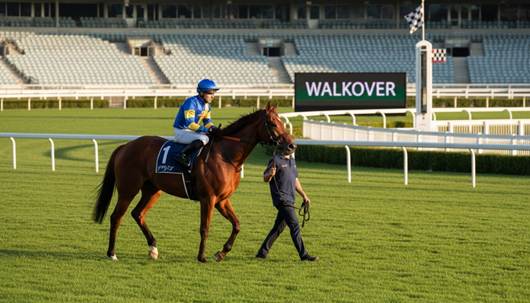
The term walkover traces its origins to the horse racing tracks of Britain. When only one horse remained in a race, it was required to walk over the course before being declared the winner. The imagery is telling – a solitary horse parading to victory without a single challenger in sight. It remains a fitting metaphor for how such situations unfold in sports today.
To the casual spectator, a walkover may appear a trivial administrative formality. But for those with a stake in the outcome, particularly bettors, it creates complications far beyond the playing field. (It must be noted that betting remains illegal in India, but the principle of unintended consequences applies universally.)
Ultimately, the true measure of sport lies not in victories handed over by circumstance, but in those forged through effort, skill, and the worthy challenge of an opponent. A true sportsperson understands this – and competes not just to win, but to earn the right to do so.
Famous Walkovers in Sporting History
Tennis (The Most Common Arena)
- 2022 Wimbledon Men’s Semifinal: Nick Kyrgios advanced to the final after Rafael Nadal withdrew due to an abdominal tear—the first men’s Wimbledon semifinal or final walkover since 1931.
- 2020 Western & Southern Open Final: Victoria Azarenka was declared champion after Naomi Osaka withdrew with a hamstring injury.
- 2020 French Open: Novak Djokovic received a walkover in the fourth round when opponent Pablo Carreno Busta withdrew.
- 2014 ATP World Tour Finals: Novak Djokovic was awarded the championship title after Roger Federer withdrew before the final with a back injury.
- 1987 French Open Final: Ivan Lendl won the title after Mats Wilander withdrew.
- 1974 Davis Cup Final: India refused to play South Africa in protest against its apartheid policies, resulting in a walkover win for South Africa.
- 1966 Australian Open Final: Margaret Court won the title via walkover against Nancy Richey—the only final-round walkover in women’s Grand Slam history.
Notably, Novak Djokovic holds the record for advancing at Grand Slams via walkovers or retirements, having done so 16 times as of the 2024 US Open.
Horse Racing
- 1980 Woodward Stakes: The legendary Spectacular Bid won a major Grade 1 stakes race by walkover. As the sole remaining entrant, he had to walk over the course to officially claim victory.
- 18th Century – Eclipse: The dominant 18th-century racehorse won roughly half of his eighteen races by walkover – no other owners dared risk their horses against him.
Other Sports
- 1973 Chile vs. USSR FIFA World Cup Qualifier: When the Soviet Union refused to play in Chile following the 1973 coup d’état, FIFA awarded a 2–0 victory to Chile. The Chilean team still took the field and scored an “unopposed goal” to fulfill the formality.
- 1972 World Chess Championship: Bobby Fischer forfeited the second game of his match against Boris Spassky, handing a win to Spassky.
- 1910 All-Ireland Football Final: Louth was awarded the championship after Kerry refused to travel to Dublin over a dispute concerning train fares.
- 1908 Olympic 400m Final: After American John Carpenter was disqualified for blocking, teammates John Taylor and William Robbins refused to race in protest. British runner Wyndham Halswelle ran the race alone—the only walkover in Olympic history.
Conclusion
The stories of Echo Squadron’s captain and Colonel Nehru’s tennis match remind us that sporting spirit is not about winning at all costs—it is about how one plays the game, how one accepts defeat, and how one values the contest itself. In an age increasingly driven by results and rankings, these small acts of integrity shine brightly, reminding us that the truest victories are those we earn, not those handed to us.


Beautiful & Morale Uplifting read, elaborating & establishing an Addage : Sports Field is 2nd Battlefield.
Sporting Spirits are most Akin to true Soldierly Spirits .. !!!
LikeLiked by 1 person