
By Brig Azad Sameer (Retd)
The Indian Constitution, once described by constitutional experts as a seamless web, is currently facing its most significant structural stress test since the Emergency. The dramatic events of April 17, 2026, where the Constitution (131st Amendment) Bill suffered a historic defeat in the Lok Sabha, serves as a distressing prelude to this crisis. By failing to secure a two-thirds majority, the bill—which sought to link Women’s Reservation to a massive population-based delimitation exercise—exposed a deep-seated rift in the Indian polity. This defeat was not merely a legislative hurdle; it was a loud assertion of Federalist push- back against what many perceive as a drift toward over-centralisation.
The Quasi-Federal Framework
To understand these tensions, one must look at the unique architecture of the Indian state. The Constitution establishes a Quasi-Federal system—a term popularised by K.C. Wheare. Unlike the Coming Together federalism of the United States, India is a Holding Together federation. The word federal does not figure anywhere in the constitution. It is simply a union of states, indestructible union of destructible states. It possesses a strong centralising bias (Art. 356, a single judiciary, and a unified civil service) designed to maintain national integrity, yet it grants states significant autonomy in local governance. The founding fathers had found this a sound and yet a delicate balance which is now being threatened by a phenomenon known as the Performance Paradox.
The Performance Paradox and the Southern Grievance
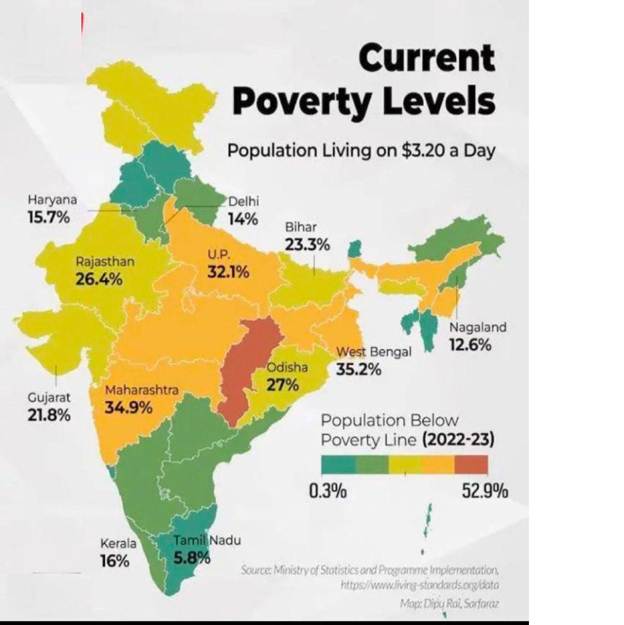
The performance Paradox refers to a scenario where states are politically and fiscally penalised for achieving the very developmental goals set by the Union. Since the 1970s, the Southern states—Tamil Nadu, Kerala, Karnataka, Andhra Pradesh, and Telangana—have aggressively implemented national mandates in:
- Population Control: Achieving Replacement Level Fertility (TFR) decades ahead of the North.
- Human Development: Leading in literacy, life expectancy, and infant mortality reduction.
- Economic Productivity: Contributing nearly 30% of India’s GDP despite hosting only 20% of its population.
The Paradox: Because the North’s population grew at a much higher rate, a strictly population-based political and fiscal system would cause a power and money swing away from the performing South toward the lagging North.
Fiscal Fault lines: The 16th Finance Commission
The 16th Finance Commission (16th FC) is the current battlefield for fiscal federalism. The Southern states argue that the Divisible Pool of taxes is being distributed unfairly.
- The Contribution: For every ₹100 that Tamil Nadu or Karnataka contributes to the Central tax pool, they historically receive back only about ₹29 to ₹40. Conversely, states like Bihar and Uttar Pradesh often receive upwards of ₹200 to ₹700 for every 100-rupee contributed. This is a key concern.
- The 16th FC Challenge: The South is demanding that the Commission move away from using the 2011 Census as the primary weight for Need. They are pushing for:
- Greater weight for Tax Effort (rewarding states that collect taxes efficiently).
- Higher weight for Demographic Performance (rewarding states with lower fertility rates).
- A Capping Mechanism to ensure that no state’s share of the tax pool drops by more than a certain percentage in a single cycle.
If the 16th FC ignores these performance metrics, the South fears a fiscal drain that will cripple their ability to maintain their high-quality social infrastructure.
The Representational Crisis: Delimitation
The most explosive challenge to the Constitution is the Delimitation Exercise. Under the current One Person, One Vote principle, the redrawing of constituencies based on the 2011 or 2026 Census would fundamentally alter the character of the Lok Sabha.
- The Math of Dilution: Projections suggest that in an expanded House of 850 seats, the Hindi-speaking North could gain enough seats to form a government without a single seat from the South or the Northeast. Northern states are projected to gain over 200 seats, while the South would gain only about 65, widening the absolute gap between the two regions. In percentage terms the North’s share increases by roughly 5% while the South’s share decreases by roughly 3%.
- The Southern View: This is seen as a violation of the Federal Contract. Southern leaders argue that Numerical Democracy (majority rules) is colliding with Constitutional Democracy (protection of regional identities).
- The 131st Amendment Fallout: The defeat of the bill in April 2026 was specifically triggered by the government’s attempt to use delimitation as a prerequisite for Women’s Reservation. The Opposition successfully framed this as a Trojan Horse that would have functionally disenfranchised the Southern states under the guise of gender equality.
Conclusion
The Indian Constitution is navigating a Triple Threat: fiscal disparity, demographic divergence, and representational imbalance. The historic defeat of the 131st Amendment perhaps signals that the era of consensus-free centralising reforms is over.
For the Union to remain cohesive, the Indian state must evolve from a Quasi-Federal structure into a Cooperative Federal structure. This requires a 16th Finance Commission that rewards efficiency and a Delimitation formula that protects regional voices – perhaps through a weighted representation or a more powerful Rajya Sabha. Without these safeguards, the Performance Paradox risks turning India’s success stories into its sources of instability.


We should be responsible for our choices and should accept realities . South has outpaced North on SDG goals but the conundrum of better environment has now produced this paradoxWe have chosen this path to tread and need to accept the reality today. Well compiled as usual Regi. Kudos
LikeLiked by 2 people
Thank you for your response
LikeLiked by 1 person