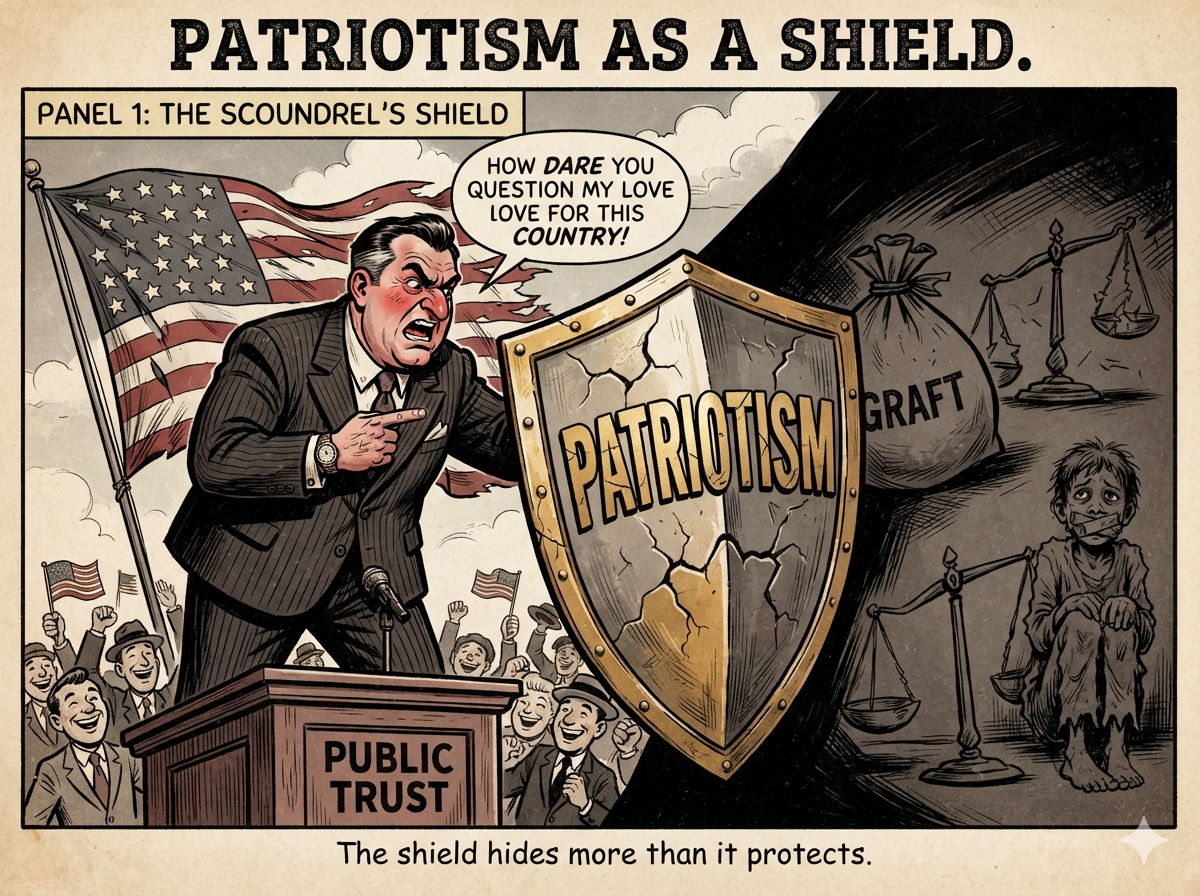
When Samuel Johnson famously declared in 1775 that “patriotism is the last refuge of the scoundrel,” he was not denouncing genuine love for one’s country or community. Instead, Johnson was targeting a specific form of political theater: the weaponisation of national identity by those seeking to shield corrupt acts, deflect accountability, or inflate their own stature. Throughout history, whenever power fails on substance, performance takes over. Flag-waving becomes a substitute for virtue, and jingoism becomes an iron shield against criticism.
History’s most destructive autocrats exemplified this dynamic by elevating state-centric nationalism into a totalising faith. Adolf Hitler transformed German patriotism into a racialised crusade, using the defense of the Vaterland to justify territorial aggression, silence domestic opposition, and execute mass murder. Benito Mussolini exploited Italian irredentism, using the glorious myth of the Roman Empire to cover the brutality of his fascist regime and mask its economic failures. In the Soviet Union, Joseph Stalin cynically recast Marxism into Socialism in One Country and rallied the nation under the banner of the Great Patriotic War – a desperate plea to traditional Russian nationalism that consolidated his totalitarian grip and cleansed his bloody purges from public accountability. In every case, intense national devotion was demanded not to serve the people, but to insulate the leader from judgment.
This dynamic is not exclusive to totalitarians; it repeatedly manifests across democratic history as well. In ancient Rome, the Senator Catiline attempted to overthrow the Republic while wrapping his conspiracy in romanticised appeals to traditional Roman liberty. During the French Revolution’s Reign of Terror, Maximilien Robespierre institutionalised state violence under the banner of republican virtue, branding any opponent a traitor to the Fatherland. Centuries later, during the American Red Scare of the 1950s, Senator Joseph McCarthy weaponised anti-communist hysteria to destroy lives and consolidate power, framing criticism of his reckless overreach as disloyalty to the flag.
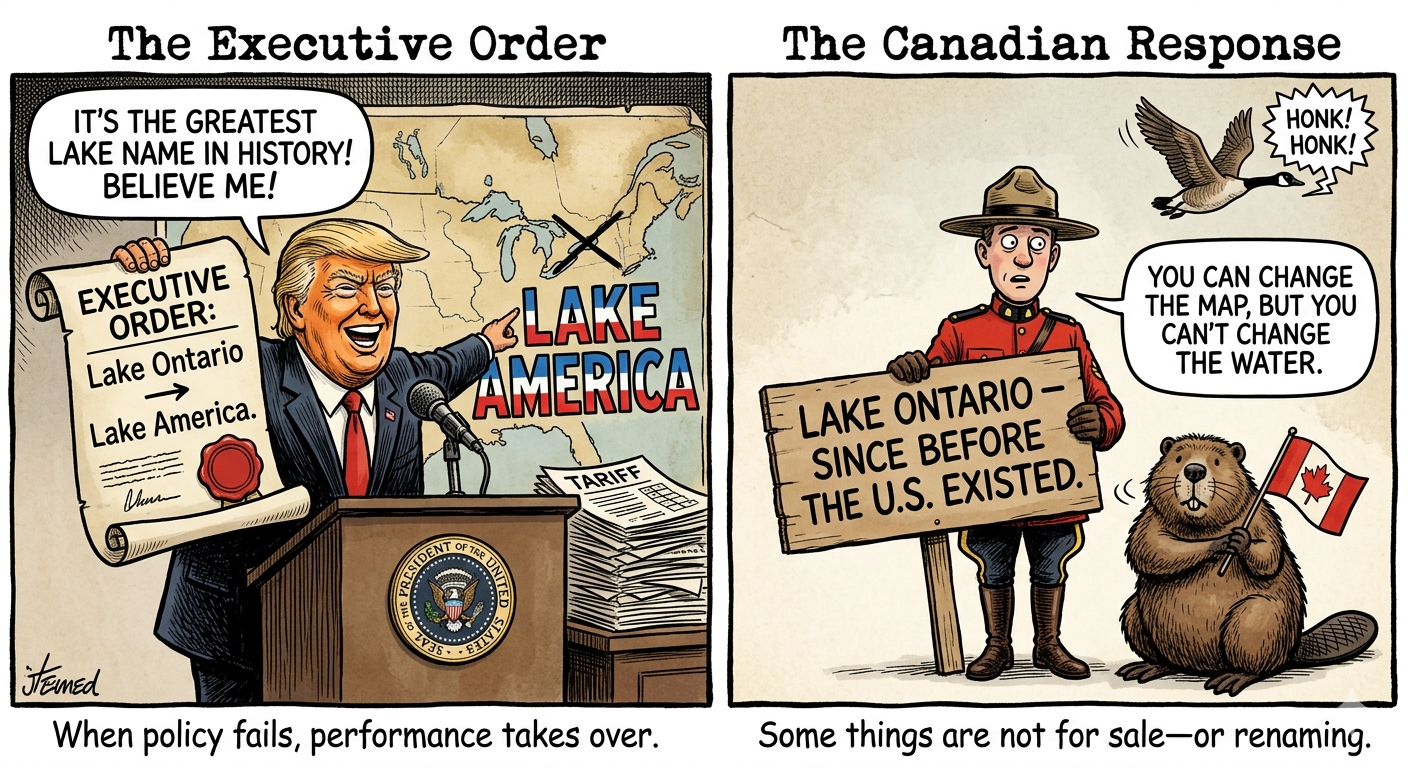
In the last 50 years or so we have seen this phenomenon coming alive in many parts of the world practiced by astute politicians who lack substance. The latest episode in this long, sordid trajectory is the geopolitical spectacle surrounding Lake America. In late August 2026, amid an escalating trade war and tariff dispute with Canada, an executive order from Washington officially declared that the US portion of Lake Ontario—a shared body of water whose Indigenous name Ontario predates both modern nations by centuries—would be renamed Lake America for federal usage.
Wrapped in rhetoric claiming to honor the contributions of visionary and patriotic Americans, the declaration offers a textbook modern example of Johnson’s thesis. Renaming a shared, historic body of water does nothing to resolve trade deficits or economic friction; it is political posturing designed to offer quick, sensational victories to a domestic audience. It uses geography as a vanity project, wrapping diplomatic failure in the safe, unassailable cloak of hyper-patriotism.
The Lake America controversy reinforces why Johnson’s warning remains vital. True patriotism builds, preserves, and reflects humility in service to a society’s highest ideals. Scoundrels, by contrast, treat national pride as cheap currency—slapping a flag on an ego, weaponising national symbols to silence critics, and demanding applause for the performance. Whenever power insists that bluster is loyalty, history tells us to look closely at what that bluster is trying to hide.
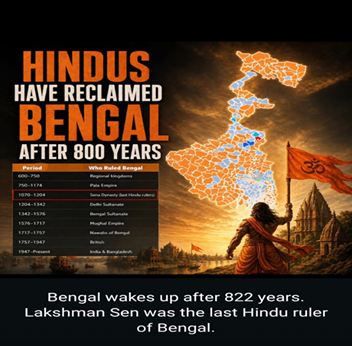
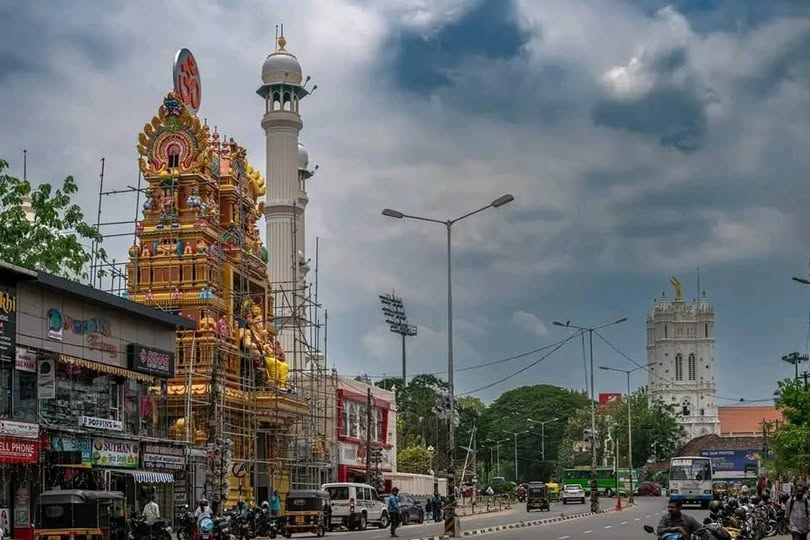
Earlier today, a friend sent me a digital poster. It featured a map of Bengal, a timeline of dynasties, and a bold headline: Hindus have reclaimed Bengal after 800 years. I am someone who by accident of birth is a Muslim, although the funny part is that some of my clan demand proof. To, me the image of the poster didn’t just feel like a political update; it felt like a silent, invisible boundary line being drawn across a shared past. My friend insisted it was just history and general knowledge. I accepted the words in silence. We continue to be the great friends that we have been all these years, bound by shared memories that predate these shifting sands. Yet, beneath that clinical defense lies a troubling psychological shift: the quiet transformation of a modern democratic mandate into a narrative of ancient civilizational warfare. It makes one wonder when our personal bonds became so fragile that they required the armor of historical justifications.
This uneasy realisation feels particularly sharp against the backdrop of my own life. I spent nearly three and a half decades serving in the Indian Army, retiring some fifteen years ago. In all those years of wearing the uniform, moving shoulder to shoulder with men of every conceivable background, I never once felt a sense of exclusion. The camaraderie was absolute, the shared identity unquestioned. But today, something seems to have changed decisively. A subtle, cold current has entered our collective consciousness, making me look back at my service not just with pride, but with a quiet, growing yearning for a time when belonging was simply understood.
When a political victory is framed as a religious reclamation, the implications feel heavy and deeply unsettling. It suggests that for more than a millennium, anyone not of a specific faith was merely an occupier, an interloper, or a guest whose time has run out. This mindset views the ballot box not as a tool for governance or social welfare, but as a sword for correcting history’s perceived grievances. It forces us into an archaic mindset, replacing the quiet dignity of a citizen with the harsh, binary identity of the conqueror or the conquered. We are no longer neighbors building a future together; we are ghosts re-enacting ancient battles.
If the majority begins to view political success as a religious re-conquest, the delicate concept of a pluralistic society starts to fracture. Where does that leave the minorities? It leaves them in a state of perpetual audition – constantly needing to prove their belonging to a land that their ancestors have called home for generations. It turns everyday neighbors into others and shared regional histories into a zero-sum game of winners and losers. There is deep loneliness in realising that the soil you walked upon, defended, and loved is suddenly being measured by a yardstick you can never meet.
True knowledge should tell us that history is a complex tapestry, woven with threads of coexistence, compromise, and shared survival. It is more often than not a perspective of the writer and the reader, not a scoreboard of tribal triumphs. When we celebrate a political win as a religious victory, we don’t just exclude millions; we diminish the very democratic values that allowed the win to happen in the first place. In trying to reclaim a past that cannot be changed, we risk losing the fragile, precious present we have built together.
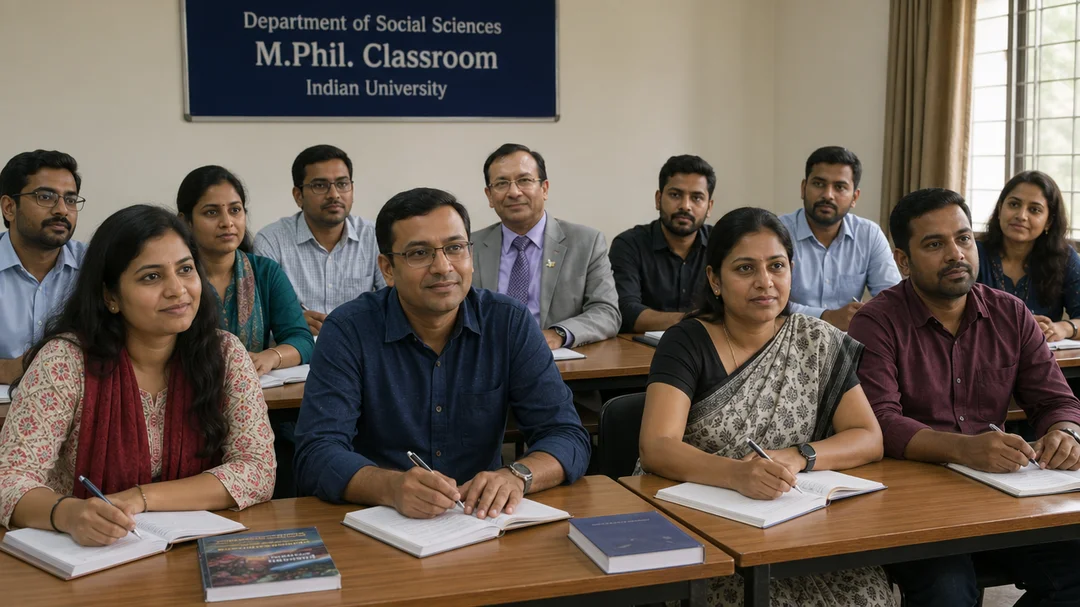
In 2004 I had a brain wave that a break from the Army would perhaps do me some good. I applied for a year’s study leave. The Indian Army did something rather brave: they granted me leave as requested. The mission? Head to Pune University, enroll in the M.Phil program for Defense Studies, and return with a sharper mind, hopefully well versed with matters of national security. Little did I know that I was walking into the enemy camp in civvies?
I arrived on campus as a seasoned “Realist.” For nearly two decades, my worldview was built on the sturdy foundation of hard power, deterrence, and the immutable logic of Si vis pacem, para bellum—if you want peace, prepare for war. I was a walking, talking embodiment of the military establishment, albeit a very academic one for that year.
Then, the curriculum happened.
An Officer and a Pacifist?
The irony began the moment I opened the syllabus for a mandatory core subject: Peace and Conflict Studies. There I was, a serving officer whose entire career was defined by the necessity of the military, sitting in a classroom where the prescribed reading list included a direct assault on my profession.
The book at the top of the list? “Peace: An Idea Whose Time Has Come” by Anatol Rapoport.
Imagine an executive from Kentucky FriedChicken being sent to attend a mandatory seminar on the spiritual wonders of strict vegetarianism. My plight was more or less the same. My employer—the Army—was literally footing the bill for me to study a text that argued, with devastating conviction, that militaries aren’t just unnecessary; they are a curse on global society. I was a “Realist” behind enemy lines, reading a manual on why my own uniform was really a part of the problem.
The Book: “Peace: An Idea Whose Time Has Come”
Anatol Rapoport doesn’t pull his punches. With a single burst from his “AK”, he brings down Clausewitz, Sun Tzu and Hegel, all in one go. In this work, he explores the evolution of war not as a glorious necessity of statecraft, but as a tragic, systemic failure.
Rapoport’s View: War as a Disease
To Rapoport, war is not a rational tool used by states to achieve goals. Instead, he presents a perspective that was, for a soldier, undoubtedly quite jarring:
The Pathological View: Rapoport argues that war is essentially an outcome of a “diseased human mind.” He views the institution of war as a social pathology – a chronic illness that has infected human civilization. To him, the “need” for war is a psychological glitch we haven’t yet outgrown. He hopes that the evolved human being will outgrow this “need”.
Abolition, Not Management: While my many Realist stalwarts call for “Conflict Management” or “Limited War,” Rapoport was calling for the total de-legitimization of War and the military. To him, peace isn’t just a ceasefire; it’s the total rescue of humanity from a long-standing mental disorder.
The Parasitic Cancer. Anatol Rapoport famously employed a biological metaphor to describe the global military apparatus as a malignant cancer on human society. His view wasn’t just a rhetorical insult; it was a systemic analysis of how military institutions function. Here are the core reasons behind his perspective:
Self-Perpetuation (The “Parasitic” Nature). Rapoport argued that like a cancer cell, the military-industrial complex has its own “genetic code” focused solely on growth and survival. It does not exist to solve a specific problem (like winning a final war) and then disappear. Instead, it creates conditions (fear, perceived threats) that ensure it continues to receive funding and power. It thrives even if it harms the “host” (society).
Diversion of Social Energy. In biology, a tumor consumes nutrients that the body needs for healthy organs. Rapoport saw the military in the same light. Massive amounts of wealth, scientific intelligence, and human labor are “sucked” into the military machine. This prevents society from addressing real existential threats like poverty, disease, and environmental collapse
Decoupling from Human Conscience. Rapoport criticized military strategists for treating war as a “game” or a mathematical problem. By removing the moral and human cost from the equation, the military functions like a soulless biological process. This “blind growth” occurs without regard for the pain or destruction it causes to the global social fabric.
The Autotelic Nature of Arms Races. The term autotelic describes an activity or experience that is an end in itself, rather than a means to an end.He viewed the arms race as a classic symptom of this cancer. Each “cell” (nation) grows its military because the neighboring “cell” is growing. Each military has a symbiotic relationship with the adversary’s military. One is entirely dependent on the other for its own survival. This leads to a state of metastasis where the growth becomes uncontrollable and serves no defensive purpose, eventually reaching a point where it can destroy the entire global organism (through nuclear war).
Host Destruction. The ultimate tragedy of a tumor is that by successfully killing its host, it also kills itself. Rapoport warned that the global military establishment is on a path to a Nuclear Holocaust. In its quest for “security” and dominance, it creates a world so dangerous that total annihilation becomes a statistical probability.
The Author: Who was Anatol Rapoport?
Anatol Rapoport (1911–2007) was a true polymath—a concert pianist, a mathematical psychologist, and a pioneer in Game Theory. Despite my hard core “Realist” foundations, it was hard not to respect a man who was nothing short of a genius. He had won a famous international tournament on cooperation with the simplest possible strategy: “Tit for Tat.” He was a co-founder of the Peace Research Institute in Oslo and spent a life time trying to apply rigorous academic logic to the often irrational pursuit of human conflict. The “After-Action” Report
So, was I converted? Did I trade my combat fatigues for a khadi kurta and a start a protest against the military industrial complex? Not exactly. I didn’t leave Pune University ready to dismantle the world’s arsenals in a hurry. However, the irony of the situation did its work. Being forced to study Rapoport’s “Peace” didn’t make me a pacifist, but it did make me a sort of “thinking Realist.” When I consider the military industrial complex of the USA, Rapoport’s perspective looks every bit real.
I realized that while hard power is a reality on our borders, viewing the world only through a gun sight is a form of tunnel vision. The Army sent me to Pune to learn about the defense of the nation from an academic perspective; ironically, I learned that truly defending it might involve understanding the mind of a man who thought my very existence was a symptom of a sick world. Surprisingly, even today Peace and conflict Studies is still part of the university’s core curriculum for Defense Studies. But I wonder if Anatol Rapoport is now on the reading list.
Looking back at 2004, I realize that the most dangerous thing in a conflict may not be the enemy’s hardware—it could just as well be the inability to see the world from a different angle. Even if that angle thinks you’re the problem!
In the grand theater of democracy, we often measure progress by the laws we pass. We celebrate “Yes” votes as milestones of evolution. But in a vibrant, breathing democracy, the “No” vote is not just a sign of friction—it is a vital sign of health. When a parliament rejects a bill, it isn’t a failure of the system; it is the system working exactly as intended.
The Logic of the Negative
A “No” vote is as much an expression of the will of the people as a “Yes.” In a representative system, members of parliament are not mere rubber stamps for the executive; they are the filters through which the collective concerns, anxieties, and wisdom of the citizenry pass. If a bill fails, it signifies that the proposed law did not meet the threshold of consensus required to govern a diverse nation. It reflects a protective mechanism: the refusal to be governed by a law that representatives deem flawed, premature, or unjust.
The Judiciary’s Stance: Assent is Not Optional, the Will is Sovereign
Recent legal battles in India have brought the role of the Governor into sharp focus. The Supreme Court of India has clarified that a Governor cannot “sit on a bill” indefinitely as it is the “will of the people” expressed through its representatives. By extension, this logic reinforces the sanctity of the legislative process itself. If the passage of a bill is the “will of the people” that a Governor must respect, then the rejection of a bill by the House is equally a definitive “will of the people” that the executive must bow to. The House’s right to say “No” is the ultimate check against executive overreach.
Turning Points: When Dissent Changed History
History shows that when the Indian Parliament said “No,” it didn’t just stop a bill; it forced a better future into existence.
The Privy Purses Rejection (1970): A Lesson in Constitutional Integrity In 1970, the bill to abolish the privy purses of former royals failed in the Rajya Sabha very narrowly.
The Follow-up: When the government tried to bypass this “No” by issuing an executive order, the Supreme Court struck it down, ruling that the executive cannot override the legislature.
The Change: This forced a national debate on the “basic structure” of the Constitution and led to the 26th Amendment in 1971. The original “No” ensured that such a massive social shift happened through proper constitutional pathways rather than executive whim, preserving the honor of the democratic process.
The Panchayati Raj & Nagar Palika Bills (1989): From Rejection to Revolution The 64th and 65th were defeated in the Rajya Sabha because they were seen as a central “power grab” that bypassed state governments.
The Follow-up: The defeat forced the government to abandon its top-down approach and engage in genuine federal consultation.
The Change: This refined the legislation into the landmark 73rd and 74th Amendments of 1992. Today, these are the bedrock of local self-governance, providing constitutional status to over 250,000 local bodies. The 1989 “No” prevented a flawed, centralized version of local rule from becoming law, leading to a far more robust and inclusive system.
The POTA Rejection (2002): Safeguarding Civil Liberties When the Rajya Sabha rejected the Prevention of Terrorism Bill (POTA), it marked a rare moment where a joint session of Parliament had to be called.
The Follow-up: The rejection cast a spotlight on the bill’s potential for abuse, specifically regarding the admissibility of confession to the police as evidence.
The Change: While the bill eventually passed in a joint session, the initial rejection created a national record of dissent that laid the groundwork for its repeal in 2004. The parliamentary “No” ensured that the trade-off between security and liberty remained at the center of the national consciousness, preventing the normalization of draconian powers.
The Vajpayee Confidence Vote (1999): The Weight of a Single Vote In one of the most dramatic moments in Indian parliamentary history, the Atal Bihari Vajpayee government fell on April 17, 1999, by a margin of just one vote after the AIADMK withdrew support.
The Follow-up: The razor-thin defeat forced a mid-term election, but it also solidified Vajpayee’s image as a dignified statesman who respected the democratic mandate without resorting to “horse-trading.”
The Change: This “No” ultimately led to a stronger mandate in the 1999 General Elections enabling Vajpayee to become the first non-Congress Prime Minister to complete a full five-year term. It proved that even a single vote of dissent can reset a nation’s political course toward long-term stability.
The 131stAmendment Bill: Rejection as a Prelude to Refinement
The recent defeat of the 131st Amendment Bill serves as a contemporary master class in the nuances of parliamentary dissent. This “No” vote was not necessarily a rejection of the bill’s core intent, but rather a strategic push-back against its structural presentation. By linking the amendment to two other bills, the legislative package became an “all-or-nothing” proposition that the opposition found impossible to digest. This entanglement masked the individual merits of the 131st Amendment, proving that the process of lawmaking is just as critical as the purpose.
However, this rejection should be viewed with a sense of optimism. History has shown us that when landmark bills are defeated due to technical or procedural linkages, they often return in a more evolved and transparent form. This “No” acts as a constructive pause, signaling that for such a significant change to take root, it must stand on its own merit. We can certainly look forward to a positive prognosis, ultimately leading to a more robust and consensus-driven law.
Conclusion: Diversity in Dissent
A democracy where every bill passes unanimously is not a democracy; it is a monologue. A “No” vote forces a government to negotiate, to refine, and – most importantly – to listen. It ensures that the minority is heard and that the majority remains accountable. The next time you see a “No” vote on the news, don’t see it as a deadlock. See it as a heartbeat—the sound of democracy that refuses to remain silent
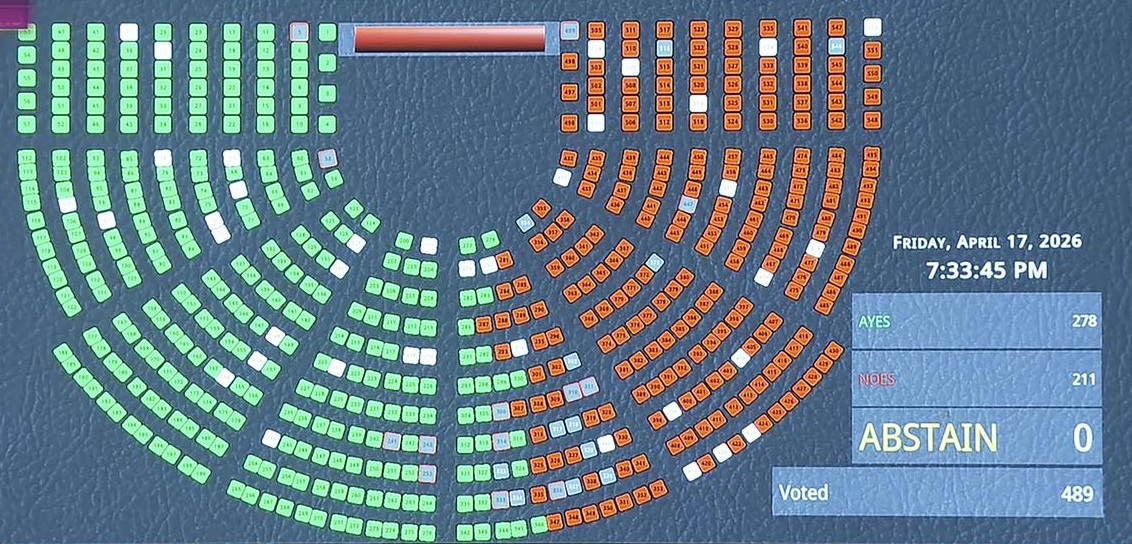
The Indian Constitution, once described by constitutional experts as a seamless web, is currently facing its most significant structural stress test since the Emergency. The dramatic events of April 17, 2026, where the Constitution (131st Amendment) Bill suffered a historic defeat in the Lok Sabha, serves as a distressing prelude to this crisis. By failing to secure a two-thirds majority, the bill—which sought to link Women’s Reservation to a massive population-based delimitation exercise—exposed a deep-seated rift in the Indian polity. This defeat was not merely a legislative hurdle; it was a loud assertion of Federalist push- back against what many perceive as a drift toward over-centralisation.
The Quasi-Federal Framework
To understand these tensions, one must look at the unique architecture of the Indian state. The Constitution establishes a Quasi-Federal system—a term popularised by K.C. Wheare. Unlike the Coming Together federalism of the United States, India is a Holding Together federation. The word federal does not figure anywhere in the constitution. It is simply a union of states, indestructible union of destructible states. It possesses a strong centralising bias (Art. 356, a single judiciary, and a unified civil service) designed to maintain national integrity, yet it grants states significant autonomy in local governance. The founding fathers had found this a sound and yet a delicate balance which is now being threatened by a phenomenon known as the Performance Paradox.
The Performance Paradox and the Southern Grievance
The performance Paradox refers to a scenario where states are politically and fiscally penalised for achieving the very developmental goals set by the Union. Since the 1970s, the Southern states—Tamil Nadu, Kerala, Karnataka, Andhra Pradesh, and Telangana—have aggressively implemented national mandates in:
Population Control: Achieving Replacement Level Fertility (TFR) decades ahead of the North.
Human Development: Leading in literacy, life expectancy, and infant mortality reduction.
Economic Productivity: Contributing nearly 30% of India’s GDP despite hosting only 20% of its population.
The Paradox: Because the North’s population grew at a much higher rate, a strictly population-based political and fiscal system would cause a power and money swing away from the performing South toward the lagging North.
Fiscal Fault lines: The 16th Finance Commission
The 16th Finance Commission (16th FC) is the current battlefield for fiscal federalism. The Southern states argue that the Divisible Pool of taxes is being distributed unfairly.
The Contribution: For every ₹100 that Tamil Nadu or Karnataka contributes to the Central tax pool, they historically receive back only about ₹29 to ₹40. Conversely, states like Bihar and Uttar Pradesh often receive upwards of ₹200 to ₹700 for every 100-rupee contributed. This is a key concern.
The 16th FC Challenge: The South is demanding that the Commission move away from using the 2011 Census as the primary weight for Need. They are pushing for:
Greater weight for Tax Effort (rewarding states that collect taxes efficiently).
Higher weight for Demographic Performance (rewarding states with lower fertility rates).
A Capping Mechanism to ensure that no state’s share of the tax pool drops by more than a certain percentage in a single cycle.
If the 16th FC ignores these performance metrics, the South fears a fiscal drain that will cripple their ability to maintain their high-quality social infrastructure.
The Representational Crisis: Delimitation
The most explosive challenge to the Constitution is the Delimitation Exercise. Under the current One Person, One Vote principle, the redrawing of constituencies based on the 2011 or 2026 Census would fundamentally alter the character of the Lok Sabha.
The Math of Dilution: Projections suggest that in an expanded House of 850 seats, the Hindi-speaking North could gain enough seats to form a government without a single seat from the South or the Northeast. Northern states are projected to gain over 200 seats, while the South would gain only about 65, widening the absolute gap between the two regions. In percentage terms the North’s share increases by roughly 5% while the South’s share decreases by roughly 3%.
The Southern View: This is seen as a violation of the Federal Contract. Southern leaders argue that Numerical Democracy (majority rules) is colliding with Constitutional Democracy (protection of regional identities).
The 131st Amendment Fallout: The defeat of the bill in April 2026 was specifically triggered by the government’s attempt to use delimitation as a prerequisite for Women’s Reservation. The Opposition successfully framed this as a Trojan Horse that would have functionally disenfranchised the Southern states under the guise of gender equality.
Conclusion
The Indian Constitution is navigating a Triple Threat: fiscal disparity, demographic divergence, and representational imbalance. The historic defeat of the 131st Amendment perhaps signals that the era of consensus-free centralising reforms is over.
For the Union to remain cohesive, the Indian state must evolve from a Quasi-Federal structure into a Cooperative Federal structure. This requires a 16th Finance Commission that rewards efficiency and a Delimitation formula that protects regional voices – perhaps through a weighted representation or a more powerful Rajya Sabha. Without these safeguards, the Performance Paradox risks turning India’s success stories into its sources of instability.
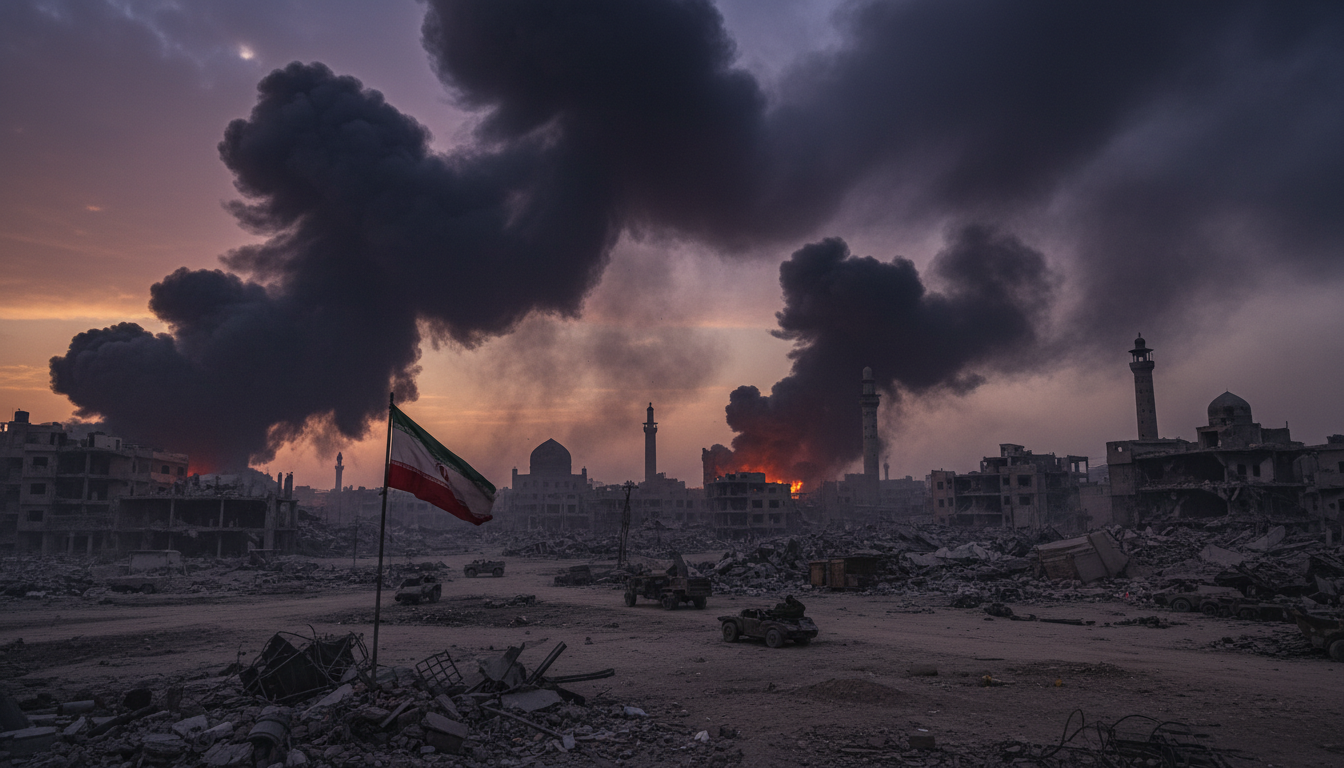
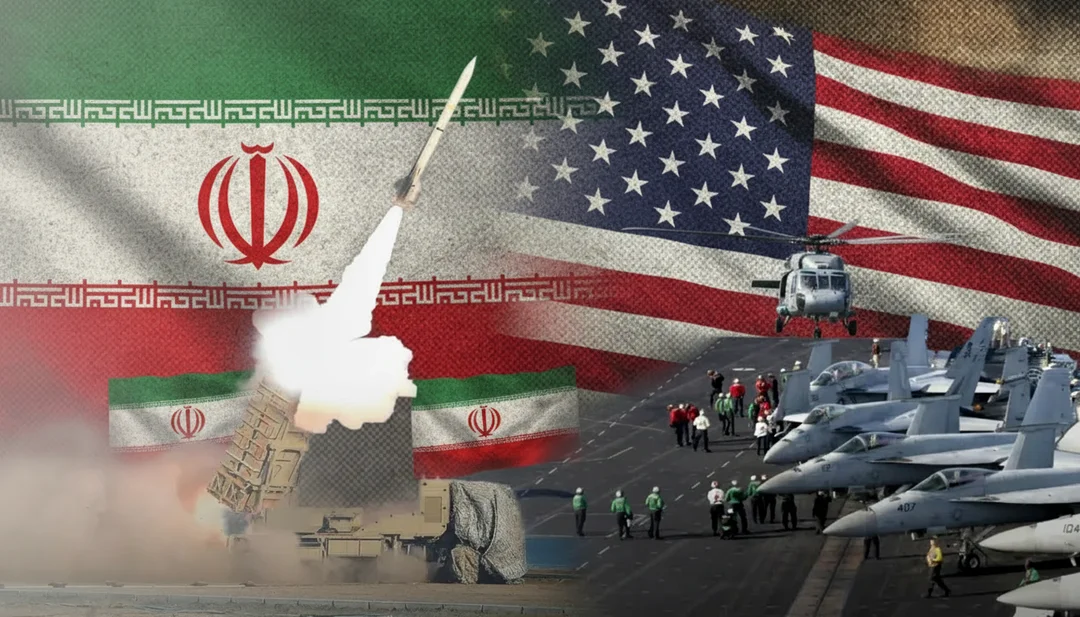
To understand the strategic paradox of Operation Epic Fury, we can juxtapose the empirical data of Iran’s physical devastation into the broader narrative of its psychological and political survival. Who lost or won and whether the conflict achieved anything more than mindless devastation is a million dollar question. The history of modern warfare is littered with victors who mastered the battlefield only to find themselves paralyzed by the peace that followed. As of now Operation Epic Fury stands as the ultimate testament to this phenomenon. While the United States has functionally dismantled Iran’s conventional military capacity, the stalled diplomacy in Islamabad suggests that military obliteration has failed to translate into strategic submission.
The scale of the beating endured by the Islamic Republic is historically unprecedented for a 38-day campaign. According to IHS Jane’s Defense and satellite analysis from the International Institute for Strategic Studies (IISS), the kinetic degradation of Iran’s sovereignty is almost total. Neutral observers estimate that 90% of the Iranian regular Navy and approximately 55% of the IRGC’s fast-attack fleet now rest at the bottom of the Persian Gulf. Iran’s Integrated Air Defense System (IADS), once a formidable layered shield of S-300 and Khordad-15 batteries, has been degraded by over 80%, leaving the nation’s skies effectively under the management of Allied air power.
Furthermore, the bleeding extends deep into the industrial heart of the regime. Combined data from European intelligence agencies and neutral maritime monitors suggest that 85% of Iran’s defense industrial base—specifically the facilities responsible for the Shahed drone series and the Fateh ballistic missile families—has been reduced to rubble. With over 2,000 command-and-control nodes neutralized, the Iranian military is currently a headless giant, possessing the mass of a nation but the coordination of a ghost.
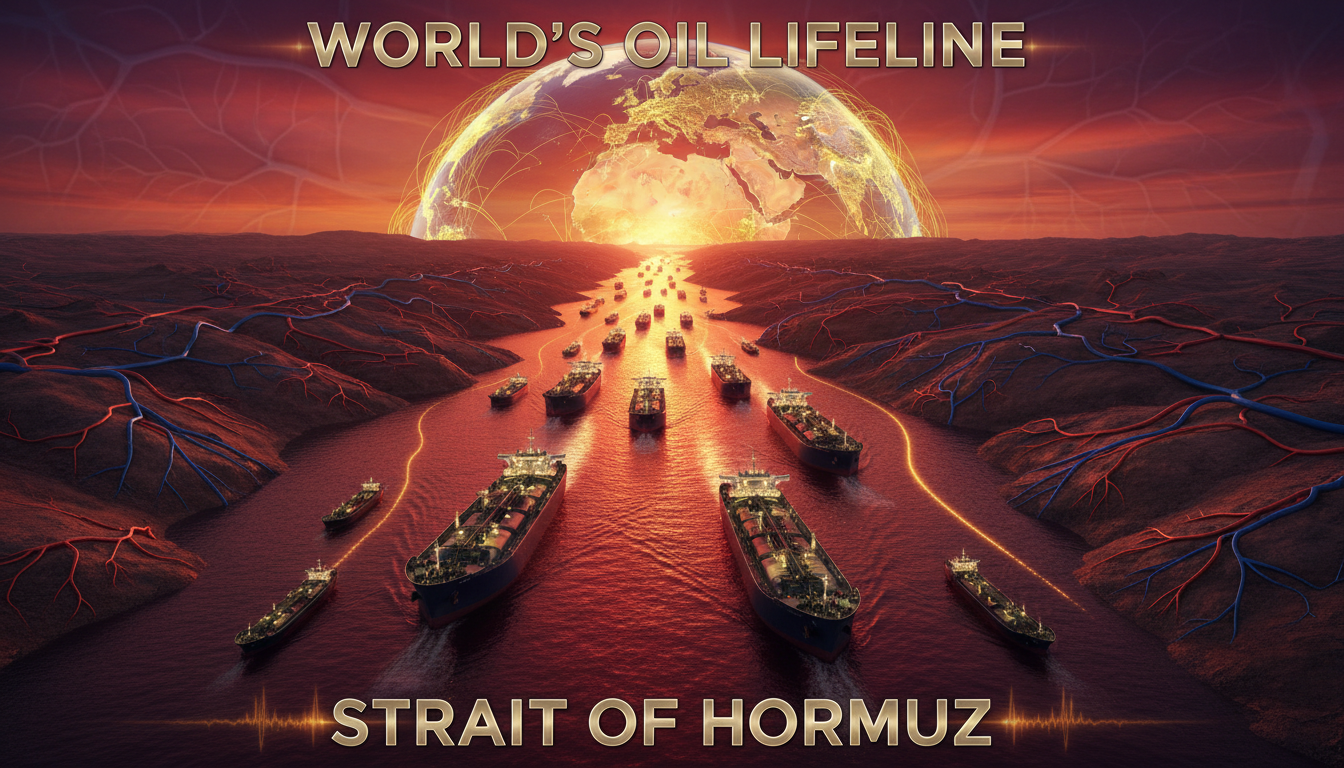
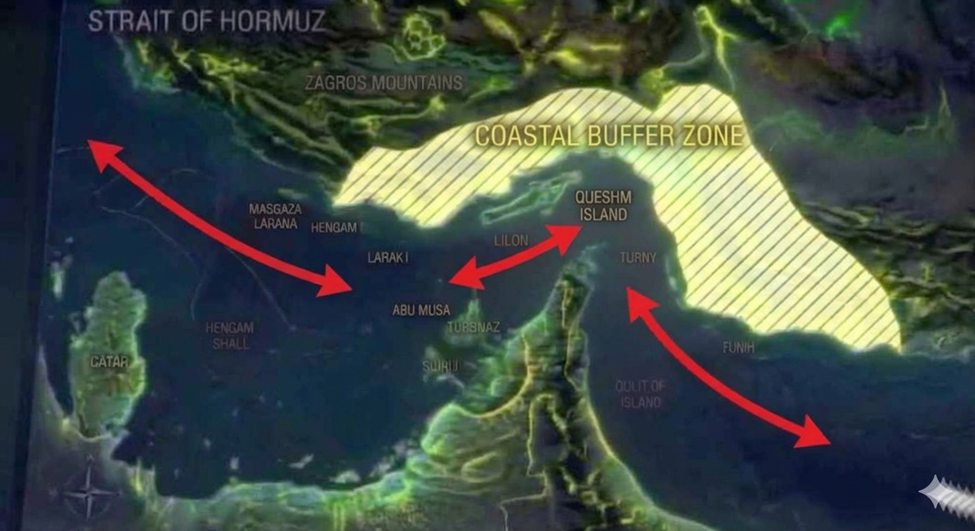
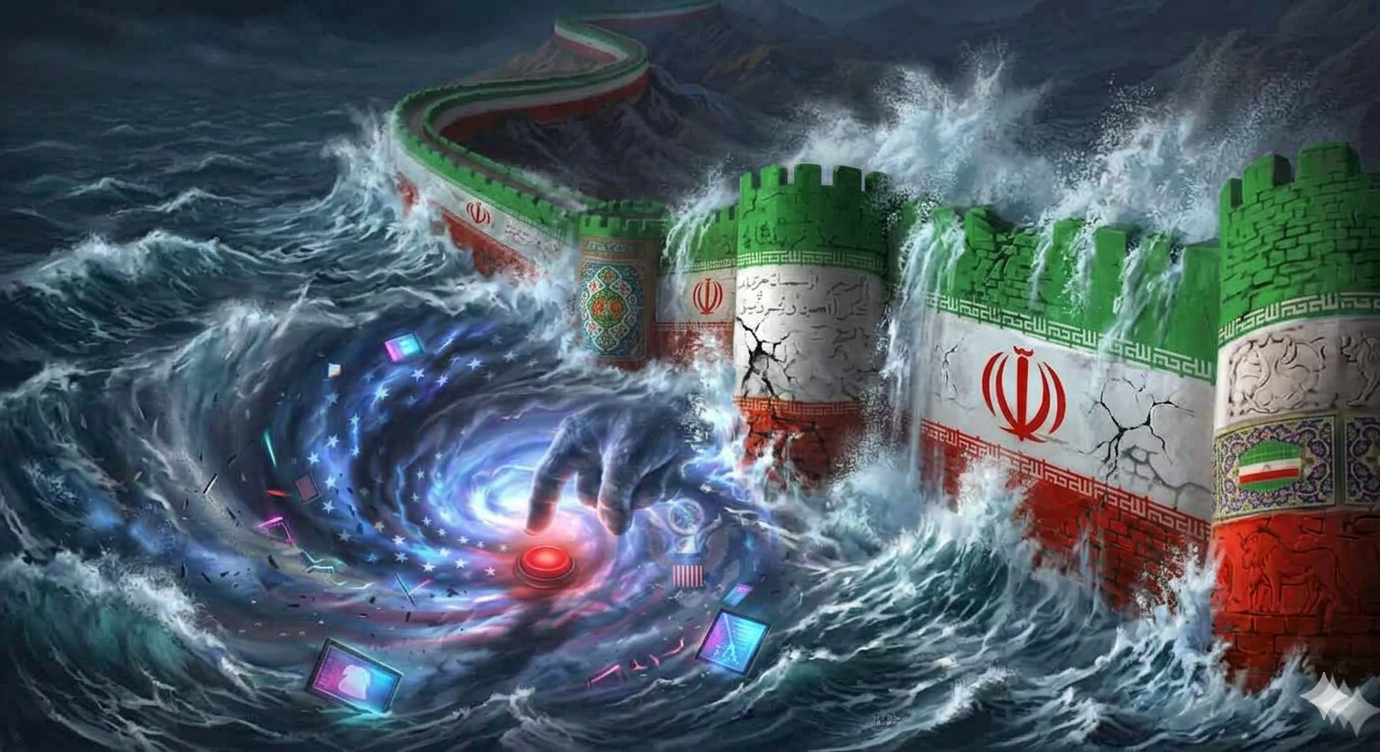
Yet, despite being bombed back to a pre-industrial state, the Great Wall of the Iranian state remains standing. Like a heavyweight boxer who has lost every round and is bleeding from every pore, Tehran refuses to throw in the towel. This defiance is not born of military strength, but of a calculated asymmetric resilience. By mining the Strait of Hormuz and retreating into a deep state of guerrilla governance, the regime has ensured that the U.S. cannot claim a total victory. The very fact that U.S. Vice President J.D. Vance found himself at a negotiating table in Islamabad—rather than accepting a formal surrender—proves that Iran has achieved at least a defensive draw. Many analysts continue to argue that the much talked about US rescue operation was indeed a delightful smokescreen for a strategic operation aimed at seizing the enriched uranium located at the Isfahan facility. The fact that this operation failed implies that not all the operational objectives of the US have been achieved. Before the Operation commenced the Strait of Hormuz was well and truly open. For over six weeks now the maritime traffic through the strait is just a trickle, causing severe economic migraine to the global community. These two facets further reinforce the defensive draw hypothesis.
In this light, the net effect of Operation Epic Fury is a stalemate of extremes. The U.S. has achieved most of its kinetic objectives: the missile factories are dust and the nuclear infrastructure is severely compromised. However, the political objective—a fundamental change in the regime’s behavior or its collapse—remains elusive. Iran has traded its physical infrastructure for a hardened, singular narrative of survival. As U.S. destroyers now are in the close vicinity of the treacherous, mine-laden waters of the Gulf, they do so not as conquerors, but as co-custodians of a fragile ceasefire. Iran may be broken, but as long as it refuses to concede, it has not truly lost. The hurricane has passed, the wall is scarred and crumbling, but it has not yet fallen.
Back in 2005 I was posted at Baramulla, where the security of the military station was one of my responsibilities. In a region where the line between peace and insurgency is razor-thin, my days were defined by a restless vigilance. You learn to expect the unexpected in the valley, but nothing – no tactical briefing, no combat experience, no seasoned intuition – could have prepared me for the raw, celestial terror of that morning.
My mission was to visit and familiarise myself with the Kayian Bowl, a sensitive deployment right on the Line of Control (LOC.) I set off from Baramulla in a staff car, eventually reaching the high-altitude pass of Tutmari Gali (TMG) at an altitude nearly 11000 feet. As we began our descent from the pass, the world opened up into a view that was nothing short of jaw-dropping. The Kayian Bowl lay beneath us like a hidden emerald kingdom, framed by the jagged, snow-dusted peaks of the Himalayas that seemed to pierce the very fabric of the sky with a majestic beauty. The Lipa valley lying across the LOC looked equally enchanting. It was a vista of deceptive serenity – vast, silent, and breathtakingly beautiful—a reminder of why this land is both loved and fought over.
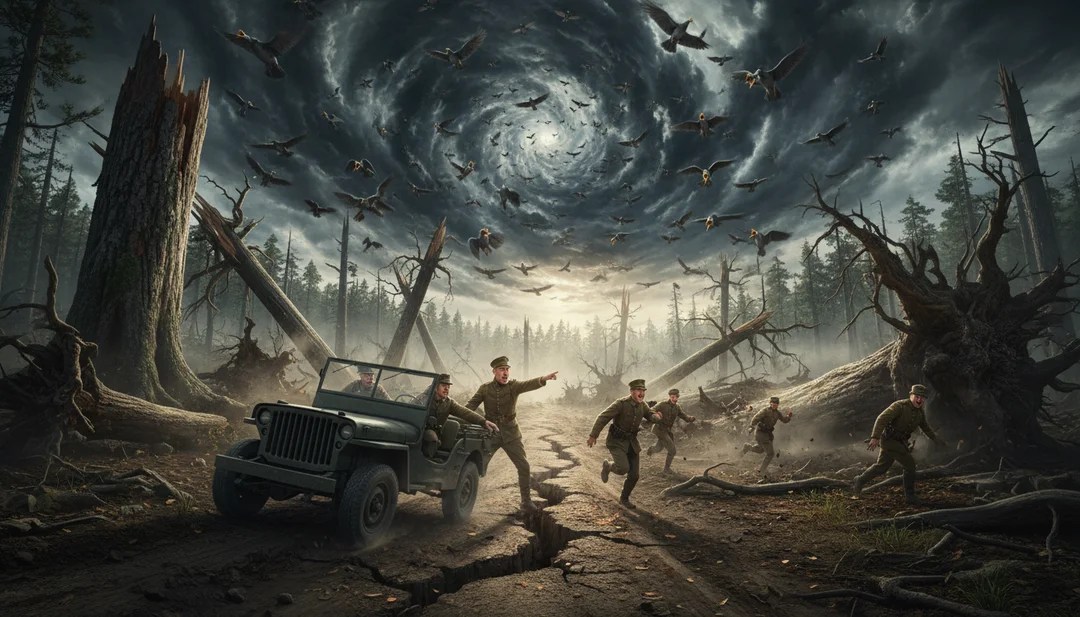
At TMG, I swapped into an Army Gypsy, with a young Major taking the wheel to navigate the rugged mud tracks. We were a small convoy of three vehicles; behind us, a protection party sat armed to the teeth, their eyes scanning the dense tree line for any sign of hostility. In these ancient forests, a sudden crack of a branch usually signaled an ambush. We were prepared for a firefight. We were not prepared for the earth waiting to betray us.
Suddenly, the world went mad.
At first, it looked like a freak gale. The towering pines began to sway with a violent, rhythmic intensity that defied logic. “It’s a sudden storm!” I shouted over the rising roar.
“No, Sir,” the Major yelled back, his voice tight with a realisation that chilled my blood. “It’s an earthquake! Run for the clearing!”
He jammed on the brakes, the tyres skidding as the very track beneath us began to ripple like a carpet being shaken. We scrambled out, and the sensory assault became a nightmare. The forest wasn’t just moving; it was screaming. Thousands of birds took flight in a panicked, black cloud, their shrieks creating a deafening, discordant cacophony. Then came the sound of the giants falling – massive, deeply rooted trees snapped like matchsticks, hitting the ground with bone-jarring thuds that competed with the underground growl of the shifting tectonic plates.
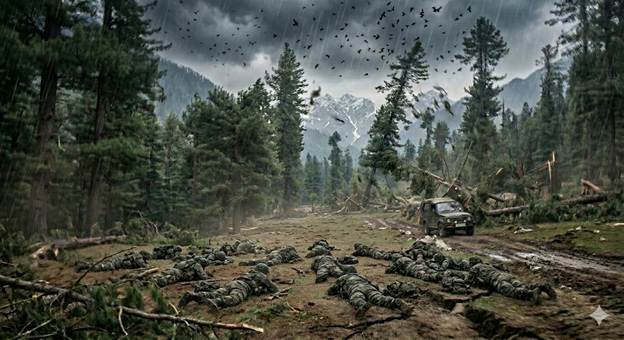
In that moment, decades of military tactics evaporated. We weren’t soldiers or commanders; we were fragile organisms clinging to a dying planet. We huddled together in the center of a small clearing – a dozen men, shoulder to shoulder, stripped of rank and held together by a primal, shivering terror.
“Hug the ground!” I roared, throwing myself down.
Lying face-down, I felt the pounding of my heart and the trembling of the earth merge into an eerie resonance that vibrated through every pore of my being. It wasn’t just shaking; it was a violent heaving. The ground felt liquid, bucking and surging in a relentless, rhythmic assault that seemed to last an eternity. I remember the terrifying sight of the soil itself breathing, cracks snaking through the mud as we pinned ourselves to the earth. Would the cracks open up and just swallow us whole?
When the first tremors finally petered out, a heavy, suffocating silence fell – only to be shattered moments later by the aftershocks. Each time the earth shuddered anew, the terror felt sharper, more exhausting, and a cruel reminder of our helplessness.
After what felt like the longest ten minutes of my life, the earth finally went still, though the animals continued their frantic, wild cries. The transition back to soldiering was jarring. The Major, shaking off the paralysis of the moment, immediately began checking personnel and gear. We were lucky. We were all there. But the track we had just traveled told a grim story—a massive tree lay across our path just fifty yards from where we had stopped. Had we stayed in the vehicles for seconds longer, we would have been crushed into the mud.
Leaving a party with the vehicles, we trekked the rest of the way to the Battalion Headquarters on foot. When we arrived, the Commanding Officer (CO) greeted me with a crisp salute and a calm smile, as if the mountains hadn’t just tried to tear themselves apart.
“Tea, Sir?” he asked, his voice steady.
Over a hot cup of tea, he gave the status report: one collapsed bunker, two injured boys, and a mule. He spoke with the courage of a man used to hardship, but as I held my cup, I could still feel the phantom vibrations in my bones. We had survived the harrowing unpredictability of the LOC for eternity, but that day, we learned the ultimate truth: the greatest threat isn’t always the enemy in the woods – it could be the very ground beneath your feet.
Looking toward the West, I watched the blue sky churn into a muddy brown, as though an invisible hand had shaken a jar of silt into a basin of clear water. The rising dust told me at once that the epicenter was somewhere over Pakistan Occupied Kashmir (POK,) yet I remained oblivious to the chilling reality: we were standing a mere 20km from the heart of the upheaval. We were also unaware of the human tragedy that was unfolding all around us. In his characteristic business as usual tone, the CO commenced his briefing for me. Halfway into the briefing, there was a fresh wave of tremors and we hit the ground. When it was over we were back on our feet. “May I have your permission to resume sir”? Military etiquette. Both of us must have been a bit crazy. Resume he did and completed his briefing ten minutes later.
All through the briefing, I was contemplating the return to TMG. The track was blocked by fallen trees. As though reading my thoughts, he said “Sir, for your return to TMG, I can give you one mule, the rest of your party will have to trek along.” And so it was. A little later, I bid good bye and we commenced our climb back to TMG.
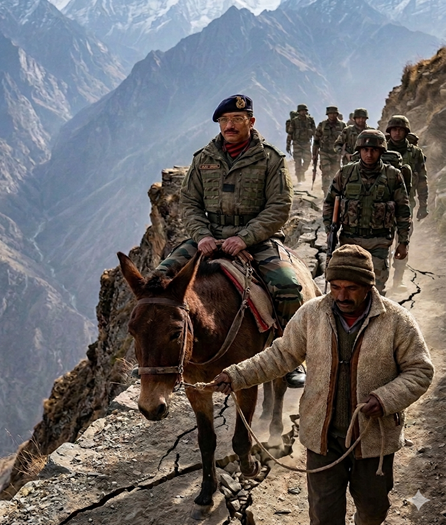
The return journey to TMG was a three-and-a-half-hour climb into a world that felt fundamentally broken. Perched atop a mule – a sturdy, stoic creature led by a civilian porter – I looked out over a landscape transformed by violence, not of man, but of the nature itself. Behind me followed a small party of half a dozen soldiers, my trusted protection party. On any other day, our eyes would have been scanning the ridgelines for the glint of a barrel or the movement of a shadow; but today, the threat of terrorism had vanished, replaced by a much older, more primal fear. We weren’t looking for insurgents; we were watching the sky and the very ground beneath the mule’s hooves.
The terrain was a graveyard of geology. Around every bend, the hillsides bore the jagged white scars of fresh landslides, and the mule track was frequently bisected by deep, sinister fissures – cracks in the earth that looked like lightning bolts frozen in soil. There were stretches where the path narrowed to a mere ribbon of dirt, and the mule walked with a terrifying, casual grace barely inches from the edge of a precipice. From my vantage point, the drop was a dizzying plunge into bottomless depths. One misstep, one loose stone, and the journey would end in a silent, terrifying dive into nothingness.
Nature seemed to have a rhythmic, punishing pulse. Every thirty minutes or so, the mountain shivered with a fresh aftershock. It was uncanny; seconds before the tremors hit, the mule froze and let out a snort two, sensing the vibration before it reached us. Our soldiers instantly dropped into a lying position, seeking safety in the dirt, while I remained stuck atop the animal – exposed and conspicuous, a sore thumb in a landscape that was trying to shake us off. We watched in breathless silence as boulders, dislodged by the quakes, thundered down distant slopes. It felt as though the Almighty was shielding us with an invisible hand, guiding the rocks away from our narrow path, yet the terror remained a constant cold companion.
The mental pressure of the precipice eventually broke my nerve. I decided to trust my own aging and tired feet than the hooves of even the most sure-footed beast. I dismounted and walked the rest of the way, feeling the tremors through my boots. Then, a surreal touch of the modern world pierced the desolation. Through a technological miracle of military communication patching, a phone call from Delhi crackled to life over our radio’s handset. It was a General, a stalwart former CO of our Regiment, his voice booming with impeccable radio telephony. He was calling because my wife in Pune was in a state of panic; the TV news was a montage of destruction, and I had been unreachable. Speaking into the handset amidst the dust and the shifting rocks, I told him we were safe, under the watchful eye of some Super Power. Minutes later the good news travelled to Pune and comforted a family in panic. We finally limped into TMG at 3:00 PM, weary survivors of a trek across mountains that refused to stay still.
The aftershocks even as far as in Baramulla continued for many days until we became sort of immune to them and stopped reacting. As the dust finally settled and the tremors grew faint, the true scale of the catastrophe began to emerge from the haze. What we had experienced on that lonely mountain track was just a fraction of a larger, more distressing tragedy. The earthquake of October 8, 2005, had not recognised the LOC; it had carved a path of devastation through the mountains, leaving a trail of death and ruins on both sides. Populated towns on either side were reduced to rubble. Villages that had stood for centuries were reduced to piles of stone and timber, and the vibrant life of the hills was replaced by a hollow, haunting silence. Thousands had perished in an instant, and for those who survived, their livelihoods and homes had vanished into the very earth that once sustained them. Just one piece of statistics. Nearly 75000 people perished, mostly in POK.
In the days that followed, our role shifted from the vigilance of soldiers to the compassion of rescuers. The Army was drawn into one of the most complex and grueling disaster relief operations in history. We found ourselves navigating fractured terrain to reach isolated hamlets, airlifting supplies to the stranded, and sharing what little we had with those who had lost everything. The uniforms that usually symbolized the fight against terror and infiltration now stood for hope. Amidst the immense loss and displacement, we witnessed the resilience of the human spirit, but the scars on the landscape and in the hearts of the people would remain long after the mountains finally stopped shaking.
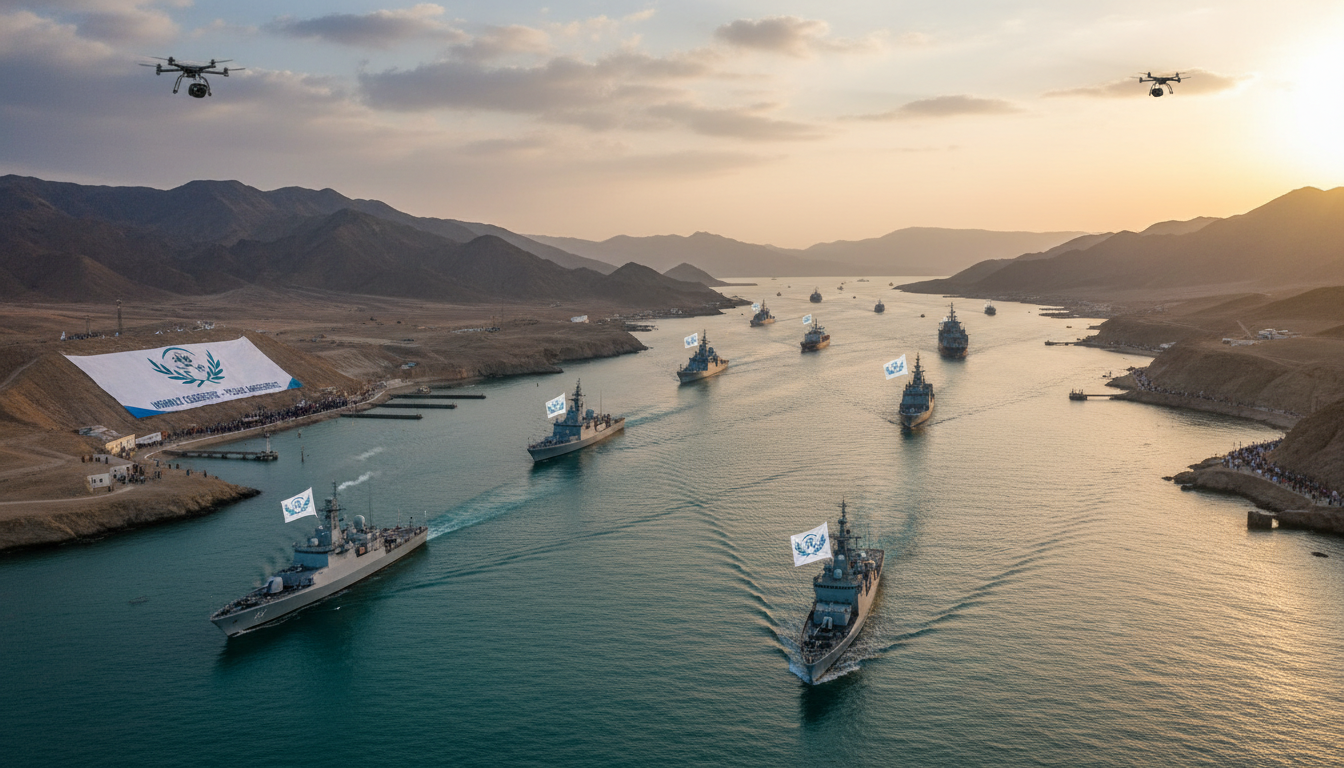
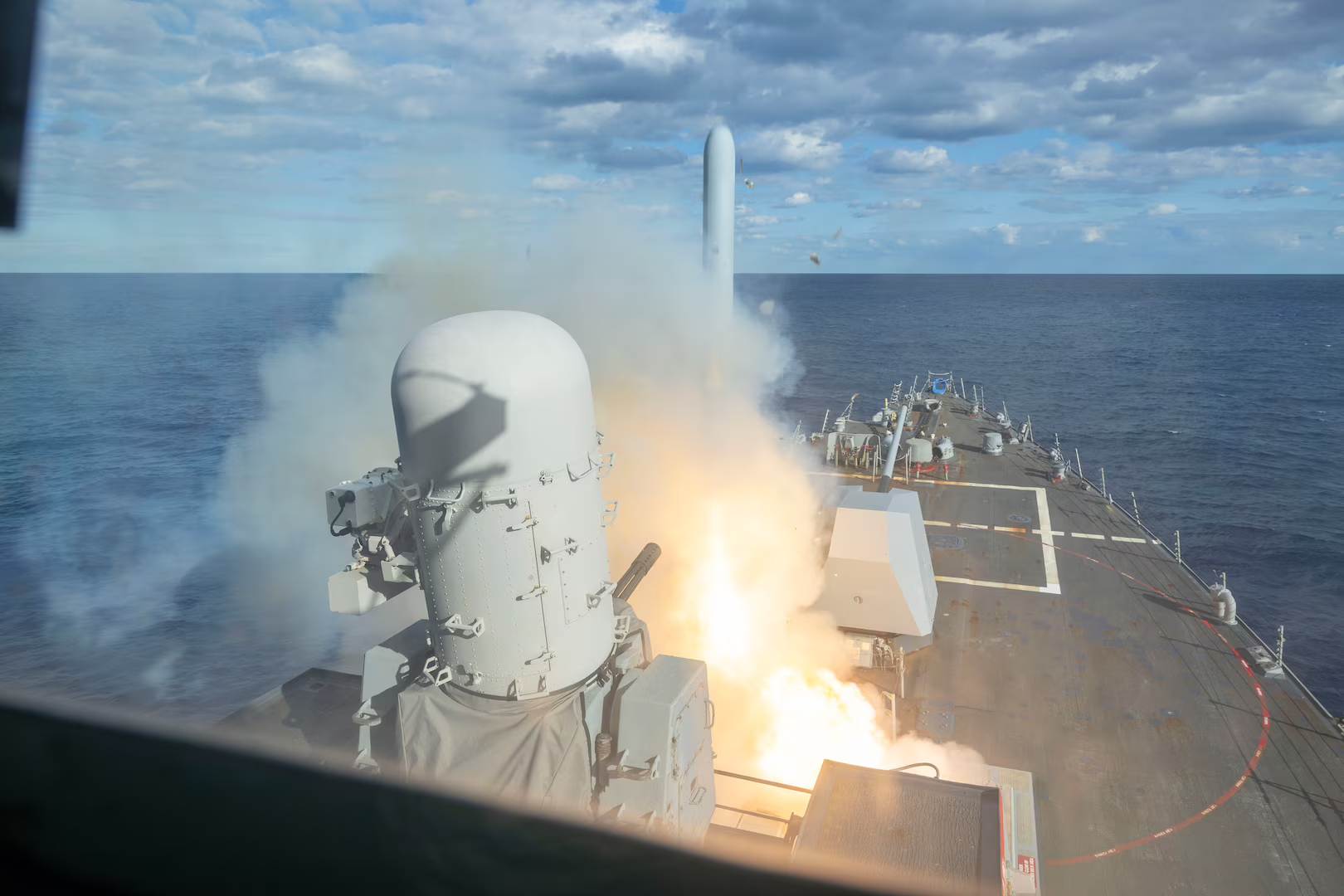
The chronicles of military history are awash with peace periods used not for de-escalation, but for the strategic repositioning of offensive assets that would be too vulnerable during active hostilities. As of 11 April 2026, the transit of U.S. guided-missile destroyers into the Persian Gulf under the mantle of a humanitarian mine-clearing mission appears to be a classic war college case of this maneuver. While the Islamabad talks superficially aim for a diplomatic exit to the conflict, the physical movement of the USS Frank E. Petersen Jr. and USS Michael Murphy into the heart of the Gulf suggests that the United States is not preparing for peace, but may well be instead maximizing it’s configuration for the failure of talks and more lethal phase of Operation Epic Fury.
A ceasefire, by definition, is a standstill agreement intended to freeze the tactical map to allow for negotiation. By moving high-value combatants through the Strait of Hormuz and into what Iran considers its territorial waters the U.S. has fundamentally altered the military status quo. If the introduction of front-line warships into a contested combat zone during a cessation of hostilities does not constitute a violation, the term ceasefire loses all functional meaning and will need to be redefined. It is a confrontational act of naval encroachment that weaponizes the diplomatic process to bypass the very A2/AD (Anti-Access/Area Denial) barriers that kept the U.S. fleet at bay during the height of the kinetic exchange.
The skepticism surrounding the mine-clearing narrative is justified. Heavy destroyers are not the tools of maritime sanitation; they are the tools of power projection. The reality is far more clinical: the U.S. is possibly shaping the battlefield. By establishing a permanent naval presence inside the Gulf now, they get rid of the bottleneck risk of the Strait of Hormuz for the future. These warships serve as the vanguard for a much larger logistical build-up. With the Iranian fast boat threat suppressed by the ceasefire terms and the coastal missile batteries momentarily silenced by diplomacy, the U.S. is free to conduct the hydrographic surveys and coastal reconnaissance necessary for terrestrial operations. It is also a high stake method of testing Iranian resolve.
The true objective likely lies in the preparation for full-scale amphibious operations. An invasion of the Iranian littoral requires more than just air superiority; it requires a sanitised Gulf where amphibious assault ships (LHAs) and transport docks (LPDs) can operate without the incessant threat of a closed door behind them. By this maneuver now, the U.S. is in essence pre-staging the heavy lifters. The current destroyers are the scouts ensuring that when the ceasefire inevitably collapses – or is deemed expired by Washington – the heavy iron of the Marine Expeditionary Units will already be in position to strike the Iranian mainland.
In conclusion, the U.S. naval movement is possibly a classic example of strategic opportunism. By taking cover under the ceasefire, the U.S. has achieved through a peaceful transit what may have been far more dangerous during active war. This is not the behavior of a nation seeking a durable exit; it is the behavior of a superpower positioning its pieces for a final, knockout blow on the terrestrial plane. Operation Epic Fury is not ending; it is possibly just reloading. What we cannot figure out now is whether the ceasefire is entirely an eyewash or some serious effort towards peace during which the pawns are being moved quite unfairly, to prepare for the contingency of failure of talks.
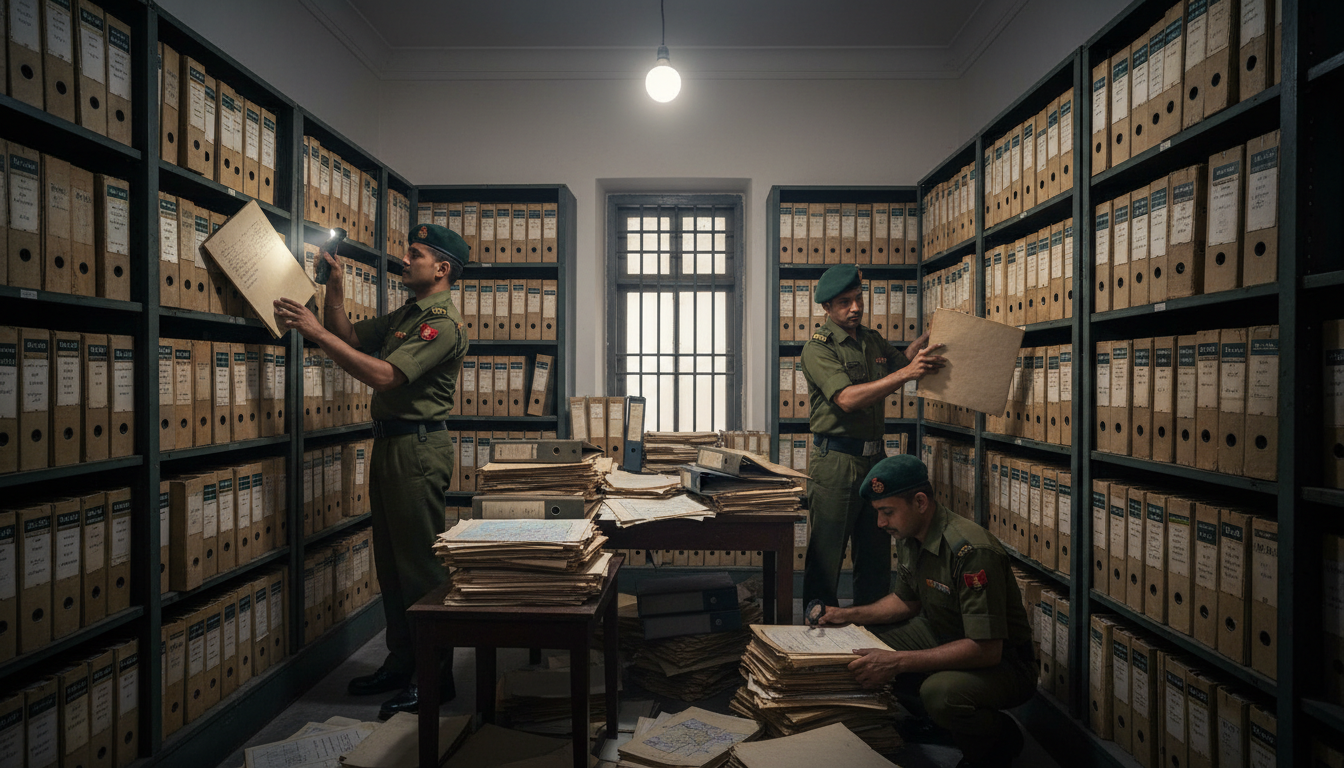
In 1991, as a young and relatively innocent Major, I was posted to the Army HQ Military Secretary’s (MS) Branch. Our section in South Block dealt with the Promotion Boards for Majors and Lt Colonels. Essentially, our job was to retrieve Confidential Report Dossiers (CRDs) from the sections that filed and held them—curiously referred to as Libraries, though they contained more dust than literature—and perform the secretarial alchemy required for selection boards.
In the MS Branch, the hierarchy of the CRD is sacred: the Officer signs for it, but the Clerk holds it. It is a beautiful system of plausible deniability that works perfectly—until the music stops and you’re the one left holding the baby.
One morning, the music stopped. A CRD had vanished and I had signed for it!!
Now, in MS Branch lore, a CRD is never lost. To suggest such a thing is heresy, punishable by professional excommunication. It is merely misplaced – much like the Holy Grail, the city of Atlantis, or a politician’s sense of ethics. But as weeks turned into months, my misplaced file began to look suspiciously like a permanent disappearance. It had simply evaporated into the thick, bureaucratic ether of the Army HQ.
Over the next few months, our section – four officers and half a dozen clerks – transformed into high-stakes archaeological explorers. Long before COVID-19 made N95 masks a fashion statement, we were pioneers of the lifestyle. Clad in masks to survive generations of silt and the ancient plague bugs that had merrily colonised the dossiers, we swung into unenviable action.
In those days, the Indian Army was still suspicious of futuristic gadgets like vacuum cleaners. Instead, mask clad, we spent our afternoons bent double, scouring the dark crevices behind steel almirahs. We searched places so obscure I’m fairly certain we discovered a lost platoon from the ’71 war, but of the CRD, there was no sign. The drill continued indefinitely, a slow-motion descent into madness.
Six months in, the Additional MS – the Big Boss – decided he’d had enough of our archeological adventures. A Court of Inquiry (C of I) was being drafted. In the Army, a C of I is usually a formal invitation to your own professional funeral.
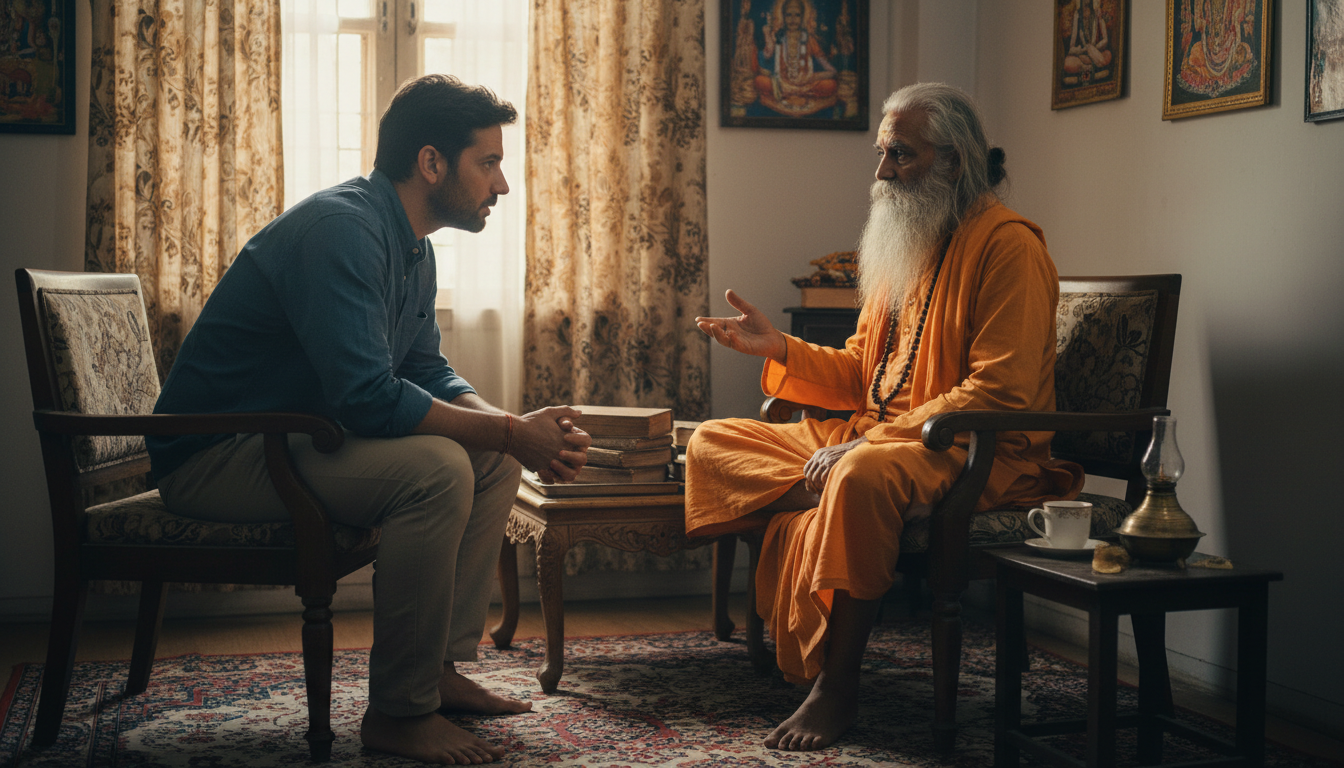
Just as the gallows were being readied, a colleague leaned over his desk, looking like a man pushing contraband. “Go to Green Park,” he hissed. “There’s a Baba. He’s occult. He sees things. He specialises in exactly this kind of disaster.”
Now Azad Sameer the irreverent, did not believe in mystics. But when your career is flashing before your eyes, you don’t ask for a peer-reviewed second opinion. So it was the proverbial straw. The next day, with the unofficial (and slightly embarrassed) blessings of my superiors, I slipped into civvies and headed to Green Park.
The waiting room was packed with people whose lives had also apparently fallen behind a steel cupboard. There were even a few souls looking for relatives lost at the Kumbh Mela, Bollywood-style. Finally, I was ushered into a dimly lit room where a fragile old man sat in a lotus position atop a chair. He looked as though he hadn’t seen direct sunlight since the British Raj.
He didn’t even open his eyes. “Fauji ho?” (Are you a soldier?)
I looked at my posture – ramrod straight – and my haircut, which was a 0.5mm tribute to one of our commanding officers, a man who viewed any hair longer than a mustard seed as a personal insult. It wasn’t exactly a Sherlock Holmes-level deduction. “Yes,” I croaked.
“Document ka pata chahiye?” (Looking for a document?)
I nearly fell over. This was better than any Intelligence Bureau brief I’d ever read. He proceeded to describe the folder with the terrifying precision of a man who had personally filed it. He knew the shape, the size, and the exact shade of Bureaucratic Buff on the cover.
Then came the invoice. “One hundred rupees,” he whispered.
At 1991 prices, this wasn’t pocket change, but I’d have paid in gold bars to get that albatross off my neck. He took the note, vanished into a back room to consult the celestial archives, and returned with the most frustratingly vague SITREP in military history: “Don’t worry. It will be found very soon. Come back and tell me when you find it.”
I walked out feeling like I’d been pickpocketed by the divine. “Very soon?” I wanted GPS coordinates! I wanted a room number in South Block or Sena Bhavan! I returned to South Block, mentally rehearsing my minimum damage statement before the C of I. Alas! There was no way out.
But as I neared the office, I saw my colleague – the one who had suggested the Baba – performing a frantic, one-man bhangra in the corridor.
“Mil gaya! Mil gaya! CRD mil gaya!” (We got the CRD)
The document had been found. Accidentally. That very morning, in the basement of South Block, at the bottom of a stack of old covers destined for reuse. We had searched that exact pile five times in three months. Logic had no seat at this table.
Before I could process the miracle, I was summoned by the Deputy MS, a man who rarely smiled and possessed a naturally sinister aura. I walked in, spine stiff, ready for the Even though it’s found, you’re a liability lecture. The room was silent. On his vast, polished desk sat the missing CRD. Beside it sat a beautiful, amber-filled bottle of Peter Scott whisky. He looked at the file, then at me, then back at the bottle. He didn’t ask about the Baba. He didn’t ask about the search. He simply pushed the bottle toward the edge of the desk.
“Go get drunk,” he growled.
I didn’t need a second order. I took the bottle and beat a hasty retreat, realising that in the Indian Army, some things are governed by the MS Branch, some by the Gods, and the very best things are governed by a well-timed bottle of whisky.
According to the official Pentagon narrative, the rescue of DUDE 44 B was the most devoted act of camaraderie in human history. After an F-15E Strike Eagle went down on April 1, 2026, the pilot (DUDE44A) was whisked away within hours. However, the Weapons System Officer (WSO: DUDE44B) took a bit longer, leading to a mission that can only be described as a tactical overkill. To save one man, the U.S. launched an armada of 155 aircraft and landed two $100-million MC-130J Commando II transports on a wet, sandy farm field. It’s a touching story, provided you don’t look at a map—or a balance sheet.
Holes in the Narrative
In the world of standard Search and Rescue, you send a couple of agile HH-60W Jolly Green II helicopters or maybe a CV-22B Osprey. You do not land two massive, 70-ton fixed-wing transports in the mud 100 miles away from the guy you’re looking for. Using an MC-130J to rescue a single airman is like using a cruise ship to pick up a stranded jet-skier: it’s flashy, but it’s a logistical nightmare that puts hundreds more people at risk. By putting 96 personnel on the ground in the heart of Iran, the Pentagon didn’t just plan a rescue; they accidentally invited a hundred people to a potential hostage crisis party.
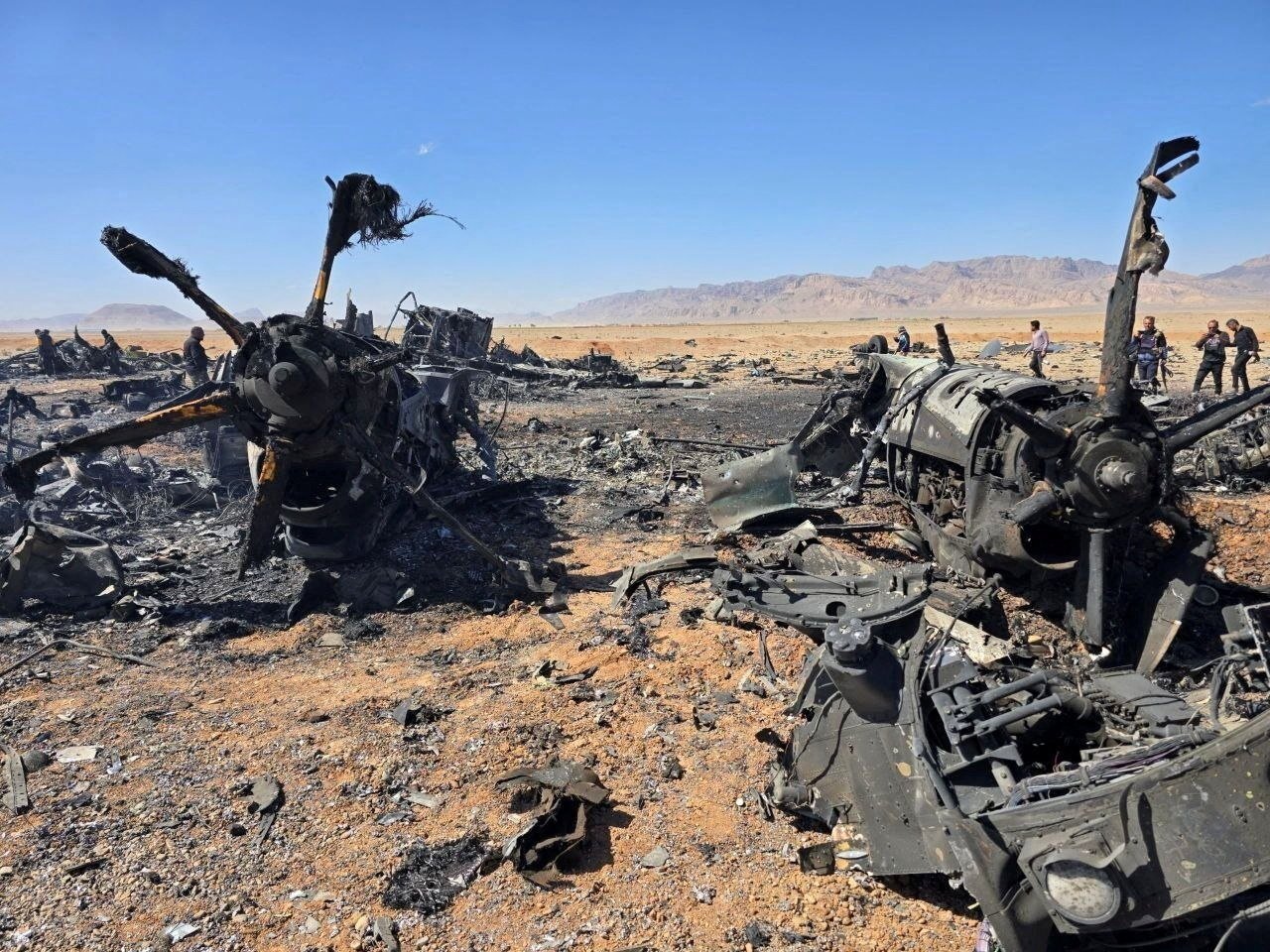
The geography of the mission is where the official story really starts to sink – much like those MC-130Js in the Isfahan mud. The landing site was uncomfortably close to Iran’s primary underground nuclear facilities and missile infrastructure. Furthermore, the cargo involved—four MH-6 Little Bird helicopters that had to be offloaded and reassembled – is the textbook signature of a Direct Action raiding party. You don’t bring an assembly-required helicopter kit to a time-sensitive rescue mission unless you were already heading there to kick open a very specific, very nuclear door.
Strategic Mission
The logical conclusion is that the rescue of DUDE 44 Bravo was a mission of opportunity. The 96 personnel and their heavy-lift aircraft were almost certainly on a primary strategic mission – likely a counter-proliferation raid or a high-value target seizure near Isfahan. That also explains the use of 155 combat aircraft for the rescue mission. The Iranian airspace had to be sanitised for a strategic mission which involved the move of two clumsy, elephantine transport aircraft. When the F-15E crashed nearby, the Pentagon pivot was swift: if the secret raid failed (which, given the stuck in the mud outcome, it seemingly did), they could blow the sensitive gear to smithereens and tell the world it was all a heroic, albeit a bit expensive, effort to leave no man behind. It’s much easier to explain losing $300 million in hardware as saving a brother than as getting the tyres stuck during a botched nuclear heist. Also, a new word got added to our glossary of military terminology: scuttle. To be used when the getaway car gets stuck in the mud.
The Great Escape
However, we must give credit where it is due: the eventual extraction of those 96 personnel was a genuine feat of professional airmanship. When the heavy-hitters failed, the U.S. successfully pivoted to three lighter CASA CN-235 aircraft. These nimble turboprops did what the massive Commandos couldn’t – they landed on that same soggy strip, packed in nearly a hundred elite soldiers, and hummed their way back to safety. While the Official Version might be a tall tale, the fact that all the personnel returned home without a single casualty remains the highlight of the story that holds water. It is tactical brilliance that really needs a standing ovation. Someone took a very smart abort mission decision, early enough to make the great escape possible. It’s a bit funny though, 96 went in to save one and then the 96 had to be rescued!
The Concluding Question
One odd question remains. Why were the CASA CN235 aircraft not used for the special mission in the first place, when it was evidently clear that these were more suited for the sticky airstrips available? They could not obviously carry the Little Bird choppers, necessary for the onsite move.Logically, it appears that ONLY MC130Js had a mission appropriate pay load capability. Something really heavy had to be brought in or taken out or probably both ways. We generally know that enriched uranium is normally carried in very heavy lead lined steel containers. It’s also a probable reason why the aircraft refused to take off from the sand after they landed. It’s a different matter that these special containers, now melted and mangled, maybe somewhere amongst the aircraft wreckage.
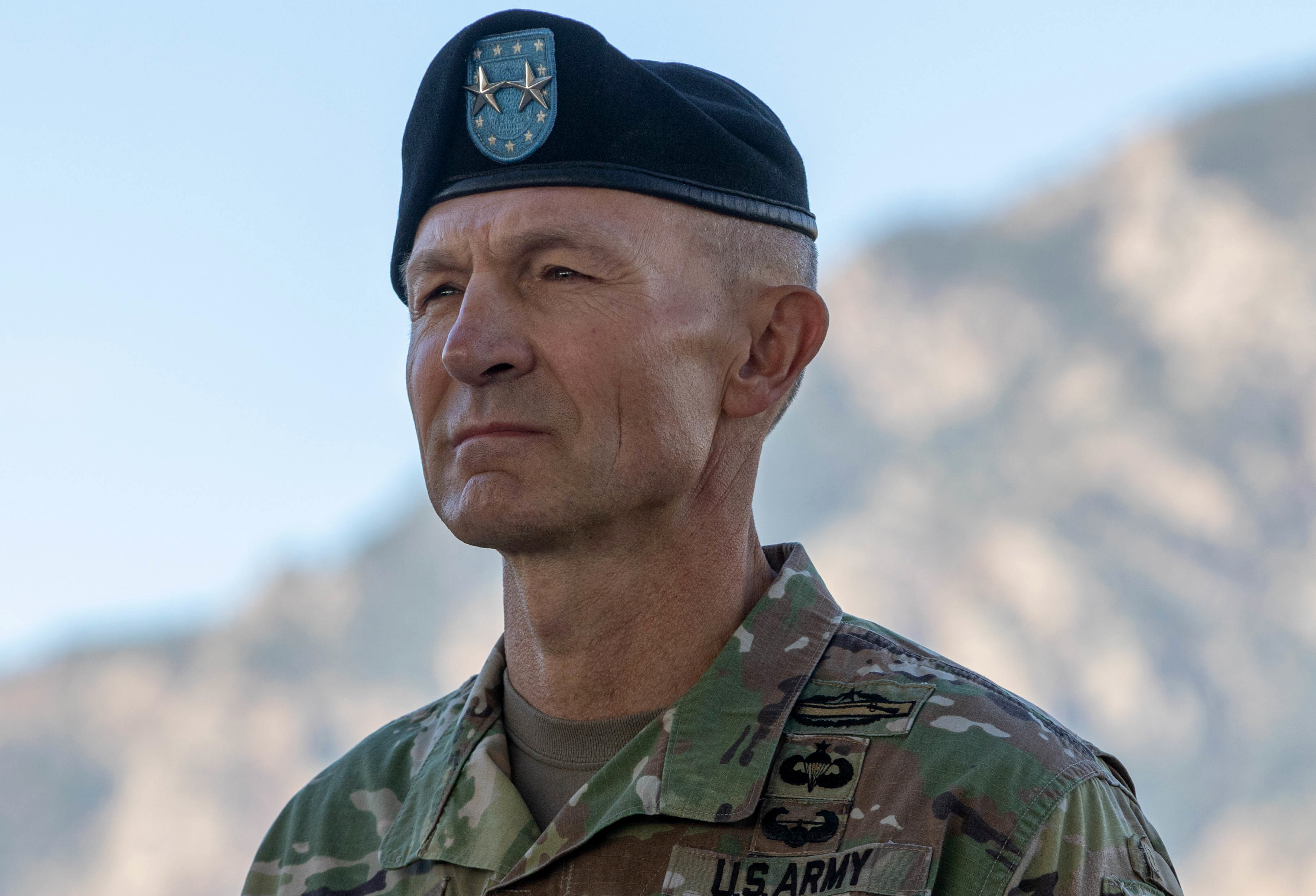
Maj. Gen. Randy George, outgoing commanding general, 4th Infantry Division and Fort Carson, prepares to receive the Distinguished Service Medal prior to a retreat and farewell ceremony on Founders Field, Fort Carson, Colorado, Oct. 4, 2019. Maj. Gen. George was awarded a Distinguished Service Medal for his service as the 4th Inf. Div. commanding general. (U.S. Army photo by Sgt. Daphney Black)
On the day after April Fool’s, as if in a lingering extension of the absurd, the United States Army was rocked by the abrupt sacking of its Chief during Operation Epic Fury. On April 3rd, the Army woke to find its top general Missing in Action. While some initially dismissed the news as a belated prank, the reality was sobering. This was no upheaval in a distant banana republic; it was happening in the United States, the self-proclaimed center of the civilized world. General Randy George was simply told to go home, ushered into the convenient euphemism of early retirement without explanation.
Rumors quickly went viral that George was the 24th high-ranking officer fired by Secretary of Defense Pete Hegseth since taking office. While the exact tally remains debated, the number of verified departures is staggering – at least 14 top officials, including a member of the Joint Chiefs of Staff, the Naval Chief, the head of the Defense Intelligence Agency, and the Commandant of the Coast Guard, have been cleared out. To understand this latest dismissal and its potential fallout, one must first look at the unprecedented context of the current Pentagon.
Purge in the Pentagon
The phrase Purge in the Pentagon feels surreal, carrying echoes of totalitarian regimes like Stalin’s Russia or Mao’s China. Yet, it has become the reality for the world’s oldest democracy. Upon taking office in 2025, the Trump administration, with Hegseth at the helm, initiated a sweeping overhaul of the Department of Defense. The mission was clear: eliminate woke ideology and partisan influence.
This purge targeted leaders who supported Diversity, Equity, and Inclusion (DEI) programs or were perceived as insufficiently loyal to the President’s agenda. Central to this effort was the Warrior Board, a panel of retired senior officers empowered to review the performance of three- and four-star generals. Those found wanting in strategic readiness – often a shorthand for ideological alignment – were recommended for immediate retirement, creating a massive leadership vacuum at the top.
The scale of these dismissals has ignited a fierce national debate. Supporters call it a necessary house cleaning to restore a focus on lethality and merit. Critics, however, view it as a political vendetta that shatters the tradition of a non-partisan military. By early 2026, this friction had escalated into a constitutional crisis, with several state governors refusing to allow similar ideological screenings for their National Guard units.
The Sacker-in-Chief
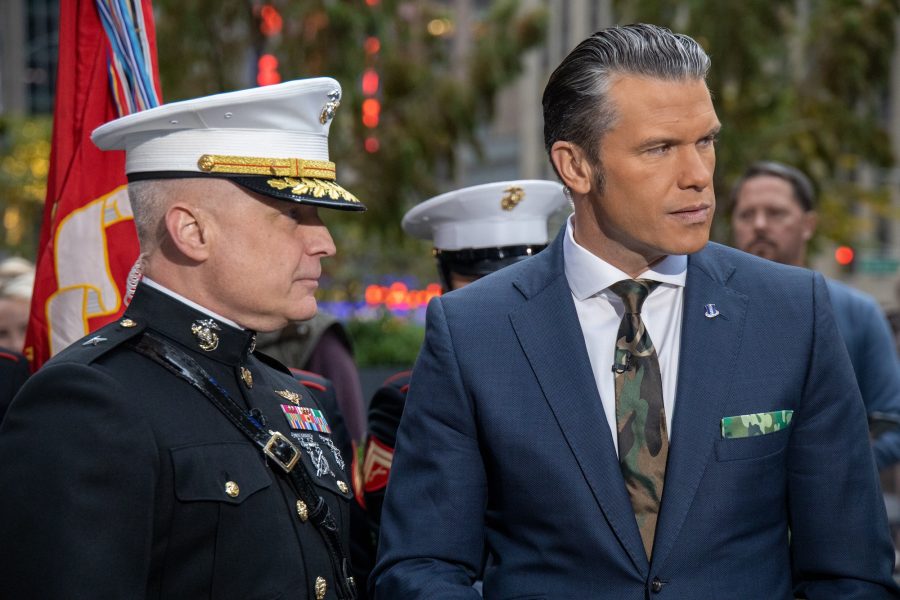
Pete Hegseth’s rise to power – and his rebranding of the Pentagon as the Department of War -has earned him the moniker The Sacker-in-Chief. A former infantry officer in the Army National Guard, Hegseth volunteered for tours in Guantanamo Bay, Iraq, and Afghanistan before leaving the service as a Major. While he holds two Bronze Stars and a Combat Infantryman Badge, critics often point out that his medals were for meritorious service rather than valor, suggesting his warrior persona is more a media creation than a product of battlefield heroism.
His credentials were further scrutinised during his 2025 confirmation due to his Jerusalem Cross and Deus Vult (God Wills It) tattoos. Though Hegseth defends them as symbols of faith, military security officials once flagged them as potentially extremist – leading to the revocation of his orders to guard President Biden’s 2021 inauguration. We now know that his far-right symbolism is for real. At 44, the retired Major systematically ousted the very Generals and Admirals who once sat far above him in the chain of command.
Hegseth’s path to the Pentagon was paved in the studios of Fox News. As a decade-long co-host of Fox & Friends Weekend, he championed America First policies and successfully advocated for the pardon of service members accused of war crimes. Thus, he also made strides first into President Trump’s living room and then his coterie. After being appointed Secretary in January 2025, he quickly moved to replace the old guard. In the wake of General George’s dismissal, Hegseth elevated his own former aide, Gen. Christopher LaNeve, to the position of Army Chief, ensuring a loyalist was in place to execute a radical cultural overhaul.
Perilous Portents
The timing of General George’s removal – five weeks into Operation Epic Fury – is virtually unprecedented and has sent shockwaves through international defense circles. While the Department of War issued a perfunctory note of thanks, they offered no reason for truncating a term intended to run until 2027.
Insiders point to a bitter fallout between George and Hegseth over promotions. George reportedly refused to block the advancement of women and minority officers whom Hegseth wanted purged. Furthermore, as a Biden appointee and former aide to Lloyd Austin, George was viewed as ideologically incompatible with the new administration’s warrior ethos.
However, there may be a more urgent, tactical reason for this sudden vacancy. As a member of the Joint Chiefs of Staff, the Army Chief is a primary military advisor to the President. It is highly probable that George either objected to pending decisions regarding Operation Epic Fury or was expected to do so. In politics, it is often easier to replace the advisor than to overrule reasoned professional advice.
The heart of the disagreement likely lies in the boots on the ground controversy. Many analysts warn that any terrestrial operation in Iran is inherently perilous. While a strike and extricate mission is feasible, US forces are not currently logistically prepared for sustained ground combat, which threatens to drag the nation into another forever war. While the exact nature of George’s counsel remains classified, one conclusion is clear: the sacking of the Army Chief and the looming threat of a ground invasion are inextricably linked. The next phase of the war may be only days away.
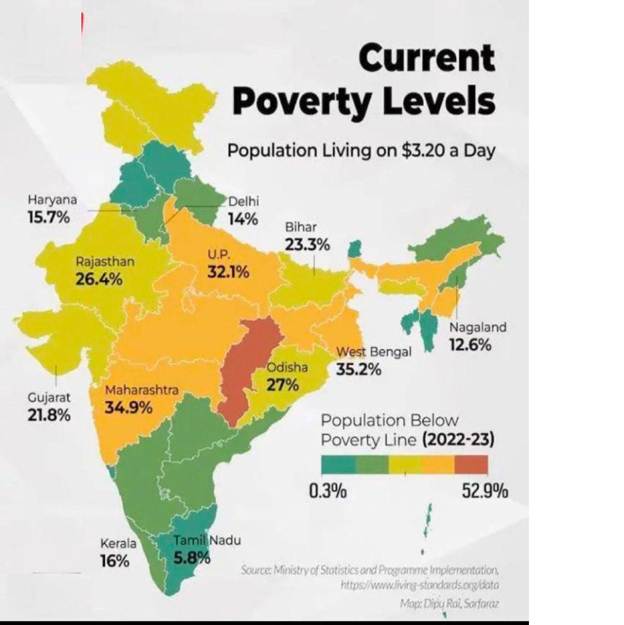
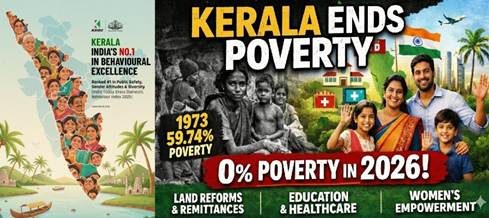
The Kerala Model of development has long been a subject of fascination for global economists like Amartya Sen. It presents a profound paradox: a region achieving human development indices – high life expectancy, low infant mortality, and near-universal literacy – comparable to advanced Western nations, despite a relatively low per-capita income. At the heart of this success is the systematic dismantling of structural violence. By addressing the invisible, systemic barriers that historically suppressed its people, Kerala transformed from what Swami Vivekananda once called a lunatic asylum of caste into a global beacon of social justice and Positive Peace. Essentially it is only when social and economic inequities are minimised do we get Positive Peace.
1. The Concept of Structural Violence: The Galtungian Framework
The term Structural Violence was pioneered by the Norwegian sociologist and Father of Peace Studies, Johan Galtung, in 1969. To understand Kerala’s journey, one must first grasp Galtung’s expansion of what violence means. He argued that violence is not merely a physical act of hitting or killing (which he termed Direct Violence); rather, it is any social arrangement or institution that prevents a human being from achieving their full potential.
Galtung defined it as the avoidable gap between the potential and the actual. If a person dies from a curable disease because they cannot afford medicine, or if a child remains illiterate because of their social status, violence has been committed – even if no one pulled a trigger. This form of violence is silent, actor less, and often invisible because it is built into the very laws, economic systems, and social norms of a country. Furthermore, Galtung introduced two supporting concepts:
Cultural Violence: This refers to aspects of culture – religion, ideology, or language – that are used to justify or sanitise structural or direct violence. In India, the doctrine of Karma was sometimes historically misused to suggest that a person’s low social status was a divine consequence, making the structural inequality seem natural, preordained and unchangeable.
Positive Peace: Galtung argued that the absence of direct violence is merely Negative Peace. For a society to thrive, it requires Positive Peace, which is the active presence of social justice, equity, and the removal of the structures that cause harm. Kerala’s history is a deliberate march toward this Positive Peace.
2. Two Millennia of Caste Endogamy
The Roots of Inequity: In the Indian context, the most potent engine of structural violence has been the caste system, a hierarchy sustained for nearly 2,000 years through the rigid practice of endogamy (marrying strictly within one’s own caste). As analysed by Dr. BR Ambedkar, endogamy was the mechanical method used to create enclosed units that prevented the fusion of blood and culture across society. This centuries-old practice resulted in several deep-rooted facets of structural violence:
The Monopolisation of Resources: Endogamy ensured that Social Capital – land ownership, literacy, and ritual status – remained locked within the upper tiers of the hierarchy. Wealth and knowledge were not allowed to trickle down; they were inherited only by those born into the right circle.
Systemic Deprivation: For the underprivileged sections (the Dalits and Adivasis), this meant a hereditary sentence to manual labour and landlessness. In Kerala, this was particularly brutal. The state practiced unapproachability and even unsuitability, where a lower-caste person was legally and socially barred from using public roads or entering schools.
Internalised Oppression: By maintaining these rigid silos for two millennia, the system created a psychological barrier. The marginalised were often persuaded to perceive their own deprivation as an inescapable law of the cosmos rather than a result of human-made policy, practice or norm. Breaking this 2,000-year-old structural deadlock required more than just charity; it required a total revolution of the state’s socio-economic architecture.
3. Constitutional Deconstruction: The Union’s Post-Independence Mandate: To dismantle this multi-layered structural violence and to rectify for the errors of history the newly independent Indian state, under the chairmanship of Dr. BR Ambedkar, institutionalised a radical legal framework. The Constitution of India (1950) served as the primary tool for Positive Peace by criminalising the most overt forms of caste-based discrimination. Article 17 abolished Untouchability, transitioning it from a social norm to a punishable offense, while Article 15 prohibited discrimination on grounds of religion, race, caste, sex, or place of birth. Recognising that mere legal equality was insufficient to bridge the avoidable gap, the Union government introduced Articles 16(4) and 330, establishing the world’s most comprehensive system of Affirmative Action (Reservations) in public employment and legislative bodies. Furthermore, the Scheduled Castes (SC) and Scheduled Tribes (ST) Prevention of Atrocities Act was eventually conceptualised to provide a legal shield against direct violence. These national measures provided the essential legal scaffolding upon which Kerala would later build its unique, localised socio-economic interventions, turning constitutional promises into lived realities for the marginalised.
4. Empirical Evidence: Kerala’s Lead in the Fight against Structural Violence
The most conclusive proof of Kerala’s success in dismantling structural violence lies in its consistent performance in the Sustainable Development Goals India Index (SDGI), developed by NITI Aayog. The SDGI is a comprehensive framework that evaluates Indian states and Union Territories on their progress toward the United Nations’ 17 Sustainable Development Goals, effectively measuring a state’s ability to provide equitable health, education, and economic security. Since its inception, Kerala has remained the national benchmark, securing the top rank in all four editions: it shared the lead with Himachal Pradesh in 2018, held the solo top position in both 2019-20 and 2020-21, and most recently shared the first-place ranking with Uttarakhand in the 2023-24 assessment.
This sustained excellence translates directly into the lives of Kerala’s most vulnerable populations. Recent findings from the NITI Aayog National Multidimensional Poverty Index (2023) and the National Family Health Survey 6 (NFHS-6) reveal a dramatic reduction in structural violence compared to the All-India average:
Multidimensional Poverty (MPI): Kerala’s headcount poverty ratio is a staggering 0.55%, the lowest in India, compared to the national average of 14.96%. While poverty among SCs and STs remains over 30% in many states, the gap in Kerala is statistically marginal, proving that birth is no longer a predictor of destitution.
Health and Survival: A primary marker of avoidable death is the Infant Mortality Rate (IMR). Kerala’s IMR is roughly 6 per 1,000 live births, matching developed nations like the USA, while the All-India average stands at 28. Furthermore, while the national Maternal Mortality Ratio (MMR) is around 97 per lakh, Kerala has achieved an MMR of 19, demonstrating a systemic protection of life that transcends class.
Literacy and Education: Kerala’s literacy rate is nearly universal at 94-96%, compared to the Indian average of 77%. Critically, the SC/ST literacy rate in Kerala (over 90%) is higher than the general literacy rate of most other Indian states. The gender gap in literacy is also the lowest in India (under 2%), proving that structural barriers against women have been effectively dismantled.
Life Expectancy: A person born into an underprivileged section in Kerala can expect to live nearly 75 years, roughly 10-12 years longer than the national average for the same demographic. In Kerala, the system no longer steals years of life based on the circumstances of one’s birth.
5. Current Prosperity and Socio-Economic Status: A Story of Upward Mobility
The contemporary prosperity of Kerala is defined by a radical shift from agrarian feudalism to a robust, service-oriented middle-class economy. Central to this upward mobility was the Land Reforms Act of 1963, which dismantled the Janmi (landlord) system and redistributed land to the tiller, effectively decapitating the primary engine of structural violence: landlessness. This foundational change allowed subsequent generations to pivot toward education rather than subsistence labour. Today, this transition is visible in the significant presence of underprivileged communities in elite professional spheres. In the medical and engineering sectors, the avoidable gap has been narrowed through sustained state support; for instance, nearly 14-15% of undergraduate engineering enrolments in the state now come from SC and ST communities. Specialised programs like the Sree Chitra Tirunal Institute for Medical Sciences and Technology (SCTIMST) Empowerment Program provide targeted scholarships and research opportunities in biomedical sciences for ST students, ensuring they reach the highest tiers of medical specialisation.
Furthermore, the state’s bureaucracy has seen a democratic overhaul. Recent data from the e-Caste database indicates that SC and ST members now hold over 62,000 permanent government positions. This upward movement extends into Group A and gazetted services, where once-marginalised groups now exercise administrative agency. In the realm of private business, the Kerala Startup Mission (KSUM) has launched initiatives like Startup Dreams and the Backward Classes Development Department (BCDD) Grant, providing up to ₹10 lakh in early-stage funding specifically for entrepreneurs from backward classes and SC/ST backgrounds. These schemes, combined with a Migration Miracle that has democratised access to global labour markets, ensure that prosperity in Kerala is increasingly decoupled from the historical accidents of birth. The state’s rurban landscape now reflects a spatially distributed wealth where high-quality housing and modern amenities are a shared reality rather than a caste privilege.
6. Current Status of Caste-Based Occupations
One of the most profound markers of dismantling structural violence in Kerala is the near-total decoupling of caste from occupation. For centuries, the varna system acted as a rigid professional prison; today, that prison has been razed. The state has successfully moved away from hereditary labour through a combination of aggressive trade unionism, minimum wage legislation, and universal education. In Kerala, manual scavenging – a brutal hallmark of caste-based violence elsewhere – is virtually non-existent, replaced by technological interventions.
Furthermore, the democratisation of the sacred has struck at the heart of Cultural Violence. In a historic move, the Kerala Devaswom Board (which manages temples) began appointing non-Brahmins and Dalits as priests, challenging the 2,000-year-old monopoly over ritual labour. In the secular sphere, the high density of white-collar professionals among SCs and STs – enabled by the state’s robust reservation policies and a 90%+ literacy rate—means that a person’s surname no longer dictates their tools of trade. While subtle prejudices may linger in private social circles, the economic necessity of caste-based labour has been replaced by a Dignity of Labor culture, where the minimum wage for an unskilled worker in Kerala is often three to four times higher than the national average. A plumber in the US may arrive for work in a swank car. But here in Kerala at least he arrives in a swank bike. Much of the caste-based occupations have simply vanished. In a few generations caste-based occupations may entirely be a relic of the past.
7. Evaluation: Current Levels of Structural Violence
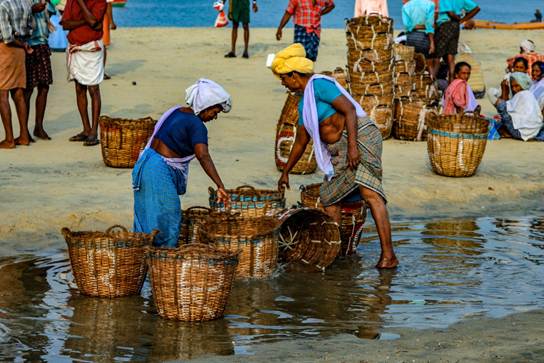
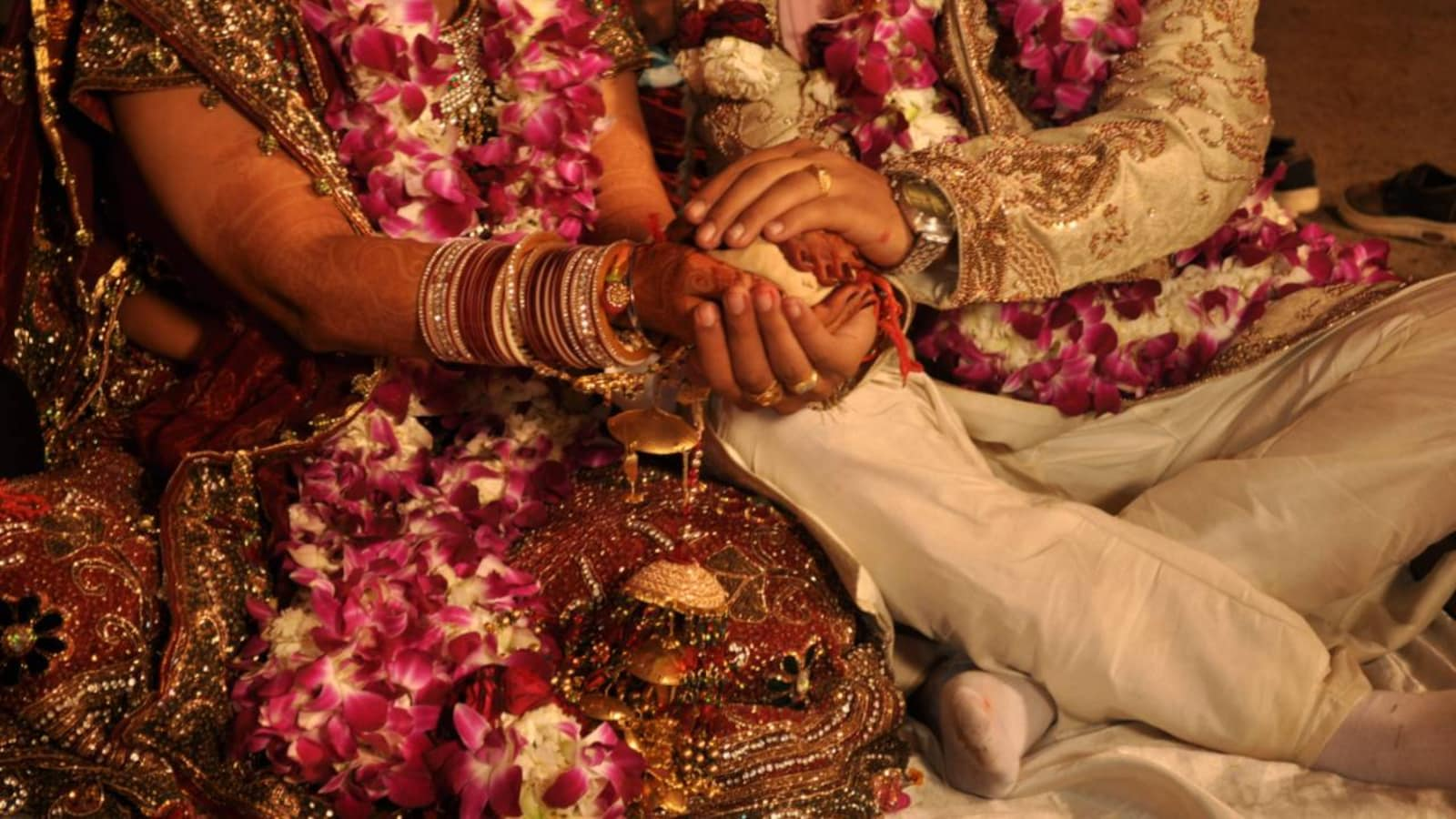
Is caste-based endogamy still prevalent in Kerala? Yes, of course it does. Only 12-15% of all marriages are inter-caste. In the case of marriages below the age of 24 this is nearly 25% inter-caste. These figures are however more than double the national average. Does structural violence exist in Kerala today? The answer would have to be yes, but very little in scale. While Kerala has made historic strides toward Positive Peace, an honest evaluation reveals that structural violence has not been entirely eradicated; rather, it has evolved and shrunk into specific pockets of exclusion. The Galtungian avoidable gap persists for two specific groups: the Adivasi (tribal) communities in regions like Attappady and the coastal Fisherfolk. Despite the state’s low Multi-Dimensional Poverty Index MPI, these groups still face higher rates of malnutrition and land alienation compared to the Kerala average, representing a last mile challenge for the Kerala Model.
Additionally, new forms of structural barriers have emerged in the form of Gendered Violence. While Kerala leads in female literacy and health, its female labour force participation rate (LFPR) has historically lagged its educational achievements, suggesting that patriarchal social norms still act as a structural brake on women’s economic potential. However, when measured against the Direct Violence and Extreme Poverty prevalent in the rest of South Asia, Kerala’s levels of structural violence are remarkably low. The state has moved from a caste lunatic asylum to a deliberative democracy where the marginalised have the political agency to protest and demand their rights. Kerala’s journey proves that structural violence is not a permanent condition of the Global South, but a policy choice that can be unmade through persistent social engineering and the pursuit of equity.
8. The Mechanics of Transformation
A Tripartite Synergy: The transition from a lunatic asylum to a model of human development was not accidental; it was the result of a deliberate, century-long synergy between social movements, visionary governance, and institutional reform. This transformation can be broken down into several key catalysts:
The Kerala Renaissance: Cultivating the Grassroots: Long before the state intervened, a powerful social reform movement—the Kerala Renaissance – began eroding the foundations of cultural violence. Figures like Sree Narayana Guru, who championed the slogan One Caste, One Religion, One God for Man, and Ayyankali, who led the struggle for the right of Dalit children to attend school, challenged the internal logic of the caste system. These movements did more than protest; they built alternative institutions – schools, temples, and community centres – that empowered the marginalised to reclaim their human agency. By the early 20th century, these grassroots agitations had successfully shifted the public consciousness, making social equity a non-negotiable political demand.
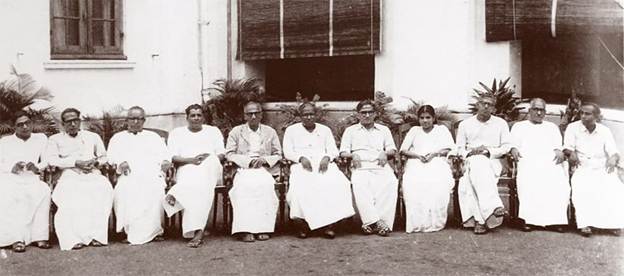
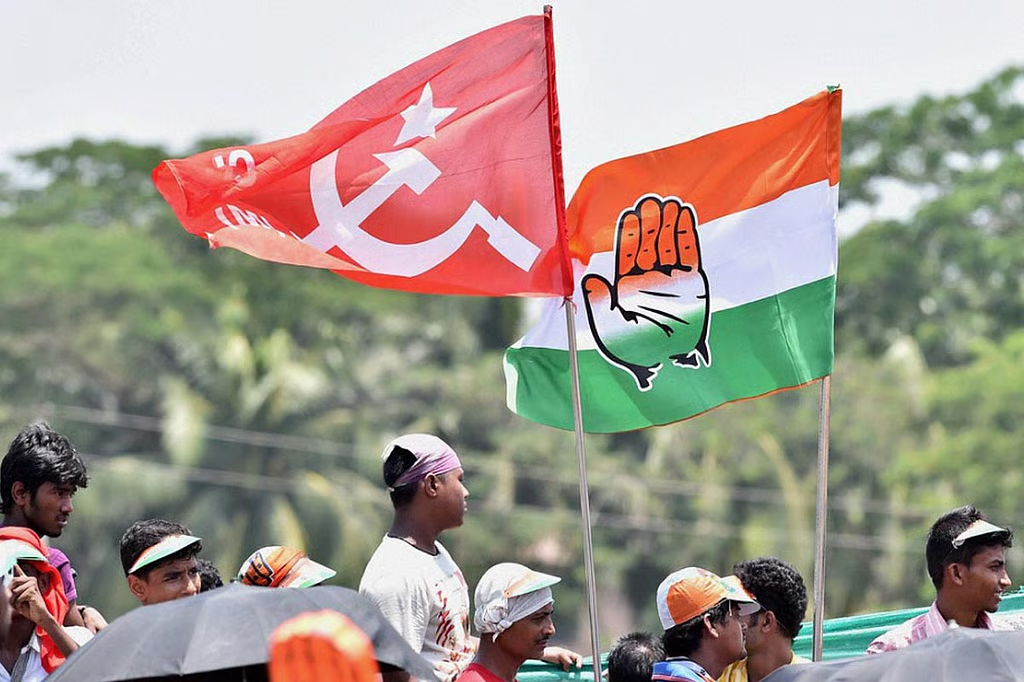
1957: The First Communist Ministry and Legislative Boldness: A pivotal moment in the dismantling of structural violence occurred in 1957 with the election of the first Communist ministry in the world through a democratic process, led by EMS Namboodiripad – well known as EMS. This government moved beyond rhetoric to enact systemic change. The Education Bill of 1957 sought to regulate private schools and ensure better conditions for teachers, effectively democratising access to knowledge. Simultaneously, the introduction of the Kerala Agrarian Relations Bill (the precursor to the 1963 Land Reforms) struck at the heart of feudalism. By promising land to the tiller, the state began the physical process of redistributing social capital, ensuring that the underprivileged were no longer mere appendages to the soil but stakeholders in the economy.
9.Understanding the Kerala Model
The Kerala Model is a unique developmental trajectory where high human development outcomes – comparable to those in the Global North – coexist with a relatively modest per-capita income. This model was not the product of a single era but the result of a sustained ideological commitment to equity. A defining moment in this journey occurred in 1957, when Kerala elected the first Communist government in a major democratic state in the world. Under the leadership of EMS, this ministry introduced radical reforms that fundamentally sowed the seeds of the state’s future progress. By prioritising land redistribution and the democratisation of education, they struck a decisive blow against the inherited structures of feudalism and caste. It sowed the seeds of the welfare state where health and literacy developed into human rights. This focus on Human Capabilities (as Amartya Sen describes it) ensured that even those with low private incomes had access to world-class health outcomes and 100% literacy.
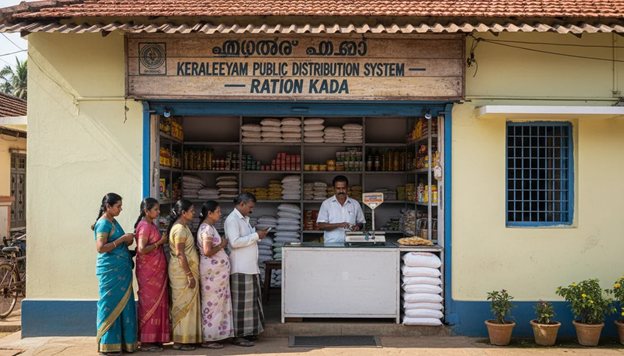
Political Continuity. What makes the Kerala Model truly remarkable is its political continuity. The radical seeds sown by the 1957 ministry created a powerful social demand for welfare that no subsequent administration could ignore. Over the following decades, whether the state was led by the Left (LDF), or Centrist coalitions (UDF), the core pillars of the model – universal healthcare, food security through the public distribution system, and accessible education – were nurtured to fruition. This cross-party consensus ensured that the dismantling of structural violence became a permanent feature of the state’s governance. As a result, the Kerala Model stands today as a testament to how visionary early legislation, when consistently upheld by successive governments irrespective of their political labels, can transform a society from the bottom up.
Education, Migration, and the Global Dividend: This heavy investment in human capital directly enabled the Migration Miracle. Because the state had produced a highly literate and healthy workforce, Keralites were uniquely positioned to take advantage of the 1970s oil boom in the Gulf. This migration served as a massive economic bypass of the traditional caste-based wealth structures. Remittances flowed directly into rural households, funding the construction of modern homes and the higher education of the next generation. In this way, the state’s focus on health and education provided the wings for upward mobility, allowing the underprivileged to leapfrog centuries of domestic economic stagnation.
Kudumbashree: Economic Agency as a Tool for Liberation: A cornerstone in the fight against gender-oriented structural violence is Kudumbashree, the State Poverty Eradication Mission launched in 1998. By organising women into a massive three-tier network of Neighbourhood Groups (NHGs), Kerala shifted the focus from traditional charity to economic agency. For women from underprivileged and below-poverty-line (BPL) backgrounds, Kudumbashree dismantled the structural barrier of financial dependence. Through micro-credit, collective farming, and small-scale entrepreneurship, millions of women gained access to independent capital for the first time. This economic empowerment directly challenged the silent violence of domestic confinement, allowing women – particularly those from marginalised castes – to bypass traditional money lenders and patriarchal control over household resources. By turning the homemaker into a breadwinner, the mission effectively narrowed the avoidable gap between a woman’s economic potential and her actual social standing.
The Intellectual Scaffolding: Missionaries, Libraries, and Civil Society: The structural transformation of Kerala was significantly bolstered by an intellectual and social infrastructure that preceded and complemented state action. In the 19th and early 20th centuries, Christian missionaries played a foundational role by establishing Western-style schools and dispensaries that were often the first to open their doors to the unapproachables and untouchables. This early institutional presence was later amplified by a unique grassroots intellectualism – the Library Movement (Granthasala Sangham). By establishing thousands of village libraries, the movement ensured that literacy was not just a functional skill but a tool for political consciousness. This was further strengthened by civil society organisations like the Kerala Sastra Sahitya Parishad (KSSP), which popularised science and rationalism. These non-state actors created a critically literate citizenry capable of identifying structural violence and holding the state accountable, ensuring that the push for equity was a persistent demand from below rather than a mere gift from above.
Institutionalising Equity: Food Security and the Decentralisation Revolution: A critical, often overlooked mechanism in dismantling the structural violence of hunger and administrative exclusion was the universalisation of the Public Distribution System (PDS) and the subsequent Big Bang decentralisation of the 1990s. While most of India struggled with chronic under nutrition among the marginalised, Kerala’s robust PDS network ensured that food was treated as a fundamental right, effectively decoupling caloric intake from caste-based land ownership. This was further solidified by the People’s Planning Campaign of 1996, which remains one of the world’s most ambitious experiments in local democracy. By devolving nearly 40% of the state’s development budget to local Panchayats, the state shifted the power of the purse and the plan to the neighbourhood level. This allowed marginalised communities, including Dalits and Adivasis, to directly prioritise their own needs – be it a local clinic, a paved road to an isolated colony, or a specialised school – thereby dismantling the bureaucratic barriers that historically silenced their voices. This institutionalised Positive Peace by giving the people at the bottom of the pyramid the political agency to dismantle any remaining local vestiges of structural violence.
Ecological Justice and the Protection of the Vulnerable: The Kerala Model also recognised that structural violence often manifests as environmental degradation, which disproportionately affects the most vulnerable. The landmark Silent Valley Movement of the 1970s and 80s was not merely an environmental crusade but a social justice struggle that prevented the displacement of indigenous communities and the destruction of their natural capital. By successfully protesting large-scale industrial projects that threatened the ecological security of the marginalised, Kerala’s civil society demonstrated that Positive Peace also requires a sustainable relationship with the environment. This legacy of grassroots environmentalism continues to protect the commons – the forests and water bodies that the underprivileged depend on – ensuring that the march toward prosperity does not come at the cost of the ecological foundations of the poor.
10.Conclusion: Towards a Resilient and Inclusive Positive Peace
Kerala’s journey from a fractured lunatic asylum to a global benchmark for human development is a definitive testament to the power of dismantling structural violence. By systematically erasing the avoidable gap between human potential and lived reality, the state has proven that high-quality life outcomes are not the exclusive property of wealthy nations, but the result of a deliberate, multi-layered pursuit of Positive Peace. However, to sustain this legacy, the way forward must involve addressing the second-generation challenges born of its own success. This requires bridging the last mile of exclusion for Adivasi and coastal communities, transitioning from a remittance-dependent economy to a high-value knowledge society, and dismantling the remaining patriarchal barriers that limit women’s labour force participation despite their educational achievements. By evolving the Kerala Model to meet these modern complexities, the state can ensure that the foundations of structural violence are not merely dismantled for the present, but are permanently replaced by a resilient, inclusive, and equitable future for every citizen. Sooner or later the playing field will be level from where true meritocracy should evolve.
The drums of war are beating louder than ever in West Asia, but a closer look at the tactical map suggests we might be watching a high-stakes theatrical performance rather than the opening salvo of a world-altering invasion.
As of today, the indicators for a U.S.-led terrestrial operation—part of the much-discussed Operation Epic Fury – remain Critical High. Major General Brandon Tegtmeier and the 82nd Airborne’s Immediate Response Force are on the ground in Kuwait. Global oil markets have already reacted, with prices sliding below $100 per barrel following President Trump’s 5-day ceasefire offer and a 15-point peace plan sent via Pakistan. However, if you look past the headlines, the military reality tells a different story.
The Fist Without an Arm
The 82nd Airborne is a formidable fist, capable of rapid vertical envelopment. But in modern warfare, a fist needs an arm to provide reach and sustained power. In this case, that arm is missing.
Despite the hype surrounding the potential seizure of Kharg Island, the U.S. currently lacks the San Antonio-class mother ships inside the Persian Gulf. Without these LPDs (like the USS San Diego or USS New Orleans, which remain outside the Strait of Hormuz), an amphibious assault to link up with paratroopers and provide the sea to shore logistic support, does not seem probable as of now. You cannot hold territory you cannot resupply from the sea. Logistic sustenance of a force launched via vertical envelopment is possible temporarily, even up to week or so through an Air bridge operation. But by itself it is inadequate and fails the requirement for a longer-term outlook. Normally you do not launch forces by vertical envelopment when land link up or shore to land link up does not seem probable in the short term
The Kharg Island Ruse
While the media is in a frenzy over Kharg Island – the terminal for 90% of Iran’s oil exports – strategic analysis suggests this is likely an operational ruse. By fixing Iranian defensive attention on their oil infrastructure, the U.S. is forcing Tehran to overextend its posture, while the real battle is being fought in the halls of diplomacy and on the floors of stock exchanges.
A Diplomatic Smokescreen
The 15-point plan, demanding the total dismantling of Iran’s nuclear facilities and an end to regional proxy funding, isn’t a traditional negotiation. It is a Shaping Operation.
The Goal: Create a Negotiate or be Invaded ultimatum.
The Reality: Tehran has already dismissed the offer as fake news, and the recent Iranian drone strike on Kuwait International Airport shows they are calling the bluff by attempting to crater the runway for U.S. C-17s.
Conclusion: The Grand Illusion
The alignment of the 82nd Airborne, the 5-day tactical pause, and the aggressive peace proposal are pieces of a massive diplomatic bluff.
The U.S. is projecting the image of an imminent invasion to force a collapse in Iranian resolve and stabilize global energy markets. But without the heavy lift of amphibious support inside the Gulf, Operation Epic Fury remains a paper tiger. We aren’t seeing the start of a ground war; we are seeing the ultimate exercise in Armed Diplomacy.
Following the blockade of the Strait of Hormuz by Iran, the Global economy is indeed reeling and pretty badly at that. In the meantime a heated debate has possibly ignited within the Pentagon and among Allied planners: Is a terrestrial intervention on Iran’s northern coast to secure the dominating costal high grounds, the only way to permanently break the blockade on the world’s most vital oil artery?
For a long time, strategic thinkers have described the Strait of Hormuz as the world’s jugular vein. For the effective blockade, the Iranians are known to be using comparatively cheap tactics, utilising anti-ship cruise missiles (ASCMs), smart mines, and swarming drone technology. The U.S. military doctrines boasts of Command of the Seas and Command of the Air strategies and capabilities. While the USA does seem to enjoy command of the air, the ‘command of the seas doctrine’ has been tested severely as never before. Carrier-based airstrikes can degrade Iranian capabilities, and possibly even remove the blockade temporarily. Even this will take some doing. However, there is near unanimity among military analysts that as long as Iranian forces control the rugged, mountainous terrain of the Hormozgan Province, the blockade can be made effective once again, within hours.
The Case for Terrestrial Operations
The rationality for land-based buffer zone is rooted in what is called as the Whack-a-Mole problem. Iran’s mobile missile launchers, such as the Noor and Ghadir systems, are skillfully camouflaged within the limestone cliffs and complex of coastal caves overlooking the shipping lanes. They can emerge from a hidden cave or hardened bunker, fire a missile and relocate within minutes. By the time the launch is located and counter measures considered, the mole is back in its hole. The problem is complicated by the fact that sinking of even a single vessel in the narrow passage may cause a permanent blockade.
To anyone familiar with basic military tactics, it is abundantly clear that to effectively clear the strait, one must seize and secure the following:
The Island Chain to include the islands of Queshm, Larak, Abu Musa, Tunbs and maybe Hormuz.
Tactical high grounds on the northern coast line. A terrestrial operation to occupy the high grounds extending from Bandar e Lengeh and running east for about 250 km will be needed to clear the threat and physically displace the weapons that currently hold global energy markets to ransom. The depth of this zone is about 70 to 200 km Northward from the coast line and include all the lower ridge lines that dominate the water way and at least some points on the main Zagros mountain ridge lines.
This is not an easy task, the hostile terrain extending over a vast area of approximately 2500-3000 sq km. The contours of such an operation if undertaken will primarily hinge around vertical envelopment employing very large sized heli-borne and air-borne forces in conjunction with special operations, to seize the tactically important high grounds overlooking the coast line as well as the island chain. This necessarily may have to be followed up with frontal assaults to link up with forces landed in depth. In addition may an extensive Air Bridge operation may have to be established for logistic sustenance of a large force, at least for initial phase of the operation until the land link up completed.
Minimum Estimated Force Levels
Amphibious Assault Force consisting of 2 to 3 Marine expeditionary Units (5000 to 7000 marines).
Special Operations Command. 2-3 seal teams and Army rangers for silent insertion.
Air Superiority and Suppression. 2/3 Carrier Strike Groups together with land based A-10s and AC 130s operating from bases in UAE and Oman for close air support
Seizing and Holding the coastal buffer. 1 Army Airborne Division and 2 infantry Divisions.
Time Frame
Initial operations to clear the blockade may take about 2 to 3 weeks. To fully sanitise the coast line, many months of counter insurgency operations will be required, difficult to estimate or define.
Financial Implication
All the above add up to a full scale invasion which according expert estimates may involve a financial implication of roughly 5 billion dollars per month if successfully executed.
The Challenge of Fortress Iran
However, the feasibility of such a campaign is fraught with extreme danger. The northern coast of the Strait is a defender’s dream. In essence, for the attacker to win in this kind of terrain, the defender must flee. Any attacking force must face the tyranny of the terrain which is characterised by jagged mountains that rise abruptly from the sea, leaving little room for the kind of large-scale amphibious landings seen in the 20th century. Key assets of the US Mechanised Forces are of little use in this kind of terrain. More hostile than the terrain will be the weather. Not all troops are accustomed to operating in temperatures over 40 degrees combined with extreme coastal humidity. While the US military may well have adequate forces trained for such vertical envelopment and amphibious operations, it’s a moot question whether they are trained to operate in harsh mountainous terrain and very hostile weather conditions.
U.S. forces will face the Islamic Revolutionary Guard Corps (IRGC) Mosaic Doctrine – a decentralised, asymmetric defense designed to bog down high-tech invaders in a war of attrition. Any landing force will be met with pre-positioned, motivated insurgent cells, man-portable air-defense systems (MANPADS), and a civilian population likely to view the intervention as a violation of national sovereignty, potentially sparking a decades-long insurgency. More than three weeks of the operation comprising ruthless air and missile attacks by the combined forces of USA and Israel have resulted in almost 70% of the Iranian surface missile force being destroyed. But even the Pentagon has admitted that the even the island chain is far from neutralised, despite an almost complete air superiority of the attacking force.
The Logistics of an Impossible Shoreline
Logistically, sustaining even brigade-sized force on the Iranian coast will indeed be a herculean task. Capturing and holding a coastline of 250 km may well require beyond a Corps size force. The humongous nature of the logistics involved is indeed a never ending nightmare.
Furthermore, a terrestrial invasion might almost certainly escalate the conflict beyond a localised maritime dispute. It will likely trigger a total mobilisation of the Iranian state and could draw in regional proxies, and perhaps other global players turning a mission to open the taps into a full-scale theater or global war.
The Verdict
A limited raid-and-destroy mission by Special Operations Forces to hit specific batteries is highly feasible, especially involving an aerial insertion and exfiltration. But a sustained terrestrial occupation to control the choke point remains an operation in the realm of very low probability, an operation of last resort. A large scale terrestrial operation of sort is far too expensive, far too dangerous involving unacceptable casualties in the long run and the probability of successful execution not very high. For now, Washington appears to be tethered to a strategy of maritime escort and aerial suppression. But as oil prices climb and the blockade holds, the pressure to take the coast and islands may soon enter the realm of active consideration.
Bloated vanity transforms into a hurricane And plays a second innings. Remember the shadows that scorched the stones of 1945? The ego is a heavy, inflated thing—a lung filled with warm air, Or toxic ash perhaps, swelling until the earth begins to crack.
Now the hurricane, a screaming, mindless force, Lashing out at the silence of the Great Stone Wall. The ancient wall begs not for mercy; It holds the line with a quiet, terrifying dignity; The storm demands the world acknowledge its righteous rage.
Hidden in the bunker of frustration, the bully broods; The map of relevance shrinking by the day. Maddened by fury, the finger moves His finger—a pale, trembling worm—begins its move. It moves across the console, as in a slow funeral march.
We can see the finger move We can see the finger move We can see the finger move Slow and steady, sure and certain We feel its vibrations in our very teeth, A low-frequency hum of a world preparing to sublimate.
There is no impulsive strike, Only the unbearable crawl, Across the metal, toward the red, unblinking eye of the button. We read the chronicle of extinction written in the red dust, We read the final pages of history in real-time, breathless and numb. Yet we are the silent spectators; in silence is our strength. We turn to the floodlights of the field so green, Oh, that glorious drive through extra cover, That arc of a curving free kick into the net! Our eyes are fixed on the scoreboard, tallying trivial triumphs, While the finger crawls, the finger crawls.
We wait for a David and his sling of truth, Or a Prophet to part the sea of our collective inaction. But the stadium is a temple of indifference. The air grows thin; the shadow of that creeping finger reaches the button. We are not victims of a sudden lightning strike, We are the architects of a preordained fall painfully slow. Oh, shall we not shatter the glass and seize the hand, Or shall we simply wait for the telecast cut to a silent black?
This is how the Kaliyug ends. This is how the Kaliyug ends. This is how the Kaliyug ends. Not in a frenzy but in slow motion.
The Author’s Notes
The Hurricane of Hegemony (The USA)
The bloated vanity and hurricane: Represent the expansive, often chaotic nature of a global superpower.
The Second Innings: This suggests a resurgence of interventionism or a sequel to past conflicts (like the World Wars or the Cold War).
Shadows of 1945: This is a chilling reminder that the US is the only nation to have used nuclear weapons. The toxic ash refers to the literal and political fallout of that hegemony, now swelling to a breaking point as it faces a world it can no longer fully control.
The Ancient Stone Wall (Iran)
In this reading, Iran represents the Great Stone Wall—a stand-in for a 5,000-year-old Persian civilization that views the US as a screaming, mindless force of modern history.
Quiet, Terrifying Dignity: This describes the posture of a nation that refuses to bow to sanctions or military threats. The wall holds the line, representing a defensive, immovable ideology that infuriates the hurricane because it cannot be blown away or easily broken.
The Bully in the Bunker
The bully brooding as his map of relevance shrinks represents a fading superpower’s frustration.
The Pale, Trembling Worm: This metaphor suggests that despite the massive military industrial complex (the hurricane), the actual decision-making power rests in the hands of a fragile, fallible human being in a command center.
The Slow Funeral March: The movement of the finger toward the console symbolises the slow-motion escalation toward a regional or global conflict. It isn’t a sudden mistake; it is a calculated, agonisingly slow crawl toward a red, unblinking eye
Global Indifference (The Spectators)
While the US and Iran engage in this high-stakes standoff, the rest of the world is portrayed as a Temple of Indifference.
The Scoreboard: While the finger crawls toward the button in the Middle East, the global public is distracted by extra covers and free kicks – a critique of how we consume news and entertainment simultaneously. We watch the chronicle of extinction as if it were just another sports highlights reel.
Trivial Triumphs: This suggests that international diplomacy has become a game of scoring points rather than saving lives.
The Failed Saviors
The wait for a David with a sling of truth or a Prophet represents the world’s reliance on some unknown miracle. However, the poem suggests these figures are absent. Instead of a heroic David stopping the Goliath (the US hurricane), there is only the silent black of a cut transmission.
The Slow-Motion Kaliyug
In this geopolitical context, the End of the Kaliyug is the collapse of the modern world order.
It doesn’t end with a sudden lightning strike, but through the preordained fall – refusing to blink until the telecast finally goes dark. The tragedy is that we see it coming in slow motion and do nothing to seize the hand.
Between the target And the impact Between the coordinates And the crushed little skulls Falls the Shadow Oh! Life is yet to bloom and still so short
Between the mission And the massacre Between smart bombs And the severed limbs Falls the Shadow For Thine is the Empire
Between the precision And the primary school Between the seven year olds And the concrete rubble Falls the Shadow For Thine is the Sovereignty
One hundred eighty souls, Gathered on this brink of the swollen Jajrud, In this valley of dying stars. They are not targeted, Just collateral liberation.
The world’s most incisive eyes Are hollow, stuffed with straw, Leaning together, Looking but not seeing, Or just not wanting to see The ribbons in the red dust And the satchels with the little books.
Ninety more must carry the weight, In this hollow land, This cactus land. They carry the weight of the missing limb, The shattered eyes And the silence that screams.
No apology is whispered, No head is bowed in the wind. Between the liberation And the butchery Between the error And the rage Falls the Shadow For Thine is the kingdom of Tyranny
This is the way the childhood ends This is the way the childhood ends This is the way the childhood ends Not with a prayer but a blast.
(With profound apologies to T.S. Eliot—adapted from The Hollow Men and with a silent prayer for the hundreds of little girls who lost their lives or limbs when the bombs came down on them on 28 February 2026)
As of today, the world stands on the precipice of a contrived calamity. The joint U.S.-Israeli attack on Iran represents a profound breakdown of the international rules-based order. By targeting sovereign leadership and infrastructure during active diplomatic negotiations, these actions do more than ignite a regional war; they dismantle the very concept of Just War Theory and the sanctity of the UN Charter.
A Violation of Law and Logic
Under the pretext of preventing nuclear proliferation, the aggressors have sidestepped the International Atomic Energy Agency (IAEA) and the UN Security Council. It is a bitter irony that the United States—the only power to have ever deployed atomic weapons and a nation currently retaining a stockpile capable of ending civilization multiple times over—is now the primary actor in an unprovoked assault to prevent a hypothetical threat.
Just war theory requires last resort, legitimate authority, and proportionality. None of these pillars are present here. To attack while diplomats are at the table is to acknowledge that force is the first choice, not the last. To carry out political assassinations is to engage in extrajudicial state-sponsored violence that invites a cycle of retaliation, which we are now witnessing as the Middle East descends into chaos. Historically we have seen that this type of unilateral use of force has been the cause of breeding and growth of terrorism. The current situation only aggravates that problem.
The Fallacy of the Global Policeman
A dominant rationalization offered by the aggressors is the tyrannical nature of the Iranian government and its history of internal oppression. However, this argument is primarily inconsistent and legally hollow. The in-house political struggle of a nation belongs solely to its people; it is not a mandate for foreign powers to act as global judge, jury, and executioner. By initiating a military operation for regime change under the facade of liberation, the U.S. and Israel have unilaterally appointed themselves as global policemen—a role that violates the foundational principle of state sovereignty.
The idea that a state can be bombed into democracy is a historical absurdity. If the Iranian people seek to challenge or change their leadership, that is their inherent right and their struggle to wage. When external powers interfere through high-altitude strikes and political assassinations, they do not bring freedom; they bring chaos, martyrdom, and the destruction of the very civil society required for internal reform. International order cannot survive if tyranny becomes a subjective thumbs up for any nuclear-armed power to dismantle a sovereign neighbour.
Historical Amnesia
This historical pattern of interventionism is not an anomaly, but a continuation of a destabilizing doctrine. From the decades-long morass in Afghanistan to the 2003 invasion of Iraq—launched under the false pretences of weapons of mass destruction—the United States has repeatedly bypassed international law to pursue regime change. The 2011 intervention in Libya further illustrates this catastrophic cycle; what was framed as a humanitarian mission to protect civilians quickly devolved into the state-sponsored assassination of its leader, leaving a power vacuum that turned the nation into a failed state, a civil war and a marketplace for modern slavery. The western intervention in Iraq resulted in the country being fractured to pieces and the establishment of the dreaded Islamic state and organizations like the ISIS. Until the sanctions hit hard Iraq was near ideal secular state. What a demonic transformation? Afghanistan marked the return of the Taliban. Dreaded Terrorists have returned to power in Syria too. In every instance, the forced dismantling of sovereign structures did not yield the promised democracy. Instead, it fractured civil society, displaced millions, and created fertile breeding grounds for extremist groups like ISIS and Al-Qaeda. By ignoring the lessons of these ruins, the current aggression against Iran risks repeating a history where liberation serves only as a precursor to enduring regional chaos and the global proliferation of terror.
The BRICS Response: Rhetoric without Resolve
The expanded BRICS+ bloc has issued a joint statement strongly condemning the violation of Iranian sovereignty. However, this response remains strategically way too insufficient. While China and Russia have categorized the attacks premeditated aggression, they have stopped short of offering any material or military deterrent. By limiting their intervention to diplomatic notes and calls for dialogue at a toothless UN, BRICS has apparently highlighted its inability to propose a functional security alternative. This disinclination signals to the aggressors that while the Global South may dissent morally, it lacks the resolve to stop the dismantling of sovereign states by force.
The Connivance of Continental Silence
Simultaneously, the response from the European Union has been characterized by a lukewarm, strategic ambiguity that borders on moral bankruptcy. Rather than acting as a principled mediator or a champion of the international legal framework it claims to uphold, the EU has issued hollow pleas for de-escalation that fail to name the aggressors or acknowledge the illegality of the strikes. This paralysis stems from a deep-seated reluctance to break ranks with Washington, yet such subservience effectively signals that the rules-based order is a selective privilege rather than a universal right. By offering only bureaucratic hand-wringing in the face of a sovereign nation’s dismantling, Brussels is setting a catastrophic precedent that erodes the security of all mid-sized and smaller states. This collective silence is not merely a diplomatic failure; it is an invitation to future lawlessness. If the sanctity of borders and the immunity of leadership can be discarded today in the Middle East without a forceful European rebuke, there is no logical or legal barrier to prevent similar military adventurism in other strategic territories. Today the target is Tehran, but a world without enforceable sovereignty is a world where even the quietest corners of the globe—perhaps even the resource-rich expanses of Greenland—could tomorrow find themselves in the crosshairs of a nuclear power’s unilateral security interests. Failure to act now transforms the EU from a bystander into an architect of a new era of global anarchy.
The Need for Urgent Action
The retaliation from Iran and its allies is the predictable result of a sovereign state being pushed to the brink. When the world allows one or two nations to dictate the internal politics of others through fire and steel, it signals the end of global stability.
The rest of the world must react. If the international community does not move beyond urging restraint to an explicit condemnation and active diplomatic isolation of the aggressors, we are effectively endorsing a world where might is the only right. We must demand an immediate cessation of hostilities. The alternative is a total war where the primary casualties are the innocent millions who have no say in the games of nuclear-armed titans. Are we heading into global anarchy? Time is running out.
Recently I was stunned by a video of Shiv Khera explaining why he is not a Gandhian. No one expects anybody else to be Gandhian. Fair enough, it’s a difficult individual choice to be Gandhian in democratic modern India. But the management Guru, chose to denigrate the national icon by selective quotes from religious scriptures to indicate that anyone who is a Gandhian should be ashamed of himself. He also implied that if you are a proud Hindu you cannot be a Gandhian. Even Caesar may have agreed that this was the unkindest cut of all. He was and is a Mahatma to so many not only in India but in every corner of the world. The moral depravity of Khera implying that he was a coward and a charlatan, somehow hurt my sensibilities deep within and like a maggot in the brain it kept growing. There is no peace until my conscience finds expression. Thus this piece.
In watching Shiv Khera’s viral dismissal of Mahatma Gandhi, I was struck by how easily the complex machinery of history is dismantled by the superficial logic of corporate management. Mahatma Gandhi is undoubtedly still a national icon. Every Prime Minister and President of India has referred to him as the Mahatma and/or Father of the nation. Visiting foreign dignitaries are taken to the Raj Ghat, as a national memorial. Plaques there and at many other places refer to him as Father of the nation. Many official sites such as the PMO, the ministry of culture and Press information Bureau often refer to him as Father of the Nation. It was none other than the great patriot Subhash Chandra Bose who first called him Father of the Nation. The Supreme Court of India has observed that while the title isn’t formal, it is a collective responsibility to respect him as Father of the Nation, noting his status is beyond any formal recognition. One of India’s three national holidays is Gandhi Jayanti. His image appears on our currency notes. All this, only to re-emphasize that he remains a national icon. In a democracy it is perfectly fine for any citizen to not accept his status as Father of the nation or The Mahatma. One may not agree with his world view or ideology. But surely no citizen, even if the blue blood of patriotism is not flowing in his veins, should be disrespecting a national icon in public spaces until there is a change in status.
Khera attempts to manage Gandhi out of our history books by using a selective reading of Indian epics, portraying the Mahatma as a peddler of passivity and cowardice. As an Indian, I find this not just historically inaccurate, but a profound betrayal of the very moral foundation upon which our Republic stands.
The Fallacy of the Passive Mahatma
Khera’s central argument hinges on the idea that Lord Ram and the Sikh Gurus took up arms, while Gandhi chose neutrality or tolerance. This is a fundamental misreading of Gandhi’s philosophy. Gandhi never advocated for the non-violence of the weak—the submission of the coward who is afraid to fight. He advocated for Satyagraha, which is the non-violence of the strong.
As Gandhi himself famously wrote, “If there were only a choice between cowardice and violence, I would advise violence.” However, he saw a third, more difficult way: the courage to stand unarmed before a charging Lathi, to absorb the blow without striking back, and in doing so, to strip the oppressor of their moral authority. That is not neutrality; that is the ultimate stand, which needs a lot of courage.
The Greatest Mass Movement in History
Unambiguously, Mahatma Gandhi singularly conceptualised and led the freedom movement of India, which many scholars acknowledge as the greatest mass movement in the history of the world, excepting for some religious and totalitarian movements. He innovated and adopted a political strategy which up until then was unknown to the world. In many ways he changed the course of world history in successfully waging an anti-colonial movement and inspiring such movements in many parts of the world.
A great Political and Spiritual Leader
Mahatma Gandhi’s status as one of history’s most influential political and spiritual leaders is not just a matter of opinion; it is substantiated by his global status and honors, numerous global studies on leadership and the testimony of many world leaders. Let us not take this as a congress construct. It is not. Here is how the world formally recognizes his legacy:
United Nations Recognition.In 2007 The United nations General Assembly voted unanimously to establish October 2 as the International day of Non-Violence. This is a rare honour where a global community formally adopts an Individuals birthday to promote their specific philosophy as a tool for political change.
Global Successor Movements. Gandhi’s methods of Satyagraha provided the blue print for most significant human rights movements of the 20th century. Martin Luther King Jr. (USA): King famously stated, “Christ gave us the goals and Mahatma Gandhi the tactics.” He traveled to India in 1959 to study Gandhi’s methods, which became the bedrock of the American Civil Rights Movement.
Nelson Mandela frequently referred to Gandhi as his political role model, noting that Gandhi’s spirit helped South Africa transition out of Apartheid without a total racial bloodbath. The Dalai Lama identified himself as a follower of Gandhi’s philosophy of non-violence in his struggle for Tibetan autonomy.
International Tributes and Monuments. Gandhi is one of the most statued individuals in the world outside of his home country. There are over 70 countries with official monuments dedicated to him, including high-profile locations like Parliament Square in London (placed alongside Churchill and Lincoln) and Union Square in New York. In 1999, Time magazine named Gandhi the runner-up to Albert Einstein as the Person of the Century. Einstein himself famously said of Gandhi: “Generations to come… will scarce believe that such a one as this ever in flesh and blood walked upon this earth.” I asked Gemini to list 10 greatest leaders of all recorded history. This is what it said before listing out the 10 names… “Defining the greatest leaders is subjective, but these 10 figures are consistently cited for their transformative impact on world history”. At the very top spot was Mahatma Gandhi. AI simply does logical analysis of data available to it.
Academic and Intellectual Influence. Gandhi’s political strategy—using moral authority to defeat military might—is taught in political science and conflict resolution courses globally. Oxford & Harvard University hold extensive archives and dedicated chairs for Gandhian Studies, treating his writings on self-reliance and ethics as core philosophical texts.
The Architect of the Indian Mind
Khera speaks of management and leadership, yet he ignores the greatest management feat in human history. Before Gandhi, India was a collection of 565 princely states and British provinces. There was no Indian identity that could unite a peasant in Kerala with a lawyer in Bombay. Gandhi conceptualised a movement that didn’t just target the British; it targeted the Indian psyche, transcending religious, cultural and language boundaries
He didn’t just lead a protest; he forged a nation. By picking up a handful of salt or sitting at a spinning wheel, he gave the common man—regardless of caste or literacy—a sense of agency. He took the geographical expression of India that the British mocked at and turned it into a psychological reality. We should be proud of him because he proved that a colonized people could regain their dignity not by mimicking the brutality of their masters, but by transcending it.
A Debt of Gratitude
We owe Gandhi our gratitude because he ensured that when India was born, it was born with a democratic soul. If India had won its freedom through the barrel of a gun or the muscularity that Khera admires, we might have become just another post-colonial military dictatorship. Instead, Gandhi gave us a tradition of mass mobilization and dissent that remains the bedrock of our democracy.
To call Gandhi’s legacy cowardly while sitting in the safety of a free country that he lived and fought for is the height of historical amnesia. Gandhi managed the most difficult resource of all: the human conscience. He taught us that true power doesn’t lie in the ability to kill, but in the refusal to be intimidated. As Indians, our pride should stem from the fact that our revolution was led by a man who was strong enough to be kind and wise enough to be inclusive. The great man’s character and reputation will surely outlive such assassination attempts.
Up until modern times we theorised and formulated ancient history through archeology and historical linguistics. Archeologists dug up ancient sites and by the study of artifacts and other evidence from these sites formulated their inferences. In historical linguistics, scholars use related languages as archeological sites, and they dig through layers of vocabulary and grammar to uncover the past. This multi-disciplinary field has now entered the science of Population Genetics and Paleo- Genomics which help solve the jigsaw puzzle with a lot more clarity.
Back in school a half century ago we learnt about the Aryan and Dravidian ancient history of India. How has science changed this old narrative if at all? The Aryan-Dravidian narrative has shifted from a story of conquest and pure races to a much more complex story of deep-time mixing. The modern Indian population is often described as a subcontinent-sized mystery. However, through the lens of paleo-genomics—the study of ancient DNA—we can now reconstruct the history of India not just through ruins and texts, but through the very cells of its people. Modern population genetics has replaced the old labels with three primary ancestral building blocks or three pillars that exist in almost every Indian today, regardless of whether they speak a Dravidian or Indo-Aryan language and regardless of from where they hail in the subcontinent or their religion or caste. So, let’s delve into each of these three building blocks as almost every Indian has inherited genes from all three blocks to a lesser or greater extent.
The Foundation: The Out of Africa Pioneer Group
The story begins with the First Indians, also probably the first Homo sapiens around 50,000 to 65,000 years ago, a small band of Homo sapiens migrated out of Africa, likely crossing the Bab-el-Mandeb strait and via the Arabian Peninsula, following the Southern Coastal Route into India. The migration Size was relatively small and perhaps covered a thousand plus years. Genetic modeling by Narasimhan et al. (2019)[i] suggests a significant bottleneck. While thousands may have left Africa, only a few hundred to a few thousand successfully founded the lineage that would populate the whole of South Asia. These pioneers are referred to as Ancient Ancestral South Indians (AASI) and should be considered as the indigenous people of India as they are known to be the first Homo sapiens who arrived in the subcontinent more than 50000 years ago. It is not conclusively known if humans lived in the subcontinent before the AASI, but if they did, they have left no genetic signature in the population of today. Currently, no pure AASI population exists on the mainland; they are a ghost population whose DNA is found mixed into nearly every person in India. The closest living relatives to this ancient lineage are the Andamanese hunter-gatherers (Onge and Jarawa).
It is also very likely that archaic Humans (other than Sapiens) lived in the subcontinent prior to the arrival of this group out of Africa and possibly coexisted with them for many centuries. Indians today have about 2% DNA of these archaic humans (Neanderthal and Denisovan), the highest for any population outside Africa
The Neolithic Revolution and the Indus Valley Civilisation (IVC)
Between 10,000 and 7,000 years ago, a new genetic stream entered from the west—people related to the early farmers of the Zagros Mountains (Iran). These Iranian-related migrants did not replace the AASI; they merged with them. This Indus Periphery mixture created the genetic basis for the Indus Valley Civilisation (IVC). A pivotal study by Shinde et al. (2019)[ii] sequenced the DNA of a 4500-year-old female skeleton from Rakhi Garhi. The results were revolutionary: she had zero Steppe ancestry. This proved that the great cities of Harappa and Mohenjo-Daro were built by a population that was a mix of AASI and Iranian-related ancestry, before the arrival of Central Asian groups. Most scholars now believe that the Indus Valley people spoke a proto-Dravidian language (their script is sadly still not deciphered)
The Steppe Migration and the ANI/ASI Split
Around 2000 BCE to 1500 BCE, as the IVC began to decline (likely due to climate change and drying rivers), a third major group arrived: Steppe Pastoralists from the Eurasian grasslands (modern-day Russia/Kazakhstan or the Yamnaya culture). These migrants brought Indo-European languages and early Vedic culture. Their arrival triggered a massive demographic shift:
The North: Steppe migrants mixed with the IVC people in the North, creating the Ancestral North Indians (ANI). This is the foundation on which the Vedic civilization was built. The early Vedas written in Sanskrit, have quite a few Dravidian loan words. This possibly shows the affinity/ descend of the Vedic people to the IVC people, who scholars believe spoke some kind of proto-Dravidian language.
The South: IVC people who moved South, further mixing with local AASI hunter-gatherers, formed the Ancestral South Indians (ASI). They formed the base for the Dravidian culture and civilization.
The Melting Pot
These two were not watertight, separate and pure Aryan/Dravidian entities. For the next two millennia or so (from 2000 BCE to 0 CE), they mixed freely with gene flows taking place throughout the subcontinent. It was clearly a no caste bar situation throughout the length and breadth of the subcontinent. Reich et al. (2009)[iii] demonstrated that most modern Indians are a cline (a sliding scale) between these two groups. A person in Kashmir might have 50-60% ANI ancestry, while a person in Tamil Nadu might have 20-30% ANI ancestry, but almost everyone has both North and South Indian ancestry. Population Genetics has thus conclusively proved that the whole of India has a by and large a common genetic heritage. Pure Aryan/ Dravidian heritage in India is something of a myth. There is a certain oneness in the common ancient heritage of every Indian.
The Endogamy Freeze (2,000 Years Ago)
Perhaps the most Indian aspect of this genetic story is not the mixing, but when the mixing stopped. Moorjani et al. (2013)[iv] discovered that around 1,900 years ago, genetic data shows a sudden freezing of the gene pool. This aligns with the late Gupta period when the Manusmriti was composed, and the social structures of the Caste System became rigid. From this point on, people began marrying only within their specific sub-castes (Jatis). This created thousands of distinct genetic groups. India is therefore not one large population; it is a collection of thousands of small, endogamous populations living side-by-side and interestingly all having a common heritage. This rigid monogamy froze the genetic proportions in place, which is why genetically and otherwise we still see distinct regional and caste differences today despite the shared ancient roots. This gene flow freeze that prevails till today gave rise to several deleterious effects socially, economically and biologically. That calls for a separate discussion altogether.
Religion, Gene Flow, and Regional Nuance
Modern socio-political identities often suggest deep divides, but the DNA tells a story of shared heritage. Study after study on religious groups, including Reich (2018), has shown that Indian Muslims and Christians are genetically indistinguishable from the Hindu castes of their specific region. For example, a Kerala Syrian Christian shares the same ancestral proportions as a Kerala Namboothiri or Nair. The closest genetic kin of a Kashmiri Muslim is the Kashmiri Pandit. Almost identical heritage. For most of us it would be somewhat disconcerting that a Punjabi Hindu or Sikh is genetically closer to a Punjabi Pakistani Muslim, than a Hindu from say Tamilnadu. Gene flows don’t recognize borders and genetically the concept of Akhand Bharat is very much a valid concept
There is an ethnic group called Brahui who now predominantly live in the mountains of Balochistan with much smaller populations in Iran, Afghanistan, and Gujarat and Rajasthan. Genetically they are predominantly ANI stock but the Brahui language that they speak today is essentially a Dravidian language strongly suggesting a IVC lineage.
Gene Flow from the East
In Northeast India and among Munda-speaking tribes in Central India, there is a significant fourth stream of DNA besides the three discussed above. This comes from Austroasiatic (AAA) and Tibeto-Burman migrations from Southeast Asia and East Asia roughly 3,000 to 4,000 years ago.
Summary Table: The Layers of Indian Ancestry
LAYER
GROUP
ARRIVAL
FORMATION/IMPACT
1
AASI(FIRST INDIANS)
50000 + years ago
Foundational DNA of all Indians
2
Iranian related farmers
10000-70000 years ago
Mixed with AASI to build the Indus Valley civilisation
3
Steppe Pastoralists
2000-1500 BCE
Introduced Indo European languages; formed the ANI
4
East Asian/ Austroasiatic
2000-1000 BCE
Out of India Theory (OIT)
Also known as Indigenous Aryanism, the Out of India Theory is the hypothesis that Indo European language family and speakers originated within the Indian subcontinent and migrated outward to Europe and Central Asia, rather than entering India from outside. This hypothesis stands in direct opposition to the mainstream Aryan migration Theory. In the academic world of genetics, archeology and linguistics the OIT is largely considered discredited. However, it remains a popular and culturally significant idea. In some sense the theory is valid in that the Indian Civilisation has immense indigenous continuity even before the arrival of the Steppe Pastoralists.
Old School Narrative and Modern Genetic Reality
The old schoolbooks often portrayed the Aryans/Dravidians as two separate, non-overlapping groups. Genetics shows they are more like a spectrum. According to the old school narrative Dravidians were Indigenous people pushed South by invaders. According to modern genetics this group (often called Ancestral South Indians or ASI) formed when the Indus Valley people migrated South and mixed further with local hunter-gatherers (AASI the original out of Africa indigenous people). The old school narrative describes Aryans as a foreign race that conquered the North. According to modern genetics this group is a mixture of Steppe Pastoralists and the existing Indus Valley population. This group (called Ancestral North Indians or ANI) is genetically closer to West Eurasians but still contains significant indigenous Indian DNA.
Key Changes in Knowledge
The Invasion is now a Migration: The violent Aryan Invasion Theory has been largely debunked. Genetic evidence suggests a slow, multi-century migration of Steppe people who intermarried with local populations.
Everyone is mixed. There is no pure Aryan or Dravidian. Nearly every Indian—from a Kashmiri Pandit to a Tamil Brahmin to a tribal member in Kerala—carries a combination of these three ancestral lines. The difference is only in the proportions (e.g., higher Steppe ancestry in the North/Upper Castes; higher AASI ancestry in the South/Tribal groups).
So, in a nutshell we can summarize that the current Indian population is not a monolith but a mosaic of varying shades, a picture largely accepted by the Centre for Cell and Molecular Biology (CCMB), Hyderabad, a premier research institution that has carried out groundbreaking research in this field.
[i] Narasimhan, V. M., et al. (2019). The formation of human populations in South and Central Asia. Science. (Detailed the three-way mix of AASI, Iranian-farmers, and Steppe).
[ii] Shinde, V., et al. (2019). An Ancient Harappan Genome Lacks Ancestry from Steppe Pastoralists or Iranian Farmers. Cell. (The definitive study on the Indus Valley genome).
[iii] Reich, David (2018). Who We Are and How We Got Here. (A comprehensive overview of ancient DNA findings in India and globally).
[iv] Moorjani, P., et al. (2013). Genetic Evidence for Recent Population Mixture in India. American Journal of Human Genetics. (Identified the shift to endogamy 1,900 years ago).
The air was thick with the scent of salt and damp earth as we departed Vakkom. At seventy, my mission was simple: escort my 91-year-old mother, my sister Jabeena, and my wife Arifa safely home after a heart-warming visit with Fathima Kutteema our mother’s cousin, a couple of years her junior.
As dusk settled, a light drizzle began to blur the windshield. We were on a desolate stretch of road, far from the comfort of village lights, when the silence was shattered. A needlessly high speed bump caught us off guard.
Clang
The sickening sound of metal grinding against asphalt echoed through the cabin. I cursed my judgment. I should have slowed down. My military mind, honed by years of habit, went into assessment of the situation: the silencer clamp had snapped. We were stranded in the rain on a Sunday evening, with a nonagenarian in the backseat and not even the remotest probability of a mechanic in sight.
The Shadows in the Rain
As the drizzle turned into a steady downpour, I stood by the roadside, praying for a miracle—or at least a passing taxi. The road remained stubbornly empty. The plan was simple. Leave the car in situ and somehow find a taxi to get home.
Then, out of the darkness, three figures appeared. Three young men, strangers to us, emerged from the gloom. They didn’t just ask what was wrong; they took charge. Without a second thought for their clothes or the mud, two of them slid under the car into the cold slush. One held a mobile flashlight steady against the rain while the others diagnosed the wound.
”The clamp is gone,” one said, wiping grit from his forehead. “But don’t worry. We will fix it.” One youth vanished into the night, returning minutes later with a coil of metal wire—a makeshift lifeline. For twenty minutes, they worked in the mud. I watched, humbled, as these three strangers labored in the dark to ensure a great grandmother they didn’t know could get home to her bed.
My mind went into assessment mode again. These youngsters may be trying to make a killing out of an opportunity. They would possibly demand a bomb as compensation once they could execute a makeshift repair job. I told myself that even so they were angels. It was alright and i could afford it.
A Lesson in Virtue
When they emerged, drenched and covered in grime, they gave me a simple thumbs-up. “It will hold for twenty kilometer,” they promised. “Go now, before the storm breaks.”
I felt a wave of sheepishness. I reached for my phone, explaining I had little cash but wanted their phone number to enable a digital payment as a token of my immense gratitude. One of the boys stopped me. He didn’t look at my phone; he looked at me, folded his hands in a respectful gesture, and smiled.
”We are not looking for money,” he said softly. “We just wanted to help.”
They urged us to leave quickly, waving us off into the blinding rain as if they hadn’t just performed a small miracle. As I drove, the screeching of metal was replaced by a profound silence in my heart.
We often complain about the world moving too fast or losing its way. But that night, on a dark road out of Vakkom, I realised that human virtue isn’t rare—it is all-pervasive. We just have to wait for the rain to see it shine .