
By Brig Azad Sameer (Retd)
In 2004 I had a brain wave that a break from the Army would perhaps do me some good. I applied for a year’s study leave. The Indian Army did something rather brave: they granted me leave as requested. The mission? Head to Pune University, enroll in the M.Phil program for Defense Studies, and return with a sharper mind, hopefully well versed with matters of national security. Little did I know that I was walking into the enemy camp in civvies?
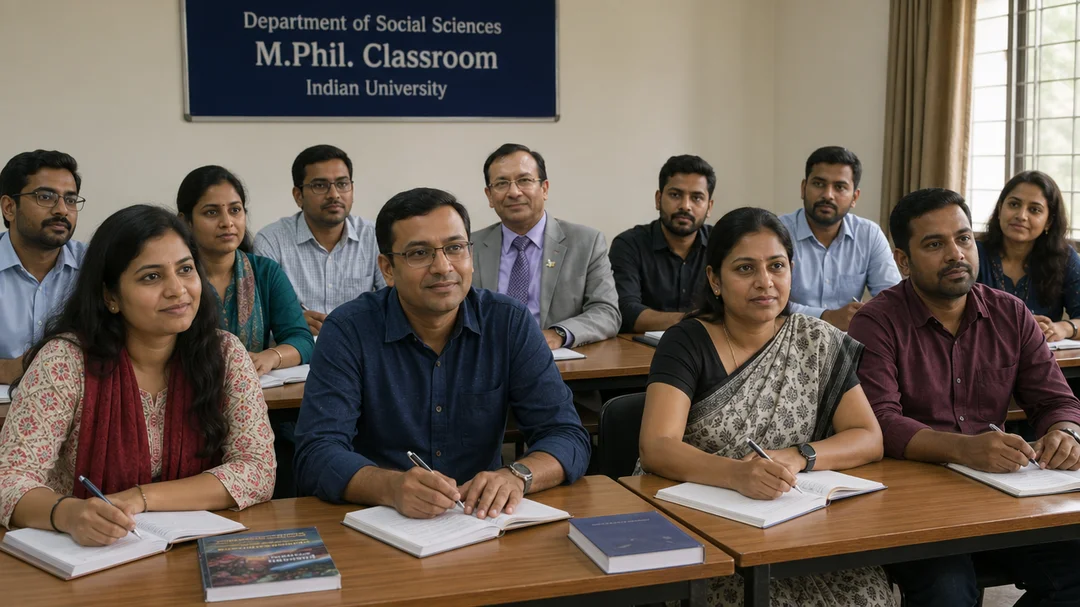
I arrived on campus as a seasoned “Realist.” For nearly two decades, my worldview was built on the sturdy foundation of hard power, deterrence, and the immutable logic of Si vis pacem, para bellum—if you want peace, prepare for war. I was a walking, talking embodiment of the military establishment, albeit a very academic one for that year.
Then, the curriculum happened.
An Officer and a Pacifist?
The irony began the moment I opened the syllabus for a mandatory core subject: Peace and Conflict Studies. There I was, a serving officer whose entire career was defined by the necessity of the military, sitting in a classroom where the prescribed reading list included a direct assault on my profession.
The book at the top of the list? “Peace: An Idea Whose Time Has Come” by Anatol Rapoport.
Imagine an executive from Kentucky Fried Chicken being sent to attend a mandatory seminar on the spiritual wonders of strict vegetarianism. My plight was more or less the same. My employer—the Army—was literally footing the bill for me to study a text that argued, with devastating conviction, that militaries aren’t just unnecessary; they are a curse on global society. I was a “Realist” behind enemy lines, reading a manual on why my own uniform was really a part of the problem.
The Book: “Peace: An Idea Whose Time Has Come”
Anatol Rapoport doesn’t pull his punches. With a single burst from his “AK”, he brings down Clausewitz, Sun Tzu and Hegel, all in one go. In this work, he explores the evolution of war not as a glorious necessity of statecraft, but as a tragic, systemic failure.
Rapoport’s View: War as a Disease
To Rapoport, war is not a rational tool used by states to achieve goals. Instead, he presents a perspective that was, for a soldier, undoubtedly quite jarring:
- The Pathological View: Rapoport argues that war is essentially an outcome of a “diseased human mind.” He views the institution of war as a social pathology – a chronic illness that has infected human civilization. To him, the “need” for war is a psychological glitch we haven’t yet outgrown. He hopes that the evolved human being will outgrow this “need”.
- Abolition, Not Management: While my many Realist stalwarts call for “Conflict Management” or “Limited War,” Rapoport was calling for the total de-legitimization of War and the military. To him, peace isn’t just a ceasefire; it’s the total rescue of humanity from a long-standing mental disorder.
- The Parasitic Cancer. Anatol Rapoport famously employed a biological metaphor to describe the global military apparatus as a malignant cancer on human society. His view wasn’t just a rhetorical insult; it was a systemic analysis of how military institutions function. Here are the core reasons behind his perspective:
- Self-Perpetuation (The “Parasitic” Nature). Rapoport argued that like a cancer cell, the military-industrial complex has its own “genetic code” focused solely on growth and survival. It does not exist to solve a specific problem (like winning a final war) and then disappear. Instead, it creates conditions (fear, perceived threats) that ensure it continues to receive funding and power. It thrives even if it harms the “host” (society).
- Diversion of Social Energy. In biology, a tumor consumes nutrients that the body needs for healthy organs. Rapoport saw the military in the same light. Massive amounts of wealth, scientific intelligence, and human labor are “sucked” into the military machine. This prevents society from addressing real existential threats like poverty, disease, and environmental collapse
- Decoupling from Human Conscience. Rapoport criticized military strategists for treating war as a “game” or a mathematical problem. By removing the moral and human cost from the equation, the military functions like a soulless biological process. This “blind growth” occurs without regard for the pain or destruction it causes to the global social fabric.
- The Autotelic Nature of Arms Races. The term autotelic describes an activity or experience that is an end in itself, rather than a means to an end.He viewed the arms race as a classic symptom of this cancer. Each “cell” (nation) grows its military because the neighboring “cell” is growing. Each military has a symbiotic relationship with the adversary’s military. One is entirely dependent on the other for its own survival. This leads to a state of metastasis where the growth becomes uncontrollable and serves no defensive purpose, eventually reaching a point where it can destroy the entire global organism (through nuclear war).
- Host Destruction. The ultimate tragedy of a tumor is that by successfully killing its host, it also kills itself. Rapoport warned that the global military establishment is on a path to a Nuclear Holocaust. In its quest for “security” and dominance, it creates a world so dangerous that total annihilation becomes a statistical probability.
The Author: Who was Anatol Rapoport?
Anatol Rapoport (1911–2007) was a true polymath—a concert pianist, a mathematical psychologist, and a pioneer in Game Theory. Despite my hard core “Realist” foundations, it was hard not to respect a man who was nothing short of a genius. He had won a famous international tournament on cooperation with the simplest possible strategy: “Tit for Tat.” He was a co-founder of the Peace Research Institute in Oslo and spent a life time trying to apply rigorous academic logic to the often irrational pursuit of human conflict.
The “After-Action” Report
So, was I converted? Did I trade my combat fatigues for a khadi kurta and a start a protest against the military industrial complex? Not exactly. I didn’t leave Pune University ready to dismantle the world’s arsenals in a hurry. However, the irony of the situation did its work. Being forced to study Rapoport’s “Peace” didn’t make me a pacifist, but it did make me a sort of “thinking Realist.” When I consider the military industrial complex of the USA, Rapoport’s perspective looks every bit real.
I realized that while hard power is a reality on our borders, viewing the world only through a gun sight is a form of tunnel vision. The Army sent me to Pune to learn about the defense of the nation from an academic perspective; ironically, I learned that truly defending it might involve understanding the mind of a man who thought my very existence was a symptom of a sick world. Surprisingly, even today Peace and conflict Studies is still part of the university’s core curriculum for Defense Studies. But I wonder if Anatol Rapoport is now on the reading list.
Looking back at 2004, I realize that the most dangerous thing in a conflict may not be the enemy’s hardware—it could just as well be the inability to see the world from a different angle. Even if that angle thinks you’re the problem!


