The Trojan Ceasefire: Naval Encroachment and the Prelude to Amphibious Escalation

By Brig Azad Sameer (Retd)

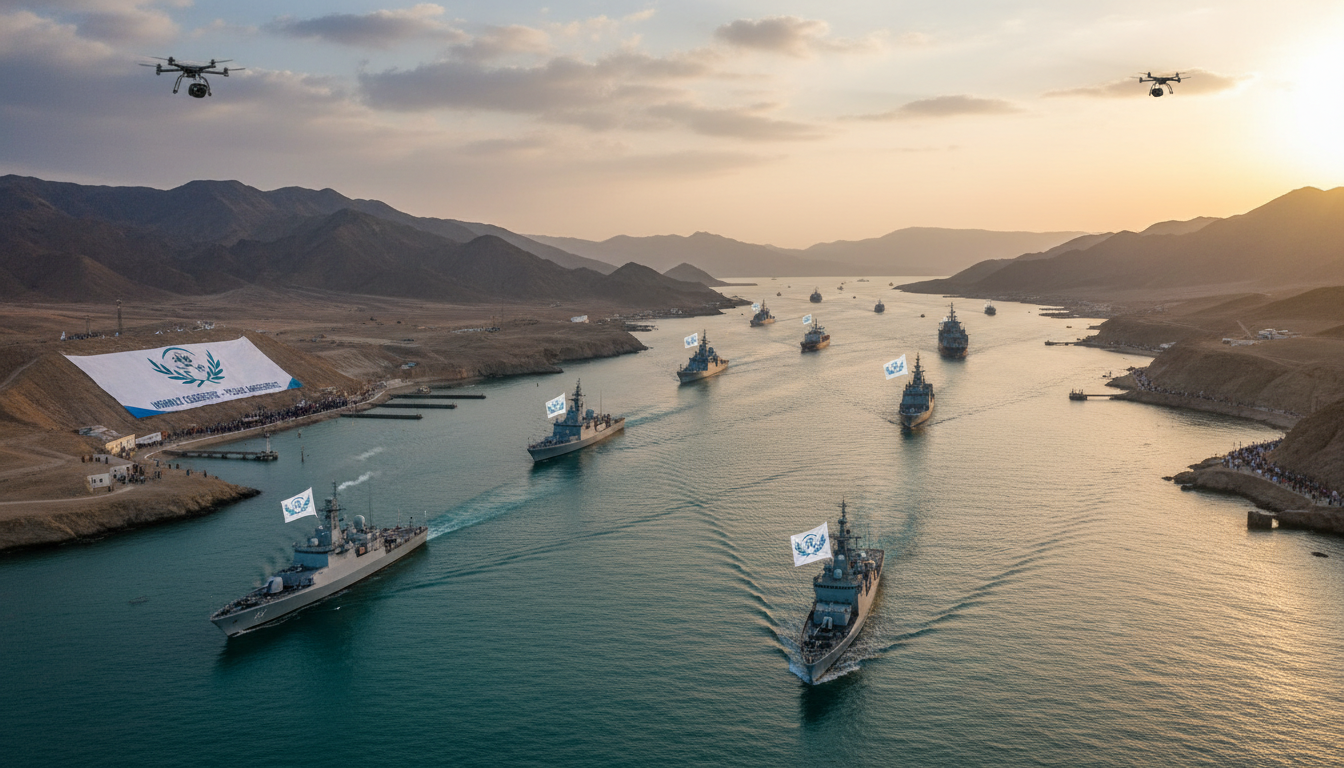
The chronicles of military history are awash with peace periods used not for de-escalation, but for the strategic repositioning of offensive assets that would be too vulnerable during active hostilities. As of 11 April 2026, the transit of U.S. guided-missile destroyers into the Persian Gulf under the mantle of a humanitarian mine-clearing mission appears to be a classic war college case of this maneuver. While the Islamabad talks superficially aim for a diplomatic exit to the conflict, the physical movement of the USS Frank E. Petersen Jr. and USS Michael Murphy into the heart of the Gulf suggests that the United States is not preparing for peace, but may well be instead maximizing it’s configuration for the failure of talks and more lethal phase of Operation Epic Fury.

​A ceasefire, by definition, is a standstill agreement intended to freeze the tactical map to allow for negotiation. By moving high-value combatants through the Strait of Hormuz and into what Iran considers its territorial waters the U.S. has fundamentally altered the military status quo. If the introduction of front-line warships into a contested combat zone during a cessation of hostilities does not constitute a violation, the term ceasefire loses all functional meaning and will need to be redefined. It is a confrontational act of naval encroachment that weaponizes the diplomatic process to bypass the very A2/AD (Anti-Access/Area Denial) barriers that kept the U.S. fleet at bay during the height of the kinetic exchange.

​The skepticism surrounding the mine-clearing narrative is justified. Heavy destroyers are not the tools of maritime sanitation; they are the tools of power projection. The reality is far more clinical: the U.S. is possibly shaping the battlefield. By establishing a permanent naval presence inside the Gulf now, they get rid of the bottleneck risk of the Strait of Hormuz for the future. These warships serve as the vanguard for a much larger logistical build-up. With the Iranian fast boat threat suppressed by the ceasefire terms and the coastal missile batteries momentarily silenced by diplomacy, the U.S. is free to conduct the hydrographic surveys and coastal reconnaissance necessary for terrestrial operations. It is also a high stake method of testing Iranian resolve.

​The true objective likely lies in the preparation for full-scale amphibious operations. An invasion of the Iranian littoral requires more than just air superiority; it requires a sanitised Gulf where amphibious assault ships (LHAs) and transport docks (LPDs) can operate without the incessant threat of a closed door behind them. By this maneuver now, the U.S. is in essence pre-staging the heavy lifters. The current destroyers are the scouts ensuring that when the ceasefire inevitably collapses – or is deemed expired by Washington – the heavy iron of the Marine Expeditionary Units will already be in position to strike the Iranian mainland.

​In conclusion, the U.S. naval movement is possibly a classic example of strategic opportunism. By taking cover under the ceasefire, the U.S. has achieved through a peaceful transit what may have been far more dangerous during active war. This is not the behavior of a nation seeking a durable exit; it is the behavior of a superpower positioning its pieces for a final, knockout blow on the terrestrial plane. Operation Epic Fury is not ending; it is possibly just reloading. What we cannot figure out now is whether the ceasefire is entirely an eyewash or some serious effort towards peace during which the pawns are being moved quite unfairly, to prepare for the contingency of failure of talks.

The Isfahan Rescue : A Classic Military Overkill or a Cover for Something Bigger?

Brig Azad Sameer (Retd)

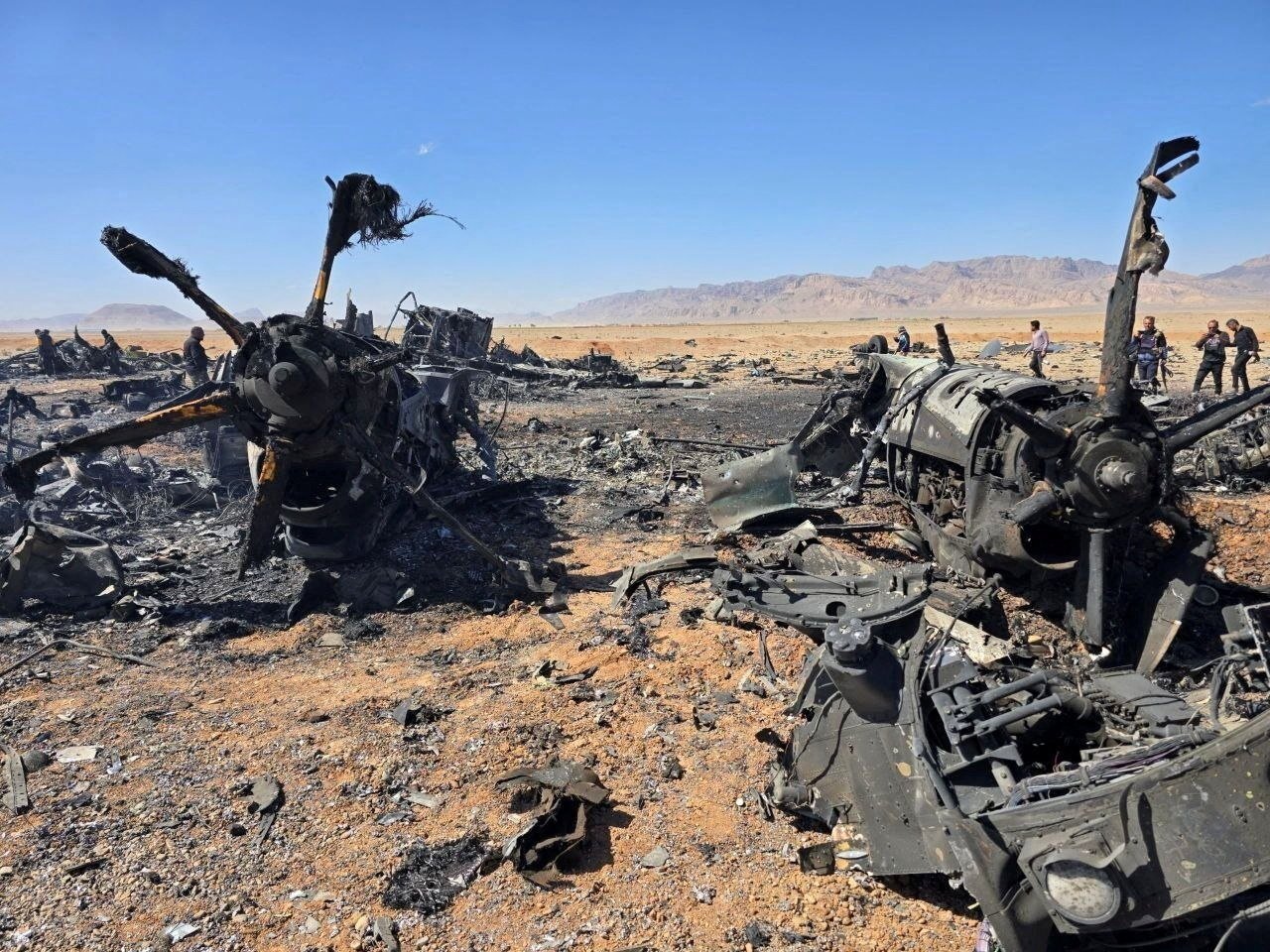
According to the official Pentagon narrative, the rescue of DUDE 44 B was the most devoted act of camaraderie in human history. After an F-15E Strike Eagle went down on April 1, 2026, the pilot (DUDE44A) was whisked away within hours. However, the Weapons System Officer (WSO: DUDE44B) took a bit longer, leading to a mission that can only be described as a tactical overkill. To save one man, the U.S. launched an armada of 155 aircraft and landed two $100-million MC-130J Commando II transports on a wet, sandy farm field. It’s a touching story, provided you don’t look at a map—or a balance sheet.

Holes in the Narrative

In the world of standard Search and Rescue, you send a couple of agile HH-60W Jolly Green II helicopters or maybe a CV-22B Osprey. You do not land two massive, 70-ton fixed-wing transports in the mud 100 miles away from the guy you’re looking for. Using an MC-130J to rescue a single airman is like using a cruise ship to pick up a stranded jet-skier: it’s flashy, but it’s a logistical nightmare that puts hundreds more people at risk. By putting 96 personnel on the ground in the heart of Iran, the Pentagon didn’t just plan a rescue; they accidentally invited a hundred people to a potential hostage crisis party.

The geography of the mission is where the official story really starts to sink – much like those MC-130Js in the Isfahan mud. The landing site was uncomfortably close to Iran’s primary underground nuclear facilities and missile infrastructure. Furthermore, the cargo involved—four MH-6 Little Bird helicopters that had to be offloaded and reassembled – is the textbook signature of a Direct Action raiding party. You don’t bring an assembly-required helicopter kit to a time-sensitive rescue mission unless you were already heading there to kick open a very specific, very nuclear door.

Strategic Mission

The logical conclusion is that the rescue of DUDE 44 Bravo was a mission of opportunity. The 96 personnel and their heavy-lift aircraft were almost certainly on a primary strategic mission – likely a counter-proliferation raid or a high-value target seizure near Isfahan. That also explains the use of 155 combat aircraft for the rescue mission. The Iranian airspace had to be sanitised for a strategic mission which involved the move of two clumsy, elephantine transport aircraft. When the F-15E crashed nearby, the Pentagon pivot was swift: if the secret raid failed (which, given the stuck in the mud outcome, it seemingly did), they could blow the sensitive gear to smithereens and tell the world it was all a heroic, albeit a bit expensive, effort to leave no man behind. It’s much easier to explain losing $300 million in hardware as saving a brother than as getting the tyres stuck during a botched nuclear heist. Also, a new word got added to our glossary of military terminology: scuttle. To be used when the getaway car gets stuck in the mud.

The Great Escape

However, we must give credit where it is due: the eventual extraction of those 96 personnel was a genuine feat of professional airmanship. When the heavy-hitters failed, the U.S. successfully pivoted to three lighter CASA CN-235 aircraft. These nimble turboprops did what the massive Commandos couldn’t – they landed on that same soggy strip, packed in nearly a hundred elite soldiers, and hummed their way back to safety. While the Official Version might be a tall tale, the fact that all the personnel returned home without a single casualty remains the highlight of the story that holds water. It is tactical brilliance that really needs a standing ovation. Someone took a very smart abort mission decision, early enough to make the great escape possible. It’s a bit funny though, 96 went in to save one and then the 96 had to be rescued!

The Concluding Question

One odd question remains.  Why were the CASA CN235 aircraft not used for the special mission in the first place, when it was evidently clear that these were more suited for the sticky airstrips available? They could not obviously carry the Little Bird choppers, necessary for the onsite move.Logically, it appears that ONLY MC130Js had a mission appropriate pay load capability. Something really heavy had to be brought in or taken out or probably both ways. We generally know that enriched uranium is normally carried in very heavy lead lined steel containers. It’s also a probable reason why the aircraft refused to take off from the sand after they landed. It’s a different matter that these special containers, now melted and mangled, maybe somewhere amongst the aircraft wreckage.

The Murder of Sovereignty: A Moment of Global Reckoning

By Veteran Brigadier Azad Sameer

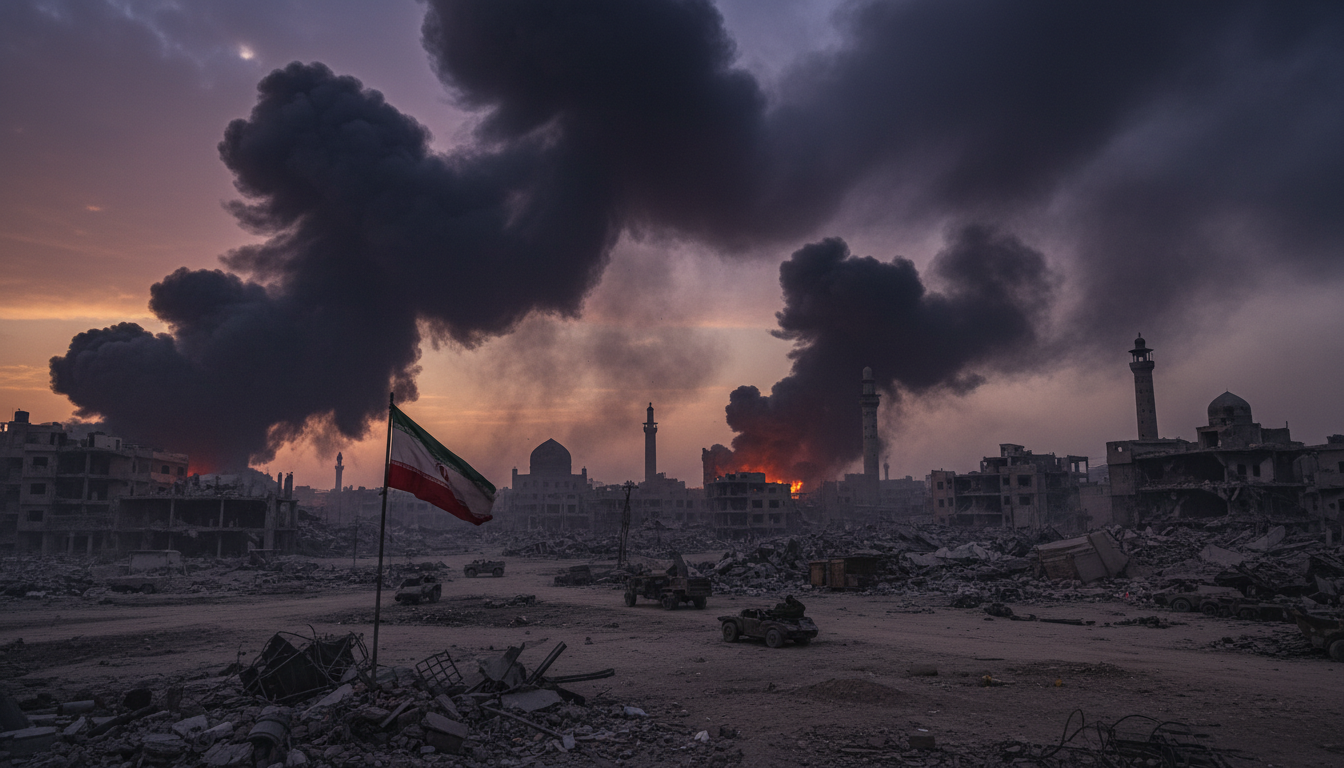
As of today, the world stands on the precipice of a contrived calamity. The joint U.S.-Israeli attack on Iran represents a profound breakdown of the international rules-based order. By targeting sovereign leadership and infrastructure during active diplomatic negotiations, these actions do more than ignite a regional war; they dismantle the very concept of Just War Theory and the sanctity of the UN Charter.

​​A Violation of Law and Logic

​Under the pretext of preventing nuclear proliferation, the aggressors have sidestepped the International Atomic Energy Agency (IAEA) and the UN Security Council. It is a bitter irony that the United States—the only power to have ever deployed atomic weapons and a nation currently retaining a stockpile capable of ending civilization multiple times over—is now the primary actor in an unprovoked assault to prevent a hypothetical threat.

​Just war theory requires last resortlegitimate authority, and proportionality. None of these pillars are present here. To attack while diplomats are at the table is to acknowledge that force is the first choice, not the last. To carry out political assassinations is to engage in extrajudicial state-sponsored violence that invites a cycle of retaliation, which we are now witnessing as the Middle East descends into chaos. Historically we have seen that this type of unilateral use of force has been the cause of breeding and growth of terrorism. The current situation only aggravates that problem.

The Fallacy of the Global Policeman

​A dominant rationalization offered by the aggressors is the tyrannical nature of the Iranian government and its history of internal oppression. However, this argument is primarily inconsistent and legally hollow. The in-house political struggle of a nation belongs solely to its people; it is not a mandate for foreign powers to act as global judge, jury, and executioner. By initiating a military operation for regime change under the facade of liberation, the U.S. and Israel have unilaterally appointed themselves as global policemen—a role that violates the foundational principle of state sovereignty.

​The idea that a state can be bombed into democracy is a historical absurdity. If the Iranian people seek to challenge or change their leadership, that is their inherent right and their struggle to wage. When external powers interfere through high-altitude strikes and political assassinations, they do not bring freedom; they bring chaos, martyrdom, and the destruction of the very civil society required for internal reform. International order cannot survive if tyranny becomes a subjective thumbs up for any nuclear-armed power to dismantle a sovereign neighbour.

Historical Amnesia

This historical pattern of interventionism is not an anomaly, but a continuation of a destabilizing doctrine. From the decades-long morass in Afghanistan to the 2003 invasion of Iraq—launched under the false pretences of weapons of mass destruction—the United States has repeatedly bypassed international law to pursue regime change. The 2011 intervention in Libya further illustrates this catastrophic cycle; what was framed as a humanitarian mission to protect civilians quickly devolved into the state-sponsored assassination of its leader, leaving a power vacuum that turned the nation into a failed state, a civil war and a marketplace for modern slavery. The western intervention in Iraq resulted in the country being fractured to pieces and the establishment of the dreaded Islamic state and organizations like the ISIS. Until the sanctions hit hard Iraq was near ideal secular state. What a demonic transformation? Afghanistan marked the return of the Taliban. Dreaded Terrorists have returned to power in Syria too. In every instance, the forced dismantling of sovereign structures did not yield the promised democracy. Instead, it fractured civil society, displaced millions, and created fertile breeding grounds for extremist groups like ISIS and Al-Qaeda. By ignoring the lessons of these ruins, the current aggression against Iran risks repeating a history where liberation serves only as a precursor to enduring regional chaos and the global proliferation of terror.

The BRICS Response: Rhetoric without Resolve

​The expanded BRICS+ bloc has issued a joint statement strongly condemning the violation of Iranian sovereignty. However, this response remains strategically way too insufficient. While China and Russia have categorized the attacks premeditated aggression, they have stopped short of offering any material or military deterrent. By limiting their intervention to diplomatic notes and calls for dialogue at a toothless UN, BRICS has apparently highlighted its inability to propose a functional security alternative. This disinclination signals to the aggressors that while the Global South may dissent morally, it lacks the resolve to stop the dismantling of sovereign states by force.

The Connivance of Continental Silence

Simultaneously, the response from the European Union has been characterized by a lukewarm, strategic ambiguity that borders on moral bankruptcy. Rather than acting as a principled mediator or a champion of the international legal framework it claims to uphold, the EU has issued hollow pleas for de-escalation that fail to name the aggressors or acknowledge the illegality of the strikes. This paralysis stems from a deep-seated reluctance to break ranks with Washington, yet such subservience effectively signals that the rules-based order is a selective privilege rather than a universal right. By offering only bureaucratic hand-wringing in the face of a sovereign nation’s dismantling, Brussels is setting a catastrophic precedent that erodes the security of all mid-sized and smaller states. This collective silence is not merely a diplomatic failure; it is an invitation to future lawlessness. If the sanctity of borders and the immunity of leadership can be discarded today in the Middle East without a forceful European rebuke, there is no logical or legal barrier to prevent similar military adventurism in other strategic territories. Today the target is Tehran, but a world without enforceable sovereignty is a world where even the quietest corners of the globe—perhaps even the resource-rich expanses of Greenland—could tomorrow find themselves in the crosshairs of a nuclear power’s unilateral security interests. Failure to act now transforms the EU from a bystander into an architect of a new era of global anarchy.

​The Need for Urgent Action

​The retaliation from Iran and its allies is the predictable result of a sovereign state being pushed to the brink. When the world allows one or two nations to dictate the internal politics of others through fire and steel, it signals the end of global stability.

The rest of the world must react. If the international community does not move beyond urging restraint to an explicit condemnation and active diplomatic isolation of the aggressors, we are effectively endorsing a world where might is the only right. We must demand an immediate cessation of hostilities. The alternative is a total war where the primary casualties are the innocent millions who have no say in the games of nuclear-armed titans. Are we heading into global anarchy? Time is running out.