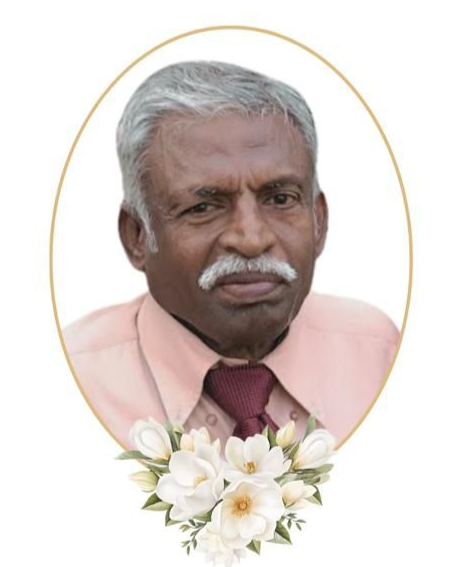
Mr. King Kristo Kumar—affectionately—and perhaps inevitably—known as KKK—was our tutor at Pandya House, Sainik School, Amaravathi Nagar, Tamil Nadu, back in 1973. We were in the seventh grade then.
He was a devout Christian, and he taught us hymns. The one I still remember is We Shall Overcome…
The Math Teacherwho Made Me write
While he was our tutor, he made me write essays on varied subjects -relentlessly. At the time, I hated every bit of it. Looking back, those exercises were likely the seed from which my writing skills grew during my years in the Indian Army and later, after migration to Canada. To say I hated writing then is an understatement. To say I am grateful now is equally true.
When were were in Grade 10 & 11, he taught us Calculus and explained the intricacies of the subject in very simple terms. I remember to this day him explaining integration and differentiation with the help of the volume and surface area of a sphere.
Volume of a cube = 4/3 πr3. Peel it like an onion and you will get smaller spheres up to it center – each with a surface area of 4 πr2. If you differentiate 4/3 πr3 with respect to r, you get 4 πr2.
Now put back each layer you peeled beginning with radius zero to r. That is integration. If you integrate 4 πr2 with the value of r from zero to r, you get 4/3 πr3.
The Sportsman
KKK was an outstanding sportsman. He coached us in basketball and played a fine game of tennis himself. In those days, he owned a steel tennis racket – a prized possession, a mark of distinction.
His Signature Arrival
Most teachers in the school campus rode bicycles. The exceptions were Mr. PT Cherian, Mr. AKR Varma – and KKK. His arrival was announced long before he appeared: the unmistakable sound of his Rajdoot motorcycle, a signature that preceded him everywhere. It was the sound of authority, of style, of a man who was, in every sense, a class apart.
Decades later, I remember that sound. And I remember the man who taught us that we shall overcome – not just in hymns, but in essays, in sports, and in life.
In 2004 I had a brain wave that a break from the Army would perhaps do me some good. I applied for a year’s study leave. The Indian Army did something rather brave: they granted me leave as requested. The mission? Head to Pune University, enroll in the M.Phil program for Defense Studies, and return with a sharper mind, hopefully well versed with matters of national security. Little did I know that I was walking into the enemy camp in civvies?
I arrived on campus as a seasoned “Realist.” For nearly two decades, my worldview was built on the sturdy foundation of hard power, deterrence, and the immutable logic of Si vis pacem, para bellum—if you want peace, prepare for war. I was a walking, talking embodiment of the military establishment, albeit a very academic one for that year.
Then, the curriculum happened.
An Officer and a Pacifist?
The irony began the moment I opened the syllabus for a mandatory core subject: Peace and Conflict Studies. There I was, a serving officer whose entire career was defined by the necessity of the military, sitting in a classroom where the prescribed reading list included a direct assault on my profession.
The book at the top of the list? “Peace: An Idea Whose Time Has Come” by Anatol Rapoport.
Imagine an executive from Kentucky FriedChicken being sent to attend a mandatory seminar on the spiritual wonders of strict vegetarianism. My plight was more or less the same. My employer—the Army—was literally footing the bill for me to study a text that argued, with devastating conviction, that militaries aren’t just unnecessary; they are a curse on global society. I was a “Realist” behind enemy lines, reading a manual on why my own uniform was really a part of the problem.
The Book: “Peace: An Idea Whose Time Has Come”
Anatol Rapoport doesn’t pull his punches. With a single burst from his “AK”, he brings down Clausewitz, Sun Tzu and Hegel, all in one go. In this work, he explores the evolution of war not as a glorious necessity of statecraft, but as a tragic, systemic failure.
Rapoport’s View: War as a Disease
To Rapoport, war is not a rational tool used by states to achieve goals. Instead, he presents a perspective that was, for a soldier, undoubtedly quite jarring:
The Pathological View: Rapoport argues that war is essentially an outcome of a “diseased human mind.” He views the institution of war as a social pathology – a chronic illness that has infected human civilization. To him, the “need” for war is a psychological glitch we haven’t yet outgrown. He hopes that the evolved human being will outgrow this “need”.
Abolition, Not Management: While my many Realist stalwarts call for “Conflict Management” or “Limited War,” Rapoport was calling for the total de-legitimization of War and the military. To him, peace isn’t just a ceasefire; it’s the total rescue of humanity from a long-standing mental disorder.
The Parasitic Cancer. Anatol Rapoport famously employed a biological metaphor to describe the global military apparatus as a malignant cancer on human society. His view wasn’t just a rhetorical insult; it was a systemic analysis of how military institutions function. Here are the core reasons behind his perspective:
Self-Perpetuation (The “Parasitic” Nature). Rapoport argued that like a cancer cell, the military-industrial complex has its own “genetic code” focused solely on growth and survival. It does not exist to solve a specific problem (like winning a final war) and then disappear. Instead, it creates conditions (fear, perceived threats) that ensure it continues to receive funding and power. It thrives even if it harms the “host” (society).
Diversion of Social Energy. In biology, a tumor consumes nutrients that the body needs for healthy organs. Rapoport saw the military in the same light. Massive amounts of wealth, scientific intelligence, and human labor are “sucked” into the military machine. This prevents society from addressing real existential threats like poverty, disease, and environmental collapse
Decoupling from Human Conscience. Rapoport criticized military strategists for treating war as a “game” or a mathematical problem. By removing the moral and human cost from the equation, the military functions like a soulless biological process. This “blind growth” occurs without regard for the pain or destruction it causes to the global social fabric.
The Autotelic Nature of Arms Races. The term autotelic describes an activity or experience that is an end in itself, rather than a means to an end.He viewed the arms race as a classic symptom of this cancer. Each “cell” (nation) grows its military because the neighboring “cell” is growing. Each military has a symbiotic relationship with the adversary’s military. One is entirely dependent on the other for its own survival. This leads to a state of metastasis where the growth becomes uncontrollable and serves no defensive purpose, eventually reaching a point where it can destroy the entire global organism (through nuclear war).
Host Destruction. The ultimate tragedy of a tumor is that by successfully killing its host, it also kills itself. Rapoport warned that the global military establishment is on a path to a Nuclear Holocaust. In its quest for “security” and dominance, it creates a world so dangerous that total annihilation becomes a statistical probability.
The Author: Who was Anatol Rapoport?
Anatol Rapoport (1911–2007) was a true polymath—a concert pianist, a mathematical psychologist, and a pioneer in Game Theory. Despite my hard core “Realist” foundations, it was hard not to respect a man who was nothing short of a genius. He had won a famous international tournament on cooperation with the simplest possible strategy: “Tit for Tat.” He was a co-founder of the Peace Research Institute in Oslo and spent a life time trying to apply rigorous academic logic to the often irrational pursuit of human conflict. The “After-Action” Report
So, was I converted? Did I trade my combat fatigues for a khadi kurta and a start a protest against the military industrial complex? Not exactly. I didn’t leave Pune University ready to dismantle the world’s arsenals in a hurry. However, the irony of the situation did its work. Being forced to study Rapoport’s “Peace” didn’t make me a pacifist, but it did make me a sort of “thinking Realist.” When I consider the military industrial complex of the USA, Rapoport’s perspective looks every bit real.
I realized that while hard power is a reality on our borders, viewing the world only through a gun sight is a form of tunnel vision. The Army sent me to Pune to learn about the defense of the nation from an academic perspective; ironically, I learned that truly defending it might involve understanding the mind of a man who thought my very existence was a symptom of a sick world. Surprisingly, even today Peace and conflict Studies is still part of the university’s core curriculum for Defense Studies. But I wonder if Anatol Rapoport is now on the reading list.
Looking back at 2004, I realize that the most dangerous thing in a conflict may not be the enemy’s hardware—it could just as well be the inability to see the world from a different angle. Even if that angle thinks you’re the problem!
Recently, my friend Veteran Colonel Mani Mohan Nehru shared an anecdote that beautifully captures the essence of sporting spirit – a story worth retelling.
In 1990, as a Captain instructor at the National Defence Academy (NDA), he was officiating a hockey match between Echo Squadron and Lima Squadron. The Echo team arrived punctually, ready to play. The Lima team, through no fault of its players, was delayed due to an administrative lapse. By the book, Captain Nehru could have declared Echo Squadron the winners by walkover on technical grounds. The Echo captain, seeing an opportunity, requested just that.
Captain Nehru looked at him and asked, “Your request is legitimate, but as a sportsperson, would you really want to win by a walkover?”
The young Cadet paused, reflected, and then replied, “Sir, we want to play and win.”
I complimented him on his sporting spirit, Colonel Nehru recalled. The match was played. Echo Squadron lost 2-0.
The next morning, Captain Nehru received an angry call from the Echo Squadron Commander – a Major demanding to know why his team had been illegally made to lose. Captain Nehru apologised, not for his decision, but for the Squadron Commander failing to commend the extraordinary sportsmanship displayed by the team captain – a young Cadet who chose the uncertainty of competition over the certainty of an unearned victory. The Squadron Commander, furious over lost championship points, retorted, “I will teach sporting spirit to my team captain!”
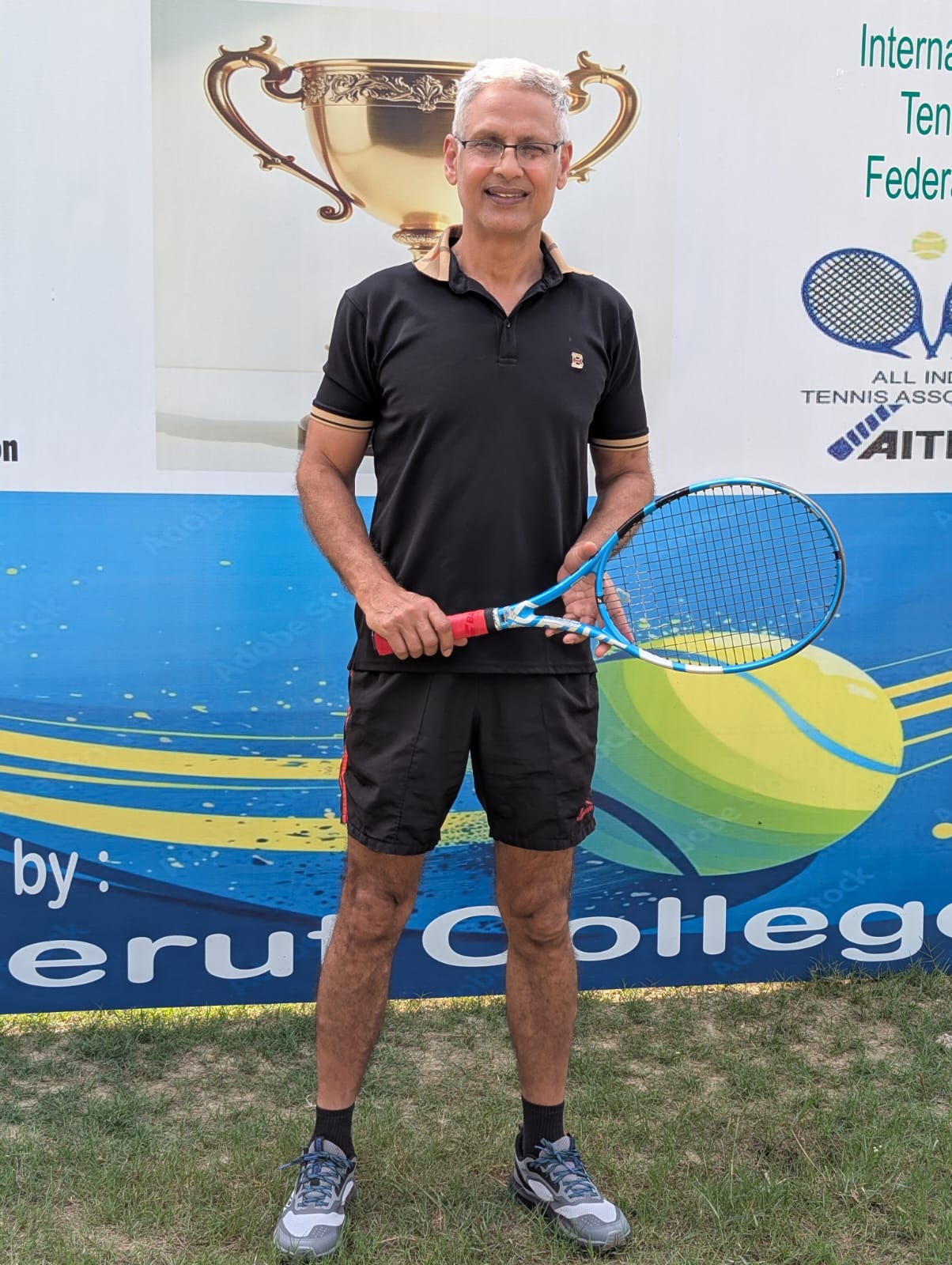
Years later, Colonel Nehru found himself in a strikingly similar position. In an Indian Tennis Federation match, he was scheduled to play his quarterfinal against Ajit, the nation’s number-one-ranked player. Ajit, however, was caught in an unforeseen traffic jam – a casualty of India’s enduring VIP culture. Legally, Colonel Nehru stood to win by walkover. But sporting spirit whispered otherwise. When the organisers asked if he would agree to a rescheduled time, he said yes. Like the Echo Squadron team, he chose to play. Like them, he lost.
The Essence of True Sport
Losing a match is an inherent part of any contest. Every game must have a victor and a vanquished. What truly distinguishes a competitor is how one accepts defeat—and that requires the grace of a true sportsperson. The distinction between a mere participant and a sportsperson is subtle but profound: it elevates the spirit of competition beyond mere athleticism into the realm of character.
A great sportsperson would rather win through spirited, competitive play than through an administrative default or an opponent’s misfortune. Victories achieved without a fight carry the uncomfortable weight of a hollow triumph. The scoreboard may register a win, but the heart knows it was never truly earned.
The Origin of Walkover
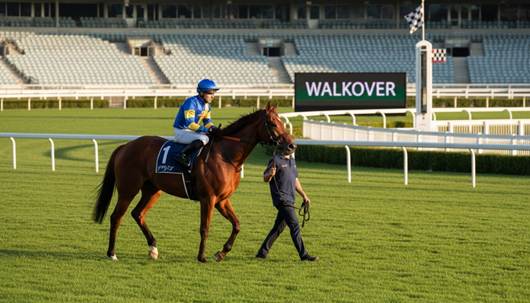
The term walkover traces its origins to the horse racing tracks of Britain. When only one horse remained in a race, it was required to walk over the course before being declared the winner. The imagery is telling – a solitary horse parading to victory without a single challenger in sight. It remains a fitting metaphor for how such situations unfold in sports today.
To the casual spectator, a walkover may appear a trivial administrative formality. But for those with a stake in the outcome, particularly bettors, it creates complications far beyond the playing field. (It must be noted that betting remains illegal in India, but the principle of unintended consequences applies universally.)
Ultimately, the true measure of sport lies not in victories handed over by circumstance, but in those forged through effort, skill, and the worthy challenge of an opponent. A true sportsperson understands this – and competes not just to win, but to earn the right to do so.
Famous Walkovers in Sporting History
Tennis (The Most Common Arena)
2022 Wimbledon Men’s Semifinal: Nick Kyrgios advanced to the final after Rafael Nadal withdrew due to an abdominal tear—the first men’s Wimbledon semifinal or final walkover since 1931.
2020 Western & Southern Open Final: Victoria Azarenka was declared champion after Naomi Osaka withdrew with a hamstring injury.
2020 French Open: Novak Djokovic received a walkover in the fourth round when opponent Pablo Carreno Busta withdrew.
2014 ATP World Tour Finals: Novak Djokovic was awarded the championship title after Roger Federer withdrew before the final with a back injury.
1987 French Open Final: Ivan Lendl won the title after Mats Wilander withdrew.
1974 Davis Cup Final: India refused to play South Africa in protest against its apartheid policies, resulting in a walkover win for South Africa.
1966 Australian Open Final: Margaret Court won the title via walkover against Nancy Richey—the only final-round walkover in women’s Grand Slam history.
Notably, Novak Djokovic holds the record for advancing at Grand Slams via walkovers or retirements, having done so 16 times as of the 2024 US Open.
Horse Racing
1980 Woodward Stakes: The legendary Spectacular Bid won a major Grade 1 stakes race by walkover. As the sole remaining entrant, he had to walk over the course to officially claim victory.
18th Century – Eclipse: The dominant 18th-century racehorse won roughly half of his eighteen races by walkover – no other owners dared risk their horses against him.
Other Sports
1973 Chile vs. USSR FIFA World Cup Qualifier: When the Soviet Union refused to play in Chile following the 1973 coup d’état, FIFA awarded a 2–0 victory to Chile. The Chilean team still took the field and scored an “unopposed goal” to fulfill the formality.
1972 World Chess Championship: Bobby Fischer forfeited the second game of his match against Boris Spassky, handing a win to Spassky.
1910 All-Ireland Football Final: Louth was awarded the championship after Kerry refused to travel to Dublin over a dispute concerning train fares.
1908 Olympic 400m Final: After American John Carpenter was disqualified for blocking, teammates John Taylor and William Robbins refused to race in protest. British runner Wyndham Halswelle ran the race alone—the only walkover in Olympic history.
Conclusion
The stories of Echo Squadron’s captain and Colonel Nehru’s tennis match remind us that sporting spirit is not about winning at all costs—it is about how one plays the game, how one accepts defeat, and how one values the contest itself. In an age increasingly driven by results and rankings, these small acts of integrity shine brightly, reminding us that the truest victories are those we earn, not those handed to us.
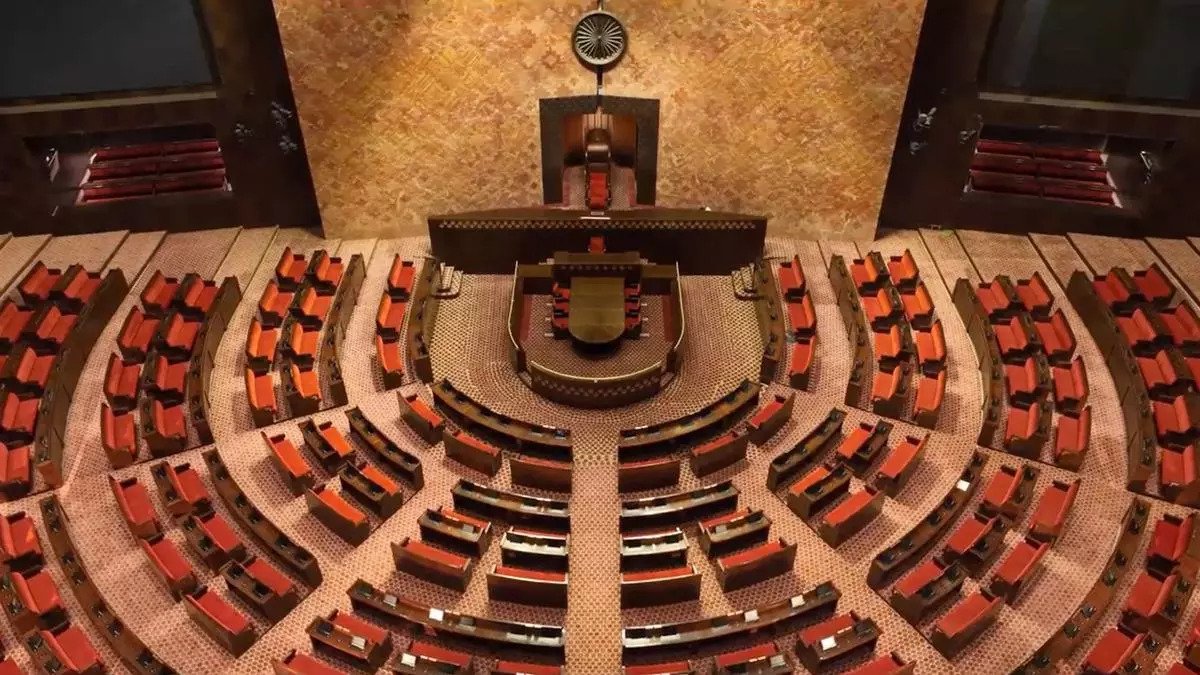
In the grand theater of democracy, we often measure progress by the laws we pass. We celebrate “Yes” votes as milestones of evolution. But in a vibrant, breathing democracy, the “No” vote is not just a sign of friction—it is a vital sign of health. When a parliament rejects a bill, it isn’t a failure of the system; it is the system working exactly as intended.
The Logic of the Negative
A “No” vote is as much an expression of the will of the people as a “Yes.” In a representative system, members of parliament are not mere rubber stamps for the executive; they are the filters through which the collective concerns, anxieties, and wisdom of the citizenry pass. If a bill fails, it signifies that the proposed law did not meet the threshold of consensus required to govern a diverse nation. It reflects a protective mechanism: the refusal to be governed by a law that representatives deem flawed, premature, or unjust.
The Judiciary’s Stance: Assent is Not Optional, the Will is Sovereign
Recent legal battles in India have brought the role of the Governor into sharp focus. The Supreme Court of India has clarified that a Governor cannot “sit on a bill” indefinitely as it is the “will of the people” expressed through its representatives. By extension, this logic reinforces the sanctity of the legislative process itself. If the passage of a bill is the “will of the people” that a Governor must respect, then the rejection of a bill by the House is equally a definitive “will of the people” that the executive must bow to. The House’s right to say “No” is the ultimate check against executive overreach.
Turning Points: When Dissent Changed History
History shows that when the Indian Parliament said “No,” it didn’t just stop a bill; it forced a better future into existence.
The Privy Purses Rejection (1970): A Lesson in Constitutional Integrity In 1970, the bill to abolish the privy purses of former royals failed in the Rajya Sabha very narrowly.
The Follow-up: When the government tried to bypass this “No” by issuing an executive order, the Supreme Court struck it down, ruling that the executive cannot override the legislature.
The Change: This forced a national debate on the “basic structure” of the Constitution and led to the 26th Amendment in 1971. The original “No” ensured that such a massive social shift happened through proper constitutional pathways rather than executive whim, preserving the honor of the democratic process.
The Panchayati Raj & Nagar Palika Bills (1989): From Rejection to Revolution The 64th and 65th were defeated in the Rajya Sabha because they were seen as a central “power grab” that bypassed state governments.
The Follow-up: The defeat forced the government to abandon its top-down approach and engage in genuine federal consultation.
The Change: This refined the legislation into the landmark 73rd and 74th Amendments of 1992. Today, these are the bedrock of local self-governance, providing constitutional status to over 250,000 local bodies. The 1989 “No” prevented a flawed, centralized version of local rule from becoming law, leading to a far more robust and inclusive system.
The POTA Rejection (2002): Safeguarding Civil Liberties When the Rajya Sabha rejected the Prevention of Terrorism Bill (POTA), it marked a rare moment where a joint session of Parliament had to be called.
The Follow-up: The rejection cast a spotlight on the bill’s potential for abuse, specifically regarding the admissibility of confession to the police as evidence.
The Change: While the bill eventually passed in a joint session, the initial rejection created a national record of dissent that laid the groundwork for its repeal in 2004. The parliamentary “No” ensured that the trade-off between security and liberty remained at the center of the national consciousness, preventing the normalization of draconian powers.
The Vajpayee Confidence Vote (1999): The Weight of a Single Vote In one of the most dramatic moments in Indian parliamentary history, the Atal Bihari Vajpayee government fell on April 17, 1999, by a margin of just one vote after the AIADMK withdrew support.
The Follow-up: The razor-thin defeat forced a mid-term election, but it also solidified Vajpayee’s image as a dignified statesman who respected the democratic mandate without resorting to “horse-trading.”
The Change: This “No” ultimately led to a stronger mandate in the 1999 General Elections enabling Vajpayee to become the first non-Congress Prime Minister to complete a full five-year term. It proved that even a single vote of dissent can reset a nation’s political course toward long-term stability.
The 131stAmendment Bill: Rejection as a Prelude to Refinement
The recent defeat of the 131st Amendment Bill serves as a contemporary master class in the nuances of parliamentary dissent. This “No” vote was not necessarily a rejection of the bill’s core intent, but rather a strategic push-back against its structural presentation. By linking the amendment to two other bills, the legislative package became an “all-or-nothing” proposition that the opposition found impossible to digest. This entanglement masked the individual merits of the 131st Amendment, proving that the process of lawmaking is just as critical as the purpose.
However, this rejection should be viewed with a sense of optimism. History has shown us that when landmark bills are defeated due to technical or procedural linkages, they often return in a more evolved and transparent form. This “No” acts as a constructive pause, signaling that for such a significant change to take root, it must stand on its own merit. We can certainly look forward to a positive prognosis, ultimately leading to a more robust and consensus-driven law.
Conclusion: Diversity in Dissent
A democracy where every bill passes unanimously is not a democracy; it is a monologue. A “No” vote forces a government to negotiate, to refine, and – most importantly – to listen. It ensures that the minority is heard and that the majority remains accountable. The next time you see a “No” vote on the news, don’t see it as a deadlock. See it as a heartbeat—the sound of democracy that refuses to remain silent
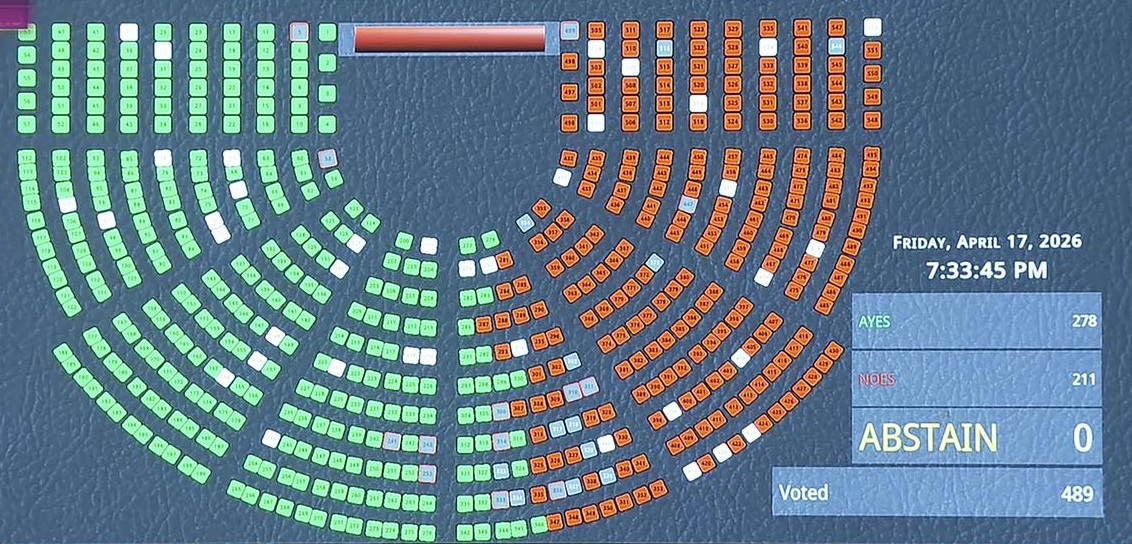
The Indian Constitution, once described by constitutional experts as a seamless web, is currently facing its most significant structural stress test since the Emergency. The dramatic events of April 17, 2026, where the Constitution (131st Amendment) Bill suffered a historic defeat in the Lok Sabha, serves as a distressing prelude to this crisis. By failing to secure a two-thirds majority, the bill—which sought to link Women’s Reservation to a massive population-based delimitation exercise—exposed a deep-seated rift in the Indian polity. This defeat was not merely a legislative hurdle; it was a loud assertion of Federalist push- back against what many perceive as a drift toward over-centralisation.
The Quasi-Federal Framework
To understand these tensions, one must look at the unique architecture of the Indian state. The Constitution establishes a Quasi-Federal system—a term popularised by K.C. Wheare. Unlike the Coming Together federalism of the United States, India is a Holding Together federation. The word federal does not figure anywhere in the constitution. It is simply a union of states, indestructible union of destructible states. It possesses a strong centralising bias (Art. 356, a single judiciary, and a unified civil service) designed to maintain national integrity, yet it grants states significant autonomy in local governance. The founding fathers had found this a sound and yet a delicate balance which is now being threatened by a phenomenon known as the Performance Paradox.
The Performance Paradox and the Southern Grievance
The performance Paradox refers to a scenario where states are politically and fiscally penalised for achieving the very developmental goals set by the Union. Since the 1970s, the Southern states—Tamil Nadu, Kerala, Karnataka, Andhra Pradesh, and Telangana—have aggressively implemented national mandates in:
Population Control: Achieving Replacement Level Fertility (TFR) decades ahead of the North.
Human Development: Leading in literacy, life expectancy, and infant mortality reduction.
Economic Productivity: Contributing nearly 30% of India’s GDP despite hosting only 20% of its population.
The Paradox: Because the North’s population grew at a much higher rate, a strictly population-based political and fiscal system would cause a power and money swing away from the performing South toward the lagging North.
Fiscal Fault lines: The 16th Finance Commission
The 16th Finance Commission (16th FC) is the current battlefield for fiscal federalism. The Southern states argue that the Divisible Pool of taxes is being distributed unfairly.
The Contribution: For every ₹100 that Tamil Nadu or Karnataka contributes to the Central tax pool, they historically receive back only about ₹29 to ₹40. Conversely, states like Bihar and Uttar Pradesh often receive upwards of ₹200 to ₹700 for every 100-rupee contributed. This is a key concern.
The 16th FC Challenge: The South is demanding that the Commission move away from using the 2011 Census as the primary weight for Need. They are pushing for:
Greater weight for Tax Effort (rewarding states that collect taxes efficiently).
Higher weight for Demographic Performance (rewarding states with lower fertility rates).
A Capping Mechanism to ensure that no state’s share of the tax pool drops by more than a certain percentage in a single cycle.
If the 16th FC ignores these performance metrics, the South fears a fiscal drain that will cripple their ability to maintain their high-quality social infrastructure.
The Representational Crisis: Delimitation
The most explosive challenge to the Constitution is the Delimitation Exercise. Under the current One Person, One Vote principle, the redrawing of constituencies based on the 2011 or 2026 Census would fundamentally alter the character of the Lok Sabha.
The Math of Dilution: Projections suggest that in an expanded House of 850 seats, the Hindi-speaking North could gain enough seats to form a government without a single seat from the South or the Northeast. Northern states are projected to gain over 200 seats, while the South would gain only about 65, widening the absolute gap between the two regions. In percentage terms the North’s share increases by roughly 5% while the South’s share decreases by roughly 3%.
The Southern View: This is seen as a violation of the Federal Contract. Southern leaders argue that Numerical Democracy (majority rules) is colliding with Constitutional Democracy (protection of regional identities).
The 131st Amendment Fallout: The defeat of the bill in April 2026 was specifically triggered by the government’s attempt to use delimitation as a prerequisite for Women’s Reservation. The Opposition successfully framed this as a Trojan Horse that would have functionally disenfranchised the Southern states under the guise of gender equality.
Conclusion
The Indian Constitution is navigating a Triple Threat: fiscal disparity, demographic divergence, and representational imbalance. The historic defeat of the 131st Amendment perhaps signals that the era of consensus-free centralising reforms is over.
For the Union to remain cohesive, the Indian state must evolve from a Quasi-Federal structure into a Cooperative Federal structure. This requires a 16th Finance Commission that rewards efficiency and a Delimitation formula that protects regional voices – perhaps through a weighted representation or a more powerful Rajya Sabha. Without these safeguards, the Performance Paradox risks turning India’s success stories into its sources of instability.
Back in 1986, I was the Senior Subaltern – the Big Brother to all the Subalterns of the Regiment. The Senior Subaltern as the term suggests is the senior most subaltern or the junior most Captain. He generally must have a PhD in mischief management. He functions as a high-stakes professional translator, skillfully turning the Colonel’s terrifying roars into gentle suggestions that the junior officers can understand and survive.
He is a walking paradox who can enforce iron-clad discipline on the parade ground while simultaneously serving as the mastermind behind every legendary prank in the Officers’ Mess. To the juniors, he is a scary mentor who knows all their secrets; to the seniors, he is the only one who can keep the young pups from accidentally saluting a tree or a lamp post or generally keeping them away from one miscellaneous chaos or the other. Ultimately, he is the regimental glue – one with the heavy responsibility of keeping the youngsters out of harm’s way from the Adjutant’s crosshairs.
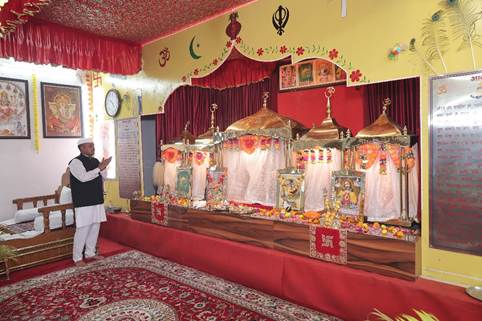
One morning, after the Mandir Parade, a delegation of young officers led by the legendary (late) Captain Pratap Singh, MVC, approached me. They looked like they had just cracked a secret code.
“Sir,” Pratap began, “Our boys say you’re a pro at the Sanskrit aartis and shlokas, though a christian from Kerala. We stood right behind you today to see if you were actually reciting or moving your lips like a Bollywood extra. You were surprisingly good….. But we have one question.”
Then came the trap.
The Ritual Showdown
For those who haven’t been to a Mandir Parade, it ends with a classic call-and-response with the Pandit (the Regiment Chaplain):
Pandit: प्राणियों में Praniyon Mein… (Among all living beings…)
Response: सदभावाना हो Sadbhavana Ho! (May there be goodwill!)
Pandit: विश्व का Vishw Ka (For the universe)
Response: कल्याण हो Kalyan Ho (may there be Well-being)
Pandit: भारत माता की Bharat Mata Ki (To Mother India)
Response: जय हो Jai Ho (Let there be Victory)
The Unexpected Answer
Lieutenant Gulshan Rai Kaushik stepped forward with a smirk. “Sir, what exactly did you say when the Pandit called out ‘Praniyon Mein’?”
Without missing a beat, I replied, “Sambhavana Ho!”
Kaushik froze. “Sir, its Sadbhavana (Goodwill), not Sambhavana.”
I kept a straight face. “Look, Kaushik, for a Mallu like me, it’s Sambhavana. If you don’t believe me, go ask any Malayali soldier in the Regiment. It’s a regional variation.“
Now, what I didn’t tell him was that in Malayalam, Sambhavana (സംഭാവന ) means a donation or contribution. So, while everyone else was praying for universal goodwill, I was essentially praying for a Divine Donation.
Fire Support from Our Second-in-Command (2IC)
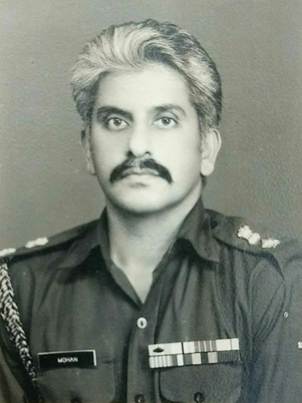
Just then, our 2IC, Major Mohan Krishnan, walked toward us. He was a certified war hero from the 1971 Battle of Jarpal – a man who had stared down enemy tanks and was mentioned in dispatches. He directed the artillery fire, fighting alongside Major Hoshiyar Singh PVC of 3 Grenadiers as the Observation Post Officer. He was also, conveniently, a fellow Mallu, a hard core variety.
“Don’t take my word for it,” I told the youngsters. “Ask our 2IC.”
The juniors gathered their courage. “Sir,” Kaushik asked, “what is the correct response to ‘Praniyon Mein’?“
Major Krishnan didn’t even blink. He barked out: “SAMBHAVANA HO!”
The Verdict
The junior officers were stunned. Two Mallu officers, one a war veteran and the other a Senior Subaltern, both confidently shouting for sambhavna in the middle of a prayer. Now sambhavna in Hindi meant possibility or probability which in the context of the prayer made little sense to us. They couldn’t possibly guess our intended prayer for divine donations. They began to wonder if there was some secret Malayali Sanskrit they hadn’t been taught by their parents.
The Major walked away coolly. I followed him with a smirk.
The best part? The Pandit’s next line: Vishwa ka Kalyan Ho (May the world have well-being). In Malayalam, Kalyanam(കല്യാണം) meansMarriage. So, while the rest of the Indian Army was praying for world peace, we Mallus were basically chanting for a World Wedding Festival, (for which divine donations were initially requested.)
The young officers never questioned my Sanskrit again. To this day, I think they’re still wondering if we were genuinely confused – or if the Mallu Mafia has its own hilarious way of keeping faith.
Ultimately, I realised that leadership isn’t about being technically flawless in every prayer; it’s about the unspoken loyalty that connects a Regiment. Because at the end of the day, a soldier doesn’t follow a dictionary – they follow a leader who speaks their language, even if that language is a hilarious Mallu version of the truth.
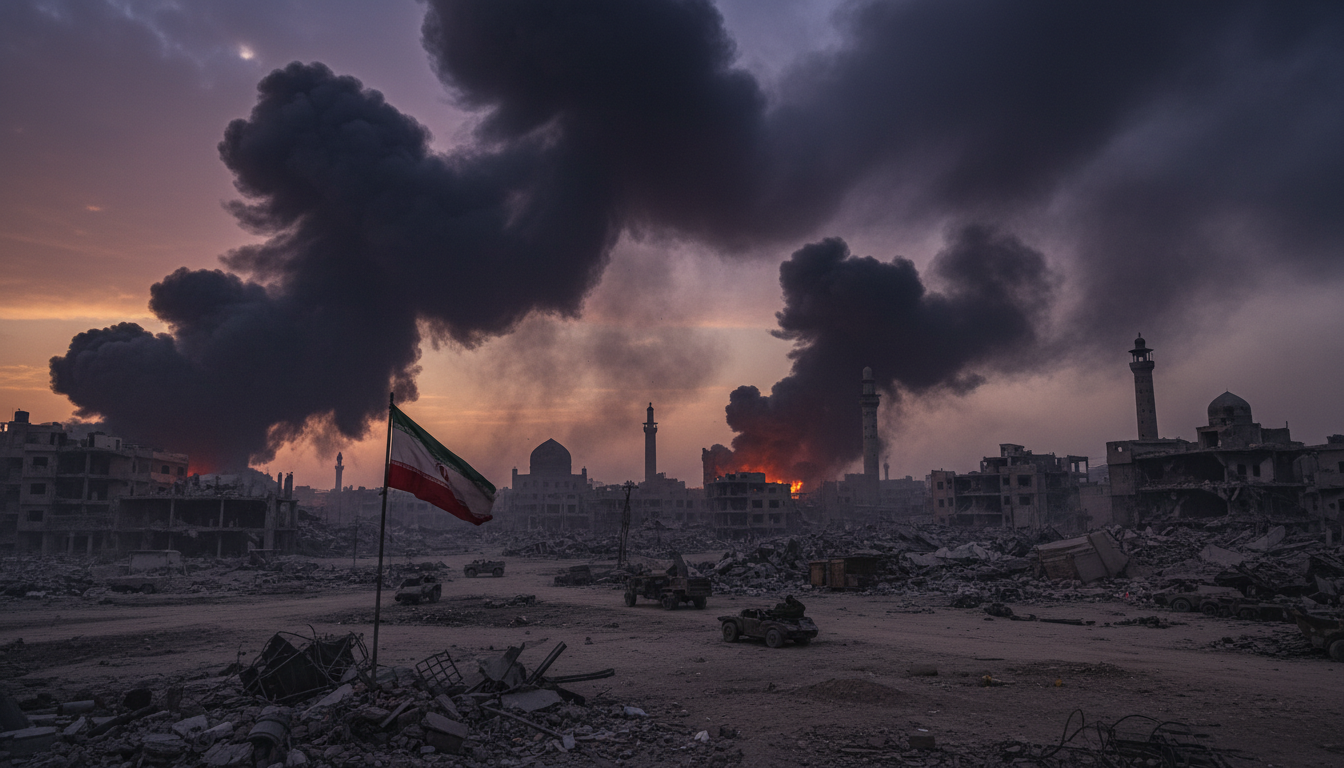
To understand the strategic paradox of Operation Epic Fury, we can juxtapose the empirical data of Iran’s physical devastation into the broader narrative of its psychological and political survival. Who lost or won and whether the conflict achieved anything more than mindless devastation is a million dollar question. The history of modern warfare is littered with victors who mastered the battlefield only to find themselves paralyzed by the peace that followed. As of now Operation Epic Fury stands as the ultimate testament to this phenomenon. While the United States has functionally dismantled Iran’s conventional military capacity, the stalled diplomacy in Islamabad suggests that military obliteration has failed to translate into strategic submission.
The scale of the beating endured by the Islamic Republic is historically unprecedented for a 38-day campaign. According to IHS Jane’s Defense and satellite analysis from the International Institute for Strategic Studies (IISS), the kinetic degradation of Iran’s sovereignty is almost total. Neutral observers estimate that 90% of the Iranian regular Navy and approximately 55% of the IRGC’s fast-attack fleet now rest at the bottom of the Persian Gulf. Iran’s Integrated Air Defense System (IADS), once a formidable layered shield of S-300 and Khordad-15 batteries, has been degraded by over 80%, leaving the nation’s skies effectively under the management of Allied air power.
Furthermore, the bleeding extends deep into the industrial heart of the regime. Combined data from European intelligence agencies and neutral maritime monitors suggest that 85% of Iran’s defense industrial base—specifically the facilities responsible for the Shahed drone series and the Fateh ballistic missile families—has been reduced to rubble. With over 2,000 command-and-control nodes neutralized, the Iranian military is currently a headless giant, possessing the mass of a nation but the coordination of a ghost.
Yet, despite being bombed back to a pre-industrial state, the Great Wall of the Iranian state remains standing. Like a heavyweight boxer who has lost every round and is bleeding from every pore, Tehran refuses to throw in the towel. This defiance is not born of military strength, but of a calculated asymmetric resilience. By mining the Strait of Hormuz and retreating into a deep state of guerrilla governance, the regime has ensured that the U.S. cannot claim a total victory. The very fact that U.S. Vice President J.D. Vance found himself at a negotiating table in Islamabad—rather than accepting a formal surrender—proves that Iran has achieved at least a defensive draw. Many analysts continue to argue that the much talked about US rescue operation was indeed a delightful smokescreen for a strategic operation aimed at seizing the enriched uranium located at the Isfahan facility. The fact that this operation failed implies that not all the operational objectives of the US have been achieved. Before the Operation commenced the Strait of Hormuz was well and truly open. For over six weeks now the maritime traffic through the strait is just a trickle, causing severe economic migraine to the global community. These two facets further reinforce the defensive draw hypothesis.
In this light, the net effect of Operation Epic Fury is a stalemate of extremes. The U.S. has achieved most of its kinetic objectives: the missile factories are dust and the nuclear infrastructure is severely compromised. However, the political objective—a fundamental change in the regime’s behavior or its collapse—remains elusive. Iran has traded its physical infrastructure for a hardened, singular narrative of survival. As U.S. destroyers now are in the close vicinity of the treacherous, mine-laden waters of the Gulf, they do so not as conquerors, but as co-custodians of a fragile ceasefire. Iran may be broken, but as long as it refuses to concede, it has not truly lost. The hurricane has passed, the wall is scarred and crumbling, but it has not yet fallen.
Back in 2005 I was posted at Baramulla, where the security of the military station was one of my responsibilities. In a region where the line between peace and insurgency is razor-thin, my days were defined by a restless vigilance. You learn to expect the unexpected in the valley, but nothing – no tactical briefing, no combat experience, no seasoned intuition – could have prepared me for the raw, celestial terror of that morning.
My mission was to visit and familiarise myself with the Kayian Bowl, a sensitive deployment right on the Line of Control (LOC.) I set off from Baramulla in a staff car, eventually reaching the high-altitude pass of Tutmari Gali (TMG) at an altitude nearly 11000 feet. As we began our descent from the pass, the world opened up into a view that was nothing short of jaw-dropping. The Kayian Bowl lay beneath us like a hidden emerald kingdom, framed by the jagged, snow-dusted peaks of the Himalayas that seemed to pierce the very fabric of the sky with a majestic beauty. The Lipa valley lying across the LOC looked equally enchanting. It was a vista of deceptive serenity – vast, silent, and breathtakingly beautiful—a reminder of why this land is both loved and fought over.
At TMG, I swapped into an Army Gypsy, with a young Major taking the wheel to navigate the rugged mud tracks. We were a small convoy of three vehicles; behind us, a protection party sat armed to the teeth, their eyes scanning the dense tree line for any sign of hostility. In these ancient forests, a sudden crack of a branch usually signaled an ambush. We were prepared for a firefight. We were not prepared for the earth waiting to betray us.
Suddenly, the world went mad.
At first, it looked like a freak gale. The towering pines began to sway with a violent, rhythmic intensity that defied logic. “It’s a sudden storm!” I shouted over the rising roar.
“No, Sir,” the Major yelled back, his voice tight with a realisation that chilled my blood. “It’s an earthquake! Run for the clearing!”
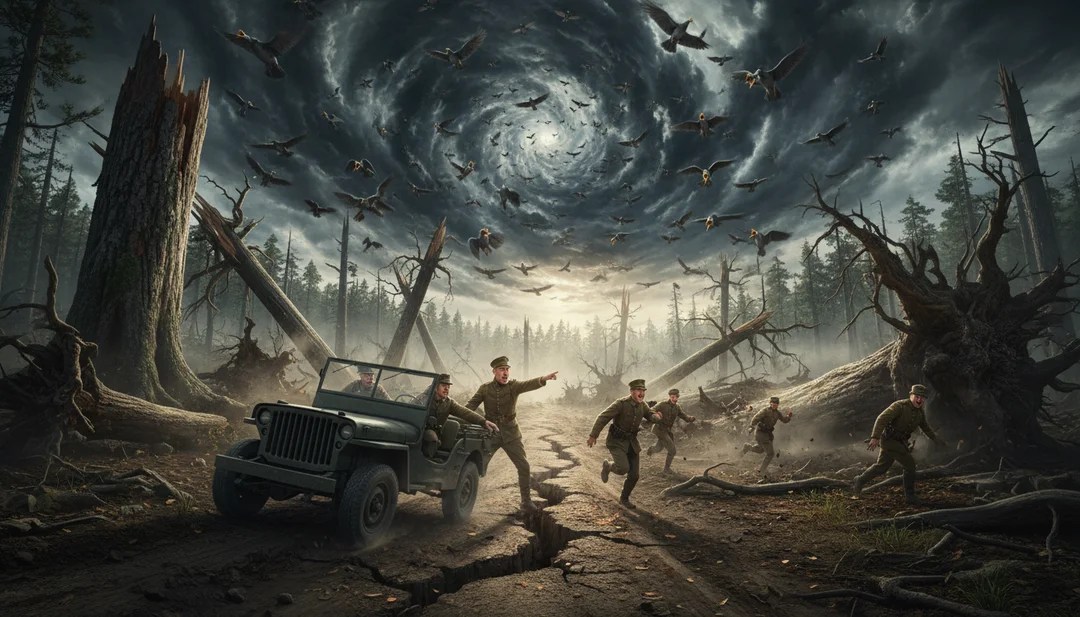
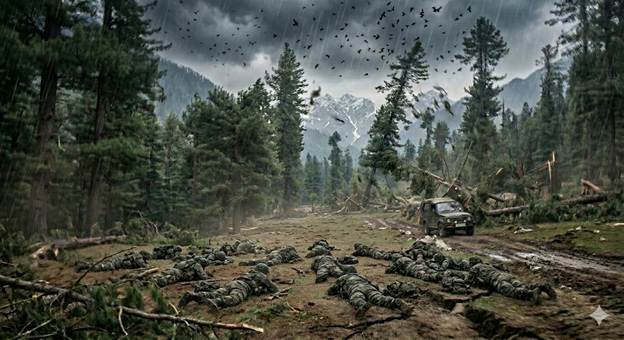
He jammed on the brakes, the tyres skidding as the very track beneath us began to ripple like a carpet being shaken. We scrambled out, and the sensory assault became a nightmare. The forest wasn’t just moving; it was screaming. Thousands of birds took flight in a panicked, black cloud, their shrieks creating a deafening, discordant cacophony. Then came the sound of the giants falling – massive, deeply rooted trees snapped like matchsticks, hitting the ground with bone-jarring thuds that competed with the underground growl of the shifting tectonic plates.
In that moment, decades of military tactics evaporated. We weren’t soldiers or commanders; we were fragile organisms clinging to a dying planet. We huddled together in the center of a small clearing – a dozen men, shoulder to shoulder, stripped of rank and held together by a primal, shivering terror.
“Hug the ground!” I roared, throwing myself down.
Lying face-down, I felt the pounding of my heart and the trembling of the earth merge into an eerie resonance that vibrated through every pore of my being. It wasn’t just shaking; it was a violent heaving. The ground felt liquid, bucking and surging in a relentless, rhythmic assault that seemed to last an eternity. I remember the terrifying sight of the soil itself breathing, cracks snaking through the mud as we pinned ourselves to the earth. Would the cracks open up and just swallow us whole?
When the first tremors finally petered out, a heavy, suffocating silence fell – only to be shattered moments later by the aftershocks. Each time the earth shuddered anew, the terror felt sharper, more exhausting, and a cruel reminder of our helplessness.
After what felt like the longest ten minutes of my life, the earth finally went still, though the animals continued their frantic, wild cries. The transition back to soldiering was jarring. The Major, shaking off the paralysis of the moment, immediately began checking personnel and gear. We were lucky. We were all there. But the track we had just traveled told a grim story—a massive tree lay across our path just fifty yards from where we had stopped. Had we stayed in the vehicles for seconds longer, we would have been crushed into the mud.
Leaving a party with the vehicles, we trekked the rest of the way to the Battalion Headquarters on foot. When we arrived, the Commanding Officer (CO) greeted me with a crisp salute and a calm smile, as if the mountains hadn’t just tried to tear themselves apart.
“Tea, Sir?” he asked, his voice steady.
Over a hot cup of tea, he gave the status report: one collapsed bunker, two injured boys, and a mule. He spoke with the courage of a man used to hardship, but as I held my cup, I could still feel the phantom vibrations in my bones. We had survived the harrowing unpredictability of the LOC for eternity, but that day, we learned the ultimate truth: the greatest threat isn’t always the enemy in the woods – it could be the very ground beneath your feet.
Looking toward the West, I watched the blue sky churn into a muddy brown, as though an invisible hand had shaken a jar of silt into a basin of clear water. The rising dust told me at once that the epicenter was somewhere over Pakistan Occupied Kashmir (POK,) yet I remained oblivious to the chilling reality: we were standing a mere 20km from the heart of the upheaval. We were also unaware of the human tragedy that was unfolding all around us. In his characteristic business as usual tone, the CO commenced his briefing for me. Halfway into the briefing, there was a fresh wave of tremors and we hit the ground. When it was over we were back on our feet. “May I have your permission to resume sir”? Military etiquette. Both of us must have been a bit crazy. Resume he did and completed his briefing ten minutes later.
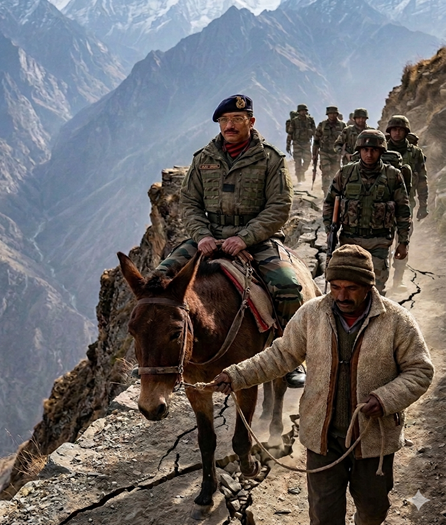
All through the briefing, I was contemplating the return to TMG. The track was blocked by fallen trees. As though reading my thoughts, he said “Sir, for your return to TMG, I can give you one mule, the rest of your party will have to trek along.” And so it was. A little later, I bid good bye and we commenced our climb back to TMG.
The return journey to TMG was a three-and-a-half-hour climb into a world that felt fundamentally broken. Perched atop a mule – a sturdy, stoic creature led by a civilian porter – I looked out over a landscape transformed by violence, not of man, but of the nature itself. Behind me followed a small party of half a dozen soldiers, my trusted protection party. On any other day, our eyes would have been scanning the ridgelines for the glint of a barrel or the movement of a shadow; but today, the threat of terrorism had vanished, replaced by a much older, more primal fear. We weren’t looking for insurgents; we were watching the sky and the very ground beneath the mule’s hooves.
The terrain was a graveyard of geology. Around every bend, the hillsides bore the jagged white scars of fresh landslides, and the mule track was frequently bisected by deep, sinister fissures – cracks in the earth that looked like lightning bolts frozen in soil. There were stretches where the path narrowed to a mere ribbon of dirt, and the mule walked with a terrifying, casual grace barely inches from the edge of a precipice. From my vantage point, the drop was a dizzying plunge into bottomless depths. One misstep, one loose stone, and the journey would end in a silent, terrifying dive into nothingness.
Nature seemed to have a rhythmic, punishing pulse. Every thirty minutes or so, the mountain shivered with a fresh aftershock. It was uncanny; seconds before the tremors hit, the mule froze and let out a snort two, sensing the vibration before it reached us. Our soldiers instantly dropped into a lying position, seeking safety in the dirt, while I remained stuck atop the animal – exposed and conspicuous, a sore thumb in a landscape that was trying to shake us off. We watched in breathless silence as boulders, dislodged by the quakes, thundered down distant slopes. It felt as though the Almighty was shielding us with an invisible hand, guiding the rocks away from our narrow path, yet the terror remained a constant cold companion.
The mental pressure of the precipice eventually broke my nerve. I decided to trust my own aging and tired feet than the hooves of even the most sure-footed beast. I dismounted and walked the rest of the way, feeling the tremors through my boots. Then, a surreal touch of the modern world pierced the desolation. Through a technological miracle of military communication patching, a phone call from Delhi crackled to life over our radio’s handset. It was a General, a stalwart former CO of our Regiment, his voice booming with impeccable radio telephony. He was calling because my wife in Pune was in a state of panic; the TV news was a montage of destruction, and I had been unreachable. Speaking into the handset amidst the dust and the shifting rocks, I told him we were safe, under the watchful eye of some Super Power. Minutes later the good news travelled to Pune and comforted a family in panic. We finally limped into TMG at 3:00 PM, weary survivors of a trek across mountains that refused to stay still.
The aftershocks even as far as in Baramulla continued for many days until we became sort of immune to them and stopped reacting. As the dust finally settled and the tremors grew faint, the true scale of the catastrophe began to emerge from the haze. What we had experienced on that lonely mountain track was just a fraction of a larger, more distressing tragedy. The earthquake of October 8, 2005, had not recognised the LOC; it had carved a path of devastation through the mountains, leaving a trail of death and ruins on both sides. Populated towns on either side were reduced to rubble. Villages that had stood for centuries were reduced to piles of stone and timber, and the vibrant life of the hills was replaced by a hollow, haunting silence. Thousands had perished in an instant, and for those who survived, their livelihoods and homes had vanished into the very earth that once sustained them. Just one piece of statistics. Nearly 75000 people perished, mostly in POK.
In the days that followed, our role shifted from the vigilance of soldiers to the compassion of rescuers. The Army was drawn into one of the most complex and grueling disaster relief operations in history. We found ourselves navigating fractured terrain to reach isolated hamlets, airlifting supplies to the stranded, and sharing what little we had with those who had lost everything. The uniforms that usually symbolized the fight against terror and infiltration now stood for hope. Amidst the immense loss and displacement, we witnessed the resilience of the human spirit, but the scars on the landscape and in the hearts of the people would remain long after the mountains finally stopped shaking.
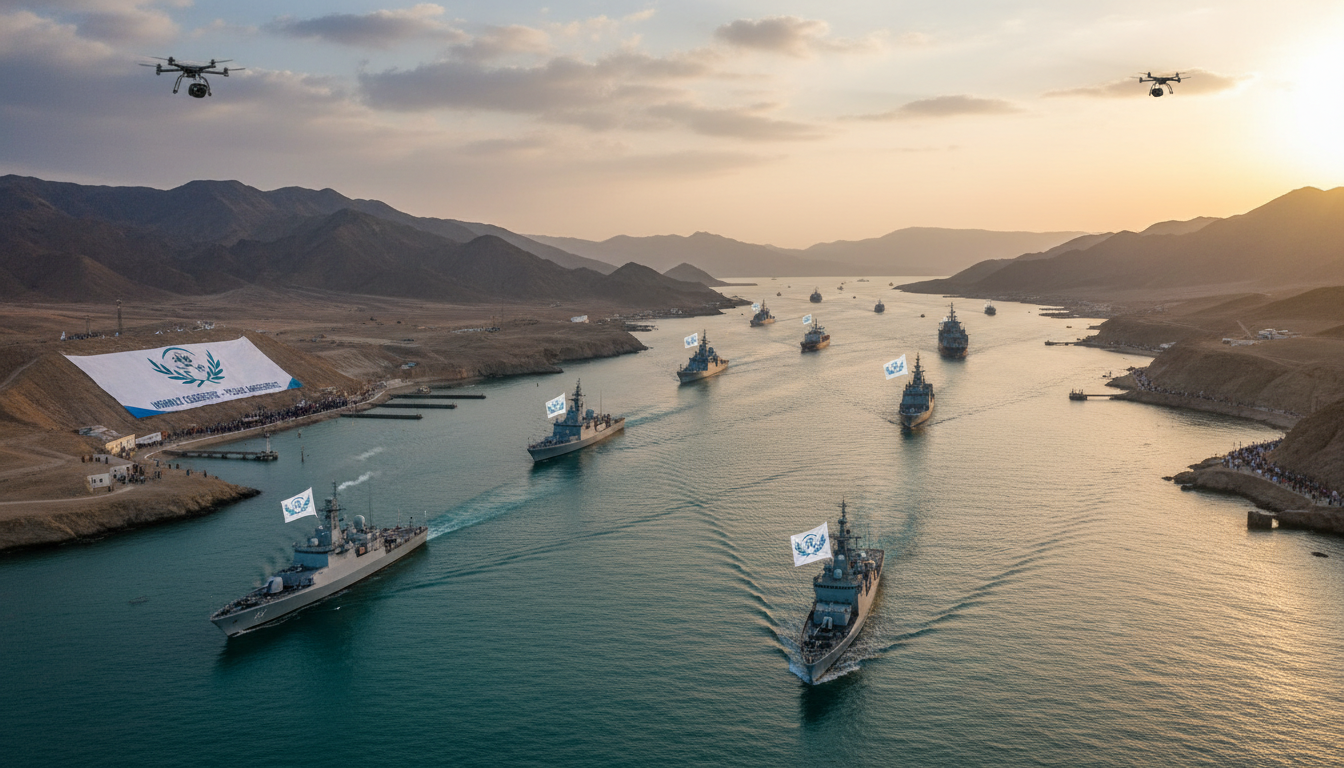
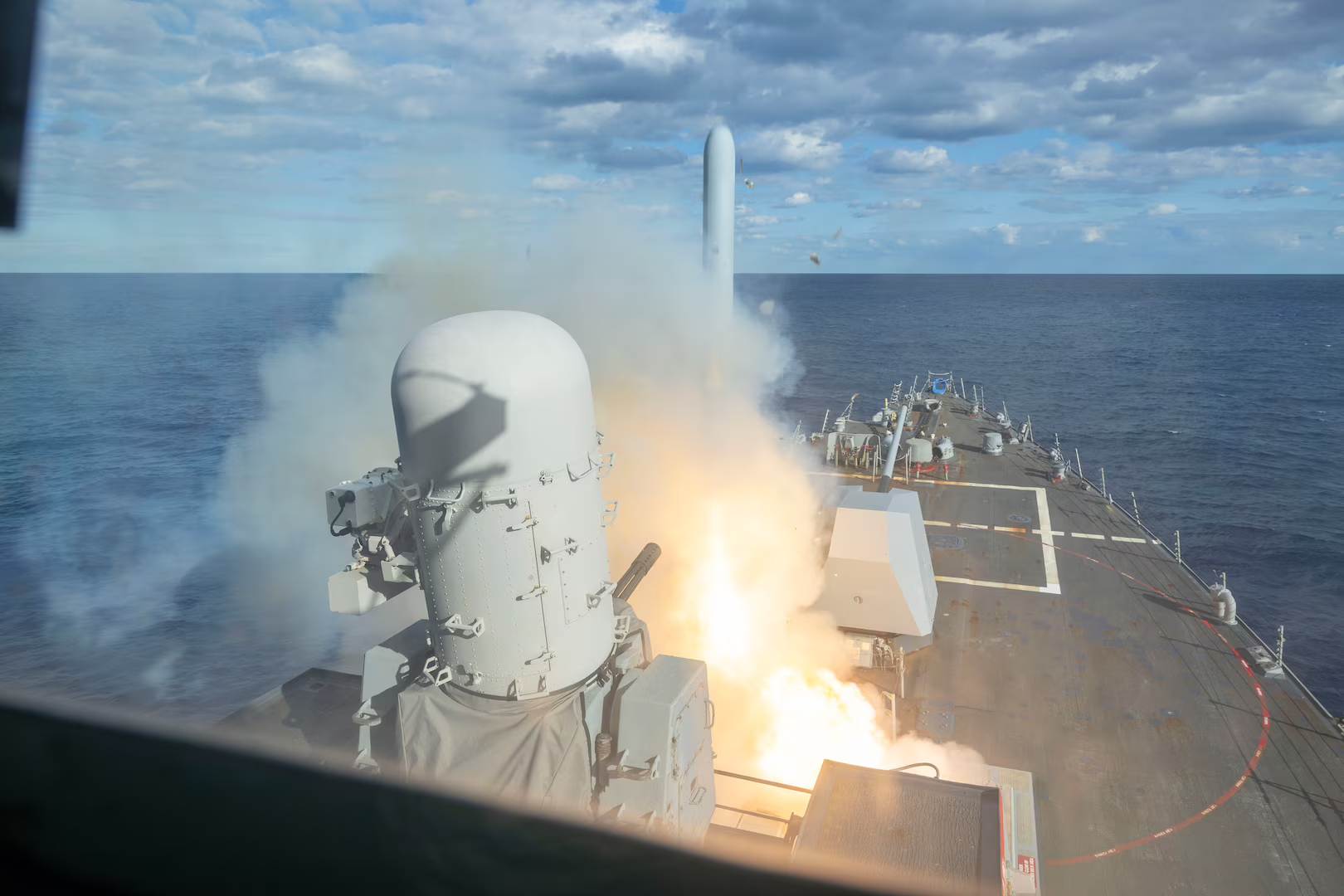
The chronicles of military history are awash with peace periods used not for de-escalation, but for the strategic repositioning of offensive assets that would be too vulnerable during active hostilities. As of 11 April 2026, the transit of U.S. guided-missile destroyers into the Persian Gulf under the mantle of a humanitarian mine-clearing mission appears to be a classic war college case of this maneuver. While the Islamabad talks superficially aim for a diplomatic exit to the conflict, the physical movement of the USS Frank E. Petersen Jr. and USS Michael Murphy into the heart of the Gulf suggests that the United States is not preparing for peace, but may well be instead maximizing it’s configuration for the failure of talks and more lethal phase of Operation Epic Fury.
A ceasefire, by definition, is a standstill agreement intended to freeze the tactical map to allow for negotiation. By moving high-value combatants through the Strait of Hormuz and into what Iran considers its territorial waters the U.S. has fundamentally altered the military status quo. If the introduction of front-line warships into a contested combat zone during a cessation of hostilities does not constitute a violation, the term ceasefire loses all functional meaning and will need to be redefined. It is a confrontational act of naval encroachment that weaponizes the diplomatic process to bypass the very A2/AD (Anti-Access/Area Denial) barriers that kept the U.S. fleet at bay during the height of the kinetic exchange.
The skepticism surrounding the mine-clearing narrative is justified. Heavy destroyers are not the tools of maritime sanitation; they are the tools of power projection. The reality is far more clinical: the U.S. is possibly shaping the battlefield. By establishing a permanent naval presence inside the Gulf now, they get rid of the bottleneck risk of the Strait of Hormuz for the future. These warships serve as the vanguard for a much larger logistical build-up. With the Iranian fast boat threat suppressed by the ceasefire terms and the coastal missile batteries momentarily silenced by diplomacy, the U.S. is free to conduct the hydrographic surveys and coastal reconnaissance necessary for terrestrial operations. It is also a high stake method of testing Iranian resolve.
The true objective likely lies in the preparation for full-scale amphibious operations. An invasion of the Iranian littoral requires more than just air superiority; it requires a sanitised Gulf where amphibious assault ships (LHAs) and transport docks (LPDs) can operate without the incessant threat of a closed door behind them. By this maneuver now, the U.S. is in essence pre-staging the heavy lifters. The current destroyers are the scouts ensuring that when the ceasefire inevitably collapses – or is deemed expired by Washington – the heavy iron of the Marine Expeditionary Units will already be in position to strike the Iranian mainland.
In conclusion, the U.S. naval movement is possibly a classic example of strategic opportunism. By taking cover under the ceasefire, the U.S. has achieved through a peaceful transit what may have been far more dangerous during active war. This is not the behavior of a nation seeking a durable exit; it is the behavior of a superpower positioning its pieces for a final, knockout blow on the terrestrial plane. Operation Epic Fury is not ending; it is possibly just reloading. What we cannot figure out now is whether the ceasefire is entirely an eyewash or some serious effort towards peace during which the pawns are being moved quite unfairly, to prepare for the contingency of failure of talks.
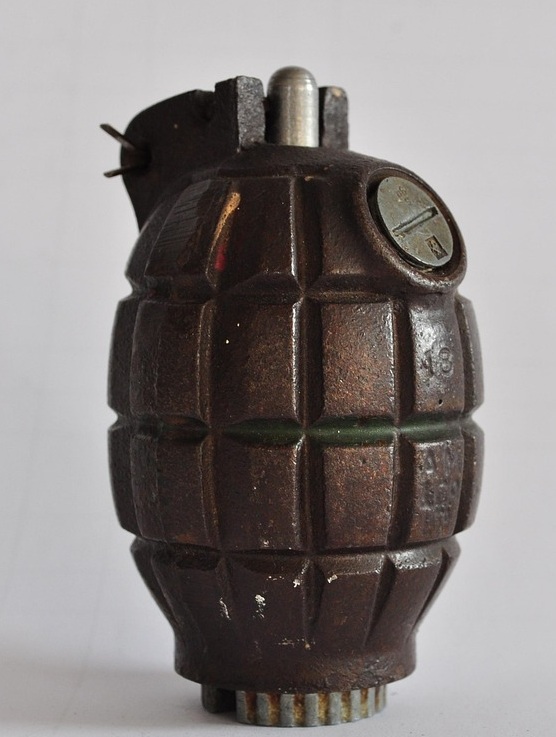
The year was 1985. Our regiment – 75 Medium Regiment (Basantar River) – was stationed in Delhi, and we were allotted the grenade firing range at the Rajputana Rifles Centre in Delhi Cantonment for routine practice. As a young Lieutenant, I was assigned Officer-in-Charge Practice by our Commanding Officer, Colonel Mahaveer Singh. When I undertook the task I had no clue that I would almost terrorise the President of India. My partner in crime and my second-in-command for this task, Subedar Amarjit; he was barely educated by conventional standards, but an out and out soldier to the core. He is a key personality in this little story and so a bit more about him and his background, for a better perspective on the story.
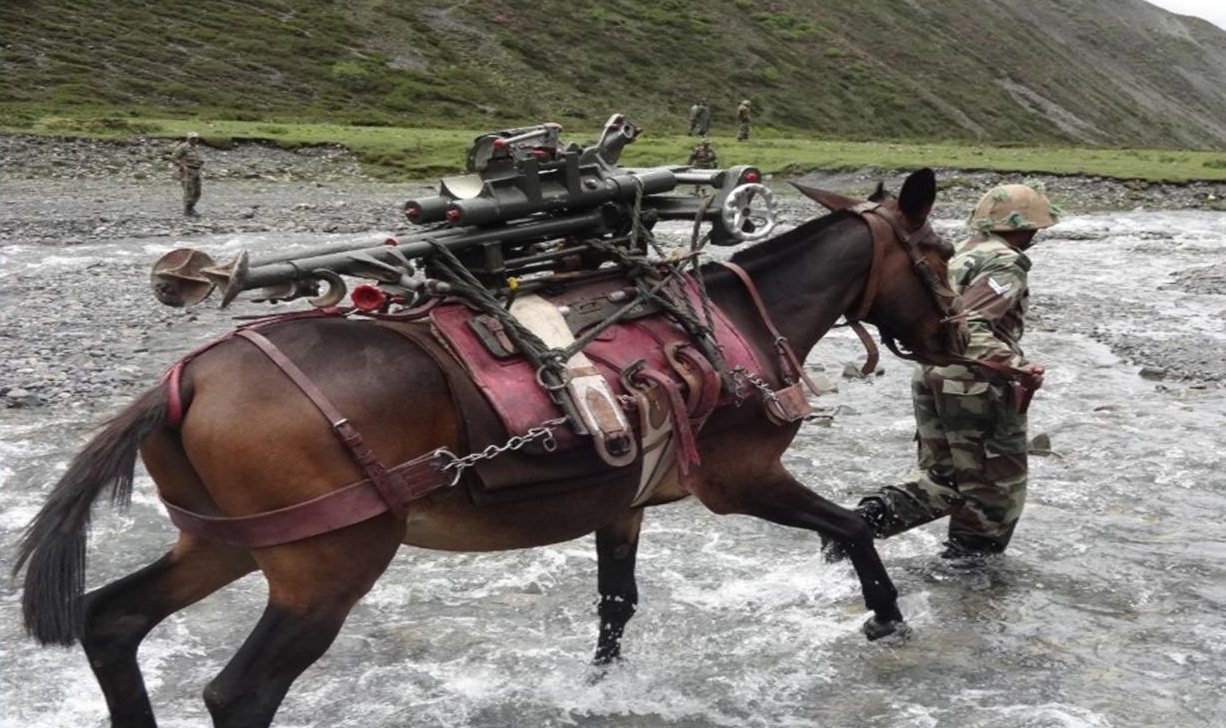
Subedar Amarjit had joined the Indian Army as a Mule Driver, a role that demanded resilience, resourcefulness, and an uncanny bond with his animal. It’s obvious that education wasn’t a particularly important requirement for this critical task. His academic career, it seemed had peaked somewhere around learning to draw a straight line and geometric shapes. When the Army phased out mules from Packed Artillery Regiments, he transitioned to become a Gunner, and a pretty good one at that.
Packed Artillery units were specialised units designed for mountain warfare, where guns or mortars were broken down into loads carried by mules or soldiers. These Regiments provided critical fire support in some of India’s toughest terrains. A mule driver, Muleteer or Muleskinner, was more than a handler – he was a caretaker, a trainer, and a partner to his mule. The term skinner came from their ability to outsmart the famously stubborn but intelligent mules into obedience. Mules could carry nearly a third of their body weight, transporting vital equipment where vehicles could not reach. Though hardier than horses, they could panic under fire, requiring careful battle inoculation – tying them near the guns during practice firings to accustom them to the noise. The bond between driver and mule was vital and profound; on postings, drivers were known to weep at parting. And in true soldierly fashion, they communicated their commands with a rich vocabulary of profanity.
Subedar Amarjit, now commanding men, retained that colourful flair and sometimes forgot the difference between men and mules. His vocabulary was about 20% routine military and about 80% that would make a taxi driver blush. He carried a little notebook which was a collection of hieroglyphics and sketches that looked like cave paintings.
Subedar Amarjit embodied a paradox of leadership that he developed from his days as a Mule Driver – a heart full of love for his soldiers, yet an unyielding belief that excellence demanded tough training. He lived by a simple, time-worn creed – जवान और पीतल एक सामान है – जितना रगडोगे उतना चमकेगा (a soldier and brass are alike: the more you rub them, the more they shine.) He knew that polish comes only from pressure, that discipline without affection breeds resentment, but affection without discipline breeds complacency. Under his watch, every soldier was both cherished and challenged, buffed by relentless drills until they gleamed with the unmistakable lustre of professional pride.
The Practice and the Problem
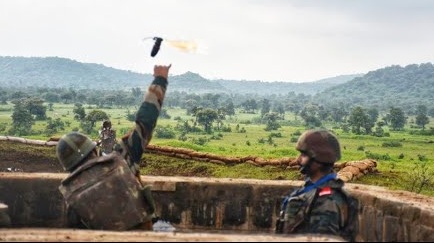
The grenade practice proceeded as planned – until it didn’t. At the end of the session, we were left with four blinds: grenades that had failed to detonate. I had heard the four-second fuse burn, but no explosion followed. The grenades were over two decades old, relics from another era and perhaps better off in a museum.
We waited an hour as dusk settled over the range. Then Subedar Amarjit, with the confidence of a man who had outsmarted mules and the mountains, walked in, picked up the four grenades, and placed them in a pile atop a piece of plastic explosive with a detonator attached. I hesitated, uncertain. He was not, quite cocksure.
“The fuse has gone off,” he declared, punctuating his certainty with a string of Punjabi expletives. “It cannot explode now.”
BOOM the pile went off with a very satisfying blast and a cloud of smoke. We dusted our hands and headed back to the Regiment for dinner, quite convinced about our super efficiency. I reported the day’s events – and the disposal method – to our Adjutant, Captain RB Gowardhan – now a Veteran Colonel. Pretty much everything seemed routine.
The Heavens Come Down
At around 10 PM, my colouful dreams with a Marilynn Monroe look alike were shattered by Captain Gowardhan shaking me up with uncontrolled violence. “What have you done?” he demanded. I had no idea of what the panic was about.
We drove to Delhi Area Headquarters, where the top brass had gathered with very grave faces in the wake of some unknown calamity. I recounted the day’s events in detail: the practice, the blinds and their disposal. As I spoke, the tension on the faces around me slowly eased. By midnight we were dismissed, my military reputation still intact (barely). I still couldn’t make much of the commotion.
What Had Happened?
That day, Giani Zail Singh, then President of India, was returning from the Delhi Airport to his residence. His convoy passed along the road adjacent to the grenade range – apparently at the precise moment that we detonated the blinds. In the aftermath of Mrs. Indira Gandhi’s assassination, Delhi was quite a jumpy place. The explosion triggered an immediate security alert. Delhi Police just didn’t go berserk, they did a whole Bollywood sequence possibly looking for a terrorist cell.
All’s Well That Ends Well
Fortunately, the explanation was straightforward, and Delhi police reached a laboured conclusion that there were no terrorists after all. But the incident left an indelible lesson: in the military, timing is everything. A routine disposal, a coincidental presidential convoy, and a moment of panic – all could have spiralled into a major incident. Subedar Amarjit’s confidence was rooted in experience, but the universe, as it often does, had its own timing.
Decades later, I remember that night not for the fear it caused, but for the reminder that even the most routine actions can have unexpected consequences. And that sometimes, the difference between a crisis and a story is sheer, blind luck.I wonder if Subedar Amarjit ever realised how close he and I were to becoming a national headline. He probably went back to his notebook and drew a little picture of a cake that looked like Charminar.
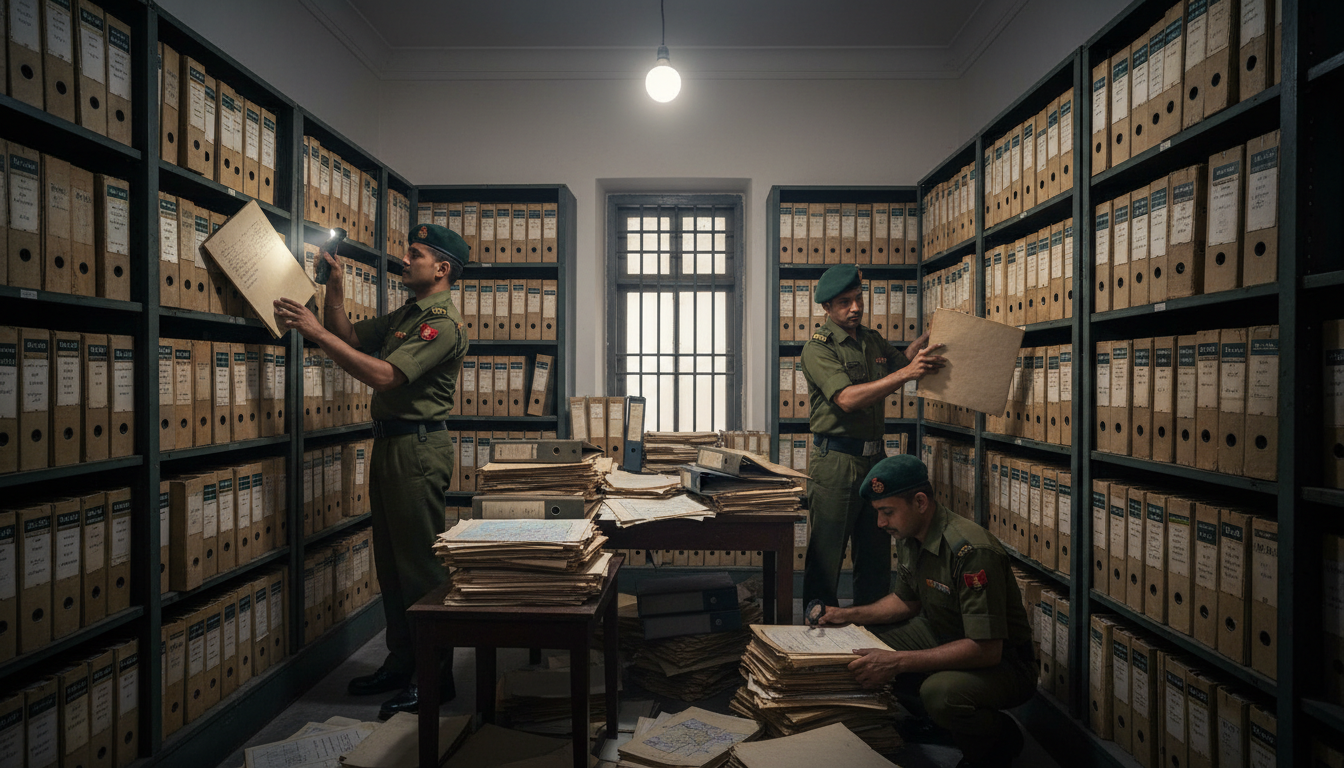
In 1991, as a young and relatively innocent Major, I was posted to the Army HQ Military Secretary’s (MS) Branch. Our section in South Block dealt with the Promotion Boards for Majors and Lt Colonels. Essentially, our job was to retrieve Confidential Report Dossiers (CRDs) from the sections that filed and held them—curiously referred to as Libraries, though they contained more dust than literature—and perform the secretarial alchemy required for selection boards.
In the MS Branch, the hierarchy of the CRD is sacred: the Officer signs for it, but the Clerk holds it. It is a beautiful system of plausible deniability that works perfectly—until the music stops and you’re the one left holding the baby.
One morning, the music stopped. A CRD had vanished and I had signed for it!!
Now, in MS Branch lore, a CRD is never lost. To suggest such a thing is heresy, punishable by professional excommunication. It is merely misplaced – much like the Holy Grail, the city of Atlantis, or a politician’s sense of ethics. But as weeks turned into months, my misplaced file began to look suspiciously like a permanent disappearance. It had simply evaporated into the thick, bureaucratic ether of the Army HQ.
Over the next few months, our section – four officers and half a dozen clerks – transformed into high-stakes archaeological explorers. Long before COVID-19 made N95 masks a fashion statement, we were pioneers of the lifestyle. Clad in masks to survive generations of silt and the ancient plague bugs that had merrily colonised the dossiers, we swung into unenviable action.
In those days, the Indian Army was still suspicious of futuristic gadgets like vacuum cleaners. Instead, mask clad, we spent our afternoons bent double, scouring the dark crevices behind steel almirahs. We searched places so obscure I’m fairly certain we discovered a lost platoon from the ’71 war, but of the CRD, there was no sign. The drill continued indefinitely, a slow-motion descent into madness.
Six months in, the Additional MS – the Big Boss – decided he’d had enough of our archeological adventures. A Court of Inquiry (C of I) was being drafted. In the Army, a C of I is usually a formal invitation to your own professional funeral.
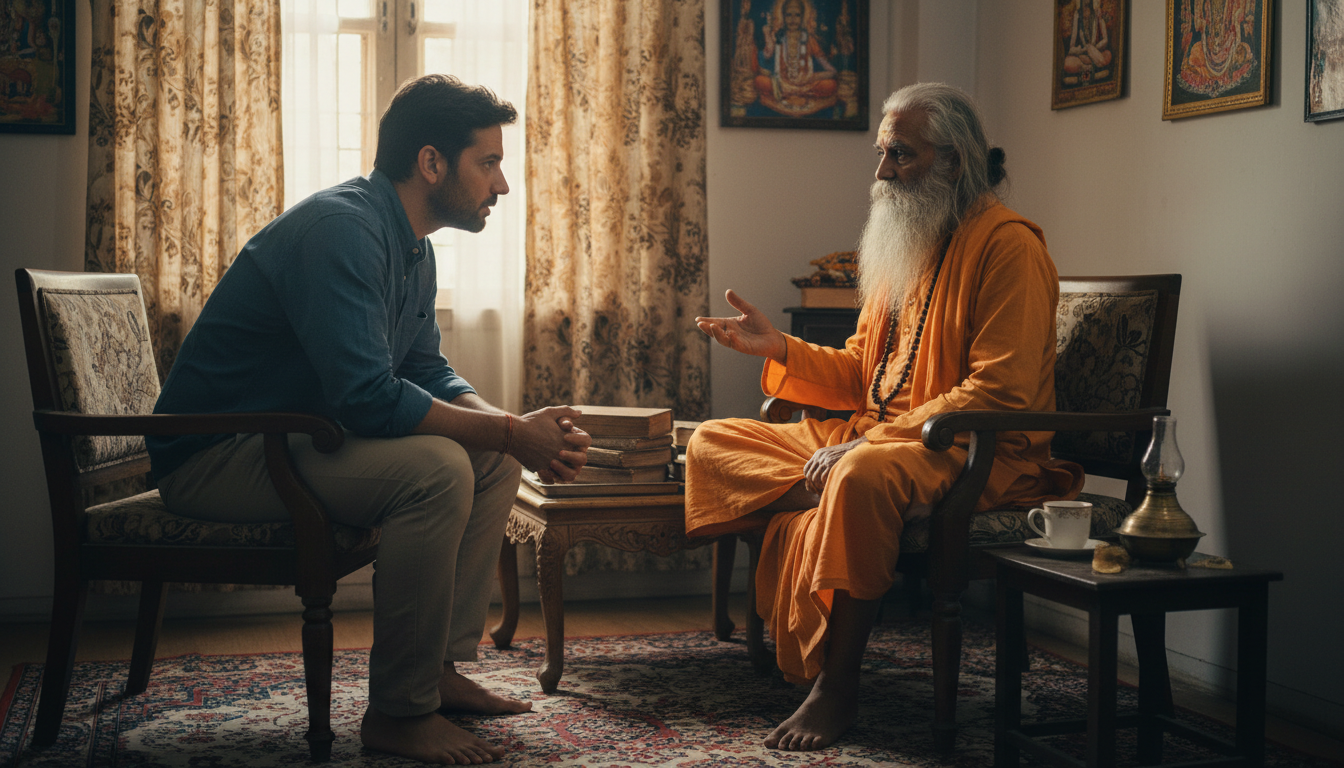
Just as the gallows were being readied, a colleague leaned over his desk, looking like a man pushing contraband. “Go to Green Park,” he hissed. “There’s a Baba. He’s occult. He sees things. He specialises in exactly this kind of disaster.”
Now Azad Sameer the irreverent, did not believe in mystics. But when your career is flashing before your eyes, you don’t ask for a peer-reviewed second opinion. So it was the proverbial straw. The next day, with the unofficial (and slightly embarrassed) blessings of my superiors, I slipped into civvies and headed to Green Park.
The waiting room was packed with people whose lives had also apparently fallen behind a steel cupboard. There were even a few souls looking for relatives lost at the Kumbh Mela, Bollywood-style. Finally, I was ushered into a dimly lit room where a fragile old man sat in a lotus position atop a chair. He looked as though he hadn’t seen direct sunlight since the British Raj.
He didn’t even open his eyes. “Fauji ho?” (Are you a soldier?)
I looked at my posture – ramrod straight – and my haircut, which was a 0.5mm tribute to one of our commanding officers, a man who viewed any hair longer than a mustard seed as a personal insult. It wasn’t exactly a Sherlock Holmes-level deduction. “Yes,” I croaked.
“Document ka pata chahiye?” (Looking for a document?)
I nearly fell over. This was better than any Intelligence Bureau brief I’d ever read. He proceeded to describe the folder with the terrifying precision of a man who had personally filed it. He knew the shape, the size, and the exact shade of Bureaucratic Buff on the cover.
Then came the invoice. “One hundred rupees,” he whispered.
At 1991 prices, this wasn’t pocket change, but I’d have paid in gold bars to get that albatross off my neck. He took the note, vanished into a back room to consult the celestial archives, and returned with the most frustratingly vague SITREP in military history: “Don’t worry. It will be found very soon. Come back and tell me when you find it.”
I walked out feeling like I’d been pickpocketed by the divine. “Very soon?” I wanted GPS coordinates! I wanted a room number in South Block or Sena Bhavan! I returned to South Block, mentally rehearsing my minimum damage statement before the C of I. Alas! There was no way out.
But as I neared the office, I saw my colleague – the one who had suggested the Baba – performing a frantic, one-man bhangra in the corridor.
“Mil gaya! Mil gaya! CRD mil gaya!” (We got the CRD)
The document had been found. Accidentally. That very morning, in the basement of South Block, at the bottom of a stack of old covers destined for reuse. We had searched that exact pile five times in three months. Logic had no seat at this table.
Before I could process the miracle, I was summoned by the Deputy MS, a man who rarely smiled and possessed a naturally sinister aura. I walked in, spine stiff, ready for the Even though it’s found, you’re a liability lecture. The room was silent. On his vast, polished desk sat the missing CRD. Beside it sat a beautiful, amber-filled bottle of Peter Scott whisky. He looked at the file, then at me, then back at the bottle. He didn’t ask about the Baba. He didn’t ask about the search. He simply pushed the bottle toward the edge of the desk.
“Go get drunk,” he growled.
I didn’t need a second order. I took the bottle and beat a hasty retreat, realising that in the Indian Army, some things are governed by the MS Branch, some by the Gods, and the very best things are governed by a well-timed bottle of whisky.
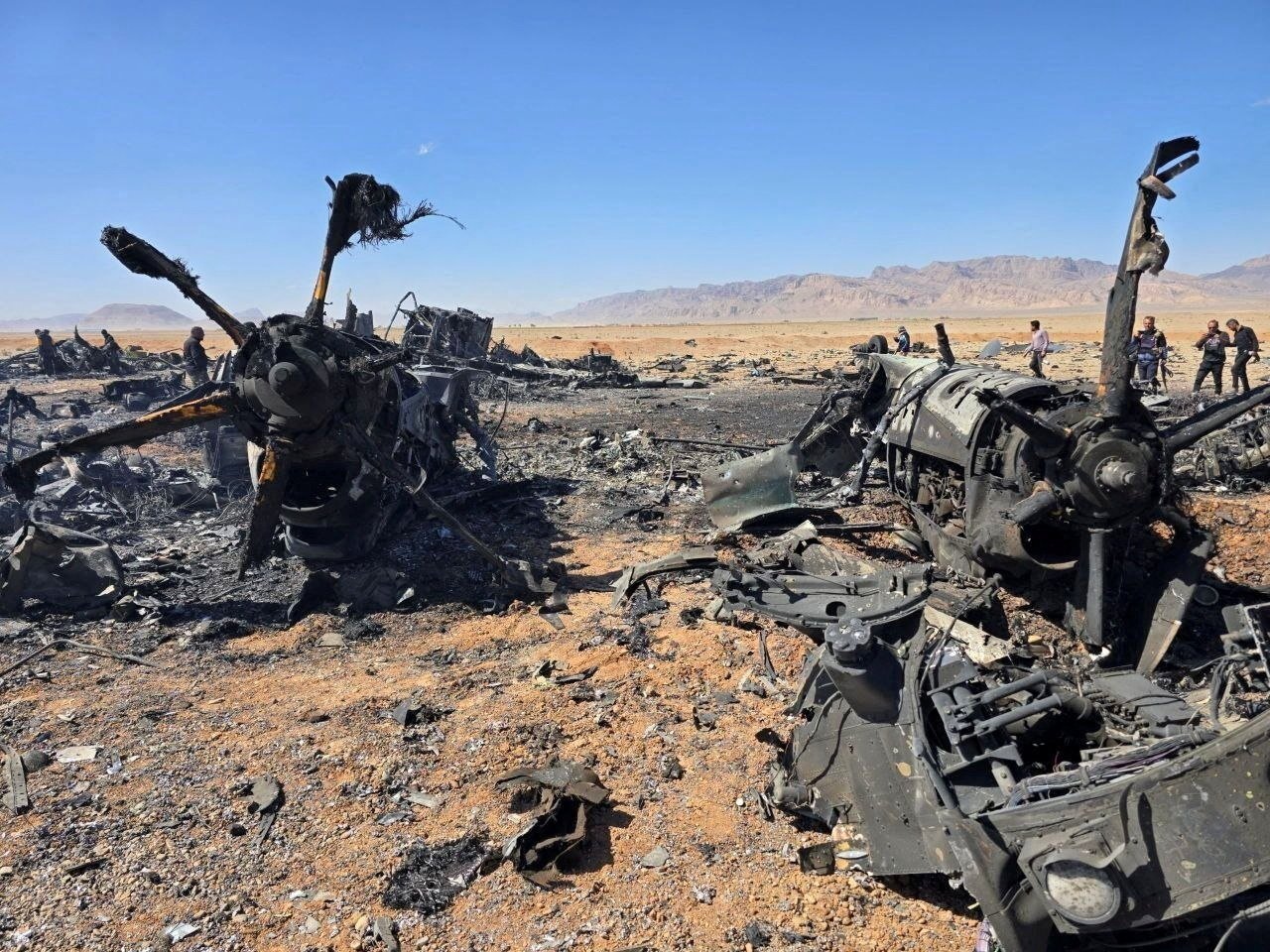
According to the official Pentagon narrative, the rescue of DUDE 44 B was the most devoted act of camaraderie in human history. After an F-15E Strike Eagle went down on April 1, 2026, the pilot (DUDE44A) was whisked away within hours. However, the Weapons System Officer (WSO: DUDE44B) took a bit longer, leading to a mission that can only be described as a tactical overkill. To save one man, the U.S. launched an armada of 155 aircraft and landed two $100-million MC-130J Commando II transports on a wet, sandy farm field. It’s a touching story, provided you don’t look at a map—or a balance sheet.
Holes in the Narrative
In the world of standard Search and Rescue, you send a couple of agile HH-60W Jolly Green II helicopters or maybe a CV-22B Osprey. You do not land two massive, 70-ton fixed-wing transports in the mud 100 miles away from the guy you’re looking for. Using an MC-130J to rescue a single airman is like using a cruise ship to pick up a stranded jet-skier: it’s flashy, but it’s a logistical nightmare that puts hundreds more people at risk. By putting 96 personnel on the ground in the heart of Iran, the Pentagon didn’t just plan a rescue; they accidentally invited a hundred people to a potential hostage crisis party.
The geography of the mission is where the official story really starts to sink – much like those MC-130Js in the Isfahan mud. The landing site was uncomfortably close to Iran’s primary underground nuclear facilities and missile infrastructure. Furthermore, the cargo involved—four MH-6 Little Bird helicopters that had to be offloaded and reassembled – is the textbook signature of a Direct Action raiding party. You don’t bring an assembly-required helicopter kit to a time-sensitive rescue mission unless you were already heading there to kick open a very specific, very nuclear door.
Strategic Mission
The logical conclusion is that the rescue of DUDE 44 Bravo was a mission of opportunity. The 96 personnel and their heavy-lift aircraft were almost certainly on a primary strategic mission – likely a counter-proliferation raid or a high-value target seizure near Isfahan. That also explains the use of 155 combat aircraft for the rescue mission. The Iranian airspace had to be sanitised for a strategic mission which involved the move of two clumsy, elephantine transport aircraft. When the F-15E crashed nearby, the Pentagon pivot was swift: if the secret raid failed (which, given the stuck in the mud outcome, it seemingly did), they could blow the sensitive gear to smithereens and tell the world it was all a heroic, albeit a bit expensive, effort to leave no man behind. It’s much easier to explain losing $300 million in hardware as saving a brother than as getting the tyres stuck during a botched nuclear heist. Also, a new word got added to our glossary of military terminology: scuttle. To be used when the getaway car gets stuck in the mud.
The Great Escape
However, we must give credit where it is due: the eventual extraction of those 96 personnel was a genuine feat of professional airmanship. When the heavy-hitters failed, the U.S. successfully pivoted to three lighter CASA CN-235 aircraft. These nimble turboprops did what the massive Commandos couldn’t – they landed on that same soggy strip, packed in nearly a hundred elite soldiers, and hummed their way back to safety. While the Official Version might be a tall tale, the fact that all the personnel returned home without a single casualty remains the highlight of the story that holds water. It is tactical brilliance that really needs a standing ovation. Someone took a very smart abort mission decision, early enough to make the great escape possible. It’s a bit funny though, 96 went in to save one and then the 96 had to be rescued!
The Concluding Question
One odd question remains. Why were the CASA CN235 aircraft not used for the special mission in the first place, when it was evidently clear that these were more suited for the sticky airstrips available? They could not obviously carry the Little Bird choppers, necessary for the onsite move.Logically, it appears that ONLY MC130Js had a mission appropriate pay load capability. Something really heavy had to be brought in or taken out or probably both ways. We generally know that enriched uranium is normally carried in very heavy lead lined steel containers. It’s also a probable reason why the aircraft refused to take off from the sand after they landed. It’s a different matter that these special containers, now melted and mangled, maybe somewhere amongst the aircraft wreckage.
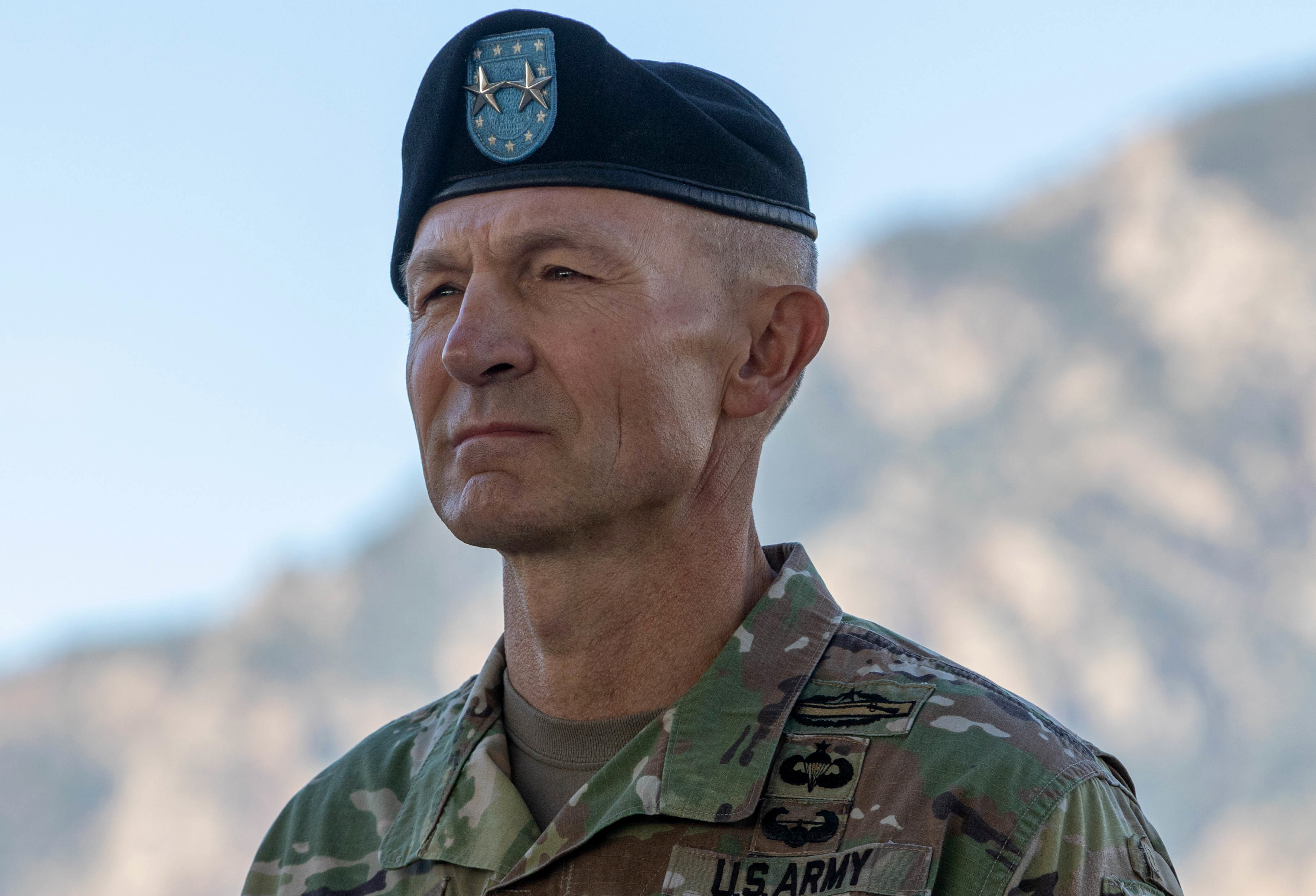
Maj. Gen. Randy George, outgoing commanding general, 4th Infantry Division and Fort Carson, prepares to receive the Distinguished Service Medal prior to a retreat and farewell ceremony on Founders Field, Fort Carson, Colorado, Oct. 4, 2019. Maj. Gen. George was awarded a Distinguished Service Medal for his service as the 4th Inf. Div. commanding general. (U.S. Army photo by Sgt. Daphney Black)
On the day after April Fool’s, as if in a lingering extension of the absurd, the United States Army was rocked by the abrupt sacking of its Chief during Operation Epic Fury. On April 3rd, the Army woke to find its top general Missing in Action. While some initially dismissed the news as a belated prank, the reality was sobering. This was no upheaval in a distant banana republic; it was happening in the United States, the self-proclaimed center of the civilized world. General Randy George was simply told to go home, ushered into the convenient euphemism of early retirement without explanation.
Rumors quickly went viral that George was the 24th high-ranking officer fired by Secretary of Defense Pete Hegseth since taking office. While the exact tally remains debated, the number of verified departures is staggering – at least 14 top officials, including a member of the Joint Chiefs of Staff, the Naval Chief, the head of the Defense Intelligence Agency, and the Commandant of the Coast Guard, have been cleared out. To understand this latest dismissal and its potential fallout, one must first look at the unprecedented context of the current Pentagon.
Purge in the Pentagon
The phrase Purge in the Pentagon feels surreal, carrying echoes of totalitarian regimes like Stalin’s Russia or Mao’s China. Yet, it has become the reality for the world’s oldest democracy. Upon taking office in 2025, the Trump administration, with Hegseth at the helm, initiated a sweeping overhaul of the Department of Defense. The mission was clear: eliminate woke ideology and partisan influence.
This purge targeted leaders who supported Diversity, Equity, and Inclusion (DEI) programs or were perceived as insufficiently loyal to the President’s agenda. Central to this effort was the Warrior Board, a panel of retired senior officers empowered to review the performance of three- and four-star generals. Those found wanting in strategic readiness – often a shorthand for ideological alignment – were recommended for immediate retirement, creating a massive leadership vacuum at the top.
The scale of these dismissals has ignited a fierce national debate. Supporters call it a necessary house cleaning to restore a focus on lethality and merit. Critics, however, view it as a political vendetta that shatters the tradition of a non-partisan military. By early 2026, this friction had escalated into a constitutional crisis, with several state governors refusing to allow similar ideological screenings for their National Guard units.
The Sacker-in-Chief
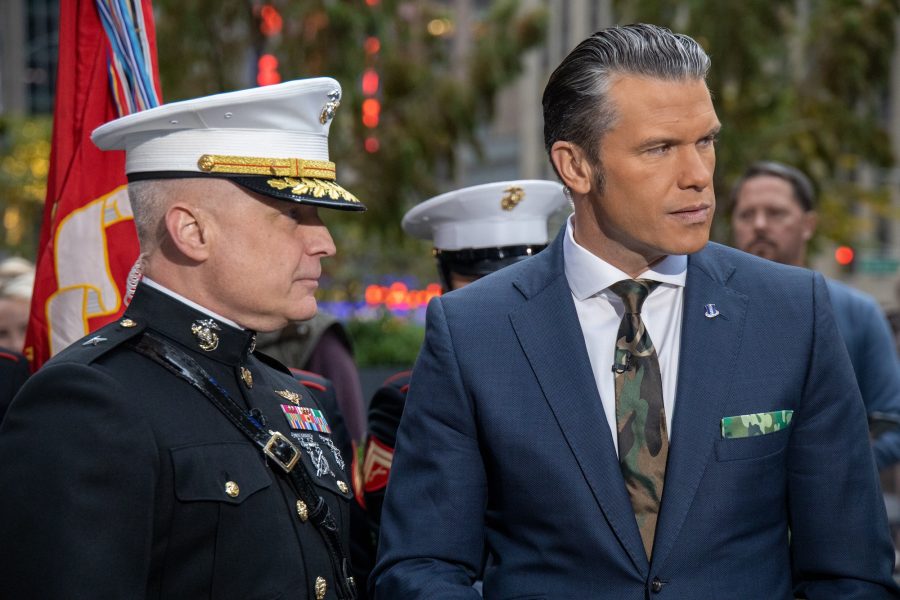
Pete Hegseth’s rise to power – and his rebranding of the Pentagon as the Department of War -has earned him the moniker The Sacker-in-Chief. A former infantry officer in the Army National Guard, Hegseth volunteered for tours in Guantanamo Bay, Iraq, and Afghanistan before leaving the service as a Major. While he holds two Bronze Stars and a Combat Infantryman Badge, critics often point out that his medals were for meritorious service rather than valor, suggesting his warrior persona is more a media creation than a product of battlefield heroism.
His credentials were further scrutinised during his 2025 confirmation due to his Jerusalem Cross and Deus Vult (God Wills It) tattoos. Though Hegseth defends them as symbols of faith, military security officials once flagged them as potentially extremist – leading to the revocation of his orders to guard President Biden’s 2021 inauguration. We now know that his far-right symbolism is for real. At 44, the retired Major systematically ousted the very Generals and Admirals who once sat far above him in the chain of command.
Hegseth’s path to the Pentagon was paved in the studios of Fox News. As a decade-long co-host of Fox & Friends Weekend, he championed America First policies and successfully advocated for the pardon of service members accused of war crimes. Thus, he also made strides first into President Trump’s living room and then his coterie. After being appointed Secretary in January 2025, he quickly moved to replace the old guard. In the wake of General George’s dismissal, Hegseth elevated his own former aide, Gen. Christopher LaNeve, to the position of Army Chief, ensuring a loyalist was in place to execute a radical cultural overhaul.
Perilous Portents
The timing of General George’s removal – five weeks into Operation Epic Fury – is virtually unprecedented and has sent shockwaves through international defense circles. While the Department of War issued a perfunctory note of thanks, they offered no reason for truncating a term intended to run until 2027.
Insiders point to a bitter fallout between George and Hegseth over promotions. George reportedly refused to block the advancement of women and minority officers whom Hegseth wanted purged. Furthermore, as a Biden appointee and former aide to Lloyd Austin, George was viewed as ideologically incompatible with the new administration’s warrior ethos.
However, there may be a more urgent, tactical reason for this sudden vacancy. As a member of the Joint Chiefs of Staff, the Army Chief is a primary military advisor to the President. It is highly probable that George either objected to pending decisions regarding Operation Epic Fury or was expected to do so. In politics, it is often easier to replace the advisor than to overrule reasoned professional advice.
The heart of the disagreement likely lies in the boots on the ground controversy. Many analysts warn that any terrestrial operation in Iran is inherently perilous. While a strike and extricate mission is feasible, US forces are not currently logistically prepared for sustained ground combat, which threatens to drag the nation into another forever war. While the exact nature of George’s counsel remains classified, one conclusion is clear: the sacking of the Army Chief and the looming threat of a ground invasion are inextricably linked. The next phase of the war may be only days away.
The Defence Services Staff College (DSSC) in Wellington, nestled in the Nilgiris of Tamil Nadu, stands as one of the premier institutions for officers of the Indian Armed Forces. It offers a rigorous one-year staff course – a milestone essential for career progression. The college trains officers from the Army, Navy, Air Force, civil services, and friendly foreign nations in the principles of joint operations. Successful completion not only enhances promotion prospects but also confers the prestigious psc (passed staff college) qualification – a mark of professional distinction.
Officers typically appear for the demanding entrance examination after approximately eight years of service, having already cleared all requisite promotion exams.
Those who excel in the entrance examination may be nominated for equivalent courses abroad, including:
Command and General Staff College, Fort Leavenworth (United States)
Staff colleges in Australia, Russia, Bangladesh, Singapore, and other allied nations
These opportunities broaden professional horizons, foster international military cooperation, and prepare officers for the highest responsibilities of command.
The Question That Haunts Every Aspirant
How does one prepare for the DSSC entrance examination? This is the question that consumes every Army officer who dreams of donning the coveted psc. Most aspirants avail themselves of four months’ leave, seeking freedom from regimental duties to immerse themselves in preparation.
I, too, once harboured this ambition. It was unceremoniously nipped in the bud by my Brigade Commander. At the time, I was serving as Brigade Major of an Artillery Brigade. My Commander, well acquainted with my confidential reports, summoned me one day and delivered what I initially considered a setback, but later recognised as one of the sanest pieces of advice I ever received.
“If I give you two months’ leave, you will pass the examination for sure,” he said. “But I do not want you to. If you qualify, you will certainly excel at DSSC and be posted as Brigade Major of an Infantry Brigade. You will work hard there—but with your attitude and ability, you will create countless difficult situations for your Brigade Commander. I want you to qualify only for the Technical Staff College.”
Decades later, I understand his wisdom perfectly.
An Unlikely Candidate
That same day, Brig RN Aggarwal, Veteran(then, a young major popularly known by nickname name Ravi), a Medical Officer posted with the Field Ambulance, walked into my office. He had been nominated for the All Arms Junior Command (JC) Course and needed a binocular and compass—items his unit did not possess.
While we waited for the equipment to be fetched, curiosity got the better of me. “A medical officer attending JC Course?” I asked, genuinely surprised.
Ravi explained that the Medical Directorate at the Army Headquarters had detailed him with barely two days’ notice. There was no time to cancel the nomination.
I reached into my cupboard and pulled out two dog-eared books from my own JC Course days: the Glossary of Military Terms and the Commander’s Handbook.
“You leave in two days, and you have a two-day train journey ahead,” I said, handing them over. “In these four days, read these like novels. Absorb what you can. Once on course, pay attention to classroom discussions. Interact with officers from Infantry, Armoured Corps, and Artillery—learn what they do. During exercises, be original. Resist the temptation to fall back on ‘pre-course knowledge’ that others may possess. And one more thing: carry a box full of medications. The students, their wives, and their children will all depend on you for medical cover.”
The Return with a BI Grading
Three months later, Ravi returned with a BI grading from the JC Course (an Instructional grading, considered very priced) – an impressive achievement. He came home to thank me, recounting how my advice had served him well. To his own surprise, he had topped his syndicate in the opening test. That initial success put him on everyone’s radar, and he worked relentlessly thereafter.
Then came the real agenda.
“I want to take a pot shot at the DSSC qualifying examination,” he announced.
“Surely, and why not?” I replied. “Come to the office tomorrow. We’ll take it from there.”
The Wellington vs. Camberley Question
Next morning, Ravi arrived promptly. I handed him four Pre-Staff Course précis and posed the most critical question: “Wellington or Camberley?”
“Wellington,” came the instant reply, “Medical Officers are not sent to Camberley.“
Thus began another bout of gyan—the same I had offered to countless DSSC aspirants over the years. Some followed it; some didn’t. To this day, I have never compiled the results.
“If you’re aiming for Wellington, you need only 40% marks to qualify. Most years, results are moderated to fill vacancies. To secure 40%, you must attempt 80% of the questions. That means you can afford to leave out 20% entirely. If you skip the first two essay questions – fifty marks each, totalling 20% of the paper – you still stand an excellent chance.”
I paused to let that sink in.
“Remember, Rome wasn’t built in a day. What you write in the examination is the sum total of what you’ve assimilated over your service career and various courses. We have barely two months. Correlate what you read with what you’ve done—that will see you through the administration paper.
You’re fresh from JC Course. What you learned there, especially from your peers, will prove invaluable for the tactics paper. When attempting tactical appreciation, remember it will be based on a company operation. Stick to basics. Craft a logical solution. Never attempt a complicated plan—you’ll only tie yourself in knots.
You’re a doctor. You have a strong scientific foundation. The Science and Military Technology paper will be a cakewalk—just read the basic pamphlet. For Current Affairs, stay abreast of national and global events. A few magazines will serve you well.”
The Deputy Commander’s Interruption
At that moment, our Deputy Brigade Commander walked in. “You must practice tactical appreciation writing,” he interjected. “I wrote it fourteen times before my examination. You fellows need to do more.”
I couldn’t resist. “I won’t write any, but I’ll still pass. It’s simple logic and basic military knowledge.”
He stormed out.
I turned back to Ravi. “You can follow my advice or ignore it. But if you choose to follow it, stay away from other study groups in the station. If you need to discuss anything, come to my office or my home.”
The Test of Faith
The next day, Ravi made his decision. He would follow my advice – and consequently, wanted leave before the examination but could get only 24 days just before exams. He suggested that afterwards, our families should have a vacation together.
A week later, Ravi arrived at my doorstep, visibly perplexed. I knew immediately what had happened.
“You were with the study group, weren’t you?” I asked. “They must have discussed questions you couldn’t answer.“
He nodded glumly. “They were discussing the US Armoured Division, the British Airborne Division, Israeli Special Forces. I had no clue – I never read about them, just as you advised.”
“Wellington or Camberley?” I asked again.
“Only Wellington,” he replied.
I repeated the logic: attempt 80% to score 40%. If questions about those obscure subjects appeared—highly unlikely—he could simply leave them out. Include them in the 20%.
The Final Verdict
That year, Major Ravi Aggarwal was the only officer from our formation selected for the DSSC Course. I, meanwhile, proceeded to the Technical Staff College – just as my Brigade Commander had foreseen.
Sometimes the best guidance isn’t about loading more, but about knowing what to leave out. And sometimes, the sanest advice comes wrapped in disappointment, only to reveal its wisdom years later.