
A Radical Break from Colonial Design
The Indian National Army (INA), or Azad Hind Fauj, led by Subhas Chandra Bose, was deliberately crafted to dismantle the rigid class, caste, and religious divisions that the British colonial military system had engineered. Under Bose’s visionary leadership, the INA established a radically inclusive template – a secular, egalitarian, and united India in miniature.
1. Dismantling the “Martial Races” Class Structure
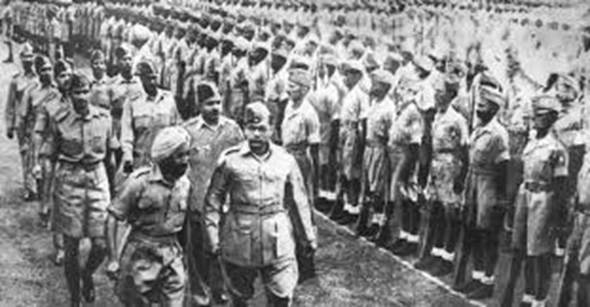
The British Indian Army was strictly organized around the colonial theory of Martial Races. This pseudo-scientific doctrine held that only certain ethnic groups and castes – Punjabi Muslims, Jat Sikhs, Gurkhas, Rajputs – were biologically and culturally fit for combat. The British grouped these men into segregated, single-class regiments to prevent inter-community mixing and to avoid another unified rebellion like the 1857 uprising. Bose overturned this structure entirely:
- Classless Regiments: He abolished segregated, caste-based, and religion-based infantry units. Soldiers from all regions, castes, and social classes lived, trained, and fought side by side in integrated platoons.
- Unified Messing: In sharp contrast to British camps, where separate kitchens were maintained for Hindus, Muslims, and Sikhs to respect dietary caste codes, Bose enforced common kitchens. All soldiers ate the same food together – a revolutionary step that directly shattered traditional caste and religious barriers.
2. Dual Streams of Personnel
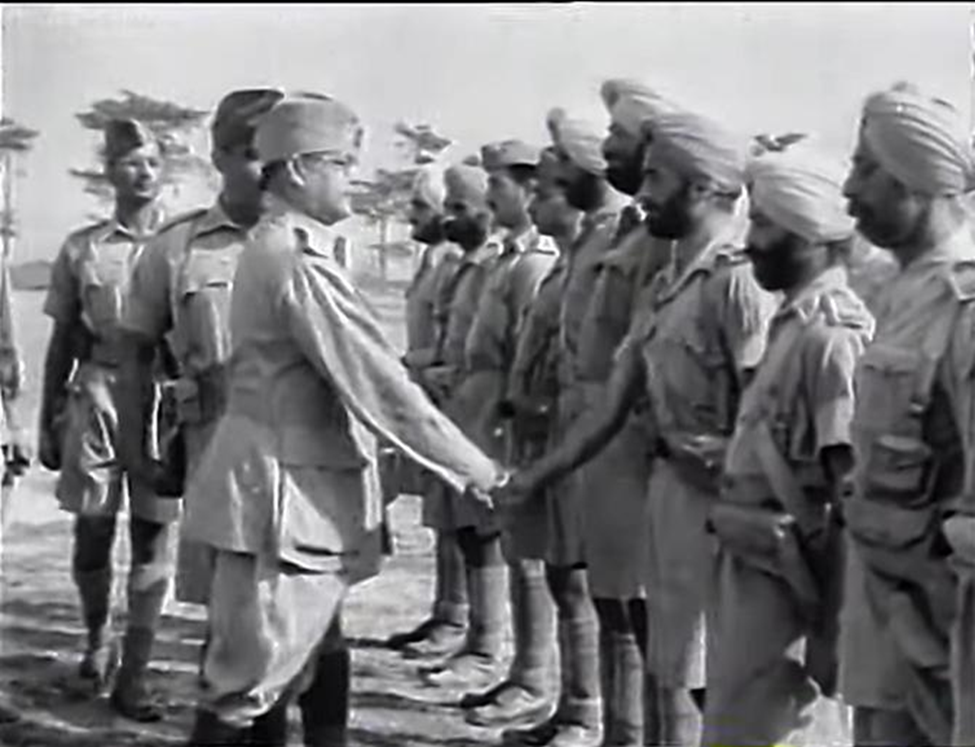
The workforce of Bose’s INA drew from two distinct socio-economic streams:
- The Military Elite (Prisoners of War): Approximately 30,000 to 40,000 professional soldiers captured by the Japanese in North Africa and Southeast Asia formed the INA’s backbone. These were trained, disciplined soldiers from the traditional peasant-martial backgrounds of British India.
- The Labour and Civilian Masses: Bose heavily recruited from the Indian diaspora in Southeast Asia – Malaya, Burma, Singapore, and Thailand. This group included wealthy merchants who provided financial backing, English-speaking white-collar clerks, and tens of thousands of impoverished, illiterate Tamil plantation labourers. This massive influx of civilian working-class volunteers democratised the military hierarchy.
3. Religious Composition and Secular Integration
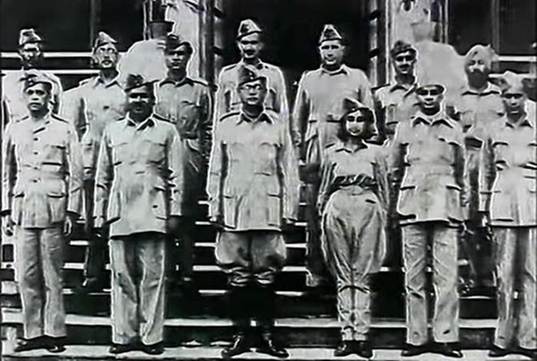
Bose’s INA was a masterful realisation of inter-faith harmony. While Hindus formed the numerical majority (mirroring India’s demographics), Muslims and Sikhs held exceptionally high-profile leadership and combat roles. Key aspects of religious integration included:
- Top-Tier Leadership: Bose deliberately placed leaders of different faiths in critical command positions. Notable examples include General Shah Nawaz Khan (Punjabi Muslim, commanding the Subhash Brigade), Colonel Prem Kumar Sahgal (Hindu), and Colonel Gurbaksh Singh Dhillon (Sikh). The British inadvertently cemented this image of inter-faith unity when they tried these three specific officers together during the famous 1945 Red Fort Trials.
- Secular Symbology: Official greetings, language, and symbols were stripped of specific religious connotations to ensure universal belonging.
- Language: Hindustani – a blend of Hindi and Urdu written in Roman script – was made the official language to bridge cultural gaps.
- Greeting: The secular phrase Jai Hind (Victory to India) replaced religious salutations as the universal greeting.
- National Anthem: The anthem, Subh Sukh Chain, was a Hindustani adaptation of Rabindranath Tagore’s Jana Gana Mana.
- Brigade Names: Brigades were named after prominent secular and national heroes from diverse backgrounds – such as the Gandhi, Nehru, Azad (after Maulana Abul Kalam Azad), and Subhash Brigades.
4. Gender Inclusivity: The Rani of Jhansi Regiment
Under Bose’s visionary leadership, the INA established a radically inclusive template—a secular, egalitarian, and united India in miniature – that gave equal space to women.
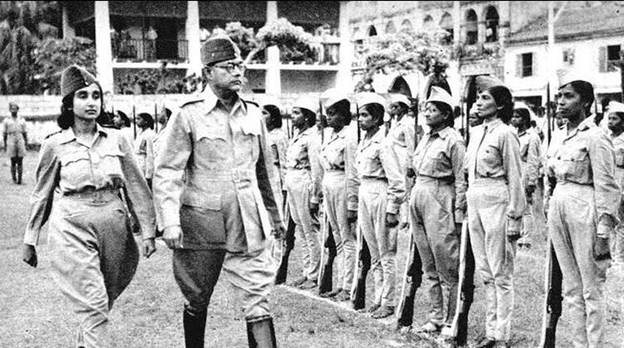
In a pioneering move for any World War II-era military, Bose formed an all-female combat unit: the Rani of Jhansi Regiment. It was led by Captain Lakshmi Swaminathan (later Sahgal), a Malayalee Hindu doctor. The regiment drew hundreds of young civilian Indian women from Malaya and Burma, representing multiple religious backgrounds – Hindus, Muslims, Sikhs, and Christians. These women were trained in advanced combat, firearms, and tactics alongside male soldiers, shattering traditional gender and social roles in one decisive stroke.
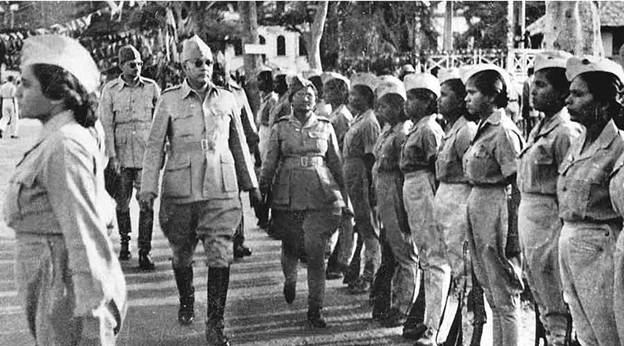
Yet, it appears that present generations have largely forgotten the sacrifices, valour, and devotion to duty demonstrated by the INA’s women. Their stories – of marching into battle, of smuggling arms, of enduring imprisonment – deserve not just a footnote in history books, but a prominent place in the nation’s collective memory. Forgetting them is not merely an oversight; it is a disservice to the very idea of India they fought to create.
The present generations appear to have forgotten about the sacrifices, valour and devotion to duty demonstrated by the INA’s women.
5. Summary of Differences
| Feature | British Indian Army | Bose’s INA |
| Recruitment Basis | Martial Races theory (selected castes/ethnicities) | All-inclusive (professionals + civilian labour masses) |
| Regiment Structure | Segregated by religion, caste, and class | Completely integrated and classless |
| Dining (Messing) | Separate kitchens to maintain caste/religious purity | Common kitchens (all communities ate together) |
| Official Language & Motto | English; regimental religious war cries | Hindustani; Jai Hind |
| Women’s Role | Non-combatant / nursing only | Active combat infantry (Rani of Jhansi Regiment) |
Epilogue
Long before independent India’s Constitution enshrined secularism and equality, Bose’s INA had already practised them on the battlefield – with common kitchens, integrated regiments, and women in combat. It was not merely an army; it was a vision of the nation Bose hoped to liberate. And though the INA did not win military victory, its legacy quietly shaped the forces that eventually won India its freedom.
If the women of Rani of Jhansi Regiment could do it then, the Indian women of today can do it better!!!


The vision of our great leaders, who have inspired us.
LikeLiked by 1 person