
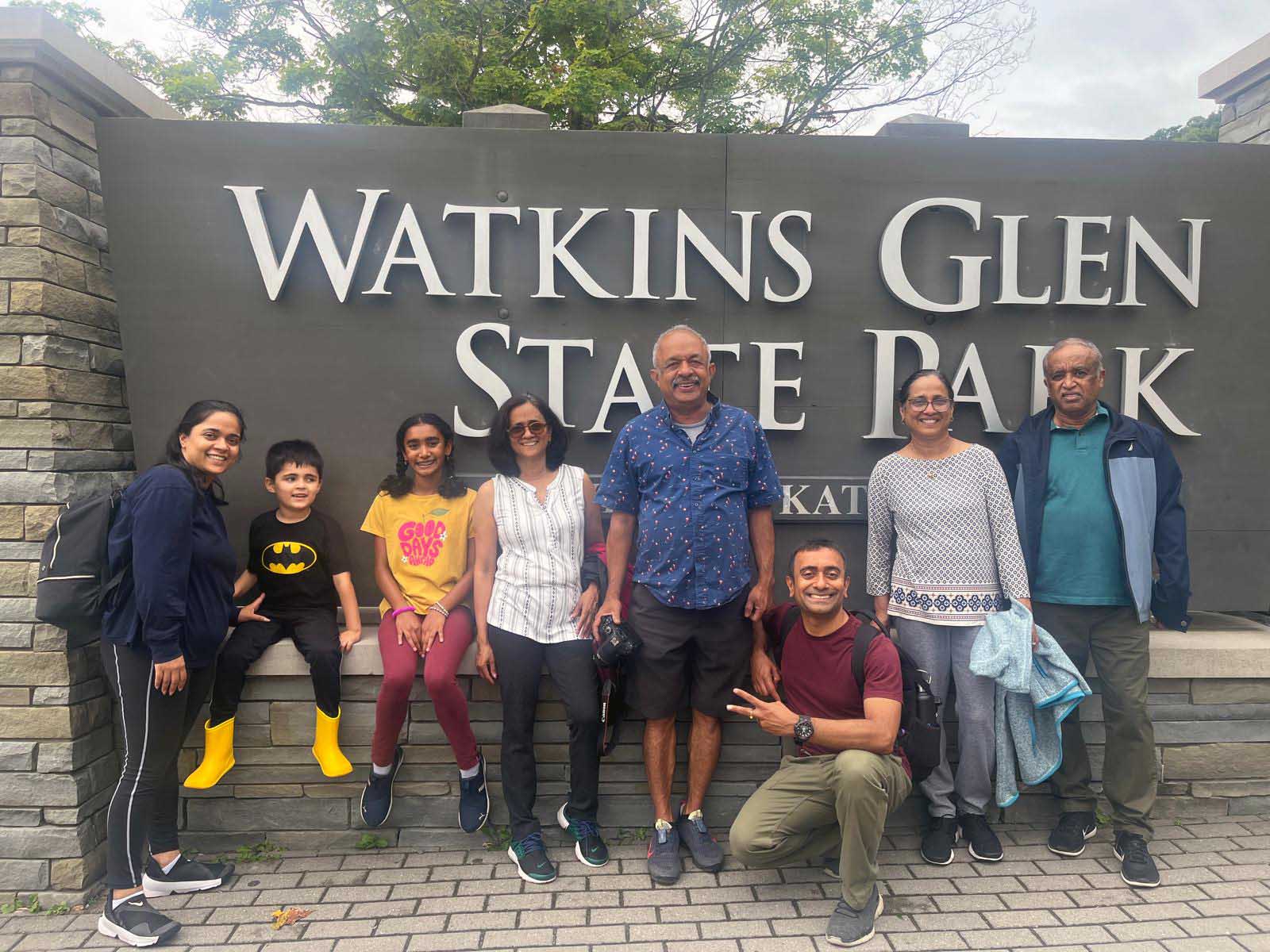
For the long weekend of September 2024, we organised a family trip to Watkins Glen State Park on Finger Lakes in New York State.

The park with stunning waterfalls, dramatic flumes, and picturesque potholes combine to make a gorgeous waterscape. The park’s landscape encompasses stone staircases, arched bridges, and winding tunnels that weave up and through the scenic gorge.
About 400 million years ago (Devonian Period,) this area was covered by a shallow sea. The erosion of the nearby Arcadian Mountain Range filled this sea with layers of sand and silt. This led to the formation of the sandstone and shale bedrock that characterises the Finger Lakes Region.
300 million years ago (Permian Period,) the supercontinent Pangaea was formed causing uplift in the northeast of what is now North America. The inland seas that once covered the area become land. Streams began to cut their way through the newly uplifted bedrock.

2.5 million to 12,000 years ago (Pleistocene Epoch,) deep valleys were cut along what is now the Finger Lakes and Great Lakes. The global climate began to cool, marked by mass extinctions, repeated cycles of glaciations and melt (probably more than 40 times). The five Great Lakes and Finger Lakes are remnants of those massive glacial lakes.
12,000 years ago to date (Holocene Epoch,) the massive lakes that engulfed the present-day Finger Lakes receded. They left large basins and valleys behind, exposing enormous sheer cliffs along its southern half. Some of these cliffs still hang directly over the lake today. Others have receded away from the lake due to erosion.
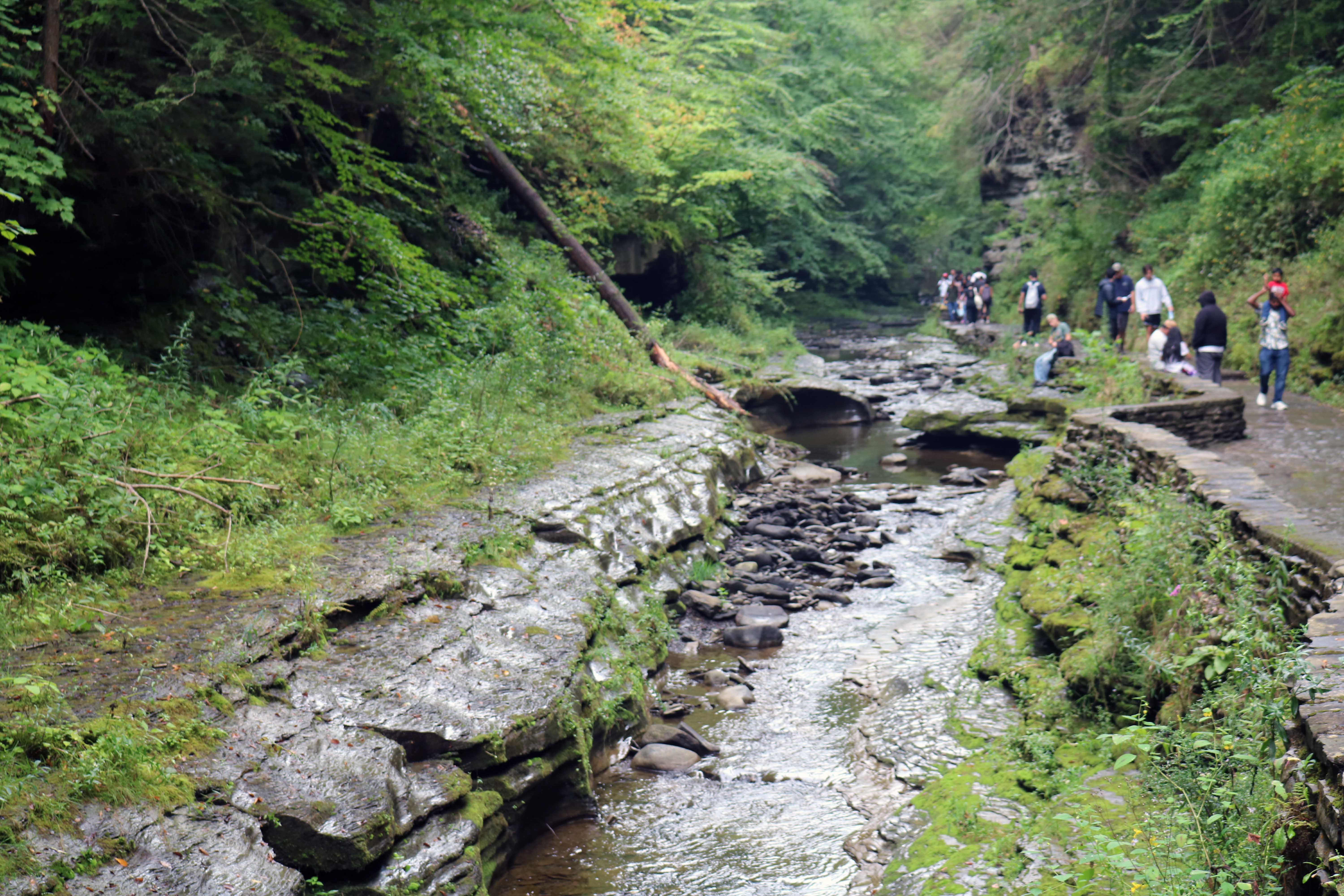
Watkins Glen State Park comprises of a series of waterfalls and gorges that are too beautiful to be missed. A two-mile hike took us past 19 waterfalls and up over 800 stone steps. There are several small trails leading off the Gorge Trail, a hiker’s dream.

Enroute the trail, such markers are placed to facilitate dealing with any emergency.

We entered the Trail through a tunnel chiseled into the rock face.
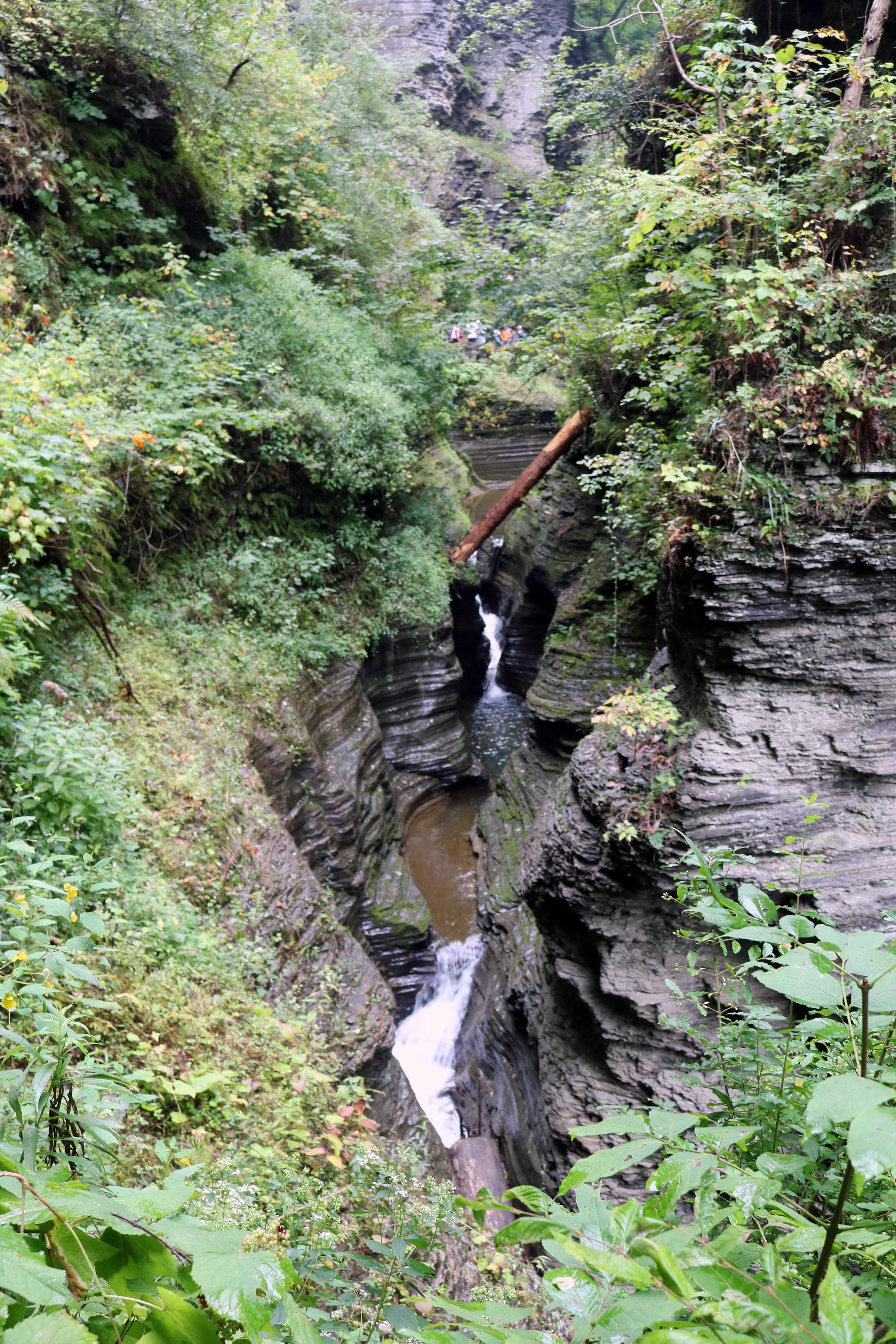
The first falls that welcomed us into the gorge was aptly named the Entrance Cascade The falls drop a total of 43 feet in two distinct sections; first down a swishing flume-like slot which drops 17 feet and the second a sheer 26 feet out of the canyon.
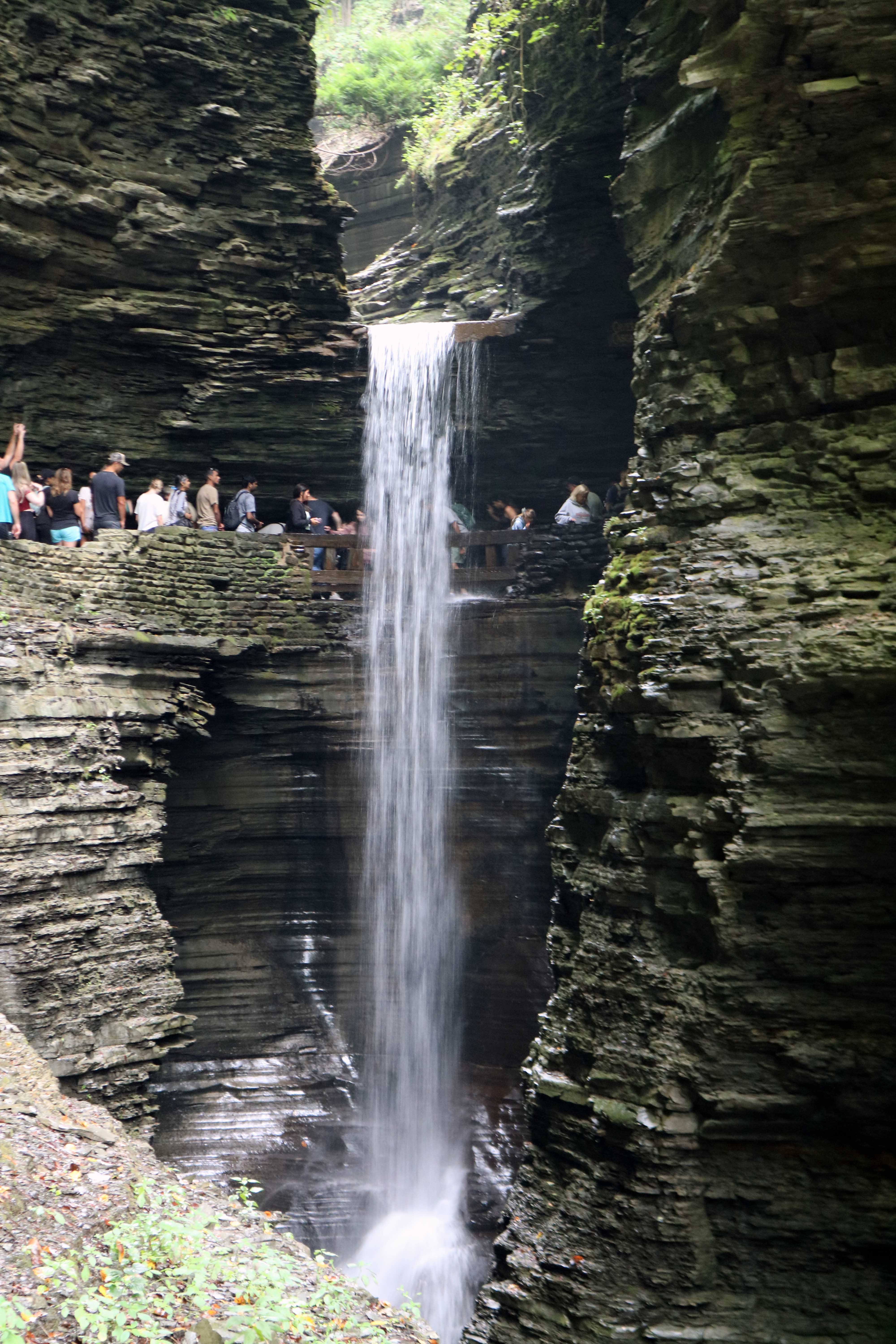
Cavern Cascade was the next waterfall we encountered and is the tallest waterfall along Glen Creek and is almost certainly the most unique waterfall in the canyon (52 feet.) The Trail passes behind the falls, and we reached out and touched the falling water.
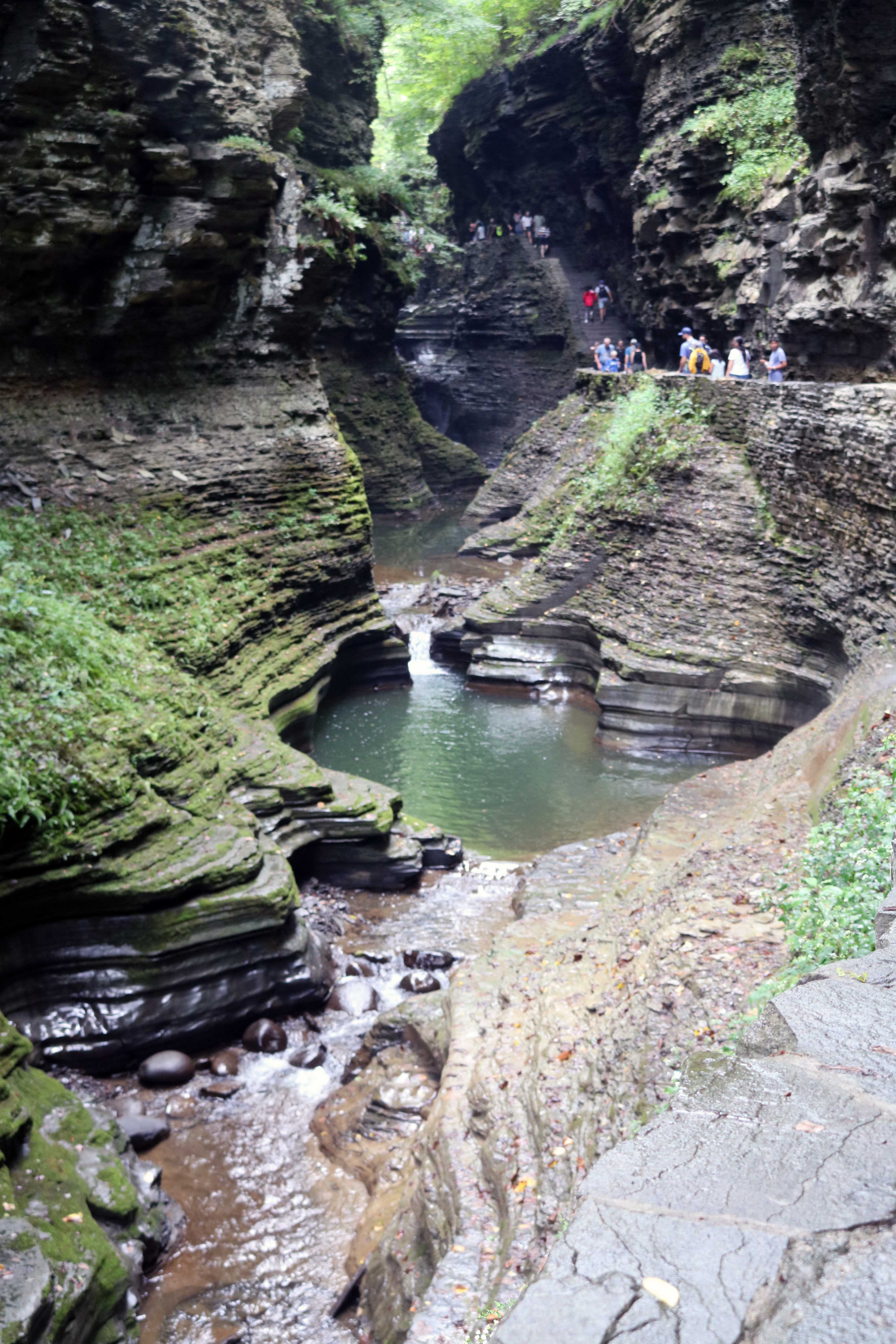
This is the Triple cascade aka Glen of Pools, a very pretty chain of pothole pools separated from one another by small tumbles ranging from 6 inches to about 3 feet in height.
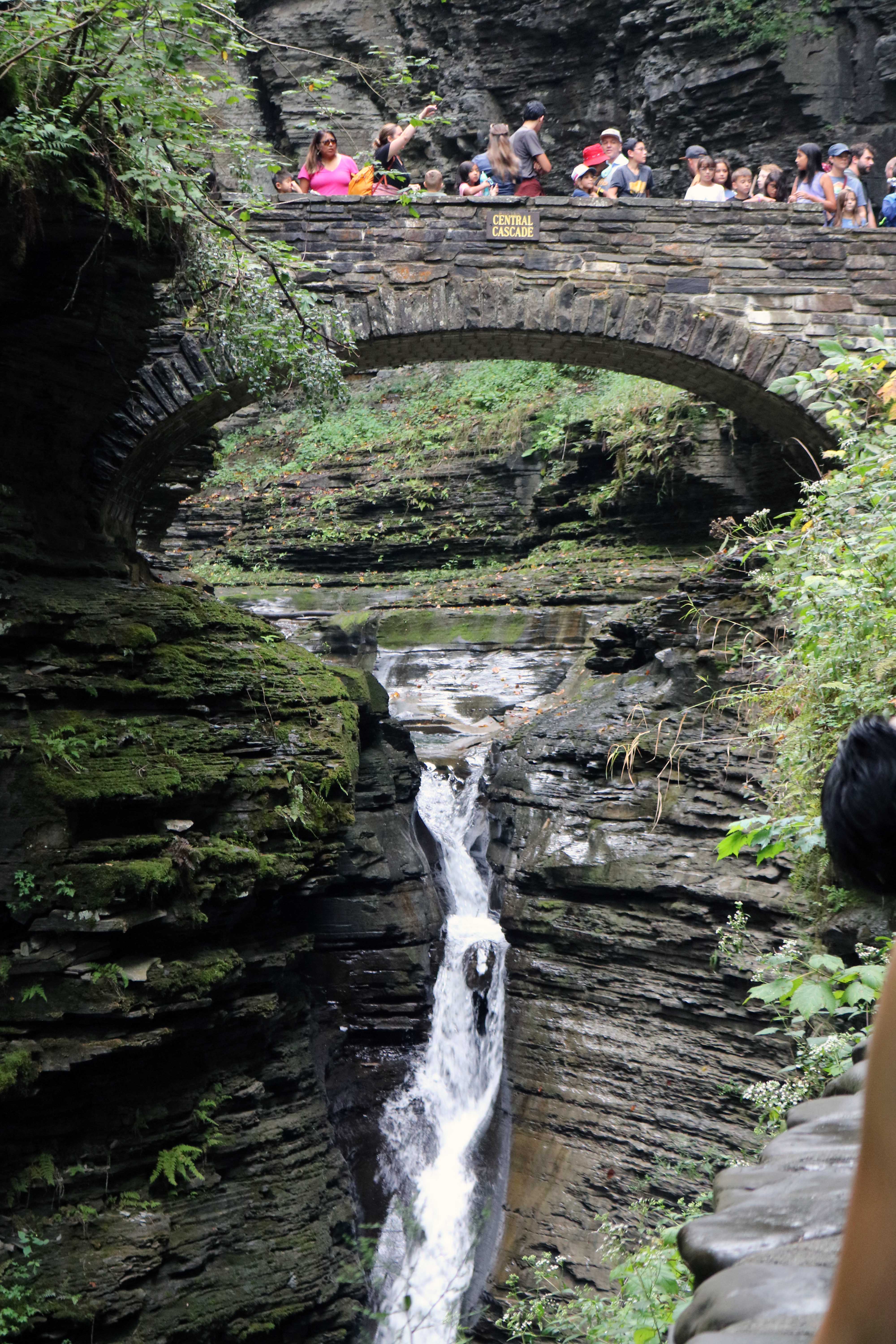
Central Cascade is the third major waterfall we encountered, halfway up the gorge – hence its name – drops 41 feet in a narrow horsetail-type fall with the stone arch bridge above.

The Triple Cascade with its triple stair-step form is certainly eye-catching. The waters tumble a total of twelve feet in three steps. Adjacent to it is the Rainbow Falls with its stone arch footbridge above.
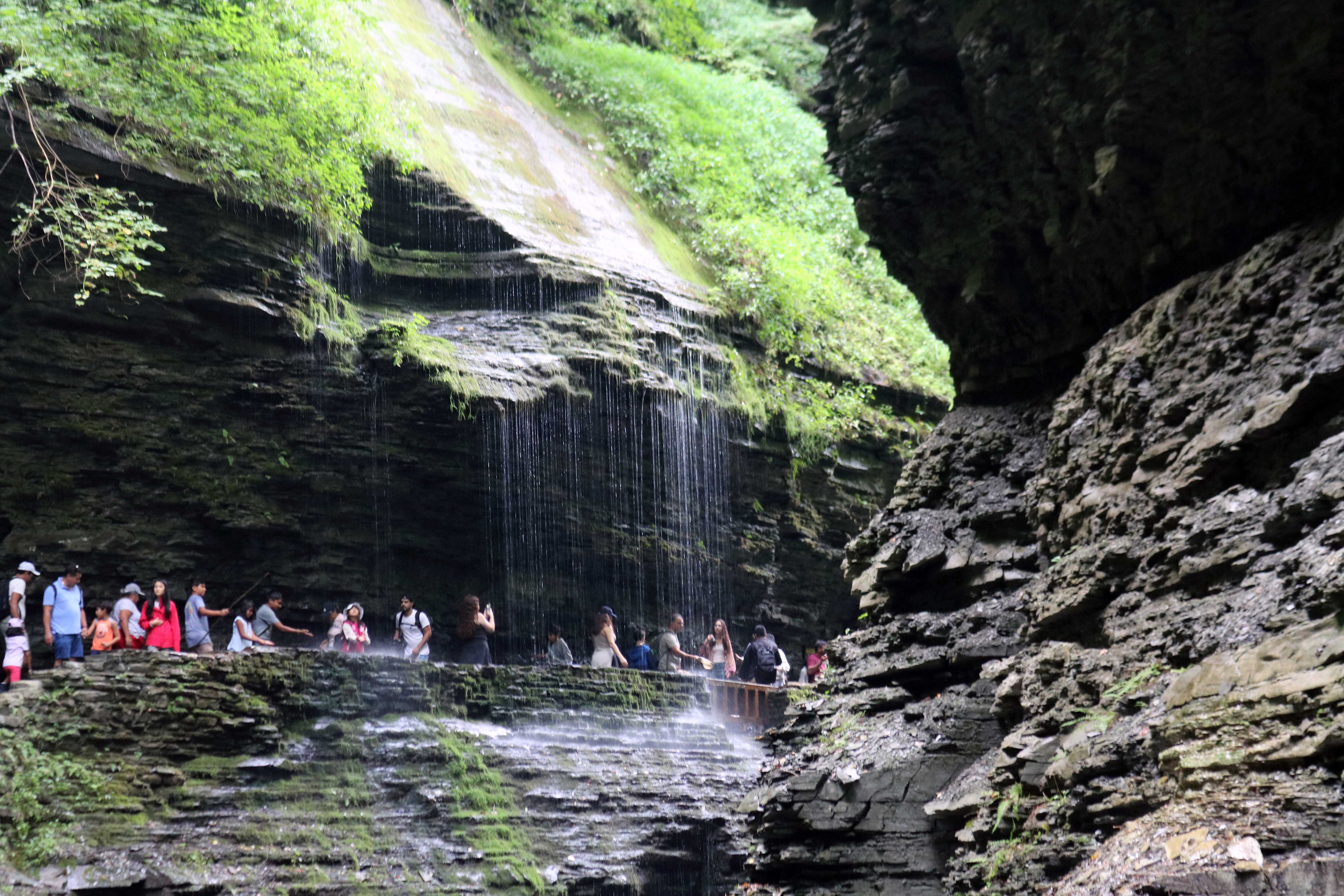
Rainbow Falls first slides over an angled pitch of moss-covered rock, then plunges over an undercut cliff in dozens of tiny rivulets which bead down onto the stone railing lining the trail as it passes directly beneath the falls.

Pluto Falls is in the Spiral Gorge, where the creek squeezes through and narrows to two feet wide, dancing between potholes with small falls in between.
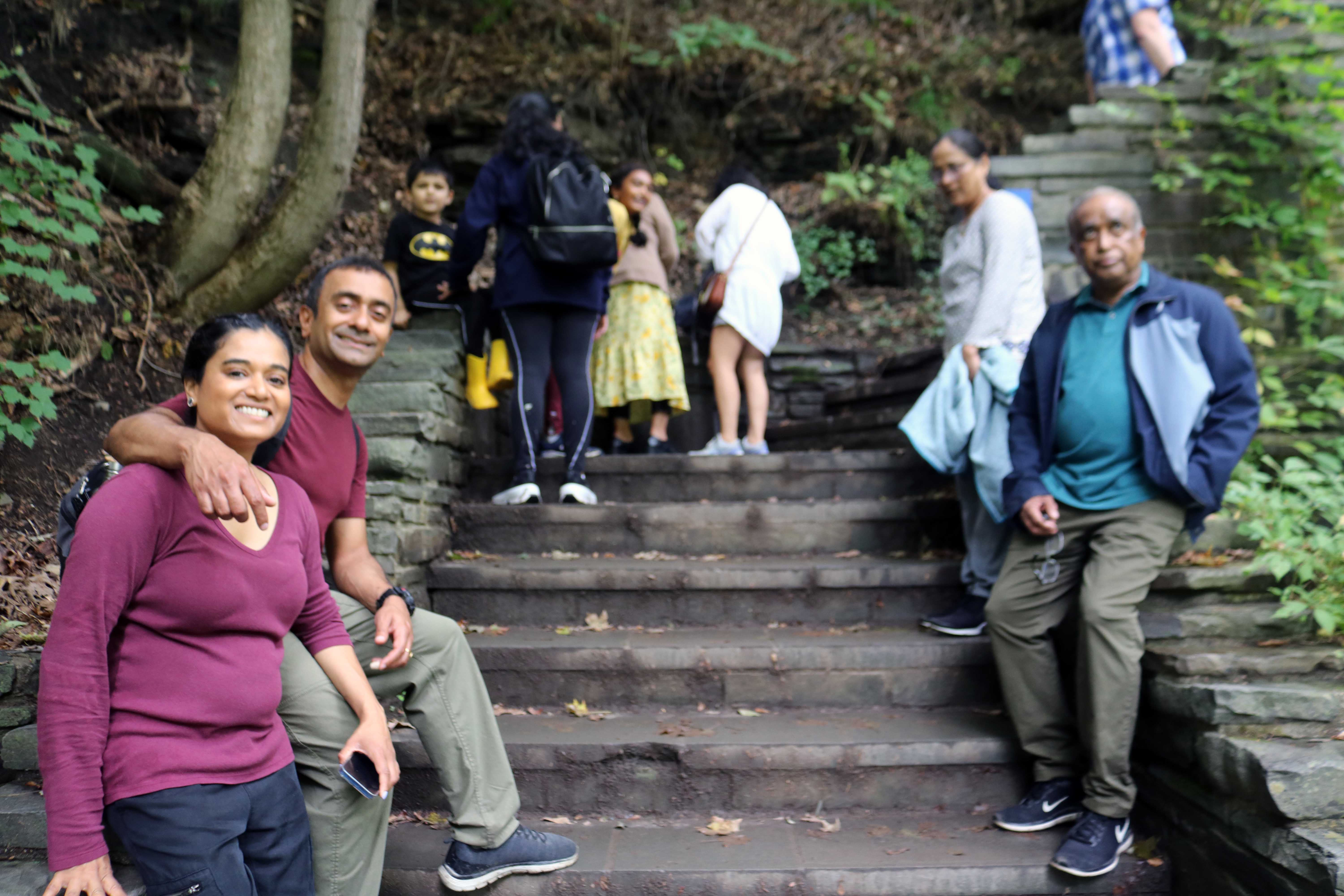
Jacob’s Ladder was the final ascent of 180 stone steps to the Upper Entrance to the park to the Gorge Trail along Glen Creek. This marked the end of our hike.
 REJINCES