

On 01 September 2024, we visited the Taughannock Falls in the Finger Lake area of New York State. The falls roars down a hanging valley, drawing thousands of visitors who hike the wide winding canyon to the viewing area at its base. In summer, it dries considerably, offering visitors a less wet experience walking up the creek bed. Behold! This fall is 215 feet – about 33 ft higher than Niagara Falls.
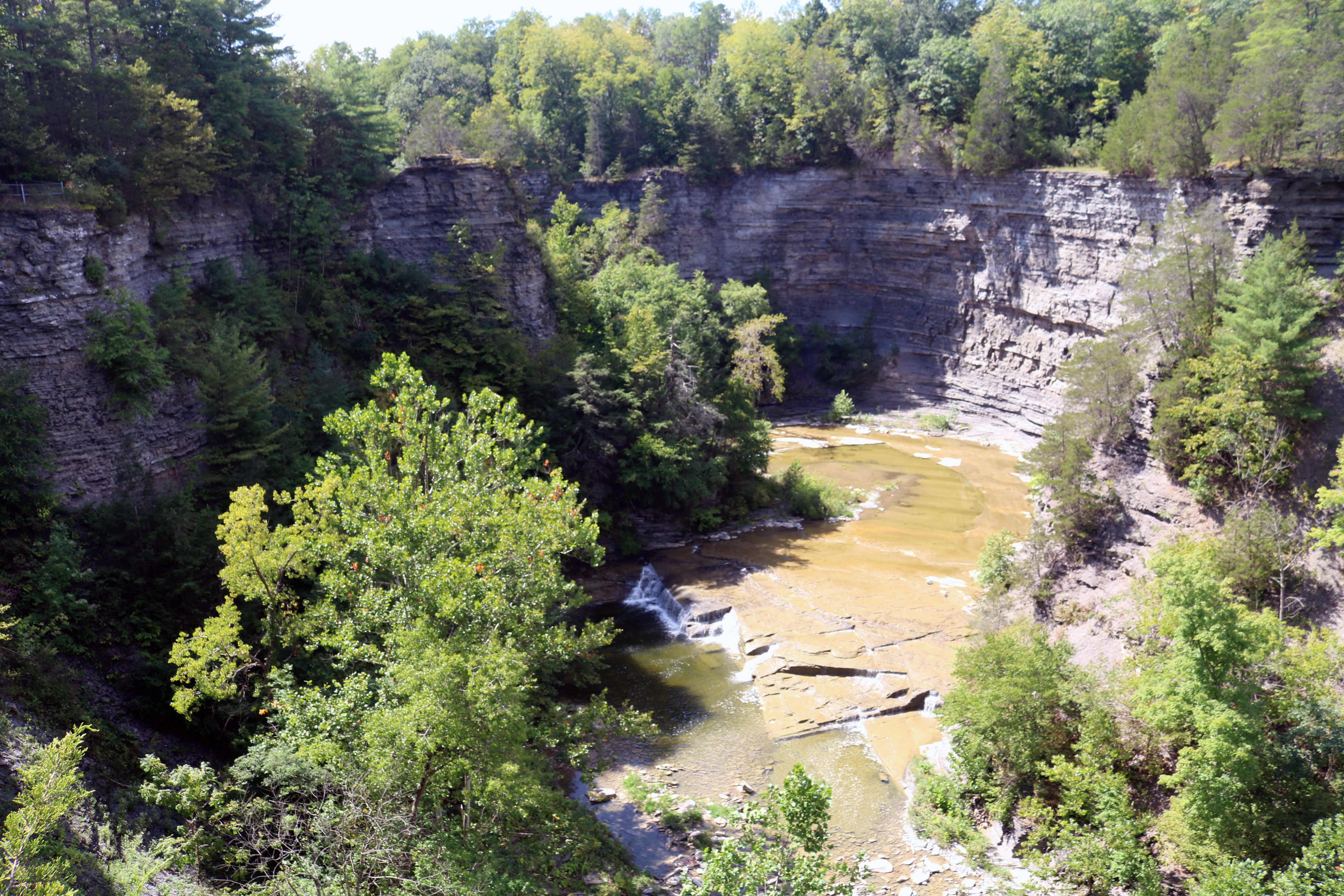
Erosion from water and ice has carved out 400 ft high cliffs over thousands of years. The pool at the base of the falls is deep and littered with gigantic boulders from rock falls akin to the Niagara Falls. This area has recorded many rockfalls which killed and maimed few tourists. This canyon is most active as far as erosion. It is also one of the most beautiful gorges filled with waterfalls.
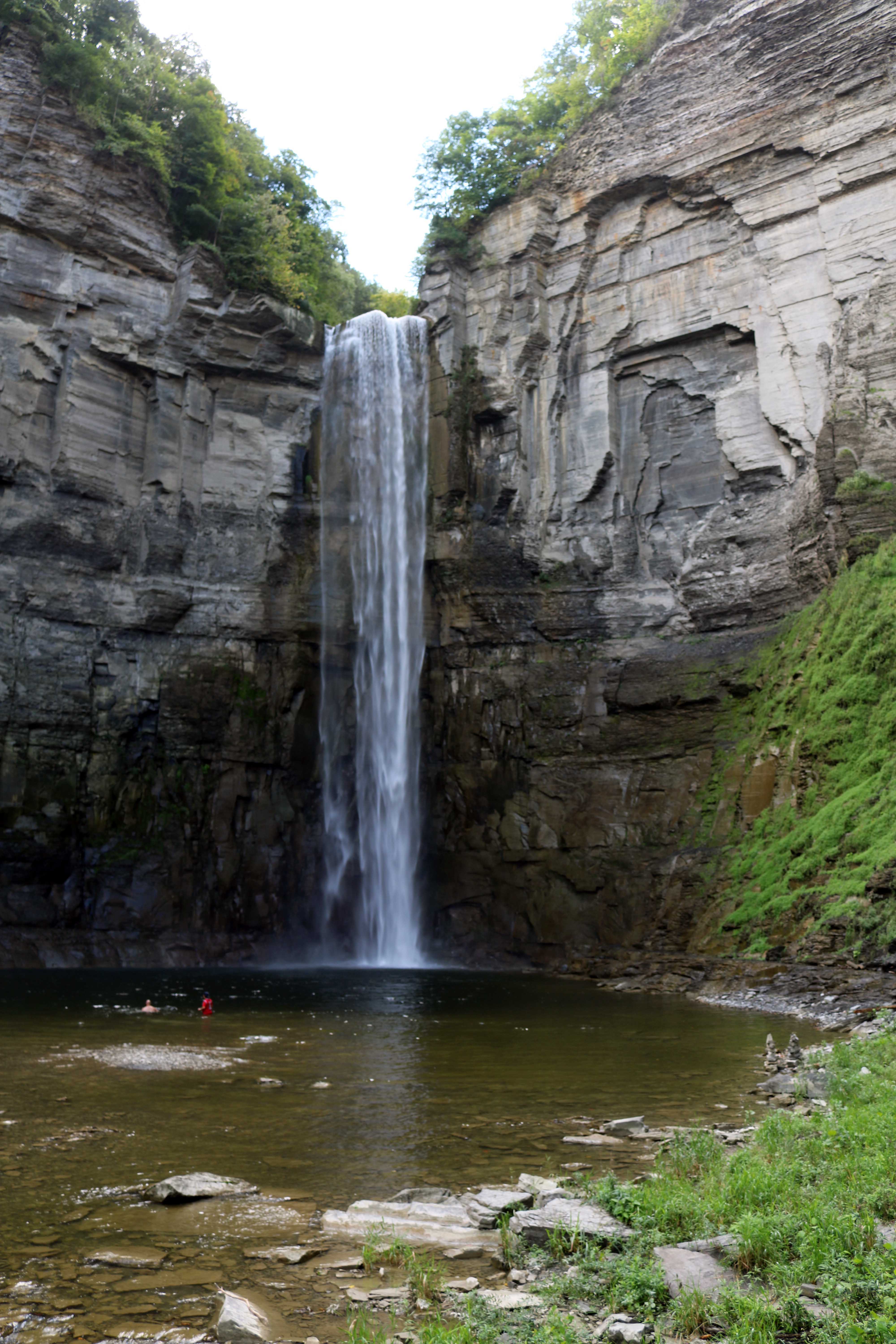
The name Taughannock comes from Native American language meaning The Great Falls of the Woods. The Gorge Trail runs from the main park entrance, past the Lower Falls, and along the gorge all the way to Taughannock Falls.
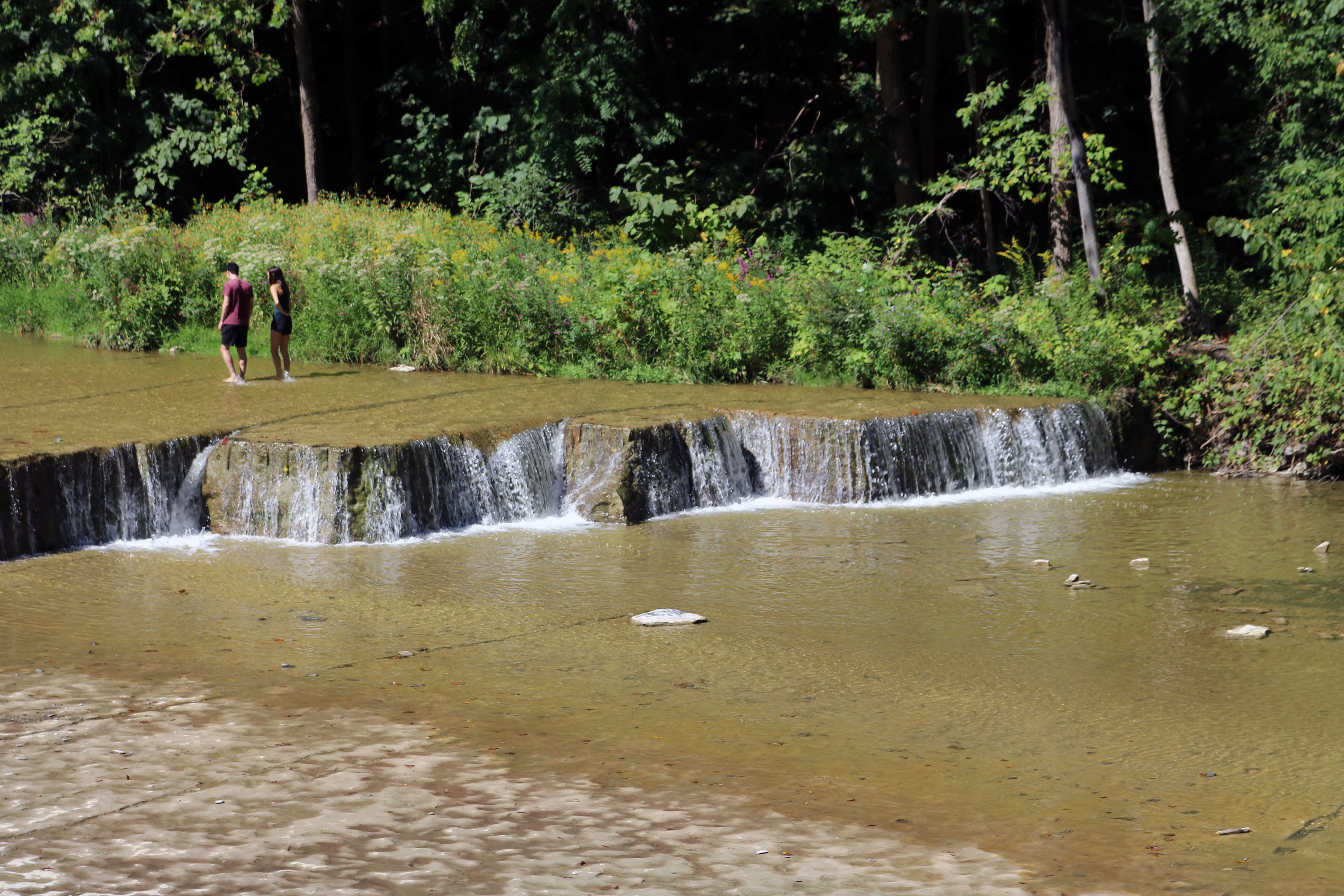
When we visited the area at the end of summer, the water level was low, and it facilitated us to walk in the creek bed. Throughout the trail, there are many information boards placed, some about the history, geology and the landscape.

As we entered the park, the lower falls -19 feet tall falls on average stretch to about 50 feet in width, that tumble over a blocky ledge – welcomed us. During floods, the creek will swell to cover the entire creek – over 100 feet wide.

We began our hike along the ripple-like pattern on the limestone creek bed which was once an ocean bed. It features symmetrical cracks in the rock, sometimes at very distinct 90-degree angles. The ripple pattern in this area is the result of erosion from acidic rains and abrasive effect of flowing sand. Acidic rain puddles in the creek bed dissolves the limestone and the sand particles will swirl around in these dimples, further carving them out over millions of years.

We walked through the gorge trail, and it culminated about 300 ft from the falls, a perfect distance for photography.

Photography session completed, we set out we commenced our trek to the Upper Taughannock Falls.
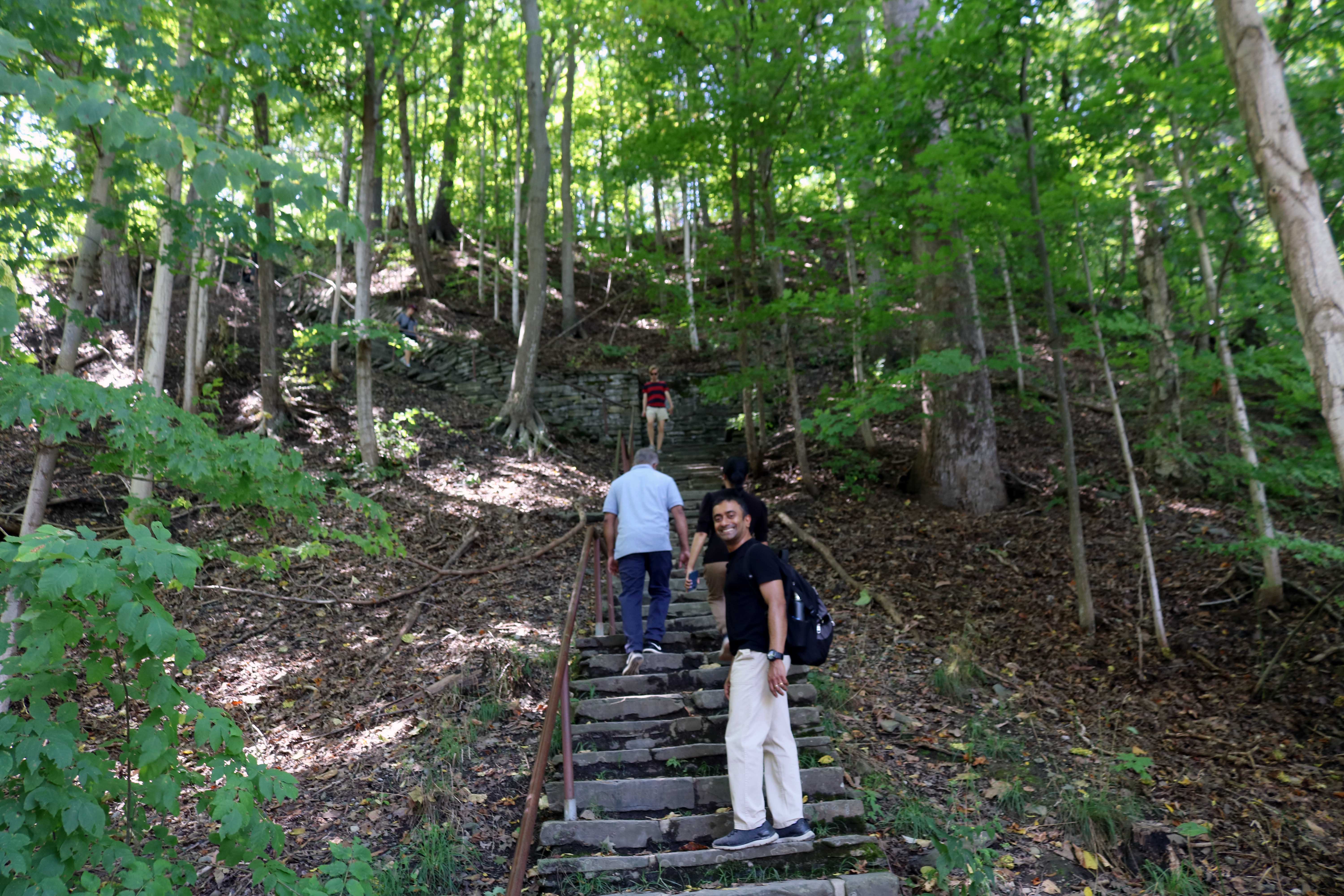
As we trekked ahead to the Upper Taughannock Falls, we entered the V-shaped notch in the streambed.
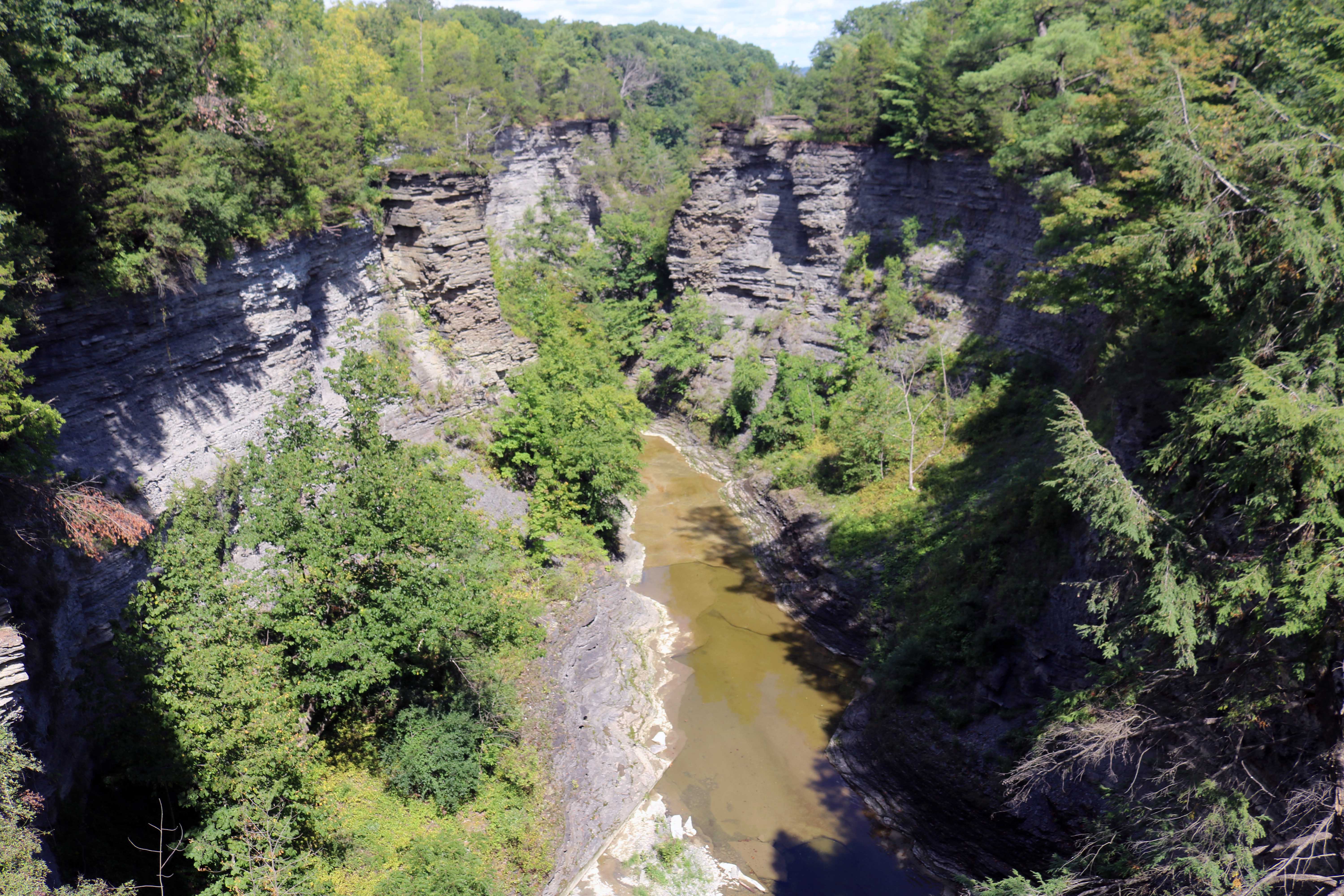
Over the years numerous rock falls have occurred at the falls e. The cliffs surrounding the falls are quite unstable and is prone to rockfalls.
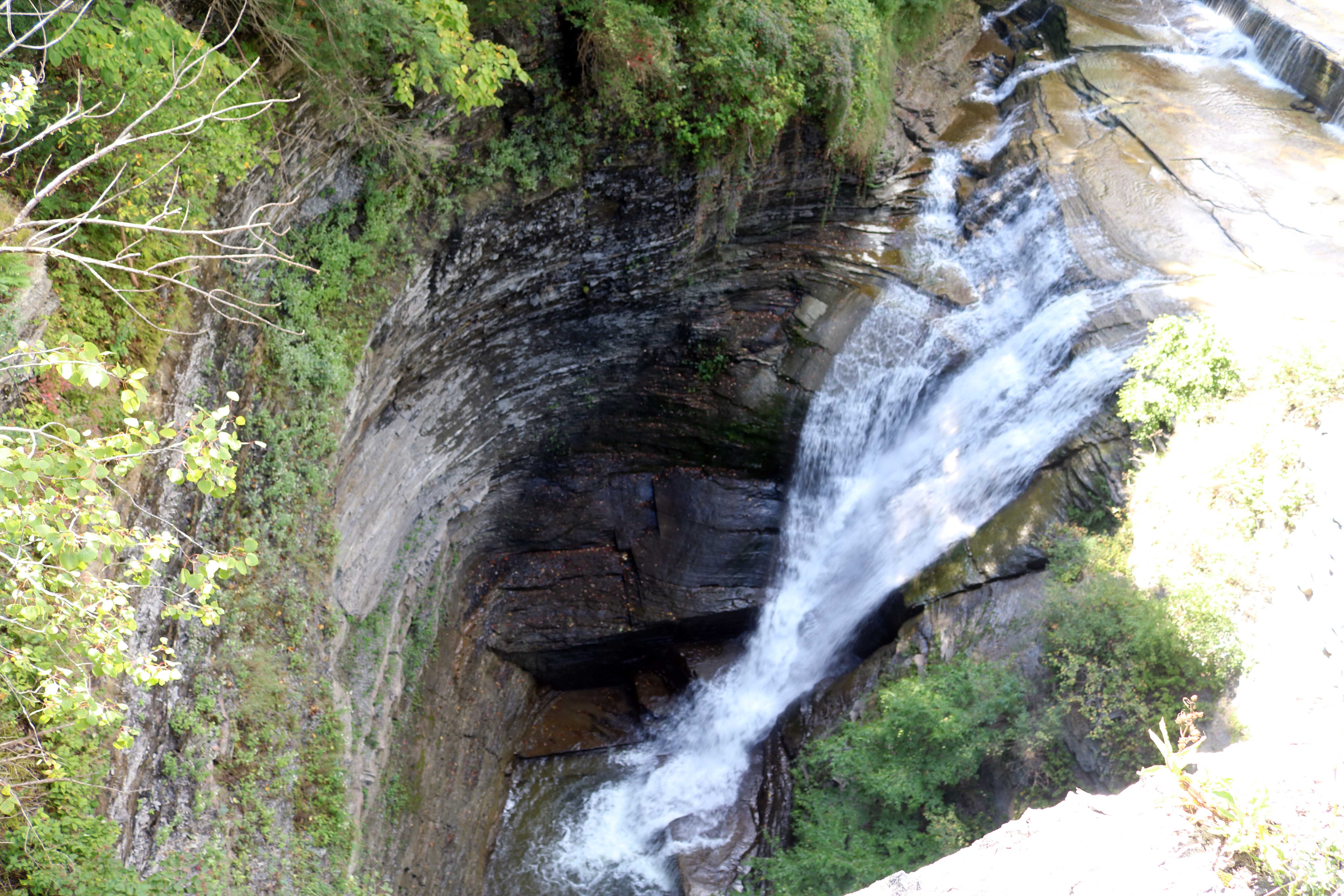
Upper Taughannock Falls is significant in stature, and especially unique in appearance. It is overshadowed and overlooked by its much larger downstream sibling. The Upper Falls marks the point where the creek plunges into Taughannock Gorge, which is considerably narrower here than at the larger falls downstream.
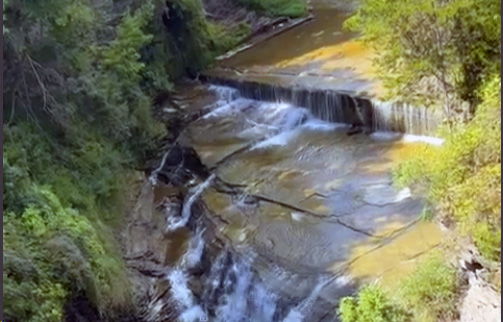
The upper falls drop 58 feet where the creek transitions from sheeting across a broad smooth bedrock shelf, plunging over a small 3-foot ledge which is so uniform that it looks like a dam.
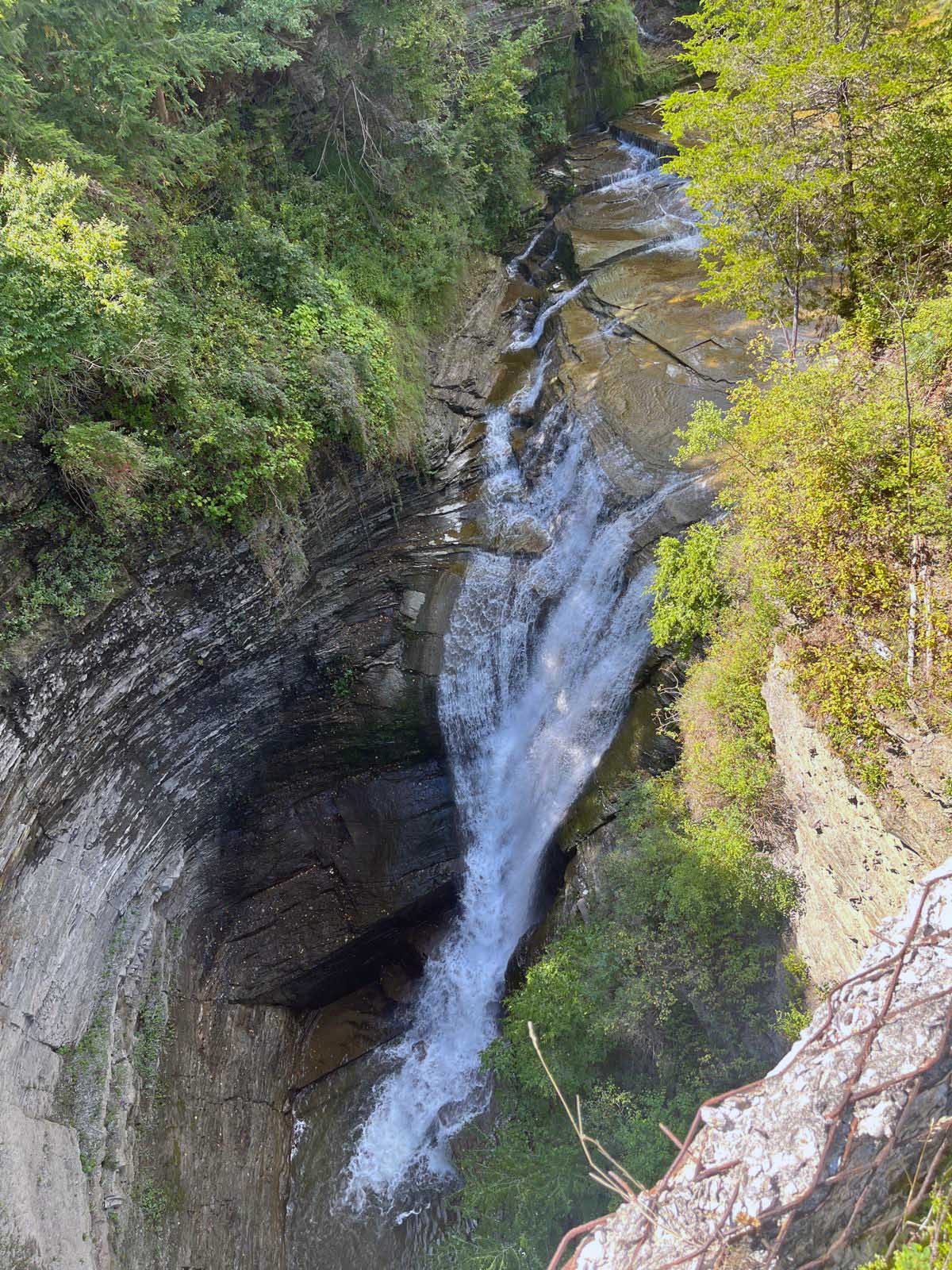
The water then funnels into a booming horsetail type fall, transitioning from a broader breadth at its top to a narrow plunge of water at its base. As we viewed this fall from a bridge looking nearly straight down, it appeared much taller. Thus culminated our long-weekend of adventure.
“I go to nature to be soothed and healed, and to have my senses put in order.” – John Burroughs – American naturalist and nature essayist.
 REJINCES