
During our trek to the Taughannock Falls in the Finger Lake area of New York State, I came across some very interesting mushrooms. Roughly 75 people in North America are poisoned each year by mushrooms, often from eating a poisonous species that resembles an edible species. The advice to all is Don’t eat any mushroom in the wild! Avoid touching them too!!!
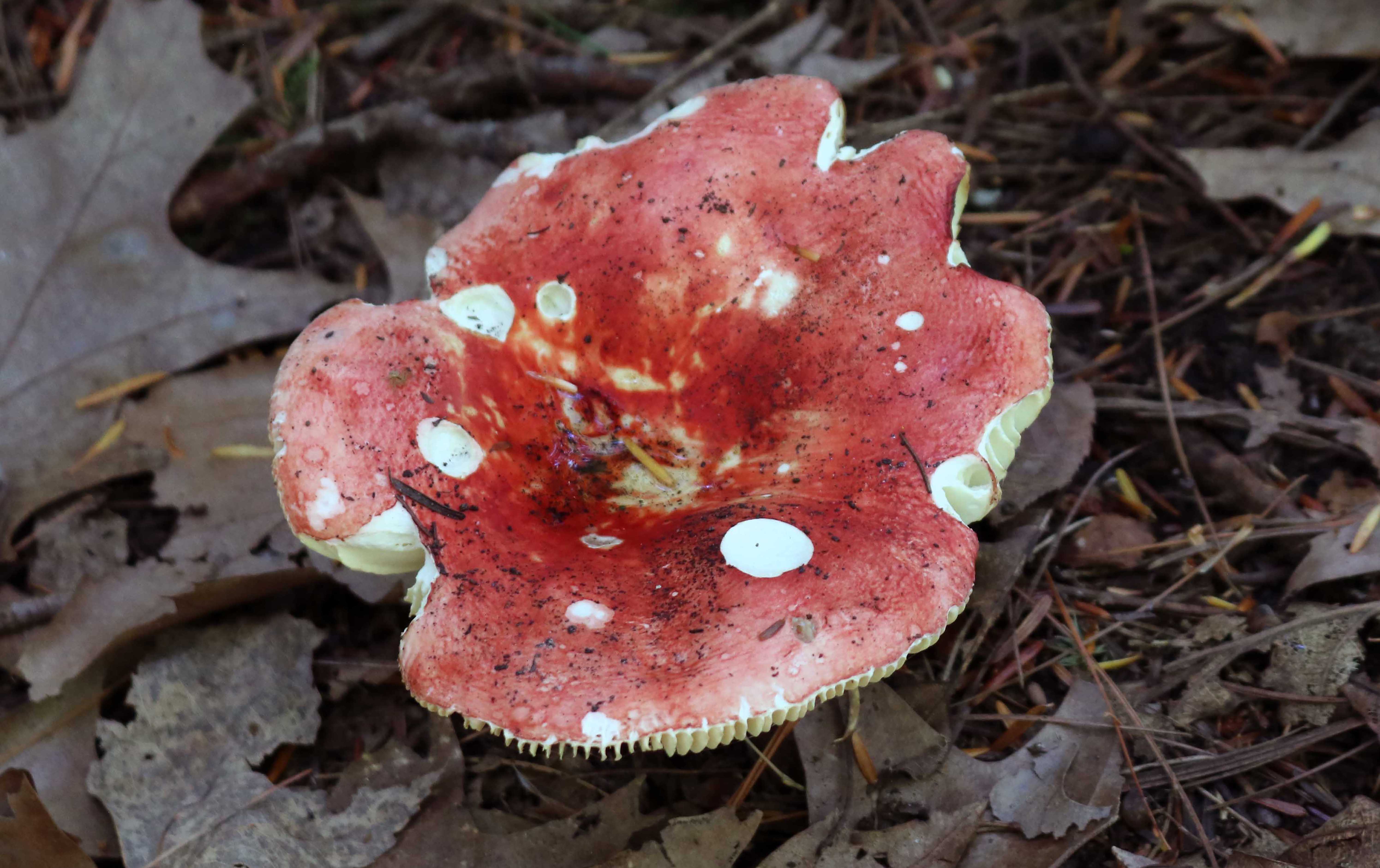
This is Russula cystidiosa, an oak-loving red mushroom with a bright red cap, a white stem, and a creamy to yellowish spore print.
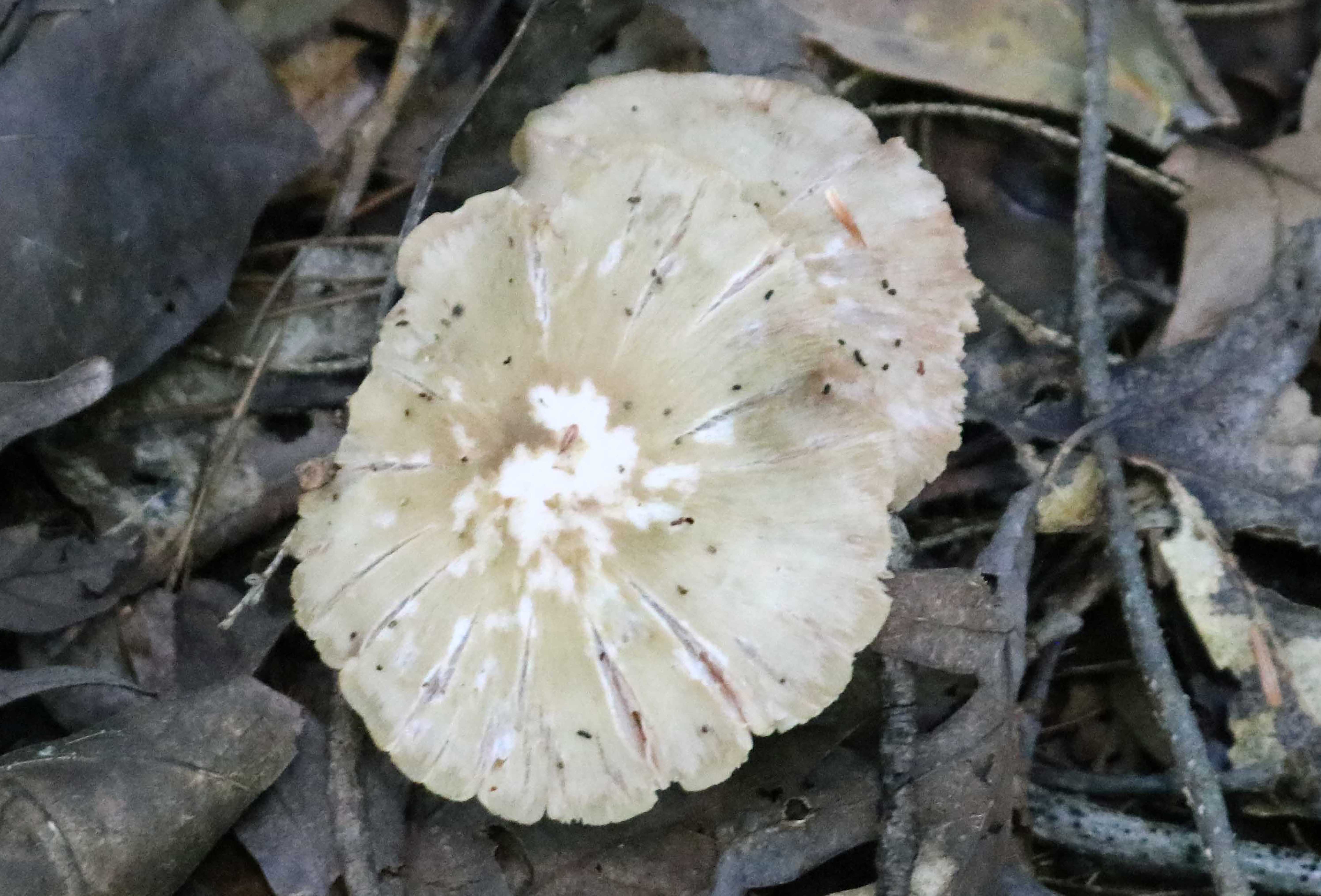
Megacollybia Platyphylla is a medium-sized mushroom that grows mainly on coniferous deadwood. It can be identified by its white spore print, brown to gray-brown cap, and a stem base often attached to white cords.

Albomagister – meaning Mr White in Italian – the name comes from its texture – is a genus of fungi in the family Tricholomataceae and this family has only one species.
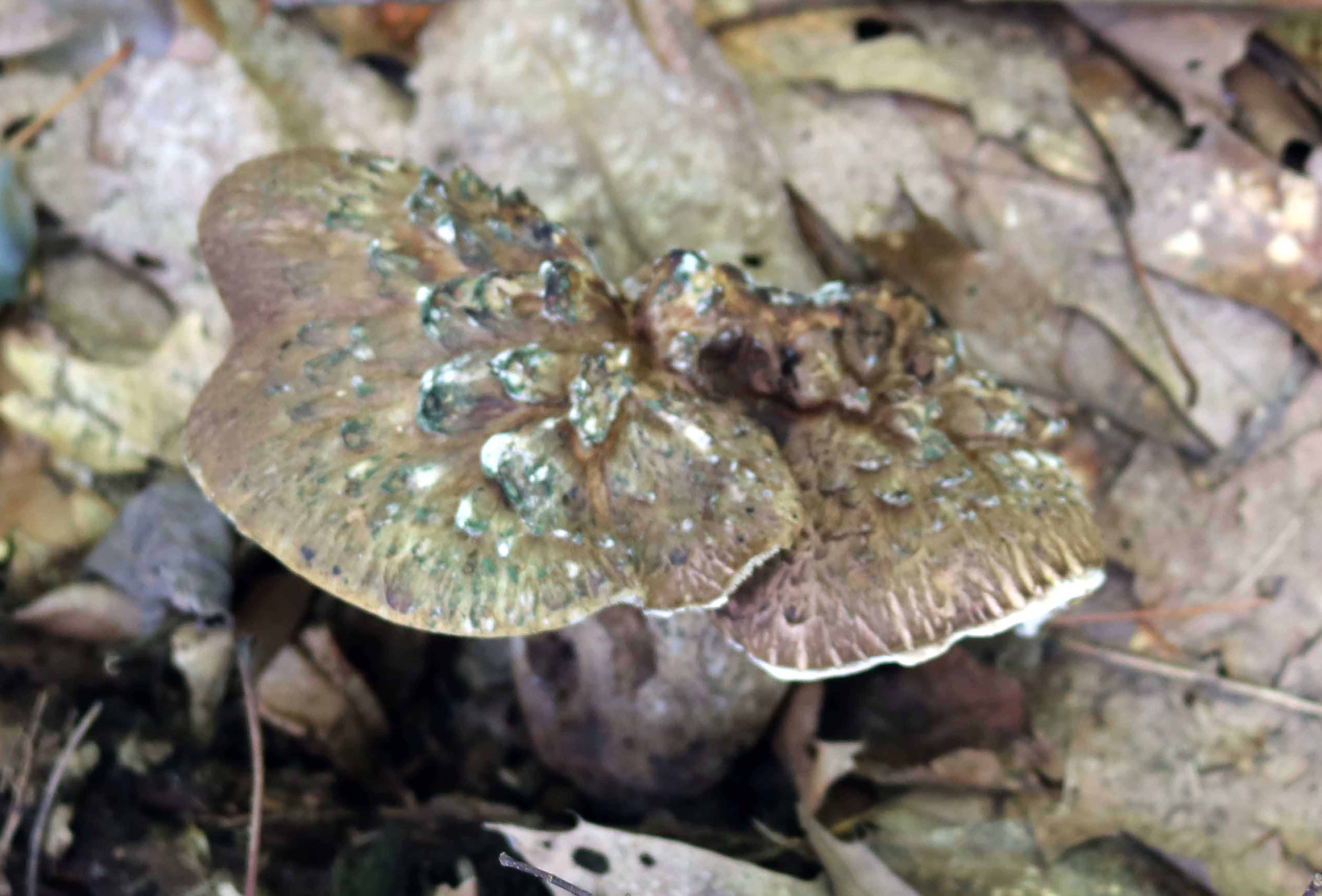
Polyporus Squamosus is an edible mushroom and is also known as Pheasants Tail as the pattern on the top of the cap that resembles pheasant’s feathers.
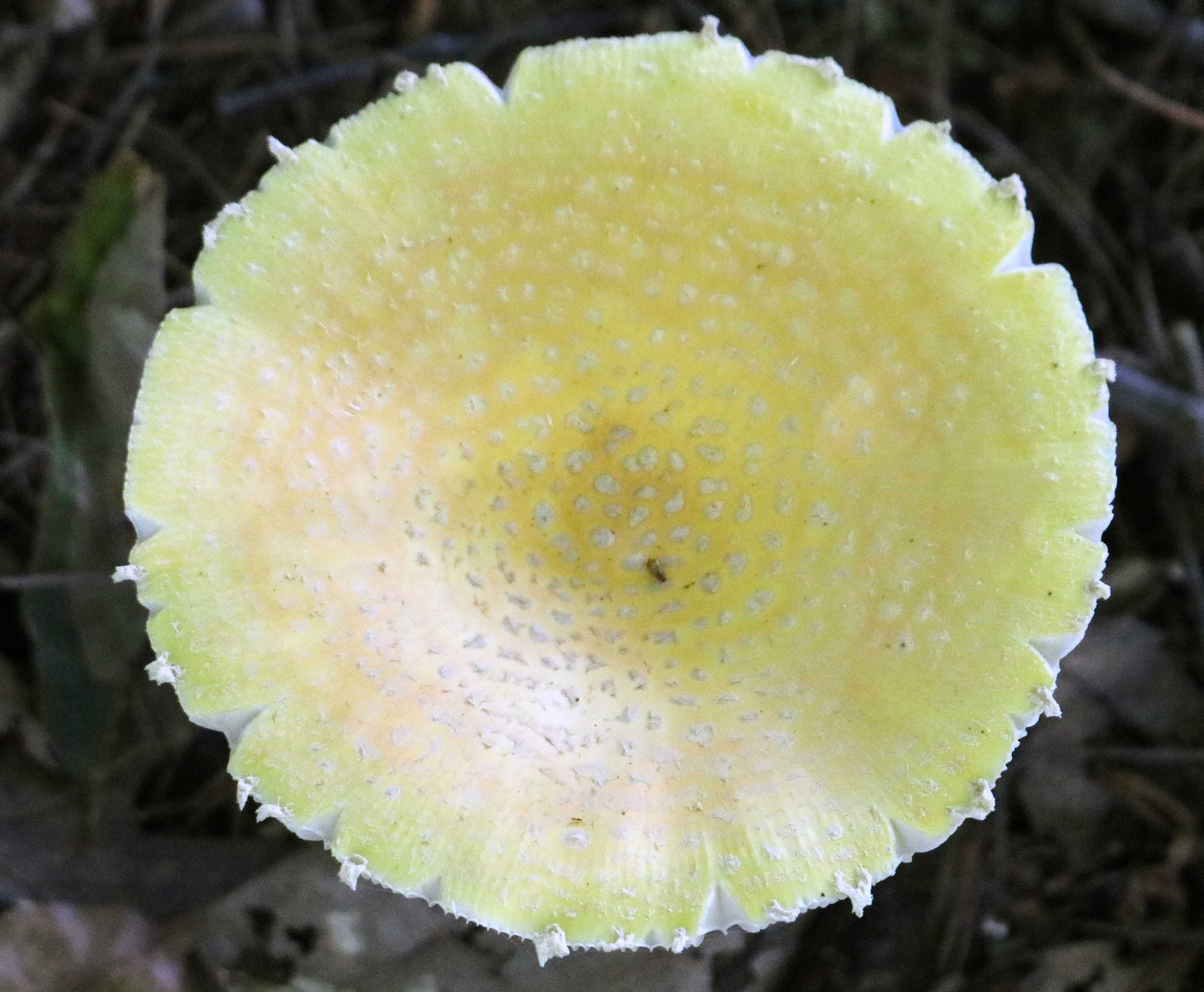
Leucocoprinus is a genus of fungi in the family Agaricaceae, an yellow mushroom with white spore prints.
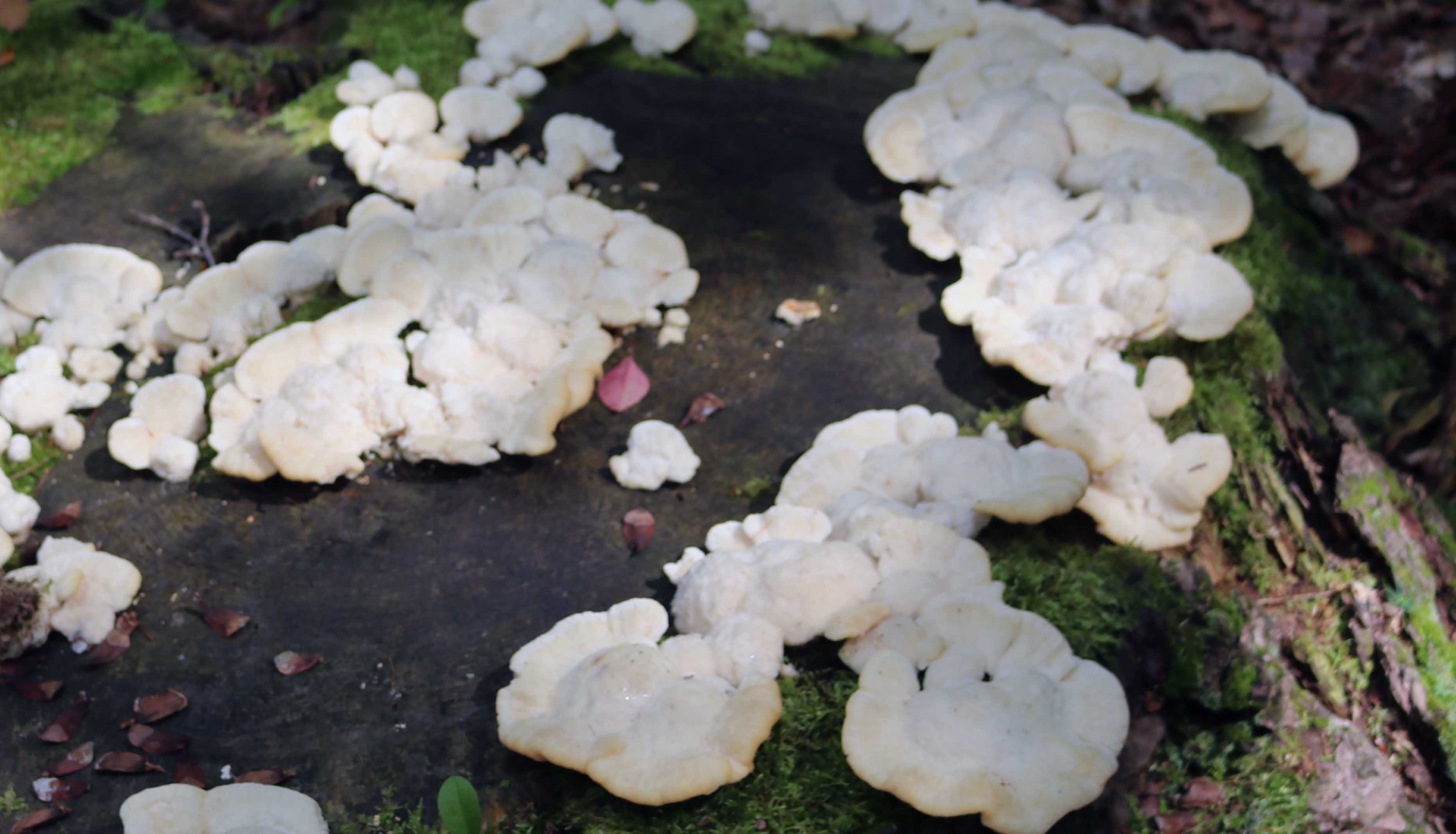
Powder-puff Bracket (Postia Ptychogaster) is a species of fungus in the family Fomitopsidaceae. The fungus resembles a powdery cushion that grows on stumps and logs of rotting coniferous wood.
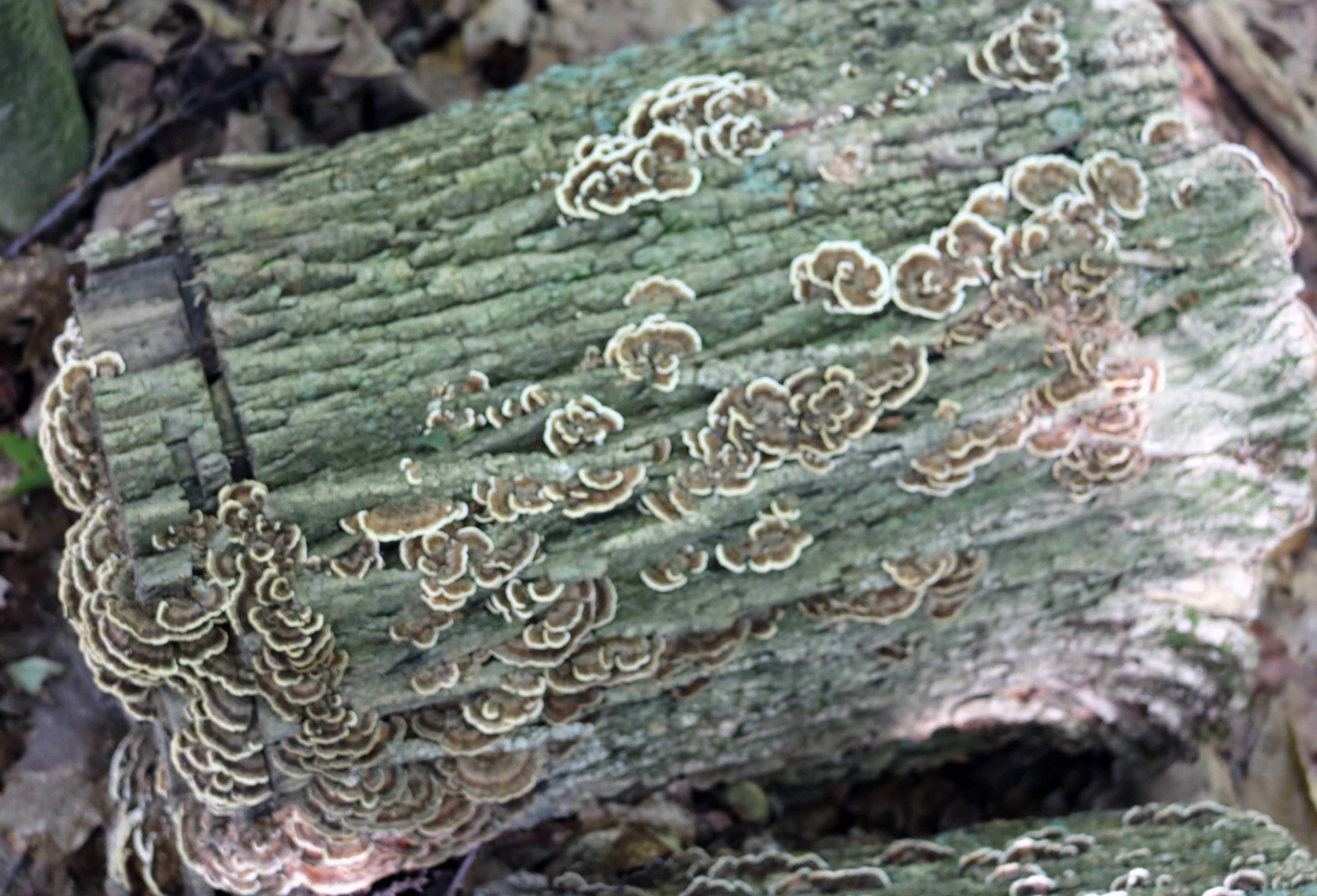
Turkey Tail fungus (Trametes versicolor ) grows on dead logs with concentric brown rings akin to a turkey’s tail. The fungus has been used in traditional Chinese medicine for many years to treat pulmonary diseases.

Ramaria Stricta, commonly known as Coral Mushroom. The name Ramaria is derived from Ram– meaning branch –aria meaning furnished with – as these mushrooms are furnished with numerous branches.

Frosted Lichens grows on hardwoods and requires bark with high pH and high moisture holding capacity. The lichen appears to have suffered a dramatic population decline due to air pollution and timber harvest.
Nature alone is antique, and the oldest art a mushroom. – Thomas Carlyle, Scottish essayist, historian, and philosopher
 REJINCES