
Recently an Indian Army Veteran friend chose to take his own life. Such decisions are often very complex and invariably there is a psychological dimension. He was afflicted by oral cancer and by and large we presume that it was an issue of the threshold of pain tolerance combined with a sense of hopelessness that came from the lack of response to prolonged medical treatment. That probably pushed him beyond the edge. He was in obvious excruciating pain; neither could he speak, nor could he eat solid food. He must have deliberated the consequences of his action on his family. It was his personal decision, and he did not disclose it either to his wife or to his friends. The decision to end his life and say goodbye to his near and dear ones, would have been taken with a deep sense of grief and sadness.
This episode brought into focus the need for euthanasia. In India, euthanasia is a crime. Section 108 of the Bharatiya Nyaya Samhita (Indian Penal Code) deals with the attempt to commit suicide and is punishable. So here the situation was one where his near and dear ones could be of no help in arriving at and executing a difficult decision. It is not an impractical utopian world. There are places in the modern world where such decisions could have been arrived at jointly with the help of near and dear ones and implemented in as painless a manner as possible. To my mind the concept of euthanasia is one of compassion.
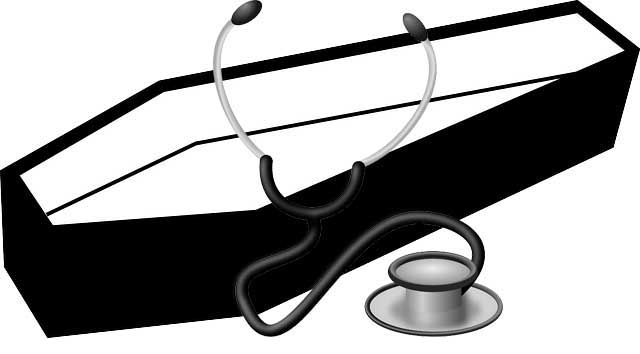
The difference between euthanasia and physician-assisted death lies in who administers the lethal dose. In euthanasia, this is done by a doctor or by a third person, whereas in physician-assisted death, this is done by the patient himself. There is also a concept of active and passive euthanasia. The latter merely refers to the aspect withdrawal of all measures that support life artificially and allowing the patient to die naturally.
Many governments and societies base their laws regarding criminality of suicide and homicide on the belief that human life is God-gifted, and no human has the right to take it away. It is sadly ironic that most countries that legislate death penalty do not provide for any form of assisted dying. It is a crime in these jurisdictions to assist another person in ending his/her own life. As a result, people who are grievously and irremediably ill cannot seek a physician’s assistance in dying and may be condemned to a life of severe pain and intolerable suffering.
A person facing this prospect has two cruel options; either he/she can take his/her own life prematurely, often by violent or dangerous means, or he/she can suffer until he/she dies from natural causes. In all the jurisdictions that allow some form of assisted dying, the death penalty is not in vogue. Only in a small portion of the developed world is some form of euthanasia legally permissible. In the developing world it is almost universally conspicuous by its absence except some cases of passive euthanasia. Even in the US there are barely 10 states where it is legal.
There is a related concept of voluntary death called Voluntary Stoppage of Eating and Drinking (VSED.) Although instances of abuse are possible here too, as in cases of euthanasia, it is a practical alternative in jurisdictions where euthanasia is not legal. Dr Michael Gregor in his best-selling book How Not to Age dwells on this concept. The ancient Hindu concept of Samadhi may well encompass VSED. Samadhi is a state of intense concentration achieved through meditation. In Hindu yoga this is regarded as the final stage, at which union with the divine is reached before or at death.
Many who witnessed VSED describe it as peaceful, dignified and painless. It is believed that terminal dehydration causes a painless feeling in the last stages, and one drifts gradually from deep painless sleep into death. Dr Gregor gives an account of a physician who witnessed his mother’s death adopting this method and who describes it as almost ideal.
In 2016, Canada became the first Commonwealth country to legalise assisted dying. A person suffering from a grievous and irremediable medical condition can receive Medical Assistance in Dying (MAiD) if they meet the following criteria:
- Be at least 18 years old
- Be eligible for Canadian health insurance
- Be capable of making health care decisions
- Have a grievous and irremediable medical condition
- Make a voluntary request for MAiD
- Give informed consent after being told about other treatment options, including palliative care
A physician or nurse practitioner must determine if the person meets the eligibility requirements, and a second physician or nurse practitioner must confirm. The person must also sign a written request for MAiD, and have a witness sign it. Before receiving MAiD, the person must be given the opportunity to withdraw the request.
MAiD affords dying people autonomy and compassion during the most difficult time, improves end-of-life care even for those who don’t choose the option, and costs states almost nothing to implement. Among those who sought MAiD in Canada, the reasons were disease-related symptoms, loss of autonomy, loss of ability to enjoy activities, and fear of future suffering.
Please refer to Medical assistance in dying: Overview – Canada.ca.

On March 27, 2018, the Brickendens – George (95) and Shirley (94) died holding hands in their bed in a Toronto retirement home. The Brickendens are one of the few couples in Canada to receive a doctor-assisted death together, and the first to speak about it publicly. They wanted to die at a time and place of their choosing.
The Brickendens were married for 73 years. He was a Navy Veteran and she an Air Force Veteran. George was the co-founder of an insurance company and an accomplished show jumper whose family bred horses. Shirley was a renowned artist whose watercolours and acrylics were sold through Montreal galleries and the Art Gallery of Ontario. Their children who stood at the foot of the bed, said that the couple drew their last breaths at almost the same moment.
In the case of Ms Lee Carter, she took her mother Kathleen, 89, to Switzerland in 2010 for a doctor-assisted death because of a degenerative spinal condition. Kathleen said in an affidavit she did not wish to live as an ironing board, flat on her back, unable even to read a newspaper. Ms Lee Carter said that after her mother’s death, the entire family were elated as Kathleen got what she wanted. The case of Kathleen led to the Supreme Court’s decision, which gave Canadians a choice to die with dignity in their own country, surrounded by friends and family.
If forced into a choice between MAiD and VSED what would you choose?
Currently Australia, Austria, Belgium, Colombia, Luxembourg, Netherlands, Spain and Switzerland, permit some form of assisted dying. In the US, several states allow assisted dying, including California, Colorado, Hawaii, Maine, Montana, New Jersey, New Mexico, Oregon, Vermont, and Washington.
In most countries/jurisdictions where euthanasia is legal, the process of legislation often followed prolonged public debate, and almost everywhere judicial intervention forced the passage of such legislation. While opponents to legalisation emphasised the inadequacy of safeguards and the potential to devalue human life, a vocal minority spoke in favour of reform, highlighting the importance of dignity and autonomy and the limits of palliative care in addressing suffering. The majority expressed concerns about the risk of abuse under a permissive regime and the need for respect for life.
For those suffering unbearably and coming to the end of their lives, merely knowing that an assisted death is open to them can provide immeasurable comfort – Bishop Desmond Tutu
The terminally ill also have rights like normal, healthy citizens do and they cannot be denied the right not to suffer – Christaan Barnard – South African cardiac surgeon who performed the world’s first human-to-human heart transplant operation

 REJINCES