
It was fascinating to watch Dr Suresh Nambiar from Kannur, Kerala – singing a Hindi song with such elan and perfect diction. Kannur is a district in Northern Kerala and part of Malabar – comes from a combination of the word Mala (hill) and the Persian/Arabic word Barr (country/continent).
Malabaris – People hailing from Norther Kerala – have a rich heritage and association with Hindustani Music and Ghazals. Most performers in various singing competition hail from Malabar. Let us look deeper into it.
All the traders – Arabs and Europeans – headed for the Malabar Region in search of spices abundantly available. With trade came Judaism, Christianity and Islam to the region. Various ports operating dhows (small sea faring vessels) along the Malabar Coast on the Arabian Sea flourished in both trade and cultural exchanges.
In Malabar, cosmopolitan Hindustani film music too underwent local adaption with the traditional musical genres, such as Mappila songs of Malabari Muslims. Each port city in Malabar has different stories to narrate about their encounters with Hindustani music and its widespread practice among denizens.
The port city of Ponnani was famous from medieval times for its political and economic importance. In those days, dhows predominantly plied between Bombay and Ponnani, loaded with spices, salt and timber. The crew known as Khalasis (dhow workers) carried back ghazals, qawwalis, film songs and musical instruments with them from Bombay ports. During their month-long arduous journeys in dhows, music sessions were the only form of entertainment on board. Along with Mappila and folk songs, they sang Hindustani songs learned from their port calls. They brought what they practised to Malabar and fused it with Mappila songs resulting in Kadalpattus (Sea songs).
Kochi is a city of multiple ethnicities – Jews, Europeans, Anglo-Indians, Arabs, Bengalis, Gujaratis, Marathis, Deccanis, Kutchi Memons, etc. They came as traders or travellers and many settled in Kochi. Jew Town in Kochi with its Synagogue is a must see for any tourist.
The Cheraman Juma Mosque, claimed to be built in 629 CE to be the first mosque to be built in India. St Thomas – a disciple of Jesus – is believed to have brought Christianity to the shores of Malabar.
Through this kaleidoscope of cultures evolved a hybrid culture of music and art. Among them, the Deccanis, who came from Hyderabad were famous for their Hindustani Ghazals and Qawalis, which became popular among the locals.
Calicut, another thriving port city too was a melting pot of cultures, especially for music and musicians. The people welcomed Hindustani musicians from the far North to celebrate important events and entertain at their evening clubs patronised by the trading community in Calicut. Unlike in North India, in Malabar, there were no royal courts or the gharana system to offer patronage for such itinerant artists. The clubs organised Mehfils and the artists were in great demand. Many of these artists settled in Calicut and were prominent in spreading Hindustani Music in the area. They ran music schools and earned a number of disciples and patrons.
Jan Muhammed, gifted singer from Bengal, was a well-known name among the Hindustani musicians of the 1920s, who frequently visited Calicut for mehfils, and later lived in this city after marrying a native woman from Calicut.
By the end of the 1940s, gramophone music and records became popular among music lovers of Calicut. The Calicut Phono House was one such pioneering centre, where people crowded to listen to their favourite Hindustani film songs and other classical numbers. The broadcasting of Binaca Geetmala from Radio Ceylon, which aired Hindustani film hit songs on audience requests, was also very popular.
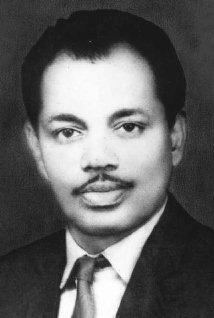
We should remember Mohmad Sabir Baburaj (MS Baburaj) who rose from being a street singer as a teenager, to lead singer in marriage mehfils, a crowd puller in Communist Party programmes, a music director in theatre, to being a leading music director in the Malayalam films. He composed a number of evergreen Malayalam hits, introducing a unique style blending Hindustani raga based music such as khayal, ghazal, qawwali and tumri, with the local folk Mappila (Muslim) songs.
The Baburaj – P. Bhaskaran – Yesudas combination produced many of the most memorable Malayalam tunes of the 1960s and 1970s. Most of his classic duets were sung by P Leela, K. J. Yesudas and S. Janaki, each recording solo Baburaj compositions as well. Many of Baburaj’s songs remain very popular in Kerala, with songs like ഒരു പുഷ്പം മാത്രം’Oru Pushpam Maatram, (Lone Flower) is frequently rendered on stage at various events.
There is a need for further research as to how Hindustani Music became so popular with Malabaris, irrespective of religion and caste. It has had an impact in the enunciation, pronunciation and diction of the locals in Malayalam, Hindi, Urdu and Arabic. Dr Suresh Nambiar’s singing is a proof of it.
 REJINCES