
After 27 years of the the murder of Donna Oglive on March 8, 1998, a team of investigators from Toronto Police using Investigative Genetic Genealogy (IGG) solved the murder mystery. On February 6, 2025, 50-year-old Ronald Gordon Ackerman, of Gander, Newfoundland, was arrested at Pearson International Airport, Toronto and was charged with First Degree murder of Donna Oglive.
The Toronto Police claimed that “with IGG, anybody who committed sexual assault or homicides over the past 40 or 50 years – if they’re still alive – they’d be expecting a knock at their door at any point.”
In Donna Oglive murder case investigations, the Genealogists of OTHRAM lab in Texas assisted the police who began tracking the Deoxyribo-Nucleic Acid (DNA) in 2022, leading to Ackerman’s family. Investigators were able to gather DNA samples and make a match in 2024.
IGG is a DNA technique that can help identify suspects in criminal cases and can lead to an arrest when a suspect’s DNA profile matches the DNA profile at a crime scene.
DNA is the building block of the human body – unique to everyone. This unique DNA is present in one’s blood, saliva, skin tissue, hair, and bone. Unlike one’s fingerprints, DNA does not change or alter throughout a person’s life span.
How does IGG work?
- DNA from a crime scene is uploaded to a genetic genealogy database.
- The database identifies genetic relatives of the person who left the DNA.
- A family tree is built using genetic relatives and public records.
- Leads are developed to identify the person from the family tree and case information.
- The Police narrows down the suspect pool to a small group of relatives.
- The Police examine each suspect until they find a direct DNA match.
- The Police arrest if the DNA profile matches.
In 2022, IGG helped identify a suspect in the murders of two women in Toronto in 1983. In 2025, IGG helped identify the remains of a man found in the Detroit River in 2003. Recently, the police used IGG to identify and arrest the suspect of two 1983 murders in Toronto. The Niagara Regional Police Service also used the IGG to locate a suspect in the 1999 murder of a 26-year-old Torontonian.
IGG by Toronto Police
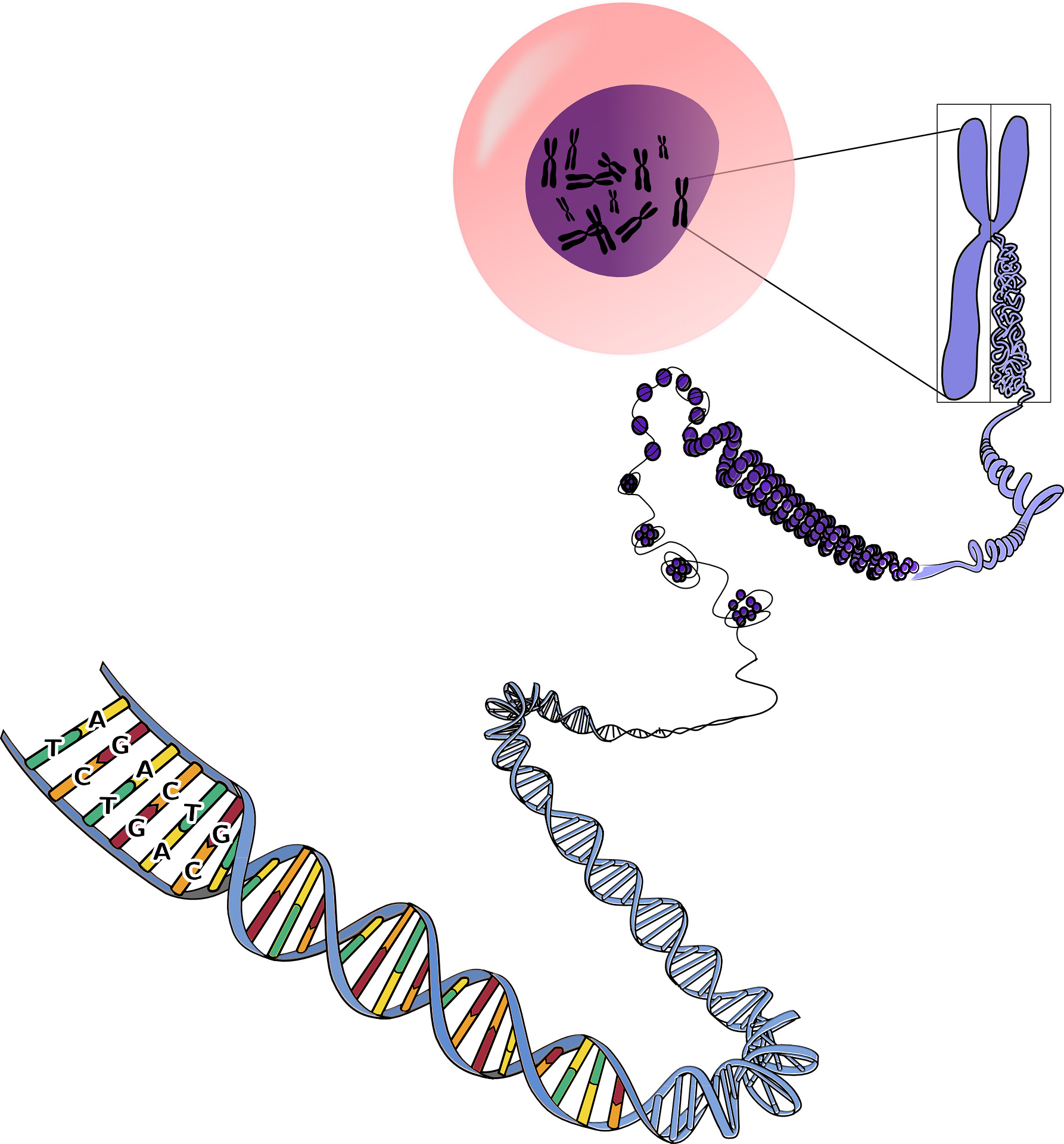
When the police recover DNA from a crime scene, it is sent to the Centre of Forensic Science to create a Short Tandem Repeat (STR,) or a DNA profile with 21 DNA markers. The STR is uploaded to the national database. The STR is then sent to OTHRAM lab. With a DNA-sequencing machine, from the STR, a Single Nucleotide Polymorphism (SNP) is generated with hundreds of thousands or even millions of DNA markers that show a person’s skin colour, eye colour, hair colour, where their family is originally from.
The police upload an SNP profile to sites like GEDmatch or FamilyTreeDNA. They extract a list of people on file who match with the offender’s DNA – anywhere between zero and a couple hundred. If they match with a close relative, they will finish a case in 24 hours. If it’s fourth or fifth cousins, it takes six or eight months to solve the case. When they narrow down search to one family of interest, then it is a more of traditional police investigation.
DNA evidence is powerful, but it does mean that the DNA taken from a suspect is an absolute guarantee of the suspect’s guilt. The technique has the following limitations: –
- Contamination from other sources during collection.
- Degradation of DNA due to environmental factors.
- Human error in analysis.
- Difficulty interpreting complex or mixed DNA profiles.
- Sample size of the DNA database.
- Criminals planting fake DNA samples at a crime scene.
DNA evidence contains a wealth of personal and genetic information that can be used to identify an individual or a family. The collection and analysis of DNA evidence can also result in the creation of large DNA databases that can be used for purposes other than the investigation of a crime. This can result in the violation of privacy rights and civil liberties, as well as the potential for abuse and misuse of the information.
 REJINCES