
Indian Premier League cricket matches were suspended in the wake of the recent standoff between India and Pakistan. Sunil Gavaskar, legendary Indian cricket player, has suggested that the remaining 17 matches be played without cheerleaders and DJs- as a respect to those who lost their lives in the recent conflict.
What about the soldiers??

On 08 March 2019, during India-Australia One Day Cricket match at Ranchi, the Indian players were wearing disruptive pattern Indian Army caps with the BCCI logo in front and the manufacture’s Nike logo at the back. I scurried through the internet to catch the news about the new headgear Indian players were wearing.
It was Lieutenant Colonel MS Dhoni, a legend from Ranchi, the wicket keeper, who came up with the novel idea. He handed over the cap to Virat kohli, the Indian Captain, and also to all team members and support staff before the start of the match. Captain Kohli at the toss said “This is a special cap, it’s a tribute to the Armed forces. We’re all donating our match fees of this game to the National Defence Fund. I urge everyone in the country to do the same, donate to the families of our armed forces.”
This must be the first time the Indian Cricket team must have shown such a gesture to the soldiers. Obviously, it had complete support from BCCI.
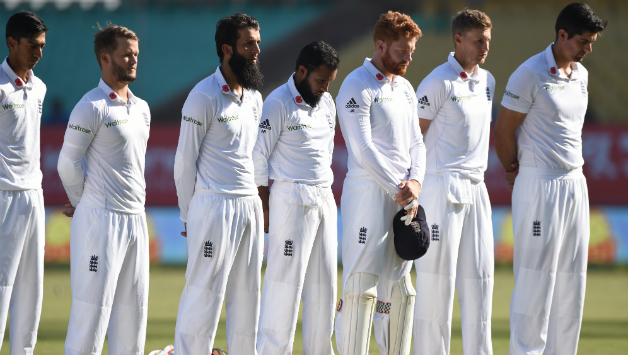
English Cricket Team that played a test match at Rajkot (November 9-13, 2016) were seen wearing the Red Poppy in honour of fallen soldiers to commemorate Remembrance Day (11 November). Will the Indian Cricket Team ever do so for the Armed Forces Flag Day (07 December)?
Few years ago, we watched a baseball game at Toronto between the Toronto Blue Jays and the Tampa Bay Rays. The Rogers Centre is the home-ground of the Blue Jays. The atmosphere was as electric as that of any cricket matches of the Indian Premier League.
During the innings interval, a sixty year old Veteran from the Canadian Army who was a Captain and had served in many UN assignments was called on to the centre and the Team Management of the Blue Jays presented him with a team shirt with his name printed at the back and with the team captain’s signature in the front. The entire stadium stood up to give the veteran a standing ovation – no one instructed anyone to do it, but was spontaneous. This is what is called patriotism.
Our son then said that during all the matches, a veteran from the armed forces or the police forces, who is a registered fan of the Blue Jays, is honoured this way.
Can we ever expect such a gesture at Mohali from the Kings XI Punjab or at Chennai from the Chennai Super Kings? Why one veteran, we can always honour a dozen at every match.
Will this ever happen in any Indian city? Will this remain a distant dream?
 REJINCES
There are countless acts of patriotism by fellow Indians that often go unnoticed. Each gesture is meaningful in its own way and cannot be compared. In India, patriotism remains strong and vibrant, even amidst the noise of political controversies.
The key difference lies in demographics and historical experience. In many Western countries, especially during the Second World War, nearly every household had someone who served—and often someone who was lost in battle. That deep, personal connection to the armed forces continues to shape public sentiment even today.
In contrast, India’s vast population means that large sections of society have never experienced war directly. Most have never faced conscription or lost a loved one in combat. This creates a natural disconnect for many. Yet, while the number of families directly connected to the defence forces may be relatively small, there are moments when the entire nation unites—rising as one in support of its soldiers and their sacrifices.
LikeLiked by 1 person