Long before it became a nationally mandated scheme, the mid-day meal program in Kerala had nurtured generations of students, built on a foundation of international aid and local community effort. I now recollect seeing it being played out first hand. Our father, a primary school headmaster in the 1960s and 70s, oversaw one of these early initiatives—a programme fueled by wheat, corn flour, milk powder, and vegetable oil from the US Agency for International Development (USAID) under the PL480 program.
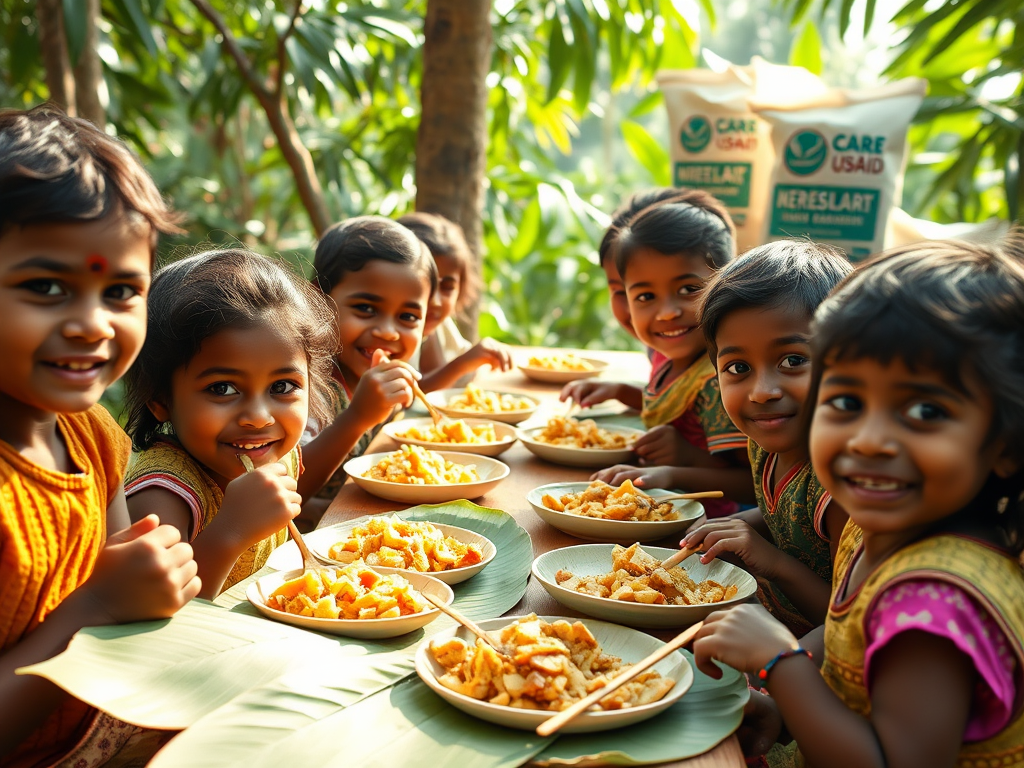
The operation was under CARE (Cooperative for Assistance and Relief Everywhere,) an independent non-governmental organization (NGO) that received funding from USAID. The program laid the groundwork for Kerala’s future success in its educational and consequent social endeavours.
The program was essentially only for the needy. The CARE inspectors visited the schools for a headcount of the children partaking the mid-day meals and that was the only day – we the kids from the families that were comparatively well to do and therefore not included in the program – were allowed to stand in the queue for the mid-day meal. A little cheating for a good cause! The numbers had to be inflated. Many a time, our friends kept a small portion of their meals for us and gave it to us when we returned to school after lunch break. It was something inexplicably philosophical to explain. The impoverished kept a little of their share for their friends who returned from home after a full meal. For us it was the novelty of the corn flour Uppuma and for them its was the innocence of friendship from the core of their heart.
In 1941, Kerala started the School Lunch Programme by the Travancore Government. Even earlier some sort of mid day meal program was initiated by the Madras municipal corporation on a small scale. In the 1950s K Kamaraj, the Chief minister of Tamil Nadu had initiated the mid day meal project as his pet project, but it did not meet with much success. Later in the 1970s MG Ramachandran (MGR) as chief minister revived the program successfully. On 28 November 2001, the Supreme Court passed an interim order that provided for the conversion of eight food security schemes into entitlements of the poor. Between 2002 and 2004, however, most Indian states instituted universal midday meals in primary schools. Now in India the program is universal, the central and state governments contributing to the funding. But by and large there is no doubt that the program undertaken by CARE in Kerala was an early successful role model.
A Tapestry of Support: How the Scheme Operated
The operation was a remarkable collaboration between international, state, and local entities:
- International Aid: The core ingredients were provided by USAID and distributed by CARE.
- State Support: The Kerala government supplied funds for onions, spices, and condiments to make the meals palatable.
- Local Community: Affluent families and local institutions like the church contributed additional funds, embedding the program into the community’s fabric.

The meals themselves – often uppuma made from the supplied ingredients – were prepared by the school peon, who doubled as the cook, and were served by teachers. In a quintessential Kerala touch, the students used the broad, circular leaves from the Macaronga Peltata tree (വട്ടയില vattayila) as eco-friendly plates.
More Than a Meal: A Lifeline for Many
The benefits of this scheme were profound and personal:
- Combating Hunger and Malnutrition: For many children, this was not just a snack but a vital lifeline. One classmate in Grade 3 confessed he hated weekends and vacations because, without school, he missed his one guaranteed stomach-full meal. The scheme directly tackled classroom hunger and malnutrition, ensuring children were nourished and ready to learn.
- Ensuring Education and Literacy: CARE inspectors conducted headcounts to ensure only the neediest children received the meal. On these days, those of us from more affluent families, who typically went home for lunch, were asked to stand in the queue to inflate the numbers and secure more resources for the school. This memory highlights the scheme’s primary goal: to incentivise school enrollment and attendance. It is undeniably one of the key foundations upon which Kerala built its famed 100% literacy rate.
- A Foundation for the Future: By ensuring children completed primary education, the scheme equipped a generation with the basic skills needed to thrive. It laid the essential groundwork for the mobility and social uplift that later defined Kerala, enabling thousands to seek opportunities across India and in foreign countries, particularly the Gulf region.
A Lasting Legacy
We have all heard of the adage There ain’t no such thing as a free lunch. Sometimes its untrue as in this endeavour. The CARE programme was more than a free lunch; it was a powerful act of care that nourished bodies, minds, and a community’s future. It seamlessly blended international aid with local compassion, creating a model of effective public welfare. The memories of tasty uppuma on a vattayila leaf are not just merely emotive nostalgia; they are testament to a successful policy that understood a simple truth: a child cannot learn on an empty stomach. This pioneering initiative paved the way for the universal mid-day meal scheme that India implemented decades later, leaving a lasting legacy on the nation’s educational and social landscape.
 REJINCES
I also enjoyed CARE food at times, later on I read about the driving forces behind it, much deeper than humanitarian.
Click to access 1993-06_India_US_Estranged.pdf
Your blog is very interesting.
LikeLiked by 1 person