Canadian Spring & Weeping Pussy Willow

Flowering of the Weeping Pussy Willow signals the onset of spring in our garden.

The Salix Caprea ‘Pendula,’ commonly known as the Goat Willow or Weeping Pussy Willow, which belongs to the Caprea genus of flowering trees. It is also known as Kilmarnock, as the tree was first commercially sold in 1853 by Thomas Lang of Kilmarnock, Scotland.
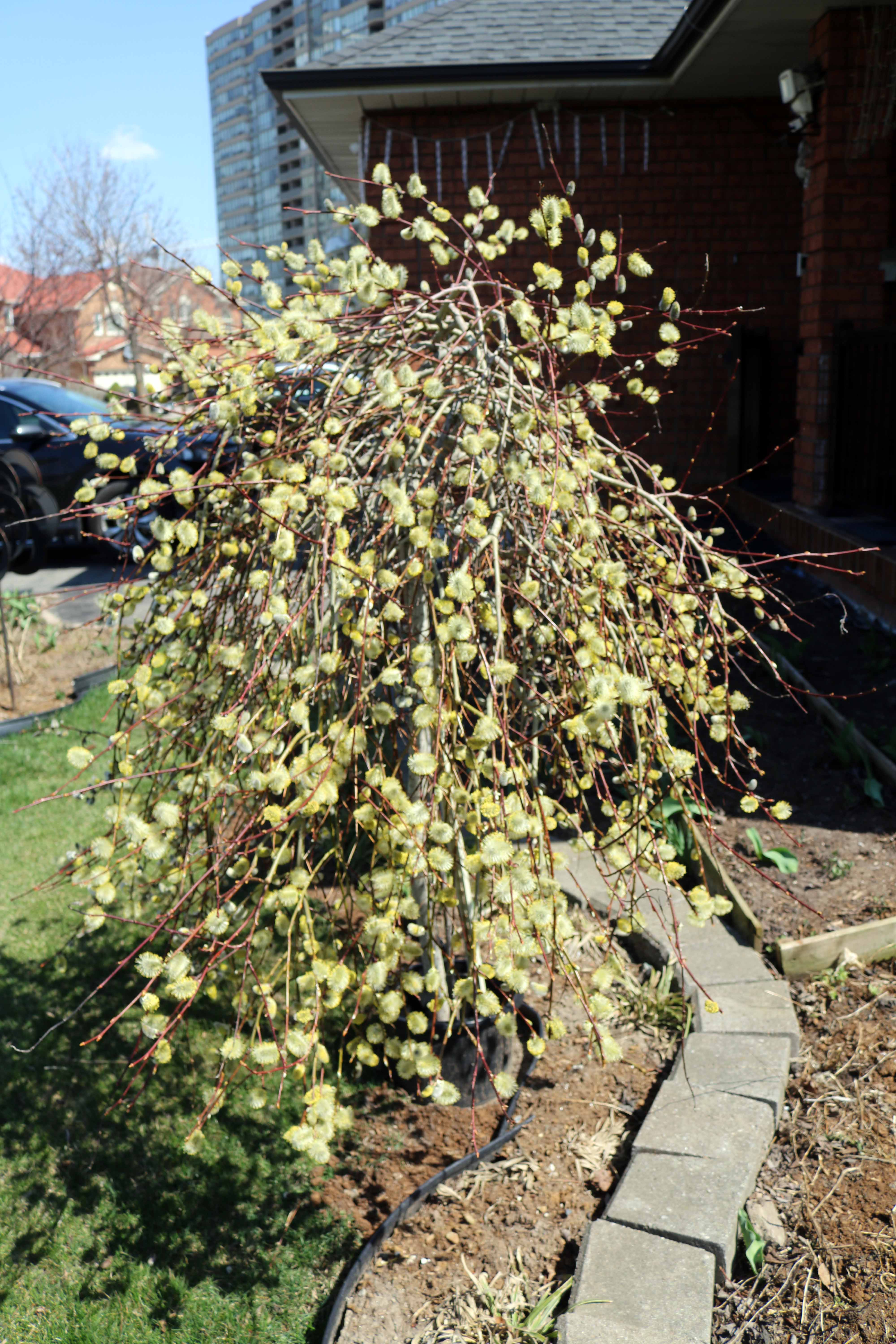
This tree is grafted – a Weeping Pussy Willow grafted on top of a regular Pussy Willow trunk. The tree grows pendulous branches or weeping branches and can reach up to 8 feet, while the spread of the tree can also be around 6 feet.

The weeping pussy willow is referred to by poets and philosophers as the tree of enchantment. It relates to all that is feminine – dreaming, intuition, emotion, enchantment, healing and revitalisation. The willow’s flexibility symbolises resilience and inspires us to move on with life.
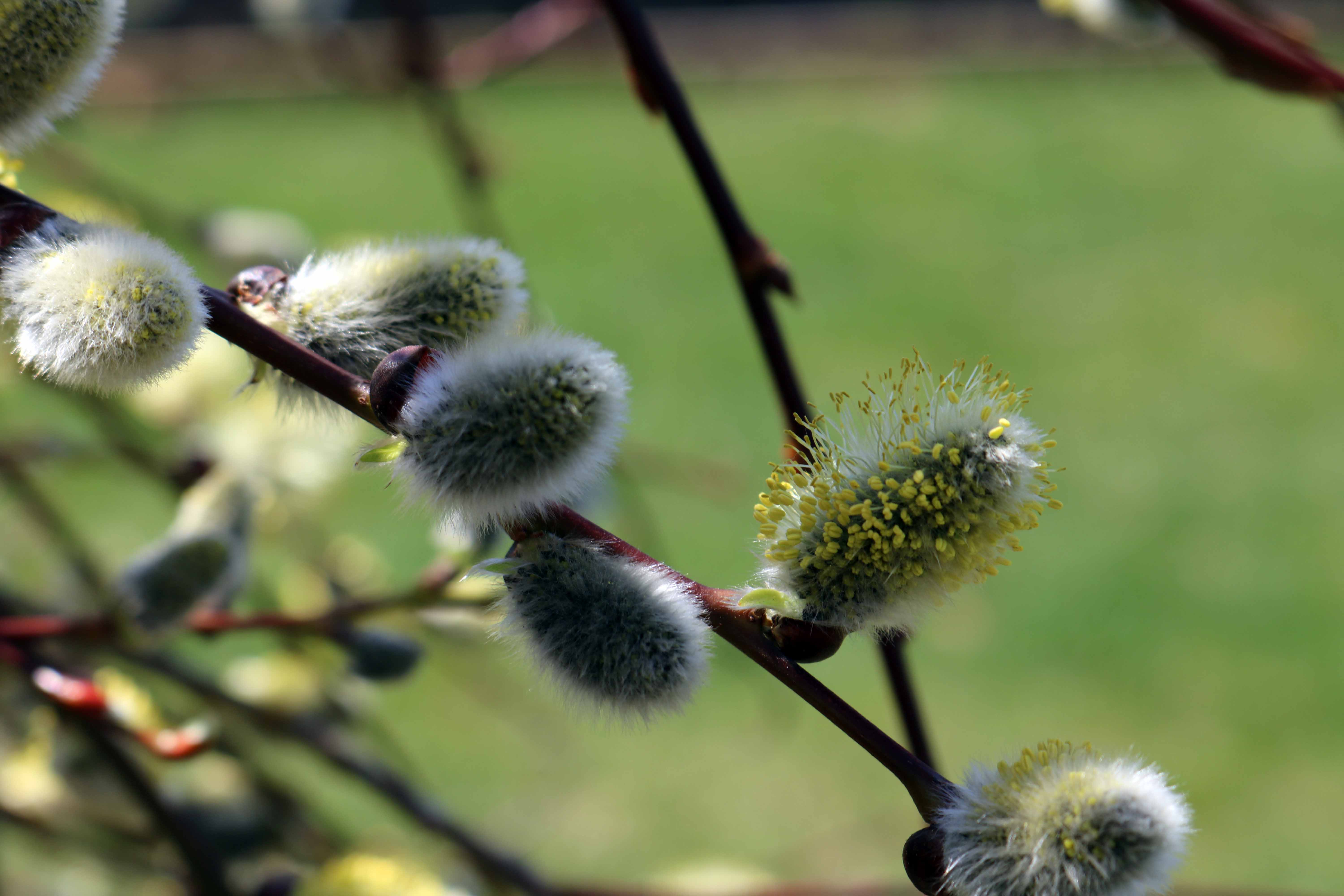
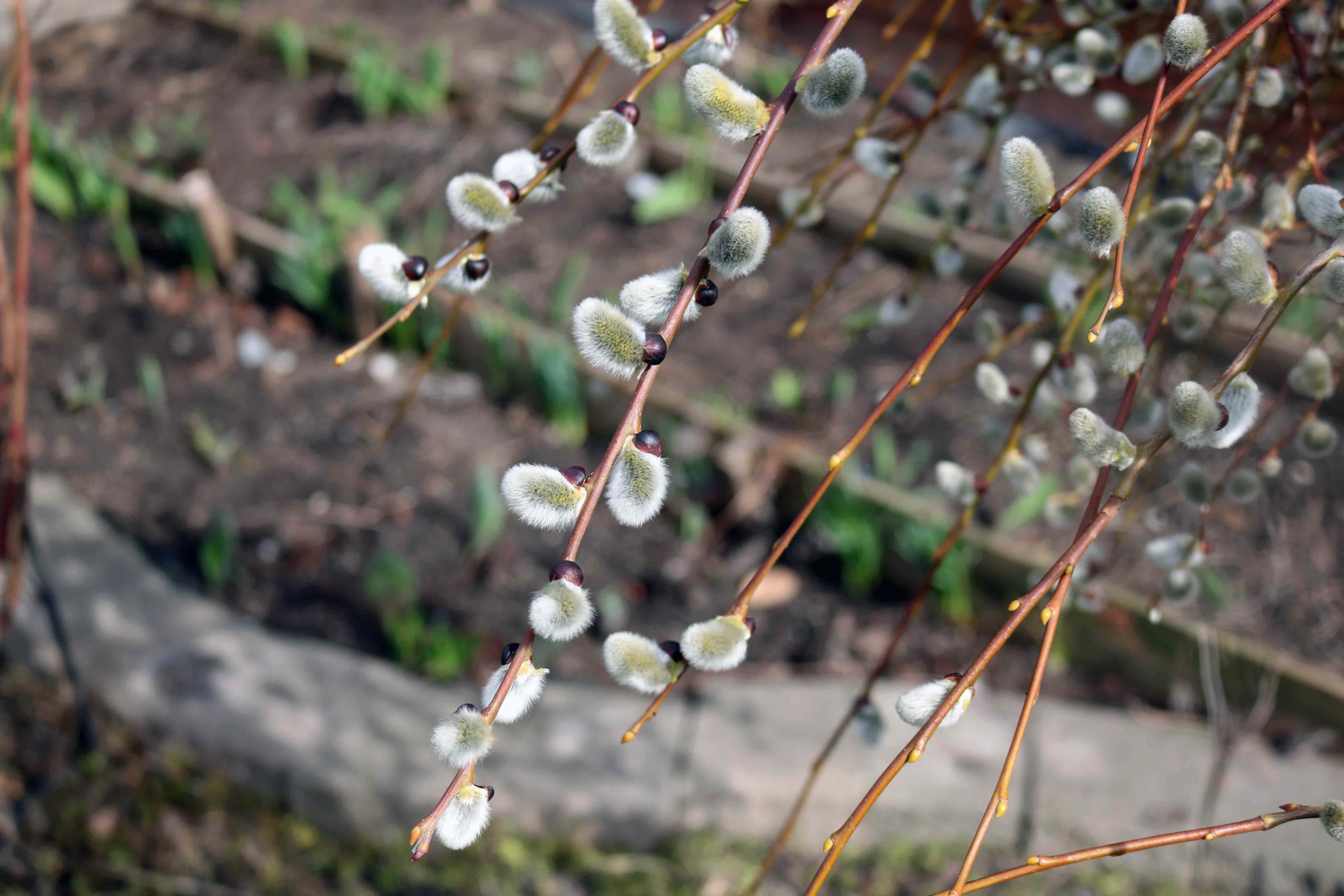
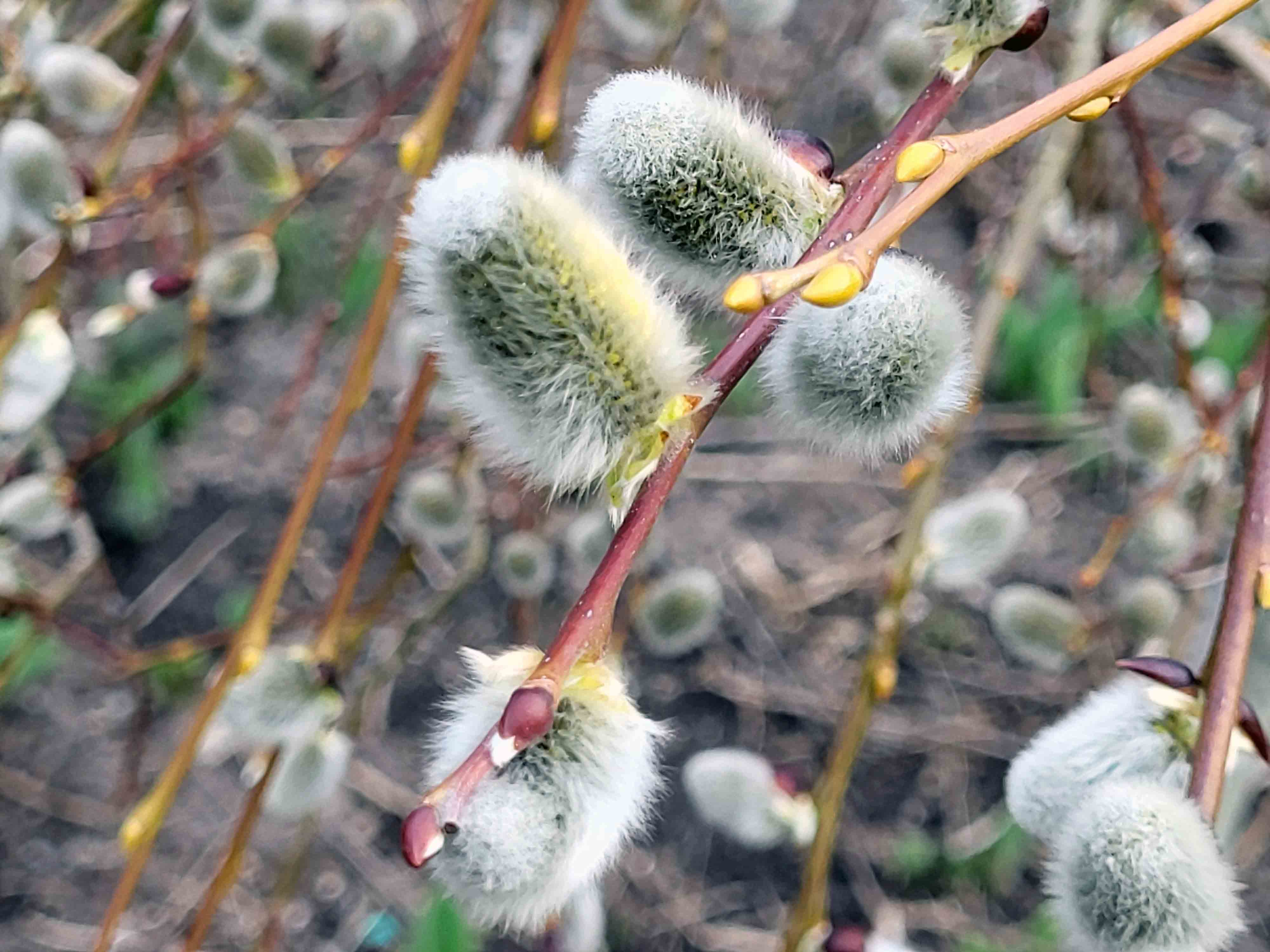
Fuzzy nubs start to appear along the branches, even before the leaves sprout. It is to increase the chances of pollination by wind and the leaves do not get in the way of the pollen riding the wind.

These nubs are flowers that sprout just before they fully bloom. The soft coating of hairs acts as insulation to protect these early bloomers from cold temperatures. Most other willows make similar flowers. The tree derives its name from these soft silver tufts that resemble tiny cats’ paws, feeling so much like cat fur.

Even in full bloom, willow flowers hardly look like flowers at all. They have neither any petals nor any fragrance. Such flowers are called Catkins, derived from the old Dutch word Katteken meaning a kitten. Alder, Birch, Beech, Hazel also produce catkins.

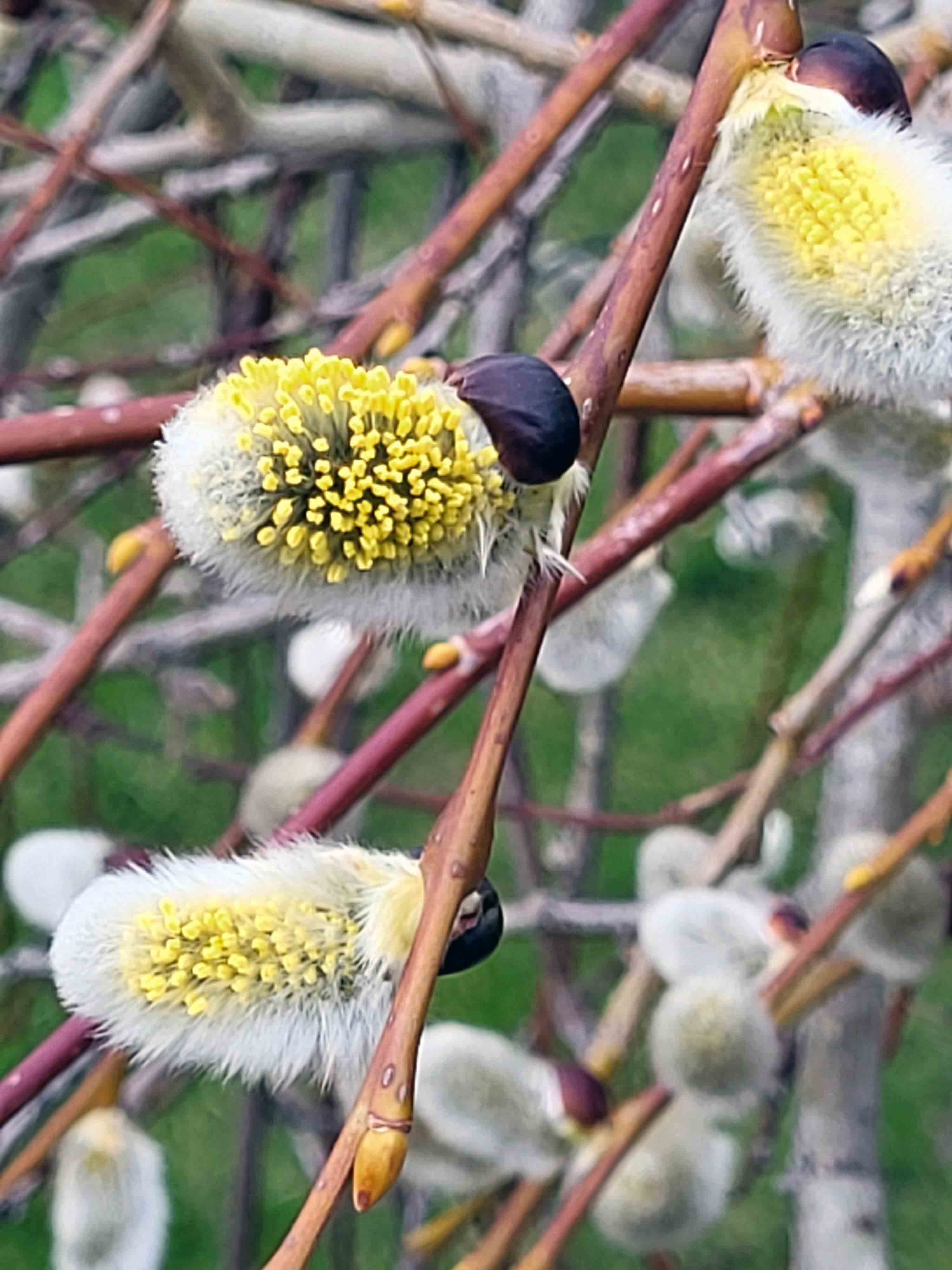
Pussy willows are Dioecious, meaning there are male and female plants. Only male plants produce the fuzzy flowers. The flowers on female plants look more like greenish hairy caterpillars. The male catkins begin to look yellow when the pollen develop on the tips of the anthers.

Catkins usually don’t rely on pollinators to spread their pollen. Instead, they release it into the wind, where it may or may not land on the female flower parts. To hit their targets, the catkins produce a large volume of pollen. Such a massive quantity of pollen released in the atmosphere results in many humans developing allergies and breathing difficulties during this period.

These trees thrive both in sunny sites and sites with partial shade. This willow will need some sun in the afternoons. These trees are tough and are easy to maintain. The tree needs a stake until the roots are well anchored.

Spring Snowfall

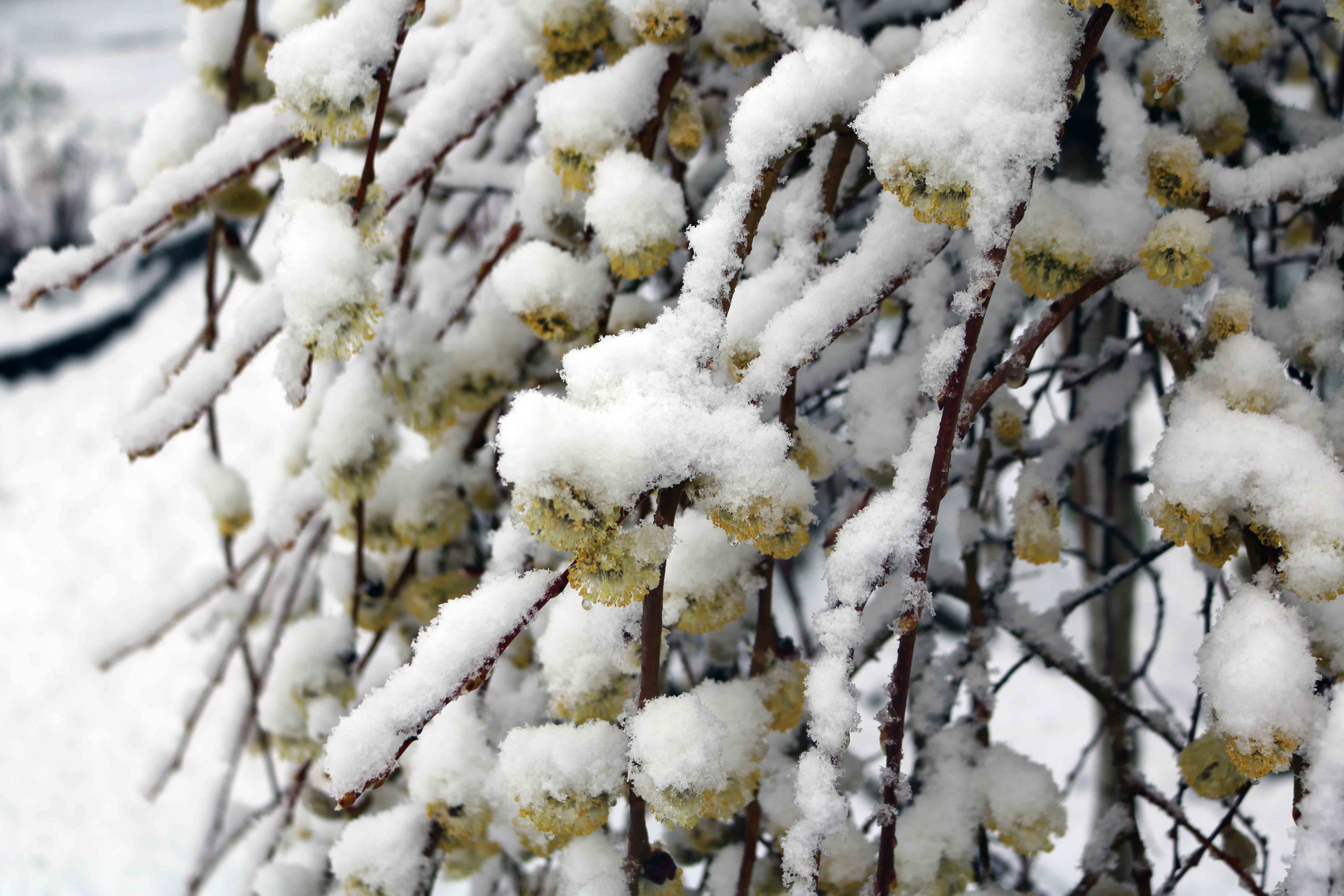
Easter Monday, April18, 2022, 4 PM – we were in for a surprise – Snowfall after the onset of Spring with the Spring Equinox on 20 Mar 2022.  This date marks the astronomical first day of spring around the Northern Hemisphere. In the Northern Hemisphere, March equinox (Spring Equinox or Vernal Equinox) is when the Sun crosses the Equator, heading North. This is Utttarayana as per Hindu Astronomy. After this date, the Northern Hemisphere is tilted more toward the Sun, resulting in increasing daylight hours and warming temperatures. 
Environment and Climate Change Canada (ECCC) dutifully announced the arrival of Spring on March 20 and I obediently put away the snow-blower and the snow shovels in the shed.  The weather is expected to be warmer during the final days of April, but a cooler pattern is expected for early May.
The snowfall predicted was for about eight inches, what came down may be a bit more.  Blame it on Climate Change or Global Warming!
It appears that Mother Nature too was tricked by the weather.  Daffodils have already sprouted and grown over eight inches tall. They will all thrive through this Spring-Snow-Storm and will flower in a fortnight.
It is a Canadian saying that ‘April rains bring in May flowers.’ Tulips in our garden are also getting buried under the snow.  What will April snow bring this May?
The Weeping Pussy Willow catkins flowered, and they will lose their pollens with the snow piling on them. Some of the flowers in the inside will survive this onslaught of snow. 
A tricky storm track and a delicate temperature gradient hovering around 2oC resulted in this unprecedented spring snowfall.  During this time of the year, the difference between a snowfall and a chilling rain is only a few degrees Celsius. 

Weeping Pussy Willow

The very first flowers that appear in our garden on the onset of Spring is on the Weeping Pussy Willow.  The Salix Caprea ‘Pendula’ is commonly known as the Goat Willow or Weeping Pussy Willow, which belongs to the Caprea genus of flowering trees.
The tree grows pendulous branches and can reach up to 8 feet, while the spread of the tree can also be around 6 feet.
Fuzzy nubs start to appear along the branches, even before the leaves sprout. The reason for this is so that the leaves don’t get in the way of the pollen travelling on the wind, so the chances of pollination are increased.
These nubs are flowers that sprout just before they fully bloom. The soft coating of hairs acts as insulation to protect these early bloomers from cold temperatures. Most other willows make similar flowers, and since they’re among the very first to bloom, they’re especially delightful—they signal the onset of spring. The tree derives its name from these soft silver tufts that resemble a tiny cats’ paws, feeling so much like fur.
Even in full bloom, willow flowers hardly look like flowers at all. They have neither any petals nor any fragrance. Such flowers are called Catkins, derived from old Dutch word Katteken meaning a kitten. Alder, Birch, Beech, Hazel also produce catkins.
Pussy willows are Dioecious, meaning there are both male plants and female plants. Only male plants produce the fuzzy flowers. The flowers on female plants look more like greenish hairy caterpillars.
The male catkins begin to look yellow when the pollens develop on the tips of the anthers.
Catkins usually don’t rely on pollinators to spread their pollen. Instead, they release it into the wind, where it may or may not land on the female flower parts. To hit their targets, the catkins produce a a large volume of pollen. Such massive quantity of pollens released in the atmosphere results in many humans developing allergies and breathing difficulties during this period.