
A Lesson from Dr. Shashi Tharoor
Recently, I watched a video clip of Dr. Shashi Tharoor – a Member of Parliament famously known for his idiosyncratic command of the English language. In it, a high school student asked him to offer a difficult word from his vast vocabulary, one she had never heard. He paused for a moment, then replied with a single word: “READ.”
The simplicity belied the profundity. Reading, he suggested, is the gateway to everything else.
Reading: Exercise for the Mind
Reading is to the mind what exercise is to the body, observed Joseph Addison, the celebrated essayist, poet, playwright, and politician. Who among us does not wish to exercise their mind? Reading sharpens intellect, stimulates critical and analytical thinking, assimilates new information, and enhances problem-solving abilities. The benefits are, quite literally, endless.
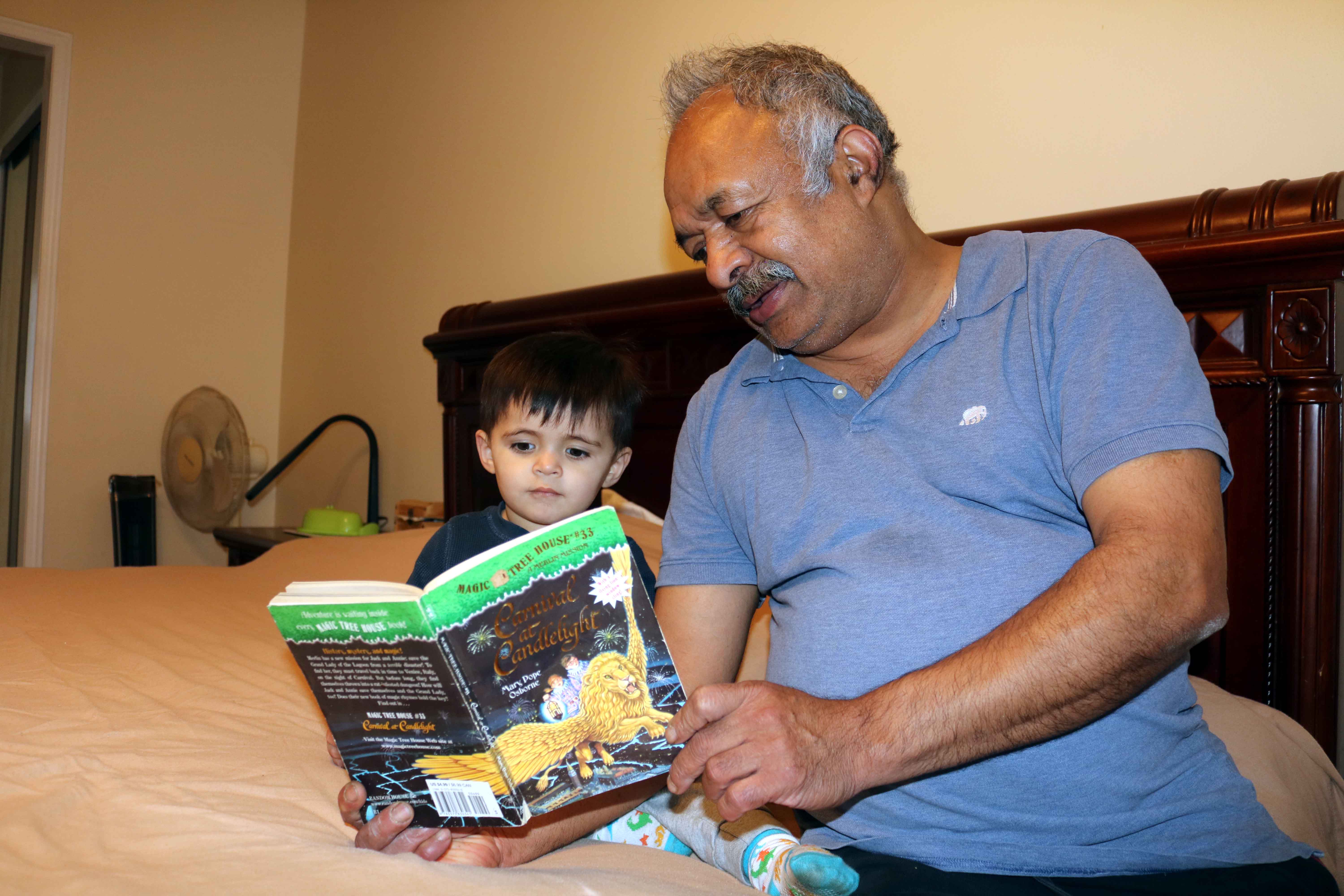
One who does not observe cannot paint. One who does not listen cannot sing. And one who does not read can never truly write. Shashi Tharoor attributes his legendary vocabulary and impeccable spelling not to rote memorisation, but to extensive reading. He rarely consults a dictionary, instead deducing the meaning of unfamiliar words contextually as they appear across different passages and paragraphs.
The CARS Challenge
Students aspiring for professional courses worldwide—Medical College Admission Test (MCAT), Pharmacy College Admission Test (PCAT), Law School Admission Test (LSAT), and various management entrance exams – must contend with the Critical Analysis and Reasoning Skills (CARS) section. For many, this section proves to be their personal Waterloo.
CARS is essentially an advanced form of the comprehension questions that have long been staple in English language examinations. But while traditional comprehension tested language skills alone, CARS evaluates knowledge, critical analysis, and reasoning power – all compressed within stringent time constraints.
Many students struggle with this section because it demands intuition and prior knowledge of diverse subjects. One must navigate difficult words and grasp their precise contextual meanings; failure to do so inevitably consumes precious time. Students accustomed to formulas, theorems, and scientific theories find CARS particularly uncomfortable. They may have mastered the art of cramming subject matter without truly understanding conceptual aspects – but CARS cannot be crammed for. It must be cultivated over time, through extensive reading and relentless practice.
Building the Reading Muscle
To develop the skills CARS tests, one recommended approach is regular reading of editorial pages in leading English newspapers and economic dailies. Even assimilating ten percent of what one reads expands knowledge base. Ultimately, it all comes down to reading.
Becoming a better reader requires reading more—and building reading stamina begins young. Children of parents who read invariably become better readers themselves; they imitate what they observe, and the habit becomes ingrained. So put down your mobile phone. Switch off the television when in your children’s company. Pick up a book instead. Everything from books to magazines builds reading stamina.
Notably, CARS passages rarely concern natural sciences—they encompass virtually everything else.
The Right Way to Read for CARS
When practising for CARS, read passages normally. Never skim. Never skip lines. You may think you are reading faster, but you will inevitably miss essential information—”missing the woods for the trees.” With deliberate, attentive reading, you will find yourself extracting relevant information more efficiently. Prior knowledge of passage subjects helps immensely but must never become a hindrance to answering questions objectively.
Consider this simple passage:
While Nelson Mandela is the father of South Africa, Mahatma Gandhi is our grandfather,” Harris Majeke, South Africa’s ambassador to India, said. “Mandela was inspired by the Satyagraha campaign led by Gandhi. It was a compelling act of passive protest against oppression. This would later inspire the formation of the African National Congress and strengthen Mandela’s belief in our shared humanity.” It is true that there is a direct connection between Gandhi’s campaign against discrimination in South Africa and the anti-apartheid movement there. “The African National Congress, which in 1952 launched the first mass movement against apartheid under the leadership of Dr. Albert Luthuli, had been founded in 1912 on the model of the Indian National Congress, with which Gandhi had been closely associated,” writes Claude Markovits in “The Un-Gandhian Gandhi: The Life and the Afterlife of the Mahatma.
A student unfamiliar with Mahatma Gandhi, Nelson Mandela, Claude Markovits, South African history, Satyagraha as passive protest, or the evils of apartheid will struggle to comprehend, analyse, and answer questions on this passage satisfactorily.
Reading for Pleasure, Learning for Life
The ideal preparation for CARS combines reading for pleasure with utilising what I call dead time – those interstitial moments spent travelling, waiting for someone, or anticipating an event. As Shashi Tharopor’s example demonstrates, one naturally acquires new words and phrases, practices forming opinions, and learns to reason beyond the text.
Reading for pleasure differs fundamentally from reading to learn. The latter – grasping concepts, retaining them permanently – varies among individuals but represents a common denominator among successful people who rely primarily on their intellect. Fortunately, this skill can be acquired, enhanced, and fine-tuned.
Kevin Horsley’s bestseller Unlimited Memory explores advanced learning strategies for faster learning, better retention, and enhanced productivity. Yet reading for pleasure remains primary; without this habit, reading to learn becomes nearly impossible. Like swimming and cycling, reading for pleasure grows increasingly difficult to acquire with advancing years.
A Practical Lesson
Our niece, commuting four hours by train from her Kerala university each weekend, once complained about ogling and eve-teeing from fellow male travellers. Both victim and perpetrators, I observed, lacked any concept of utilising dead time. I advised her to read during journeys – it would divert attention from the ogling Romeos, many of whom would be intimidated by the sight of a girl with an English book. Meanwhile, she would gain knowledge, improve vocabulary, and enhance language skills.
Within a month, she reported success. Five years later, she still carries a book while travelling and has evolved into a young woman of considerable general awareness.
Reading vs Television
A Kingston University, London study revealed that book readers demonstrate greater empathy than television viewers. When watching a film or show based on a book, one perceives it through the director’s lens. When reading, one controls the pace, makes assumptions, and shapes perception according to personal imagination. Television viewers, the study found, exhibited more anti-social behaviour than readers. Among readers, fiction enthusiasts showed the best social skills; comedy readers excelled at relating to people; romance and drama lovers demonstrated the greatest empathy and ability to see through others’ eyes.
Readers Become Leaders

Good readers make great leaders. Abraham Lincoln had merely one year of formal education; his reading compensated for the rest. Roosevelt reportedly read two books daily. Thomas Jefferson amassed one of the most exhaustive personal libraries of his era. Bill Gates reads approximately fifty books annually – as he puts it, Reading is absolutely essential to success.
Even in the military profession, I have observed that those who rise to the highest echelons possess varied qualities of head and heart – but reading remains an invariable common denominator.
Dr. Tharoor’s single-word answer READ encapsulates a lifetime of wisdom. In that one word lies the key to vocabulary, knowledge, critical thinking, empathy, and ultimately, leadership itself. The question is not whether we can afford to read, but whether we can afford not to.
- “Coming into contact with a good book and possessing it, is indeed an everlasting enrichment.” Dr. APJ Abdul Kalam
- “Reading maketh a full man; conference a ready man; and writing an exact man” Francis Bacon
- “Books are uniquely portable magic” Stephen King
- “Time is a river and books are boats” Dan Brown
- “Any book that helps a child to form of a habit of reading, make reading one of his deep and continuing needs is good for him” Maya Angelou
- “It is what you read when you don’t have to that determines what you will be when you can’t help it” Oscar Wilde
 REJINCES