The Unguided Missile
We were commissioned as Second Lieutenants from the academies and joined our Regiments—eager to go, like unguided nuclear-tipped missiles, primed for detonation but uncertain of trajectory.
Years later, when I commanded our unit, our young officers often remarked on a peculiar aspect of my leadership. No matter how serious their mistake, my response was invariably the same: “That’s all. Don’t worry. I’ll handle it from here.”
They wanted an explanation. Why no rebuke? Why no fault-finding mission?
One day, in a lighter moment, I obliged.
“When I was a Second Lieutenant, I messed up more than all of you combined.”
They clamoured for details. Dil Mange More. And so I delivered.
The Gurgaon Incident
I joined our Regiment in 1983 at Gurgaon. During a battery deployment exercise, our 130mm gun, towed by a Kraz vehicle, needed to cross the Delhi-Jaipur Highway. In those days, the highway was narrow and followed a different alignment. Traffic was halted for the military convoy.
Enter the Superintendent of Police of Gurgaon, who demanded passage and was refused. The refusal escalated. Words were exchanged. Then fists. Whatever transpired—and the details remain mercifully hazy—I ended up facing a criminal charge of attempted murder using lethal weapons, alongside a Court of Inquiry.
I escaped both. Thanks to our Commanding Officer, Colonel Mahaveer Singh.
Teen Murti Bhavan: Three Days That Defined a Second Lieutenant

On 31 October 1984, Prime Minister Indira Gandhi was assassinated. By evening that day, our Battery received orders to assume security at Teen Murti Bhavan, where her mortal remains would lie in state.
Our Battery Commander resided in Delhi, so I marched the Battery forward and reported to General K. Balaram, the Adjutant General, who was in overall command. Those who served in that era will recall General Balaram’s formidable reputation—the first, and perhaps only, AG to be granted Vice Chief status.
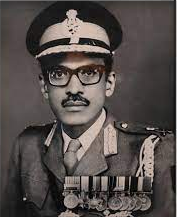
Our Battery Commander, then a student when General Balaram commanded at Wellington, warned me profusely. He narrated countless incidents of the General’s exacting standards—how he rode his own scooter after office hours, never touching his staff car. I braced myself for the worst.
Instead, I found an unexpected camaraderie. General Balaram and I smoked Capstan cigarettes together. In the chaos following the assassination, all cigarette shops in Delhi had shuttered. Naik Paul, my driver, inexplicably maintained a steady supply—to this day, I do not know how.
Whenever work pressure mounted, General Balaram summoned me to the Operations Room we had established inside Teen Murti Bhavan. He craved a deep inhale of smoke and a cup of tea—specifically, the tea brewed in steel glasses by our soldiers. Thus, every summons meant either the situation at the gate had spiralled, or the General simply needed a break.
The Gatekeeper’s Trials
We were responsible for the VIP entrance, through which every head of state passed. Whenever things went awry, General Balaram’s voice thundered across the compound: “Get that Second Lieutenant! Only he can solve this chaos.”
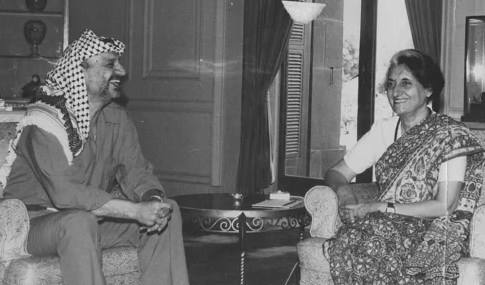
Enter Yasser Arafat, flanked by four bodyguards armed to their teeth. I refused them entry. “Our boys will ensure his security,” I declared. Arafat gave me a long, penetrating glance, then ordered his bodyguards to stay put with me. Even the Chairman of the Palestine Liberation Organisation thought better than challenging a Second Lieutenant.
Next came the Japanese delegation, led by Prime Minister Yasuhiro Nakasone. Over a hundred press personnel accompanied them—journalists, reporters, photographers. I informed their liaison officer that only five could enter with the Prime Minister. The officer pleaded helplessness. I solved the problem my way.
I assembled the entire press corps outside the entrance. When the Prime Minister arrived, I randomly called out five individuals and sent them inside. Chaos erupted. “My photographer is inside, but I’m the reporter!” “My reporter is inside, but I’m the photographer!” I announced calmly that whoever had entered would emerge with material for everyone to share.
Then came a man claiming to be the Commissioner of Police, Delhi. Denied entry through the VIP Gate, he exploded. “Who are you to stop me? What are you doing here?”
“If you had done your duty,” I replied evenly, “I wouldn’t need to be here.”
These were but a few highlights from those three unforgettable days.

The Pattern Repeats
A few weeks later came another altercation with a senior Delhi police officer. Again, a Court of Inquiry. Again, our Commanding Officer saved me.
That was life as a Second Lieutenant.
The Extinct Species
When I assumed command in 2002, I realised something remarkable: the species of Second Lieutenant I had embodied—the unguided missile, the chaos magnet, the perpetual disciplinary problem—had apparently become extinct.
Or perhaps, like me, they had simply found Commanding Officers who remembered their own youth.
Now, when our young officers messed up, I saw not failures, but reflections. I heard not excuses, but echoes. And I understood that leadership is not about catching mistakes, but about catching people before they fall. “That’s all. Don’t worry. I’ll handle it from here.”
Because someone once handled it for me.



 REJINCES