The Longwood Gardens

Longwood2a
Visiting Marina’s sister Charm and her husband Cherian at Delaware, USA, every summer for the past decade, we always plan to visit the Longwood Gardens. The visit materialised only in the summer of 2015. The Longwood Gardens, one of the world’s greatest gardens of today, was established by Mr Pierre Du Pont when he purchased Peirce’s Park in 1906 in order to save the trees in the park. The park owner had contracted a lumber mill operator to remove the trees from the park.

Longwood2b
Mr Du Pont was born in 1870 in Delaware, USA. He was president of the world famous DuPont Company from 1915 to 1919, and served on its Board of Directors until 1940. He also managed General Motors from 1915-1920, became GM’s president in 1920 and served on GM’s Board of Directors until 1928.

During his early years in Wilmington, Delaware, he was influenced by the area’s natural beauty and by the Du Pont family’s long tradition of gardening. His jobs took him to Europe many a times and he was always exposed to a wide variety of garden settings, fountains, grand architecture and the latest technology.
longwood2d
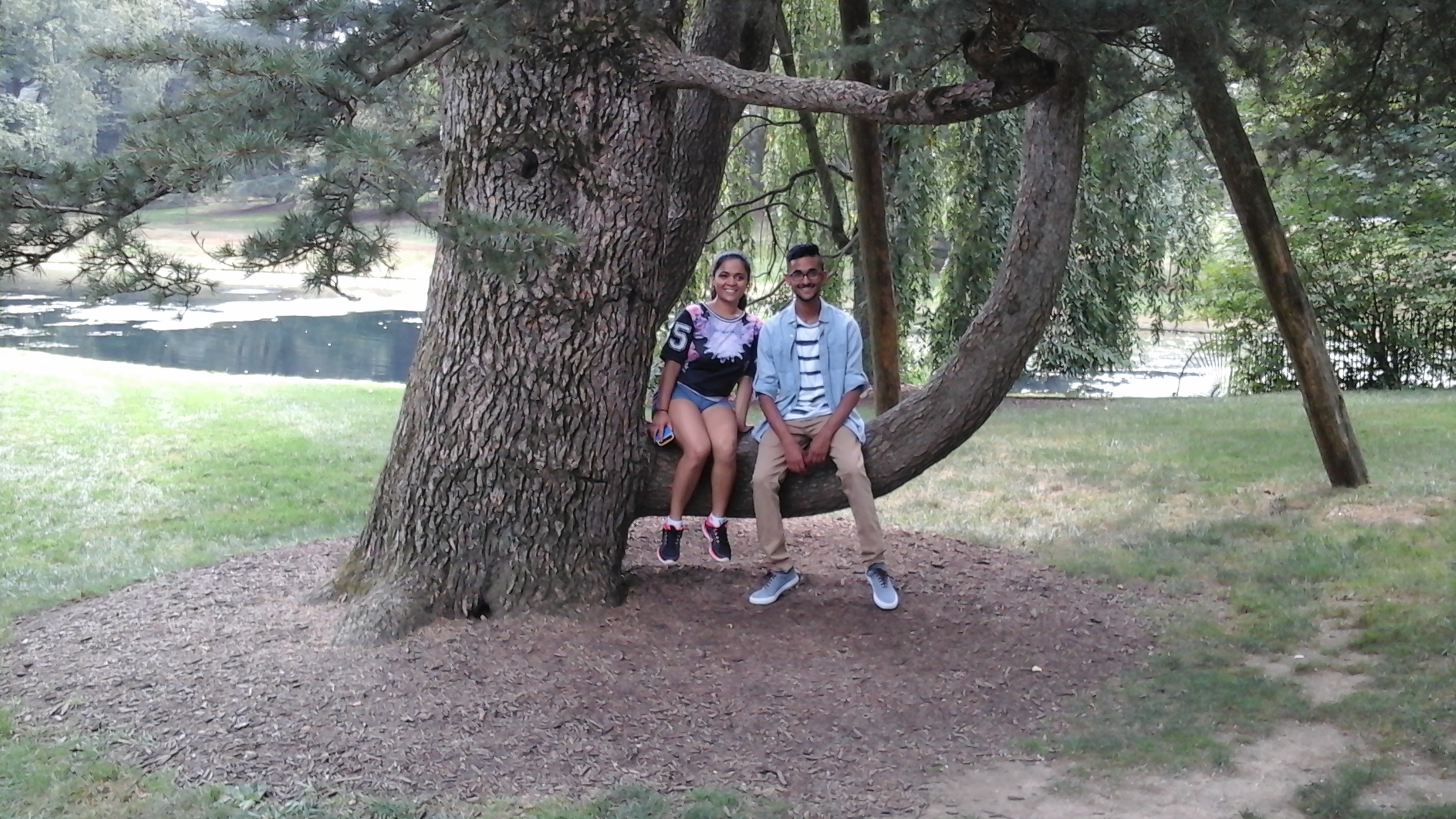
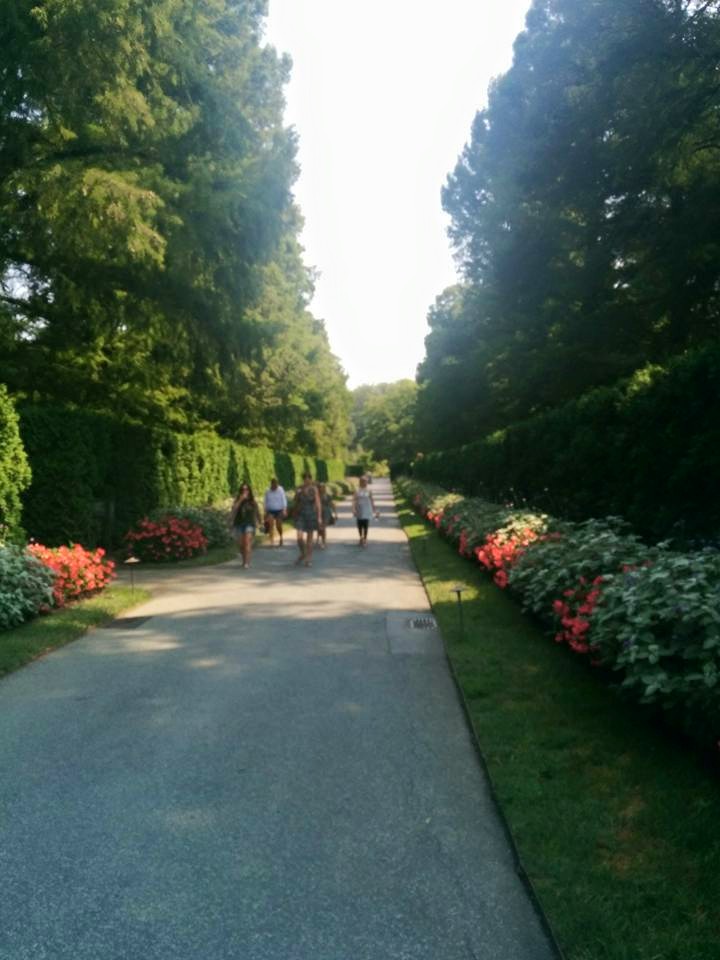
After buying the Peirce’s Park at the age of 36, Pierre started to create a garden, which today is the Longwood Garden. He built the gardens piecemeal, beginning with the Flower Garden Walk and he followed no grand plan or design. He added an open-air theatre in 1912, inspired by an outdoor theatre near Siena, Italy. He then added the “secret” fountains that drenched the unaware visitors.
Longwood Flowrwalk
As a wedding gift to Alice Belin, whom he married 1915, he added a conservatory – Longwood’s first “winter garden” and planted exotic foliage and created a small marble fountain. In 1921, he opened the Conservatory, a perpetual Eden which used the latest technology of the day to heat, water, and power the complex. All the systems were hidden in tunnels so as not to detract from the grandeur of the glass-covered and surrounding rooms. He then opened the greenhouse to the public.

By the mid-1930s, Longwood had grown from the original 202 acres to over 1000 acres due to Pierre’s purchase of 25 contiguous properties over the years. Today the Longwood Gardens has a yearly budget of nearly $50 million and a staff of 1,300 employees, students, and volunteers. Longwood is continuously evolving to become one of the world’s greatest gardens.  The garden is open to visitors year-round to enjoy exotic plants and horticulture, events and performances, seasonal and themed attractions, educational lectures, courses, and workshops.

The Longwood Gardens consists of 20 outdoor gardens and 20 indoor gardens within 4.5 acres of heated greenhouses, known as conservatories It contains 11,000 different types of plants and trees, as well as fountains. The Gardens also has extensive educational programs including a graduate program, and extensive internships. It hosts 800 horticultural and performing arts events each year, from flower shows, gardening demonstrations, courses, and children’s programs to concerts, organ and carillon recitals, musical theatre, fountain shows, and fireworks displays. It also hosts an extensive Christmas light display during the holiday season.
Longwood2e
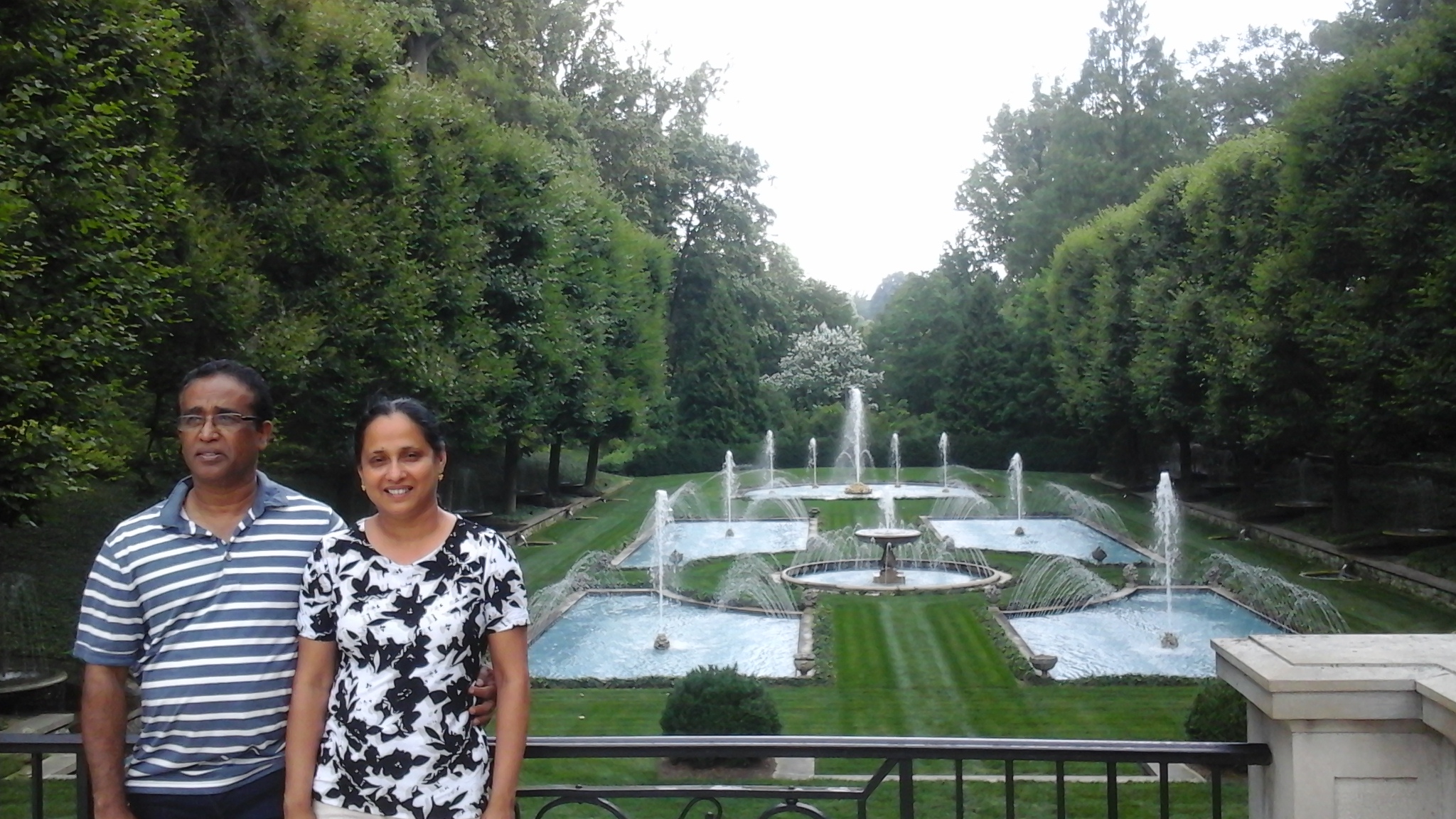
Longwood Gardens is renowned for its extraordinary fountains. The astonishing shows gather attention from far and wide, and are a favorite among visitors of all ages. Inspired by the success of the Italian water gardens and open air theatre fountains, Mr Du Pont unveiled the Main Fountain Garden in 1931. The goal was to rival the fountains he had seen in Europe. Today, this open air theatre conducts fountain shows featuring 750 jets in changing patterns, this showpiece comes alive with five-minute shows set to music. Since its 1914 Garden Party debut, this Italian-style outdoor theatre has expanded from its simple original fountains to the 750 jets that create the rainbowed curtain of water.
Longwood2c
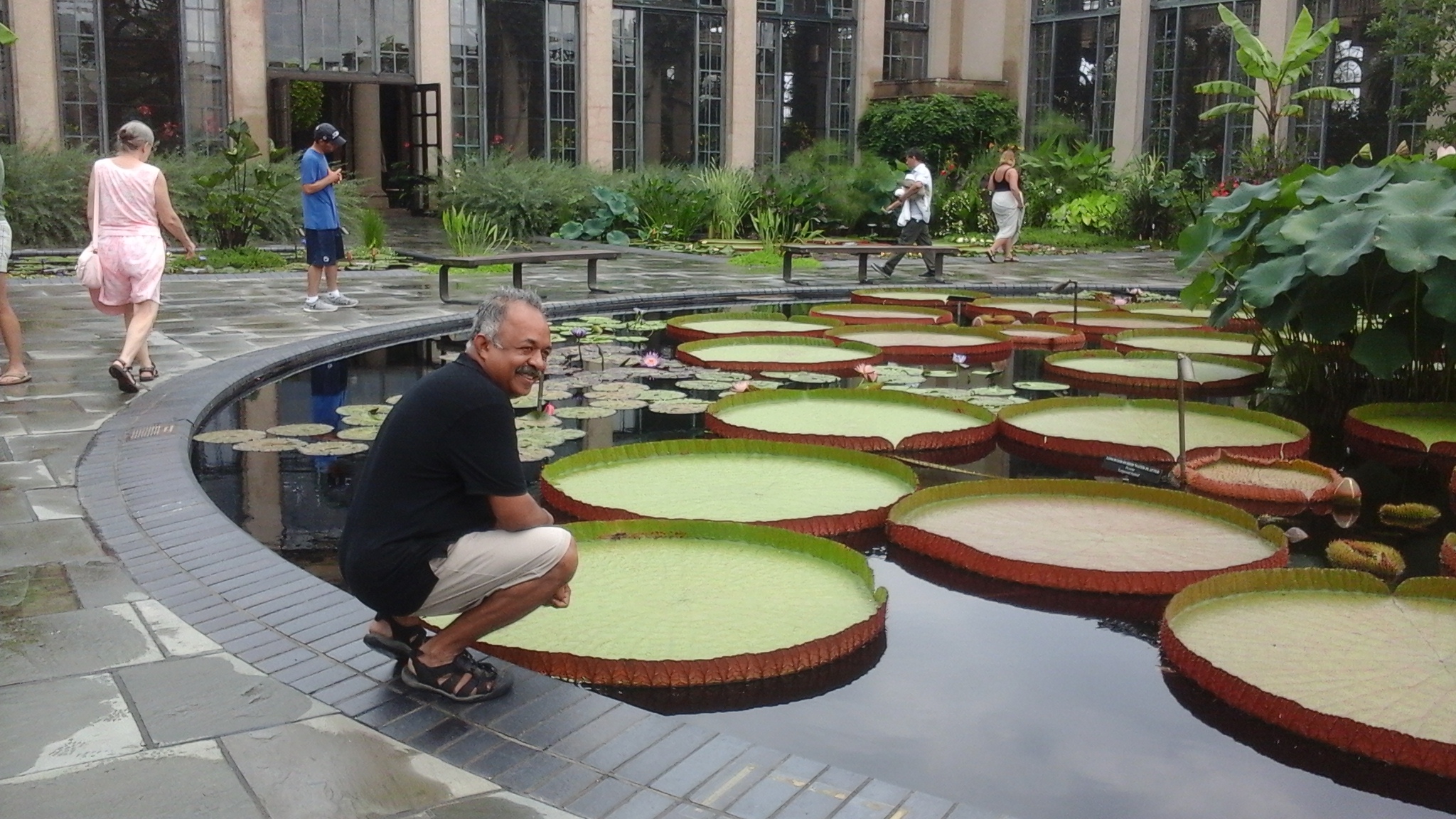
Tucked into a protected courtyard (accessed via the Conservatory), this stunning outdoor garden features aquatic plants from all over the world. The garden is open from late May through mid-October. Peak bloom occurs mid-July through September (depending on weather). The water-lilies and tropical aquatic plants are displayed here in five large pools. The aquatic plants consists of lilies, lotus and incredible Victoria water-platters with leaves measuring up to four feet in diameter. This leaf might have been used to float the infant Lord Krishna, to be discovered by Markandeya. The same leaf could have been used by Kunti to float infant Karna and also may have been used in the case of infant Moses.

Longwood Orchids
The Orchid House displays a fraction of the 7,500 orchids at Longwood Gardens. To ensure a continuous display, the orchid grower hand picks and replaces the plants three times a week with others from the five orchid growing houses. Orchids were a passion of Pierre Du Pont and his wife, Alice. Orchids were one of the first plant collections—started in 1922. In 1948, the collection was greatly enlarged when Pierre  DuPont’s sister-in-law, Mrs. William Du Pont, donated her well-known and respected collection of more than 2,300 orchid plants to Longwood.
Longwood Palms
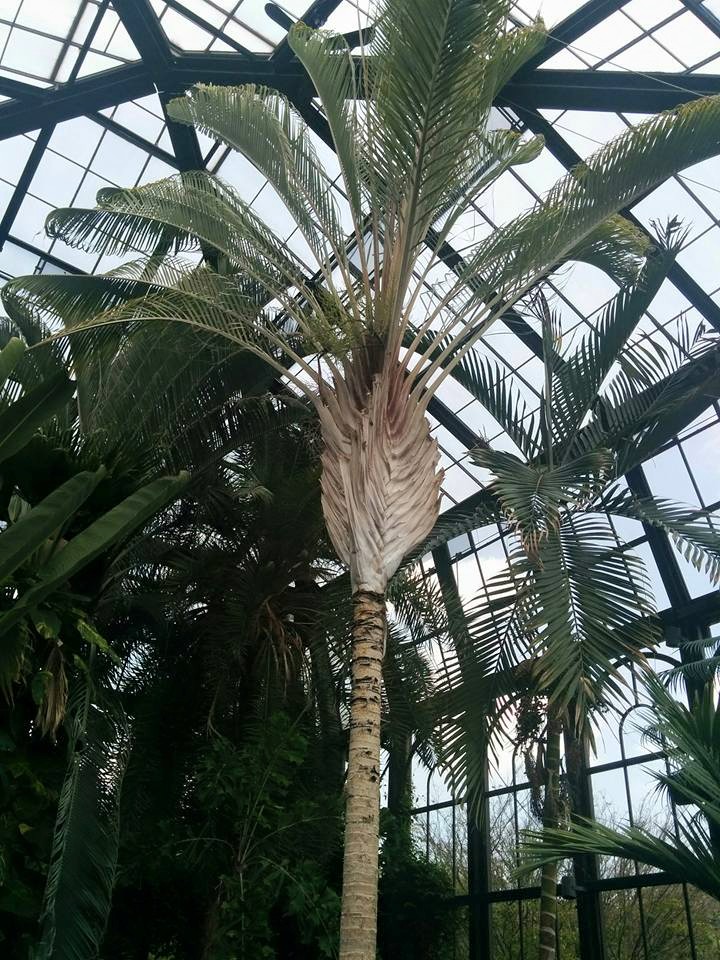
The Palm House opened on Palm Sunday, 1966 with a landscape of palms in all sizes and shapes from all around the world. Mr Du Pont preferred temperate houses because they were less expensive to heat and only the small conservatory in the Peirce House was warm enough for an occasional palm.
Longwood2f
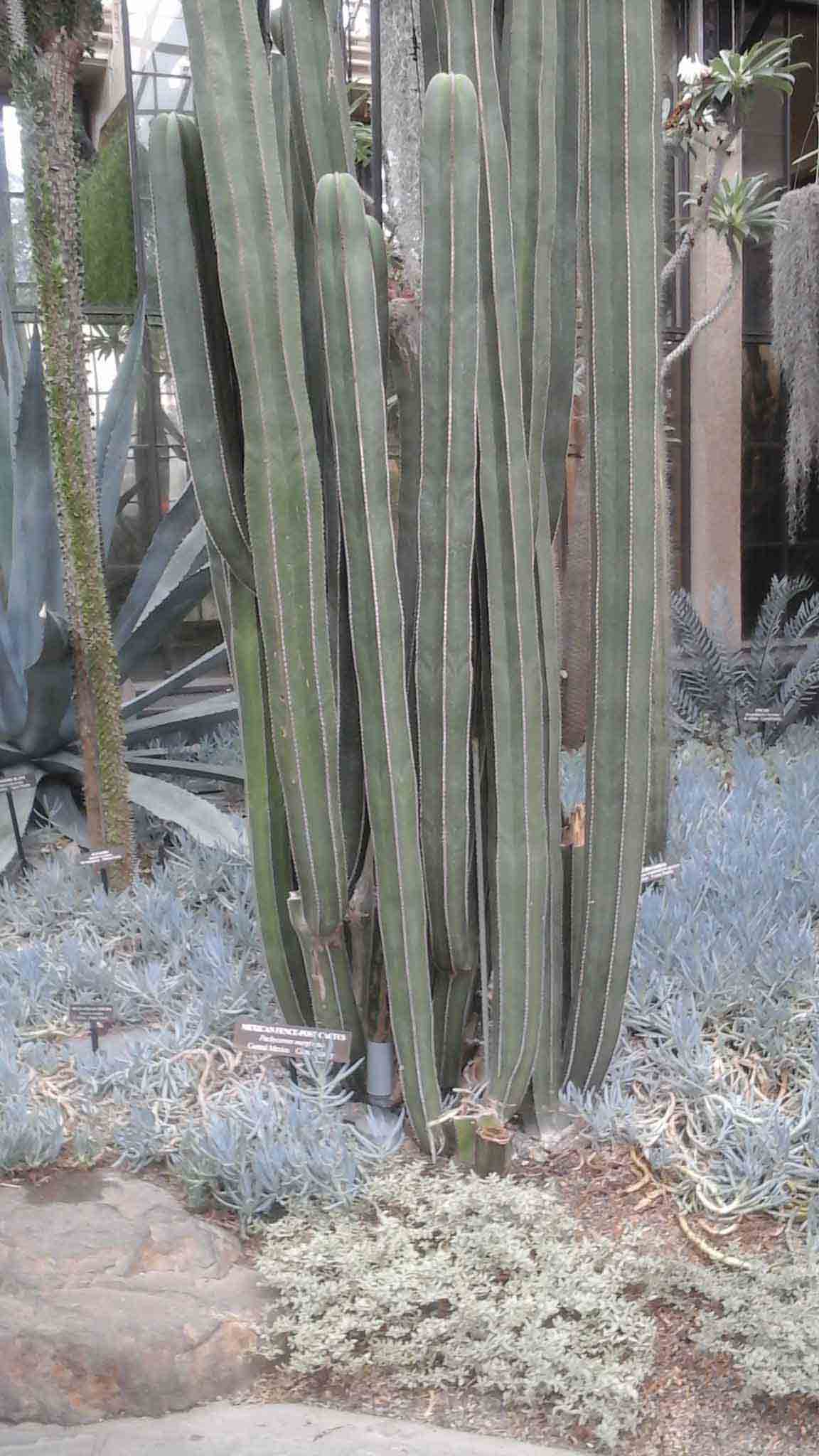
The Silver Garden houses the cacti collections. Through the glass roof the moonlight appear to bounce off the gray and silver-foliaged plants that fill this garden. This mimics the dry and arid landscapes found in Mediterranean and desert regions. Slate, rocky outcroppings, and exotic plants combine to create this multi-textured garden. The gray-blue slate pathway gives the impression of a dry streambed that would be found in a desert. The greenhouse containing this garden was built in 1921 and was originally used to grow peaches and nectarines. Following a major structural renovation, the Silver Garden came into being in 1989.

These are some of the few specialities of the Longwood Garden and must be included in the itinerary of anyone visiting this part of America.

Cadet Yaseen’s Graduation Parade

Yasin CTC 11

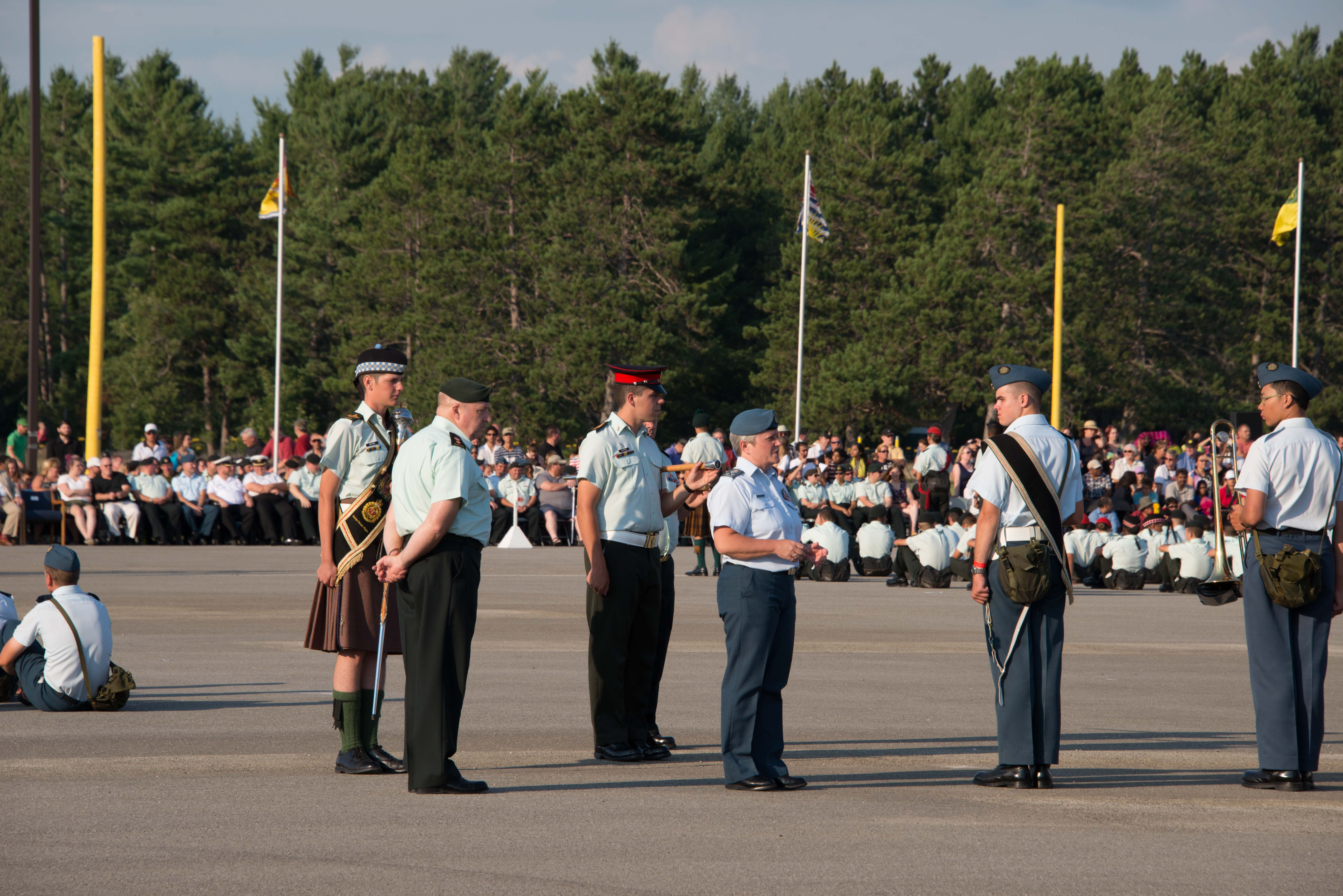
Our family friends – Hussain and Fatima, invited me to attend their son Cadet Yaseen’s Graduation Parade at the Cadet Training Centre (CTC) Blackdown, Ontario on August 14, 2015. CTC conducted a training camp for six weeks to train Cadet Instructors in Drill & Ceremonial, Survival Techniques, Adventure & Expedition, Fitness & Sports, Military Band and Pipes & Drums. Cadet Yaseen was attending the Drill & Ceremonial Instructor Course. The Graduation Parade marked culmination of their training.

On August 14, by 3 PM, I picked up Hussain from their home and drove towards the CTC. Fatima could not attend as she was indisposed. The CTC Blackdown is co-located with the Canadian Forces Base Borden (CFB Borden) and is about 100 kilometres North of Toronto, in the heart of Simcoe County, one of the major tourist areas in Ontario. The drive through the picturesque country side was breathtaking. Being a summer Friday evening, the traffic was heavy on the highways with vehicles towing boats and camper-trailers and cycles, heading to the cottage country to spend the weekend.

Vet Plate

On reaching the CTC, the Military Police points-woman on duty directed my car to the parking lot adjacent to the parade ground as the vehicle had the Veteran’s plate. That was the first time I ever got a preferential treatment after receiving the Veteran’s plate.

The ceremonial parade was in keeping with any British Army parades, being followed by the armies of all the Commonwealth countries. The Reviewing Officer of the day was Lieutenant General Chris Whitecross OMM, CD, a Three-Star General. She is the first lady officer to hold the rank of a Lieutenant General in the Canadian Forces.

Yasin CTC LtGenWhitcross

Lieutenant-General Chris Whitecross enrolled in the Canadian Forces in 1982, joining the Canadian Military Engineers after spending 4 years in the Cadet program. Her postings have taken her from Germany to Afghanistan and almost every province in Canada. She had served with United Nations Protection Force in the Former Republic of Yugoslavia and Commanded 1 Construction Engineering Unit.

Lieutenant-General Whitecross has a Bachelors Degree in Chemical Engineering from Queen’s University and a Masters Degree in Defence Studies from the Royal Military College. She is a graduate of both the Command and Staff College and the Advanced Military Studies Course, both conducted at the Canadian Forces College. She is a recipient of the Order of Military Merit and was awarded the US Defense Meritorious Service Medal for her service at Kabul, Afghanistan. Currently, she is the Commander of the Canadian Forces Strategic Response Team on Sexual Misconduct. She was promoted to her current rank on 26 May, 2015.

Yasin CTC Prd

The graduating cadets smartly marched into the drill square in 14 Squadrons and after the General Officer received the customary General Salute, the reviewing of the parade took place.   There were 14 officers and veterans, mostly Lieutenant Colonels, who reviewed each of the squadrons. This allowed opportunity for the reviewing officers to speak with each of the graduating cadets.

Yasin CTC Review

The Cadets were well turned out and looked very smart. Boys and girls, Army, Navy and Air Force Cadets formed the Squadrons based on the type of course they underwent at the CTC. The Army cadets wore the berets of the Regiments to which their school’s Cadet Company was affiliated to. Cadet Yaseen wore the Red Beret with the Military Police Cap-Badge. Some cadets were wearing Regimental Kilts, Stockings, Belts, etc. This practise of wearing the Regimental accoutrements by the cadets will surely go a long way in inducing pride in the cadets.

Yasin CTC Band

The General Officer reviewed the Band Squadron and at the end of the review addressed all the Cadets of the Band and appreciated them for an excellent show. She reminisced the days she was a cadet in her teens, playing in the very same band and as to how the training she received at the very same place had stood in great stead with her till today. This gesture from the General Officer would have surely enthused the cadets of the Band Squadron.

The review, which took about 30 minutes was followed by the Reviewing Officer’s address. The General Officer was so roused by the spirit of the cadets that she spoke from the saluting base, without moving to the pre-designated rostrum. She opened her speech with the line that she was not going to follow the script that she had prepared and which was duly placed on the rostrum by her Staff Officer, but would speak from her heart. The speech was electrifying and inspirational – in its content and in delivery. She complimented the cadets for the successful completion of their training and exhorted them to carry what they learnt to their Cadet Companies back at school and impart the skills to other cadets there.

Yasin CTC MarchPast

The squadrons then marched past the saluting base, saluting the General Officer and each squadron was applauded by the audience with a standing ovation.

Yasin CTC Gnrs

On culmination of the Parade, Cadet Yaseen left to collect his Course Certificate, Movement Order and his belongings and Hussain and I met Lieutenant Colonel O’Leary from the Artillery Regiment (Gunner) of the Canadian Army. This marked the meeting of two Gunners from two different countries and we exchanged pleasantaries and notes about the life in both armies. A Gunner will always reamin a true Gunner in deed and in spirit, irrespective of the army they served was proved once again.

We bid goodbye to Colonel O’Leary, picked up Cadet Yaseen and drove home. Enroute I treated Cadet Yaseen to a sumptous dinner in appreciation of him graduating from a tough course and also for providing me an opportunity to attend such an august function (in August). We all enjoyed the dinner, especially Cadet Yaseen, as it was surely a welcome change from the usual camp food.

Photographs – Courtsey Hussain Chirathodi ‎

The Home Coming

Camp33

On 29 June 2015, Monday, by afternoon, we checked into Fairfield Inn Hotel of the Marriot group of hotels at Sault Ste Marie. Everyone was in a hurry to take a shower, something they missed for the four days they were out camping. After the shower, Nikhil stretched on his bed and he said that it is a great luxury to have running cold and hot water, a comfortable washroom and a refreshing bath. A soft bed at the end of a tiring day is what looks forward to and one must be thankful to the God and the parents for providing us kids with all these luxuries. I felt that the aim of the camping has been achieved to a great extent.

Nikhil found the Mermon Bible (The Book of Mormons) in the room and settled down on the couch to read it. The Mormons are one of the most successful and prosperous cults that owns large pieces of land in Utah, Hawaii and Canada, along with owning the Marriott Hotel chain, Beneficial Life Assurance Company and many television and radio stations. The cult was started in New York State by a farm worker in the 1820’s named Joseph Smith. Mr Smith was driven to action after he claimed to have been visited by a vision of God and by an angel called Moroni who revealed the whereabouts of buried golden plates to him. The Book of Mormons is based on these very same magical golden plates. Mitt Romney, who ran as Republican Party’s nominee for US President in 2012 election an and who served as the Governor of Massachusetts from 2003 to 2007 belongs to the cult.

In the evening we drove to the Harmony Beach for a swim and dinner thereafter. By evening everyone retired to the bug free environs for a good night’s sleep. After the courtsey breakfast at the hotel, we checked out and drove to Sudbury, about 300 km along Trans National Highway 17. This city of about 160,000 has the most happy people in the country according to Statistics Canada report of 2015. It is also the largest city in Ontario by area and the seventh largest municipality by area in Canada. The city was founded following the discovery of nickel ore by Tom Flanagan, a Canadian Pacific Railway blacksmith in 1883.

We drove to the Science North, an educational resource for children and adults across the province. The centre provides hands-on experience for kids and the exhibits can be handled by kids and they can perform various science experiments. This place is a must visit place for all middle and high school students. Some of the impressive exhibits were:-

  • Northern Forests – In this area, you learn and see animals who live in northern forests. Some of the animals include the Northern Screech Owls, the porcupine and the skunk. Other notable animals include the Northern Flying Squirrels, the Grey Rat Snake and the Big Brown bats. The nocturnal room allows people to see active nocturnal animals during the day. The intricate bee hive, behind a plate glass window, allows visitors to see into the hive.
  • Rivers and Lakes – In this area, animals that live in rivers and lakes are featured. The Beaver, Common Snapping Turtle, Northern Water Snakes and local fish found in Northern Ontario Lakes feature in this section. This sections allow people to get a better understanding of the aquatics systems that surround Northern Ontario and the difficulties and challenges these systems are currently facing and how erosion effects the landscape around us.
  • Tropical Invertebrates – This is where the visitors can learn why our bugs are so small and find out what a snail feels like in your hand or how millipedes protect themselves by touching and handling the real thing.
  • Discovery Theatre – The discovery theatre is where visitors watch live science shows on topics ranging from fire to sound.
  • BodyZone – The exhibits are about DNA and how it makes you unique, and how our body works. There are stations that allow the visitor to measure various body performance.
  • FedNor CyberZone – The focus of CyberZone is on computer and communications technology. You can mix your own music at the DJ station, play with green screen technology, and create stop-motion animation movies.
  • Space Place – This lab focuses on astronomy and space exploration. Exhibits include a 6-foot gravity well, a microgravity drop tower, and information on Canadian space exploration.
  • TechLab – Technology and engineering area where you can create your own circuits, take apart old electronics, and play with pulleys and gears.

At the end of the visit was the film Wildfires! A Firefighting Adventure in 4D. It is a remarkable experience in that it uses 3D film techniques combined with motion seating and special wind, water, scent and smoke effects to explore the science of fire behaviour and firefighting. The film takes you into the heart of a major forest fire to give you a close-up and unforgettable look at how fires are created and ultimately controlled, and how scientific research and practical experience have combined to develop effective forest fire fighting techniques used today. The film captures the valiant efforts of the firefighters and pilots from the Ontario Ministry of Natural Resources’ Aviation, Forest Fire and Emergency Services section – and the equipment and knowledge they use to battle this incredible force of nature.

The entire film was shot during the biggest forest fire in Ontario in nearly a decade. The film also provides visitors with the rare opportunity to ride in a Bombardier 415 Superscooper waterbomber aircraft and experience the intensity of a raging inferno that destroys everything in its path. This aircraft is a Canadian amphibious aircraft specifically built as a water bomber, specifically built for aerial firefighting. These planes move to a pre-reconnoitered lake near the forest fire, then descend from 15 metres altitude, scoop 6,137 litres of water during a 12-second 410 metres long run on the water at 70 knots (130 km/h), then climb back to 15 metres altitude. With the water in their belly, they fly to the place of the fire and discharge this load to quench the fire. That kind of flying takes special skills, training and bravery.

We departed from Science North, had lunch and drove home to reminisce our camping experiences. During the drive the children were more anxious about our next camping and hence I booked for a two day camping at Alogonquin National Park to witness the changing colours of the Fall Season in October.  From the last week of September though October, the leaves in this park are alive with various shades of red, yellow, purple, black, orange, pink, magenta, blue and brown. In the Fall, as daylight hours shorten and temperatures cool, the veins that carry fluids into and out of the leaves are gradually closed off, reducing the chlorophyll contents in the leaves. At this time, the other pigments in the leaves take over and results in a riotous display of colour and then the leaves fall off.

Going Gets Tough

Camp2 1

On the morning of 28 June 2015, Sunday, after a sumptuous breakfast, everyone got into action, packing up the camp. The children got into dismantling and packing up of the three tents. It took them some time and effort to fold the first tent to fit into its bag. The parents were busy packing up the rations and the cooking equipment and also garbage disposal. We bid goodbye to the Fort William camp at about 10 AM and drove back to Wawa on the picturesque Trans Canadian Highway 17. A 83-kilometre section of the Trans-Canada Highway, between Thunder Bay and Nipigon, is renamed the Terry Fox Courage Highway to honour him for his courageous one-legged a cross-country run for cancer research – the Marathon of Hope. At the intersection of Highway 17 and Highway 11, about 10 kilometers from Thunder Bay, stands a nine foot high bronze statue of Terry, set on a 45-ton granite base, at the Terry Fox monument. The monument also offers a breath-taking view of Lake Superior.

We reached Wawa by 3:30 PM and halted for lunch. After lunch, we drove for an hour to reach the Visitor Centre of the Lake Superior Provincial Park located at Agawa Bay. Being a Sunday, the centre was closed, but there was a self-serve kiosk for the campers. We filled the form to camp at the Crescent Lake Camp Ground, giving details of the vehicle, number of persons and the number of tents to be pitched. The form along with the money towards the camping charges were deposited in the box placed there.

The kiosk also had literature giving out details of the camping grounds, the actions needed from the campers to protect the ecological integrity of the park. The mantra appeared to be “Leave your pristine surroundings just as you found them; take nothing but pictures, leave nothing but footprints“.

We drove another hour South along Highway 17 and took a diversion on a gravel track and drove for about 5 kilometers to reach the Crescent Lake Camping area. The camping ground was empty as the camping season had just commenced with the closing of schools. The camp sites are picked based on first-come-first-serve basis and there are no reservations.

Camp Cres Lk1

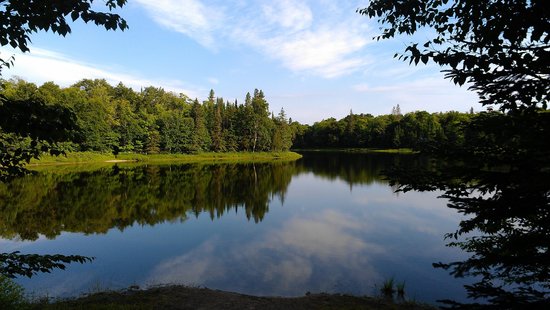
Crescent Lake is an undeveloped lake surrounded entirely by the remote Superior National Forest. It is characterised by clean, blue, unpolluted, undisturbed, quite waters. This quiet campground has waterfront campsites with easy access to fishing, exploring the nearby wilderness and simply enjoying the beauty of the natural area. Superior National Forest, located in northeastern Minnesota’s arrowhead region, comprises of 3 million acres. The forest spans 150 miles along the United States-Canada border. Superior National Forest is known for its coniferous forest ecosystem, numerous clean lakes and diversity of plants and animals. The entire campground is heavily wooded with white pines, red pines, spruce, balsam, birch and aspen. Birds and wildlife are abundant, from moose and bear to bald eagles and Canadian Goose.

The campground has 32 sites situated on a peninsula that juts out into the lake, providing many sites with nice views of the water and some sites with access to the water. Picnic tables and campfire grates are provided on each site. We drove through the camping area and chose a site closest to the water front and parked our van. The children got into the act of pitching the tents. Alas! they did it in 10 minutes flat – with all the experience they had from the previous location. The parents were into setting up the barbeque to cook the dinner.

After pitching the tents and unloading the necessary bedding, rations and cooking utensils, I led the children into the woods to collect firewood for the campfire. Walking on the forest ground, I felt a spongy feeling, as if walking on a rubber mattress, which I had never experienced in the coniferous woods of Kashmir or Sikkim. That was when I remembered the lesson on coniferous family of trees by our botany teacher at Sainik School, Mr AD George. He had taught us that the coniferous forests are found mainly in the Northern hemisphere, called Taiga or Boreal forests and they cover vast areas of North America from the Pacific to the Atlantic. Coniferous trees thrive where summers are short and cool and winters long and harsh, with heavy snowfall. The needle-like leaves have a waxy outer coat which prevents water loss in freezing weather and the branches are soft and flexible and usually point downwards, so that snow slides off them. The coniferous trees shed their leaves and grow new ones. The needles fall to the forest floor and form a thick springy mat. Thread-like fungi help to break down or decompose the fallen needles. These fungi provide nutrients from the decomposed needles back to the roots of the trees.

The major concern for everyone was to ward off the mosquitoes and the bugs. The best methodology was to wear a track pant and a jacket with a hood. One has to apply the bug repellent lavishly to all the exposed parts. The repellants now available in Canada are surely not as messy and does not have the pungent smell as the ones I was used to while in the Indian Army. Everyone was extra conscious not to let any insect into the tents. The scariest of all was to go into the woods to relieve and one had to carry a can of repellent to keep the insects at bay.

We set the campfire going and I got into cooking the dinner – mainly barbequing the meats and the veggies. The children entertained us all with their singing, mimicry, storytelling and et all. After dinner, everyone set out to take precautions to ensure that no wild animals came calling on to our site. It was mainly garbage collection and storage in the van for the night. Based on the instruction pamphlet we got from the kiosk, all the trash, leftover food, and litter were packed into a bag. All the spilled food was collected and the dishes and plates were washed and stored in the van. All the leftover rations were also placed in the van. Everyone retired to sleep after a tiring day.

At night, as there was no ambient light from any human settlements and as the sky was clear, we did a bit of star gazing. The Astronomy knowledge I had gained during the Regimental Survey Officers’ Course I did in 1984 came in handy. We could locate the Pole Star, Jupiter, Constellations like the Ursa Major (Big Bear), Ursa Minor (Small Bear), Cassopia, Orion etc. We could also see two meteors shooting across the sky.

Next morning, after breakfast, everyone had a swim in the lake and went on a trek along the trail in the campground. Children improvised a fishing rod, line and hook as we had not carried any angling equipment (an inadvertent omission on my part), and tried their hand at fishing, but was not a successful one. The least, they learnt to improvise. By about noon, ladies prepared lunch and all other got into the packing up drill. After  pack-up, it was garbage disposal at the designated site in the campground. The site again had huge animal proof bins. After lunch, we drove to Sault Ste Marie (Soo), about an hour away, to check into a hotel that we had booked.

Some of the lessons learnt:-

  • Plan your route and learn the park regulations.
  • Carry proper clothing and equipment – including angling equipment. Be prepared for extreme weather, hazards and emergencies. (Luckily we had none.)
  • Pack food in reusable, leak-proof containers to minimise waste.
  • Inspect your campsite and rest areas for trash or spilled foods. Pack out all trash, leftover food, and litter. Do not bury garbage as animals will just dig it up.
  • Respect what you encounter. Leave any natural object where you found it. It is illegal to cut any live vegetation, harass wildlife or disturb or remove cultural artifacts in a park.
  • Clean your boots, vehicles and gear so you do not transport invasive species.
  • Pack food securely and hang your pack between trees, at least 6 metres above the ground or store them in the vehicle. Do not bring food of any kind into your tent.
  • Remember that sound travels across water. Noise pollution disturbs wildlife and will diminish everyone’s wilderness experience. Chances of seeing wildlife are better if you travel quietly and camp in smaller groups.
  • Before you leave, complete a final scan of your campsite. Ensure the fire is out, all garbage is collected and all your equipment is packed away. Leave the area in better shape than when you arrived.

Home Coming in the next Blog

Camping at Thunder Bay

Camp 1 2

When we decided to go camping with the Josephs, many of my army friends had only one question – “Aren’t you fed up of camping? Haven’t you had enough of it?”

Every parent today is busy with their lives, profession, social activities, etc and the children are equally busy with their studies, sports and extra-curricular activities. Living in a campsite and sleeping in a tent is a sure way to get everyone together in close proximity. It facilitates the family to explore new activities which would not be possible at home. Every event and chore becomes a family affair and everyone chips in with their bit. Camping ensures that the family works together to setup the tents, cook and serve the meals, clean up after every event, fetching water, collecting firewood, starting up a campfire, etc.

The activities like hiking, fishing, roasting marshmallows, star gazing, exploring, storytelling and singing around the campfire, and that too with the children away from their computers and without a cell phone in their hands is indeed a great achievement.

Research all over the world has proved that children who experience nature are happier, healthier and also helps with cognitive development. It is amazing to note that only 20% of the children of today can climb trees. They surely know more about their cartoon characters, movie superstars and their favourite sport hero than they know about wildlife, plants and nature.

We reached the camp site at Fort William Historical Park, Thunder Bay at 2 PM on 27 June 2015. Located on Lake Superior, Fort William became the key midway transshipment point and a trading post for the French located at Montreal. The aboriginals paddling from the West carrying precious furs bartered with the French coming from the East bearing valuable trade goods and supplies. The treaties that followed the American Revolution (1776 – 1783) banned the Montreal traders from entering the area South of the Great Lakes. From 1804 then until its own absorption by the Hudson’s Bay Company (British) in 1821, the North West Company (French) exercised a virtual monopoly of all trade into the North-West directed from Montreal. As the company’s inland headquarters, Fort William became the pivotal point in a vast fur trading empire. In 1821, the Hudson Bay Company closed down the Fort William trading post as they were focused on the fur trade from the North-West of the Great Lakes, to the Arctic.

Being the first camp, we booked a site with amenities like electric power, water and washrooms. The camp ground caters for about 250 sites and there were many spots already occupied by tents, RVs, camper vans and caravans. Each site had a picnic table, a fire ring for campfire, a water tap, an electric outlet and adequate space to pitch about three tents. The first task was to unload the van and pitch the fly-proof tent around the picnic table. The fly-proof tent is of 10’x10′ size with a canopy and a zipped up net cover all around, thus making it fly proof. This tent effectively covers a picnic table. These tables are placed in all the camping grounds and parks of Canada and are of standard size of 8’x6′. The outdoors in Canada in the wilderness is famous for the bugs and mosquitoes. They will any day beat the ones of Meerut and Kochi.

camp Thunder1

With some assistance, the children managed to set up the tent in about 20 minutes. By then Marina had started cooking Mutton Biryani. She had marinated the meat and had frozen it the day before and carried it in the ice-box. The children then proceeded to set up the living tents. The tents are made of water-resistant fabric and has a cabin-like design that includes a hinged door and angled windows that keep rain out even when they are open. The tents are much lighter, easy to carry, more comfortable, water and wind proof and easy to pitch when compared to the ones we had in the Indian Army. The first tent was pitched in 25 minutes and the second in 20 minutes. Everyone felt that they achieved something and were tired and hungry. That was when Marina served her Biryani and not a morsel was left. It is sure that the children will eat more while outdoors and working hard.

After a hard days labour, sumptuous lunch and tired from travelling for about 15 hours, everyone retired into their tents for a well deserved siesta. By 6 PM the girls had prepared the evening tea and after tea everyone had a refreshing bath. At that time there was a big group which arrived to camp. It was a marriage party. The bride, the groom, the best man, the maids, guests – all had arrived with their tents and were busy pitching it. After an hour, they all got dressed and moved to the banquet hall of the centre for the wedding. It seems the bride and the groom met first at a camp and wanted to celebrate their wedding at a camp.

The evening begun with setting up of campfire. There was the usual barbecue of chicken and pork by me and the ladies laid out the salads. The camp area came alive with the music from the banquet hall and accompanied by the swarming bugs and mosquitoes. Everyone sat around the campfire and the children got busy with the roasting of marshmallows, storytelling and singing.

In the evening Joseph and I decided that we must move to a tougher camp site as the children have got adjusted to the camp life. In hindsight, it was a wise decision to select the first site with basic amenities to put the children through the drill of setting up a camp. After passing instructions to all that after breakfast, we will up stick from the present location and move into a new campsite, deep in the woods in the Lake Superior Conservation area near Wawa, the parents retired to bed and the teenagers as usual continued into the early hours of morning with their usual activities.

The lessons learnt at the camp at Fort William:-

  • Do not over-pack, especially food items.       Carry the least and in case you need more, you can always buy them fresh from the local stores.
  • Be prepared to cope with inconvenience, especially washrooms, The parents must lead by example with a positive can-do attitude.
  • Organize the camp well. Fix locations for important items like forks, spoons, knives, tissue rolls, etc.
  • Brief every member – adults and children about the layout of the camp site. There is every possibility of someone losing their way at night, especially after a visit to the washroom.
  • Ensure that all children are involved in meaningful camp chores, such as gathering firewood, collecting water from the tap, etc.
  • Teach the campers about the knots, hitches and lashings as it would save a lot of time in tent pitching.
  • Pitch the tent in your backyard the previous weekend. This will teach the campers about tent pitching, managing space inside the tent, entry and exit without letting insects in.

The going gets tough – in the next blog


Camping in North-Western Ontario

Camp33

The schools closed for summer by end June 2015 and our son Nikhil graduated from Grade 12. We decided to celebrate it with a camping out in the wilderness of Canada. Our family friends the Stephens also agreed to join the party as their son Jeevan had also graduated from grade 12. Joseph Stephen and Annie Stephen were both my mother’s students while at school and their daughter Jeena and our daughter Nidhi, both are university students. Jeevan’s friend Alex also joined us. The party being complete, I booked the camping site at Thunder Bay, about 1,500 kilometers from our home.

Everyone was enthusiastic about the trip from the word go. The parents were really fired up and the children had to be. The preparations commenced with equipment procurement of two eight-person tents, one insect proof tent for serving of food, a portable charcoal barbecue etc. Administrative instructions regarding the clothing and bedding to be carried, meat to be marinated, veggies, bread etc.

As the party was large with a good amount of administrative loads, a 12-seater van was rented for the trip. The van was a real boon that it could carry all the persons and the administrative loads and it facilitated relief for the drivers on the long journey.

The aim of the exercise was to get the children out of their backyards, and into an environment that is going to allow them to see and experience nature unlike their home. Nature delivers a complete sensory experience; amazing scenery; glimpses of wildlife; vast starlit nights, and a great way to initiate the children to appreciate nature. Making the children live in harmony with the nature and without the luxuries they are used to at home, will surely make them better human beings and will kindle the survival instincts in them. The situations thrown up would make them come out with real time ingenious ideas to solve the problem at hand. The children will also get trained in setting up a camp, tent pitching, cooking, organising a camp fires, etc. The research shows that children who experience nature are happier, healthier and also helps with their cognitive development.

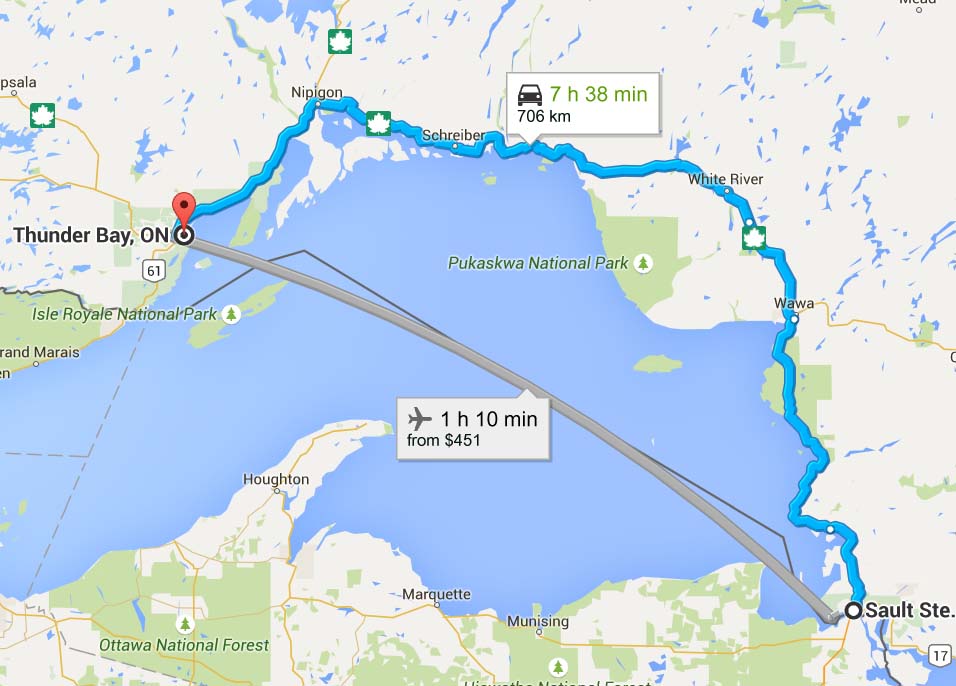
The children were tasked to research and plan the itinerary to include the activities they would like to do enroute. The first leg of the journey was the 1,500 kilometers drive to Thunder Bay and it commenced around 11 PM on 26 June after everyone returned home from work. Everyone took turns at the wheel and by the dawn of 27 June we reached Sault Ste Marie and stopped for morning tea.

Camp Map2

Map Courtesy Google

The Soo, as the city is nicknamed, was established by the French Jesuits in the mid-1600s French traders crossed Lake Superior in their quest for furs. Later, English explorers arrived, followed by lumbermen and exploiters of the mineral deposits. Sault Ste. Marie is a low-rise metropolis spread over undulating hills and flanked by the vastly wooded Algoma wilderness, with the St. Mary’s River at its door. The town is one of the gateways to the US and is located in the narrow neck between Lake Superior and Lake Huron. Canals and Locks, operated jointly by the US and Canadian governments facilitates lifting of ships about 21 feet from Lake Huron and Lake Superior. It is fascinating to watch a big ocean liners, freighters, barges, tugboats being raised and launched on to the next water level the year around.

The drive from Soo to Thunder Bay was on Trans Canadian Highway (Highway 17). The highway passes along Lake Superior, the biggest fresh water lake in the world. The Trans-Canadian railway line also runs parallel to the Highway 17. The original Trans-Canada Route was Highway 11 (designated “The King’s Highway”) was started in 1923 and completed on a war footing to provide toad access to mining towns of Northern Ontario. In 1960, it was realigned and became the new and much shorter Trans-Canada Highway.

Camp Map1

Map Courtesy Google

Driving Westwards to the town of Wawa about 230 kilometers on the highway, the beautiful Lake Superior falls on the South with the dense forests of the Lake Superior National Park on the right with vast and beautiful area of wilderness known simply as ‘North of Superior’. As we drove along the highway, we could spot bears, deer in the wooded hills, sand hill cranes, turkey vultures feeding on an old moose carcass, an accident victim who might have had an encounter with a truck at night.

All along the highway, there are signs to warn drivers about the dangers of wild animals crossing the roads. There has been many such accidents and many have lost their lives due to such accidents. The highway is a two lane road, one lane either way and mostly frequented by trucks, cars and a few buses. At many a places, there are small detours of about 50 meters, to park the vehicles. These detours have been mostly made at points providing a scenic view of the Lake Superior. There are garbage cans placed and these garbage cans are ‘bear proof’ and for the first-time user, a bit intriguing to open one. There are restrooms, picnic tables and a covered picnic area in some of them. These are the favourite spots for many bikers, cyclists and trekkers whom we crossed all along the highway.

Camp Wawa

As we drove along, the landscape changed from rock and forest to a narrow band of farm land, known as the Canadian Shield’s north shore clay belt. We reached the town of Wawa and at the entrance to the town is a large, free-standing, metal sculpture of a Canada Goose as ‘Wawa’ is an (Red)Indian word for Canada Goose. Wawa came into prominence in 1897 with the discovery of gold, followed closely by that of iron ore and more recently diamonds. The area is well known for its pulp industry as the forests around the town is abundant with soft wood trees.   Wawa has a municipal air field and a few eateries and we had our breakfast here.

The next stretch of 480 kilometers was to the final destination – Thunder Bay. The road passes through the mining towns of through the communities of White River, Mobart, Marathon, Terrace Bay, Schreiber, Rossport and Nipigon. Most of these towns have shrunk due to the mines closing down. Only the paper pulp industry and farming seems to be active in these towns.

We reached Thunder Bay by 3 PM. The city of Thunder Bay was formed by the amalgamation of the cities of Port Arthur and Fort William. Thunder Bay is located on the shores of a bay formed and protected by the Sleeping Giant rock formation. The myth is that the Ojibway tribal chief was cursed by the Gods as he let out the secret of the silver mine to the European explorers and was converted into a rock to guard the bay. Thunder Bay is a stopover for ships from around the world who have negotiated the St. Lawrence River and locks on the Great Lakes to reach the most westerly Canadian inland port.

Camp TerryFox

The Eastern edge of Thunder Bay is the site of the Terry Fox Memorial. The cross-Canada Marathon of Hope undertaken by this courageous young man ended near Thunder Bay when his cancer flared again. In 1980, with one leg having been amputated due to cancer, he embarked on a cross-Canada run to raise money and awareness for cancer research. Although the spread of his cancer eventually forced him to end his quest after 143 days and 5,373 kilometers and ultimately cost him his life. Terry Fox continues to be an inspiration for Canadians and Terry Fox Run is held in communities across Canada each year in September to raise funds for cancer.

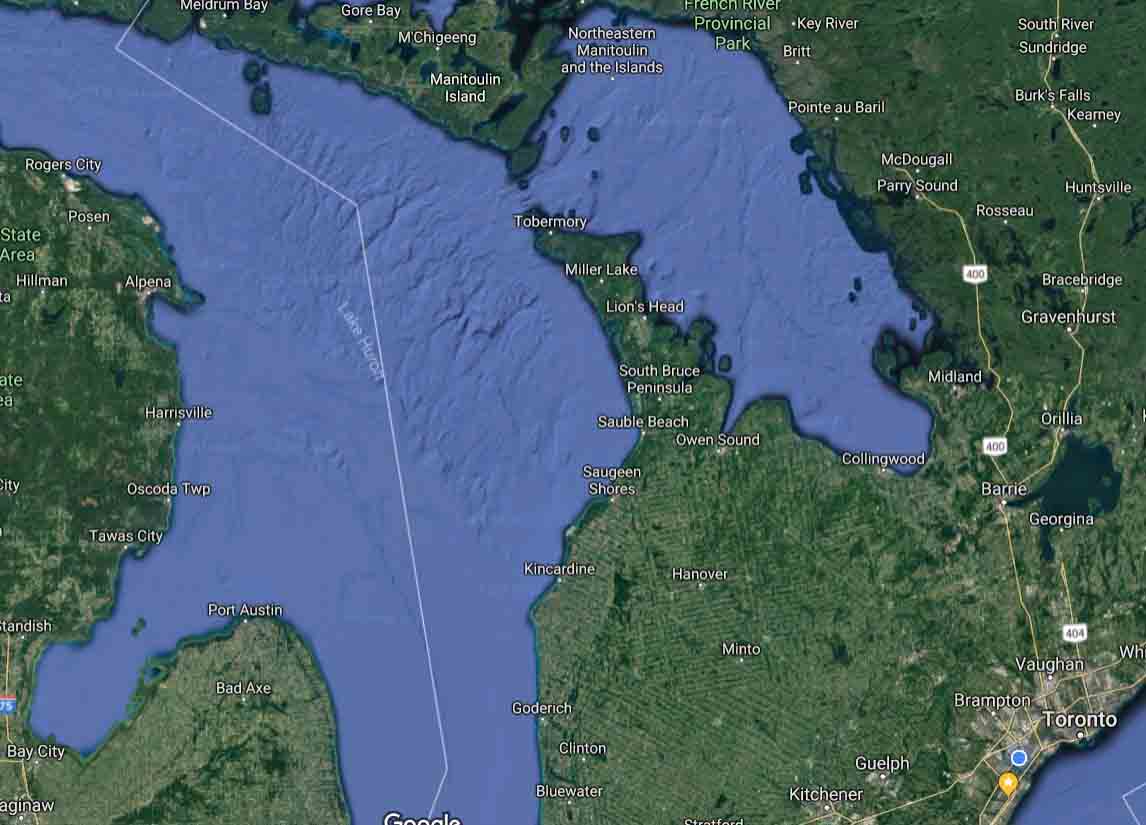
After driving about 1,500 kilometers North-West from the City of Mississauga on the shores of Lake Ontario, and along the shores of Lake Huron and Lake Superior; crossing 10 degrees Longitude to the West and 5 degrees Latitude to the North – we were still in the province of Ontario.

Maps Courtesy Google Maps

Camping at Thunder Bay in the next blog

Shipwrecks of Tobormory

The first long weekend after the onset of Spring is during the second weekend of May with the third Monday of May celebrated as Victoria Day. Queen Victoria was Canada’s sovereign at the time of Confederation in 1867. When Queen Victoria died in 1901, Parliament made her birthday an annual holiday to be celebrated on May 24. In 1952, the Parliament ruled that the Monday before May 24 be celebrated as Victoria Day. The weekend is known in Canada as the unofficial start of summer and is the oldest state holiday.

toborwreck3

Gardening enthusiasts like us make use of the long weekend to begin planting annual saplings in the gardens. It was a family affair as usual with Marina and children, all joining and helping to plan and layout a garden which would be treat to everyone’s eyes. We brought many plants from the local nursery, and some saplings we had grown indoors, to go with the new colour scheme we had decided. Two weeks prior we had visited the city’s recycling yard to collect compost to feed the garden as we have been practising organic farming.

We finished with planting our garden early by Saturday afternoon, and hence decided to drive to Tobermory, about 300 km North of Toronto to enjoy the rest of the long weekend.  Tobermory derives its name from Scottish dialect where in ‘Tobar Mhoire’ means the ‘well of Mary’. The name was given by Scottish fishermen after the port of Tobermory on the Island of Mull in Scotland. We reached Tobermory by 7 PM and checked into a motel there.

toborwreck311

Tobermory is known as the Scuba Diving Capital of Canada and is located at the mouth of Big Tub Harbour on the Georgian Bay of Lake Huron. The area comes under Fathom Five Park, Canada’s first National Marine Park. The park is known for over 20 shipwrecks and 19 islands, notably Flowerpot Island, within its boundaries. Only two shipwrecks in the harbour are intact and visible from the water surface. The other wrecks are disintegrated and dispersed around on the lakebed in the Georgian Bay.   The deep clear water and the numerous shipwrecks attract over 8,000 divers from around the world each year. We booked for a boat cruise for Sunday morning to explore the Fathom Five Marine Park.

toborwreck1

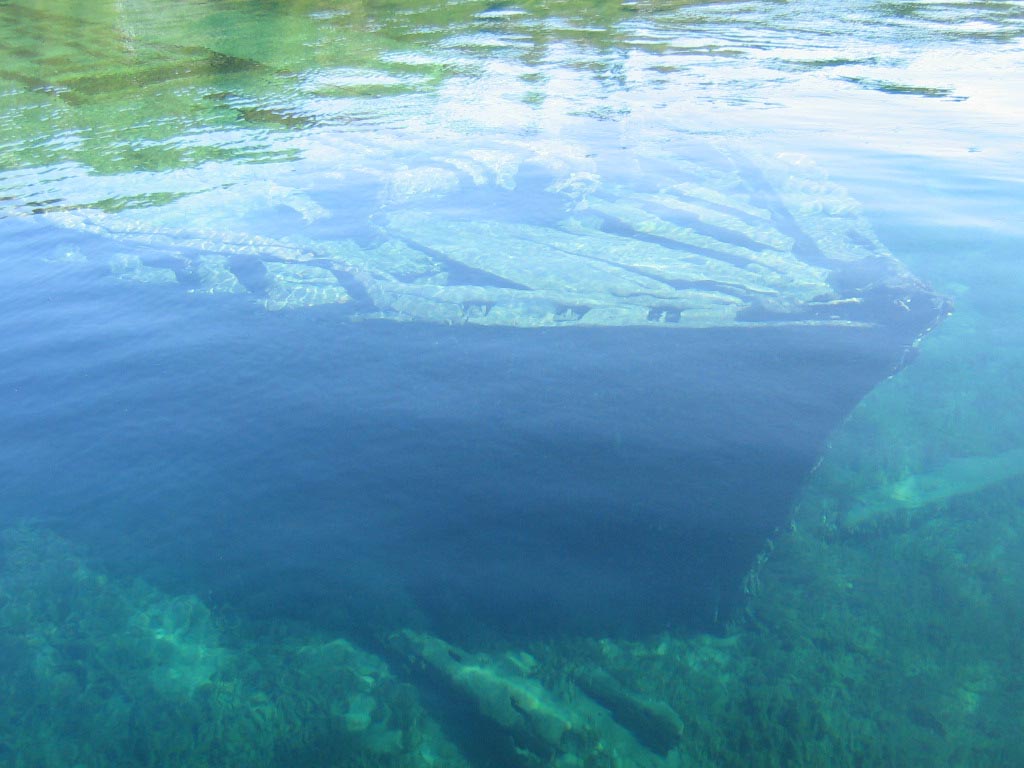
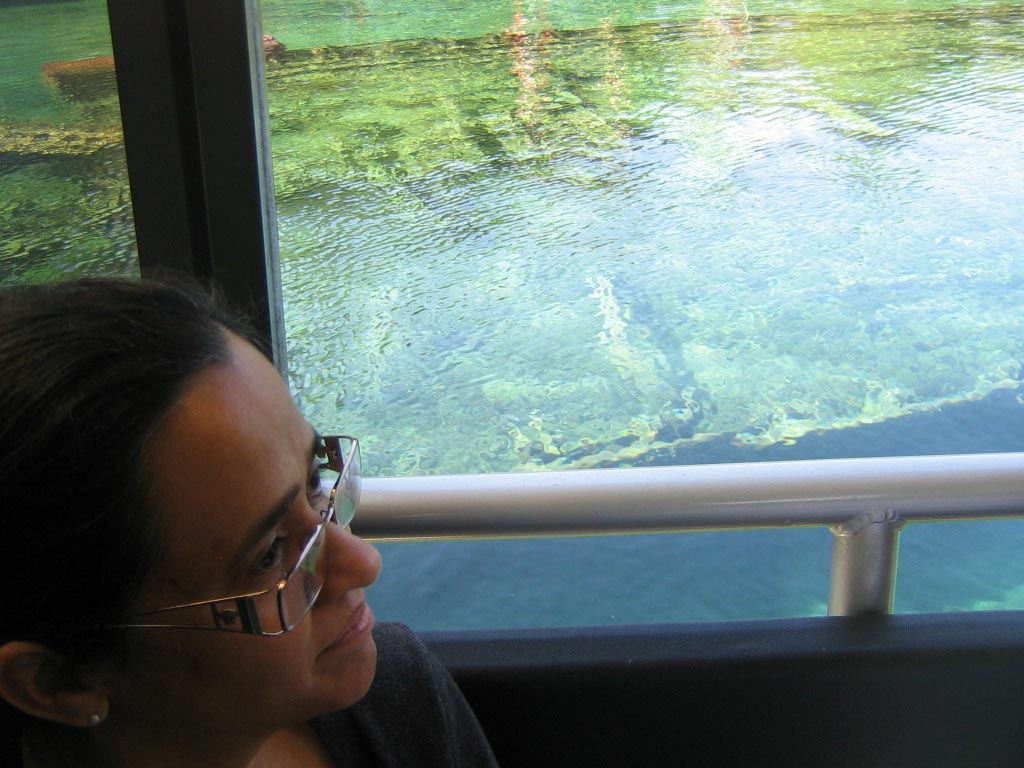
We set off on the boat with about 30 other tourists. The boat’s guide briefed everyone about the safety drills and then we took off to the Big Tub Harbour. The boat had a glass bottom, and we could see the lake’s bed clearly. The algae and lichens in the cold water and the lime stones in the lakebed ensures that the water remains crystal clear all through the year. Our first stop was atop the wreckage of The Sweepstakes, a Great Lakes Ship Built in 1867 in Burlington, Ontario. The wreckage is at a depth of about 20 feet. This double masted, 120 feet long ship was damaged while hauling coal late in the summer of 1885 and then towed to Big Tub Harbour to be repaired. In September of 1885 it was determined that the damage was too extensive to be repaired. She was stripped of anything of value before sinking where she lies today. Her hull is still intact and is considered one of the best-preserved nineteenth century great lakes ships to ever be discovered. In order to reinforce the hull and reduce further deterioration, metal bars throughout the inside of her hull have been installed by Parks Canada.

tobortwreck2

The next halt was 100 meters away at the wreckage site of a passenger ship – The City of Grand Rapids. She was an elegant a double-decked passenger steamer until it burned and sank in October 1907. Its charred remains now lie in shallow water about 15 ft deep. On the evening of October 29, 1907, fire broke out aboard the Grand Rapids while docked in the Little Tub Harbour. A tug towed the burning ship out of the harbour, and released it. The City of Grand Rapids then drifted into Big Tub Harbor. It continued to burn, and eventually came to rest at the head of the harbour, where it burned to the waterline, rolled to starboard and sank. Today, the iron-sheathed hull is intact and is filled with coal used for the boilers, as well as silt. The charred tips of the frames can be seen on both the starboard and port sides. Lying on the bottom and clearly visible mid-way along the starboard side is part of the smokestack and a metal frame from the piano that once entertained the guests on board.

toborlthouse

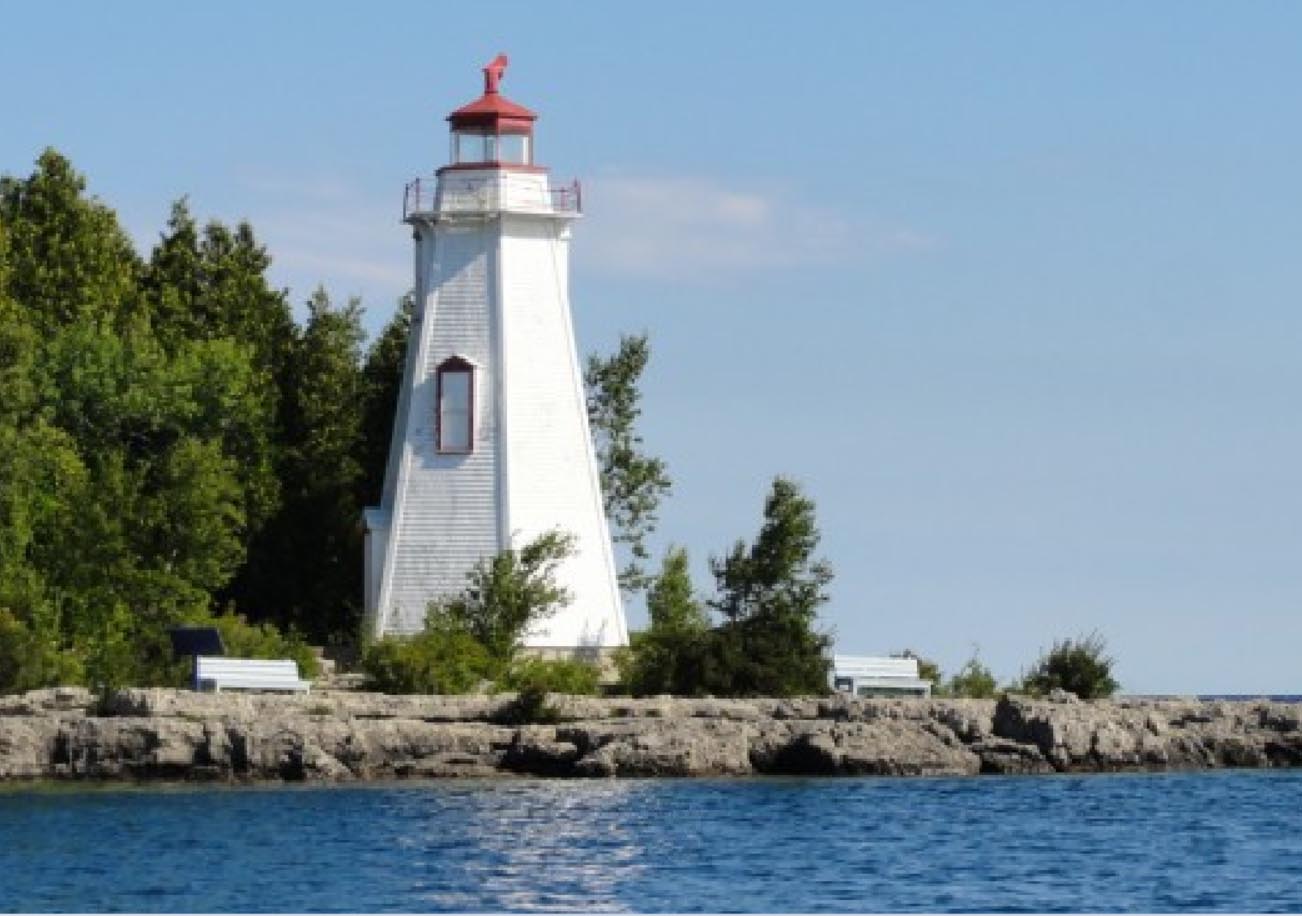
Our next stop was at the Big Tub Lighthouse. In 1871 Captain John Charles Earl settled at The Big Tub Harbour. In those days, vessels were extensively used to transport coal, lumber, fur, blubber etc as part of the trade through the Great Lakes. The perfect safety with which vessels could lie in the basin at Tobermory had made this harbour much frequented harbour of refuge. For the convenience of navigators, Captain Earl started hanging a lantern at the top of a high pole to ensure safe navigation for vessels entering the harbor from the treacherous waters of Lake Huron and Georgian Bay. The number of shipwrecks offshore testify to the dangerous waters of this area. He was remunerated for this service by various captains, they presenting him with useful house supplies, such as a bag of potatoes, flour, etc. In the course of a few years the Government acknowledged this service and paid him a salary of about $30 a year. The first lighthouse was constructed in 1885 for a cost of $675. The original structure was later replaced by the six-sided, 14-meter-high wooden lighthouse of today. The lighthouse, a fully automated one today, still guides boats through powerful currents, frequent fogs and numerous shoals to the safety of Big Tub Harbour.

From the lighthouse, the boat sped away, skimming the waters to reach the Flowerpot Island, one of Canada’s most fascinating natural attractions, about 6 km away. This is the only island in the park which has camping facilities, marked trails, caves and its namesake flowerpots.

The Flowerpots are a type of sea stack, formed over many years as wind, rain, waves and ice hammered away at the cliff that once stood alongside the water’s edge.  The softer rock eroded more quickly, leaving the harder rock remaining in the shape of Flowerpots. There are many flowerpots all along the waters on the Island.

toboflowrpot

This flowerpot’s top resembles the head of a native warrior carved in the stone, a reflection of unusual geology.

The caves on the island were formed after the ice age, approximately 12,000 years ago, when the glacial Lake Algonquin completely covered Flowerpot Island. As the lake levels fell in stages, the cliffs were exposed to the eroding effects of the lake for varying duration of time. This phenomenon caused numerous caves to form in the cliffs throughout the island.

After a well-deserved break, we returned home by evening on Sunday, to tend to the saplings we planted and for the summer months to arrive.

The Seven Books of Remembrance

BooksofRemembrance copy

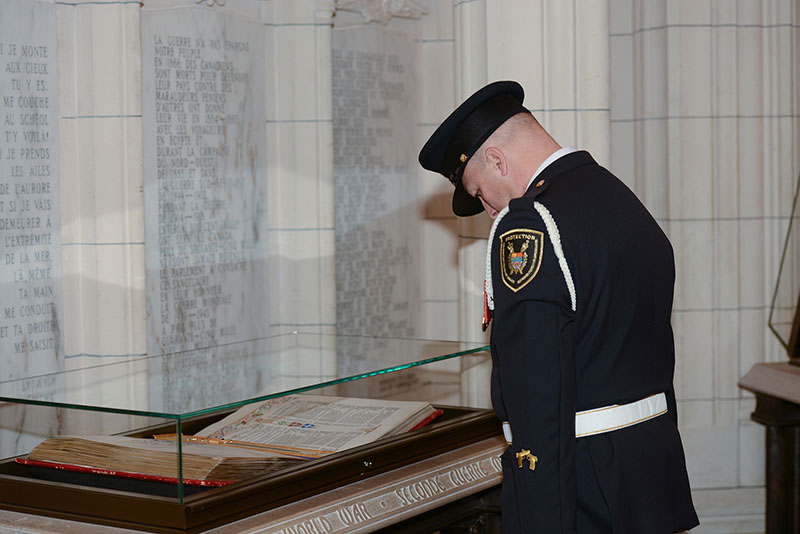
We took Guillaume Le Floch, the French exchange student to visit the Canadian Parliament building at Ottawa in August 2014. During the tour we entered the Memorial Chamber in the Peace Tower. The Memorial Chamber is a small, quiet room that houses seven Books of Remembrance which record the names of the men and women who have given their lives in military service to Canada. The Memorial Chamber is a beautifully crafted room with a vaulted ceiling, stained glass windows and intricate carvings depicting Canada’s record of war.


These books contain the names of more than 118,000 Canadians who fought in wars and died either during or after them. These men and women made the ultimate sacrifice while serving the country in uniform. The Government of Canada has always been in the forefront in honouring the men and women in uniform. The seven Books of Remembrance ensures that their names are etched in the history of the country and are always well preserved and cared for.

These Books of Remembrance represent the highest expressions of modern workmanship and artistry. The craftsmanship, heraldic illumination, calligraphy, water coloring, bookbinding and leather tooling give the books a special look and quality unequalled the world over.


The first book is the largest of the Books, containing 66,655 names, of those who died in is the First World War. The second book contains 44,893 names of those who did the extreme sacrifice in the Second World War. The third is the Korean War Book of Remembrance which commemorates the 516 men and women who died during the Korean War from 1950 to 1953.

The fourth book is the South African War/Nile Expedition Book of Remembrance, containing names of nearly 300 Canadian volunteers, who gave their lives in these early campaigns in the late 1800s This book was commissioned on May 31, 1962, the anniversary of the signing of the Peace of Vereeniging, which ended the war in South Africa.
The fifth is the Merchant Navy Book of Remembrance which commemorates the men and women of the Merchant Marine who died while serving Canada at sea during both World War I and II.


The sixth is the New Foundland Book of Remembrance which honours more than 2300 men and women who sacrificed their lives in both World War I and World War II, before Newfoundland became a Canadian province in 1949.

The seventh is the In Service of Canada Book of Remembrance This book records the names of those who died since October 1947 in military service to Canada (except in the Korean War), either in Canada or abroad.

On July 1, 1917 , then Prime Minister Sir Robert Borden dedicated a site in the Centre Block of the Houses of Parliament as a memorial to the debt of our forefathers and to the valour of those Canadians who fought in the First World War. Two years later the Prince of Wales laid the corner stone of “The Tower of Victory and Peace” as it was originally known. The intention was for all the names of the Canadian soldiers to be engraved on the walls of the chamber, but it was soon realized that there would not be enough space on the walls to contain more than 66,000 names.

Thus resulted the Book of Remembrance and the design of the Tower was altered to create a chamber to accommodate the Books. The Prince of Wales on August 3, 1927 unveiled the altar; a gift from the British Government, upon which the Book of The First World War rests this day.


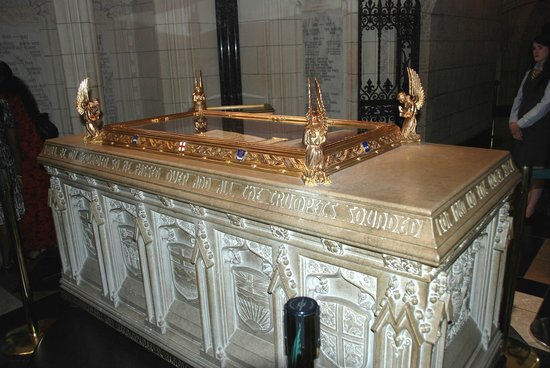
James Purves was the artist chosen for the creation of the first book. James Purves died in 1940, at which time only the preliminary work had been done and only one page was fully illuminated and illustrated. Alan Beddoe, an assistant of Purves, took over and completed the book in 1942. By the time the first book was completed, Canada was already in the middle of the Second World War. Today this book lies open on the Altar in the centre of the Memorial Chamber, covered by a glass case and with kneeling statuettes of praying angels at its corners.


In 1948, Beddoe was selected to create the Book of Remembrance for the Second World War. He changed the script style and included approximately 75 names per page as compared to 125 names per page in the First World War Book. He also incorporated many pages commemorating particular actions, battles, and places that were significant to Canadians during the war. The Second World War Book of Remembrance was placed in the Memorial Chamber on Remembrance Day of 1957 (November 11).

The names of those lost are inscribed in the Korean War Book of Remembrance, which includes a page decorated with the United Nations symbol surrounded by the Arms of the 17 countries which participated in the United Nations Forces. The Book was dedicated in the Memorial Chamber on November 11, 1962.

The Nile Expedition in 1884 marked the first time Canada took part in a war overseas. Four hundred volunteers skilled in river navigation served in the expedition; sixteen gave their lives. The South African War broke out on October 11, 1899. This war marked the first occasion in which large contingents of Canadian troops served abroad. More than 7,000 Canadians volunteered to fight in the South African War. Almost 300 names are listed in the South African War / Nile Expedition Book of Remembrance. The Book was dedicated and placed in the Memorial Chamber on May 31, 1962, the sixtieth anniversary of the signing of the Peace of Vereeniging, which ended the war in South Africa.

Every morning, at eleven o’clock, the pages of the Books of Remembrance are turned by a member of the House of Commons Protective Service Staff. A calendar was devised so that each page of each book is turned once a year. Some pages are left exposed for several days at a time on or near a date of the anniversary of the actions they commemorate. During the ceremony a guard in marches in front of the First World War Book, bows and salutes and then marches over to the book on the right and turn the page. This process is repeated for all of the Books of Remembrance and is done in a counter-clockwise direction around the Chamber.

The seven Books of Remembrance are testaments to the valour, sacrifice and selflessness of those Canadians who have died in military service. Any country that honours its soldiers will always go a long way ahead as Canada has proved.

Wounded Warriors Park

WoundedWarrier

Canada’s first monument and park dedicated to wounded veterans and other uniformed personnel injured in the line of duty opened on 01 November 2014 at Whitby, a town about 50 kilometers from Toronto. The park has been aptly christened as ‘The Park of Reflection,’ which aims to be a living tribute to survivors and the families who care for them. The park was designed by Daimian Boyne, a Canadian Armed Forces veteran who served in Bosnia. Boyne believes that everyone remembers those who have fallen in the line of duty but have always forgotten those who became ill and injured.

Boyne, who suffered severe post-traumatic stress, said it can be especially difficult for those with less obvious injuries and it is often their families who are left to cope. He is also of the opinion that post-traumatic stress creates disharmony in a family unit and this monument depicts a family and a community dealing with such veterans.

After leaving the military in 2006, Mr. Boyne struggled with depression, suicidal thoughts and other effects of post-traumatic stress disorder (PTSD). He went on to study horticulture at Algonquin College in 2009 with the help of a veterans’ transition program and found nature to be a key part of the healing process. Currently national events co-ordinator with Wounded Warriors Canada, Boyne said he has run many events across the country and watched nature return smiles to the faces of men and women, showing them there’s life after service.

On release from the military after being injured in the line of service there was a thought in Boyne’s mind as to how people are going to remember the sacrifices of him and his family. He thought of a the firefighter who runs into a house to save lives and ends up getting hurt. He or her, and their families, made the sacrifice for the community and as a token of paying them back and remembering them forever, he came up with the idea of this park.

Canadians pay wonderful tribute to those who have fallen in the line of duty but we have always forgotten those who became ill and injured on the line of duty. Many are left with lifelong scars – physical, emotional, psychological, etc. Some live a difficult and dreadful life post retirement. This park aims to be a living tribute to survivors and their families who care for them. This is a new way of showing the ill and injured that their service and sacrifice will never be forgotten.

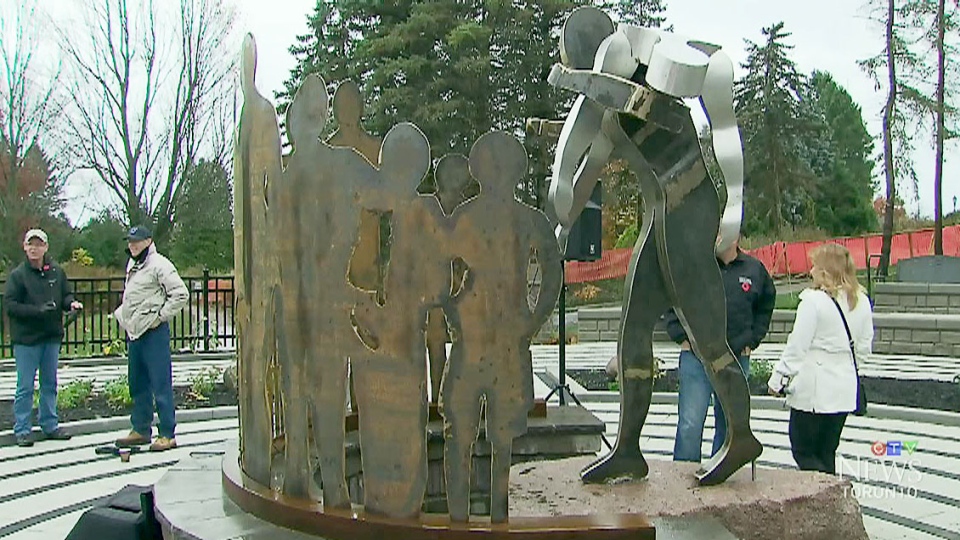
The park, an initiative of Wounded Warriors Canada, features an amphitheater overlooking a circular plaza with a labyrinth walking path and healing garden. A central sculpture depicts a first responder carrying a wounded comrade back to society, with shapes surrounding it that represent community members. Tribute stones have been created to be inlaid in the pathway with the names of the ill and injured. Members of the public have been advised to purchase tribute stones for $500 each, with the name of a loved one who has been injured in service, to be placed at the park. The centerpiece was envisioned by Daimian Boyne with an aim to provide a tranquil place that serves both as a tribute and as a place of calm and healing.

The Wounded Warriors Canada hopes that the park will inspire other such parks in communities across Canada and also across the world. While this park will serve as a reminder of the wounded living among us, it would also become a place of laughter and joy, of community events and theater, and so become a celebration of life. If we can make the wounded veteran realise that their service and sacrifice will never be forgotten, one can honestly believe that it is going to bring up their heart and soul and it is going to give them the courage to get back into the community again.

Dozens of uniformed personnel — military, police and firefighters — as well as veterans, spectators and dignitaries were on hand for the formal opening that featured the pomp and ceremony of a marching band, bagpipes and ‘The Last Post’.

Toronto Police Chief Bill Blair was in Whitby on Saturday, where he said that such spaces are appreciated by those in uniform. He added that it gave them strength and just reminds them that their sacrifice and their effort on behalf of their fellow citizens is recognized and appreciated.

Corporal David Macdonald, a member of the Royal Regiment of Canada who was injured during a combat tour in Afghanistan and later suffered a stress disorder, said the new facility was important to him. He added that when a soldier comes home battered and broken, it is a long journey to recover.  The society often fails to recognize the toll taken on those with invisible scars or injuries. When asked about the war in Afghanistan, everyone appears to know the tally of the soldiers that were killed, but no one knows the mere numbers of soldiers maimed or wounded, some for life.

One of my Gurus during my Indian Army days, General Raj Mehta, was wounded while serving as a Brigadier in Kashmir, fighting the terrorists.   He wrote to say that a memorial for the wounded is something pretty unusual from the Indian context because we neglect our brave dead savagely, so cannot be expected to really bother about our wounded who are still alive…We have many many cases where the wounded are denied disability pension which both military as well as civil bureaucracy holds up on trivial grounds and contests in the courts for years.   When he got wounded, he was savagely criticised because it was felt that a Brigadier should not have got wounded as it gave the terrorists a moral ascendency.  Superficially, however, a veneer of concern was maintained by the hierarchy by sending “Get Well…We are proud  of you” messages, but in reality, most of this was disingenuous talk that was so easy to see through…

Whale Watching @ Bay of Fundi

After spending three days on the Prince Edward Island (PEI), the Eastern most province of Canada, we decided to travel to the Bay of Fundy for Whale watching.

The Bay of Fundy is a bay on the Atlantic coast between the Canadian provinces of New Brunswick and Nova Scotia. Some sources believe the name ‘Fundy’ is a corruption of the French word ‘Fendu’, meaning ‘split’, while others believe it comes from the Portuguese ‘funda’, meaning ‘deep’. The Bay of Fundy is known for having the highest tidal range in the world and is said to be best place to watch the whales in the summer.


We had entered PEI through the Confederation Bridge and decided to take ferry for exiting the island. It could have been the resultant of my military mind which prompted the decision for a different exit route and also the eagerness for the experience of traveling by the ferry.

The ferry commences its voyage from Wood Islands, PEI and takes 75 minutes crossing the Northumberland Strait to Caribou, Nova Scotia. The bottom two decks of the ferry holds about 150 vehicles, which include 60 feet trucks, cars and motor cycles. The upper two decks are for passengers and there is Wi-Fi, movies, restaurants, lounges, children play area, etc on board.   We loaded our car into the ferry at about 2 PM and moved into the upper deck to enjoy the sea breeze. We reached Caribou by around 3:30 PM and drove off to Middleton.

We spent the night in a motel at Middleton and the next morning drove to Freeport in Nova Scotia and reached an yellow building – the Lavena’s Catch Cafe which also houses the booking office for the Whale Watching Tour operated by Captain Tim. He also doubles up as a lobster fisherman, when he is not operating the Whale Watching Tour. On reaching the cafe, Nidhi our daughter was quick to come up with the fact that this place had featured in the Food Network’s series Pitchin’ In, hosted by chef Lynn Crawford.

Lavena’s Catch Cafe established in 2000 is owned and operated by Tim Crockers’ sister Lavena and her husband Stanton. It is purely a family business and has been listed in Where To Eat In Canada since 2002. All dishes are prepared daily.  The menu boasts of delicious seafood entree’s and fabulous homemade desserts. The menu is somewhat dictated by what comes off the boat that day and the seafood is as fresh as you can get. We had breakfast and placed our order for lunch, mainly scallop chowder, baked haddock and salads.

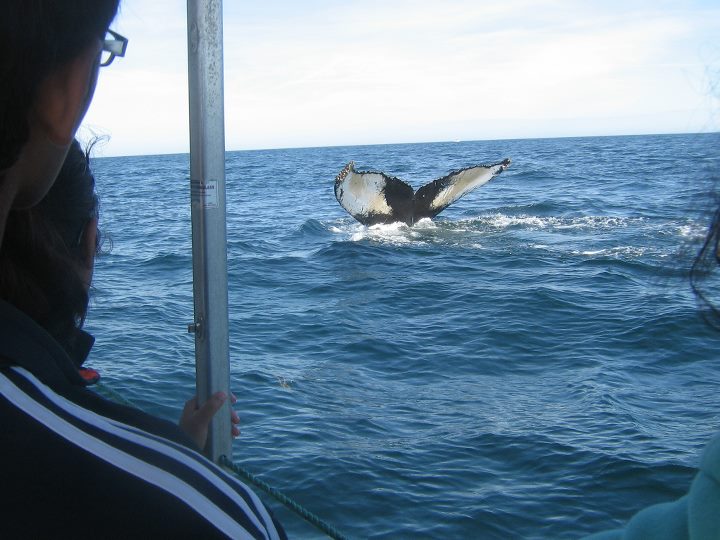
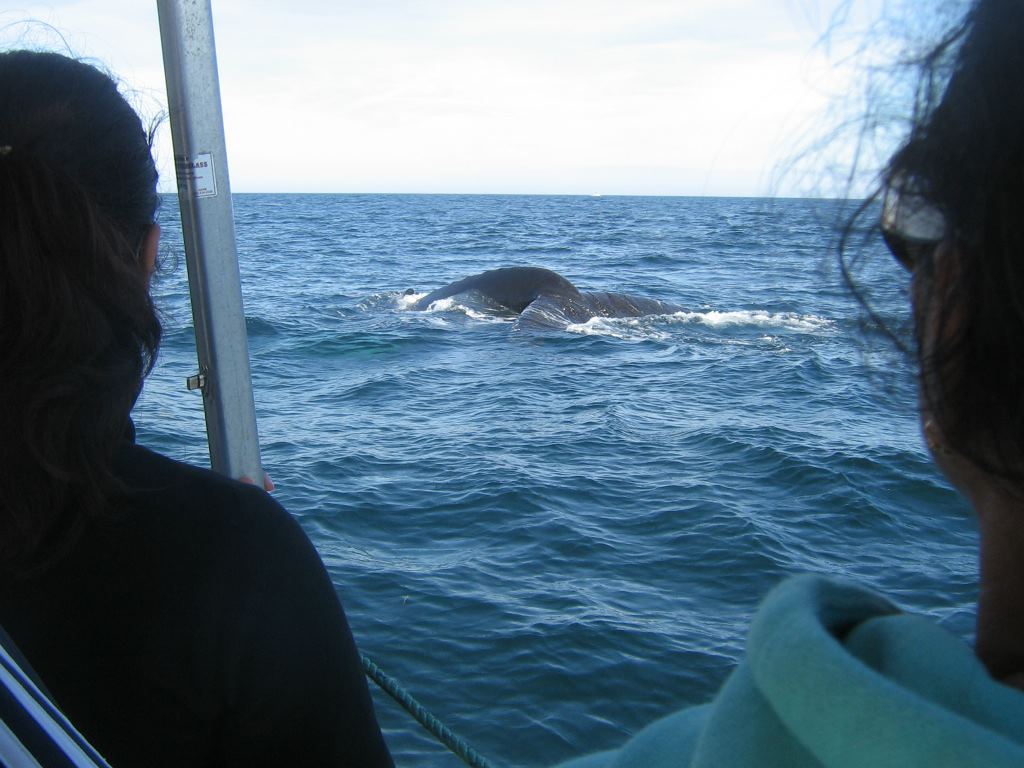
At 10 AM we embarked on Captain Tim’s boat for the Whale Watching Tour. After the mandatory safety briefing, the boat steamed off into the Bay of Fundy – a 90 minute cruise. Captain Tim kept briefing us about the seas, the whales and all his previous experiences of encounters with the whales. He claimed that he had never missed sighting the whales in any of his tours and promised us that we will all meet the biggest mammals. Suddenly the boat broke into high speed and Captain Tim called everyone to look in the front and there they were – about eight Humpback whales swimming majestically. Captain Tim positioned the boat about 30 meters from the swimming whales and moved parallel to them so that we could see the whales. These “showmen” put on some spectacular shows, literally throwing their bodies out of the water (breaching). They come into the Fundy Bay to feed on the enormous amount of capelin (small smelt fish) that come in from the sea. The humpbacks are about 12-16 metres long with black dorsal colouring and large white pectoral fins. Their top looks like a hump and hence their names and another distinctive feature of the Humpback are their fluked tail. Flukes are the two lobes of the whale tail.

Whale watching tours follow the Marine Tour Operators Code of Ethics which include no chasing, harassing or herding the whales. This is to ensure that the whales are not disturbed from their natural routine or injured.

On returning to the Lavena’s Catch Cafe by mid-day, hot chowders were waiting for us. We enjoyed the fabulous seafood lunch and set out to the Digby Port to catch the ferry to St Johns in New Brunswick. We loaded the car into the ferry and set sail at 4 PM for a three hour journey across the Bay of Fundy.

The facilities in the ferry were similar to the earlier ferry and the duration being three hours, we decided to settle down in the lounge for a game of cards. After about two hours, the Captain announced that there were some killer whales sighted on the port side. We looked out and was about four killer whales emerging out of water, doing flips, turns and somersaults before landing back on the water. These killer whales are called Orcas and is a toothed whale, the largest of the Dolphin family. They are easily distinguished by their fin and their prominent black and white markings which can be seen from far. They are natural predators but as well, they are natural showmen.

We disembarked at the St John’s port at about 7 PM and drove off to the hotel and spent the night there. Early morning we drove to Quebec City and the next day to our home in Mississauga.

Walk for Water

toronto-73508_1280

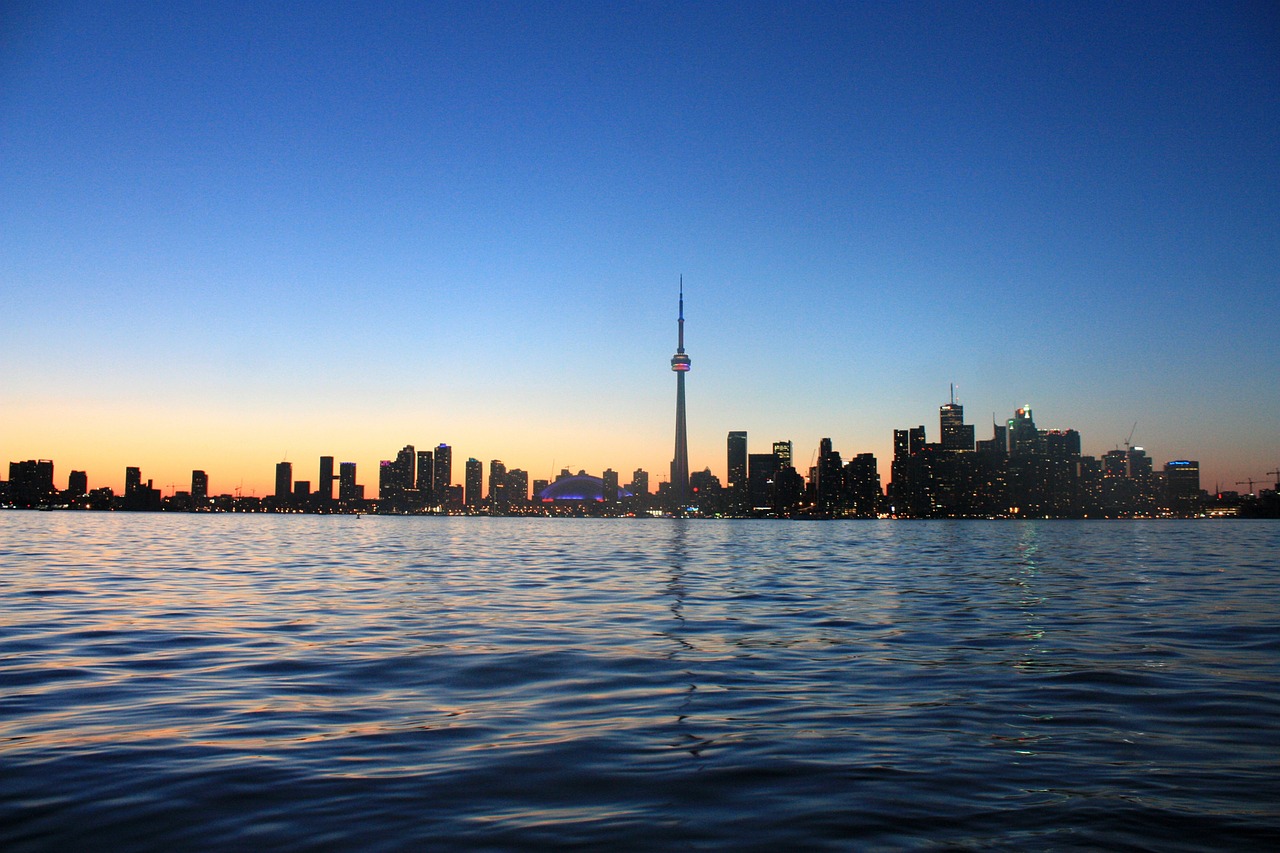
A friend invited me to participate in a charity walk of 5 km on 29 August 2014, through a picturesque trail in the city to raise awareness about the problem of safe drinking water faced by millions worldwide and also to raise money. The Walk for Water was in support of Water Missions International’s response to the global water crisis through sustainable safe water and sanitation solutions around the world. Safe water is the source of life. It is the foundation for health, education and viable economies. The global safe water crisis is much more than just a lack of safe water. Providing those people with access to safe water gives them an opportunity  to go to school, work and play free from the stress of dirty, disease-filled water.

There were posters put up all along the path depicting the problems faced by people all over the world. There were posters saying how lucky the Canadians are as they have the Great Lakes and thousands of smaller lakes with clean potable water. Canadians are blessed with clean municipal water supply all through the day year around.

This prompted me to study the municipal water supply system in our City of Mississauga, which comes under the Peel Region.

water66aaLake Ontario is the source for the Peel Drinking Water System. As the lake water enters the intake, located about 2 km from the lake-shore, it is chlorinated. The chlorine kills bacteria and prevents mussels from growing in the intake pipe and obstructing the flow. As the water enters the treatment facility, it passes through travelling screens. The screens prevent items such as fish, sticks and aquatic plants from entering the treatment facility and damaging equipment. Water is then treated by means any one of the following treatments based on the age of the plant.

  • Conventional treatment.-
    • Alum, a coagulant is added to the water. The rapid mixer thoroughly mixes the coagulant with the water to help form sticky particles from the suspended particles in the water.
    • Slow mixing that helps the sticky particles collide with each other, forming larger and heavier particles called floc.
    • Floc particles are removed from the water by inclined plate settlers or the water is slowed down in large tanks to allow particles to settle to the bottom.
    • Removes remaining particles and chlorine-resistant bacteria and reduces the levels of compounds that can cause tastes and odours.
    • The water travels down by gravity through layers of granular activated carbon, sand and gravel.
  • Ozone Biologically Activated Carbon Contactor and Membrane Filtration (OBM) Treatment.
    • Ozone gas is bubbled through the water in the Ozone Contactors. Ozone kills bacteria and also helps to break down substances that cause tastes and odours so that they can be removed easily.
    • BACC Filters: These specially designed contactors remove the biodegradable organic matter produced by the activity of the ozone process. This removal process keeps the water stable after treatment by minimizing re-growth of bacteria in the distribution system.
    • Membrane Filters:   These are specially designed water filters with very small pores that the water is pulled through. The membrane filters remove microorganisms and producing water with very little turbidity.
  • The modern state-of-the-art Membrane Filtration, Ultraviolet Light, and Granular Activated Carbon Contactor (MUG) treatment.
    • Membrane Filtration.   Raw water is pulled through state-of-the-art Ultra Filtration Membranes with pores small enough to filter out particles and many microorganisms.
    • UV Light.   Filtered water then passes through UV Light Units, which inactivate microorganisms. These units also reduce taste and odour in the water by Advanced Oxidation. The Advanced Oxidation process uses hydrogen peroxide and a higher intensity of UV light to oxidize (break apart) compounds that cause unpleasant taste and odour. The Advanced Oxidation system is used seasonally, when taste and odour problems are at their peak due to lake and temperature conditions.
    • Granular Activated Carbon Contactor (GACC).   The water then flows down through a matrix of carbon granules into GACC. They eliminate any residual hydrogen peroxide from the Advanced Oxidation process.

Water treated by any of the three above processes is further treated prior to supply into the water supply system as under:

  • Chlorination for inactivation of bacteria/ disease causing organisms.
  • Fluoride  addition for better dental health and to protect teeth from cavities

The water is then supplied through the pipes, buried 10 feet below to prevent freezing in winter. The old ductile iron pipes (DIP) forming the water mains, running mostly below the municipal roads, are now being replaced with polyethylene encased DIP, which has a lifespan of up to 100 years.

Majority of the water main replacement projects are undertaken from March to October every year, in partnership with road and sewer renewal projects for improved cost effectiveness and minimized public inconvenience. This prompted a friend to remark that in Canada we have four seasons – winter, severe winter, winter and then construction.

How do they ensure water at the optimum pressure throughout?

A typical municipal water supply runs at between 50 and 100 psi (major appliances require at least 20 to 30 psi). Pumps at the water treatment plant pump water at about 100 psi and is connected to the main pipe lines. There are three water towers in the city which are also connected to the same pipeline. During low water usage hours, the tanks on the water towers get filled and they discharge into the pipeline when the pressure falls due to high usage during peak hours, thus maintaining the optimum pressure. There are no overhead tanks in the homes as the city guarantees 24 hours water supply at optimum pressure.

As the water in the pipelines is maintained under high pressure all throughout, there is hardly any chance of muddy water from the ground getting into the pipes. Mixing of dirty water or sewage is possible only when there is intermittent water supply and there is a crack in the pipe. The water in the pipe leaks into the soil around when under pressure. When the water supply is shut down, the pressure in the water pipes drop below the pressure of water in the soil, forcing the muddy water into the pipeline through the crack. When the water supply is restored, this muddy water in the pipes reaches the consumer.

How come the water in the water towers do not freeze in the cold Canadian winters?

They do freeze. They just don’t normally freeze solid. The central pipe that runs from ground level up into the bottom of the tank is called a riser. Many tank risers are wrapped with heat tape, covered with insulation and capped by an aluminum jacket. Ice forms on the surface of the tank, in many cases several feet thick. Normally, this ice layer floats on the surface as the water level rises and falls. Many times this ice remains stuck to the roof the tank and remains there.

This is why the City of Mississauga proclaims that the best drinking water is the municipal water.

Bishnois and Khojis of Rajasthan

RJ

Rajasthan, the land of kings and royalty, has been a mesmerising experience for me during my stay in India. The Western desert state of the Indian Union is vibrant, and exotic where tradition and royal glory meet in a riot of colors against the vast backdrop of sand and desert. It has an unusual diversity in its entire forms- people, customs, culture, costumes, music, manners, dialects and cuisine.. The landscape is dotted with invincible forts, magnificent palace havelis, rich culture and heritage, beauty and natural resources. It is a land rich in music, Dance, Art & Craft and Adventure, a land that never ceases to intrigue & enchant.

We in the Indian Army, visited Rajasthan mainly during operational deployments on the border, artillery field firing practices and various tactical exercises. One has seen the state progressing and developing in all fields – education, social matters, communication infrastructure, industrial output, exploitation of natural resources, etc. However two features will ever remain in my memory.

Bishnois

While media and scholars have celebrated Indian women environmentalists and activists such as Medha Patkar and Arundhati Roy, you may not have herd of Imarti Devi and Begu Bai of Khejarli (Barmer District), the first proponent of Indian ecofeminism. They led a massive sacrifice for the protection of trees in February 1730 in Jodhpur. More than 300 Bishnoi men and women, sacrificed their lives to protect the trees from the soldiers of the king Abhay Singh of Jodhpur, who wanted to fell the trees to treat the lime stones for constructing his palace.  The dead were buried, not cremated and there is a temple at that site.


Bishnoi temple as it exist today,  commemorating the Khejarli massacre.

All of you must be familiar with the episode of, Salman Khan’s shikar of deer in Rajasthan. Salman Khan together with friends undertook a hunting excursion in Rajasthan. In doing so they rushed blackbucks until their exhaustion, shot endangered and strictly protected animals. The locals protested and the actor with his entire entourage was put behind the bars.

These people are the Bishnois of Rajasthan. They are seen as an example by the global environment community for their deep devotion to conservation of nature. The Bishnoi sect was founded by Lord Jambheshwar believed to be an incarnation of Vishnu, the preserver, and is probably the only religion in the world that’s based on principles of conservation. Legend has it that Jambheshwar, born into the warrior clan of Rajputs but chose a different life. Instead of developing hunting skills, he learned to communicate with living beings. He came up with the 29 principles that would govern the lives of his many followers, who would be called Bishnois — derived from ‘bees’ and ‘noi’, which means 20 and nine.

Here are some of the unique Bishnoi practices that show how their lifestyles are in a complete fit with their environment: Bishnois do not cut trees; instead they use dried cow dung as fuel. They do not cremate their dead as Hindus normally do, because it involves the use of firewood; instead, they bury them. Agriculture is the mainstay of the people; they also carve wood during the time they are not busy on their fields. The required wood comes from trees that have fallen during storms. Each Bishnoi family creates a tank in their field to provide water for black bucks and antelopes in the arid summer months. They maintain groves for the animals to graze and birds to feed. Solar energy is used to extract underground water to irrigate the groves. The region where they live is a desert, and these groves help to recharge rain water in the aquifers in the desert.

Not only do the Bishnois protect the deer from poachers, they also allow them to graze freely on their farmlands. It’s the belief of every Bishnoi that the first right to the harvest goes to the deer. Many Bishnoi temples doubles up as rescue shelters and the priests take care of injured animals. Some of these go back into the wild after they recover, while others roam about in the compound.

Many Bishnois believe that their fore-fathers take rebirth as deer and that is why many are attached to these animals.   The Bishnoi women have deep maternal affection for the rescued fawns. It is not uncommon for a Bishnoi woman to breastfeed a newly born, orphaned fawns..

Adapting to the modern times, the Bishnois have become ‘active conservators’ pursuing poachers and capturing them to be handed them over to the forest authorities. They now have what they call the Tiger Force, a 1000-strong brigade committed to wildlife protection, spread across hundreds of villages. The Tiger Force came into the spotlight when they chased and caught Salman Khan and his gang red-handed with the blackbucks they had killed.

Prior to induction into Rajasthan, all troops of the Indian Army are made well aware of the sentimentality of the Bishnois to the wildlife and the trees. All out efforts are made by the Army to provide all assistance to the locals in their conservation efforts.

Khojis

During one of my area familiarisation trips in the Rajasthan borders, I stopped at a Border Security Force Headquarters for lunch. There I met a frail and old man – may be in his late eighties. The company commander introduced him to me as a Khoji.- the tracker. Every day at sunrise, the Khoji’ diligently examines a stretch of sand running alongside the wire- fencing border with Pakistan, for any telltale signs of infiltration. The slightest indentation or disturbance in the sand raises the alarm for the tracker. It tells him whether any human or animal has crossed the three-tiered barbed wire fence.

He utilises his uncanny ability, which includes recognising the footprints of individuals camels, cows, goats or sheep from amongst hundreds of others to track them down, however far they may have strayed into the desert wasteland. One glance at a broken twig, a bent blade of dried grass or even the hint of a footprint in the sand are all that he requires to catch his prey. For the Khoji, eEach footprint has subtle but distinct differences which only a Khoji’s trained eye can spot.

He even predicts as to the type of animal that crossed, the weight on its back, the direction where the animal is headed to, and also the likely place it would have reached by then. The Khojis learn their craft as children by tracking camels, sheep and cattle which stray far from home in search of food across the vast desert. It’s instinctive and the ability to successfully pinpoint footprints increases with experience. And, unlike other professions in tribal, superstitious and caste-ridden Rajasthan, the Khoji’s do not belong to any one community. They also worship no deity or special Gods.

The Khoji’s are employed exclusively by the BSF which have around 100 of them in the desert districts of Rajasthan and neighbouring Gujarat state, where they monitor the 1,500 km long sandy stretch of border with Pakistan for smugglers and illegal aliens. An asset to each BSF battalion, their services are also called upon by the local police to track down criminals or missing livestock. They also organise tracking courses for BSF personnel.

Their rivals in Pakistan, known as Pugees, are similarly employed by the Ranger border guards. But over the past years, fencing and flood lighting of the Rajasthan border has greatly reduced the Khoji’s workload. Earlier, they not only tracked illegal immigrants and smugglers but also herds of cattle, camels and sheep which frequently strayed across the open border.

I was astonished by the capability of these Khojis and many a times we employed them to track down infiltrators which our modern radar systems and the supersensitive cameras of the drones could not identify, mainly due to the lie of the sand dunes in the deserts.

Walking Tours

Ottawa-Nights

Exploring Canada is real time consuming and over the past two summers we decided to explore Ottawa, the Capital City and Quebec City, the capital of Quebec Province. At both these places, we undertook walking tours of extremely different nature.

On 31 December 1857, Queen Victoria chose Ottawa as the Capital of Canada being midway between Toronto and Quebec City and less prone to political mobs being a small city. Ottawa is the fourth largest city in Canada and is the most educated city with minimum unemployment. Ottawa with Gatineau, Quebec, on the West together form the National Capital Region (NCR). In effect half of it French speaking and the other half mostly English speaking.

Every city in the world offers an amazingly rich history filled with scandal, scariness and intrigue. There are many a haunted buildings, places of worships, cemetery etc that one can find in any city. While in Ottawa, the capital city of Canada, we ran into The Haunted Walk, a walking tour company that conducts “The Haunted Walk Tour”, a walking tour around the city which commenced at 9 PM and ended by 10:30 PM for the reasonable rate of $15 per head.

The hostess was Margo, a middle-aged lady, cloaked in black cape and carrying a lantern, gathered all the 15 participants near the Parliament building and briefed us about the tour and the safety aspects. She began with the haunting tale of the graveyard under our feet and continued across the street, under the canal, to Lisgar High School and all around the City spinning tales of long ago ghosts and even some personal tales. The fireworks from the Parliament building provided a perfect backdrop for all her ghost stories.

Margo conducted us on the tour visiting important landmarks of Ottawa and with each place she had some hunting story to narrate, which she did perfectly, with complete “effects”. She did not use any props or any hysteric sounds as one anticipated. The tales involved the Lisgar High School, the Fairmont Chateau Laurier hotel, the Confederation Park and the Rideau Canal. It was the good old fashioned story telling with the stories apparently researched and edited beforehand. Leaving alone the ghost stories, the tour quite informative and useful in discovering the streets of Ottawa.

Then we moved to the Quebec City. The crown jewel of French Canada, Québec City is one of North America’s oldest and most magnificent settlements. Its picturesque Old Town is a UNESCO World Heritage site. There is more than a glimmer of Old Europe in its classic bistros, sidewalk cafes and manicured squares.

Québec City is 400 years old. It boasts four centuries of history marked by encounters with the First Nations, battles between the French and English, terrible epidemics, four centuries during which Québec has grown into the city forging a character of its own built around a thriving culture, economic success, urban transformation, neighborhood life, and the French language.

Quebec City’s rich cultural heritage isn’t just in its architecture and historical leanings; it is in the food too. The Walking Tour was the Culinary Tour, which lasted over two hours, walking through the historic cobblestone laneways within and just outside of the old walled city, which dates back to 1535, when Frenchman Jacques Cartier established the original fort. During the tour we sipped many samples of wine, tasted various types of cheese, savoured the pastries, tasted various chocolates made from Maple syrup, etc.

Jacques Cartier was sent on an expedition by Francis I, King of France, and he arrived at Quebec in 1534, taking possession of lands. In 1608, Samuel de Champlain made landfall on the north shore of the St. Lawrence River at a spot that the Aboriginals called Kébec.   From here the New France in Canada expanded rapidly between 1660 and 1713. During the Seven Years’ War, the army of General Wolfe laid siege to Québec, and culminated in the defeat of the French General Montcalm in 1759. Four years later, with the signing of the Treaty of Paris, the King of France ceded to the British crown “Canada and all its dependencies.” From then on the Province of Quebec has maintained its French culture and language and thus Canada has two official languages – English and French.

Robert, our tour guide explained all the details about the stories behind the dishes and also the influences of Amerindian, British and French cuisines in the Quebec cooking. The foodie stops included three restaurants, two treat shops, a liquor store and an old grocery. On the way, we passed the oldest Anglican cathedral outside Britain – built in 1804 — and still using human bell ringers every Sunday.

In all these cities there were cycling tours too, but what impresses the most is the “Bixi” (Bike Taxi). Bixi is a network of 800 bicycles and 80 stations located throughout the city, to provide residents and visitors with an additional transportation option for getting around town, making active transportation simple, fast, and fun. The system includes a fleet of specially designed, heavy-duty, durable bicycles that are locked into a network of docking stations. Bixi is available for use 24 hours a day, 365 days a year, except during inclement weather conditions that might make the system unsafe. The station network provides twice as many docking points as bicycles, assuring that an available dock to return the bicycle is always nearby. To rent a cycle, you got to purchase the tickets online or from the kiosks, unlock the cycle from the dock using the code provided, ride the cycle and return it at any station by docking it.

After undertaking these tours, I was sure that in India we can offer many such tours and even many more, in any city at any time. It may not be feasible to arrange a walking tour, but a “rickshaw” or “auto-rickshaw” tour is always feasible.

General Salute at Niagara Falls

niagara banner 3

With its incredible power and beauty, Niagara Falls stands out as one of the natural wonders of the world. It should be visited at least once before you die. Located on the Niagara River, at the Canada-US International Boundary, Niagara Falls is comprised of three gorgeous waterfalls – the huge Horseshoe Falls that are situated in Canada, the American Falls which are just across the border in America and the Bridal Veil Falls.

The Niagara Falls is a sight to behold for all your senses. The thundering roar of the falls mixes with the sight of the water and rising mist, and the smell of the fresh, crisp air cooled by the torrent of water relentlessly spilling over the edge of the falls.

Niagara Falls is the second largest falls in the world based on the width. More than 6 million cubic feet of water falls over the crest line every minute in high flow.  The waters in the river are owned partly by Canada and partly by the USA. The international border runs through the middle of the river. The verdant green colour of the water flowing over the Niagara Falls is a byproduct of the estimated 60 tonnes/minute of dissolved salts and rock flour (very finely ground rock) generated by the erosive force of the Niagara River itself.

Everyone visiting us always visit Niagara and having been there umpteen times, I have become an expert tourist guide and can take you through a thrilling experience at Niagara. Once I took acclaimed Malayalam music director Sharreth and his team of musicians to Niagara. When everyone went for a boat cruise to the falls, Sharreth stayed back and I did not know how to spend the next hour as I had no clue about music and had nothing much to discuss with him. So we strolled along the falls and suddenly I asked Sharreth to sing some Raga with the sound of the falling waters as a backdrop. A Raga uses a series of five or more musical notes upon which a melody is constructed. He stopped, paused for a few minutes and said he got a Raga and he started singing it and I captured it using his cell phone. I handed over his cell phone and said you must be the first musician to sing a Raga like this and hence must treasure it.

A few years back we came to know that General Jambusarwalla and Mrs Hufreez Jambusarwalla were coming to the Niagara Falls, US side and we all decided to meet them there as they did not have a Canadian Visa. Our children were very excited to meet him as they had heard many an anecdotes and references about a great human being and a military leader from their dad. The General kept insisting that we should not undertake such an effort, but the decision had been made and we decided to comply with it.

On that day we drove from home, crossed the Canada-US border and reached the hotel where the couple were to check-in. We received them there, and on meeting us, the General said “What better can a retired General from the Indian Army ask for at the Niagara Falls than a General Salute from a Colonel and family”. We then had dinner, spoke for about two hours, and we drove back home at midnight. The children were overwhelmed by the couple’s warmth and love and were really impressed.

While driving back, our son Nikhil said that the General was so down-to-earth and that he did not fit into the frame of a General which he had in mind. He was expecting a rigid, tall and a perfect military figure from what he had heard about him, but what he experienced was a simple human being full of energy, wit and humour, who came down to a kid’s level to converse with him. Nikhil summed up his final opinion with a statement – He is very “Napoleonic”.

Great things in your life will mostly come in short packets. One got to look for them, identify them, explore them, imbibe them and learn from them” was my reply.


It was indeed a great honour for me to have had General Jambusarwalla gracing the occasion of release of my book in Bangaluru in March 2017.