Peonies are outrageously beautiful in bloom, with lush foliage. They bloom from late May through June in Toronto. The flowers last only two weeks.
Their stems are not strong enough to support the heavy blossoms, hence they need support. Peony cages are placed in spring around the plant as they grow.
Peony is named after Paeon (also spelled Paean), a student of Asclepius, the Greek god of medicine and healing. They are also the 12th anniversary flower – because the peony symbolises honour, fortune, and a happy relationship.. It is the state flower of Indiana.
Peonies are native to China. They are highly valued there, and are often referred to as the King of Flowers. They were the national flower prior to 1929, when they were replaced by the plum tree. Chinese name for the peony is Sho Yu meaning Most Beautiful.
Peonies of three types grow in our garden- Tree Peonies, Herbaceous Peonies and Itoh peonies.
Herbaceous peonies (also known as bush peonies) die to the ground in Winter. They re-emerge in March, or when the snow melts. Many find that they are deer resistant, but not always. Peonies are long lived, minimal care plants.
Tree peonies are called tree peonies for the woody stems that they have. Tree peonies have woody stems that defoliate in the fall, but the woody stems stay intact, above the ground. They tend to bloom earlier and with larger flowers than the bush peony.
Itoh or Intersectional peonies are a cross between the herbaceous (or bush) peony and the tree peony. These crosses have produced new, exciting colors. The plants have the lovely leaf form of the tree peonies, but die to the ground in the Winter. Since they are recent introductions and are still in short supply they command a high price.
Itoh Peonies derive its name from Japanese horticulturist, Dr. Toichi Itoh, who successfully created seven peony hybrids from a tree peony bred with an herbaceous peony. Dr. Itoh passed away before ever seeing his creations bloom. Years later, American horticulturist, Louis Smirnow bought some of these original Itoh peonies from Dr. Itoh’s widow and continued Itoh’s work.
Peonies like full sun, and though they can manage with half a day, they bloom best in a sunny spot. They come in every color except for blue. Pink, and white, are the most popular colours. Peonies can live upto a hundred years. In ancient times peonies were believed to relieve headaches and help with asthma.
The Netherlands is the largest cut peony producer (over 40 % of the estimated world production.)surprisingly, Alaska comes next.
In two weeks the flowers wither and the pods are exposed. Like most hybrid plants, the seeds of the peony plant will not breed true when planted and are unlikely to produce a flower like the original parent plant.
Walking to the Butterfly Conservatory @ Niagara with our grandson James, Marina suddenly stopped and said, “What is this new road sign?”
I too looked at it carefully. It was that of a Bike Fix-it Station. Niagara Falls is one of the most exciting cycling destinations in Ontario. The rolling landscape of the Region and breathtaking natural wonders provide a unique experience for enthusiasts or amateurs. From road courses to scenic trails, seeing Niagara on two wheels is not only great exercise but a memorable adventure.
On a drive to Niagara Falls, you will come across many cars laden with bicycles at the back. Varying sizes of the cycles indicate that it is a family activity for both adventure and for infotainment. Trains and buses to Niagara have special arrangements to carry bicycles.
Municipality of Niagara has established many Bike Fix-it Stations all along the cycling trails. Ontario Ministry of Tourism, Culture and Sport’s Bike Parking Capital Funding Program, Niagara Parks has undertaken a series of cycling amenity improvements along the Niagara River Recreation Trail, designed to enhance and promote cycling tourism in Niagara and Ontario.
The Fixit station includes all the tools necessary to perform basic bike repairs and maintenance, from changing a flat to adjusting brakes and derailleurs. The tools are securely attached to the stand with stainless steel cables and tamper-proof fasteners.
Hanging the bike from the hanger arms allows the pedals and wheels to spin freely while adjusting or repairing.
Every station is provided by a hand pump for tire inflation.
Cycling in Niagara is one of the best outdoor adventures to experience in Ontario. There are lots of paved bike paths, expansive green spaces, and beautiful waterways throughout Niagara Falls and Niagara region. It’s easy to hop on your bike and ride for days. The Parkway has been named one of the Top 10 cycling routes in the World, stretching over 58 km along the Canadian side of the Niagara River. Learn to ride a bicycle. You will not regret it if you live – Mark Twain The bicycle is the most civilised conveyance known to man. Other forms of transport grow daily more nightmarish. Only the bicycle remains pure in heart. – Iris Murdoch, Irish author
Most books/ articles by military spouses are never focused on the impact of the military partner’s deployment on their spouse’s psychological health. Nation First dwells into mental and physical well-being, depression and issues arising out of family relationships, especially daughter-in-law Vs mother-in-law. My salute to Shikha for being candid and straight faced – which many military spouses will bury in deep sand.
Shikha has narrated her experiences with a poker face. She has brought out the shock of the first combat deployment of her spouse, that too soon after the wedding. She has explained well as to how she coped with separation though the mother-in-law finds fault with her and blames her for all the ordeals her son had to undergo.
Kudos to Shikha for taking it on and forgiving her mother-in-law for all her taunts. That takes a lot of courage, magnanimity, and commitment to her spouse.
The life of a military spouse, the duties she is expected to carryout and her role in a Regimental life is all truthfully narrated. A military spouse spends nearly the entire time at the current duty station speculating about where you will go next.
The book rolls out the metamorphosis of a young girl with no military exposure into a military spouse. To be a military spouse, it is all about imbibing the Regimental spirit, learning acronyms and abbreviations, hearing about the escapades of her spouse while at the National Defence Academy and as a Lieutenant in the Regiment – it is endless.
The author brings out the difficulties a military spouse faces to remain unemployed after being an entrepreneur prior to wedding. Shikha has listed out the tasks a military spouse can execute, especially during intense combat like the Kargil War.
For Shikha, homecoming was like being on a blind date. First comes the honeymoon phase, and then it just gets awkward, especially when the soldier receives his posting order to nowhere. She explains the loneliness she felt and the turmoil in her mind as to what in the world she was doing with her life.
True to the indomitable spirit of a military spouse, she too went through the highest of highs and lowest of lows emotionally. She deftly handled tough situations and rose exponentially.
Whatever a military spouse narrates, it is difficult to understand her mind, the turmoil she underwent and the support she gave to her husband. Resilience, strength, and courage are the core of a military spouse.
The book covers in detail the planning and conduct of tactical battles with a micro perspective. The accounts of the operations for the capture of Tololing and Three Pimples and many other such battles, told the story of human endeavour, perseverance, grit and determination. Shikha has described in detail the anatomy of a herculean challenge, the nuances of fighting in extreme rugged high-altitude terrain, inclement weather and an entrenched enemy.
Shikha has codified the emotions of her husband who was stepping into an arduous task knowing very well that there may be no return. It tells the story of fortitude, of agony and ecstasy, of raw courage and exemplary leadership, particularly as a Forward Observation Officer with attacking Infantry Battalions.
The only aspect the book does not dwell into is Post-Traumatic Stress Disorder (PTSD.)Akhilesh suffered many injuries – both physical and psychological – but there is no mention about PTSD in the book. May that the Indian Army is yet to recognise the existence of PTSD amongst the soldiers.
The military marriage always grows apart, back together over and over and it will turn the two into a strong couple.
Negotiating the immigration process starting from filing of application, interview, preparing for transplantation into an unknown country and the actual process of moving and settling down is often a difficult one. It involves many difficulties and unforeseen variables, such as delays, frustrations, and expenditure. Most immigrants go through a period of turmoil at home and work as they settle in their new country.
Recently I have been receiving calls from my military friends in India about their children or the children of their friends facing many immigration difficulties. It is mostly about spousal ill-treatment or domestic violence.
Like many immigrants, we went through three stages: Pre-migration, Transition to Canada and amalgamating with the Canadian society & culture (Acculturation) and Settling down.
Acculturation issues many immigrant families undergo are: –
1. Adjusting to a new climate, especially the Canadian winter. 2. Biological changes associated with changes in diet. 3. Social changes associated with disruption of social networks, sudden changes to the political, economic and religious contexts of the immigrants. 4. Psychological changes such as the need to adapt to Canadian values and attitudes, especially in parenting.
Traversing through the stages of immigration and acculturation brings with it stresses and tensions in family life. I’ve observed that women find jobs faster, mostly better paying than their husbands and this is very difficult for the patriarchal and egoistic Indian male to accept. Not many will accept this Canadian reality. That is why I quit my job as a supervisor at a call-center after six months as our children demanded that I be home when they were there. They did not want to live in an empty home. I quit my job to be a house husband. My wife who was doing a four-day week took to a five-day week as her 10 hours of extra work made up much more than what I earned in my 40-hour week and expenditure came down as I did not have to drive to work.
With the wife in a better position than the husband, the situation often leads to fights ending in domestic violence or abuse. The husband starts finding fault in trivial issues such as the dresses worn by the wife, her hair style, her spending too much money on pedicure & manicure, not taking adequate care of the husband & children – it’s an endless list. In such a relationship, the woman who is capable of often does walk out to lead an independent life, sometimes with a new partner.
There is also an entirely different situation where the plight of the immigrant woman is a whole lot worse. Some women move into the household of her husband after marriage (Mail Order Brides – Please click here.) These patriarchal households often have a strict hierarchy based on chronological age, and predefined traditional Indian gender roles. It is common for three or more generations to be living together in such households with the family income being contributed to primarily by the young male members. Typical of the Indian joint family, more often than not, the parents of the husband take many decisions concerning the married couple. Under such circumstances the girl’s life becomes miserable and intolerable.
In such households, the bride is expected to cook, clean, and take care of many people other than her husband. The hapless bride with a low language proficiency, inadequate knowledge about Canada and of her rights as a permanent resident/ immigrant, and lack of financial independence – is forced to continue the relationship however unsatisfactory. The family never allows her to go out alone or even speak to her friends and acquaintances in Canada. She is denied access to the car and not allowed to drive – a need in Canada to be independent. She is sometimes denied a cellphone and even access to the internet.
The wife’s dependence on the husband and his family increases her vulnerability. She is unaware of Canadian immigration laws and policies that make it possible for abused immigrant women to leave their sponsors and apply to the state for financial help.
The birth of a child adds to her woes and often puts her into a state of bonded labour. If it is a girl child, her perils become multi-fold. Please click here to read my post on 4472 Missing Girls. She becomes enslaved to the household. Fear of the husband claiming custody of the child by declaring that she is unfit to take care of the child instills further fear. She is unaware of the support system that the Canadian Government provides for the single mother and for the children.
She feels helpless and powerless based on fear of losing custody of children to her husband if she leaves the abusive home, and later the fear of state intervention and apprehension of her children by Children’s Aid Society. Many Indian movies and TV debates have succeeded in implanting this fear in the immigrant woman’s mind.
Abuse and violence aimed at Indian immigrant women is a complex social problem in Canada determined by a wide range of contributory factors such as Indian culture and the immigration process. Several characteristics of Indian society, including the position of women, arranged marriage, and family arrangements – influence the risk of domestic violence. The sources of incompatibility between husband and wife in immigrant families include disparities in age and attractiveness, sexual difficulties, and differences in caste and religion. Continued existence under such conditions may well lead to tremendous psychological stress and serious mental illness.
What’s the way out of this rattrap?
The only way is for the woman concerned to take the bull by its horns. She needs to be aware of all the help that she can get from the state. She should preferably be made aware of these before the immigration takes place. If not, her friends in Canada and loved ones back in India somehow need to make her aware of these. She then has no option but to develop the courage to walk out of these abusive relationships, seek the State’s help in either returning to India or finding an alternative life in Canada.
In case you are aware of someone in an abusive or toxic relationship in Canada, this webpage of the Government of Canada will be useful.
‘April rains bring in May flowers’ is a common saying in Canada. This year, tulips sprouted as the days warmed up in March to above 25o C, but the weather played truant like typical Canadian weather that come April – it was a winter blast – it was freezing.
The trees bear flowers even before the leaves sprout. It is all because of a short summer available for them to grow fruits.
Tulips are spring flowers and it signals arrival of the coming of a new season. Most tulips have six petals, but some can have many more.
Tulips Originated in Persia and Turkey and were brought to Europe in the 16th century.
Cultivated varieties, referred to as ‘Dutch tulips,’ originated in the Netherlands.
They got their common name from the Turkish word for gauze (with which turbans were wrapped) – reflecting the turban-like appearance of a tulip in full bloom.
Yellow tulips symbolise cheerful thoughts.
The brightly colored, upright flowers may be single or double, and vary in shape from simple cups, bowls, and goblets to more complex forms.
Tulips typically bear cup-shaped flowers in almost every shade but true blue. They can be double or single, fringed or twisted, perfumed or non-scented.
Purple symbolises royalty.
Orange is a color that’s symbolic of friendship and appreciation.
The eleventh wedding anniversary flower is also tulip. It conveys forgiveness.
These are different shades of Red Tulips in our garden. Red tulips are most strongly associated with true love.
Red tulips are the hue of choice to express that you are deeply in love. The red colour tulips evoke passion and romance.
There are no Black Tulips. It is very dark Red. This is the blackest we got.
Pink tulips symbolise congratulations and the wish for good luck.
White tulips are a symbol of saying you’re sorry about something,
Some of the Tulips are still blooming – may be due to the strong variation in temperature this spring.
They are gone in two weeks – and that’s the saddest part.
The Ontario government announced that they will introduce a new mandatory education curriculum for elementary and high school students that aims to increase mental health literacy, in the wake of continued challenges that emerged during the COVID-19 pandemic. It will help students to recognise signs of being overwhelmed or struggling, as well as where to find help. Ontario’s current health and physical education curriculum, updated in 2019, already includes learning on mental-health literacy in every grade.
The program was ushered in due to the advocacy of Progressive Conservative MPP Natalie Pierre, who put forward a motion in December around mental health literacy. She took up the case for mental health education after her 17-year-old son took his life by suicide six years ago. After her son died, Pierre made it her personal mission to advocate for mental health education in classrooms.
She said that her son was like any other student. The day before he died, he took a university campus tour. The night before, he went to a school dance. He worked a few hours at his part time job, and he got together with friends. Everyone observed him to be a normal, healthy teenager, but that wasn’t the truth. In the months and years that followed; others contacted her to share their experiences with mental illness.
This propelled her to advocate for mental health education in schools the same way math and science are taught.
The proposed curriculum aims to create a personal toolbox of skills that a student could utilise in their life and their jobs and in the classroom. It will include learning materials for Grades 7 and 8 in the form of activities, videos, and information to help students learn how to manage stress, determine the relationship between mental health and mental illness, recognise signs, symptoms and how to find support.
A survey released in February 2023 found about 91% of school principals reported needing some or a lot of support for students’ mental health and well-being. The report also suggested that there is a lack of resources to respond to the mental health crisis in the classroom.
The curriculum is proactive, practical, and evidence based. It reaches students where they are at and at a time in their lives when mental health issues often emerge. It is aimed to prevent tragedies like the one experienced by Pierre.
Education Minister Stephen Lecce said the government will also spend $26 million over the next two years to provide mental-health resources to students over the summer, so their support isn’t interrupted by the school break.
Mental health disorders among teenagers are highly prevalent yet undertreated. Reasons for not seeking help is due to limited awareness about mental health issues, social stigma and embarrassment, teenagers’ perceptions about confidentiality and the ability to trust an unknown person. Lack of professional help, inability of parents to identify mental health issues of their children and accept the same further adds to the problem.
The need for mental health education at high school must be about being honest regarding our mental health, pain, anger. By pretending that such issues do not exist in the teens and do not have to be taught about it at school is a disservice to the students. Introduction of mandatory mental health education in grade 10 will go a long way addressing the issues faced by the students.
“Mental health…is not a destination, but a process. It’s about how you drive, not where you’re going.” — Noam Shpancer, PhD, Professor of Psychology at Otterbein University in Westerville, Ohio.
Hyacinths and Daffodils are the flowers that bloom in our garden after the Weeping Pussy Willow.
Different coloured hyacinths carry different meanings. Pink hyacinths mean Playful Joy while the purple flowers symbolise Deep Regret and White represents Love & Prayer. Each colour flower has a unique fragrance and are commonly used in perfume making.
The Hyacinth is a member of the same family as the asparagus. They bloom from March to April
According to Ancient Greek mythology legend, a young Hyacinth was killed when Apollo and Zephyrus were fighting over his affections. It is believed that Hyacinths sprung up from his spilled blood.
Hyacinths originated from Turkey and the Middle East, along the eastern shores of the Mediterranean. It was first grown in Constantinople in the 16th century. They were later introduced to Europe where hyacinth-lovers bred many new varieties and developed different colours of the fragrant flower. Today, these flowers are mainly grown in Holland.
Hyacinths are believed to be great for a range of skin disorders such as eczema and nausea. They are also meant to help soothe sore throats and snake bites.
Hyacinths and Daffodils, like Tulips are planted in early Autumn so that they have enough time to grow solid roots before the winter frost sets in.
Daffodils were brought to Britain by the Romans. The Romans believed that the daffodil sap healed wounds. It is only a myth as Daffodil sap contains sharp crystals to deter animals from eating the flower. This irritates the skin rather than healing it.
As per the Greek myth, Echo, a nymph, fell in love with a Greek named Narcissus, who told her to leave him alone. She lived alone, heartbroken. Nemesis, the God of Revenge, heard the sad story and lured Narcissus to a pool. He was so distracted by his handsome reflection that he fell in the pool and drowned. Afterwards he turned into the flower. That is why Daffodils are also called Narcissus.
Daffodils are the birth flower for March as they are one of the first signs that spring has arrived, it makes sense that these beautiful flowers represent the first month of the season.
Legend says Daffodils are associated with cheerfulness. When they are presented to someone as a bunch, it is meant to provide happiness. However, if they are only given as a single flower, it is meant to mean misfortune.
Daffodils are the official Chinese New Year symbol. In Japan, the daffodil means joy and in France they are a sign of hope.
Daffodils are the 10th Anniversary flowers. Daffodils, along with tin (now replaced with diamond,) are known as the traditional gifts to celebrate a decade of marriage. It is now, however, a more modern choice to celebrate with diamond jewelry instead of tin.
Daffodils are the National Flower of Wales and are traditionally worn on St David’s Day coinciding with the time of year daffodils begin to appear.
Flowering of the Weeping Pussy Willow signals the onset of spring in our garden.
The Salix Caprea ‘Pendula,’ commonly known as the Goat Willow or Weeping Pussy Willow, which belongs to the Caprea genus of flowering trees. It is also known as Kilmarnock, as the tree was first commercially sold in 1853 by Thomas Lang of Kilmarnock, Scotland.
This tree is grafted – a Weeping Pussy Willow grafted on top of a regular Pussy Willow trunk. The tree grows pendulous branches or weeping branches and can reach up to 8 feet, while the spread of the tree can also be around 6 feet.
The weeping pussy willow is referred to by poets and philosophers as the tree of enchantment. It relates to all that is feminine – dreaming, intuition, emotion, enchantment, healing and revitalisation. The willow’s flexibility symbolises resilience and inspires us to move on with life.
Fuzzy nubs start to appear along the branches, even before the leaves sprout. It is to increase the chances of pollination by wind and the leaves do not get in the way of the pollen riding the wind.
These nubs are flowers that sprout just before they fully bloom. The soft coating of hairs acts as insulation to protect these early bloomers from cold temperatures. Most other willows make similar flowers. The tree derives its name from these soft silver tufts that resemble tiny cats’ paws, feeling so much like cat fur.
Even in full bloom, willow flowers hardly look like flowers at all. They have neither any petals nor any fragrance. Such flowers are called Catkins, derived from the old Dutch word Katteken meaning a kitten. Alder, Birch, Beech, Hazel also produce catkins.
Pussy willows are Dioecious, meaning there are male and female plants. Only male plants produce the fuzzy flowers. The flowers on female plants look more like greenish hairy caterpillars. The male catkins begin to look yellow when the pollen develop on the tips of the anthers.
Catkins usually don’t rely on pollinators to spread their pollen. Instead, they release it into the wind, where it may or may not land on the female flower parts. To hit their targets, the catkins produce a large volume of pollen. Such a massive quantity of pollen released in the atmosphere results in many humans developing allergies and breathing difficulties during this period.
These trees thrive both in sunny sites and sites with partial shade. This willow will need some sun in the afternoons. These trees are tough and are easy to maintain. The tree needs a stake until the roots are well anchored.
During Easter, most greetings I received had either the Easter bunny or the Easter eggs.
Where did the Easter Bunny and Easter Egg come from? There is no Biblical reference to either. When Christ rose from the dead, there were no bunnies around.
Easter bunny has become a prominent symbol of Christianity’s most important holiday, though the Bible makes no mention of a bunny who delivers decorated eggs to well-behaved children on Easter Sunday.
The origins of this mythical mammal are unclear, but rabbits, known to breed prolifically, are an ancient symbol of fertility and new life. Easter occurs in the Northern Hemisphere in spring and that is when the hibernating rabbits come out.
It is believed that the Easter bunny first arrived in North America in the 1700s with German immigrants who settled in Pennsylvania and transported their tradition of an egg-laying hare called Osterhase. Their children made nests in which this creature could lay its colored eggs. The custom spread across North America and chocolates, candies and gifts in decorated baskets replaced the nests.
The Easter Eggs are a pagan tradition from their spring festivities where the egg denoted new life. From a Christian perspective, Easter eggs represent Jesus’ emergence from the tomb and resurrection – a new life for humanity.
The ancient Egyptians decorated ostrich eggs in gold and silver as a way of honouring their loved ones, who were buried with these intricate gifts. Decorating eggs for Easter is a tradition that dates to at least the 13th century, when eggs were a forbidden food during Lent. So people painted and decorated them to mark the end of the Lent and ate them on Easter as a celebration.
Eggs were very prized at Easter because hens never laid many eggs during winter due to the cold and the lack of sunlight. Hens begin to lay eggs again when the sun came out in spring, meaning eggs became associated with spring and, in turn, Easter.
Easter eggs made of chocolate started in 1725, in the Court of King Louis XIV in Versailles. The widow Giambone poured molten chocolate into empty chicken eggshells, and the first chocolate Easter egg was born.
Easter egg hunts and egg rolling are two popular egg-related traditions. In the White House Easter Egg Roll, a race in which children push decorated, hard-boiled eggs across the White House lawn, is an annual event held the Monday after Easter. The first official White House egg roll occurred in 1878, when Rutherford B. Hayes was the President. The event has no religious significance, although some people have considered egg rolling symbolic of the stone blocking Jesus’ tomb being rolled away, leading to his resurrection.
Eggs are an ancient symbol of new life and they have also been associated with fertility and death.
April rains bring in May flowers is a Canadian saying. After a heavy downpour last evening, I had to fling a bunch of worms off our driveway and put them back in the flowerbed. Earthworms lying on sidewalks or streets after a heavy rain is a common sight in Canada on the onset of spring. They move out of their burrows and swarm the roads, sidewalks, and driveways.
Why do they do this?
Scientific name for earthworms is Lumbricus Terrestris – Lumbricus in Latin means a worm and Terrestris means of the earth.They belong to Oligochaeata class meaning few bristles. The bristles help the worms to stay anchored in the soil as they move. Oligochaetes are distinguished from other worms by their lack of legs. Instead, Oligochaetes move by contracting and relaxing their longitudinal muscles, which run along the length of their body.
Researchers hypothesise several reasons why heavy rain bring these worms out of their soil homes. Many scientists opine that they come out to the soil surface after a good rain to prevent drowning in their water-filled burrows.
Earthworms do not have lungs. They breath through their skins. They need moisture-enriched soil with a certain oxygen content to survive. They are least likely to drown and can survive several days fully submerged in water if oxygen levels are right.
Some experts believe that the earthworms surface during rains for migration purposes as it gives them an opportunity to slither through greater distances across the wet soil surface or grass surface than they could through soil.
Certain species of earthworms surface to mate, but only a few of the 4,400 existing species, making it unlikely that mating is a primary reason for this surfacing. Earthworms are hermaphrodites, meaning an individual worm has both male and female reproductive organs. Earthworm mating typically occurs after it has rained and the ground is wet.
Being hermaphrodites, they can fertilise themselves (parthenogenesis,) but is rare. They emerge from the soil and jut out their anterior end. They wait for another earthworm to point in the opposite direction. The two worms join together and a mucus is secreted so that each worm is enclosed in a tube of slime. The eggs of both mates become fertilised with the sperms of the other.
Another explanation involves rain drop vibrations on the soil surface sounding like predator vibrations, like that of moles or birds. Earthworms often come to the surface to avoid falling prey. According to Professor Josef Gorres of the University of Vermont’s Department of Plant and Soil Science, “Rain can set up vibrations on top of the soil like mole vibrations. Similar to how earthworms move upwards and out of the way when predator vibrations are felt, they could move in a similar way for rain vibrations.”
What happens when drought conditions prevail?
During the peak of summer or during draught conditions, earthworms burrow deeper. They may either die or revert to a hibernation called diapause. In a diapause state, they coil up in knots in a little hole with a slimy substance to avoid moisture loss. Eggs in cocoons survive prolonged drought, allowing earthworm populations to survive drought periods.
According to Mary Ann Bruns, Associate Professor of Agronomy/Soil Microbiology in the Department of Crop and Soil Sciences at Penn University, “Earthworms dig deeper into the soil where it is moister when conditions are dry. They will do all they can to avoid extreme temperature fluctuations.“
Anglers looking for earthworms as baits create vibrations to coax worms from their burrows. They run a piece of steel or a hand saw across the top of a stake, which causes a rubbing sound to occur as the stake vibrates. These vibrations cause the earthworms to move to the surface.
Earthworms are the true friend of a gardener or a farmer. Presence of earthworms is a sign of healthy soil. The burrowing and feeding activity of earthworms has a positive effect on soil quality. The burrows help in water infiltration, soil aeration and improve soil porosity. Earthworm are known to easily consume two ton of dry matter per acre per year, partly digesting and mixing it with soil. Earthworm casts improve soil fertility as they have higher nitrogen, phosphorus, potassium, and calcium contents.
In the Netherlands, some soils reclaimed from the sea at first did not have any earthworms. In these soils the formation of topsoil with reasonable organic matter content did not take place, resulting in poor crop growth. Once the cause was established, the government of the Netherlands started a campaign to introduce earthworms. After the introduction of the earthworms, a dark topsoil layer was formed, and crop growth increased substantially.
In the spring mornings, armed with a dustpan and a brush, I collect all the earthworms on our driveway and deposit them in the garden soil.
Tips to encourage or sustain a healthy population of worms in your garden are:-
Reduce tilling your soil.
Leave organic matter on the surface.
Add organic manure and compost.
Avoid chemicals – fertilisers, insecticides, pesticides, weedicides, etc.
Use an organic mulch to keep soil moist and cool.
Natural science has not come out with any conclusive reasons as to why earthworms surface after a heavy rain in spring, but they continue to surface every spring.
While in command of the Brahmin Battery of 75 Medium Regiment at the age of 28, our Battery Havildar (sergeant) Major Mishra asked me about my कुंडली (kundli – horoscope). I said that I do not have one as we, the Syrian Christians of Kerala do not have our horoscope written at the time of our birth.
“One of the hallmarks of mental and emotional maturity is being able to run your own life and make your own decisions,” advises clinical psychologist and author Terence Sandbek, PhD.
For some, horoscopes may give a sense of feel-good, mostly because they only focus on those parts that are applicable to them. Some latch onto sections of a horoscope that confirm or support their beliefs and ignore the rest. For some, it gives an illusion of control over their lives as horoscope very opaquely says what a person is expected to do in future.
There are many who take major life-decisions based on their horoscopes. It gives them confidence, especially when what is charted in the horoscope yield positive results. To those who believe in horoscopes, it tends to reduce life-stresses.
While on a trip to Jammu, Mishra took me to a well-known astrologer to get my horoscope made backdated. The astrologer asked me about my place of birth, time, caste, and creed. I had a birthplace and time of birth as told to me by my mother, but neither a caste nor a creed.
Now the astrologer wanted to solve the riddle based on Mishra’s request. So, the astrologer asked me “What do your parents do?“
“Both are schoolteachers,” I replied.
“What about your siblings?“
“My elder brother is a barrister and the younger a college professor.”
“Then I must classify you as a Bharadwaj Brahmin.” I had no clue as to what it meant, but Mishra confirmed it “तंत्र मंत्र में साहिब पंडितो का पंडित है .” (He is a Brahmin as far as rituals and Mantras are concerned.)
As per the horoscope prepared by this astrologer, I was expected to continue serving the Indian Army till 55 and return to my place of birth in my old age. It also said that I will suffer from stomach ailments and as a cure, I must wear गोमेद (Gomed – Hessonite stone) on a silver ring on my Left Ring Finger. I never wore the Hessonite stone and never had any stomach issues till date.
The only aspect correctly predicted was that I will have a daughter and after five years a son – son was born after six years – adjustment for prediction.
Believing in predictions based on astrology can be attributed to the human psychological phenomenon – the Barnum Effect – also called Forer Effect. The phenomenon occurs when an individual believes that the predictions and descriptions apply specifically to them, though these predictions are generic in nature and can apply to anyone.
Astrology predictions are based on the Sun, the Moon, and the planets and the signs of the Zodiac. The Zodiac sign is based on where the Sun was on your birthday.
In the earlier days, astronomy and astrology went together. In 17th century, German mathematician Johannes Kepler, who propounded the laws of planetary motion, also charted horoscopes for the Roman Emperor Rudolf II.
In those days, they were not aware of the existence of Uranus or Neptune – Uranus was discovered in 1781 and, Neptune in 1846. Did they not include the effects of these planets in the horoscopes? These planets still do not find a place in the birth charts of today.
What is the influence of the planets on a human’s life? Gravitational? Electromagnetic?
The nurse present at my birth had more gravitational influence on me than Venus or Mars had. That is what Newton’s theory of gravity says. Electric and magnetic forces tend to cancel because the charges and poles have opposite signs. Electromagnetic radiation or light from Mars is blocked by walls. Then, how can someone be declared a Manglik based on the position of Mars in the birth-chart?
Is Astrology a Science? is the most common question. People who believe in astrology and the astrologers strongly claim that that astrology is a precise science.
Then What is science? – A branch of knowledge or study dealing with a body of facts or truths systematically arranged and showing the operation of general laws.
If it is a science, can astrologers work backwards if shown a birth chart and predict the time of birth? Why don’t two different astrologers agree on their predictions? Why is that the recourse to overcome birth-chart issues suggested by two astrologers differ?
How come twins or triplets born at the same time lead different life paths when the influence of the stars is the same on them?
The Earth’s rotational axis processes with a 26,000-year period that is, the North-South directional axis of the earth wobbles around. Polaris, the pole star of today wasn’t the pole star of the Northern hemisphere 4,800 years ago – it was then the star Thuban. After 2000 years, earth’s axis will process and move away from Polaris. For an observer from the earth, it appears that all stars move around the Polaris. Similar are the locations of the Zodiac’s – they too will change with respect to Earth in times to come.
In the Indian astrology, Rahu plays an important part. According to Vedic astrology Rahu is an inauspicious planet. During transition of planets the time under the influence of Rahu should be avoided to do any auspicious work.
In Kerala and Thamizh Nadu, Rahu Kalam is avoided for all auspicious activities like marriage rituals, engagement, purchase of stocks, shares, gold, home, car and starting new business or trade. This is followed by most people irrespective of their religious faith.
Rahu Kaalam is one of the eight segments of the day between sunrise and sunset. Eight segments of the day are calculated by taking the total time between sunrise and sunset at a given place and then dividing this time duration by eight. Thus, it cannot be constant through all seasons due to varying times of sunrise and sunset, but in practice, Rahu Kaalam lasts for 90 minutes, and the period changes on all days of the week.
Rahu is one of the nine major celestial bodies (navagraha) as per Indian astrology and said to be the king of meteors. Rahu is usually paired with Ketu, believed to be another shadow planet which is in the house opposite of Rahu in all birth-charts.
In reality, Rahu and Ketu denote the points of intersection of the paths of the Sun and the Moon as they move on the celestial sphere. Therefore, Rahu and Ketu are respectively called the North and the South lunar nodes. Eclipses occur when the Sun and the Moon are at one of these points, giving rise to the understanding of swallowing of the Sun and the Moon by the snake.
Rahu and Ketu are imaginary points on the Sun’s/ Moon’s path. How can an imaginary point have any effect on one’s life?
If my life is to follow a chart written based on my place and time of birth, it may be fine, but my caste and creed – I do not think so. I’m surely not a Brahmin!!!!
I took Catherine Parkinson – mother-in-law of our daughter Nidhi – for cataract surgery. The receptionist, filling out various documents queried, “Who is with you?”
Catherine replied, “My daughter-in-law’s Dad.”
Realising that the receptionist did not get it, she said, “My son’s father-in-law.”
Catherine’s statement confused the receptionist more and she said, “I will write as family.”
What is my relationship with Catherine?
In Thamizh this relationship is well defined as சம்பந்தி (Sambanthi.) It is the same in Hindi, Bengali and Marathi – सम्बन्धी.
The term Sambanthi is derived from two words – samam or sama meaning equal and bandanam or bandan meaning relation.
Thus, the literal meaning can be assumed as relationship of equal status.
Sambanthi could also be considered a derivation from the Sanskrit word sambanda or sambandham meaning an alliance as a marriage is more of an alliance between the families of the bride and the groom.
The closest I could define our relationship in English was Co-in-Law, akin to a co-brother – a reciprocal relationship not related by blood between two persons.
Co-brother (plural co-brothers or co-brethren) could mean one’s colleague in some profession or trade. The word does not find a place in many English Dictionaries. In India, co-brother is used to describe the relationship between two men married to two blood sisters- one’s wife’s sister’s husband.
Sambandham in Malayalam, the word closest to sambanthi, has a different connotation.
In Kerala in certain communities, women had a special status as they followed a matriarchal system of inheritance of wealth and property. Some families follow this tradition even today though many have moved on to some form of patriarchal system. A lady from these communities could enter into cohabitation (live-in relationship) with men and this co-habitation was called as Sambandam. The male gave a white mundu (dhothi) to the lady. The acceptance of mundu was considered as consummation of the alliance and permission to enter the lady’s bedroom. Colloquially, today, Sambandaham denotes an alliance or a marriage.
Sambandham is now not practiced, but sambanthi continues, though without an English equivalent.
On my birthday, as I was replying to all the birthdays wishes from friends, the news of passing away of Ms Sheila Cherian – Ms Sheila Murphy – came not as a surprise as she was in a coma. Anyone from our vintage reading this eulogy will acknowledge with a nod and a smile that Ms Sheila was the best educator we had ever been blessed with, was an absolute timeless icon.
Ms Sheila Murphy, an Anglo-Indian lady, was among the first group of teachers to join Sainik School, Amaravathinagar, Thamzh Nadu in 1962 at the time of inception. Mr PT Cherian joined our school a year later in 1963. After a few years, fell in love and got married, while we were in our eighth grade. On the evening of their wedding, we were treated to a never ever seen sumptuous dinner at the Cadets’ Mess. Thus, Ms Sheila Murphy became Mrs Sheila Cherian.
Mrs Sheila Cherian is the first teacher anyone who joined Sainik School, Amaravathinagar encountered. Most of us were from Malayalam or Thamizh medium schools having very little knowledge of English. The way she taught us English, especially how to write (her handwriting was exceptional.) She tried her best to improve my handwriting, but the success rate was minimal. She taught us table manners, how to sit at a table, use of cutlery and crockery, how to spread butter and jam with the knife, how to drink soup, how to eat boiled egg and most importantly, how to eat with our mouth closed.
I still remember her first class in July 1971. She was our English teacher and the Class-teacher. She first took us to the washroom and taught us how to use the urinal and the commode, how to flush and how important it is to wash our hands there after. Next, she took us to the library. She introduced us to the books in the junior section and explained to us the need to read – read more – as we grew. Then commenced her English class.
Many of the lessons she taught, I will take them to my grave – so will most of her students.
When I heard the news of her passing, there were so many thoughts and memories that raced through my head. Just like many of you who might have been blessed to be her student. I thought about the last time I met her.
In 1994, we went to Sainik School Amaravathinagar, to attend the Old Boys Association (OBA) meeting. By then Cherians had retired and had settled in the farm they purchased, adjacent to the school. We decided to call on the Cherians in the evening and reached the farmhouse. The house had about 50 old students, some with their families already there. The Cherians, known for their love for their students, whom they adored as children, as God had been unkind to the couple and had forgotten to bless them with any kids. They were playing excellent hosts to each and everyone, including little children.
We paid our respects to the couple, and by about nine in the evening, most guests had left and I was sitting with Mr Cherian enjoying a drink in the coconut grove. Mr Cherian said “Do you know why I did not come to your home to accept the Guru Dakshina? It is not that I did not love you or adore you, but because my marriage has not been complete as the God has not blessed us with any children and that was the reason why Sheila had declined to come for the marriage.”
I just could not speak and our eyes became wet. We both remained silent for the next five minutes and completed the drink.
Mr Cherian fetched another set of drinks and continued “I Married Sheila very well knowing that she would not bear any children for me, due to her gynecological condition. I wanted to set an example for my students by marrying the person I loved. I never wanted my students to tell me that I ditched their teacher.” Tears rolled down my cheeks….
Although decades have passed since we all sat in her class, that feeling we had when she greeted us back then has not faded a bit from our collective memories. We humans tend to hold on to the best memories of our childhood and Mrs Sheila Cherian was most certainly a big part of our best memories. She was indeed . . . and will always be . . . a timeless icon in our lives.
The words I write – I owe it to Mrs Sheila Cherian as she laid the foundation for all my English language abilities – to read and to write. She made our life brighter with her charming smile, motherly affection, knowledge and wisdom.
Rest in Peace Mrs Sheila Chearian. To the world you may just be a teacher, but to us,your students, you were the world.
എന്ന് സ്വന്തം ശ്രീധരൻ ( Ennu Swantham Sreedharan) Always Yours Sreedharan – with English subtitles – is the true depiction of the life of a family in Malabar (North Kerala.) A must watch.
The movie is co-produced by our friend Suresh Nellikode (our neighbour in Canada) and he has essayed a pivotal role in the movie.
എന്ന് സ്വന്തം ശ്രീധരൻ (Ennu Swantham Sreedharan) is a great movie watching experience – the best movie I watched in the past 12 months. While drawing the life of an unsung and unrecognised person or a family on screen, there is a tendency to go overboard and portray them as super-humans. This movie effectively tells the story of a do-gooder – a true good neighbour – a great family – sincerely and realistically.
The story and the situations in the movie brought back the memories of my grandmother – who too had a troop of oldies – across castes, creeds, and religions. I used to enjoy them reminiscing about their good-old-days.
When our grandmother came to live in our home – about 12 km from our ancestral home – these oldie-troopers dropped in to spend time with her. What is depicted in the movie is very close to what I experienced in my childhood.
The role played in the movie by the fish, the train and the never meeting railway tracks are apt for the story and for the occasion. Every scene and every frame in the movie is well crafted. My special kudos to the cameraman and director Siddik.
Shihabuddin has narratesthe story (real life of a few people) well and is bound to touch the viewer’s heart. His lyrics and Muhammed’s are apt for the situation, fits the story and very meaningful. The singers have rendered the songs well and they deserve a special mention.
Baburaj and Raza’s music score flows with the narration. Use of natural sounds adds value to the fare. Subair, the art director has recreated the life on Malabar realistically.
All actors, especially the children and the youth – they stole the show with their subtle acting. The women – generally used as props in many movies – here everyone has a role to play – from the grandmother to the baby-girl. Hats off to all the performers.
Suresh – you deserve an award for the subtle portrayal of Usthad. You have transformed yourself totally. My opinion could be since I know the real Suresh. But the Usthad is not you!!!!
Compliments to Memory Creations for bringing out such a fantastic movie. Siddik as a director I’m sure will have a fabulous career ahead and will execute many Memorable Creations.
While preparing for the entrance examination for the Long Gunnery Staff Course (LGSC) in 1988, the prescribed book on basic physics had a question – Recoil of a gun is based on which of Newton’s Laws of Motion? The options were:-
First Law
Second Law
Third Law
None of the above.
Based on my previous knowledge, I presumed that the answer is the Third Law, but the book stated that it is the Second Law. I sought help of our senior officers who had graduated from LGSC and they all said that it’s the Third Law. I concluded then that it might be a typo error in the book.
In 1996, I attended Technical Staff Course. Those of us without any technical qualifications like B Tech had a six months scientific orientation course prior to the commencement of the course. This orientation course covered basic sciences and mathematics.
During the class on Newton’s Laws of Motion by Dr Ganesh, a young scientist, I queried about Newton’s Laws and Gun’s Recoil to clear my mind of the lingering doubt. Dr Ganesh explained it in detail.
The gun with the bullet/ shell housed inside prior to pressing of the trigger, total momentum of the system equals zero.
On pressing the trigger, the bullet gains velocity and the gun recoils. Here too the total momentum of the system does not change. Momentum is the product of the Mass and Velocity.
That is why we calculate recoil by equating the momentum of the Gun and the bullet by the formula – Mg X vg = mb x Vb where
Mg is Mass of the Gun
vg is Velocity of the Gun
mb is Mass of the Bullet
vB is Velocity of the Bullet
We account for both the forward momentum of the bullet and the rearward momentum of the gun. Here the sum of the magnitude and direction of the momentum of both the bodies involved does not change being in opposite direction. Hence, momentum of the system is conserved.
This conservation of momentum is why gun recoil occurs in the opposite direction of bullet projection – the mass times velocity of the projectile in the positive direction equals the mass times velocity of the gun in the negative direction. Thus the sum of momentum before the trigger is pulled or when the gun fires remains the same.
Thus, the recoil of a gun is attributed to the Law of Conservation of Momentum – that is the Second Law.
Now I realised that the basic Physics book I read while preparing for LGSC was correct.
My first close encounter with the 81mm Mortar happened in 1993 when I had to organise Inter-Battalion Mortar Competition as the Brigade Major of the Artillery Brigade. I wanted to have a first-hand feel of it and requested the Mortar Platoon of one of the battalions for a demonstration of their drills.
81mm mortar is a joint design by the UK and Canada and was introduced into service in 1965–66, replacing the 3-inch Mortar. To match and then overwhelm German firepower during World War I, British engineer Sir Wilfred Stokes invented the Stokes 3-inch Mortar System.
81mm Mortar can be man-packed by the mortar detachment, in which case the ammunition is to be carried by other soldiers of the battalion. In addition to their normal equipment, each soldier carries four bombs. These mortars are the Infantry Battalion’s organic firepower, better known as the Commanding Officer’s Artillery and can be used to deliver a heavy volume of fire down on an objective in an extremely short period.
As the mortar was being brought into action, the detachment was heard shouting “Mathy, Mathy, Mathy.” I interpreted it to be ‘Maththi’ (മത്തി) – Sardine in Malayalam. The shouting subsided and the chaos settled with the mortar set in action.
I wanted to know why the clamour was all about and what they were shouting. A Mallu officer came out – he must have realised my confusion – and said “Sir, it is Madhya (मध्य)” -meaning centre. It appeared that the detachment shouted “Madhya, Madhya, Madhya” as they brought the bubbles of the spirit levels on the two axes on the dial-sight in the centre to level the mortar on a horizontal plane.
Now I had a closer look at the dial-sight to find neither bubble was centered. I asked as to what the shouting was all around. (Gunners do not shout while levelling the bubbles.)
“That’s the drill sir,” replied the officer. (A standard reply to most questions in the Army!!)
As we progressed through the competition, I realised that all Platoon Commanders assembled their platoons to indicate the AP (Aiming Point.) He said “Door se door, sahi pehachan, achcha laying edge – Abhi keliye 100-meter pe jhanda.” (दूर से दूर, सही पहचान, अच्छा laying edge – अभी केलिए 100-meter पे झंडा.)
An Aiming Point provides a point of angular reference to aim a gun in the required horizontal direction. An aiming point must be as far as possible, sharply defined and easily distinguished feature, such as the edge of a building. The Platoon Commander was correct in the definition which all Platoon commanders rattled out, but everyone used the Flag @ 100 meter.
Was the flag designated as Aiming Point at 100 meter?? No way! Even if I stretched my imagination beyond its elastic limits – it could at most be 100 feet. May be, an Infantry soldier can stretch a foot to a meter!!
I knew that selection and use of an Aiming Point on ground presents problems in featureless areas, in bad visibility or at night as putting lights on distant aiming points is seldom practical. Therefore, modern guns employ a ‘Collimator’ to simulate an Aiming Point at artificial infinity on the principle of parallel lines meet at infinity. Many Gunners – including officers – call it colli-METER.
The Flag @100 meter baffled me, and my gunnery brain cells worked on hypersonic speed to resolve the riddle. Unsuccessful, I gave it up and summoned the very same Platoon Commander who first demonstrated the functioning of a Mortar Platoon. He claimed that he was an instructor at Infantry School. He failed to convince me as all his explanations were illogical and unscientific.
“Where do you conduct your Mortar Platoon training at Infantry School? Is the area surrounded by buildings?” I asked. “Yes,” said the Platoon Commander
Now I realised that the Flag @ 100 meter (feet) was creating the artificial infinity at Infantry School, and it was being carried to all the battalions by the Platoon commanders trained at Infantry School.
Infantry will make parallel lines to meet even @ 100 feet.
On return to our regiment – 75 Medium Regiment – after completion of the ‘Computer Course’ in August 1991, our then Commanding Officer (CO) Colonel Rajan Anand appointed me as the Battery Commander (BC) of 751 Medium Battery. 75 Medium Regiment then had three batteries with fixed class composition. 751 Medium Battery consisted of Brahmins from North India, 752 Medium Battery had Jats and our 753 Medium Battery had South Indians.
That was the first time I became the BC of the Brahmin Battery and always commanded the same Battery during the rest of my service with the unit. Our Regiment was then located at Udhampur (Jammu & Kashmir). The Regiment was tasked to display the newly acquired 155mm Bofors Gun for the Gunners’ Day on Saturday, 28 September 1991 for everyone in the station and school children. Our CO gave the task of the equipment display to me. The previous day, I briefed everyone about the task at hand and the next morning at 8AM, we marched off to the stadium where the display was being conducted. The event was organised under the aegis of 8 Artillery Brigade, who were then staging at Udhampur on their induction into the Kashmir Valley. Our Regiment was under 39 Artillery Brigade. On reaching the stadium, I was shown the area where the Bofors gun and allied equipment was to be displayed by the Deputy Commander of 8 Artillery Brigade. The Deputy Commander was a Colonel with over 25 years of service, while I had eight years behind me.
I took Havildar (Sergeant) Major Lekh Ram and the Gun Detachment Commander – Havildar Chaman Prakash – and briefed them about the placement of the Gun and other equipment and various boards and charts defining the characteristics of the equipment. By 8:30AM, I moved to the tent where the Deputy Commander was sitting, pulled a chair and sat next to him. From his body language, it was evident that he did not approve of my action a wee bit. All the officers of other Regiments, mostly from 8 Artillery Brigade, were busy supervising the equipment display and were all near their detachments.
The Deputy Commander now asked me as to why I was not next to the detachment supervising their actions. I told him that I had briefed everyone well about the impending task and the Havildar Major would do his job and report to me on completion of the task and my job would commence then. I had faith in my soldiers and NCOs and I was sure that they would do an excellent job. I also said that everyone is going to see the Bofors Gun, being in the news for wrong reasons then, and not many would be interested in the field guns and mortars displayed by 8 Artillery Brigade.
Adjacent to our Bofors Gun was the detachment of the 105mm Light Field Gun, from a field regiment of 8 Artillery Brigade. By 9 AM, when the field gun detachment got ready, the Subedar Major (Master Warrant Officer) of that regiment held a practice of bringing the gun into action. This entailed the detachment of five soldiers heaving the gun on to a circular metallic platform. Due to heavy downpour for the previous four days, the ground was soggy and the detachment had to heave hard to pull the gun on to the platform. While pulling the gun on to the platform, the detachment would shout in chorus “All together heave!”
At this time Havildar Major Lekh Ram reported to me that everything is ready. After seeing the entire arrangement, I summoned everyone and said a few words of appreciation for executing the assigned task well. I ordered everyone to have a tea break, change into their ceremonial uniform and to be ready by 9:45 AM as the demonstrations were to commence at 10 AM.
After ten minutes, it was the turn of the Adjutant (Captain) of the field regiment and he too ordered the detachment into action. The detachment pulled the gun on to the platform “All together heave!” Now came the Battery Commander (Major) and the same drill was repeated. With each practice, the ground beneath the platform sank in more, making it overly difficult for the detachment.
I now told the Deputy Commander sitting beside me that with so many practices, the detachment will be tired and any more practice will surely sink the ground furthermore. He gave me a frown. Next was the turn of the CO (Colonel) of that regiment and the soldiers became even more tired.
At 9:45 AM, the Brigade Commander of 8 Artillery Brigade arrived and his first question (as expected) was as to where our CO was. I said that he was busy with other important commitments and hence had deputed me for the task. The Brigade Commander wanted me to convey his displeasure to our CO for his absence, which I dutifully agreed.
The Brigade Commander now moved on to the field gun and ordered the detachment into action. It was again “All together heave!” It left the detachment in a state of exhaustion, with their ceremonial uniforms all crumbled.
At the appointed time, the Army Commander of Northern Command arrived and he headed straight to the Bofors Gun. We gave an excellent demonstration of the capabilities of the gun and briefed about the computers for ballistic calculations, Scania gun towing vehicle and other equipment. The Army Commander complimented all our soldiers for their smart turnout, actions and briefing and moved on to the field gun.
“All together heave!” the detachment commander shouted at the top of his voice, the overly tired soldiers pulled with all their might, but the gun refused to climb on the platform as the ground beneath it had sunk in.
Once the Army Commander left, all visitors made a beeline to the Bofors gun as expected and hardly anyone cared for the field guns and mortars.
“All together heave!” and similar cries during Gun Drill has a colonial linkage. It may soon be changed to Hindi cries.
Hindenburg is in news with expose on Adani. The company is a short-seller that specialises in forensic financial research, founded in 2017 by Nathan Anderson.
The company’s website claims, ‘We view the Hindenburg as the epitome of a totally man-made, totally avoidable disaster. We look for similar man-made disasters floating around in the market and aim to shed light on them before they lure in more unsuspecting victims.’
Where does this company get its name Hindenburg?
Let us peep into the history of the real Hindenburg.
Nazi Germany built the largest airship of that time. The airship used highly flammable hydrogen gas for lift off but was vulnerable to explosion. In the 1930s, the Graf Zeppelin made an airship that pioneered the first transatlantic air service. It was named Hindenburg after Paul Von Hindenburg (1847-1934,) a German World War I military commander and President. The airship measured 804 feet from stern to bow.
Why was Helium, a non-combustible gas not used in the German airship?
U.S. law of the time prevented the Hindenburg from using helium.
Hindenburg’s designer – Hugo Eckener – wanted to use Helium, but the U.S., which had a monopoly on Helium and feared that other countries might use the gas for military purposes, banned its export.
After the Hindenburg disaster, owing to American public opinion, the law was amended to allow helium export for nonmilitary use.
Despite being filled with 7 million cubic feet of highly combustible hydrogen gas, the Hindenburg featured a smoking room. Passengers were unable to bring matches and personal lighters aboard the airship, but they could buy cigarettes and Cuban cigars on board and light up in a room pressurised to prevent any hydrogen from entering. A steward admitted passengers and crew through a double-door airlock into the smokers’ lounge, which had a single electric lighter, and made sure no one left with a lit cigarette or pipe.
On May 3, 1937, the Hindenburg left Frankfurt, Germany, on its flight across the Atlantic to Naval Air Station Lakehurst, in Manchester Township, New Jersey, just outside of New York City. It was carrying 36 passengers and 61 crew and was captained by Captain Max Pruss.
1n 1936, Hindenburg had crossed the Atlantic, often to Brazil, 34 times. While attempting to moor at Lakehurst, the airship suddenly burst into flames, probably after a spark ignited its hydrogen core. 13 passengers, 21 crew, and a ground crew lost their lives, and most of the survivors suffered serious injuries.
Hindenburg’s final flight across the Atlantic was relatively uneventful, other than some headwinds, that slowed it by an hour. When the aircraft flew over New York area, thunderstorms and bad weather thwarted the scheduled late-morning landing at Lakehurst.
To avoid the storm, Captain Pruss flew over Manhattan and out into the Atlantic, to wait until the storm subsided. People of New York ran out of their homes to watch the world’s largest airship overhead. It raised curiosity as it was roughly the size of the Titanic, but it flew overhead.
Around 6 PM, the storms passed, and Captain Pruss ordered his ship to Lakehurst, almost a half-day late. By 7 PM, the Hindenburg was on final approach to Lakehurst, which had mooring mast and a winch. In those days, large airships dropped its lines and cable to be run down through the mooring mast and into the winch, which pulled the airship to the ground. This procedure was called Flying Moor.
When Hindenburg was at an altitude of 295 feet, the mooring lines were dropped to the ground as a light rain began to fall. The lines were connected through the mooring masts to the winch and as the Flying Moor operations commenced, Hindenburg caught fire.
As the Hindenburg’s flaming tail began to drift toward the earth, the flames moved forward through the different hydrogen-holding cells toward her bow. The ship began falling steeply. When the airship’s stern hit the ground, the fire burst through its nosecone. The entire disaster lasted less than 40 seconds.
Hindenburg disaster marked the end of an era of airships. Then began World War II and arrived speedy fighter aircraft which could easily shoot down the slow-moving airships, blew the death knell to the airship industry.
Radio announcer Herb Morrison, who was at Lakehurst to record a newsreel for NBC, immortalised the Hindenburg disaster in a famous statement, “Oh, the humanity!”
The U.S. Department of Commerce and the U.S. Navy couldn’t come to any solid conclusion in their report and stated ‘the firey disaster was a result of the mixture of free hydrogen and air.’ The mystery Hindenburg disaster lives on, likely never to be definitively solved.
Such are the man-made disasters Hindenburg refers to and the company claims to shed light on them before they lure in more unsuspecting victims.
Ms Hazel McCallion, who transformed our city – Mississauga – a suburb of Toronto from a largely rural community into a bustling metropolis during her 36-year tenure as mayor, died at the ripe age of 101 on January 29, 2023.
Nicknamed Hurricane Hazel due to her unique political style, she served 12 terms as the Mayor of Mississauga from 1978 to 2014.
Hazel was born in Port Daniel, Que., on February 14, 1921. Her family owned a fishing and canning company. She attended business secretarial school in Quebec City and Montreal after high school. She joined the Canadian Kellogg company and transferred to Toronto. She remained with the company for 19 years. In 1967 she decided to leave the corporate world and devote her career to politics.
In 1945, she met her husband Sam, and the couple married six years later. The McCallions then settled in Streetsville (now part of Mississauga,), where Hazel’s political career began. Sam passed away in 1997. Hazel’s in-laws on her marriage to Sam gifted a piece of land in the village of Streetsville,where she lived at the time of her death
Hazel McCallion was the Greater Toronto Airports Authority board of directors at the time of her death. She was first appointed to the board in 2017. McCallion also sat as a chancellor of Sheridan College and a special advisor to the University of Toronto’s Mississauga campus.
McCallion the Mayor of Mississauga, I saw her the first time when she gave the graduation address to the students when our daughter Nidhi graduated from high school in 2009. She came driving her Chevrolet Malibu car bearing the licence plate MAYOR1. The graduation address was inspiring, motivating and made the listeners think. She peppered her address with wit and humour and made everyone laugh too. Immediately after delivering the address, she dashed off to the next high school in the city to address that school’s graduates. This proved that her nickname of Hurricane Hazel suited her to the tee.
Hazel McCallion, has won every mayoral election contested in Mississauga since 1978. She is the longest serving mayor in Canada and has kept the city debt-free since her first term of office. McCallion began her political career in 1968 on the Streetsville municipality which she served as Chairman of the Planning Board, and then Mayor of Streetsville. In 1974, Streesville got incorporated into the City of Mississauga.
In her first mayoral election in 1978 she narrowly defeated the incumbent mayor. In 1979 she came into world news when a public health and safety crisis occurred during the 1979 Mississauga train derailment. A train carrying toxic chemicals derailed in a heavily populated area of Mississauga. A large explosion and fire ensued as hazardous chemicals spilled. McCallion, along with the Police and other governmental authorities, oversaw an orderly and peaceful evacuation of the entire city of 200,000 residents. Despite having sprained her ankle, she continued to hold press conferences and update briefings. There were no deaths or serious injuries during the week-long emergency.
Her reputation has hinged on her financial acumen and political pragmatism, with her no-nonsense style endearing her to constituents and alienating some opponents. In 1991 she became the first mayor to submit their city’s budget to public scrutiny.
Mayor McCallion is well known for her love of hockey. She played for a professional women’s team while attending school in Montreal. One of her friends and a hockey commentator Don Cherry, who joked during her 87th birthday that while 98 per cent of the city voted for her, he was looking for the remaining 2 per cent that didn’t. She never campaigned for the elections, she never put up posters, she never delivered any elections speeches, but she always got over 90% of the votes.
Her principles were grounded in the belief that a city should be run like a business; thus, she encouraged the business model of governance. Her family’s business background, her education, and her prior career in a corporation prepared her to approach government with this model.
Hazel’s Hope, a campaign to fund health care for children afflicted with AIDS and HIV in southern Africa is her charity initiative. Hazel became the poster girl for longevity and good health for Trillium Health Centre. On her 90th birthday, Dr. Barbara Clive, a geriatrician, marvelled at Hazel’s good health: “At 90 her gait is perfect, her speech is totally sharp and she has the drive to still run this city. She’s the poster child for seniors.”
On her 100th birthday she said “My mom or dad couldn’t afford to send me to college or university. So I had to do it without that additional education. It’s the people you meet along the way, there’s always people to help you along the way if you’re willing to accept the help.”
In December 2014, Mayor McCallion stepped-down and people of the city remain ever grateful to her. What an amazing woman, who has given her life to our great city. What an inspiration for all women and for those of a certain age, that they aren’t done yet and can still live happy very productive active lives. To the generations coming up behind, to work hard and make a name for oneself and make a difference.
After delivering her annual State of the City speech, her last as mayor on September 23, 2014, Mayor McCallion had some advice for anyone who wanted to fill her coveted seat in Mississauga: “Don’t make promises you can’t keep. You have got to be honest with people. You can’t make promises when you haven’t got a hope to fulfill them.”
RIP Hazel.Thank you Hazel for all your hard work, commitment and dedication and to prove that age is only a number – even past hundred.
Col Manu Satti bid farewell to this world to be with his creator on January 25, 2023 at his home in Kakinada due to cardiac arrest. It came as a shock to me as I have been interacting with him through my blogs on various subjects.
He was a gentleman to the core who cherished great values, but was physically one among the toughest soldiers I came across.
Colonel Manu Satti graduated from Army Cadet College (ACC) and was a course senior to us at the Indian Military Academy. He was ever smiling and quiet. He was competing in the final bout of the inter-company boxing championship. His opponent was Gentleman Cadet (GC) Hamilton from Botswana. GC Hamilton was better built than GC Satti.
There was a psychological game being played against GC Satti – both by the GCs from the Hamilton’s company and by fellow GCs from Botswana – by claiming that GC Satti will not last the first round. Many made fun of him, teased him and he replied with his charming smile. GC Satti remained cool as a cucumber but was obviously boiling inside which everyone realised after what happened on the boxing ring.
Within five seconds of the gong sounding the commencement of the first round, GC Hamilton was on the mat, writhing in pain. Luckily the medical specialist at the Military Hospital Dehradun realised the seriousness of the injury suffered by GC Hamilton. He was immediately evacuated by helicopter to Command Hospital, Lucknow, and GC Hamilton’s life was saved. GC Satti’s punch was so powerful that GC Hamilton had a rupture of his small intestine and suffered heavy internal bleeding.
Colonel Satti was commissioned to 36 (Maratha) Medium Regiment in June 1982 when the Regiment was located at Meerut. We shared a good bonhomie as we were Second Lieutenants in the same Artillery Brigade. We competed fiercely on the games field and during various technical competitions, but our friendship was everlasting.
Generally, our Regiment, 75 Medium Regiment (Basantar River) used to comfortably win basketball and other games against 36 (M) Medium Regiment. But for a change, in 1985, 36 (M) Medium convincingly defeated 75 Medium. Colonel Satti was the Team Captain and the Marathas slogged for almost three months, practising morning and evening, ultimately to win the inter-regiment championship.
Colonel Mahavir Singh, our Commanding Officer played with our team. He had developed an immense liking for Colonel Satti – could be that he saw us, the Subalterns of our Regiment enjoying the company of Colonel Satti and that he was leading and coaching most sports teams of 36 (M) Medium Regiment.
In the year 1986, Colonel Satti’s father’s leg was amputated and required an artificial limp at Artificial Limb Centre (ALC) Pune. At that time, a vacancy for an officer to attend Field Engineering (FE) Course at College of Military Engineering (CME) Pune, was allotted to our Regiment. During a Commanding Officers’ conference, Colonel Mahavir came to know about his case and our Brigade Commander wanted a change of the course allotment from 75 Medium to 36 Medium.
Colonel Mahavir readily agreed once he came to know that it was Colonel Satti’s father. Such type of Commanding Officers is rare to be found. I was the nominated officer for the course and I was very happy that I could help Colonel Satti at a crucial time.
Now, Colonel Satti must be smiling at us from the heavens. Rest In Peace Buddy. We will cherish the memories and live on.
By Veteran Colonel Josey Joseph(Army Service Corps)
One Monday morning of 1995, all hell broke loose at the Northern Command HQ during the Army Commander’s morning prayer. Many Major Generals thundered that a Major had hijacked the Transit Camp Bus, leaving behind their PAs and Clerks. “How can the officer leave the soldiers behind. The officer got to be fixed. It should be a lesson for all,” opined various two starred Generals.
What lead to all these upheavals?
The young officers of Udhampur station were always critical of the Officers’ Transit Camp Bus plying between Udhampur and Jammu. Their grudge was that the senior officers, Colonels and above, travelled to Jammu on leave in Jeep, leaving the lesser mortals to travel by the Army Bus starting from the Officers’ Transit camp.
This bus was preferred by the sizeable number of clerical staff and sahayaks (helpers) of Command HQ. Every Saturday, they travelled by this bus to Jammu, spent the weekend with their families and returned Monday morning.
On Saturdays, by the time the officers reached the transit camp, all seats were occupied by these VIPs and it was a herculean task to remove them. The VIPs were stuck to their seats with bond stronger than that of Fevicol. If an officer requested for a seat, these VIPs turned their head in the opposite direction. Fevicol was not allowing them to get up and their ego of being the personal staff of Generals did not permit them to move. The bus driver and conductor remained helpless and the transit camp NCO responsible for allotment of seats tactically vanished from the scene. No one wanted to annoy the VIPs, typically following the famous Malayalam saying, You must be equally scared of the elephant shit as much as the real elephant.
On social occasions, after a few drinks, young officers of Udhampur did vent their ire on Army Service Corps (ASC) Officers and after few more drinks cursed the ASC as the bus was from one of the ASC battalions in Udhampur. It made no difference to them if the officer was from the Animal Transport Battalion. They said “Yes, AT and MT are same. Both are transport only.” Now, who would argue that Animal Transport had mules and that the technology was ages behind Motor Transport?
On that fateful Saturday, this Major reached the transit camp to travel to Jammu to see off his four-year-old daughter who had joined him for a week during Dussehra holidays. His wife, staying in SF accommodation in Delhi, had boarded her at the Delhi airport as an unaccompanied minor.
As the Major got into the bus, he found all seats occupied by the VIPs. His request to provide him a seat fell on deaf ears and the bus driver pleaded helplessness. Officers senior to him, seated in the bus did not take any action. The Major took a command decision and ordered all the JCOs/OR to get down. Reluctantly and expecting this to be some sort of prank, one by one, they came down from the bus. Finally, with the last VIP disembarked, the Major ordered the driver to start the bus and leave for Jammu. So, the officer, his daughter and another five officers left for Jammu in a bus with a seating capacity of 42 passengers.
The VIPs had been wronged! They vowed to fight together and avenge insult to their status!
“Mera 25 saal naukri mein aisa kabhi nahin hua,” (In my 25 years of service, it never happened like this,) declared the PA of Brig A. The rest nodded in agreement. “Iska kuch karna hoga,” (We got to do something about it,) and the rest again agreed. They then boarded a Shakthiman truck from the JCOs/OR transit camp, fuming at the insult to their status.
Bad news spreads fast but gossip spreads faster. My Company Second-in-Command (2IC,) receiver, and broadcaster of all gossip in Udhampur, came to me with the news that a Major had hijacked the Officer’s Bus and was moving to Jammu with the bus.
I laughed. The 2IC lost his senses. He stared at me as if I was also a hijacker. In between laughter, I assured him that the Major will come out of it. He still could not understand. He said, “Do you know, PA of Brig A had to travel in a Shakthiman truck?” I was soon identified as course-mate of the hijacker.
On that Monday, I was summoned by the DDST to enquire about the Major. With a straight face, I answered all his queries and found him to be appreciative of the Major. The Generals and Brigadiers wanted to order a Court of Inquiry and fix the officer. The Major requested for the same under Army Rule 180, wherein the person against whom allegations have been made has to be present and ask questions to the witnesses.
Since there were many loose ends and it was revealed that many of the Command HQ staff did not have official leave approval; the case was left to die a natural death.
The happiest were the ASC officers as we did not have to listen to complaints on social occasions. The ASC Branch was happy that someone had the guts to take such an action. Orders were passed that the Officers’ Transit Camp Bus was meant only for Officers and all the VIP JCOs and NCOs were barred from travelling in it, giving some relief and respect to young officers.
Two weeks later, the hijacker proceeded on Technical Staff Course at AIT, Pune and the case was finally closed.
You must be itching to know who the officer was?
None other than Reji Koduvath nick named ‘Kaduva’ (Meaning Tiger in Malayalam,) a veteran of several such battles. As a Lieutenant, while serving in Delhi, he had thrashed a Superintendent of Police and sorted out many senior Police officials.
Historically armies practised drill to prepare soldiers for battle. Drill enabled commanders to quickly move their forces from one point to another, mass their forces into a battle formation that afforded concentration of both human effort and firepower and maneuver the forces as the situation developed – akin to our school morning assembly.
The first lesson of Drill or Foot Drill for most of us was the school morning assembly. We trooped into the Assembly Hall/ Ground, wearing our school uniform, from our classrooms in single file, mostly led by our class teacher. The files then assembled, aligning in a straight line from the front and to our sides. We stood at ‘Attention’ for the prayer and the national anthem and for the rest of the assembly was in ‘Stand at Ease’ position.
The drill was employed to train soldiers over and over until a task became second nature and everyone knew how the whole formation moved at any given time. It was in fact Drilled into every soldier that they reacted to commands than thought. The Greeks and Romans had the phalanx involving the soldiers standing side by side in ranks. Just before contact with the enemy, the soldiers moved in very close together so that each man’s shield helped to protect the man on his left. In the beginning, drill gave the soldiers the ability to lock their shields together and form a moving wall of swords and spears. Today, this drill is employed by police across the globe for riot control by locking their shields.
Mahabharata describes Chakravyuh (nodal point defence), Kamalvyuh (lotus array formation), Ardh-Chandravyuh (half-moon array formation) and Shakaatvyuh (T shape formation with a Chakra on it.) Vyuh is a geometrical shape formed for battle with battle drills by maneuvering foot-soldiers, horses, chariots, and elephants. To beat any formation, it was by Makarvyuh (assaulting human waves) which the Indian Army employed during Kargil War. The origin of chess is attributed to these arrays so that the new maneuvers and formations could be war-gamed to surround the enemies.
The hallmarks of military drill are efficiency, precision, and dignity. These qualities are developed through self-discipline and practice. They lead to unit pride and cohesion. Military troops which display constant competence in drill are considered highly trained, well-disciplined, and professional. Drill develops individual pride, mental alertness, precision, and esprit-de-corps which will assist the soldiers to always carry out orders instinctively. Good drill, well-rehearsed, closely supervised, and precise, is an exercise in obedience and alertness. It builds a sense of confidence between commanders and subordinates that is essential to high morale.
The personal qualities developed on the parade ground must be maintained in all aspects of military life. Commanders must insist on the same high standards both on and off parade, to instill these qualities strongly enough to endure the strain of military duty in peace or war. The systematic correction of minor errors strengthens these characteristics and improves both individual and unit standards.
Goose Stepping, throwing their legs as high as they could while marching was a form of extreme marching held by German, Prussian, and Russian militaries to be an ultimate display of the unbreakable will and discipline of its soldiers. While marching, they do not dig their heels hard. Most modern armies have done away with this ‘fascist’ approach to marching as being too extreme. Only a few countries use it as a powerful display of military discipline.
Today, foot drill is a fundamental activity of the military and is practised regularly during initial military training. Foot drill involves marching with an exaggerated heel strike, and regimented manoeuvres performed while marching and standing characterised by an exaggerated stamping of one foot into the ground.
High levels of bone strain caused by such exaggerated drills results in stress fracture. It may also cause micro-damage to bones. Digging down of heels, especially with the foot raised over the head may cause severe strain to the neck and spine and brain damage. These soldiers may also end up with joint pains, migraines, and headaches.
A recent post on the social media that the large number of stress fracture of the hips among Lady Cadets in OTA was attributed was the difference in bone structure of women and the fact that the female hips are not meant to take the same stress as males because they have widened pelvis to enable childbearing. This made me research into the subject of stress fracture during military training.
Stress fractures represent one of the most common and potentially serious overuse injuries, especially among recruits and Officer Cadets the world over. Repetitive weight-bearing activities such as running and marching are the most frequently reported causes of stress fracture. Stress fractures have been reported in most bones of the limbs, as well as the ribs and the spine, but the most common location is the lower limb.
Military foot drill generates higher forces, loading rates and accelerations on the human body and especially the lower limbs compared to running and load carriage. This large biomechanical loading of foot drill may contribute to the high rate of stress fracture during initial military training. Lower limb injury rates, in particular stress fractures, are reportedly higher for running in women compared with men. [i]
A US Army study found that 14% of women suffered stress fractures[ii] compared to 2.3% of men. Women have an anatomical disadvantage that increase their risk of developing stress fractures. Women have wider pelvic breadths, which negatively alter loading strains. A wider pelvis alters the angular tilt on the hips and knees, increasing the stress on these bones and on those of the lower leg and foot. This anatomical difference may explain the greater distribution of stress fractures in the pelvis and hip observed in female recruits.[iii]
In female Army cadets, women who had fewer than 10 menstrual cycles in the year preceding training had significantly lower spine and hip Bone Mineral Density (BMD) than women with at least 10 cycles. In studies of elite Australian female athletes, those who suffered from stress fractures had significantly fewer menstrual cycles/year. Thus, female bones may be more sensitive to severe energy deficiencies that cause depressed estrogen levels and altered bone remodeling.[iv]
3,025 US Marine recruits were studied for 12 weeks of training at Parris Island, South Carolina. Polymer and standard mesh insoles were systematically distributed in boots that were issued to members of odd and even numbered platoons. The most important finding was that an elastic polymer insole with good shock absorbency properties did not prevent stress reactions of bone during a 12-week period of vigorous physical training.[v]
Another study that examined 1,299,332 US Soldiers found that female soldiers had a 3.6-fold higher incidence of stress fracture than male soldiers. They examined age, sex, Body Mass Index (BMI,) and race-origin of stress fracture cases. In both sexes, non-Hispanic white men and women had the highest risk of stress fracture, with a 59% and 92% higher risk respectively, than non-Hispanic blacks. The second highest risk group was Hispanics, with Hispanic men and women having a 19% and 65% greater risk respectively, than non-Hispanic black men and women. Among Native Americans /Native Alaskans and Asians, only women showed increased stress fracture risk compared with their non-Hispanic black counterparts. Asian women had 32%, higher risk of stress fracture than non-Hispanic black women.[vi]
Notwithstanding women joining the Indian Army, it is time to revisit the training norms – both for drill and Physical Training (PT.)
That brings me to the Gun Drill of the Regiment of Artillery where the detachments are trained to bring the gun into/ out of action and engagement of targets, as if in a war situation. Here too, over a period, exaggerated movements did creep in, causing skeletal damage to soldiers.
[i] Force and acceleration characteristics of military foot drill: implications for injury risk in recruits : Patrick P J Carden, Rachel M Izard, Julie P Greeves, Jason P Lake, Stephen D Myers
[ii] The impact of lifestyle factors on stress-fractures in female Army recruits: Lappe JM , Stegman MR , Recker RR :.
[iii] Females Have a Greater Incidence of Stress Fractures Than Males in Both Military and Athletic Populations: A Systemic Review Laurel Wentz , MS, RD ; Pei-Yang Liu , PhD, RD ; Emily Haymes , PhD ; Jasminka Z. Ilich , PhD, RD
[iv] Bone density of elite female athletes with stress-fractures : Carbon R , Sambrook PN , Deakin V , et al :. Med J Aust 1990..
[v] Prevention of lower extremity stress fractures: a controlled trial of a shock absorbent insole. L I Gardner, Jr, J E Dziados, B H Jones, J F Brundage, J M Harris, R Sullivan, and P Gill
[vi] Risk of Stress Fracture Varies by Race/Ethnic Origin in a Cohort Study of 1.3 Million US Army Soldiers. Lakmini Bulathsinhala, Julie M Hughes, Craig J McKinnon, Joseph R Kardouni, Katelyn I Guerriere, Kristin L Popp, Ronald W Matheny Jr, Mary L Bouxsein
Recently there was an article on social media about Indian expats in Europe still seeking an arranged marriage. The irony is that it was written by a professional matchmaker of Indian origin based in Europe.
Arranged marriages among the next gen in our family in India is on the decline. The youth want to select their mates on their own rather than opt for an arranged marriage. It could well be that the children are allowed free choice. Our generation was not allowed this freedom, more out of social and economic considerations. “Who can love whom and by how much was written in the love laws a long time ago,” lamented Arundhati Roy in the God of Small Things. But mercifully by and large the next generation has chosen to break all abhorrent caste and religious barriers.
Similar is the case in North America, among people of Indian descent. Most of those who import brides/ grooms or Mail Order Brides/ Grooms – they have not been capable of finding their partners – or they were never allowed to do so. This mostly happens to children who immigrated in their high-school or later. For them it is difficult to merge into the North American system of dating.
On migration, the parents are unaware of the social realities of North America. Like us, many came with imported cultural and social values. This did not allow for flexibility in parenting and the eldest child generally took the brunt. By the time the next one reached high school, the strings were loosened, the parents by then a little more flexible.
One of our nieces who migrated while she was in high school is now a surgeon in the US. When her parents thought that she was marriageable, they generously asked her to look for a partner. She was furious and retorted “You never allowed me to date! Why? you did not even allow me to return home late! Now you want me to bring a boy home! Is it feasible?” She settled for an arranged marriage, but her younger sister married her long-time fiancé. In our case, we had migrated when our children were very young and perhaps, we as parents had more time to accept and merge into the new value system. Our daughter Nidhi married her fiancé and our son Nikhil lives with his fiancé.
Many who go in for mail order brides/ grooms are often dependent on their parents economically. This leaves them no choice other than to follow parental diktats. The situation is often pathetic in such cases. Caught between the nuances of different cultural values, often these marriages end up unhappy. This observation is personal and there is no empirical data to evaluate which system results in happier marriages.
Nowadays there is a proliferation in the Indian digital marriage market sponsored by various matrimony sites. In the traditional value system the task is now outsourced to these companies. It does not come cheap. To this imbroglio, throw in the religious and caste angle coupled with the tenets of astronomy, and we have the comical evolution of a traditional system into the digital age.
About 23 percent of the Canadians who marry overseas from India every year and file international spousal sponsorships have their applications rejected. This has prompted applicants to complain that Canadian visa officers are suspicious of all Indian marriages – even genuine ones. It’s a crime for a foreign national to marry a Canadian citizen or permanent resident only to gain entry to Canada.
Immigration, Refugees and Citizenship Canada (IRCC) is often not convinced that the relationship is genuine and was entered into for honest reasons. It is difficult to evaluate the genuineness of these cases, with each spouse telling different versions of events and at times even questioning the genuineness of supporting documents issued by many government institutions. In short, be doubly sure when you marry an overseas citizen.
Remember Dr Balamurali Ambatti, who made it into the Guinness Book of Records for becoming the world’s youngest MD in 1995. His achievements then were widely celebrated by Indian parents. Balmurali graduated from Baltimore City College at age 11, graduated from New York University and joined medical school at 14. At age 17, he received his MD from the Mount Sinai School of Medicine in New York.
Hyderabad police arrested Balmurali Ambati and three members of his family on a complaint filed by Balamurali’s wife that she was harassed by them for not paying a promised dowry. She said that the family had locked her in a room of her New York City apartment and allowed her to return to India with them on a visit only after she signed a document agreeing to a divorce.




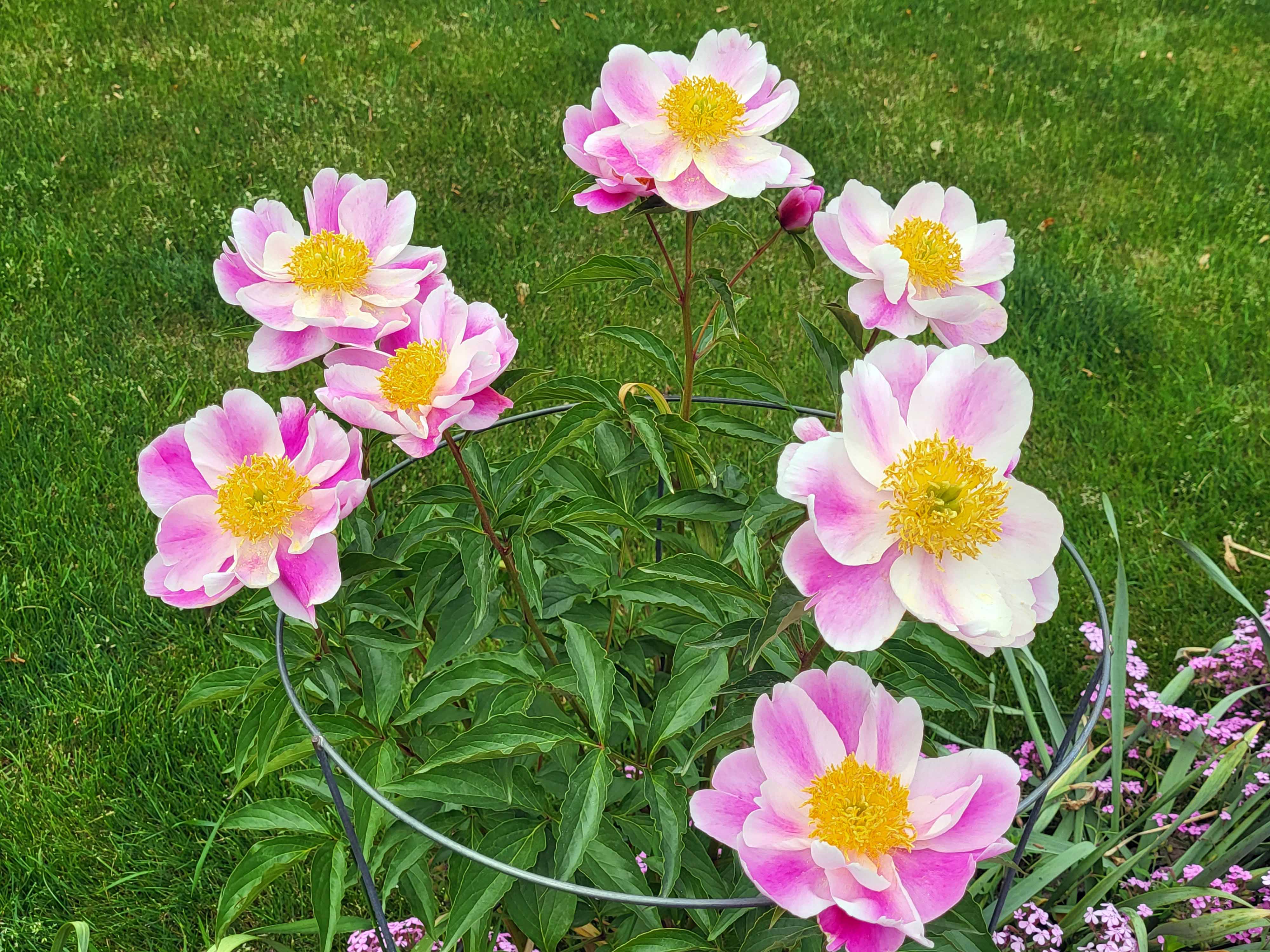



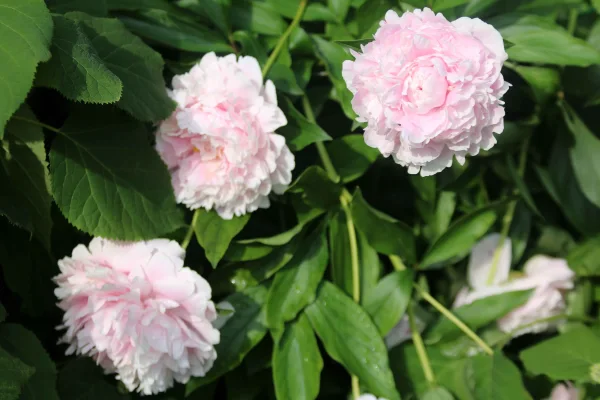
































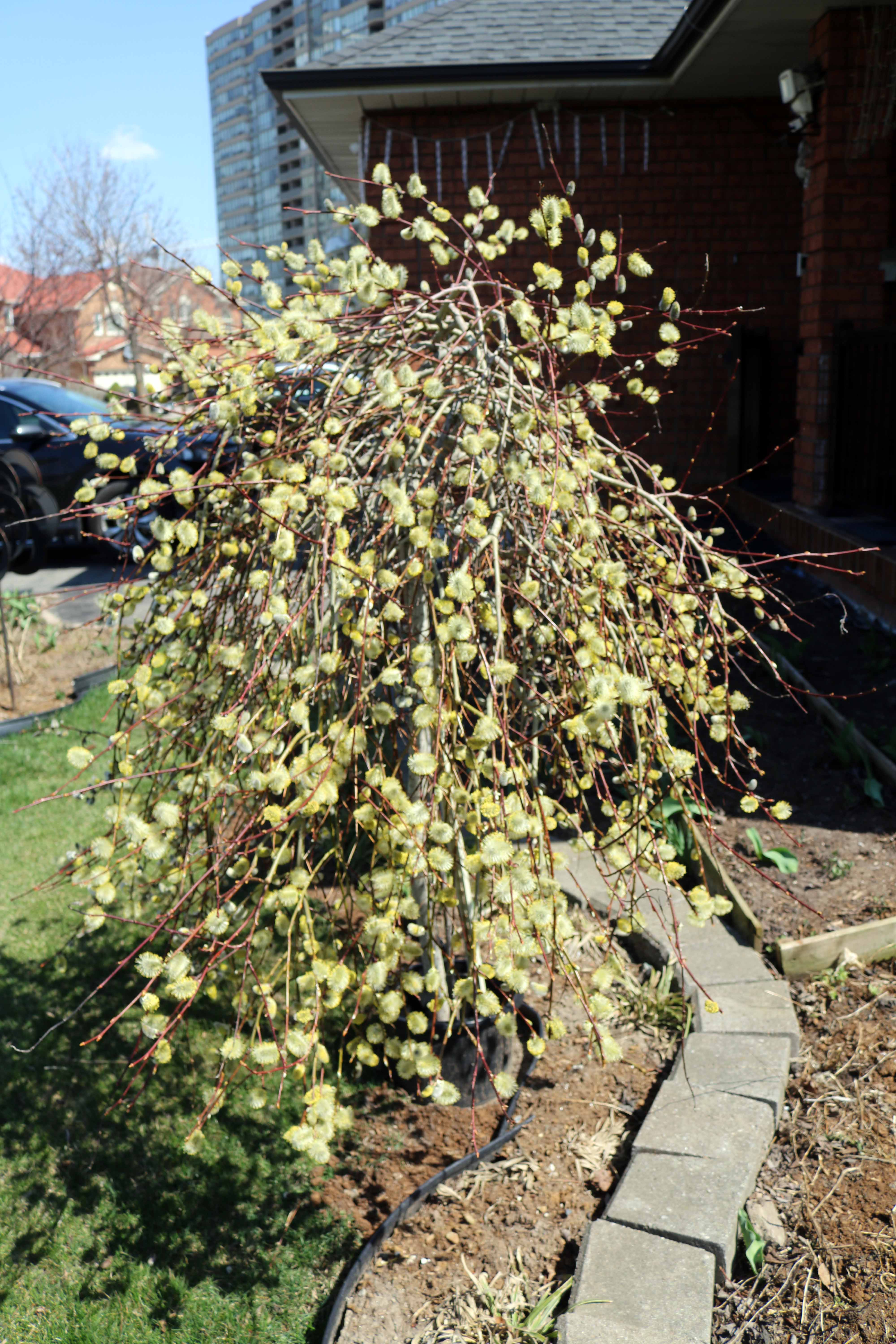





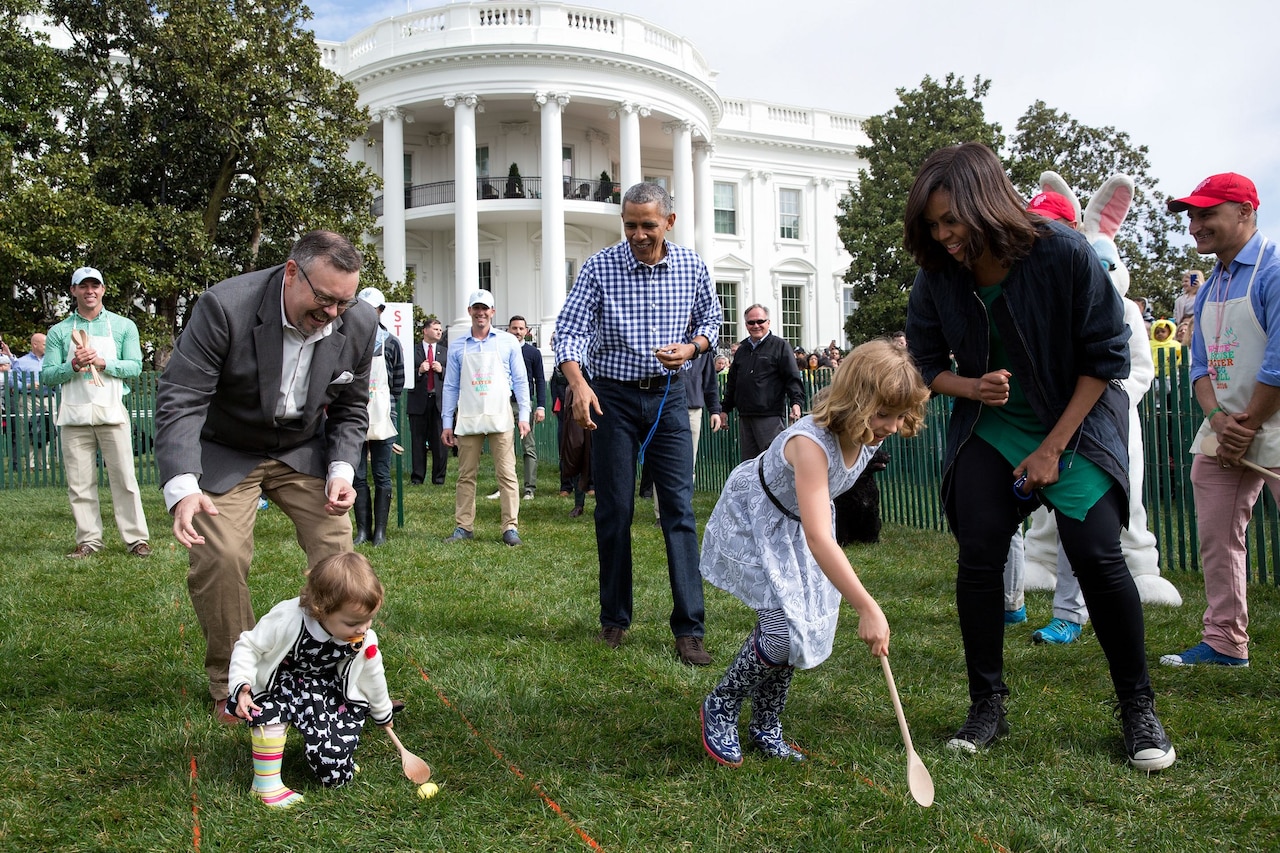

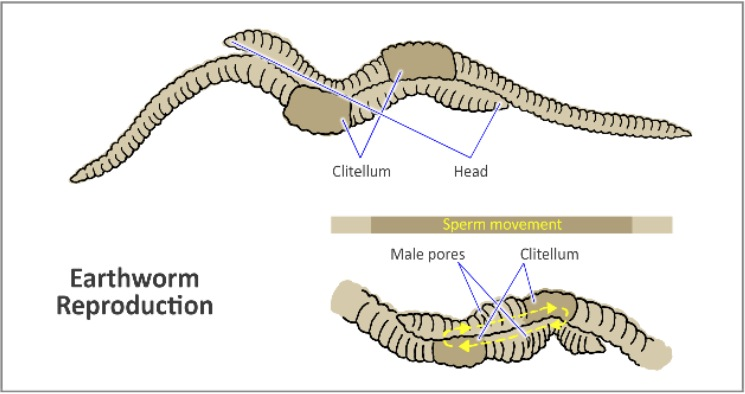


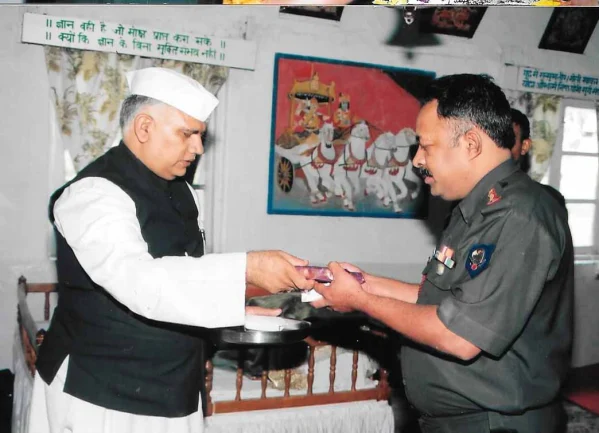





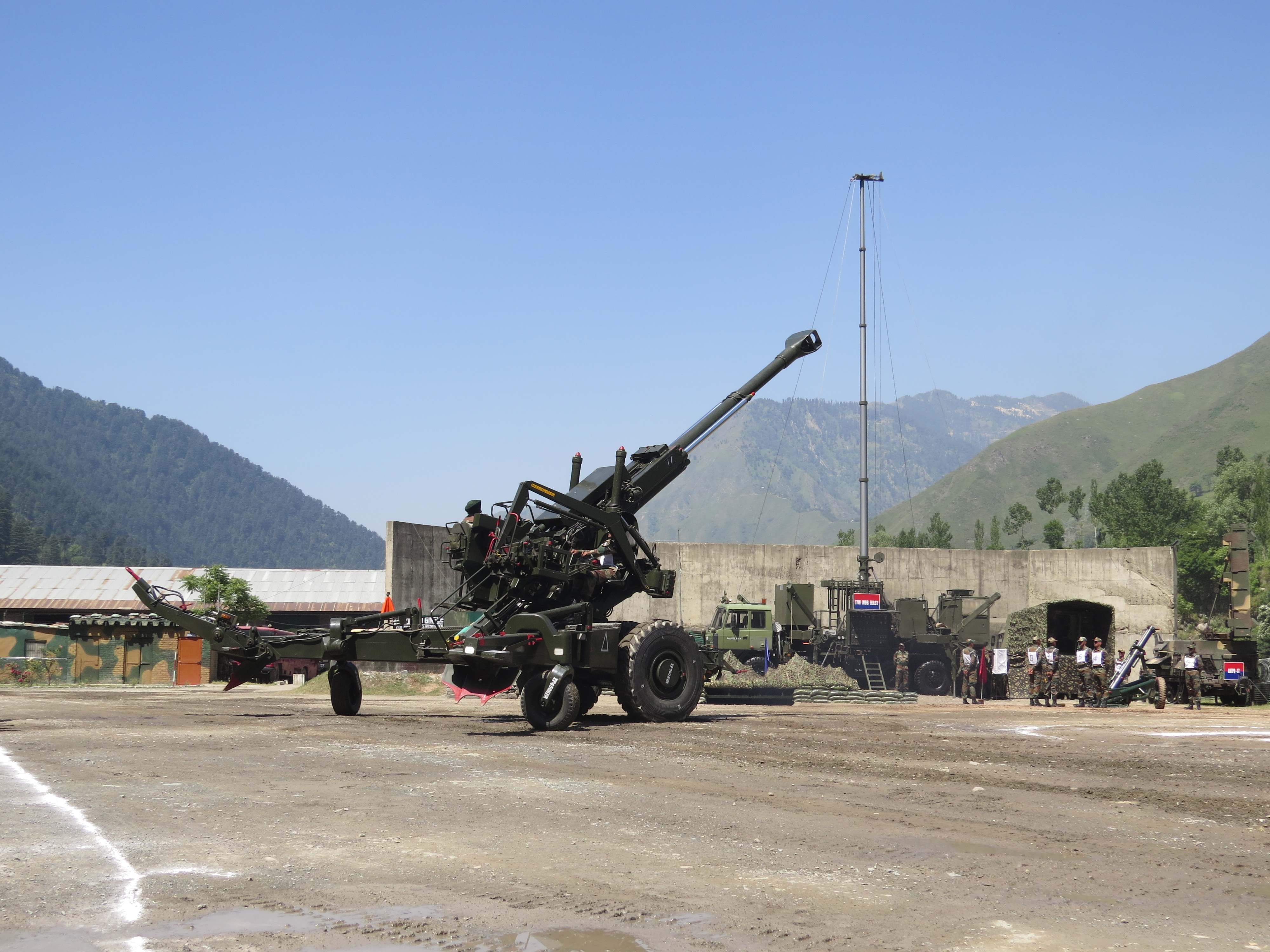


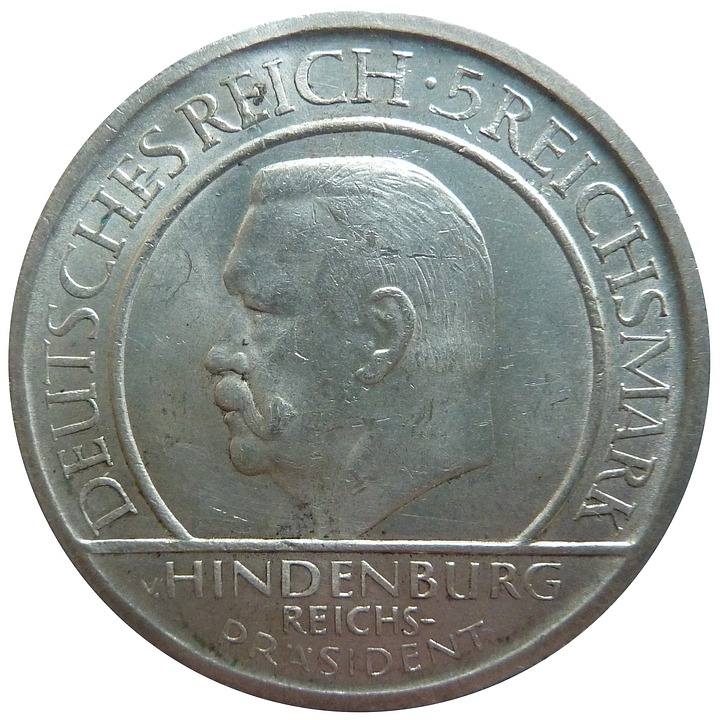

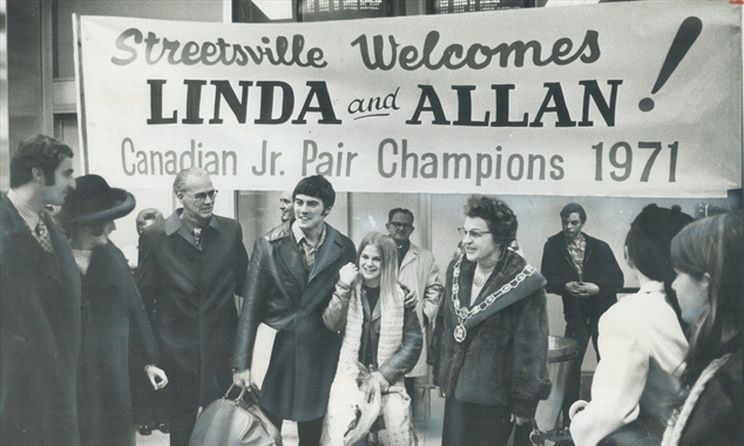
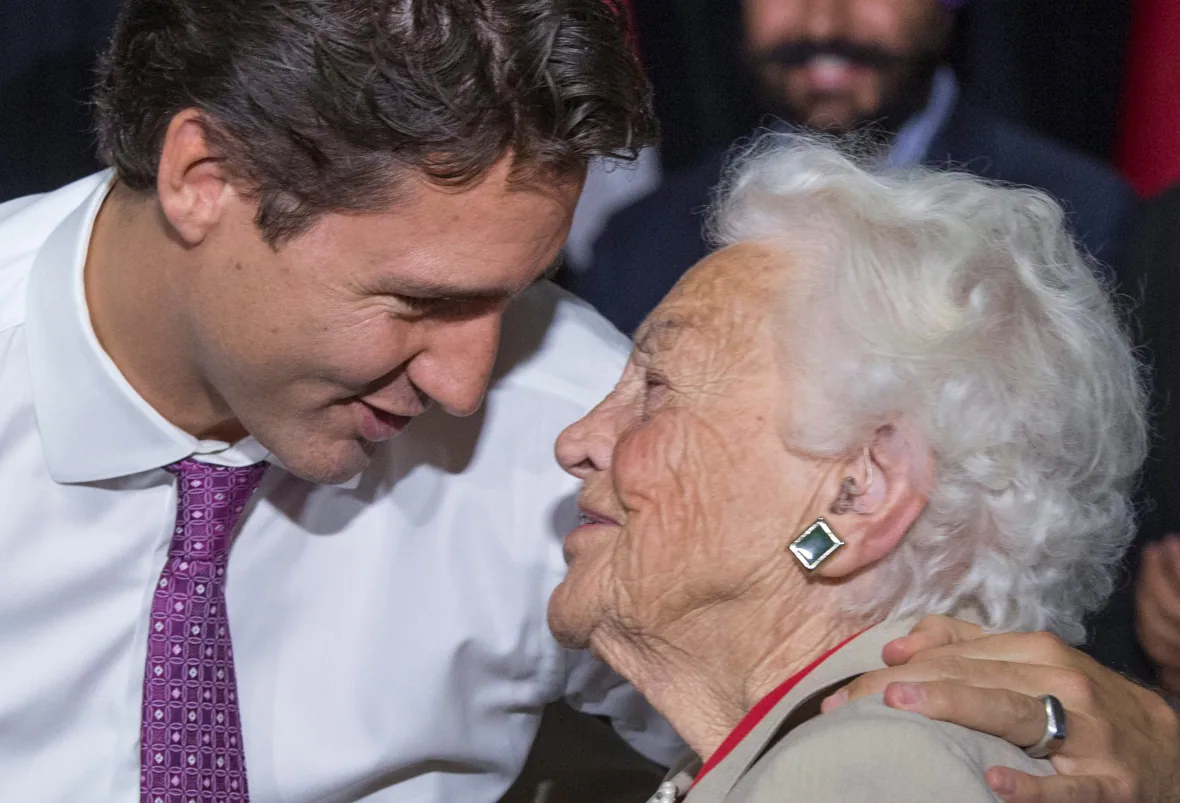





 REJINCES