Celestial Spectacles: Understanding Supermoons and the Beaver Moon of 2025

The full moon of November 5, 2025, will be a notable celestial event: the second supermoon of the year, adorned with the traditional name Beaver Moon. This occurrence provides a perfect opportunity to explore the fascinating interplay of lunar nicknames, orbital mechanics, and the science behind these brilliant apparitions.

The Cultural Tapestry of Full Moon Names

Each month’s full moon carries a name rooted in cultural and natural history, often originating from Native American, Colonial American, and European traditions. The November full moon is known as the Beaver Moon. According to the Old Farmer’s Almanac, this name signifies the time when beavers begin to retreat to their lodges for the winter. An alternative explanation points to the historical fur trade, as this was the season to set beaver traps before the swamps froze.

These names create a yearly almanac in the sky, connecting the heavens to the rhythms of life on Earth. Below is a list of the commonly accepted full moon names:

MonthFull Moon Name
JanuaryWolf Moon
FebruarySnow Moon
MarchWorm Moon
AprilPink Moon
MayFlower Moon
JuneStrawberry Moon
JulyBuck Moon
AugustSturgeon Moon
SeptemberCorn Moon (or Harvest Moon)
OctoberHunter’s Moon (or Harvest Moon)
NovemberBeaver Moon
DecemberCold Moon

The Science of Supermoons

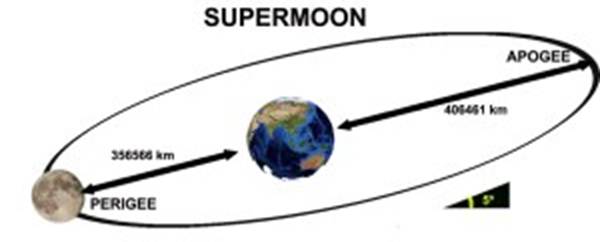
To understand a supermoon, one must first examine the Moon’s orbit. The Moon does not circle Earth in a perfect circle but in an elliptical orbit, which is inclined about 5 degrees to Earth’s orbital plane. This path has two key points:

  • Perigee: The point where the Moon is closest to Earth.
  • Apogee: The point where it is farthest.

supermoon occurs when a full moon coincides with or is near the Moon’s perigee. At this moment, the Moon can appear up to 7% larger and 16% brighter than an average full moon. Conversely, a micromoon is a full moon near apogee, appearing noticeably smaller and dimmer.

The term supermoon was popularised by astrologer Richard Nolle in 1979 and gained widespread use in the media during a particularly close approach in March 2011.

The Lunar Cycle: Phases and the Blue Moon

The Moon’s phases are governed by two distinct cycles:

  1. Sidereal Month (27.55 days): The time it takes the Moon to complete one orbit around Earth and return to the same position relative to the stars.
  2. Lunar Month (29.53 days): Also called the synodic month, this is the time from one new moon to the next, which is longer due to Earth’s simultaneous revolution around the Sun.

This discrepancy between the lunar month and our calendar months (30 or 31 days) gives rise to the Blue Moon. The idiom once in a blue moon describes a rare event, but astronomically, a seasonal Blue Moon (the third full moon in a season with four) or a monthly Blue Moon (the second full moon in a single calendar month) occurs roughly every 2.7 years. Because February is shorter than a lunar month, it can never host a Blue Moon.

On rare occasions, a double Blue Moon can occur within a single year, a phenomenon that happens only 3 to 5 times per century. The last was in 1999, and the next will be in 2037.

A Celestial Convergence

The supermoon of November 14, 2016, was a record-setter, being the closest full moon since 1948—a record that will not be surpassed until November 25, 2034. The Beaver Moon on November 5, 2025, continues this cycle of celestial wonder, offering a brilliant reminder of the dynamic and predictable dance of our closest celestial neighbour. It is a chance to witness a beautiful fusion of ancient tradition and modern astronomy.

Indian Astronomy and Full Moons

While the term Supermoon is a modern astronomical concept without a direct equivalent in Indian astronomy, the tradition of naming full moons is deeply rooted in Indian culture. The Sanskrit word for full moon, Purnima, serves as the foundation for a calendar of lunar observations tied to seasons and festivals. These are not merely astronomical markers but are imbued with cultural and religious significance. For instance, Chaitra Purnima (March/April) often heralds the Hindu New Year, while Ashadha Purnima (June/July) is revered as Guru Purnima, a day to honour teachers. The harvest moon of Sharad Purnima (September/October) is dedicated to the goddess Lakshmi, and Kartik Purnima (October/November) celebrates the birth of the deity Kartikeya. Thus, each full moon connects the celestial cycle to the rhythm of life and spirituality in India.

Horoscope

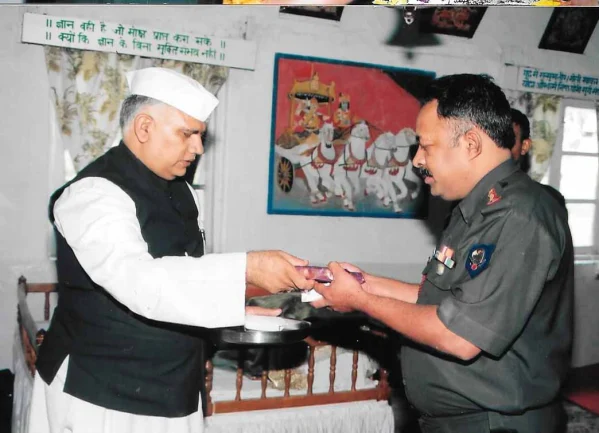
While in command of the Brahmin Battery of 75 Medium Regiment at the age of 28, our Battery Havildar (sergeant) Major Mishra asked me about my कुंडली (kundli – horoscope).  I said that I do not have one as we, the Syrian Christians of Kerala do not have our horoscope written at the time of our birth.

One of the hallmarks of mental and emotional maturity is being able to run your own life and make your own decisions,” advises clinical psychologist and author Terence Sandbek, PhD.

For some, horoscopes may give a sense of feel-good, mostly because they only focus on those parts that are applicable to them.  Some latch onto sections of a horoscope that confirm or support their beliefs and ignore the rest.  For some, it gives an illusion of control over their lives as horoscope very opaquely says what a person is expected to do in future. 

There are many who take major life-decisions based on their horoscopes.  It gives them confidence, especially when what is charted in the horoscope yield positive results.  To those who believe in horoscopes, it tends to reduce life-stresses.

While on a trip to Jammu, Mishra took me to a well-known astrologer to get my horoscope made backdated.  The astrologer asked me about my place of birth, time, caste, and creed.  I had a birthplace and time of birth as told to me by my mother, but neither a caste nor a creed.

Now the astrologer wanted to solve the riddle based on Mishra’s request.  So, the astrologer asked me “What do your parents do?

Both are schoolteachers,” I replied.

What about your siblings?

My elder brother is a barrister and the younger a college professor.”

Then I must classify you as a Bharadwaj Brahmin.”  I had no clue as to what it meant, but Mishra confirmed it “तंत्र मंत्र में साहिब पंडितो का पंडित है .” (He is a Brahmin as far as rituals and Mantras are concerned.)

As per the horoscope prepared by this astrologer, I was expected to continue serving the Indian Army till 55 and return to my place of birth in my old age.  It also said that I will suffer from stomach ailments and as a cure, I must wear गोमेद (Gomed – Hessonite stone) on a silver ring on my Left Ring Finger.  I never wore the Hessonite stone and never had any stomach issues till date.

The only aspect correctly predicted was that I will have a daughter and after five years a son – son was born after six years – adjustment for prediction.

Believing in predictions based on astrology can be attributed to the human psychological phenomenon – the Barnum Effect – also called Forer Effect.  The phenomenon occurs when an individual believes that the predictions and descriptions apply specifically to them, though these predictions are generic in nature and can apply to anyone.

Astrology predictions are based on the Sun, the Moon, and the planets and the signs of the Zodiac. The Zodiac sign is based on where the Sun was on your birthday.

In the earlier days, astronomy and astrology went together. In 17th century, German mathematician Johannes Kepler, who propounded the laws of planetary motion, also charted horoscopes for the Roman Emperor Rudolf II. 

In those days, they were not aware of the existence of Uranus or Neptune – Uranus was discovered in 1781 and, Neptune in 1846.  Did they not include the effects of these planets in the horoscopes?  These planets still do not find a place in the birth charts of today.   

What is the influence of the planets on a human’s life? Gravitational? Electromagnetic?

The nurse present at my birth had more gravitational influence on me than Venus or Mars had. That is what Newton’s theory of gravity says.  Electric and magnetic forces tend to cancel because the charges and poles have opposite signs. Electromagnetic radiation or light from Mars is blocked by walls. Then, how can someone be declared a Manglik based on the position of Mars in the birth-chart? 

Is Astrology a Science? is the most common question.  People who believe in astrology and the astrologers strongly claim that that astrology is a precise science.

Then What is science? – A branch of knowledge or study dealing with a body of facts or truths systematically arranged and showing the operation of general laws.

If it is a science, can astrologers work backwards if shown a birth chart and predict the time of birth? Why don’t two different astrologers agree on their predictions?  Why is that the recourse to overcome birth-chart issues suggested by two astrologers differ?

How come twins or triplets born at the same time lead different life paths when the influence of the stars is the same on them?

The Earth’s rotational axis processes with a 26,000-year period that is, the North-South directional axis of the earth wobbles around.  Polaris, the pole star of today wasn’t the pole star of the Northern hemisphere 4,800 years ago – it was then the star Thuban.  After 2000 years, earth’s axis will process and move away from Polaris.  For an observer from the earth, it appears that all stars move around the Polaris. Similar are the locations of the Zodiac’s – they too will change with respect to Earth in times to come.

In the Indian astrology, Rahu plays an important part. According to Vedic astrology Rahu is an inauspicious planet. During transition of planets the time under the influence of Rahu should be avoided to do any auspicious work.

In Kerala and Thamizh Nadu, Rahu Kalam is avoided for all auspicious activities like marriage rituals, engagement, purchase of stocks, shares, gold, home, car and starting new business or trade.  This is followed by most people irrespective of their religious faith.

Rahu Kaalam is one of the eight segments of the day between sunrise and sunset. Eight segments of the day are calculated by taking the total time between sunrise and sunset at a given place and then dividing this time duration by eight.  Thus, it cannot be constant through all seasons due to varying times of sunrise and sunset, but in practice, Rahu Kaalam lasts for 90 minutes, and the period changes on all days of the week.

Rahu is one of the nine major celestial bodies (navagraha) as per Indian astrology and said to be the king of meteors.  Rahu is usually paired with Ketu, believed to be another shadow planet which is in the house opposite of Rahu in all birth-charts.

In reality, Rahu and Ketu denote the points of intersection of the paths of the Sun and the Moon as they move on the celestial sphere. Therefore, Rahu and Ketu are respectively called the North and the South lunar nodes. Eclipses occur when the Sun and the Moon are at one of these points, giving rise to the understanding of swallowing of the Sun and the Moon by the snake.

Rahu and Ketu are imaginary points on the Sun’s/ Moon’s path.  How can an imaginary point have any effect on one’s life? 

If my life is to follow a chart written based on my place and time of birth, it may be fine, but my caste and creed – I do not think so.  I’m surely not a Brahmin!!!!