
Micro-Blue Moon: A Celestial Rarity

What is a Blue Moon?
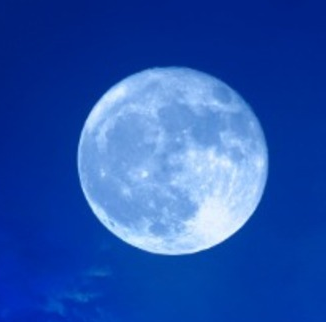
A Blue Moon is traditionally defined as the second full moon occurring within a single calendar month. On May 31, 2026, a full moon will follow the Flower Moon of May 1. This particular event will also be an Apogee Micro-Moon, meaning the moon will appear slightly smaller and dimmer than average.

This exceptionally rare phenomenon of Micro Blue Moon—a convergence of two events: the second full moon of the month and the moon reaching apogee, its farthest point from Earth in its orbit. As a result, it will be the smallest and dimmest full moon of 2026, a Blue Moon and the most distant full micromoon of the year. It is also the Flower Moon.

The May 30–31 full moon will appear roughly seven percent dimmer than an average full moon and approximately 25 to 30 percent dimmer than a Supermoon—that is, a particularly close full moon.

What is a Flower Moon?

Scientifically, a Flower Moon is simply a standard full moon phase, during which Earth sits directly between the sun and the moon, making the lunar disk appear completely illuminated from our perspective. The moon does not physically change shape or sprout petals; the name is entirely seasonal.

The name Flower Moon originates from The Old Farmer’s Almanac, which compiled traditional names used by Native American, Colonial American, and European sources. The specific term Flower Moon is attributed to Algonquin communities, honouring the abundance of spring wildflowers that bloom across North America during May.

What is a Blue Moon?

The concept of a Blue Moon as the second full moon in a month is more recent. It stems from the March 1946 issue of Sky and Telescope magazine, which published an article titled Once in a Blue Moon by James Hugh Pruett. He referenced the 1937 Maine Farmer’s Almanac, which defined Blue Moons as the third of fourth full moons in a season. However, he inadvertently simplified the definition, writing: ‘Seven times in 19 years there were – and still are – 13 full moons in a year. This gives 11 months with one full moon each and one with two. This second in a month, so I interpret it, was called Blue Moon.

Had Pruett examined the actual date of the 1937 Blue Moon, he would have found it occurred on August 21, 1937. Moreover, there were only twelve full moons in 1937; a calendar year generally requires thirteen full moons to have two full moons within a single month. Despite this oversight, his interpretation gave birth to a new and perfectly understandable definition of the Blue Moon.

This notion lay buried for decades. Then, in the late 1970s, EarthSky’s Deborah Byrd chanced upon a copy of the old 1946 issue of Sky and Telescope in the stacks of the Library at the University of Texas Astronomy Department. Subsequently, she began using the term Blue Moon to describe the second full moon in a calendar month on the radio series StarDate, which she wrote and produced.

Later, this definition was popularised by a children’s book by Margot McLoone-Basta, titled The Kids’ World Almanac of Records and Facts, published in New York by World Almanac Publications in 1985.

Looking Ahead

The next seasonal Blue Moon will fall on May 20, 2027—another opportunity to gaze up and marvel at the poetry of our skies, where even a “simple” moon can carry centuries of stories, misunderstandings, and wonder.

Celestial Spectacles: Understanding Supermoons and the Beaver Moon of 2025

The full moon of November 5, 2025, will be a notable celestial event: the second supermoon of the year, adorned with the traditional name Beaver Moon. This occurrence provides a perfect opportunity to explore the fascinating interplay of lunar nicknames, orbital mechanics, and the science behind these brilliant apparitions.

The Cultural Tapestry of Full Moon Names

Each month’s full moon carries a name rooted in cultural and natural history, often originating from Native American, Colonial American, and European traditions. The November full moon is known as the Beaver Moon. According to the Old Farmer’s Almanac, this name signifies the time when beavers begin to retreat to their lodges for the winter. An alternative explanation points to the historical fur trade, as this was the season to set beaver traps before the swamps froze.

These names create a yearly almanac in the sky, connecting the heavens to the rhythms of life on Earth. Below is a list of the commonly accepted full moon names:

MonthFull Moon Name
JanuaryWolf Moon
FebruarySnow Moon
MarchWorm Moon
AprilPink Moon
MayFlower Moon
JuneStrawberry Moon
JulyBuck Moon
AugustSturgeon Moon
SeptemberCorn Moon (or Harvest Moon)
OctoberHunter’s Moon (or Harvest Moon)
NovemberBeaver Moon
DecemberCold Moon

The Science of Supermoons

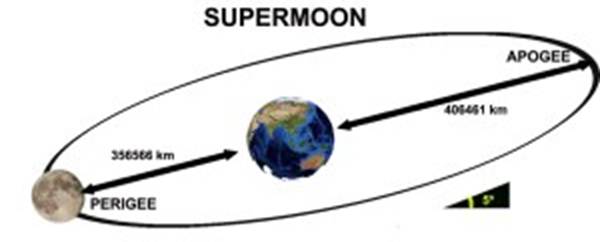
To understand a supermoon, one must first examine the Moon’s orbit. The Moon does not circle Earth in a perfect circle but in an elliptical orbit, which is inclined about 5 degrees to Earth’s orbital plane. This path has two key points:

  • Perigee: The point where the Moon is closest to Earth.
  • Apogee: The point where it is farthest.

supermoon occurs when a full moon coincides with or is near the Moon’s perigee. At this moment, the Moon can appear up to 7% larger and 16% brighter than an average full moon. Conversely, a micromoon is a full moon near apogee, appearing noticeably smaller and dimmer.

The term supermoon was popularised by astrologer Richard Nolle in 1979 and gained widespread use in the media during a particularly close approach in March 2011.

The Lunar Cycle: Phases and the Blue Moon

The Moon’s phases are governed by two distinct cycles:

  1. Sidereal Month (27.55 days): The time it takes the Moon to complete one orbit around Earth and return to the same position relative to the stars.
  2. Lunar Month (29.53 days): Also called the synodic month, this is the time from one new moon to the next, which is longer due to Earth’s simultaneous revolution around the Sun.

This discrepancy between the lunar month and our calendar months (30 or 31 days) gives rise to the Blue Moon. The idiom once in a blue moon describes a rare event, but astronomically, a seasonal Blue Moon (the third full moon in a season with four) or a monthly Blue Moon (the second full moon in a single calendar month) occurs roughly every 2.7 years. Because February is shorter than a lunar month, it can never host a Blue Moon.

On rare occasions, a double Blue Moon can occur within a single year, a phenomenon that happens only 3 to 5 times per century. The last was in 1999, and the next will be in 2037.

A Celestial Convergence

The supermoon of November 14, 2016, was a record-setter, being the closest full moon since 1948—a record that will not be surpassed until November 25, 2034. The Beaver Moon on November 5, 2025, continues this cycle of celestial wonder, offering a brilliant reminder of the dynamic and predictable dance of our closest celestial neighbour. It is a chance to witness a beautiful fusion of ancient tradition and modern astronomy.

Indian Astronomy and Full Moons

While the term Supermoon is a modern astronomical concept without a direct equivalent in Indian astronomy, the tradition of naming full moons is deeply rooted in Indian culture. The Sanskrit word for full moon, Purnima, serves as the foundation for a calendar of lunar observations tied to seasons and festivals. These are not merely astronomical markers but are imbued with cultural and religious significance. For instance, Chaitra Purnima (March/April) often heralds the Hindu New Year, while Ashadha Purnima (June/July) is revered as Guru Purnima, a day to honour teachers. The harvest moon of Sharad Purnima (September/October) is dedicated to the goddess Lakshmi, and Kartik Purnima (October/November) celebrates the birth of the deity Kartikeya. Thus, each full moon connects the celestial cycle to the rhythm of life and spirituality in India.