Second Lieutenant – The Extinct Species

The Unguided Missile

We were commissioned as Second Lieutenants from the academies and joined our Regiments—eager to go, like unguided nuclear-tipped missiles, primed for detonation but uncertain of trajectory.

Years later, when I commanded our unit, our young officers often remarked on a peculiar aspect of my leadership. No matter how serious their mistake, my response was invariably the same: “That’s all. Don’t worry. I’ll handle it from here.”

They wanted an explanation. Why no rebuke? Why no fault-finding mission?

One day, in a lighter moment, I obliged.

When I was a Second Lieutenant, I messed up more than all of you combined.”

They clamoured for details. Dil Mange More. And so I delivered.
The Gurgaon Incident

I joined our Regiment in 1983 at Gurgaon. During a battery deployment exercise, our 130mm gun, towed by a Kraz vehicle, needed to cross the Delhi-Jaipur Highway. In those days, the highway was narrow and followed a different alignment. Traffic was halted for the military convoy.

Enter the Superintendent of Police of Gurgaon, who demanded passage and was refused. The refusal escalated. Words were exchanged. Then fists. Whatever transpired—and the details remain mercifully hazy—I ended up facing a criminal charge of attempted murder using lethal weapons, alongside a Court of Inquiry.

I escaped both. Thanks to our Commanding Officer, Colonel Mahaveer Singh.

Teen Murti Bhavan: Three Days That Defined a Second Lieutenant

On 31 October 1984, Prime Minister Indira Gandhi was assassinated. By evening that day, our Battery received orders to assume security at Teen Murti Bhavan, where her mortal remains would lie in state.

Our Battery Commander resided in Delhi, so I marched the Battery forward and reported to General K. Balaram, the Adjutant General, who was in overall command. Those who served in that era will recall General Balaram’s formidable reputation—the first, and perhaps only, AG to be granted Vice Chief status.
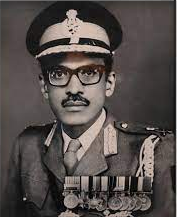
Late Lieutenant General K Balaram, PVSM

Our Battery Commander, then a student when General Balaram commanded at Wellington, warned me profusely. He narrated countless incidents of the General’s exacting standards—how he rode his own scooter after office hours, never touching his staff car. I braced myself for the worst.

Instead, I found an unexpected camaraderie. General Balaram and I smoked Capstan cigarettes together. In the chaos following the assassination, all cigarette shops in Delhi had shuttered. Naik Paul, my driver, inexplicably maintained a steady supply—to this day, I do not know how.

Whenever work pressure mounted, General Balaram summoned me to the Operations Room we had established inside Teen Murti Bhavan. He craved a deep inhale of smoke and a cup of tea—specifically, the tea brewed in steel glasses by our soldiers. Thus, every summons meant either the situation at the gate had spiralled, or the General simply needed a break.

The Gatekeeper’s Trials

We were responsible for the VIP entrance, through which every head of state passed. Whenever things went awry, General Balaram’s voice thundered across the compound: “Get that Second Lieutenant! Only he can solve this chaos.”
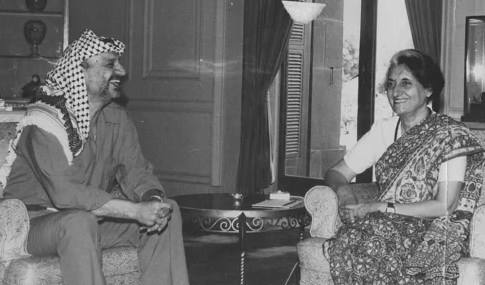
Enter Yasser Arafat, flanked by four bodyguards armed to their teeth. I refused them entry. “Our boys will ensure his security,” I declared. Arafat gave me a long, penetrating glance, then ordered his bodyguards to stay put with me. Even the Chairman of the Palestine Liberation Organisation thought better than challenging a Second Lieutenant.

Next came the Japanese delegation, led by Prime Minister Yasuhiro Nakasone. Over a hundred press personnel accompanied them—journalists, reporters, photographers. I informed their liaison officer that only five could enter with the Prime Minister. The officer pleaded helplessness. I solved the problem my way.

I assembled the entire press corps outside the entrance. When the Prime Minister arrived, I randomly called out five individuals and sent them inside. Chaos erupted. “My photographer is inside, but I’m the reporter!” “My reporter is inside, but I’m the photographer!” I announced calmly that whoever had entered would emerge with material for everyone to share.

Then came a man claiming to be the Commissioner of Police, Delhi. Denied entry through the VIP Gate, he exploded. “Who are you to stop me? What are you doing here?”

“If you had done your duty,” I replied evenly, “I wouldn’t need to be here.”

These were but a few highlights from those three unforgettable days.

With Veteran Colonel Mahaveer Singh during Golden Jubilee celebrations of 75 Medium Regiment in 2018

The Pattern Repeats

A few weeks later came another altercation with a senior Delhi police officer. Again, a Court of Inquiry. Again, our Commanding Officer saved me.

That was life as a Second Lieutenant.

The Extinct Species

When I assumed command in 2002, I realised something remarkable: the species of Second Lieutenant I had embodied—the unguided missile, the chaos magnet, the perpetual disciplinary problem—had apparently become extinct.

Or perhaps, like me, they had simply found Commanding Officers who remembered their own youth.

Now, when our young officers messed up, I saw not failures, but reflections. I heard not excuses, but echoes. And I understood that leadership is not about catching mistakes, but about catching people before they fall. “That’s all. Don’t worry. I’ll handle it from here.”

Because someone once handled it for me.

Cross Country Race

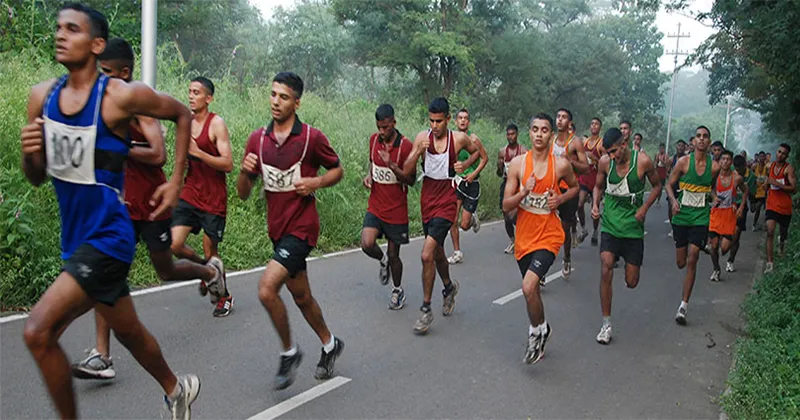
The first cross-country  race (Marathon in North America), I ran was as a Grade 5 student at Sainik (Military) School Amaravathinagar. It was a 5 km run along the base of the Western Ghats on the North side of the school. With every passing year, the distance increased. with it the difficulty. On joining the National Defence Academy (NDA), the cross country race became a ritual in every semester (half-year) and thus I ran six races in three years of about 14 km. During the first 10 years of service in the Army, I ran seven races. On reaching Canada, I ran two such races, in support of charitable causes.

Running a marathon is one of the largest physical challenges you can set, often it is more of a mental challenge – the mental strength to complete the race despite the panting, tiredness and pains. It results in an accomplishment every time, irrespective of your age. It does not matter even if you are the last, you are part of an elite club of people that have completed the race successfully.

At the NDA, the cross country race was more of a team event. The Squadron which won the trophy every semester claimed more bragging rights than the cadet who came first or second. It was a matter of pride for the cadets that their Squadron did well and hence every cadet put their heart, soul and body into doing well at the race.

The practice for the race at NDA began nearly a month prior with all cadets running a full race almost every evening and morning on Sundays and holidays. The final race was on a Sunday morning, starting at the famous Glider Dome and ending there. One witnessed cadets completing the race despite physical injuries – a cadet finished the race after he fractured his leg halfway. There have been many cadets running the race with fever. All to ensure that they do not bring in negative points for their Squadron and let the team down.

In 1987, our Regiment was located in Gurgaon near Delhi and we formed part of the Brigade stationed at Meerut – about 50 km from Delhi. Cross country race was a closely contested competition among the regiments and our unit had the rare distinction of winning it for the previous five years. 1987 was the final year at Gurgaon as the unit had received its move order to the Kashmir Valley.

Our Commanding Officer, Colonel Mahaveer Singh called Late Captain Pratap Singh, Maha Vir Chakra and self to his office in March 1987 and briefed us that we had to win the cross country competition for him. We both were Captains then and by virtue of being the senior, I became the team captain. Among young subalterns, one was away on a training course and the other admitted in the Military Hospital.

The team to be fielded for the competition was to consist of one officer and 15 soldiers. We started practicing for the race – two officers and 20 soldiers. Every morning at 5 we were picked up from our residence and the team used to be dropped off about 20 km from the regimental location. Now everyone had no option but to run back to the regiment. The faster one did it, lesser the agony.

After a month’s practice, we decided to move to Meerut a week before the race to carry out a few practices there. The race was scheduled for 11 April, Saturday to commence at 6 AM. The day we had planned to leave, Pratap’s mother took seriously ill and he had to hospitalise her and take care of her. I told Pratap to reach Meerut by Thursday evening the latest.

As Pratap had not practiced for the last week, I had made up my mind to run the race. Pratap landed up in Meerut on his motorbike on Thursday evening. On Friday I showed him the route and told him to be stand-by.

In the evening we reached the Officers’ Mess for dinner and all the young officers participating in the race were there. Seeing the senior Captains set to run the race, Lieutenant Atul Mishra wanted to know as to who amongst us was running the race. Pratap said that the person who woke up first woke up the other and the latter will run the race. Everyone believed it as the same was narrated by Atul after a decade.

After the race, I received the trophy from the Brigade Commander and after a few minutes there was Pratap with his motorbike asking me to get on to the pillion. We rode off and as I was too tired, I hugged on to him and slept off. I woke up only on reaching our regimental location after over an hour of drive.

We handed over the trophy to Colonel Mahaveer, who appreciated us for the efforts and wanted to know where the rest of the team was. Pratap said “Please do not come out with your clichéd question as to who is commanding the unit, I have ordered them to relax at Meerut for the next two days and also to visit the Nauchandi Mela“, Colonel Mahaveer passed his unique smile as a sign of approval for Pratap’s actions.

Nauchandi Mela is held every year at Meerut in April-May. It is a rare symbol of communal harmony with Hindu and Muslim shrines – Nauchandi temple and the Dargah (shrine) of Muslim saint, Bala Mian. Visitors pay obeisance at both the shrines irrespective of the religion they belong to.  The mela, which originally brought sellers and buyers of utensils and domestic animals together, now includes various kinds of goods, entertainment and food.

Colonel Mahaveer had a knack of delegation and had immense trust in all of us. He always encouraged the young officers to be decisive and whenever we goofed it up, he always held our hands and took the responsibility for our actions.