
Men’s pelvic health is as critical as mental and cardiac well-being, especially after the age of 50. It is a cornerstone of overall quality of life that is often overlooked until a crisis strikes. My own journey with Benign Prostatic Hyperplasia (BPH) began not with an emergency, but with a routine blood test—a story that underscores the vital importance of proactive healthcare for men.
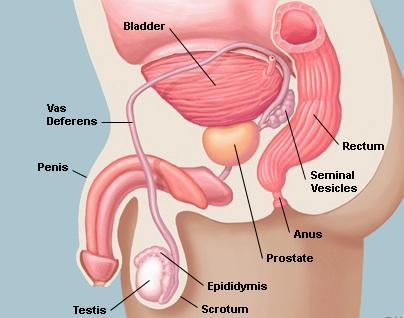
The First Sign: A Routine Test
In 2007, a routine quarterly check-up—a benefit covered under Canada’s healthcare system for managing my diabetes—revealed elevated Prostate-Specific Antigen (PSA) levels. My family doctor recommended a follow-up invasive ultrasound, a 20-minute diagnostic procedure involving a transrectal probe. The result was clear: Slight Enlargement of the Prostate, or BPH.
The PSA test, often associated with cancer screening, measures a protein produced by the prostate. Its “normal” range increases with age, and elevated levels can signal benign conditions like prostatitis or, as in my case, BPH—a common, non-cancerous enlargement of the gland driven by aging and hormonal changes.
The Wake-Up Call: A Crisis Abroad
The abstract diagnosis became a frightening reality in 2008 while holidaying at Machu Picchu, Peru. I developed acute difficulty urinating. My wife, a pharmacist, initially suspected a Urinary Tract Infection (UTI) and advised increased fluid intake. Within 12 hours, my condition deteriorated dangerously, requiring an emergency dash to a local hospital.
We faced an immediate language barrier; the medical staff spoke only Spanish. Thankfully, Google Translate bridged the gap. The diagnosis was acute urinary retention. Doctors inserted a catheter and drained a staggering 6 litres of urine, providing immense relief. We returned to Toronto with the catheter and collection bag still in place.
Navigating the Canadian Healthcare System
Our son drove us directly from the airport to a Toronto hospital Emergency Room. After confirming the situation was stable, they scheduled an urgent appointment with a urologist for the following Monday.
Dr. Scott, the urologist, conducted a thorough examination. Given my family history—my father had also suffered from BPH—he recommended immediate medication, which is Canada’s first-line treatment. However, I requested surgery to resolve the issue definitively. He agreed and advised me to sit while urinating until the procedure to ensure complete bladder emptying and avoid post-void dribbling.
The Procedure and Recovery: Transurethral Resection of the Prostate (TURP)
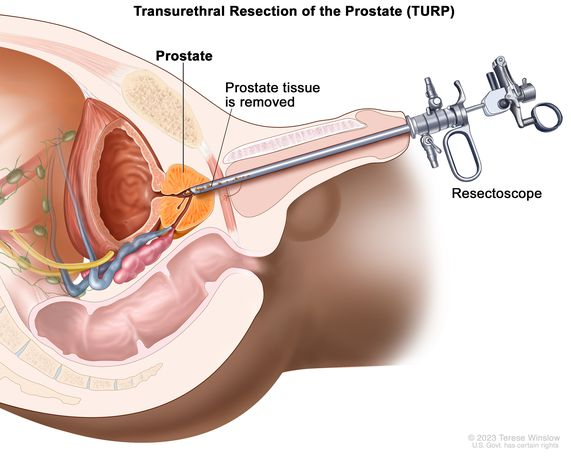
The following Monday, I underwent a Transurethral Resection of the Prostate (TURP), a common, minimally invasive surgery. The surgeon accesses the prostate through the urethra, removing the obstructive inner tissue to restore urine flow—no external incisions are made.
Discharged the next day with a catheter, I spent a week in recovery at home. A visiting nurse removed the catheter that Friday. The recovery protocol for the first 4-6 weeks is strict and essential for healing:
- Urinary Changes: Frequent urination, urgency, and some dribbling are normal and gradually improve.
- Hydration: Drink at least one glass of water per hour to flush the bladder.
- Activity Restrictions: No heavy lifting (>5-10 lbs), strenuous exercise, long car rides, or biking to prevent bleeding.
- Diet: A high-fibre diet and stool softeners prevent constipation and straining.
- Driving/Work: Avoid driving for two weeks; desk work can resume in 2-3 weeks, with physical jobs requiring 4-6 weeks.
- Sexual Activity: Abstain for 4-6 weeks. A common long-term outcome is retrograde ejaculation (“dry orgasm”), where semen enters the bladder instead of being expelled.
A Sobering Follow-Up and a Clear Message
At my two-week post-op check-up, Dr. Scott shared a sobering statistic: approximately 66% of Indian senior citizens suffer from BPH. He expressed relief that my condition was benign and not cancerous.
My experience underscores a crucial message for men over 50: do not ignore your pelvic health. A simple PSA test can be the first indicator of an issue. Listen to your body, understand your family history, and advocate for yourself within the healthcare system. BPH is highly manageable but ignoring it can lead to severe complications and emergencies. Prioritizing this aspect of health is not a sign of weakness but of wisdom—ensuring comfort, dignity, and quality of life for years to come.


 REJINCES