
Morning Rituals
Every morning in our childhood, we were woken not by alarm clocks, but by our rooster’s assertive crowing. He announced his supremacy over territory and brood with unwavering regularity. Throughout the day, another avian sound punctuated the rural silence—the hens’ triumphant “bak bak ba ko” after laying an egg. This is charmingly known as the hen’s ‘egg song.’
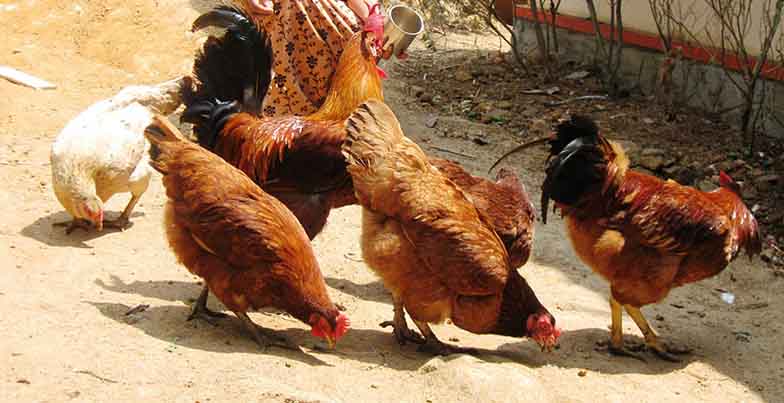
Our home stood about fifty meters from a barn that housed our cows and stored hay—their primary fodder. The hens found sanctuary there, retreating to the haystacks to escape the afternoon heat or shelter from monsoon downpours. Brooding hens made it their near-permanent residence, venturing out rarely. Most laid their eggs atop the soft hay, while some adventurous ones ventured into the main house, depositing their treasures in Amma’s grain storeroom or amongst piles of old newspapers and magazines.
The Ritual Song
The hen’s egg song typically lasts a minute or two, occasionally extending to five. At times, its persistence grew intensely irritating, and one wished fervently for silence. It appears the hen desperately wanted to broadcast her achievement to the entire world—a great event in her day, worthy of celebration.
But why this public announcement? Would silence not be more sensible, protecting her precious egg from predators and humans alike?
The Reasons Behind the Song
Several theories attempt to explain this curious behaviour:
Perhaps the hen simply feels proud of her accomplishment and crows with justifiable pride. Or maybe she experiences relief after the physical effort of laying and expresses it vocally.
Another possibility: having laid her egg in seclusion, she calls out to rejoin her flock. She might even be protecting her egg by deliberately drawing attention to herself, leading predators away from the nest.
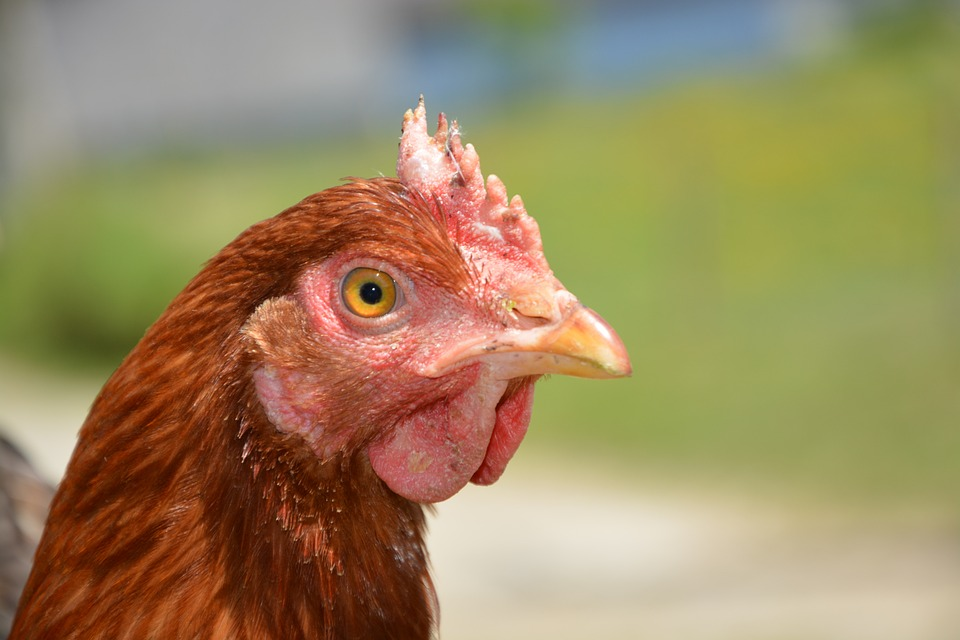
The song could also serve as an invitation to the rooster. Often, after her serenade, the rooster would approach with dipped wing, flaunting his colourful tail feathers in an elaborate circular dance. These encounters frequently culminated in successful mating—and one mating provides enough sperm to fertilise eggs for up to a week.
Hens vocalise for many reasons beyond egg-laying: purring contentedly, growling warnings, squawking alarms, and calling chicks to food. Some breeds are naturally more talkative than others, their volume and frequency determined by genetic constitution.
The Quiet Ducks
We also kept ducks, and they presented a stark contrast. They quacked incessantly throughout the day with no discernible pattern or purpose. Yet when it came to actual accomplishment, they maintained dignified silence. Ducks typically laid their eggs at night, quietly. Occasionally, they would lay early morning while being led to the water-filled paddy fields—and those eggs were usually lost. When the fields were drained for rice sowing, we would discover and collect many eggs.
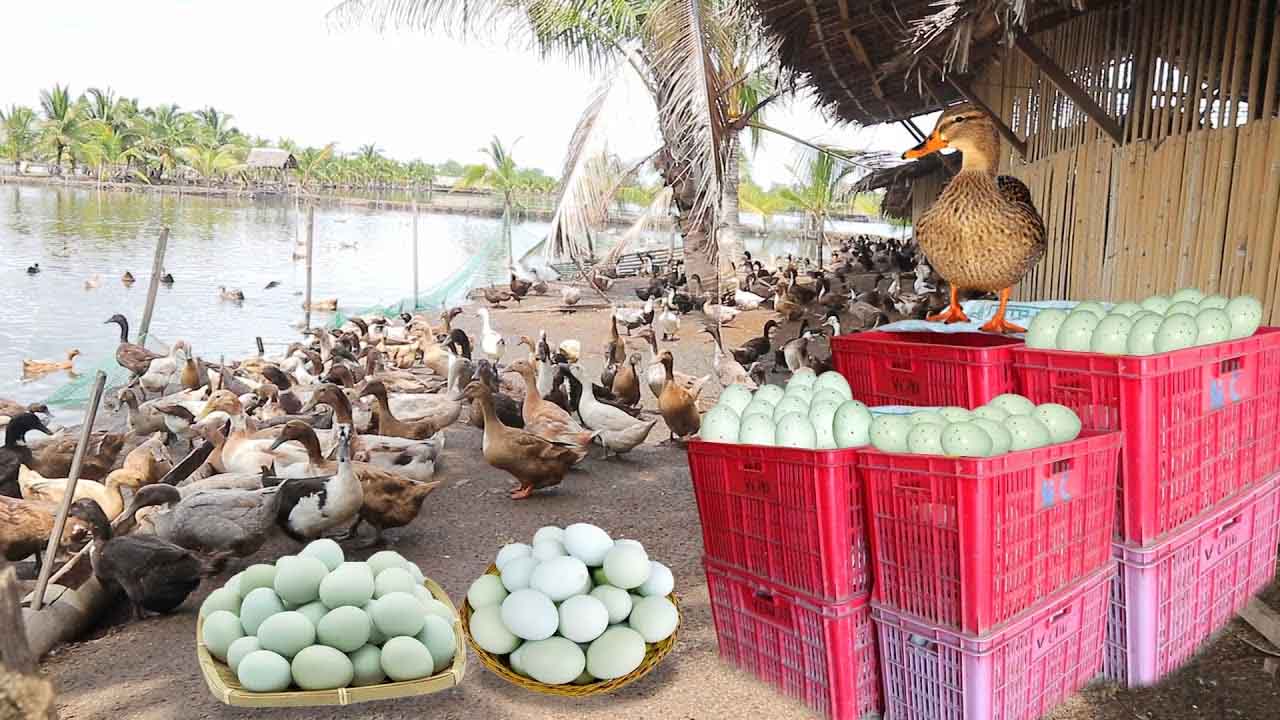
The duck’s egg is notably larger than the hen’s, and some claim it possesses twice the nutritional value. Its thicker shell ensures longer freshness. Duck eggs are richer in albumen, making cakes and pastries fluffier. They contain more Omega-3 fatty acids, which apparently regulate heart rhythm, reduce arterial plaque, decrease blood clotting, lower triglycerides, increase HDL cholesterol, and reduce inflammation. This may explain why the Chinese preserve duck eggs by brining or packing in salted charcoal—a delicacy said to remain edible for years.
The hen announces her modest accomplishment to the world; the duck, achieving something arguably greater, remains silent. As children, we would scramble through haystacks searching for eggs before crows, alerted by the hen’s song, could snatch them. Occasionally, we encountered hoaxes—hens that sang without laying.
The Ducklings’ Tale

Ducks do not brood; they refuse to sit idle in one place and consequently make poor hatchers. At our home, a brooding hen would hatch duck eggs, caring for the ducklings as her own chicks. After a week or two, the ducklings would instinctively jump into the paddy field water and swim. The poor mother hen would run along the edge, crying helplessly – unable to enter the water, unable to reach “her chicks,” unable to protect them. That moment marked the end of their relationship; the ducklings would thenceforth move as a flock.
The Human Parallel
Perhaps there exists a human parallel to this comparison between hen and duck.
Some people execute difficult tasks and accomplish great deeds yet remain quiet after their hard work. They do not announce their achievements to the world, and often their contributions are recognised only years after their departure. Consider Galileo Galilei—scientist, mathematician, and astronomer; Vincent van Gogh—Dutch Post-Impressionist painter; Johann Sebastian Bach—composer; Gregor Johann Mendel—discoverer of genetics’ basic principles. The list stretches endlessly.
Others announce every accomplishment to the world, and many make considerable noise about minor feats. Some fake it entirely—all noise, no substance.
A Modern Reflection
In today’s social media-dominated world, perhaps it is better to be a hen than a duck. Every trivial activity is broadcast as monumental achievement. The silliest moments are shared as significant accomplishments. The egg song has found its ultimate expression in the digital age.
Yet the question remains—one worth pondering in quiet moments of self-reflection: Are you a ‘duck type’ or a ‘hen type’? Do you accomplish quietly, allowing your work to speak for itself across time? Or do you announce every egg you lay, real or imagined, to an increasingly indifferent audience?
The hens and ducks of my childhood taught me this lesson long before I encountered the complexities of human ambition and recognition. Their simple existence offered a parable that grows richer with each passing year.
 REJINCES