Running Away From Studies

The Arrival: Twenty Cadets from Kerala

In July 1971, about twenty of us landed at Sainik School, Amaravathi Nagar, in Tamil Nadu. We arrived armed with little more than our mother tongue, Malayalam. English, Hindi, and Tamil were entirely alien to us.

Our medium of instruction was English. We began with the English alphabet under Ms. Sheila Cherian, gradually progressing to Wren & Martin’s grammar and Ridout’s English Today. It was a slow, painstaking journey into a new world of words.

The Language Gauntlet

Tamil as a second language was out of the question – it would have required us to cram Thirukkural and ancient poetry from the start. Tamil literature is not easily grasped by beginners. So we were assigned Hindi as our second language.

We fared predictably badly. Hindi became our nightmare, especially during the Grade 10 public examination. Only the Almighty and the examiner who evaluated our papers know how we managed to pass. Our method was simple: cram until the last alphabet and reproduce everything on paper. Fortunately, Grade 11 and 12 required no second language.

Tamil remained our third language, taught by Mr. M.V. Somasundaram and Mr. K. Ekambaram. We began with the Grade 1 Tamil textbook in Grade 5. The only saving grace was that our agony ended in Grade 8 with a Grade 4 textbook – four years of effort condensed into four grades of progress.

The 10+2 Revolution

Our 1979 batch became the first to face the newly introduced 10+2 education system under the Central Board of Secondary Education (CBSE) – an extra year of studies. The previous batch had graduated in 1977 after Grade 11.

Grade 12 loomed as a particular terror for those like me, academically undistinguished, never having achieved any scholarly glory throughout school.

The Escape Plan

Why did I join the National Defence Academy (NDA) and subsequently serve the Indian Army for over two decades?

The honest answer: I ran away from studies.

The bonus of clearing the NDA entrance examination was immediate: we joined after Grade 11. No Grade 12. No culminating public exam. What relief!

School had led us to believe that NDA training was predominantly outdoor activities – Physical Training, games, drill, weapon training, equitation, military tactics – with minimal academic demands.

Reality dawned upon arrival.

The Reckoning

We had to complete a Bachelor’s degree programme covering over thirty subjects, from Engineering Drawing to International Relations, culminating in a degree from the prestigious Jawaharlal Nehru University (JNU) – the only Bachelor’s degree this premier research university confers.

The Gods had not forgotten my academic transgressions, particularly in linguistics. How could they spare me from Hindi and Tamil?

Commission and Consequences

I was commissioned into the Regiment of Artillery – 75 Medium Regiment (Basantar River). The Regiment then had an intriguing class composition: one battery of North Indian Brahmins, another of Jats primarily from Haryana and Uttar Pradesh, and a third manned by soldiers from the four Southern states.

Now I had to master Hindi as spoken by Brahmins and Jats, and Tamil as the medium of communication for South Indian soldiers. The languages I had fled returned to haunt me.

The Irony of Escape

I had joined the military to escape studies. Two decades later, I retired having never stopped studying -and having never stopped running.

Even while commanding the Regiment, learning continued unabated. Modern high-tech radar systems, survey equipment, Unmanned Aerial Vehicles (drones) – all unfamiliar, all demanding mastery. Command required understanding, and understanding required poring over volumes of operational and maintenance manuals.

The Lesson That Lingers

My studies did not end when I hung up my military boots. They continued. They continue still. They will continue forever.

The boy who fled from textbooks discovered that learning cannot be outrun. It follows. It pursues. It eventually catches up, transforming the runner into a reluctant but perpetual student.

Perhaps that is the ultimate irony – and the ultimate gift. The escape artist became, despite himself, a lifelong learner. And in that transformation, discovered that the running itself was the education.

Anyone who stops learning is old, whether at twenty or eighty. Anyone who keeps learning stays young – Henry Ford.

Aircraft on a Highway

On November 16, 2021, Indian Prime Minister Narendra Modi inaugurated Purvanchal Expressway in Uttar Pradesh after landing on the highway airstrip in an Indian Air Force (IAF) C-130 Hercules plane.  Kudos to the IAF for executing such a mission.  The 3.2 km long airstrip has been constructed on the expressway to facilitate emergency landing by fighter aircraft.  IAF carried out a few trial landings on the strip prior to the mission with the Prime Minister on board. The questions that came to my mind were:-

  • Is it safe to execute such missions with the Prime Minister on board?
  • What was the intended aim from the military/ strategic point of view?

Who can answer my queries the best other than Veteran Wing Commander Avinash Chikte of the IAF, our senior at the National Defence Academy (NDA) – E Squadron?  He is former fighter pilot and now a commercial airline pilot. He is the author of two books and many blog posts.  He answered my questions. Please read his blog about the incident @ https://www.indiatimes.com/explainers/news/purvanchal-expressway-why-some-highways-are-built-like-runways-554391.html

Why did these questions erupt in my mind?

While in our Grade 11 at school, on November 4, 1977,  a VIP flight on the Tupolev-124, the Russian-made aircraft which was christened as Pushpaka by the IAF, crash landed at Jorhat in Eastern India with the then Prime Minister Morarji Desai on board.  The Prime Minister was accompanied by his son Sri Kanti Bhai Desai, the director of Intelligence Bureau Sri John Lobo and the Chief Minister of Arunachal Sri PK Thungan.

The aircraft was carrying 11 crew and nine passengers. Five of the crew in the front portion were killed while some of the passengers and other crew were injured. The Prime Minister was  unscathed. The plane went down nose first – a  deliberate act by the crew in the cockpit in the front part of the aircraft – to ensure they took the main impact of the crash, saving the VIP passengers.

Mr Desai is accredited as the first non-Congress Party Prime Minister of India, but he was the brunt of many teenage jokes at our school. The jokes revolved around his bizarre drinking habit and being born on the Leap Day – February 29, 1896. Babies born on the Leap Day are referred to as Leaplings, Leapers, or Leapsters. The Leap Year must be evenly divisible by 4. If the year can be evenly divided by 100, it is not a leap year unless the year is also divisible by 400.- Year 2000 is a leap years, but 1900 and 2100 are not.

The list of Indian senior politicians who survived such crash landings may interest the readers.

Babu Jagjivan Ram was seriously injured in a BOAC airline crash in Iran shortly before Independence. Babu was lucky to survive the accident in which several people were killed, but was unlucky that he was the only cabinet minister who was unable to attend the Independence celebrations on August 15, 1947.

Sardar Patel too had a miraculous escape.  The aircraft carrying him to Jaipur to to attend the inauguration of the new state of Rajasthan, force-landed near Shahpura about 65 km north of Jaipur on March 29, 1949.  Although the aircraft was completely damaged, the skill of the IAF pilot ensured that no one was injured.

Other prominent Indian politicians who did not survive an aviation accident are Mohan Kumaramangalam and Madhavrao Scindia.  Many Chief Ministers of various Indian states had miraculous escapes – mostly helicopter accidents – with former Maharashtra Chief Minister Fadnavis surviving five of them. 

Recent Canadian Incident

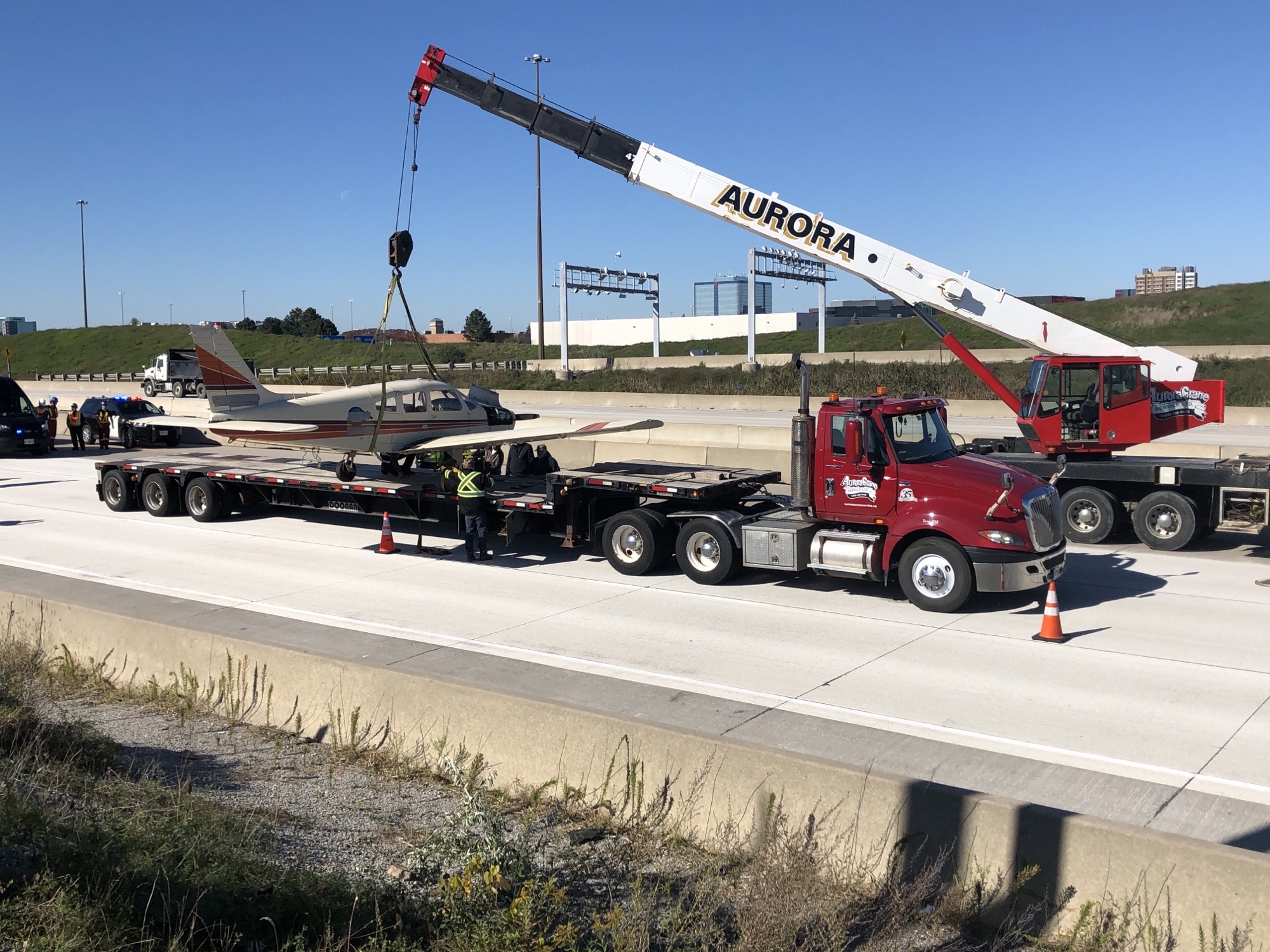
A small plane on a training mission was forced to make an emergency landing on a Canadian highway in Toronto on October 27, 2021at 11 AM.   The instructor-pilot declared May Day after running into mechanical issues and realising that he would not make it back to the airport. The pilot with his trainee managed to land the plane safely on the highway.

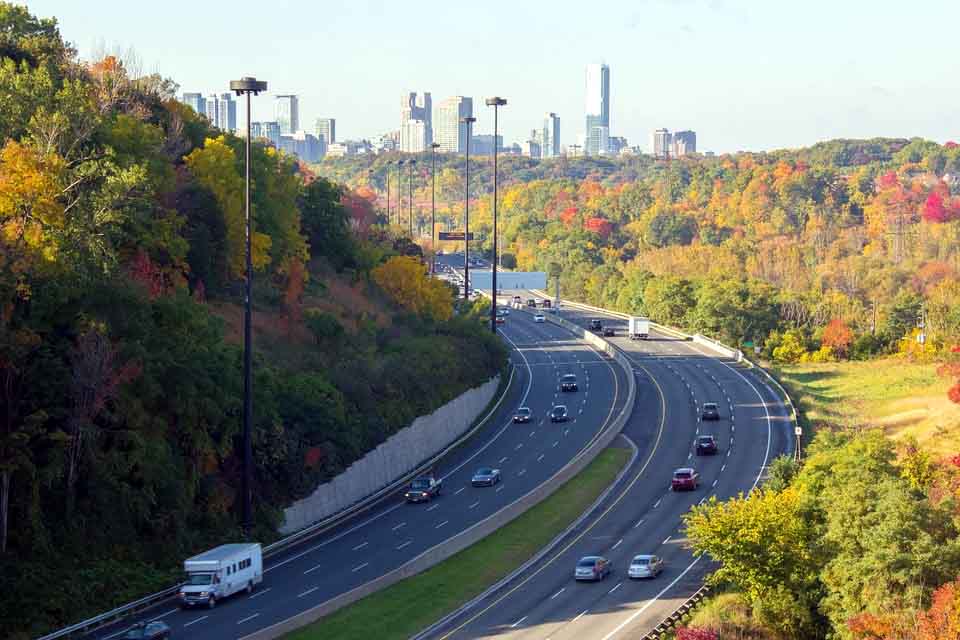
Canadian highways have two aprons on either side. The one on the right is marked with a continuous white line and can be used to stop the vehicles in an emergency. The one on the left is marked with a continuous yellow line and is meant for the emergency services vehicles like police cruisers, ambulance and fire-trucks. This lane was used by the aircraft to make the emergency landing.
By 2 PM, the plane took a ride on a flatbed truck to clear the highway, ending one of the rare Canadian highway incident in recent history

Designing a Bathroom for the Differently-Abled

Speaking to my Guru from the National Defence Academy days – Veteran General Raj Mehta – the need for designing a bathroom for his wife with reduced mobility came up.  The discussion we had is summarised here. 

Most of our friends – we over 60 years of age – with our mobility in and around our homes reducing with each passing year, will need a walker, a stick or a wheelchair to move. Are our homes designed for it?

How to make wood floors less slippery | Life Is An Episode

The floors of the home got to be non-slippery and the doors curb-less to facilitate movement with a walker/ wheelchair. 

Our discussion zoomed in to the bathroom, the most important space at any age – especially during old age. The bathroom needs special care and precision in furnishing choices and solutions.

Dimensions.  The bathroom must be large enough to enable ease of movement. It should accommodate two persons as one may need assistance.  Hence it must offer 2 meter free space on every side.

Door.  There should be no curb at the bottom of the door frame protruding out from the floor.  The door must open inwards and not outwards.  It may also be a sliding door which disappears in the wall, or a folding door with a vertically-positioned handle to optimize space even more. The door must be made of material, strong enough to withstand the blows from a wheelchair.  The door should be a minimum of 34” wide for wheelchair users. Install lever style door handles that are easier to use than doorknobs.

Floor.  Must be non- tripping and non-slipping. Fast drying and anti-slip materials should be preferred, without steps, large grout lines or uneven joints. Make sure there are no loose bath mats on the floor. Bath mats are an obstacle for people on a wheelchair and a tripping hazard.

Grab Bars. These must be fitted firmly on to the wall in strategic locations to ensure that people using a space have something to grip onto for supporting their body weight. They help to prevent the user from slipping and also assist the user to move more easily without help from others. Grab bars, preferably circular, should have an outside diameter measuring 1.25 to 2 inches. They must be free from any sharp or abrasive elements, must not rotate, and should sustain at least 250 pounds (114 kg) of force. There should be a space or gap of at least 1 inch between the wall and the grab bar.

Washbasin.  The consideration here is that a differently-abled person approaches the sink with the wheelchair and therefore must have the space to assume the most comfortable position at the sink. Adequate space must be left under the sink. The sink must ideally be placed with 34” maximum rim height with a 27” clearance for knees. The handles of the faucets must be long enough to make it is easier to reach and turn on the jet of water.  The mirror should be broad and positioned in such a way that the person can have it at their height. Fix grab bars to maneuver around the sink.

Bath.  An accessible bath needs to be 30” x 48” for mobility devices in front of each plumbing fixture and room to turn around in a wheelchair. Using a rolling shower seat or fixed shower seat at the height of 17” to 19” is a good idea. A small stool or plastic chair can allow the bather to sit while taking a shower and can be removed for users who don’t use the seat to shower. The opening to the shower is level with the floor and is sloped down to the drain. The shower should be about 60” wide for someone in a wheelchair to be able to turn around in or for an accompanying assistant. A minimum of two grab bars are recommended in the shower area. The controls to turn on the shower must ideally be near grab bars.  Place items such as hair care, bathing products, soap, washcloth, etc, so they are easily reachable and do not fall on to the floor. Towel shelves or hooks should be installed within easy reach for drying off before exiting the shower to prevent wet floors.

Toilet.  The toilet must be 17”to 19” high. A higher toilet seat makes it easier to lower, stand, or transfer from a wheelchair/walker to the toilet. Thicker toilet seats can be used to add height to existing toilet. Installing a bidet may allow for more privacy and good hygiene.  Install at least one grab bar to one side of the toilet at the distance of 18” to nearest wall or fixture. The toilet must ideally be between two support bars that are 36” apart.

Lighting.  Even lighting that avoids shadows and glares is preferred.  Using natural light as much as possible is ideal.  Easy to operate light switches must be placed at a lower height for a wheelchair user.  Motion detector lights are preferred for individuals who have trouble accessing light switches.

Wc Mark, Toilet, Handicapped, Logo, Symbol

All walks, halls, corridors, aisles and other passageways at home should be wide enough to allow ease of movement for a person on a wheelchair. The minimum clear width of an accessible route required is 36″ (915 mm) except at doors.

Modern bathroom design that blends attractive look, clever solutions, safe building materials and easy access are great for differently-abled people. The comfortable and functional layout enhance modern bathroom design for them.

“If I have to feel thankful about an accessible bathroom, when am I ever gonna be equal in the community?” – Judith Huemann – American disability rights activist. 

100 Years of The Red Poppy

French lady, Madame Anna Guérin, is accredited as ‘The Poppy Lady,’ who was inspired by John McCrae’s ‘In Flanders Fields.’ She distributed the Red Poppy on Armistice Day to raise money for Veterans’ needs and to remember those who had given their lives during the First World War.  In July of 1921 the Great War Veterans Association adopted the Poppy as the flower of Remembrance – and begun a glorious tradition of pinning the Red Poppy during the Remembrance Week.

At 11 AM on November 11, 1918, the guns fell silent after more than four years of World War I when the Germans called for an armistice to secure a peace settlement. They accepted allied terms of an unconditional surrender.

Thus the 11th hour of the 11th day of the 11th month attained a special significance and became universally associated with the remembrance of those who had died in the war. The allied nations chose this day and time for the commemoration of their dead soldiers.

On the first anniversary of the armistice in 1919, two minutes’ silence was instituted as part of the main commemorative ceremony at the new Cenotaph in London. The silence was proposed by Australian journalist Edward Honey, who was working in Fleet Street. At about the same time, a South African statesman made a similar proposal to the British Cabinet, which endorsed it.

The tradition of Remembrance Day evolved out of Armistice Day. The initial Armistice Day began at Buckingham Palace, with the King hosting a banquet honoring the French president. Later, during World War II, many countries changed the name of the holiday. The US chose Veterans Day.

Remembrance Day in Canada, known as ‘Jour du Souvenir,’ remains a statutory holiday in six of the 10 provinces. The Armistice Day Act, which was held throughout the 1920s, declared that Canada’s Thanksgiving would also be observed on Armistice Day — the Monday of the week in which November 11 fell. The government, in 1931, officially changed the date to November 11. The name also changed to Remembrance Day.

Canada has declared that the date is of remembrance for the men and women who have served, and continue to serve our country during times of war, conflict and peace, particularly the First and Second World Wars, the Korean War, and all conflicts since then in which members of the Canadian Armed Forces have participated.

Some Canadian facts on the Remembrance Week:-

  • 118,000 Canadians made the ultimate sacrifice during times of war and conflict.
  • 82% of Canadians still find the annual tribute important.
  • 54% of Canadians feel today’s youth do a great job of honouring veterans.
  • 46% Canadians think young people understand the sacrifices of those who have died in conflict.
  • 91% believe Canada should do more to honour its veterans.