
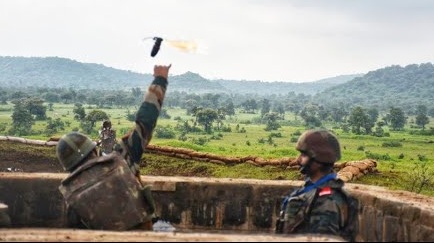
The year was 1985. Our regiment – 75 Medium Regiment (Basantar River) – was stationed in Delhi, and we were allotted the grenade firing range at the Rajputana Rifles Centre in Delhi Cantonment for routine practice. As a young Lieutenant, I was assigned Officer-in-Charge Practice by our Commanding Officer, Colonel Mahaveer Singh. When I undertook the task I had no clue that I would almost terrorise the President of India. My partner in crime and my second-in-command for this task, Subedar Amarjit; he was barely educated by conventional standards, but an out and out soldier to the core. He is a key personality in this little story and so a bit more about him and his background, for a better perspective on the story.
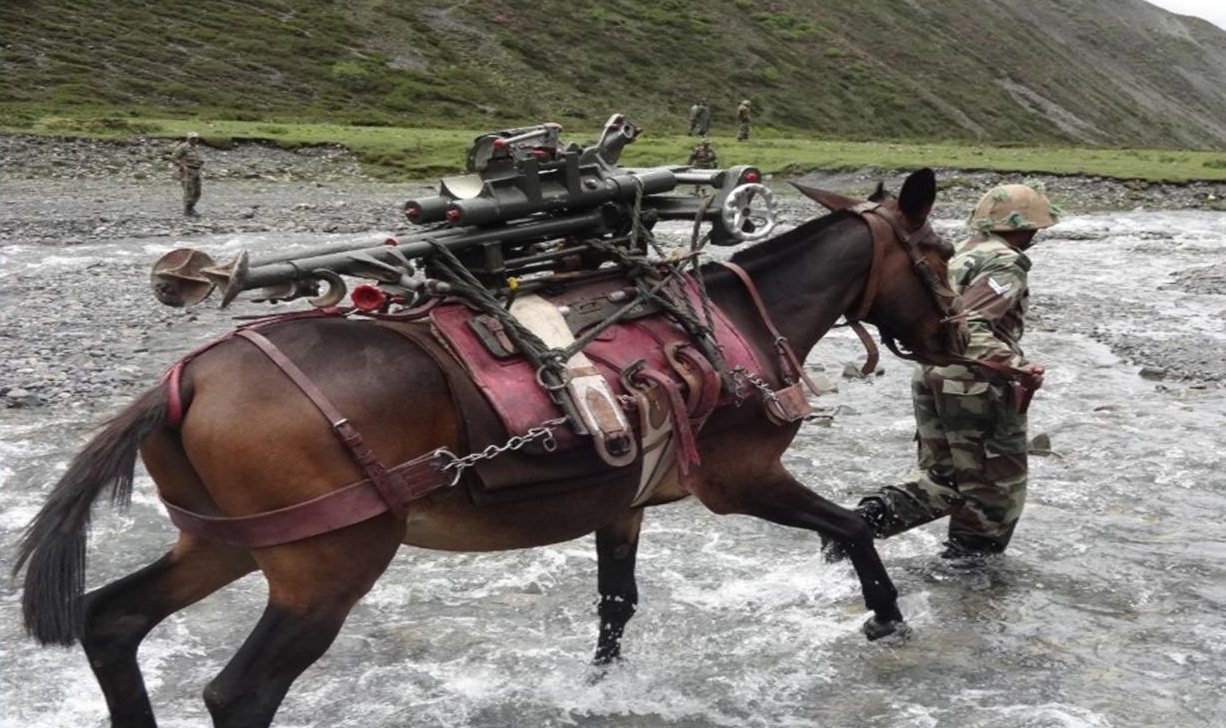
Subedar Amarjit had joined the Indian Army as a Mule Driver, a role that demanded resilience, resourcefulness, and an uncanny bond with his animal. It’s obvious that education wasn’t a particularly important requirement for this critical task. His academic career, it seemed had peaked somewhere around learning to draw a straight line and geometric shapes. When the Army phased out mules from Packed Artillery Regiments, he transitioned to become a Gunner, and a pretty good one at that.
Packed Artillery units were specialised units designed for mountain warfare, where guns or mortars were broken down into loads carried by mules or soldiers. These Regiments provided critical fire support in some of India’s toughest terrains. A mule driver, Muleteer or Muleskinner, was more than a handler – he was a caretaker, a trainer, and a partner to his mule. The term skinner came from their ability to outsmart the famously stubborn but intelligent mules into obedience. Mules could carry nearly a third of their body weight, transporting vital equipment where vehicles could not reach. Though hardier than horses, they could panic under fire, requiring careful battle inoculation – tying them near the guns during practice firings to accustom them to the noise. The bond between driver and mule was vital and profound; on postings, drivers were known to weep at parting. And in true soldierly fashion, they communicated their commands with a rich vocabulary of profanity.
Subedar Amarjit, now commanding men, retained that colourful flair and sometimes forgot the difference between men and mules. His vocabulary was about 20% routine military and about 80% that would make a taxi driver blush. He carried a little notebook which was a collection of hieroglyphics and sketches that looked like cave paintings.
Subedar Amarjit embodied a paradox of leadership that he developed from his days as a Mule Driver – a heart full of love for his soldiers, yet an unyielding belief that excellence demanded tough training. He lived by a simple, time-worn creed – जवान और पीतल एक सामान है – जितना रगडोगे उतना चमकेगा (a soldier and brass are alike: the more you rub them, the more they shine.) He knew that polish comes only from pressure, that discipline without affection breeds resentment, but affection without discipline breeds complacency. Under his watch, every soldier was both cherished and challenged, buffed by relentless drills until they gleamed with the unmistakable lustre of professional pride.
The Practice and the Problem
The grenade practice proceeded as planned – until it didn’t. At the end of the session, we were left with four blinds: grenades that had failed to detonate. I had heard the four-second fuse burn, but no explosion followed. The grenades were over two decades old, relics from another era and perhaps better off in a museum.
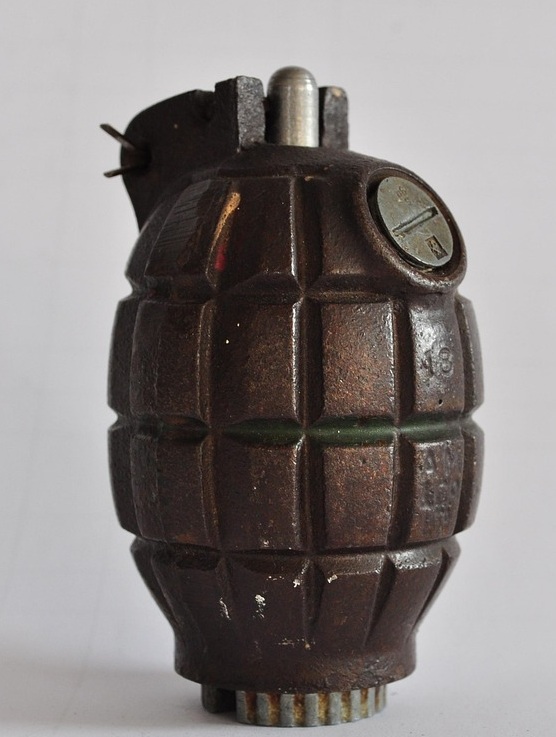
We waited an hour as dusk settled over the range. Then Subedar Amarjit, with the confidence of a man who had outsmarted mules and the mountains, walked in, picked up the four grenades, and placed them in a pile atop a piece of plastic explosive with a detonator attached. I hesitated, uncertain. He was not, quite cocksure.
“The fuse has gone off,” he declared, punctuating his certainty with a string of Punjabi expletives. “It cannot explode now.”
BOOM the pile went off with a very satisfying blast and a cloud of smoke. We dusted our hands and headed back to the Regiment for dinner, quite convinced about our super efficiency. I reported the day’s events – and the disposal method – to our Adjutant, Captain RB Gowardhan – now a Veteran Colonel. Pretty much everything seemed routine.
The Heavens Come Down
At around 10 PM, my colouful dreams with a Marilynn Monroe look alike were shattered by Captain Gowardhan shaking me up with uncontrolled violence. “What have you done?” he demanded. I had no idea of what the panic was about.
We drove to Delhi Area Headquarters, where the top brass had gathered with very grave faces in the wake of some unknown calamity. I recounted the day’s events in detail: the practice, the blinds and their disposal. As I spoke, the tension on the faces around me slowly eased. By midnight we were dismissed, my military reputation still intact (barely). I still couldn’t make much of the commotion.
What Had Happened?
That day, Giani Zail Singh, then President of India, was returning from the Delhi Airport to his residence. His convoy passed along the road adjacent to the grenade range – apparently at the precise moment that we detonated the blinds. In the aftermath of Mrs. Indira Gandhi’s assassination, Delhi was quite a jumpy place. The explosion triggered an immediate security alert. Delhi Police just didn’t go berserk, they did a whole Bollywood sequence possibly looking for a terrorist cell.
All’s Well That Ends Well
Fortunately, the explanation was straightforward, and Delhi police reached a laboured conclusion that there were no terrorists after all. But the incident left an indelible lesson: in the military, timing is everything. A routine disposal, a coincidental presidential convoy, and a moment of panic – all could have spiralled into a major incident. Subedar Amarjit’s confidence was rooted in experience, but the universe, as it often does, had its own timing.
Decades later, I remember that night not for the fear it caused, but for the reminder that even the most routine actions can have unexpected consequences. And that sometimes, the difference between a crisis and a story is sheer, blind luck. I wonder if Subedar Amarjit ever realised how close he and I were to becoming a national headline. He probably went back to his notebook and drew a little picture of a cake that looked like Charminar.
 REJINCES
Very nicely narrated with a lot of humour, Koduvath.
I enjoyed it more, because Amarjeet was a L Nk when I had joined the Regt in 1976 as (his) BC in 751 Med Bty of Brahmins. I was curious as to how a Brahmin could be a Singh or alternately how could a Singh be posted to the Brahmin Bty. He tried to explain to me in his very own *Punjindi, *a mixture more of Punjabi and less of Hindi that in his previous mtn bty, he had to be a Singh to survive.
He rose to be a Nk within a short time and 3 yrs later when I returned to comd the Regt, he was already a Hav. It was a period of Model Structure for Arty Regts, a new concept and promotions were fast. I made him a Nb Sub.
Reji, if you remember he always had a smile in a corner of his mouth!
More power to your pen…or should I say your laptop.
Best wishes Surya (Visit my Blog at https://surya-musings.blogspot.com.html https://surya-musings.blogspot.com/)
LikeLiked by 2 people
Nice readSent from my iPhone
LikeLiked by 2 people
Versatile and very much eloquent description of an event Regi. Kudos.
LikeLiked by 2 people
A humorous article Sir. The initial bit brought back old memories. I was possibly the last GPO to do a mule pack drill in ’03. We held 75/24s as sector stores till then.
LikeLiked by 1 person