Leadership Lessons from the Mandir Parade

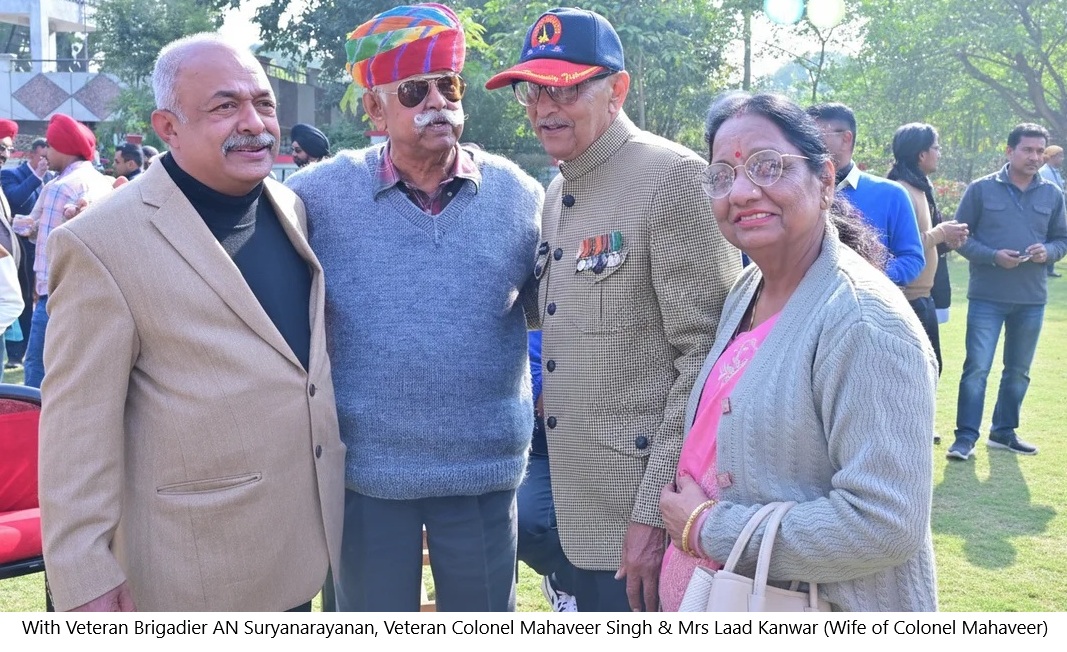
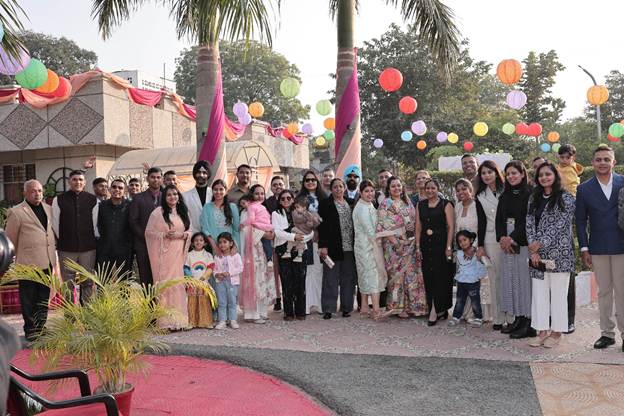
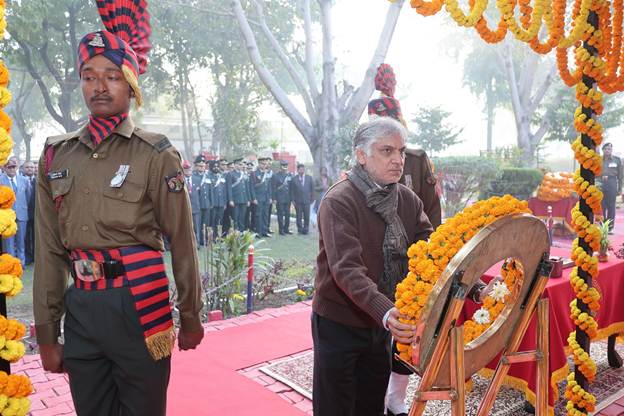
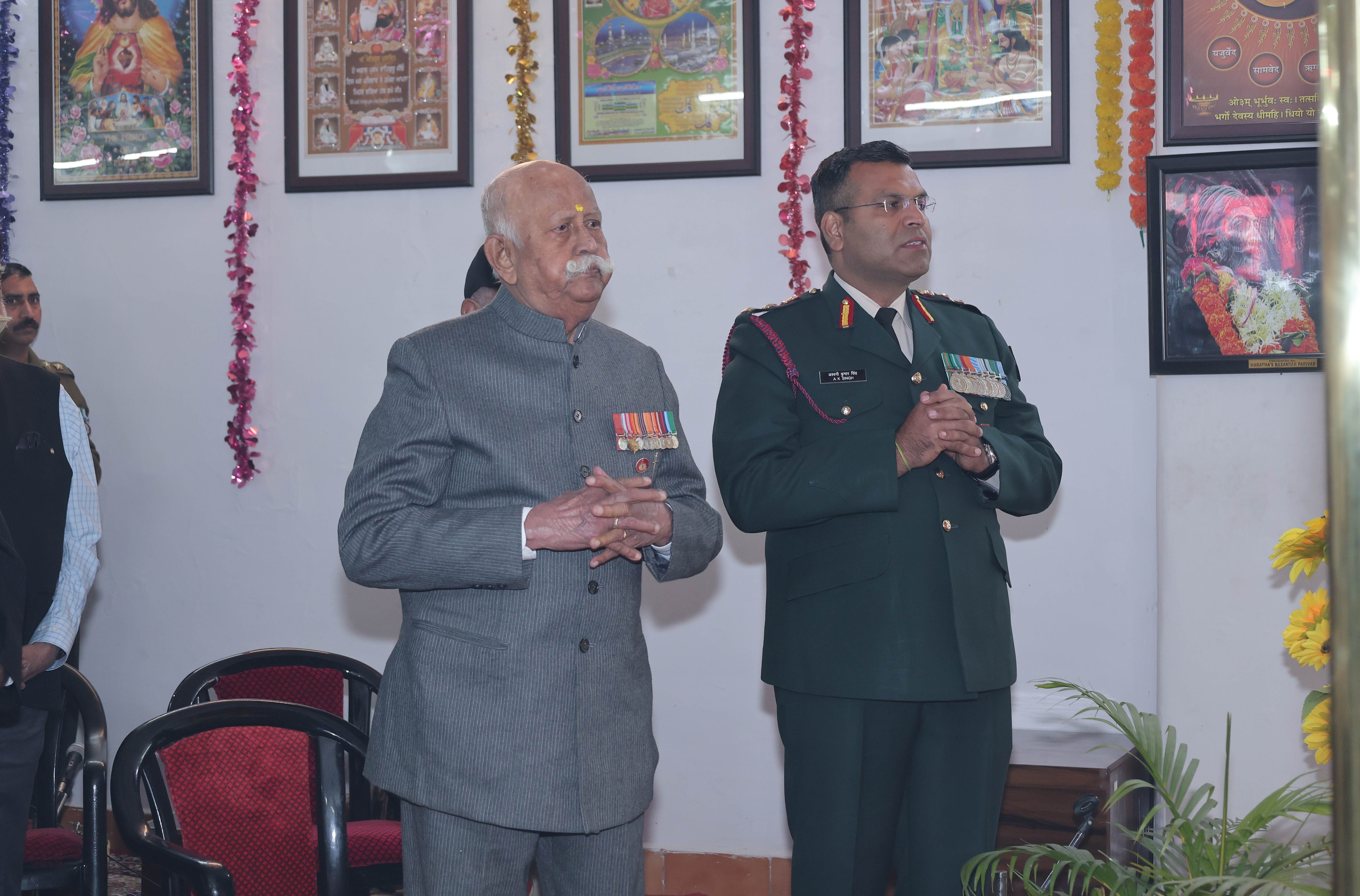
Veteran Brigadier AN Suryanarayanan with Colonel AK Singh, Commanding Officer, at the Mandir Parade

On 16 December 2025, I attended the Mandir Parade during the Diamond Jubilee of our Regiment – 75 Medium Regiment (Basantar River,) I had a terrifying realisation: I might have forgotten my ATM PIN, my wedding anniversary, and where I parked my car, but the aartis and slokas I learned forty years ago were still part of my DNA, still rearing to go.
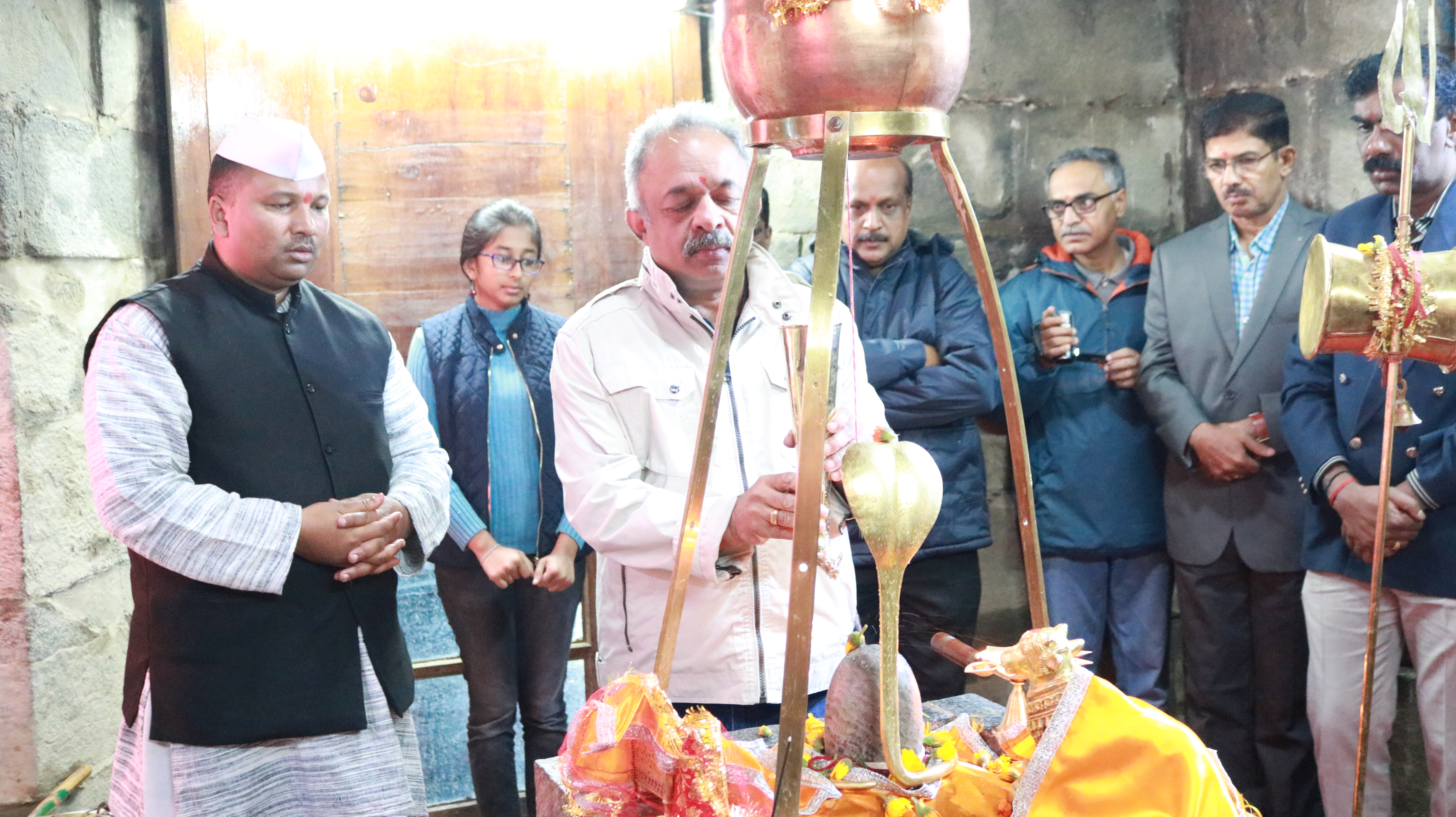
This wasn’t my first spiritual flashback. Back in 2017, during a trip to Kashmir with my Sainik School buddies, the local Religious Teacher saw me reciting verses with such gusto that he handed me the gaumukhi shringi (that fancy horn-shaped copper vessel). I held it with the confidence of a man who knew exactly what he was doing. I was also secretly hoping I wouldn’t accidentally pour holy water down my own sleeve!

What began as a leadership lesson became something far deeper. The aartis and slokas I learned in the Mandir, the hymns I heard in the Gurudwara, the prayers I offered at the Peer Baba’s shrine in Kashmir, and the Lord’s Prayer I whispered each morning and evening – they all came to feel like different doors to the same Sacred Room.

Decades later, standing at the Mandir Parade of our Regiment’s Diamond Jubilee, I understood that I had not merely memorised verses. I had absorbed a lesson that transcends religion: that faith, in all its forms, is the language of trust – and in the Army, trust is everything.

How did a Christian boy end up as a part-time Pundit?

It all started in 1982 when I was commissioned as a Second Lieutenant.  Our Regiment was like a multi faith buffet: one battery of Brahmins, one of Jats, and one from the South, even more multi faith. Our Commanding Officer, Lieutenant Colonel AN Suryanarayanan, took one look at my work-in-progress Hindi and decided the best cure was immersion therapy. He posted me to the Brahmin Battery. Our Battery Commander, late Major Daulat Bhardwaj, gave me the ultimate leadership pep talk: “To command Brahmins, you must become a Brahmin. You must be mentally alert, morally straight, and spiritually superior.”

I said, “Sir, the Academy made me physically tough, but I’m a Christian. My spiritual ‘superiority’ usually involves a Sunday hymn and a bit of bread afterward.”

Major Daulat wasn’t having it. “Get to the Mandir Parade. Learn the mantras. Rote-learn those until you’re singing them in your sleep.”

A month later, I was a lean, mean, chanting machine. I did have a moment of panic thinking about the Ten Commandments – specifically the part about no other Gods before Me – but I figured the Almighty was probably fine with it. After all, I was pretty sure that He wouldn’t be mean enough and just waiting to push me into hell at the slightest provocation.

More seriously, all officers of the Indian Army are trained to internalise and adopt the religious customs and practices of the men they command. It is an inherent part of the trust and rapport-building process.

The Test Behind the Mandir Parade

In 1986, I was the Senior Subaltern – the most senior Captain or Lieutenant in the Regiment – tasked with supervising, mentoring, and maintaining discipline among the junior officers.

One morning, after the Mandir Parade, the young officers approached me, with Late Captain Pratap Singh, Maha Vir Chakra (Posthumous), leading the pack. Captain Pratap spoke for the group. “We heard from our soldiers that you are well versed with the aartis and slokas recited in the Mandir. We wanted to check for ourselves. We stood behind you during the Parade to see if you were merely lip-syncing. You came out with flying colours.”

Their curiosity now piqued, and Captain Gulshan Rai Kaushik pressed further – दिल मांगे मोर Dil Mange More (The heart wants more.) They needed answers as to how had I learned all the aartis and slokas – especially being a Malayalee Christian.

I smiled and explained. It had begun in my early days with the Regiment, when Lieutenant Colonel AN Suryanarayanan and Late Major Daulat Bhardwaj had taken it upon themselves to rechristen me – not as a convert, but as a Brahmin in spirit. To command men of faith, they taught me, one must first understand their faith. And to understand, one must participate. What began as a leadership lesson had, over time, become a part of who I was.

Kashmir: Where Atheism Goes to Die

On my first assignment to the Kashmir Valley as a young Captain in 1987, my belief in God Almighty was instantly rekindled – not through theology, but through the sheer inhospitality of the terrain: sub-zero temperatures, heavy snowfall, avalanches, thin air deficient in oxygen, altitudes above 10,000 feet. If you want to find God, don’t go to a cathedral or a temple; go to a mountain road where one wrong turn sends your jeep into a gorge that doesn’t even have a bottom.

I was with a Punjab Battalion. On Sundays, attendance at the Mandir and the Gurudwara was mandatory. It was a Parade, which in Army-speak means: You will be spiritual, and you will be spiritual at 0800 hours sharp.

Then there was the Peer Baba shrine on the road to Headquarters. Legend had it that if you didn’t stop to pay your respects, your vehicle would develop a sudden urge to fly off a cliff. I became a very frequent visitor. Between the Mandir, the Gurudwara, the Peer Baba, and my own morning & evening Lord’s Prayer, I had a feeling that I must be the most spiritually insured man in Northern Command.

I, a Christian by birth, continued my own rituals – the Lord’s Prayer each morning and evening, a habit instilled by my father. It was right there in Kashmir, amidst the swirling snow and the will-my-jeep-survive-this-turn terror, that I finally cracked the code on Secularism. In the Army, secularism isn’t some fancy political theory – it’s essentially Spiritual All-Risk Insurance. I realised that whether I was chanting a sloka, bowing at a Gurudwara, nodding to the Peer Baba, or whispering the Lord’s Prayer, I was knocking on different doors of the same cosmic office. I wasn’t entirely sure who was signed in on the duty roster that day – Jesus, the Gurus, the Hindu Deities, or the Baba – but considering the sub-zero madness and the bottomless gorges, I figured it was best to keep all of them on speed dial. After all, when you’re 10,000 feet up, you don’t argue with the Management; you just make sure you’re on good terms with the entire Board of Directors.

Siachen: The High-Altitude Prayer Meeting

During later years of field service, I had a stint at the Siachen Glacier – the world’s highest battlefield, a disputed territory between India and Pakistan, renowned for its treacherous terrain, freezing cold at minus 40 degrees Celsius, crevasses, avalanches, and, lastly, enemy action. Statistics reveal that since 1984, when the Indian Army first occupied Siachen, more lives have been lost to the weather than to enemy action.

At minus 40 degrees, your breath freezes, your tea and everything else turns into a brick, and your brain starts wondering why you didn’t join the Navy. In Siachen, everyone is religious and your dependence on faith increases exponentially each following day. When the ice beneath your feet groans like a hungry monster and the air is too thin to support a conversation, let alone a firefight, you start talking to whoever is listening upstairs. Faith isn’t a luxury there; it’s the only thing that keeps you from checking your sanity at the base camp.
The Conclusion of a Confused Christian

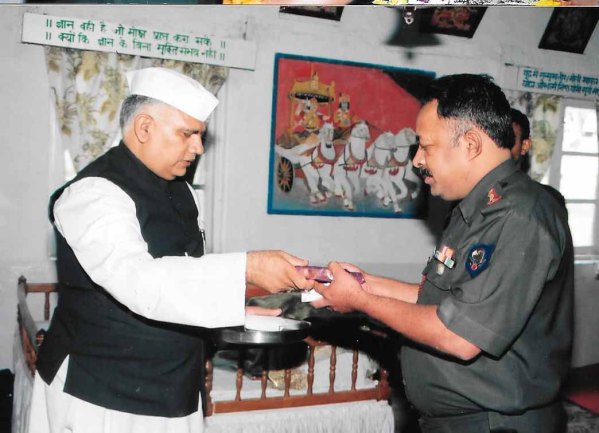
Looking back, I understand now that the Indian Army’s genius lies not in imposing a single faith, but in embracing all faiths as one. The Army doesn’t care which door you use to enter the Sacred Room, as long as you show up. I learned that trust is the real currency. If my men saw me chanting their slokas, they knew I wasn’t just their officer; I was one of them. In the end, who kept me safe through the shelling, the avalanches, and the sub-zero madness? Was it Jesus? The Guru Granth Sahib? The Peer Baba? Or the Hindu deities?  I like to think they all took turns. And honestly, considering the frequent messes that I got into, they probably needed teamwork. I honestly hope that this genius of the Indian Army is not changing its colours anytime soon.

Besides, considering your duty as a warrior, you should not waver. Indeed, for a warrior, there is no better engagement than fighting for upholding of righteousness. – Bhagavad Gita 2.31

You are my Protector everywhere; why should I feel any fear or anxiety? – Sri Guru Granth Sahib Ji on Ang (page) 103.

Be strong and courageous. Do not be afraid or terrified because of them, for the Lord your God goes with you; he will never leave you nor forsake you. – Deuteronomy 31:6

O you who have believed, remember the favor of Allah upon you when armies came to attack you and we sent upon them a wind and armies of angels you did not see. And ever is Allah, of what you do, seeing. – Surah Al-Ahzab 33:9
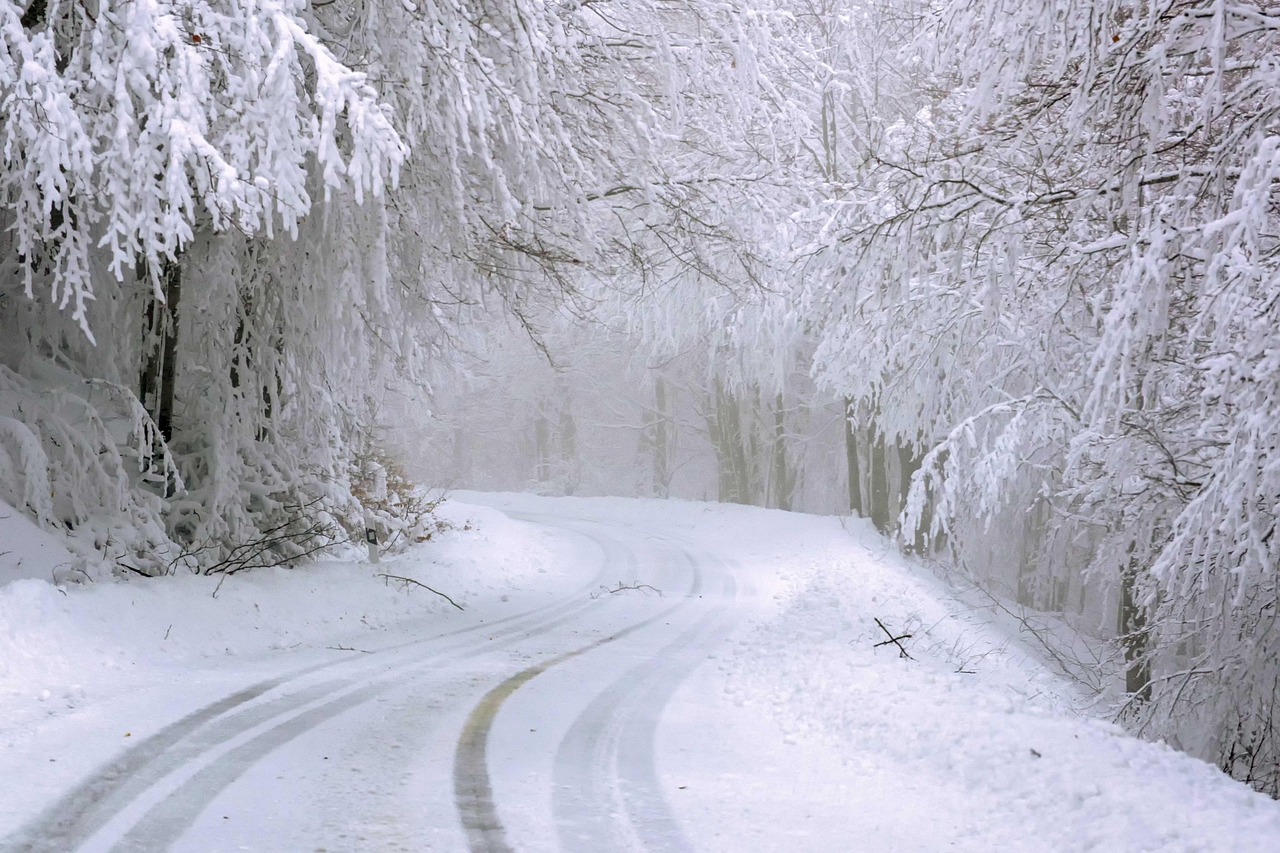
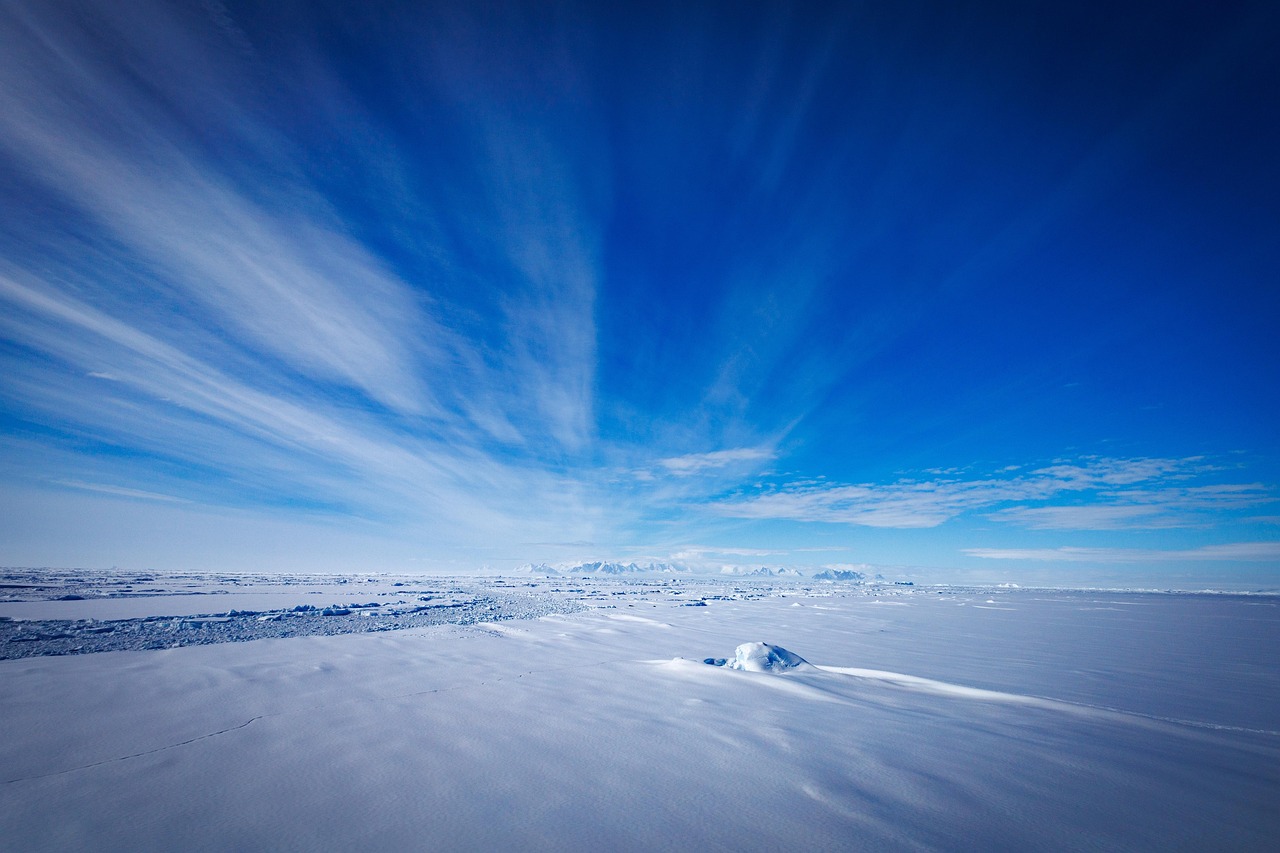
Ice Colours: A Guide to Safety and Science

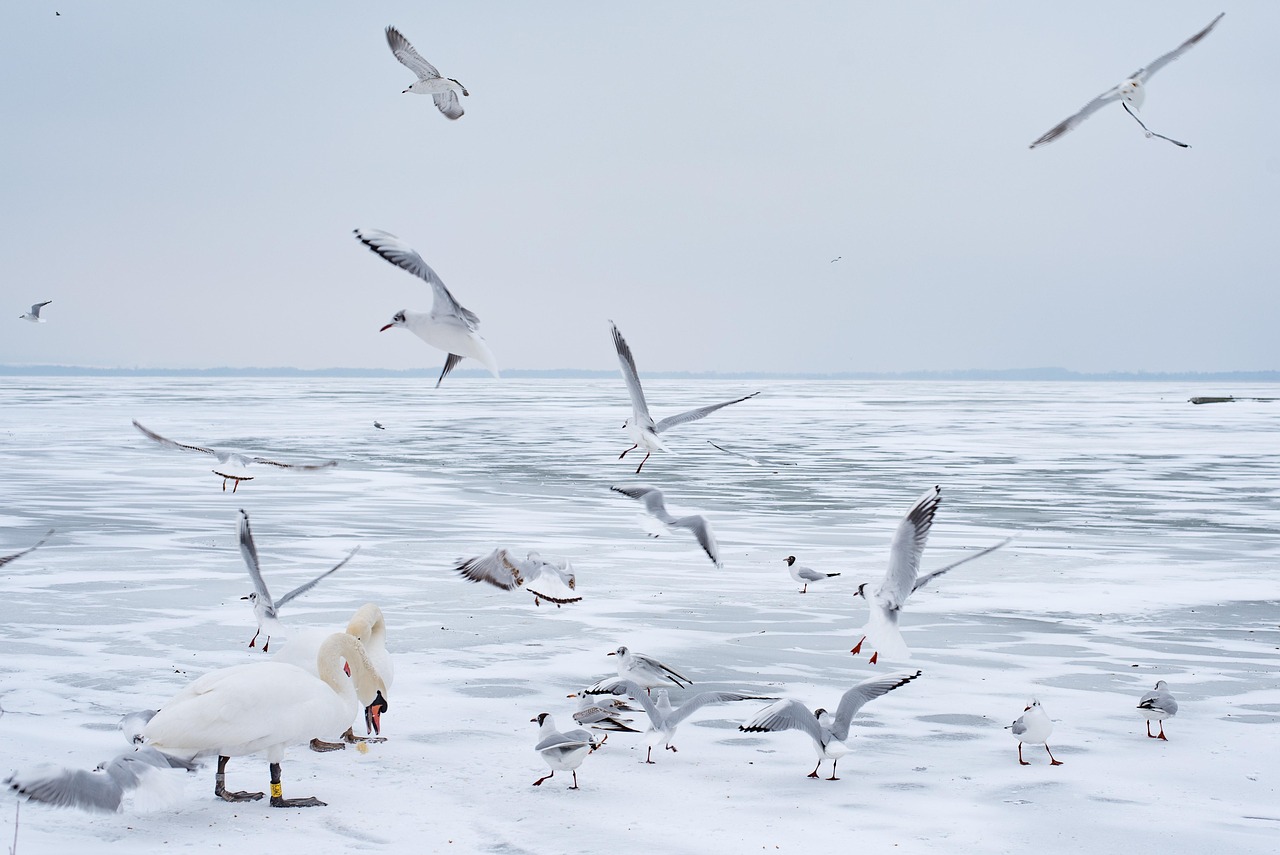
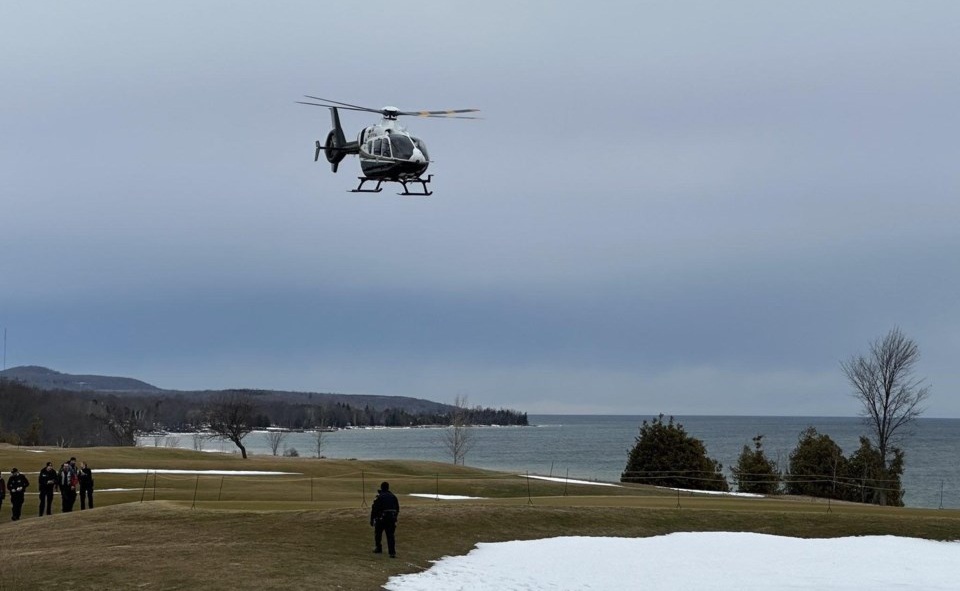
On the morning of Sunday, 8 March 2026, I moved my clock forward by one hour to mark the beginning of Spring Daylight Saving Time. As I tuned into the news, a dramatic rescue operation caught my attention. About two dozen ice fishers had become stranded after the ice shelf they were standing on broke away from the shoreline in Georgian Bay, Ontario. The massive sheet drifted approximately two kilometre from shore before splintering into several sections, leaving some people partially submerged in the freezing water.

Following the report, the newscaster offered a fascinating explanation of the different types of ice found in Canada – each colour-coded to indicate its density, age, and, most importantly, its safety level. While white ice is the most common, environmental factors such as compression, water content, and impurities can produce a surprising spectrum of hues.

White Ice: Opaque and Weaker

White or opaque ice forms when snow falls on existing ice, melts, and refreezes, or when slush freezes rapidly. Its cloudy appearance results from countless trapped air pockets. While common, white ice is only about half as strong as blue ice of the same thickness and demands cautious treatment.

Blue Ice: The Strongest and Safest

Blue ice is the gold standard of ice safety. Dense and ancient, it has been compressed over years by the weight of overlying snow, forcing out nearly all air bubbles. This density causes the ice to absorb longer wavelengths of light (reds) while scattering shorter ones (blues), giving it its distinctive transparent azure appearance. Found primarily in deep lakes or at the base of glaciers, blue ice is the strongest variety – just four inches (10 cm) is typically sufficient to support a person’s weight safely.

Grey Ice: A Sign of Danger

Grey ice signals trouble. Its dull, dark appearance indicates the presence of water or active melting and deterioration. Commonly seen in spring or on fast-moving water, grey ice is dangerously unstable and incapable of supporting significant weight. It should be avoided entirely.

Red Ice: The Watermelon Snow Phenomenon

Red or pink ice, often called watermelon snow, results from blooms of microscopic algae (Chlamydomonas nivalis) living on the snow’s surface. These organisms produce a red pigment to shield themselves from intense solar radiation. Common in British Columbia’s mountainous regions and the Arctic during spring and summer, this phenomenon tints the snowpack in shades ranging from faint pink to deep crimson.

Green Ice: A Marine Mystery

Green ice typically appears in marine settings, particularly in icebergs formed when seawater freezes to the underside of ice shelves. Scientists believe its emerald or jade hues result from high concentrations of iron oxides—derived from rock flour—trapped within the ice.

Black Ice: Clarity in Disguise

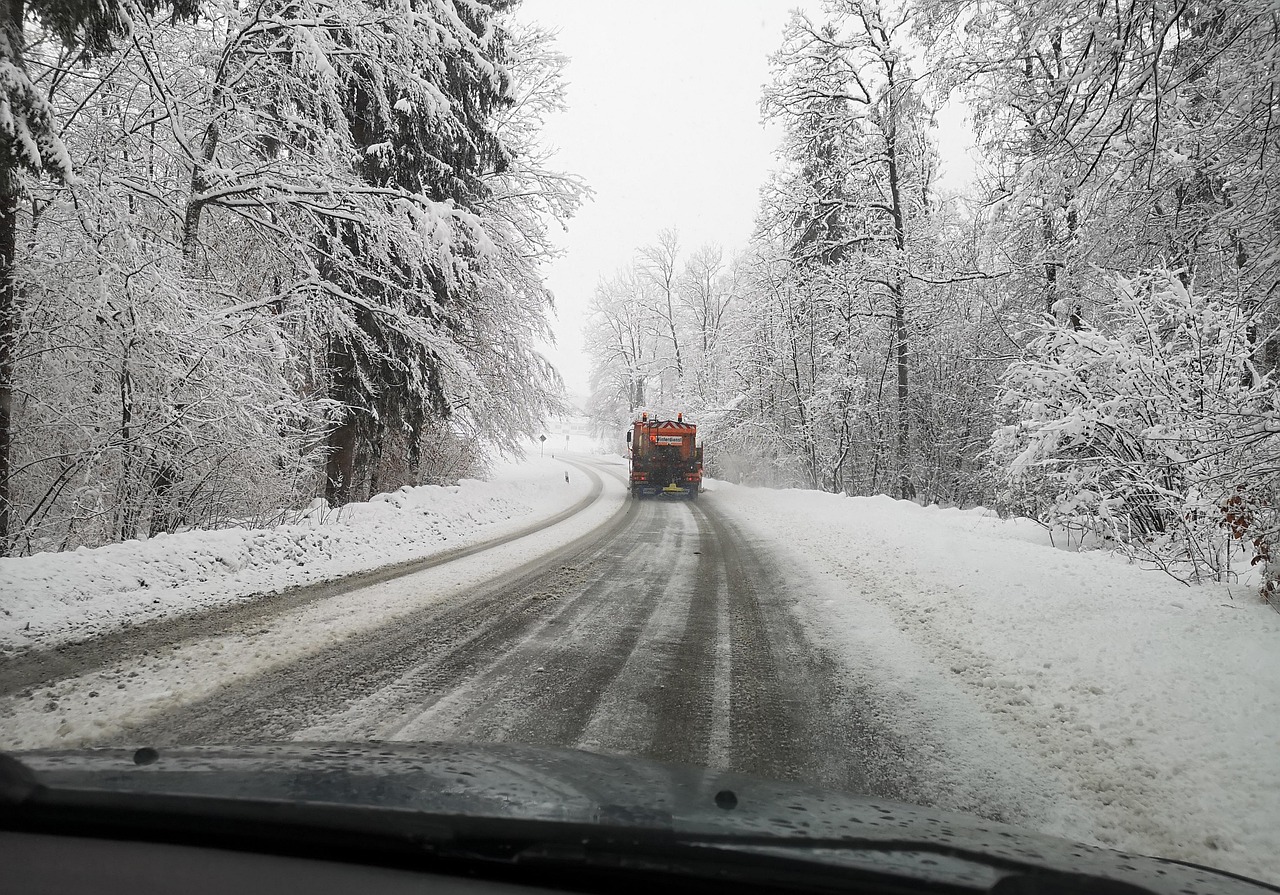
The dreaded black ice is a thin, nearly invisible, and highly slippery layer of transparent glaze ice that forms on roads, bridges, and walkways. Appearing as a wet patch on dark pavement, it occurs when moisture freezes instantly, often during early mornings or after light rain/melting snow. It poses a severe, unexpected danger to drivers and pedestrians resulting in many slip, falls, crashes, etc.

Conclusion

This colour-coded guide serves as a vital reminder that ice is far from uniform. Whether walking, fishing, or simply exploring, understanding these distinctions can mean the difference between a pleasant outing and a life-threatening emergency.

The Rogues Gallery

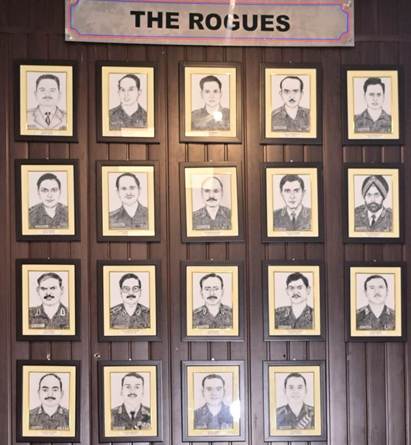
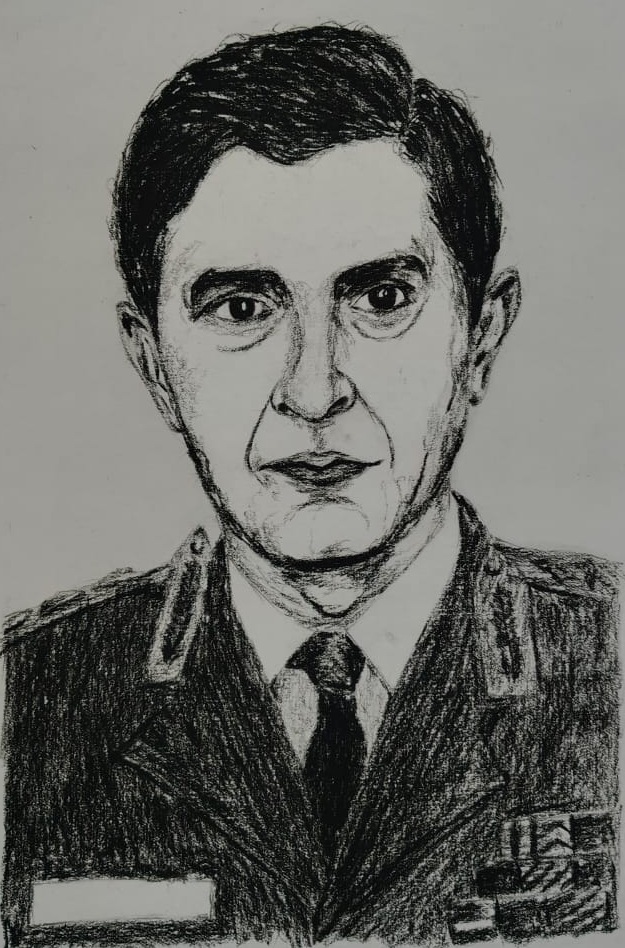
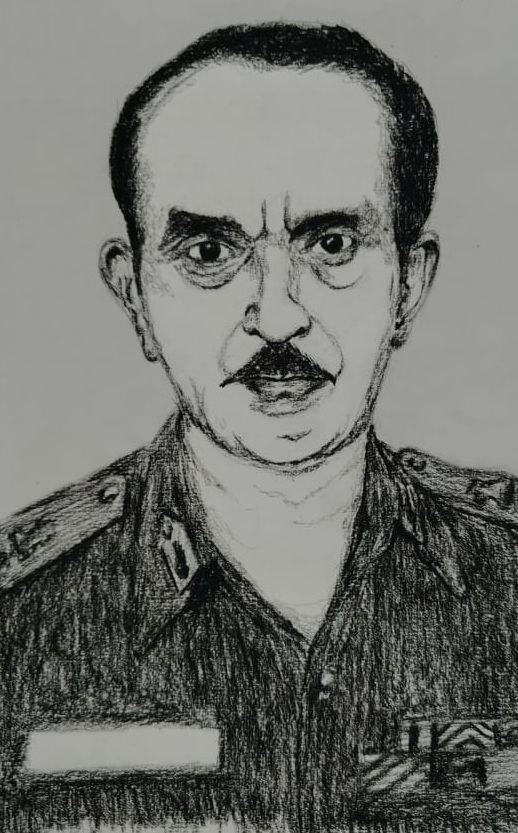
In every Regimental Officers’ Mess and the Commanding Officer’s Office, a place of distinction is reserved for what is affectionately known as The Rogues Gallery. Far from its criminal origins, this gallery holds a collection of photographs, paintings, and sometimes caricatures of the Regiment’s former Commanding Officers – the Tigers who led and shaped the Regiment’s destiny.

The term itself has an intriguing history. It originated in the mid-19th Century as a police-maintained archive of known criminals – complete with photographs, descriptions, and methods of operation – used to identify repeat offenders. In popular culture, the phrase was later adopted to describe the recurring villains and antagonists who challenge a hero, most famously immortalised in Batman’s comics through characters like the Joker, Penguin, and Riddler.

A Tradition of Affectionate Rebellion

The Rogues’ Gallery, a lighthearted, cynical, yet deeply affectionate military tradition playfully borrows its name from police mug shot collections. The implication is clear: these Commanding Officers, while revered and respected, were something of Rogues or Characters during their tenures. They were the ones who made life interesting, challenged conventions, and perhaps occasionally made things difficult for those around them!

Yet within this playful irreverence lies profound respect. The term acknowledges what every soldier knows that leading a Regiment requires a certain measure of stubbornness, unorthodox thinking, and strength of personality – qualities undeniably associated with a rogue. It is the Regiment’s way of saying that to command, one must be more than competent; one must be memorable. Notably, the incumbent Commanding Officer’s photograph finds no place in this gallery until the day he relinquishes command – a reminder that one must first earn the right to be remembered.

More than a mere display, the Rogues’ Gallery serves a vital purpose. It connects today’s officers with their predecessors, weaving an unbroken thread of continuity across generations. It fosters pride in legacy, respect for tradition, and a deep sense of belonging to something far larger than oneself. In the quiet corners of the Mess, amidst the faded photographs and painted portraits, the past speaks to the present – and the Regiment marches on.

A Parallel: The Rogue Elephant

An interesting parallel can be drawn with the rogue elephant of the wild – a solitary creature, often an older tusker, that has been displaced from leadership by a younger contender. An elephant herd is led by a matriarch, who is the oldest, largest, and most experienced female who guides her herd to food and water, makes critical survival decisions, and manages social dynamics. While in the herd, the dominant tusker play a critical role in mating, mentoring younger males and enforcing social discipline. Separated from its herd, the rogue elephant roams alone, bearing the weight of its experience in isolation. There is something poignant in this image: the former leader, once at the helm, now walks a solitary path. Like the photographs in the Rogues’ Gallery, the rogue elephant carries its history silently, a testament to a time when it led the herd through the wilderness.

Meeting the Rogues

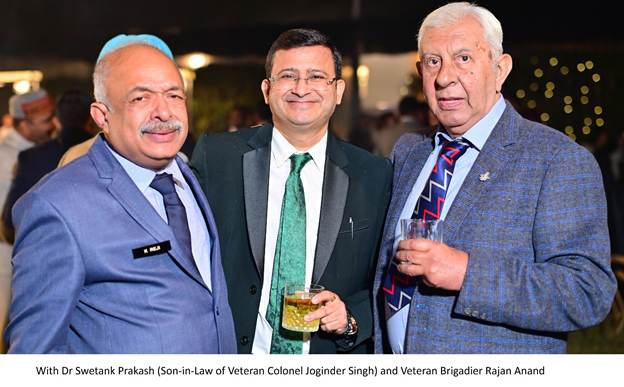
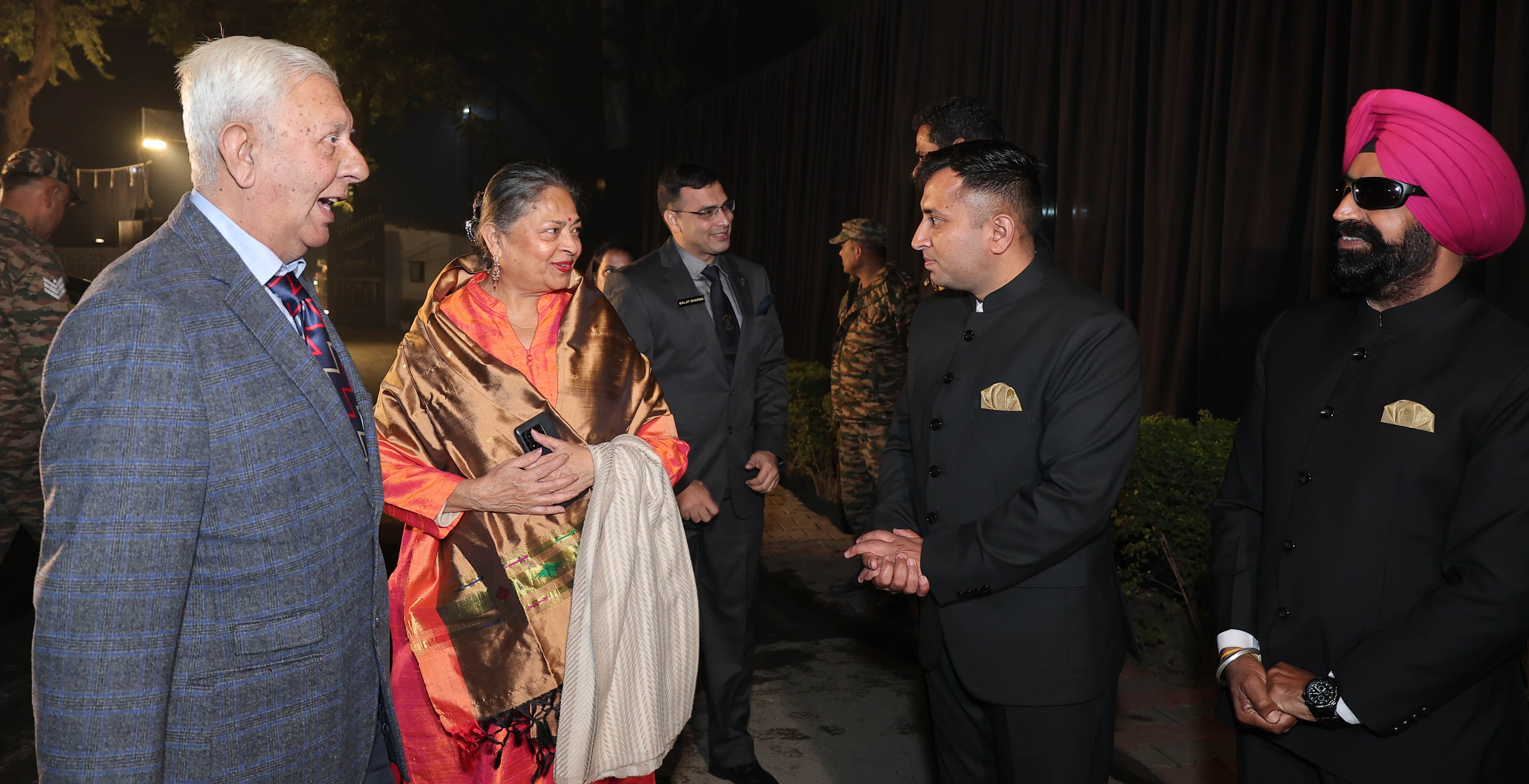
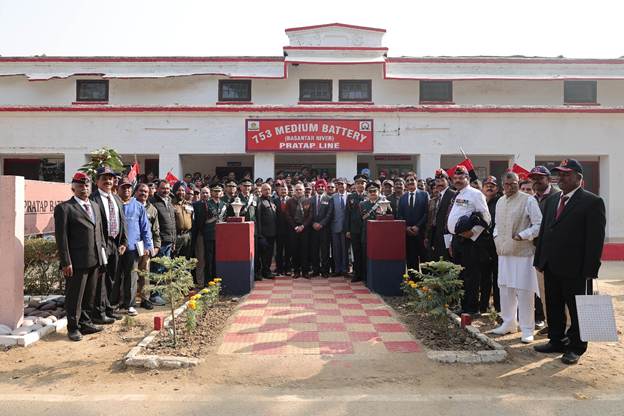
Stepping into the precincts of the 75 Medium Regiment (Basantar River) on 16 December 2025 felt like a true homecoming. The air was thick with memories and filled with the warmth of familiar faces. It was more than a reunion – it was a gathering of veterans, serving officers, and their families, bound together by shared history and sacrifice. In that space, old friends embraced, comrades reunited, and the bonds forged in service were not just remembered but renewed. Meeting the Rogues who shaped my character and moulded me into a leader – those are moments I will cherish forever.

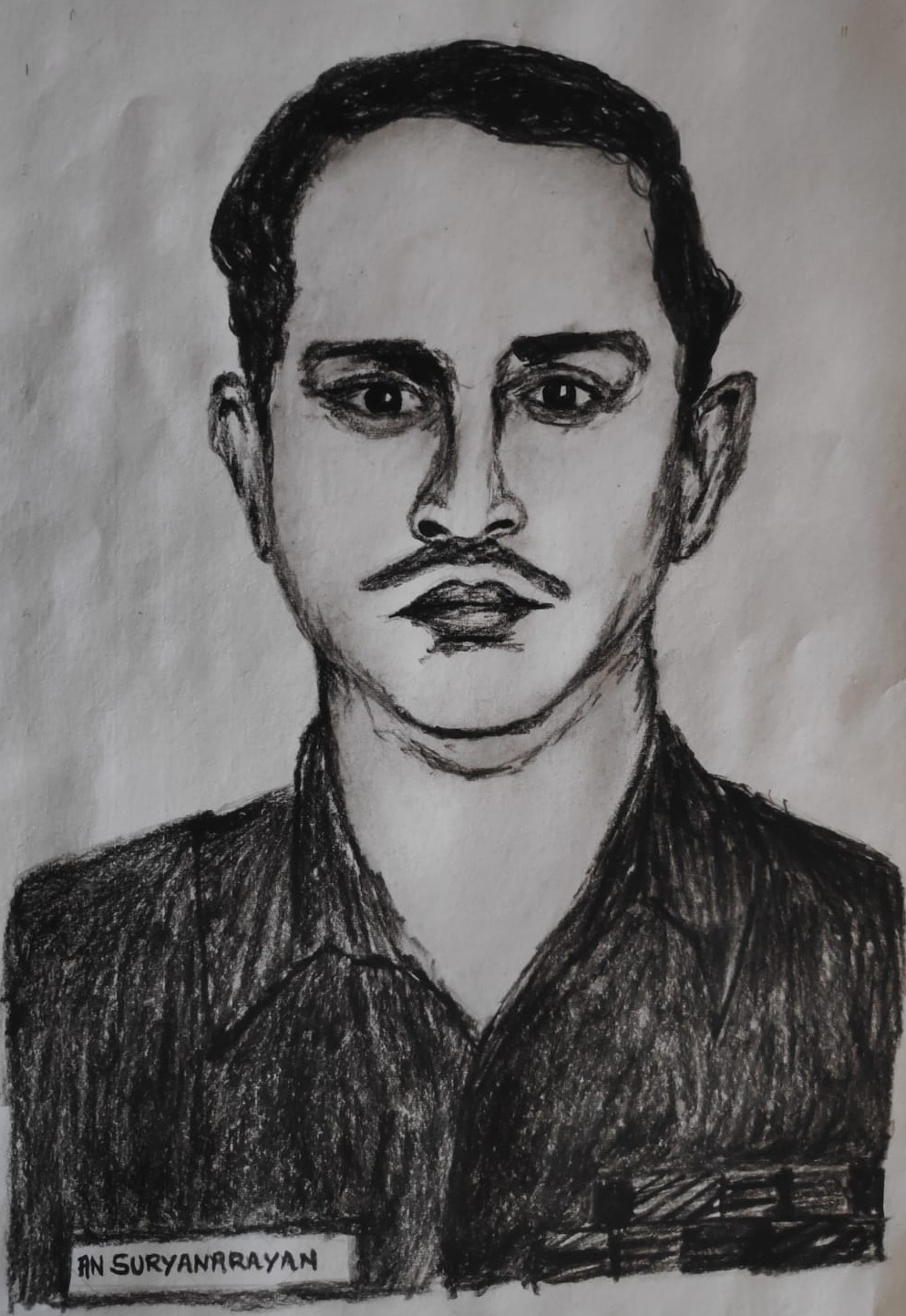
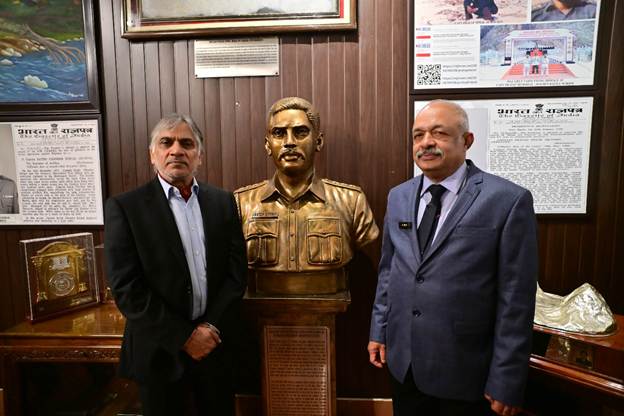
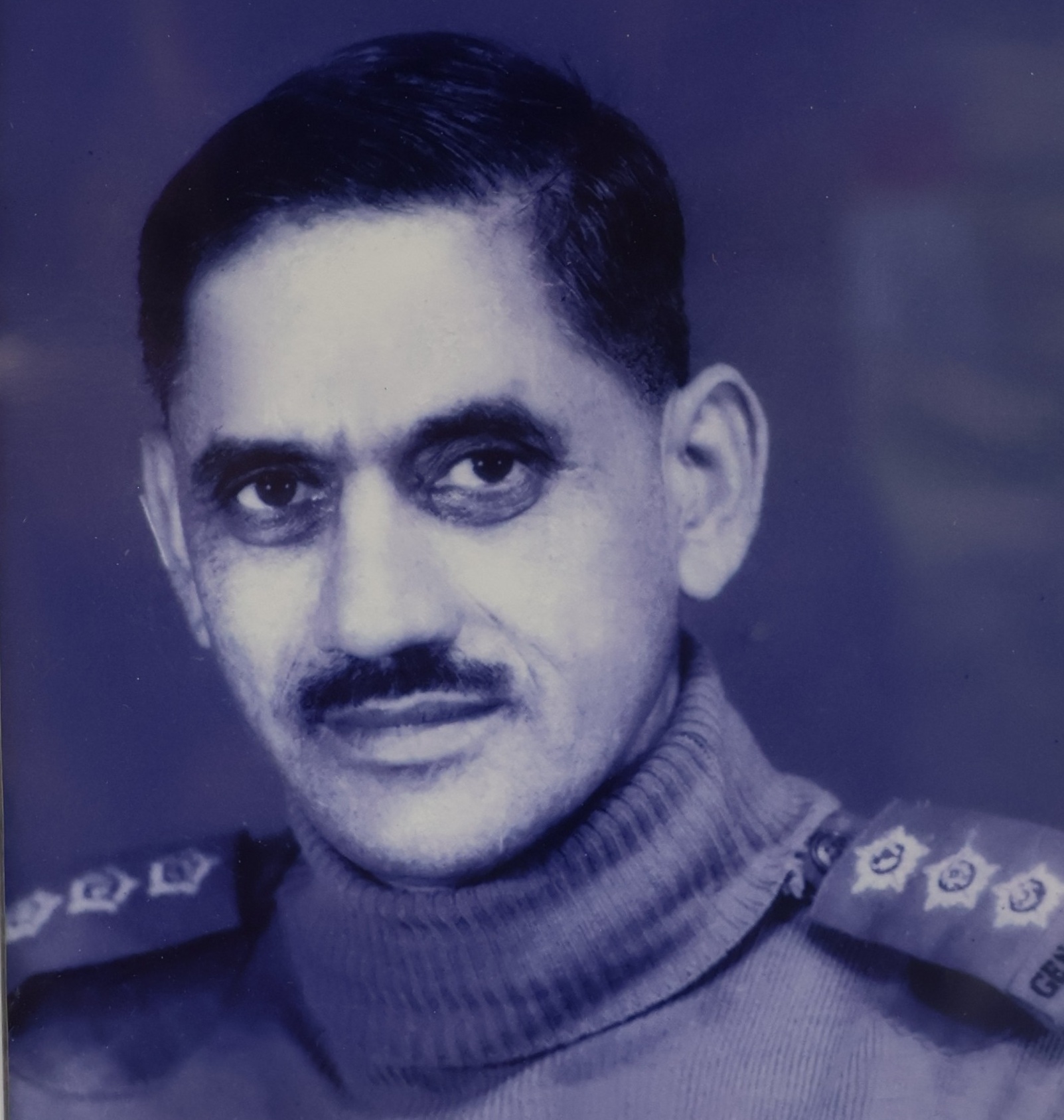
Veteran Brigadier Ariyur Natesa Suryanarayanan (Surya): Brilliance Personified

When I stepped into the Regiment in January 1983, I was a bundle of nervous energy. Lieutenant Colonel AN Suryanarayanan – affectionately known as Colonel Surya – was at the helm.  I was quite intimidated at prospect of meeting the Tiger. I was instantly put at ease by his warm and reassuring demeanour during our initial meetings. He made me feel that I truly belonged.

Though a strict disciplinarian, his authority never felt heavy handed. Colonel Surya commanded respect not through intimidation, but through sheer unadulterated brilliance. In Regimental lore Colonel Surya stood on three formidable pillars. The first was his a mastery over the English language and a gift of the gab that made him a titan in any gathering. People around were simply compelled to sit up and listen, they had no choice about it. The second was his genius for mental mathematics that bordered on the supernatural.  The third and most important was an elephantine memory that never forgot a detail.

Prior to taking command of our Regiment, he had served in the Military Secretary’s Branch at Army Headquarters – a role that perhaps honed his already exceptional memory. It was said across the entire Regiment of Artillery that he knew every officer of the corps by their personal number, their entire service history, and intimate details of their families. This was not just regimental lore; a lot of it was undeniably true.

As a Major in the late1970s, his painstaking efforts were pivotal in ensuring the Honour Title BASANTAR RIVER became an indelible part of the Regiment’s history.

When I joined our Regiment, we were deployed in the Rajasthan deserts for a training exercise. In March of that year, I proceeded to Devlali for the Young Officers’ Course from the deserts. When I returned in October 1983, Colonel Mahaveer Singh was at the helm. In my absence, the Regiment had changed hands, and I had lost the opportunity to interact with Mrs. Kalyani Suryanarayanan, the gracious wife of my first Commanding Officer.

Tragically, she passed away while I was away on the course. During the same period, Brigadier Surya was away, attending the prestigious Higher Command Course, the only Gunner officer of his batch selected for that coveted distinction. By the time we both returned, she was no more. I never had the chance to meet her, a quiet regret that lingers to this day.

Decades later, when I met him as an octogenarian, he greeted me with a warm smile and I observed that the years had done nothing to dim the fire of his intellect. He asked without a moment’s hesitation, “How is Marina? How are Nidhi, Jay, and James? And how is Nikhil doing in the Canadian Army?” I stood there, momentarily speechless. It was a profound, overwhelming moment. To realise that after all those years and across all those miles, his memory still held a place for me and my family was more than just an impressive feat of the mind. It was a testament to a leader’s heart – one that never truly let go of the men he once commanded. In that brief exchange, I realised that for Colonel Surya, we weren’t just names on a roster; we were a legacy he carried with him, forever.

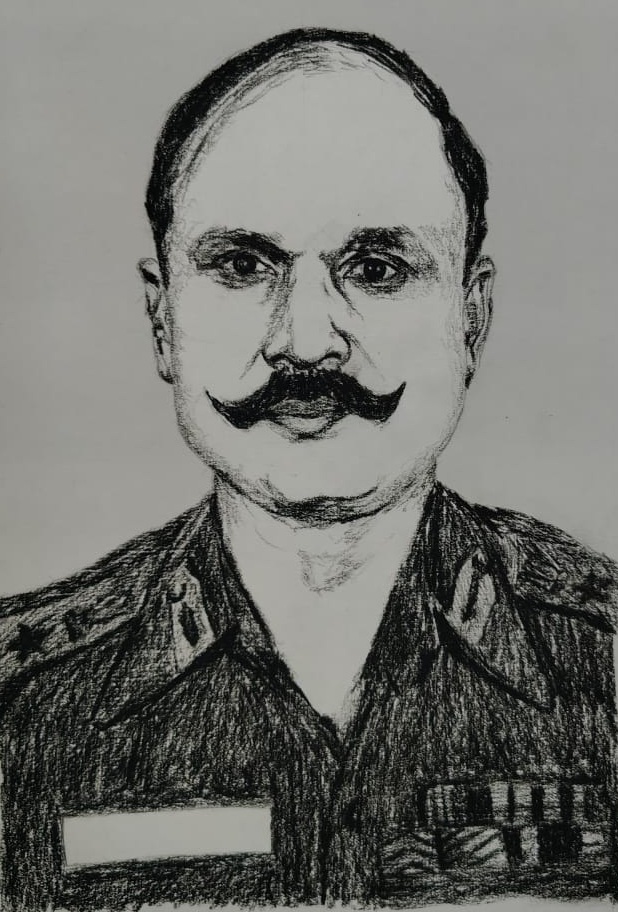
Veteran Colonel Mahaveer Singh: The Pulsating Heart of the Unit

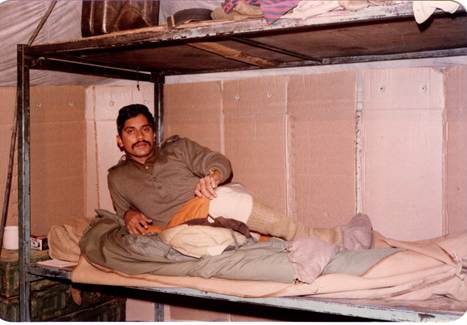
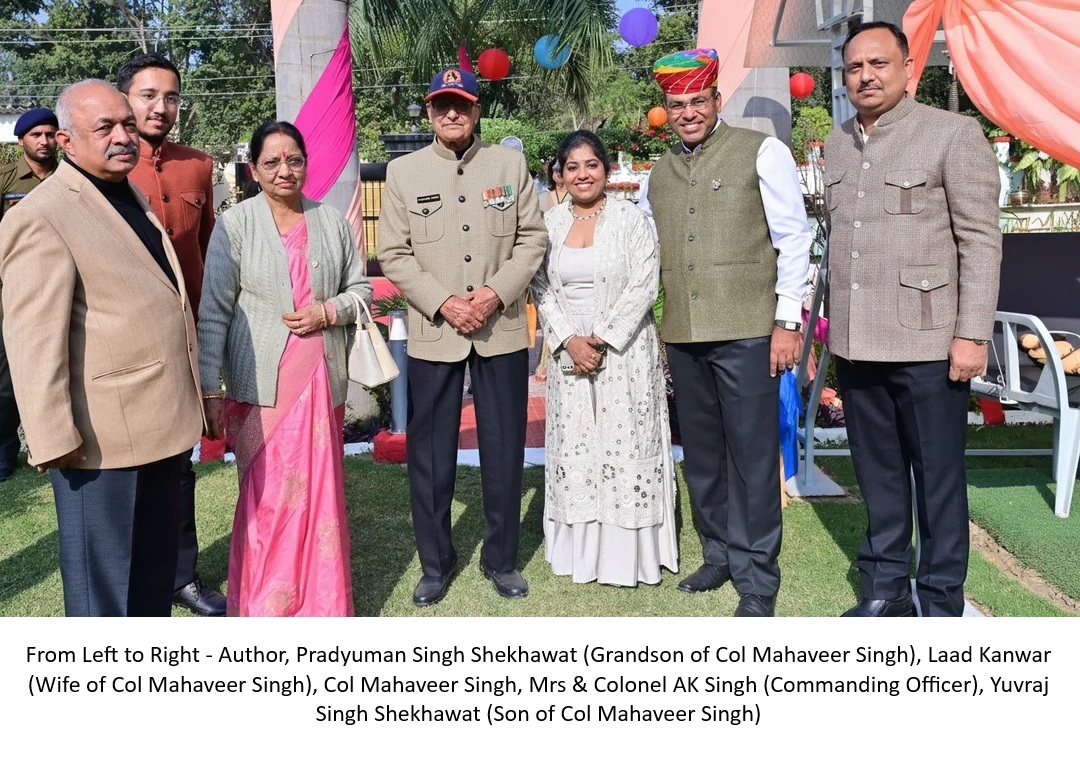
In October 1983, fresh from the Young Officers’ Course – that rite of passage where a rookie subaltern finally becomes a true Gunner – I returned to find Colonel Mahaveer Singh at the helm. He remained our Commanding Officer until 1988, a formative five-year span that remains the longest I have served under any leader. Today, even as he approaches the grand age of eighty-seven, that same irrepressible cheerfulness remains his hallmark, untouched by the passage of time.

Colonel Mahaveer, a true Rajput, embodied humility and possessed a heart large enough to embrace the entire Regiment. He treated all the young officers as his own children, often overlooking our youthful pranks and inevitable (mis)adventures with legendary grace and a twinkling sense of good humour. More importantly, he had a unique way of building leaders. He entrusted us with responsibilities, sometimes a bit heavy, long before we felt ready for them, always encouraging and motivating us to push beyond our limits and accomplish the impossible. Because he believed in us so implicitly, we began to believe in ourselves

It came as no surprise, then, that our Regiment earned the reputation of being the best in the formation. Quite effortlessly we became the envy of the formation. Young officers from other units eagerly sought attachments to our Regiment, just to spend a few days in our midst. They were invariably astonished by the unique bond we shared with Colonel Mahaveer – the sight of us playing basketball with him, sharing jokes, narrating incidents from our escapades, and above all, listening to his animated re-tellings of movie stories, particularly Sharabi, delivered without missing a beat. Yet, after every report of our latest escapades or innovative solutions to problems, he brought us back to mother earth with his trademark, all knowing smile and that classic, rhetorical question: “Who is commanding this Regiment, you or I?”

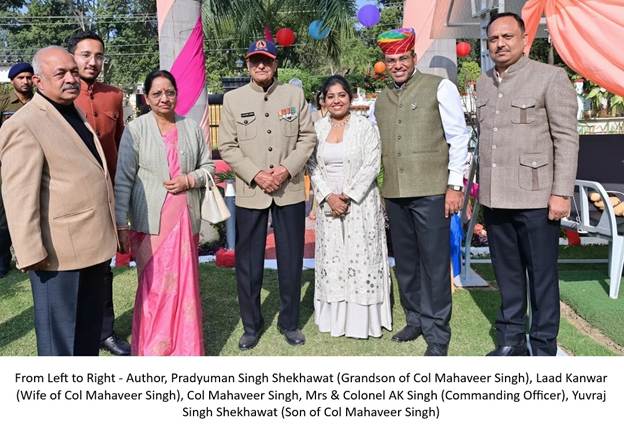
No tribute to Colonel Mahaveer would be complete without mentioning his wife, Mrs. Laad Kanwar. She was the quiet backbone of the family, the anchor that held everything together. She cared for her own children and for us – the real rogues – with such warmth and affection that none of us can ever forget. In her, we found not just the Commanding Officer’s wife, but a mother figure who made the Regiment feel like home. In the legacy of Colonel Mahaveer, it wasn’t just the professional standards that stayed with us – it was the profound realisation that a Regiment is not just a unit of soldiers, but a family bound by faith, laughter, and a leader who leads from the heart.

Veteran Brigadier Rajan Anand: The Architect of confidence

My first tenure as a Battery Commander was shaped under the guidance of Veteran Brigadier Anand – a man who taught me the true nuances of command and leadership. Flamboyant by nature, he was the architect of confidence. His leadership mantra revolved around two deceptively simple yet profound principles: delegation and absolute trust. He empowered his subordinates with unwavering confidence, often saying, “When I have Battery Commanders like you, why should I worry?” Those words instilled in us a self-belief that carried us through many daunting challenges.

An exceptional instructor, Brigadier Anand had a gift for transforming everyday moments into a professional master class. During long drives and training exercises, he seamlessly imparted his deep knowledge of tactics and leadership, enriching our understanding without us even realising we were being taught.

Years later, when I assumed command, I found my own playbook filled with his wisdom – especially his mantra of working smart over merely working hard, granting subordinates the freedom to fail (and thus, to learn), and above all, maintaining a sense of calm and stress-free poise at the helm.

Behind this remarkable officer stood his wife, Mrs. Meenu Anand – a bubbly and warm companion who complemented him perfectly. Marina and I remain forever indebted to her for the gentle, patient way she helped Marina transition from a university student into the role of an army spouse. Mrs. Anand was supportive, diplomatic, approachable, and resilient – qualities that made her not just a Commanding Officer’s wife, but a guide and a friend to all who had the privilege of knowing her.

Late Veteran Brigadier KN Thadani, Visisht Seva Medal (Kiku): The Mentor and Mountaineer

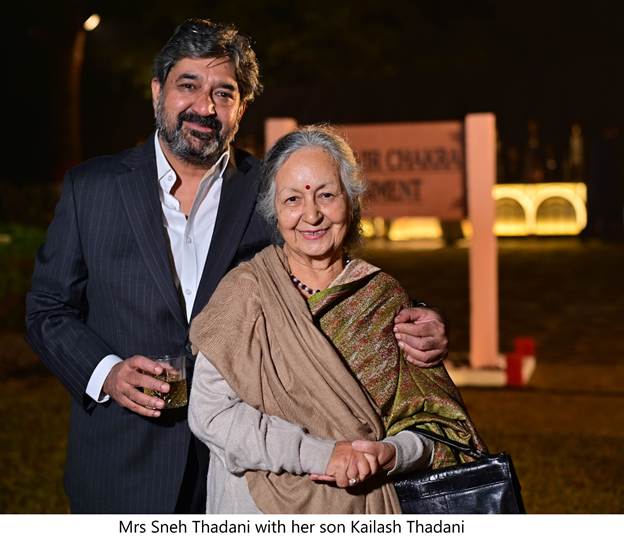
In 1985, Brigadier KN Thadani and his wife Sneh moved into the Officers’ Mess of our Regiment in Gurgaon while their home was being constructed. Though recently retired, Brigadier Thadani had deep regimental connections, having led the unit during the 1971 war. For me, then a young bachelor Lieutenant and the only regular mess member, this was an extraordinary opportunity to interact closely with a senior officer, a rarity in the Army’s hierarchical structure. Over countless meals and conversations, the Thadanis imparted wisdom not only on soldiering but also on spirituality and life, profoundly shaping the my professional and personal outlook.

I fondly recall those days and often find myself reminiscing about the couple and our times together. I look back at those Sundays with a lot of nostalgia. Brigadier and Mrs. Thadani whisked me away to the DSOI at Dhaulakuan for afternoons of cards and tambola. The day invariably culminated in dinner at some classy Delhi haunt, where the laughter was as rich as the food and the company even better. In those moments, I wasn’t just a subaltern of the unit; they treated me as family.

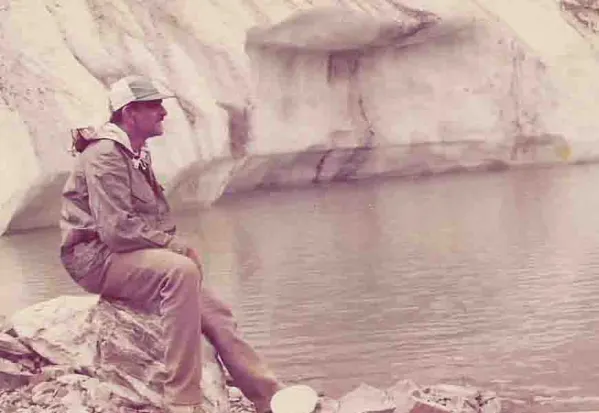
Beyond his military acumen, Brigadier Thadani was a skilled mountaineer – passionate about his craft and deeply knowledgeable about the mountains he loved. While commanding 3 Artillery Brigade in Leh, he led the very first expedition of sixteen soldiers to conquer the Apsaras I peak. The Apsaras group of mountains, lying to the north of the Teram Shehr Glacier, forms a large massif with its ridge line running from West to East. That he chose to lead from the front, even in the rarefied air of the Himalayas, was entirely in keeping with the man I had come to admire – a leader who never asked of his men what he would not do himself. He remains, in my memory, as steadfast and towering as the mountains he loved.

The Living Legacy: Why We Remember

We remember our Commanding Officers because they are far more than mere figures of authority; they are the living embodiment of leadership and the absolute accountability upon which the soul of military service rests. They are the steady hands that guide us through our darkest hours, making the profound decisions that shape our very destinies and nurturing within us an enduring sense of purpose.

Long after we have marched beyond the reach of their command, their influence remains indelibly woven into the fabric of our character. It becomes part of our professional DNA, quietly defining the persona of who we are and the leaders we eventually become. In the end, we do not just remember them – we carry them with us.

A Bond Forged in War and Peace: Remembering Gunner (Driver) VK Premachandran

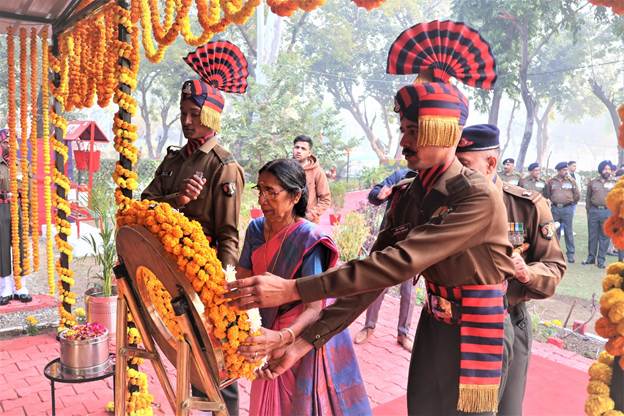
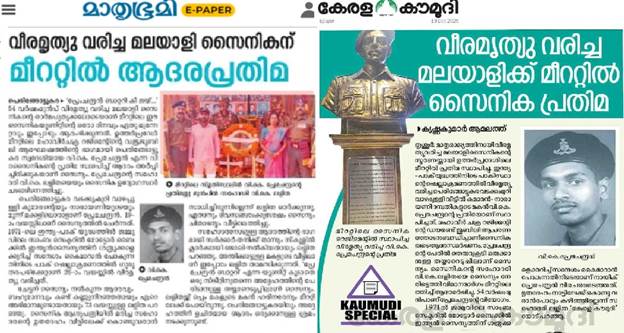
On 16 December 2025, during the solemn wreath-laying ceremony at the Quarterguard, I had the privilege of meeting Mrs. VK Lalitha, the younger sister of Gunner (Driver) VK Premachandran, who made the ultimate sacrifice during the 1971 Indo-Pak War.

Her presence at the regimental function was no accident. It was the result of painstaking efforts by Colonel AK Singh, the Commanding Officer, and Honorary Captain M Sreedharan, who traced Mrs. Lalitha and ensured she could attend the Diamond Jubilee celebrations of our Regiment. In doing so, they bridged decades of separation and brought a family’s sacrifice back into the collective memory of our Regiment.

Meeting his sister, Mrs. Lalitha, after all these years, was a moment of profound connection. In her eyes, I saw the reflection of that young soldier who rode into history, trusting his motorcycle and his destiny. And in her presence at our Diamond Jubilee, I witnessed the unbroken chain of gratitude that binds a regiment to the families of those who gave everything.

I was only 15 when my brother passed away at 23. We had lost our father years earlier, so our brother had become our guardian. After his death, our mother received a lifelong pension, and the Government of Kerala honoured his sacrifice by employing me in the Education Department,” she shared, memories flickering in her eyes.

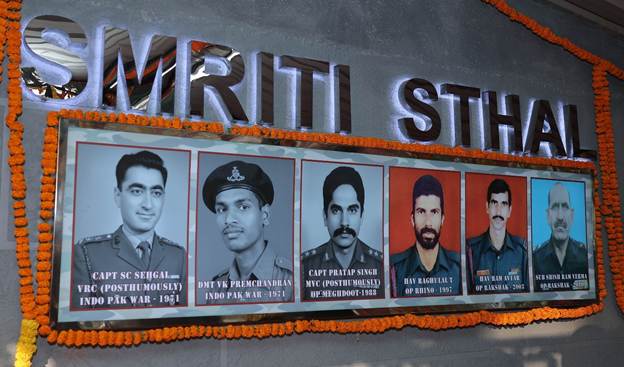
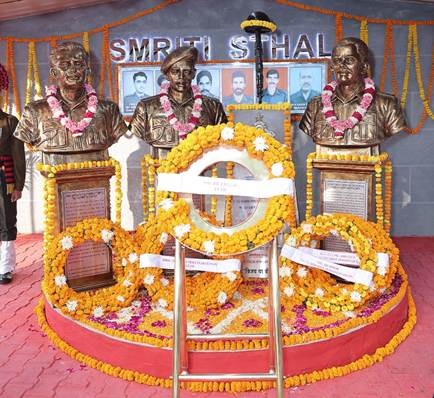
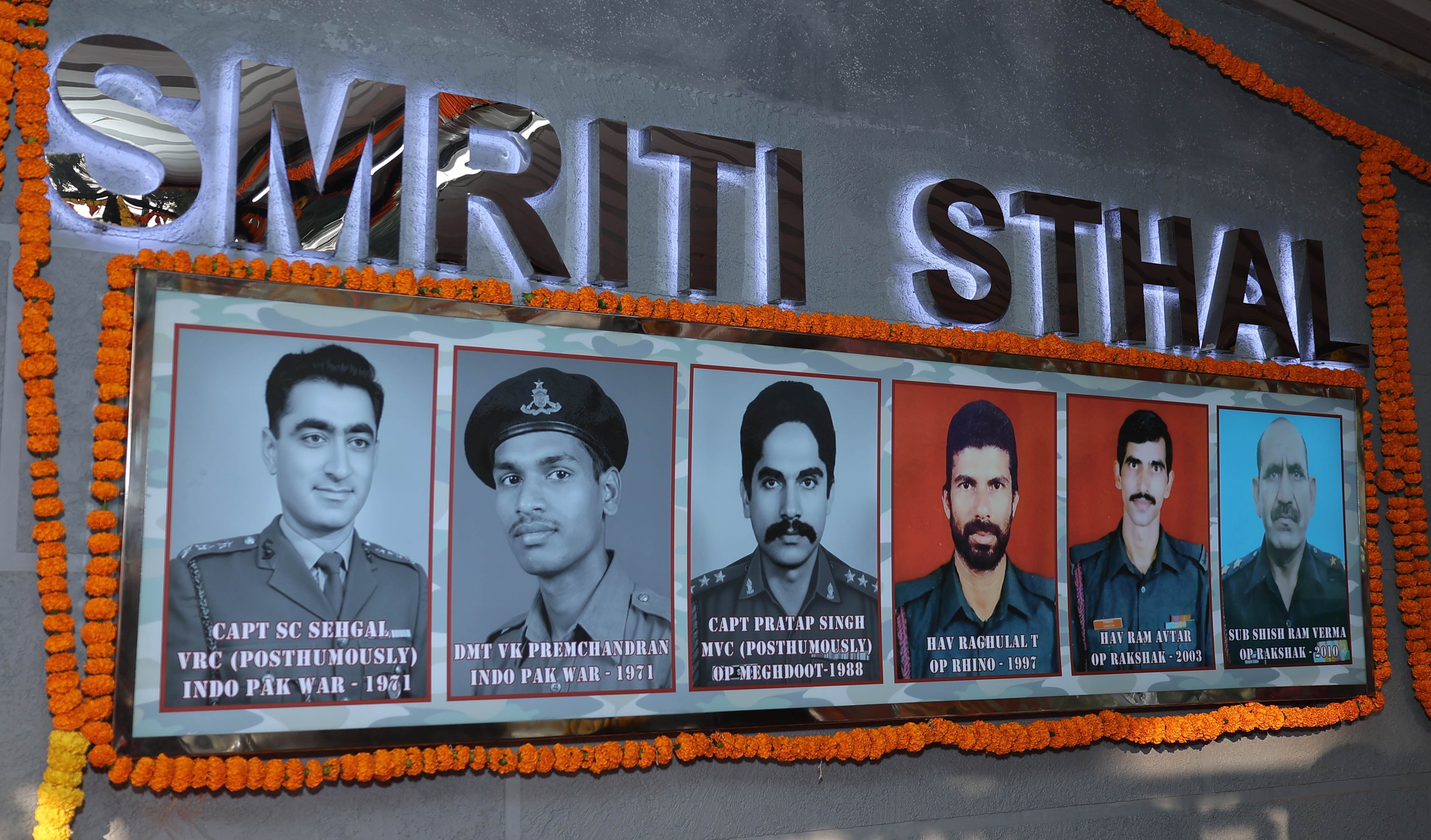
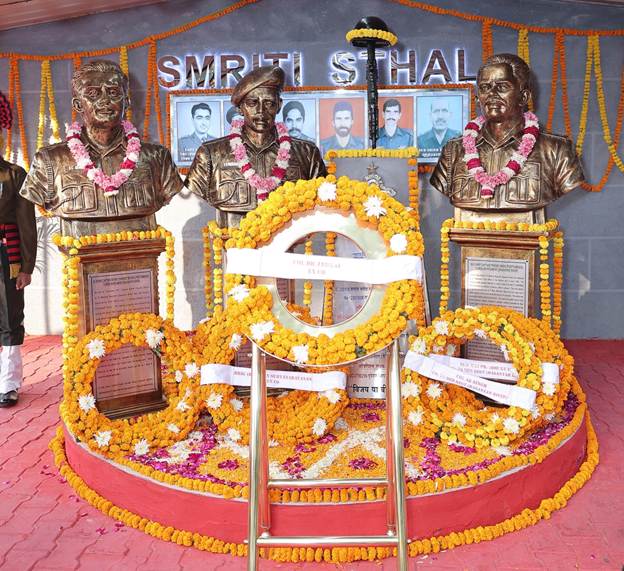
Our Regiment fulfilled a long-cherished resolve. A bust of Gunner Premachandran was installed at the Smriti Sthal of our War Memorial – a tribute that many jawans had quietly voiced during previous Raising Day gatherings. They felt deeply that the young Despatch Rider, who had carried the Fire Plan through relentless shellfire, deserved a permanent place among the Regiment’s honoured fallen.

When the bust was unveiled, it was more than stone and metal – it was the Regiment’s promise kept. A solemn affirmation that his name and his spirit will stand guard with us for all time.

As the veil was drawn back, Mrs Lalitha stepped forward and laid the first wreath. In that moment, the bond between a family’s sacrifice and a Regiment’s gratitude was sealed forever. Gunner Premachandran’s story is not just a memory – it is a legacy. And as long as the 75 Medium Regiment (Basantar River) marches, that legacy will march with us.

The Act of the Sacrifice

Let me now turn the clock back and dig deep into my own memory of Gunner Premachandran – a soldier whose name is etched not only in official citations but in the hearts of all who knew his story.

In 1985, Late Brigadier KN Thadani and his wife, Mrs. Sneh Thadani, took up residence in the Officers’ Mess of our Regiment, then stationed in Gurgaon. He had retired from the Army a few months earlier, but his connection to the Regiment ran deep.

The Thadanis were constructing their home in Gurgaon, and it was only natural that they move into the Mess during this interim period. That was my first encounter with this remarkable couple – an encounter that left an indelible mark on me.

In the hierarchical world of the Army, it is exceedingly rare for a young subaltern to interact closely with a Brigadier, retired or serving. I, then a Lieutenant and the sole bachelor officer, was the only regular dining-in member of the Mess. As messmates, I had the privilege of spending considerable time with Brigadier Thadani and his gracious wife, Sneh. Their presence transformed the Mess into a home, and their stories became my window into the Regiment’s glorious past.

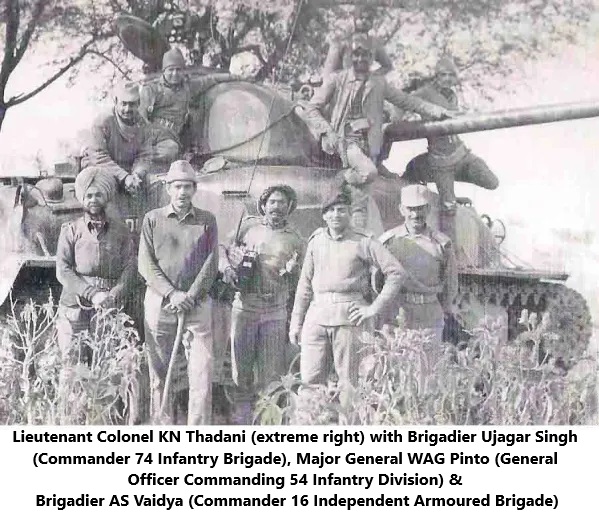
Years before, in 1971, as a Lieutenant Colonel, he had led our Regiment into the crucible of war. It was under his command that our Regiment provided critical artillery fire support to the legendary 17 Horse – The Poona Horse – during the famous Battle of Shakargarh – a battle forever remembered for the supreme sacrifice of Second Lieutenant Arun Khetrapal, Param Vir Chakra.

Basantar Day: A Time to Remember

16 December 1985 – Basantar Day – arrived, a day we annually commemorate to honour the Regiment’s achievements during the 1971 Indo-Pak War. It is a day of pride and reflection, a time when the sacrifices of our brethren are remembered with reverence. Among those sacrifices was that of Captain Satish Chandra Sehgal, who made the ultimate sacrifice and was posthumously awarded the Vir Chakra.

Lieutenant Colonel KN Thadani served as the Artillery Advisor to Brigadier AS Vaidya, Maha Vir Chakra (who later rose to become General and Chief of the Army Staff), Commander of the 16 Independent Armoured Brigade. In this pivotal role, he demonstrated exceptional professional acumen in planning and executing artillery fire support during critical operations. His strategic foresight, coupled with unwavering courage and exemplary leadership under fire, proved instrumental to the brigade’s success. For his distinguished contributions, Lieutenant Colonel KN Thadani was awarded the Visishta Seva Medal – a recognition of his invaluable service and the high esteem in which he was held by his commanders.

That evening, Brigadier Thadani shared a memory that had clearly stayed with him – a story of trust, choice, and loss.

Gunner Premachandran and His Motorcycle

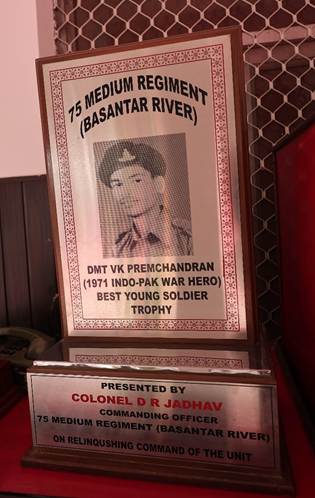
He spoke of Gunner VK Premachandran, his Despatch Rider during the war. In those days, radio communications were not advanced enough to transmit lengthy documents. The Despatch Rider was the vital link between the Commanding Officer and the Fire Direction Centre, carrying critical Fire Plan documents on his motorcycle through shell-torn terrain.

On the day of the battle in support of The Poona Horse, Brigadier Thadani handed Premachandran the Fire Plan documents. Enemy shelling was intense. Concerned for his safety, he instructed the young Gunner to load his motorcycle onto a truck and travel that way to the Fire Direction Centre.

Premachandran looked at his Commanding Officer and said, “Sir, I trust my motorcycle. It will not betray me. All these days, through heavy shelling, I have ridden it and completed every task entrusted to me. I will ride my motorcycle.”

Brigadier Thadani paused, his eyes moistening as he recalled the moment. “Had I insisted that he go in a truck...” His voice trailed off. Then, quietly, he added, “I was too carried away by his trust in his machine.”

Gunner Premachandran rode his motorcycle that day and completed the task entrusted to him. He did not return.

The Weight of Memory

That evening in 1985, I understood something profound about leadership and its burdens. Brigadier Thadani carried the weight of that decision – not as guilt, but as a memory that time could not erase. He had honoured a soldier’s faith in his machine, in his own ability. And yet, the cost was immeasurable.

Years later, I often think of that conversation. It taught me that leadership is not always about giving orders; sometimes it is about respecting the spirit of those who serve. Gunner Premachandran’s trust in his motorcycle was not naivety – it was the essence of a soldier’s resolve. And Brigadier Thadani’s willingness to share that story, with tears in his eyes, was a testament to the bond that connects a Commanding Officer to every man he leads.

Today, as we remember the valour of 1971, let us also remember Gunner Premachandran – who rode his motorcycle into history, trusting his machine, his Commanding Officer, and his destiny. And let us remember Brigadier Thadani, a leader who carried that trust in his heart to his grave.

Kerala Media

We are deeply grateful to the media in Kerala – both print and visual – for covering the event in such detail. Their thoughtful reportage ensured that the stories of sacrifice and valour reached every corner of the state.

A Tribute to Late Captain Pratap Singh, Maha Vir Chakra (Posthumous): A Tale of Valour, Sacrifice and an Emotional Reunion

The Occasion: Diamond Jubilee of 75 Medium Regiment (Basantar River)

In December 2025, I travelled to Delhi to attend the Diamond Jubilee celebrations of the 75 Medium Regiment – a momentous reunion of serving officers, soldiers, and veterans of a Regiment bound by shared history and sacrifice.

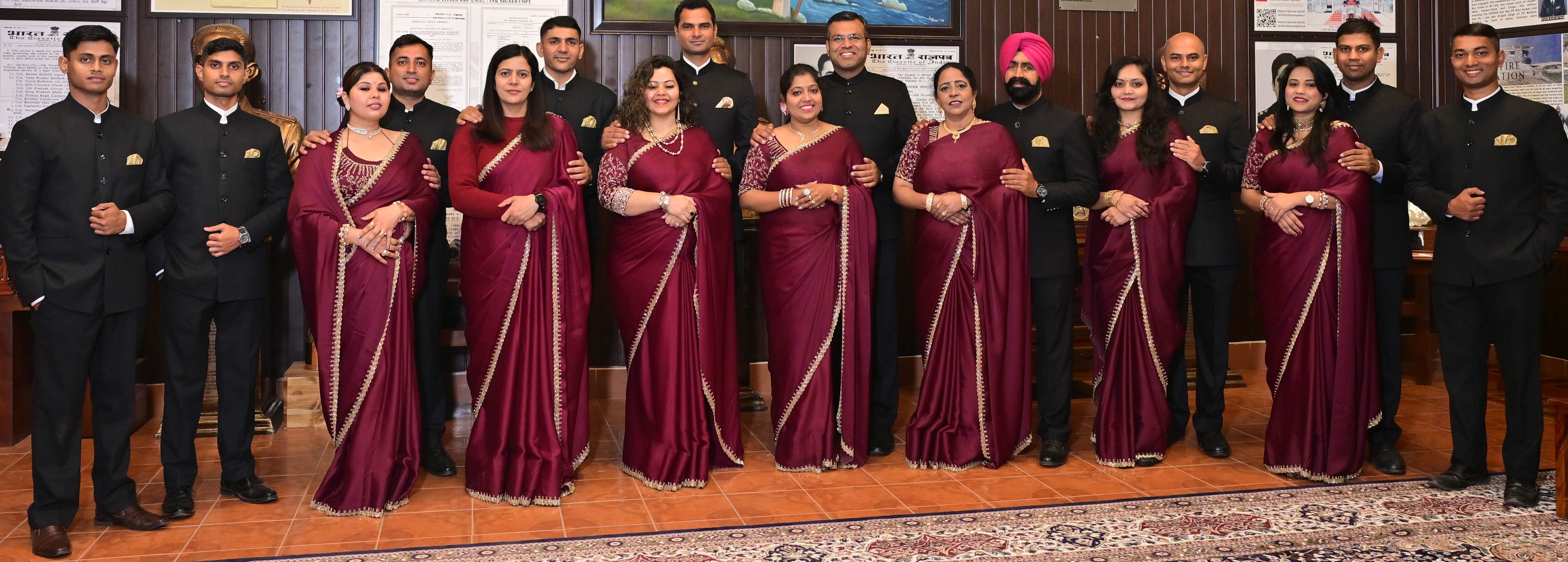
The Commanding Officer, Colonel AK Singh, along with every officer and soldier and their families of the Regiment, left no stone unturned to ensure the occasion was a grand and memorable one for all of us.

Returning to my parent Regiment for its Diamond Jubilee was not just a visit; it was a pilgrimage to the very soil where I took my baby steps as an officer. Stepping into the Regiment’s premises, I was instantly overwhelmed by a flood of emotions that spanned decades. This is the Regiment where I shed blood and sweat, where the raw potential of youth was forged into the resolve of a soldier.

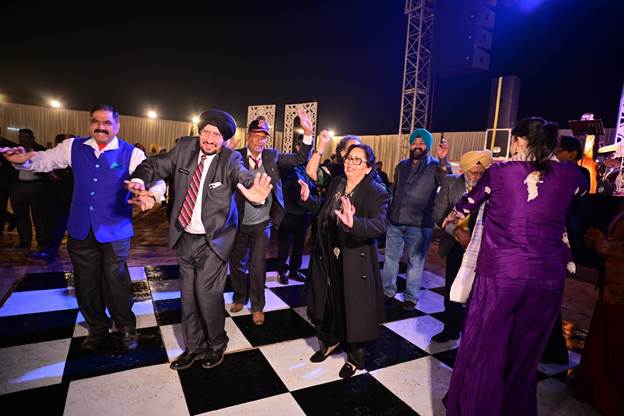
The reunion was a powerful tapestry of the past and the present. When old comrades met, we did not merely shake hands; we hugged like long-lost brothers, bound by a silent code and shared hardships that time cannot erode. In those embraces, the years of separation vanished, replaced by the unbreakable kinship of difficult days and the cozy warmth of messmates.

Watching the present torchbearers – the sharp, young officers now carrying the colours – filled me with bittersweet nostalgia. Seeing them, we saw reflections of our younger selves, full of fire and zeal. It was a proud realisation that while facing change, the soul of the Regiment remains steadfast. I felt an inexplicable pride in my chest, having contributed to a legacy that continues to shine brilliantly sixty years on.

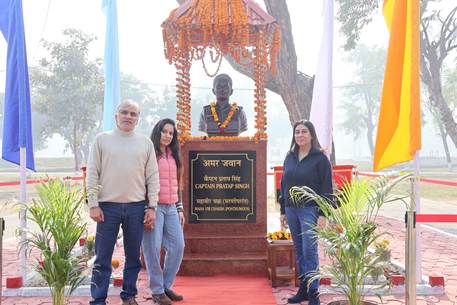
Amidst the grand festivities and warmth of camaraderie, the most profound moment for me was meeting Shakti Singh – the younger brother of Captain Pratap Singh. Our paths had not crossed for four decades, since 1985 when our Regiment was stationed in Delhi. The memory remains vivid: Pratap and I, both young bachelors at the time, were wandering through the bustling lanes of Connaught Place. Suddenly, Pratap’s eyes widened, and he urgently gestured toward our vehicle. “Sir, get into the Jeep – let’s get out of here!” he exclaimed. He had spotted Shakti nearby with Jyoti. In a typical display of conservative brotherly tact, Pratap didn’t want to disrupt the status quo or cause Shakti any needless embarrassment by revealing that he knew about the secret relationship. We made a swift tactical retreat, a moment of lighthearted protection that I carry with me ever since.

The fleeting image of Shakti and his companion, Jyoti, once seemed frozen in time – a distant memory from decades ago. On the morning of December 16, 2025, I found myself face-to-face with them again. Seeing Shakti and Jyoti now, forty years later, felt like bridging a lifetime of silence, turning a humorous memory of youth into a deeply moving connection to the past. Now they are the proud parents of Shrishti Pratap Singh; their lives are a testimony to a bond woven from love and shared history. Shrishti bears a name of deep significance, chosen to honour her father’s lifelong hero, Captain Pratap Singh. Jyoti, the pretty and petite young secret of those carefree days was now a woman of substance, a distinguished Judge of the Delhi High Court. 

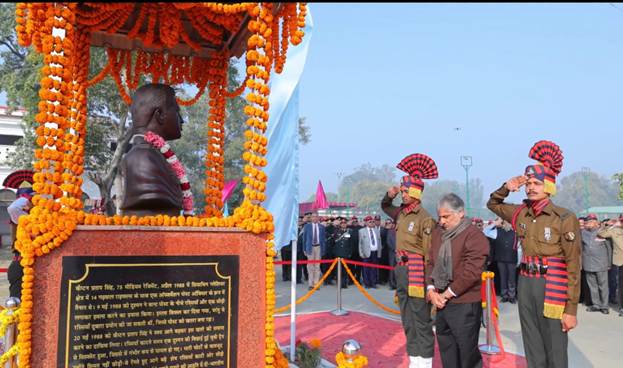
History returned home on 16 December 2025, as a new war memorial was unveiled by Shakti at the former Sikh Regiment Lines in Meerut. Commemorating Basantar Dayalongside the Regiment’s Diamond Jubilee, the inauguration was a poignant milestone in our heritage. Set against a backdrop of deep Regimental significance, the memorial serves as a permanent testament to our lineage.

Against the backdrop of grounds steeped in martial heritage, the unveiling transcended the ceremonial; it was a symbolic homecoming, a return to the very soil where generations of soldiers had marched, trained, and departed for battle. On a day already consecrated by history, this tribute served as a powerful reaffirmation of the Regiment’s unbroken covenant with its past – a solemn nod to the valour that binds every member of The Basantar Family, past and present, in an unending chain of sacrifice and pride.

A Tearful Embrace: The Weight of Remembrance

The day’s ceremonies began with a solemn wreath-laying ceremony at the Quarter guard. We paid homage to the brave sons who made the ultimate sacrifice for the motherland: Captain SC Sehgal, Vir Chakra and Gunner Premachandran from the 1971 Indo-Pak War; Captain Pratap Singh, Maha Vir Chakra; and Subedar Sheesh Ram, who fell on the icy heights of the Siachen Glacier.

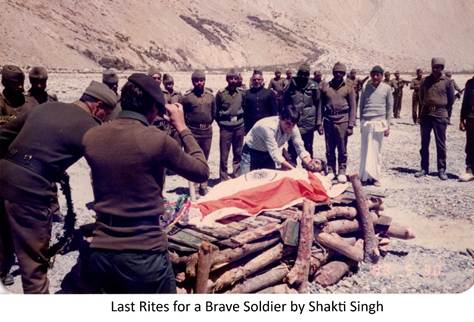
After the ceremony, Veteran Colonel Mahaveer Singh – our Commanding Officer from 1983 to 1988 – approached Shakti Singh. Without a word, they embraced each other. Tears rolled down the octogenarian’s cheeks. It was a moment of silent, profound emotion that spoke volumes.

What lay behind that tearful hug? To understand the emotion, we must rewind to1988.

The Choice: Siachen or Brigade Headquarters

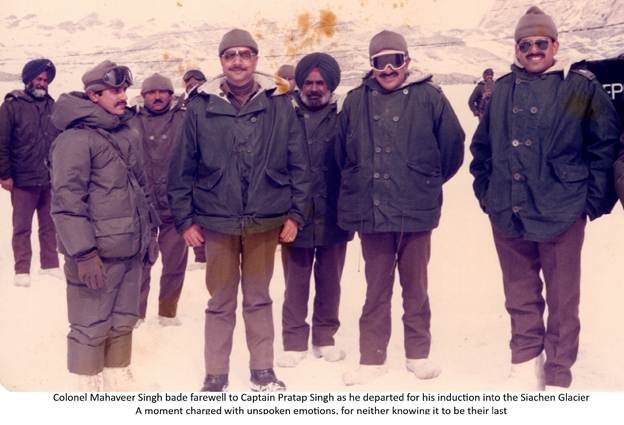
In December 1987, Colonel Mahaveer summoned Captain Pratap and me. Our Regiment was to induct its first Observation Post team into the Siachen Glacier in March 1988. One of us would lead that team and the other would be attached to Brigade Headquarters as an administrative staff officer for six months. The choice was ours to make – or so it seemed.

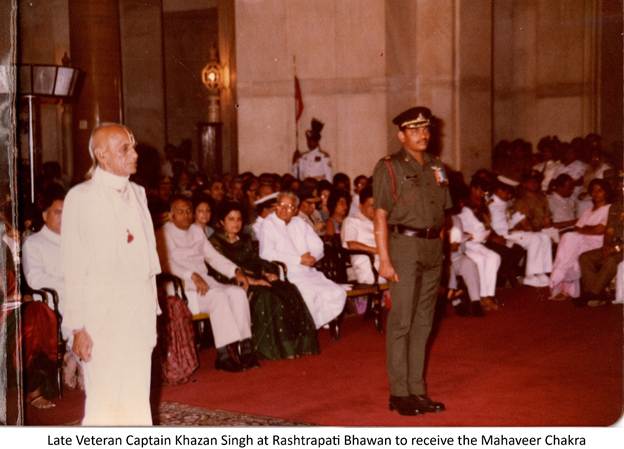
Captain Pratap, a Short Service Commission officer commissioned in September 1983, had not opted for a permanent commission. He had decided to take release from the army after completing five years of service. In January 1988, armed with his release application, Pratap walked into Colonel Mahaveer’s office. He made a compelling case: he wanted to participate in one final operation before his release, to serve his country in the field one last time. He convinced Colonel Mahaveer that he should lead the Siachen team. I, left with no choice, therefore, moved to the Brigade Headquarters.

The Supreme Sacrifice

On 27 May 1988, Brigadier DS Chowdhary, our Brigade Commander, called me to his office. His face was grave. He broke the news: Captain Pratap Singh had laid down his life while performing his duties on the glacier.

I immediately called our CO, Colonel Mahaveer. The line was silent. He did not utter a word. I rushed back to the Regiment and went straight to his office. It was the only time I ever saw tears in his eyes.

A Family of Warriors

Lieutenant Pratap Singh joined our Regiment in April 1985, when we were stationed in Delhi. Two months earlier, he had lost his elder brother, Squadron Leader Gajraj Singh, a Jaguar Test Pilot of the Indian Air Force, in a tragic air crash in Rajasthan. On compassionate grounds, Lieutenant Pratap was posted to Delhi to care for his aging parents, who lived in Basai Darapur village, near Punjabi Bagh – the reason why he sought release from the army. His family carried a proud military legacy: his elder brother, Colonel Ran Singh, was serving with an Air Defence Regiment of the Indian Army – now settled in the US, while his father, Captain Khazan Singh, was a veteran of the Second World War.

The Citation: A Story of Unparalleled Gallantry

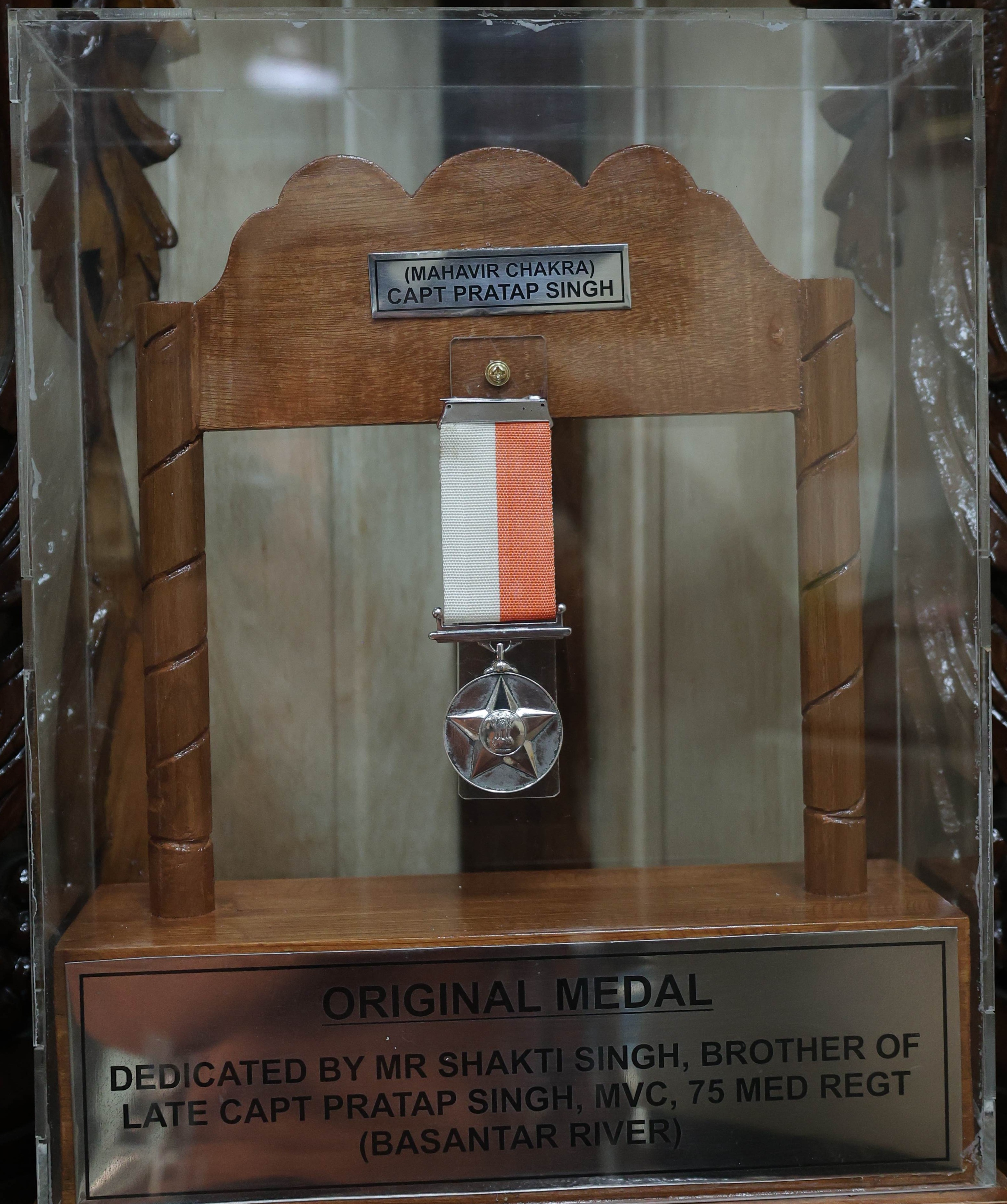
On 26 January 1989, the nation recognised Captain Pratap Singh’s supreme sacrifice, posthumously awarding him the Maha Vir Chakra, India’s second-highest gallantry award.

The citation read:

“Captain Pratap Singh was deployed as an Observation Post Officer in the Siachen area in April 1988.

The adversary made repeated attempts to retake a key post vital for our defences of Siachen, without success. Their last attempt to take the post was on 09 May 1988, when they fixed four ropes and a ladder-system on the ice-wall below the post for the purpose. This attack was successfully beaten back by our forces. The ropes and the ladder-system fixed by the adversary, however, remained in position, making it possible for them to be used again in fresh attempts.
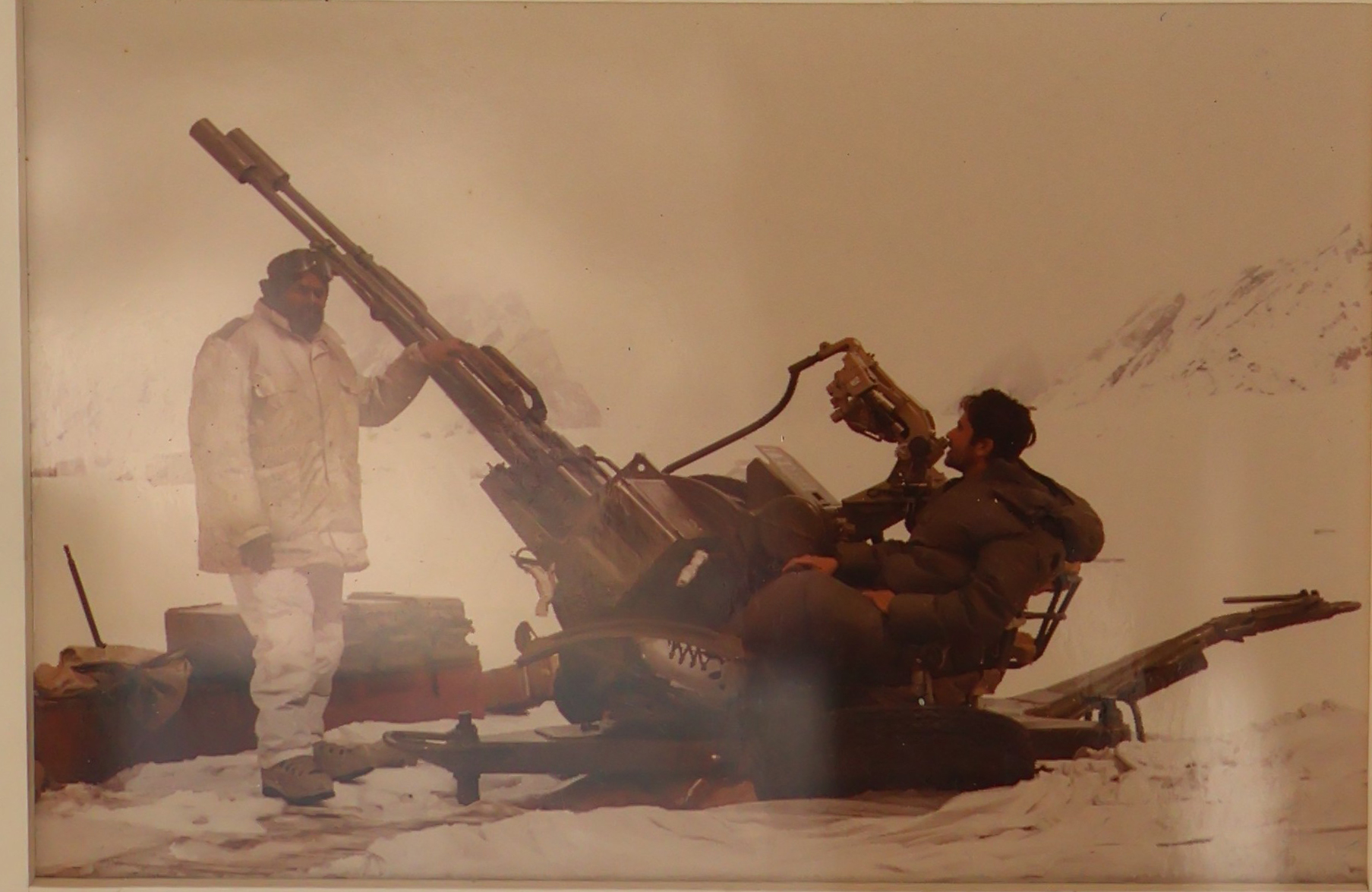
It was imperative that the fixed ropes be cut and the ladder removed to prevent further attempts. On 18 May 1988, Second Lieutenant Ashok Choudhary successfully reached and cut four of the ropes. On 26 May 1988, it was decided to cut the remaining two ropes and remove the ladder. Captain Pratap Singh undertook this mission with the help of a jawan, descending the ice wall.

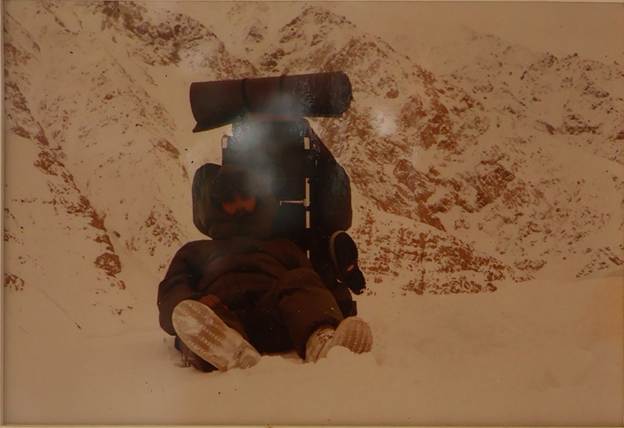
On reaching the location, Captain Pratap Singh discovered a large quantity of ammunition and grenades lying at the head of the ropes. While examining them, a booby-trapped grenade detonated, severely wounding his right arm and chest. Despite his grievous injuries, the brave officer crawled forward to the fixed ropes and cut them with his knife. He then unfixed the ladder system and let it fall down the ice wall. Inching back to his own rope to ascend, he collapsed due to his severe wounds and made the supreme sacrifice for the nation.

Captain Pratap Singh thus displayed conspicuous gallantry and extraordinary valour in eliminating a grave threat to a key post in the vital defences of the Siachen Glacier, at the cost of his life.”

Epilogue: A Legacy of Courage

That morning in December 2025, as Colonel Mahaveer held Shakti Singh in a tearful embrace, the years melted away. The pain of loss, the pride in valour, and the bonds of brotherhood that transcend time converged in that single moment.

Captain Pratap Singh’s story is not just one of sacrifice; it is a testament to the spirit of a soldier who chose one last mission over comfort, who faced certain death with unwavering resolve, and whose name remains etched in the icy heights he gave his life to defend.

For those of us who knew him, his brother Shakti, and the Regiment that carries his memory forward, Captain Pratap Singh lives on – not just in citations and awards, but in the hearts of all of us who understand soldiering in its fullest sense.

Most of you would wonder what made Captain Pratap Singh choose the difficult Siachen stint over a cozy staff job with only months remaining for his release from the army. For me who knew his pulse, it was a natural Pratap Singh decision. A decision of an altruistic leader. A decision driven by a profound duty-bound mindset and warrior first ethos. He did not want to be confined to the monotony of an administrative office. Given the opportunity, he sought a high adrenaline psychological peak to self-actualise and define his legacy. To Pratap it was all too natural.  For bureaucrats and politicians who sit in profound judgement over death/ disability compensation of soldiers and veterans, such decisions are simply far too difficult to comprehend.

What about the emotions of Col Mahaveer Singh the Commanding Officer?

In the terrible loneliness of command, he must have faced a tremendous psychological tug of war in acceding to the choice made by Captain Pratap Singh. His grief was not that of a Commanding Officer losing an officer, but the grief of a father who quite unwillingly allowed his son to walk into fire. 

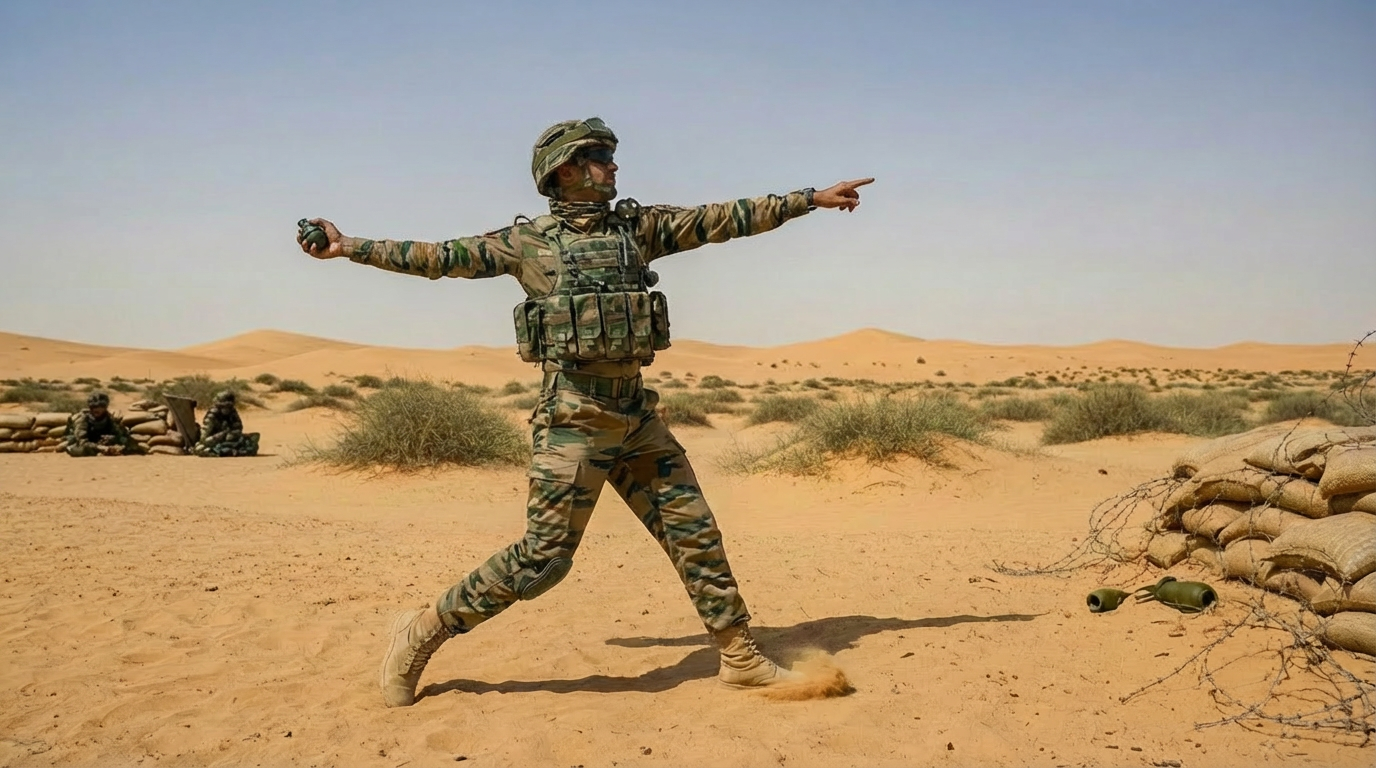
My First Grenade Throwing Practice: Lessons in Leadership and Trust

The year was 1983. I was a young Second Lieutenant, and our Regiment -75 Medium Regiment (Basantar River) – was deployed at the Pokhran Field Firing Ranges in Rajasthan. The same arid expanse that witnessed India’s nuclear dawn. We were there for our annual gunnery exercises, firing the medium guns that were our lifeblood.

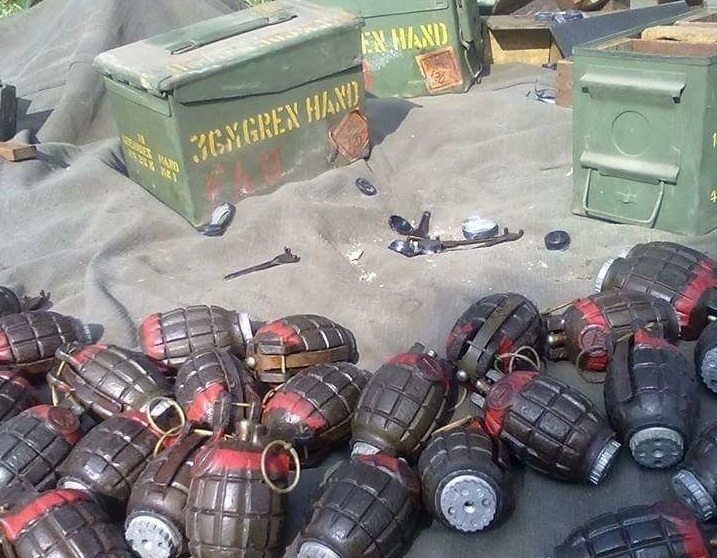
After the firing concluded, our Commanding Officer, Colonel Mahaveer Singh, assigned me a task that would test not just my technical knowledge but my ability to lead and instill confidence. I was to conduct Grenade Throwing practice for twenty soldiers – mostly raw recruits. My assistants were two Havildars – M Sreedharan & NT Mathew – and I was allotted 60 High Explosive (HE) Grenade No. 36.

I looked at the young men assembled before me. Their faces betrayed a quiet fear. The fear of the unknown.  The grenade, in regimental lore, had acquired monstrous proportions. Myths swirled around it – tales of unpredictability, of destruction that could turn upon the thrower. My first battle was not against any hypothetical enemy; it was against that fear. My own emotions when I first handled a live grenade back in the academy flooded my consciousness and I was acutely aware that at the end of the day if that fear still lingered in the minds of my boys, I would have failed in my task. 

The Weapon: A Legacy of William Mills

The grenade we were to handle was officially designated the Grenade Hand No. 36M. It was a direct descendant of the Mills Bomb, patented and manufactured by William Mills at the Mills Munition Factory in Birmingham, England, in 1915. Its distinctive pineapple-shaped, cast-iron body was grooved not primarily for fragmentation – contrary to popular belief – but for ease of grip. The waterproof variant, # 36M, had served the British Army through two World Wars.

A bit of theory is always good before practice. And so I began

This was a high-explosive, anti-personnel fragmentation weapon. It could be hand-thrown or rifle-launched. Its central striker was held in place by a close-hand lever, secured by a pin. Upon release, a spring-loaded striker ignited a time-delay fuse. Originally set at seven seconds, combat experience in the Battle of France (1940) proved this delay dangerously generous – defenders could escape or even throw it back. It was reduced to four seconds – and that was the margin between life and death – the 4 seconds that transformed a raw recruit into a seasoned soldier.

 Fear Wrapped in a Handful of Serrated Metal

I began with the fundamentals. I explained the mechanism with deliberate calm: hold the lever down, pull the pin with the opposite hand, throw. Release ignites the fuse. Four seconds. Detonation.

Then came the questions. One soldier, earnest and anxious, asked, “Sir, in the movies, they bite the pin off. Is that correct?”

No,” I said. “You pull it with your fingers. Your teeth are not tools. And remember there is nothing to panic once you pull the pin. It’s perfectly safe so long as the safety lever is in place, firmly held in your hand.”

Another asked, voice barely steady: “Sir, what happens if you drop a primed grenade?”

I looked at the grenade in my hand, lever pressed, pin still in place, I threw it with deliberate force on the desert sand. “Nothing,” I said.

The silence that followed was absolute. In that moment, they understood this was not magic. It was mechanics. It was training. It was trust.

The Practice: Stone to Steel

We began with stones—roughly the size and weight of a grenade. Ideally we should have used drill grenades, but we didn’t have any and so had to make do with stones. They practiced the motion: right arm straight from behind, like an over-arm bowler in cricket. High trajectory. Accuracy over distance. The grenade is a close-quarter weapon; it must clear obstacles and land precisely. A long throw is useless if it misses its mark.

I drilled them on the sequence:

  • Grip the grenade in the right hand, base down, lever under the fingers, thumb below the filling screw.
  • Left hand through the ring of the safety pin. Face the target. Turn right. Balance.
  • Pull the pin downward and backward. Ensure the pin is fully drawn.
  • Keep the pin. Return it to the Havildar Mathew for accounting.
  • Eyes on the target. Left shoulder pointing. Right knee slightly bent.
  • Swing back, bring the arm upright and over. Deliver.
  • Observe where it falls. Then take cover.

The Transformation

When the moment came for live throwing, the shadow of fear still lingered on their faces. I asked for volunteers who would throw the first live one. Two hands came up quick fast and then a third very hesitantly. Not bad, I told myself. But I knew instinctively I must do it first. And then the three volunteers. So it was.  They threw. They ducked. I pulled them up, made them watch the arc of the grenade, made them see where it fell. Then we ducked together, and the ground shook.

After the first round, something had changed. The visible anxiety had gone. The second round was steadier. The jerky movements changed to a flowing motion. By the third, their faces no longer carried fear—replaced by confidence. They had faced the monster and found it was only metal and mechanics, something that could be mastered by practice and nerve.

What I Learned

That day at Pokhran, I learned that leadership is not about issuing orders. It is about standing beside your men, holding the same weapon, facing the same risk. It is about answering foolish questions without contempt, and dangerous ones without evasion. It is about throwing the grenade first. I also knew that I had earned the unquestioning trust of these twenty boys and many more by word of mouth. I felt immensely happy and allowed myself a small pat. Well done Reji.

Decades later, I remember the weight of that cast-iron body in my palm, the four-second burn, the thud of detonation. But more than that, I remember the faces of twenty young soldiers who learned, in one afternoon, that fear is real but not insurmountable—and that confidence is earned, one throw at a time.

(Images – AI generated)

Beyond the PSA: A Personal Journey with BPH and the Importance of Men’s Health After 50

Men’s pelvic health is as critical as mental and cardiac well-being, especially after the age of 50. It is a cornerstone of overall quality of life that is often overlooked until a crisis strikes. My own journey with Benign Prostatic Hyperplasia (BPH) began not with an emergency, but with a routine blood test—a story that underscores the vital importance of proactive healthcare for men.

The First Sign: A Routine Test

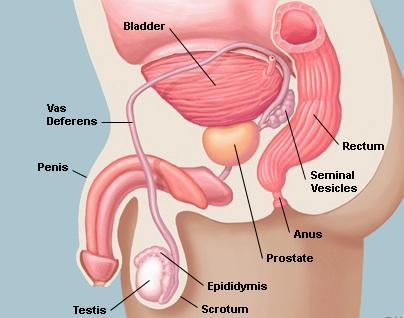
In 2007, a routine quarterly check-up—a benefit covered under Canada’s healthcare system for managing my diabetes—revealed elevated Prostate-Specific Antigen (PSA) levels. My family doctor recommended a follow-up invasive ultrasound, a 20-minute diagnostic procedure involving a transrectal probe. The result was clear: Slight Enlargement of the Prostate, or BPH.

The PSA test, often associated with cancer screening, measures a protein produced by the prostate. Its “normal” range increases with age, and elevated levels can signal benign conditions like prostatitis or, as in my case, BPH—a common, non-cancerous enlargement of the gland driven by aging and hormonal changes.

The Wake-Up Call: A Crisis Abroad

The abstract diagnosis became a frightening reality in 2008 while holidaying at Machu Picchu, Peru. I developed acute difficulty urinating. My wife, a pharmacist, initially suspected a Urinary Tract Infection (UTI) and advised increased fluid intake. Within 12 hours, my condition deteriorated dangerously, requiring an emergency dash to a local hospital.

We faced an immediate language barrier; the medical staff spoke only Spanish. Thankfully, Google Translate bridged the gap. The diagnosis was acute urinary retention. Doctors inserted a catheter and drained a staggering 6 litres of urine, providing immense relief. We returned to Toronto with the catheter and collection bag still in place.

Navigating the Canadian Healthcare System

Our son drove us directly from the airport to a Toronto hospital Emergency Room. After confirming the situation was stable, they scheduled an urgent appointment with a urologist for the following Monday.

Dr. Scott, the urologist, conducted a thorough examination. Given my family history—my father had also suffered from BPH—he recommended immediate medication, which is Canada’s first-line treatment. However, I requested surgery to resolve the issue definitively. He agreed and advised me to sit while urinating until the procedure to ensure complete bladder emptying and avoid post-void dribbling.

The Procedure and Recovery: Transurethral Resection of the Prostate (TURP)

The following Monday, I underwent a Transurethral Resection of the Prostate (TURP), a common, minimally invasive surgery. The surgeon accesses the prostate through the urethra, removing the obstructive inner tissue to restore urine flow—no external incisions are made.

Discharged the next day with a catheter, I spent a week in recovery at home. A visiting nurse removed the catheter that Friday. The recovery protocol for the first 4-6 weeks is strict and essential for healing:

  1. Urinary Changes: Frequent urination, urgency, and some dribbling are normal and gradually improve.
  2. Hydration: Drink at least one glass of water per hour to flush the bladder.
  3. Activity Restrictions: No heavy lifting (>5-10 lbs), strenuous exercise, long car rides, or biking to prevent bleeding.
  4. Diet: A high-fibre diet and stool softeners prevent constipation and straining.
  5. Driving/Work: Avoid driving for two weeks; desk work can resume in 2-3 weeks, with physical jobs requiring 4-6 weeks.
  6. Sexual Activity: Abstain for 4-6 weeks. A common long-term outcome is retrograde ejaculation (“dry orgasm”), where semen enters the bladder instead of being expelled.

A Sobering Follow-Up and a Clear Message

At my two-week post-op check-up, Dr. Scott shared a sobering statistic: approximately 66% of Indian senior citizens suffer from BPH. He expressed relief that my condition was benign and not cancerous.

My experience underscores a crucial message for men over 50: do not ignore your pelvic health. A simple PSA test can be the first indicator of an issue. Listen to your body, understand your family history, and advocate for yourself within the healthcare system. BPH is highly manageable but ignoring it can lead to severe complications and emergencies. Prioritizing this aspect of health is not a sign of weakness but of wisdom—ensuring comfort, dignity, and quality of life for years to come.

A Journey of Contrasts

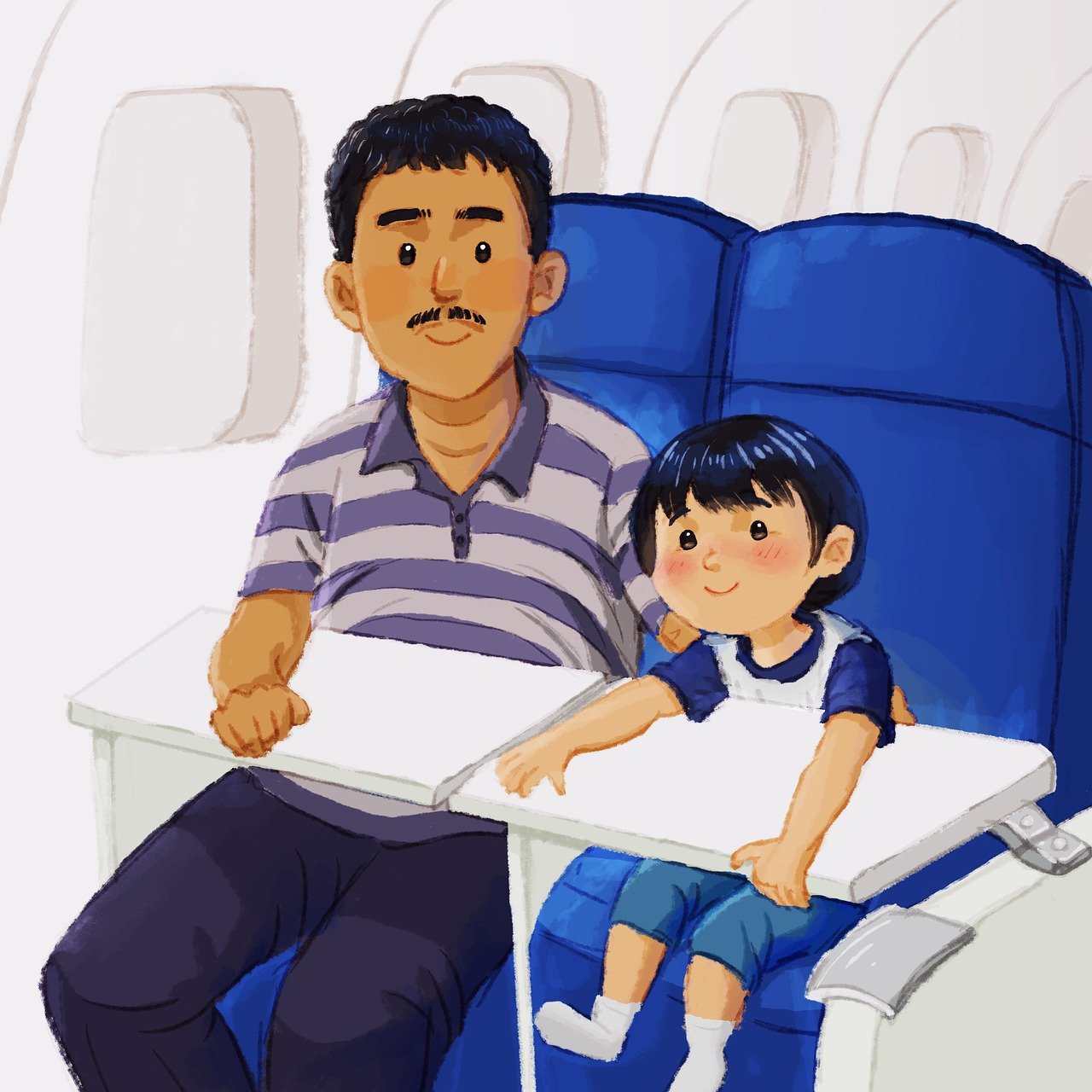
In December 2025, I travelled to India to attend the Diamond Jubilee of our Regiment – 75 Medium Regiment (Basantar River.) My journey from Toronto to Delhi and onward to Kochi aboard Air India’s Boeing 777-300ER was a revealing experience – one that showcased a promising transformation still in progress.

The Tata Turnaround: A New Era Begins

After decades of political interference and red-tape, Air India’s 2023 privatisation and takeover by the Tata Group was a watershed moment. Their ambitious five-year plan to modernise the fleet and enhance customer experience is beginning to bear fruit. The operational improvements were immediately noticeable: proactive updates on email and Whatsapp about gate changes and exceptional baggage tracking across Toronto, Delhi, and Kochi provided an incredible sense of reassurance after long-haul travel.

Onboard Experience: Highlights and Missed Opportunities

Service & Hospitality: The standout feature was the cabin crew. Their service was exceptional – warm, proactive, and genuinely attentive. The welcome ritual of a hot towel and chilled orange juice set the tone for a journey marked by outstanding hospitality.

Dining: The culinary presentation and quality were impressive, easily surpassing many competitors on the Toronto-India route. The well-curated bar selection and thoughtful non-alcoholic options added a touch of sophistication. However, the rigid, religion-based meal labelling—’Hindu Non-Veg‘, ‘Vegetarian Jain‘, ‘Muslim Meal‘ – felt out of place in a modern, global airline. Simplifying categories to ‘Indian Non-Vegetarian’, ‘Vegetarian’, etc., would be more inclusive and pragmatic. After the dinner was served, I took the tomato sauce and inscribed a cross over it and converted it into a Christian meal.  Luckily for me, we were flying over the Atlantic!

Seat & Comfort: Here, the experience faltered. Despite pre-selecting my seat, I found the 2-3-2 configuration on the 777-300ER disappointingly cramped for Business Class. The middle seat strips away any sense of privacy. My own seat’s recline mechanism was faulty, with faded markings on the controls – a clear sign of deferred maintenance. While the cabin crew heroically converted it into a bed, even they couldn’t restore it for landing, necessitating a last-minute seat change. Passenger aircraft seats should be refurbished every 15-20 years; this aircraft’s cabin felt overdue.

In-Flight Entertainment: This system urgently needs an overhaul. The screen resolution was mediocre, the film library dated, and the regional language selection was woefully inadequate – just two Malayalam and one Thamizh film in a sea of Hindi cinema. For a global airline serving the diverse Indian diaspora, this is a significant oversight. No wonder the Thamizhans are up in arms against imposition of Hindi!

The Operational Reality: The Pakistan Airspace Factor

A unique operational quirk defines this route. Due to Pakistani airspace closures, Air India’s Delhi-Toronto flight takes a longer westward path via Vienna for refuelling. The return flight, however, often benefits from strong tailwinds (jet streams) and flies direct. This explains the stopover in Vienna, where passengers remain onboard for two hours, a necessary but noticeable operational constraint.

Verdict: A Strong Contender with Clear Potential

Air India’s Business Class under Tata is a compelling proposition. The core service is excellent, the food is a highlight, and the operational logistics are handled with impressive transparency. It is a marked and welcome improvement.

Would I fly it again? A definite YES, but with clear caveats. Choose your seat carefully – avoid the middle at all costs. Temper your expectations for in-flight entertainment and seat modernity. If those aspects are upgraded to match the stellar service, Air India will not just be a good choice, but a leading one.

The airline is on the right path. It feels like a phoenix still stretching its new wings – a few feathers are still settling into place, but the flight is already impressive.

The Supreme Court’s Stay on UGC’s New Equity Rules: Unpacking the Caste Debate in Indian Higher Education

Background: The UGC’s Controversial Regulation

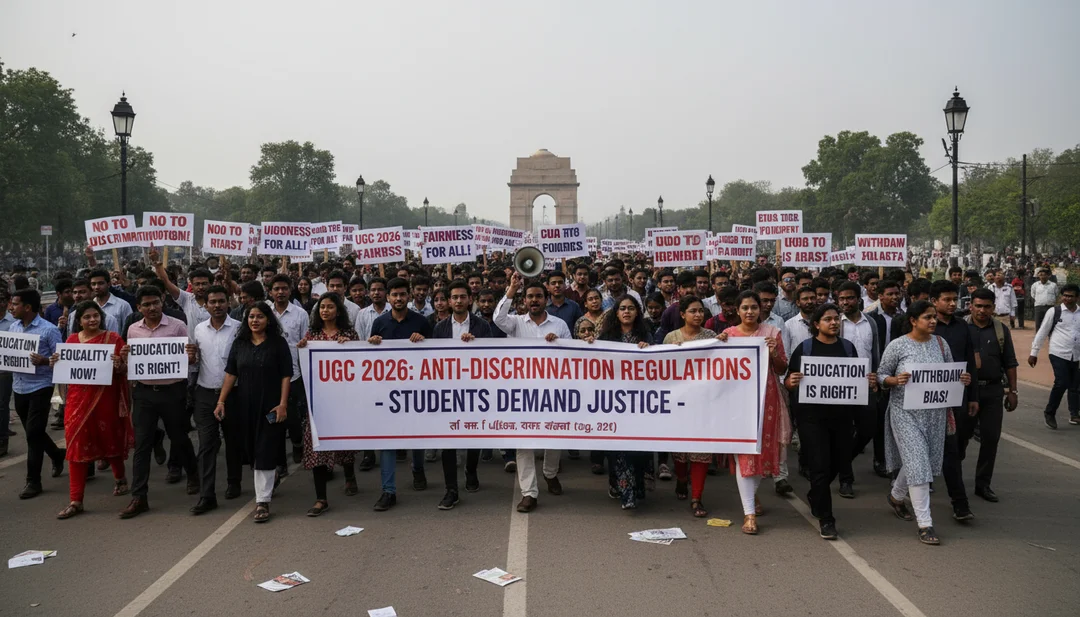
On January 13, 2026, the University Grants Commission (UGC) notified the Promotion of Equity in Higher Education Institutions Regulations, 2026. The new rules explicitly defined caste-based discrimination as discrimination against members of the Scheduled Castes (SCs), Scheduled Tribes (STs), and Other Backward Classes (OBCs). However, in a significant turn of events, the Supreme Court of India has stayed the implementation of these regulations pending further legal review.

The regulations caused immediate uproar, with protests from several upper-caste groups across India—with the notable exception of Kerala that there was not even a whimper about it in the print/ visual/ social media about it. Critics argued that the rules were themselves discriminatory, claiming they created a one-sided legal environment. Key points of contention include:

  • Severe Penalties: If a student is found guilty of caste-based discrimination (including mocking someone based on caste), they face suspension or even criminal proceedings.
  • Composition of Committees: The mandate to establish anti-discrimination committees with representation from SC, ST, and OBC members in every university.
  • Alleged Lack of Safeguards: Protesters claim the norms lack penalties for filing false complaints, potentially enabling misuse. They also argue that accused students from the general category can be barred from classes, exams, or hostels immediately upon the filing of a complaint, prior to any investigation or disciplinary committee decision. Furthermore, they contend there is no clear recourse for general category students who face harassment.

Comparison with the 2012 Regulations

The UGC’s previous framework, the Promotion of Equity in Higher Educational Institutions Regulations, 2012, took a broader approach. It mandated protections against discrimination based on caste, religion, gender, disability, language, ethnicity, and place of birth. Institutions were required to:

  • Appoint an Anti-Discrimination Officer.
  • Establish an Equal Opportunity Cell.
  • Prevent discrimination in admissions, evaluations, hostels, and scholarships.
  • Resolve complaints within 60 days.

In practice, however, enforcement often centered on SC/ST students as primary beneficiaries, while OBCs were not explicitly named, creating an implementation gap.

The Legal Landscape: The SC/ST (Prevention of Atrocities) Act, 1989

The debate exists within the wider context of the Scheduled Castes and Scheduled Tribes (Prevention of Atrocities) Act, 1989. This Act criminalises intentionally insulting or intimidating SC/ST members in public view by using their caste name.

The Legal Weight of the Stay

In a judicial context, the Supreme Court’s interim stay on the UGC Equity Regulations, 2026, functions as a procedural pause rather than a final rejection. By placing the rules in abeyance on January 29, 2026, the Court signaled that the constitutional questions—primarily regarding the principles of due process and the potential for societal division—are significant enough to require thorough scrutiny before implementation.

The reasonableness of this stay rests on a tension between two legal philosophies:

  • Individual Civil Liberties: Protecting all students from potentially vague or overbroad rules. Critics and the Supreme Court have flagged Regulation 3(c) for its narrow definition of caste-based discrimination, arguing it excludes the general category and lacks safeguards against misuse or false complaints.
  • Social Protection: Shielding historically marginalized groups from systemic bias. Proponents argue that the stay leaves vulnerable students—including those from SC, ST, and OBC communities—trapped in hostile environments without the rigorous, time-bound protections the 2026 rules were designed to provide.

A critical legal hurdle is whether the University Grants Commission (UGC), as a statutory body, has the authority to mandate rules that carry quasi-criminal consequences, such as institutional debarment or strict disciplinary penalties. Typically, such significant legal liabilities require Parliamentary debate rather than simple executive notification. Until these constitutional boundaries are defined, the Court has revived the UGC Regulations, 2012 to ensure that campuses do not operate in a legal vacuum.

Kerala: An Exceptional Case Study

Kerala stands alone as the state where such equity principles have seen more consistent application. This is attributed not merely to legislation but to deeper social changes. The breaking down of caste barriers is widely credited to historical investments in education (often pioneered by Christian missionary schools) and the socio-political movements led by communist parties. Notably, the world’s first democratically elected communist government came to power in Kerala in 1957.

The state’s proactive stance is evident in moves like the June 2024 decision to stop using the term Colony for SC/ST residential settlements, recognizing its use as a casteist slur.

A Personal Anecdote: Caste in the Indian Army

My personal encounter with overt caste identity occurred only after joining the Indian Army. Growing up in Kerala and training at the NDA and IMA, references to caste or creed were conspicuously absent.

I was commissioned into the 75 Medium Regiment, which had a unique class composition: one Battery of North Indian Brahmins, one of Jats, and one of South Indian soldiers. Our Commanding Officer, Lieutenant Colonel AN Suryanarayanan (now Veteran Brigadier), wisely posted me to the Brahmin Battery.

There, I witnessed Brahmin soldiers referring to lower-caste tradesmen-soldiers by their caste names. The issue came to a head in 1991 when, as the Battery Commander, I allotted a family quarter to Sepoy Shyam Sunder, our barber. Brahmin soldiers in the residential complex, through their Senior Subedar, requested an interview. Their grievance was unequivocal: “How can a lower-caste soldier’s family live with Brahmins?

I called a meeting with the aggrieved soldiers. “What makes you all Brahmins today?” I asked. “Aren’t we soldiers first? Is it just your surname—Sharma, Mishra, Dwivedi, Chaturvedi- that makes you a Brahmin today? Then I hereby baptise Shyam Sunder as a Brahmin. Henceforth, he will be Shyam Sunder Sharma.” The matter was settled forever.

There is no doubt that the need for the 2026 legislation is urgent and mandatory. Evolving societies must continually make efforts to make amends for the pitfalls of history. Hopefully, this stay is short-lived on concerns of due process alone.  The Supreme Court’s stay on the UGC’s 2026 regulations highlights the ongoing, deeply contentious debate around caste, equity, and justice in India.

Conclusion

While the intent to protect historically marginalised communities is clear, the execution raises valid concerns about due process and potential misuse. Kerala’s example suggests that meaningful progress requires not just laws but foundational social and educational reform. Ultimately, as the military anecdote illustrates, transcending deep-seated prejudice demands conscious leadership that insists on a common, superior identity—whether as soldiers or as students first.

Trade War Escalation: Trump Threatens 100% Tariff Following Carney-Xi Partnership

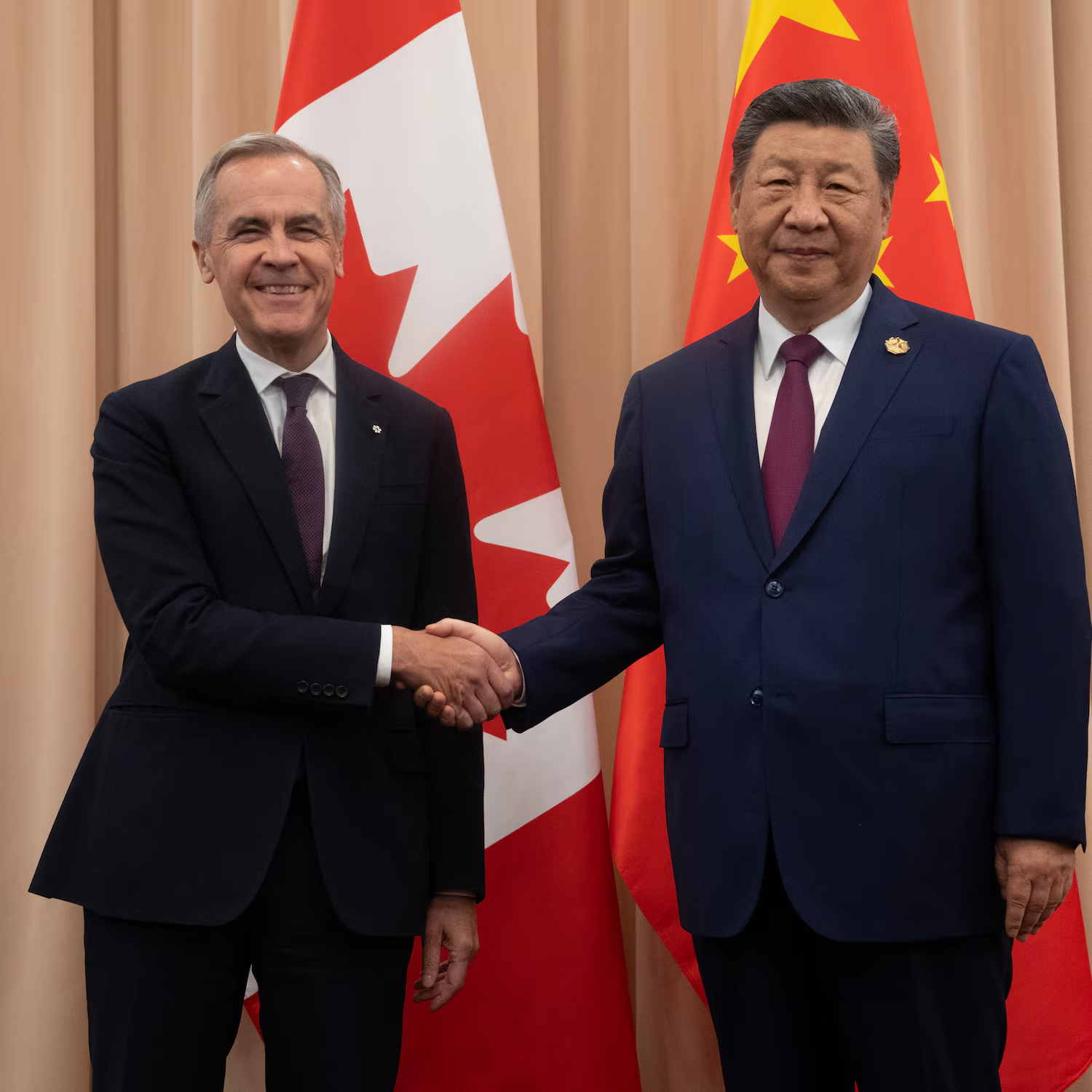
The fragile economic relationship between North America’s largest trading partners reached a breaking point this week. Following Canadian Prime Minister Mark Carney’s announcement of a strategic trade partnership with China, U.S. President Donald Trump issued a scorched-earth ultimatum on Truth Social: “If Canada makes a deal with China, it will immediately be hit with a 100% Tariff against all Canadian goods and products coming into the U.S.A.”

While Trump initially signaled openness to Canadian trade autonomy, the rhetoric soured after Carney’s Davos speech, where he claimed the “US-led world order had been ruptured.” Trump retaliated by rescinding Canada’s invitation to his Board of Peace, asserting, “Canada lives because of the United States.”

1. The Pivot to the East

Despite the threats, Canada’s Minister of International Trade, Dominic LeBlanc, clarified that the government is not seeking a full Free Trade Agreement (FTA) with Beijing but rather a “resolution on critical tariff issues.” Under the new agreement with President Xi Jinping:

  • Canola Oil: Chinese levies will drop from 85% to 15% by March.
  • Electric Vehicles: Canada will slash tariffs on Chinese EVs from 100% to the most-favoured-nation rate of 6.1%.

Carney framed the deal as essential for a “new world order,” aiming to reduce Canada’s 75% export dependency on a volatile U.S. administration.

2. The Mutually Assured Destruction of Trade

The escalating conflict poses severe structural risks to the U.S. economy, specifically across three critical sectors:

3. The Energy Shock

U.S. Gulf Coast refineries are architecturally locked into Canadian heavy crude. Billions have been invested in cokers and hydrocrackers specifically designed to process thick Canadian bitumen.

  • Irreplaceability: With Venezuelan and Mexican heavy crude production in decline, Canada now provides over half of all U.S. crude imports.
  • The Fallout: A 100% tariff would effectively starve U.S. refineries or force a catastrophic spike in gasoline and diesel prices for American consumers.

4. Food Inflation: The 2026 Potash Crisis

American farmers face a Potash Crisis that could double fertilizer costs by Spring 2026.

  • Supply Chain Vulnerability: Despite some tariffs being lifted in late 2025, the Trade Commissioner Service warns that renewed 100% duties on Canadian potash—a primary source for U.S. agriculture—would jeopardise the 2026 planting season and trigger historic food price volatility.

5. Defense Sector: The Golden Dome at Risk

The U.S. defense sector is currently scrambling to secure aluminum and cobalt for the Golden Dome—a next-generation integrated air and missile defense system.

  • Strategic Shift: The U.S. has been using Defense Production Act (DPA) funds to finance Canadian mining projects in Quebec and the Northwest Territories.
  • The Irony: Trump’s proposed tariffs would tax the very minerals the Pentagon deems “essential for national security” to counter China, effectively subsidizing the cost of U.S. defense through American taxpayers.

6.  The Automotive Breaking Point

The integrated just-in-time supply chain of the Great Lakes region faces collapse. With tariffs on parts—including engines and transmissions—potentially reaching 100%, the Canadian Vehicle Manufacturers’ Association warns of:

  • Price Surges: Thousands of dollars added to the price of every North American-made vehicle.
  • Manufacturing Exodus: Production slowdowns and massive layoffs as automakers struggle to restructure supply chains that cross the border up to seven times during a single build.

7. The Water Bomb

Trade disputes have significantly strained the 1909 Boundary Waters Treaty and the Great Lakes Water Quality Agreement. While these remain distinct from commercial pacts like CUSMA, current tensions are destabilizing their implementation: 

  • Diplomatic Disruptions: In March 2025, the U.S. administration abruptly excluded Canadian mayors from a longstanding White House meeting during the annual Great Lakes Day summit, citing “diplomatic protocols”. This unprecedented break from tradition raised fears that shared environmental resources are becoming “collateral damage” in trade rifts.
  • Water as a Trade Lever: Growing concern exists that the U.S. may leverage shared water management in future trade talks, potentially revisiting demands for bulk water diversions to drought-stricken American regions.
  • Regulatory Conflict: Friction is mounting within joint management frameworks as American shippers argue that stricter Canadian environmental standards create a competitive disadvantage.
  • Risk of Treaty Termination: Although it has endured for over a century, the Boundary Waters Treaty can be terminated with 12 months’ written notice. Escalating trade wars could lead either nation to withdraw legally, ending mandates for joint consultation on pollution and diversions.

8. Criticality of Critical Minerals

As of early 2026, tariffs have severely disrupted industries reliant on minerals essential for defence, manufacturing, and energy. 

  • Integrated Supply Chains: The U.S. remains heavily dependent on Canada for gallium, niobium, aluminum, palladium, and platinum—minerals deemed crucial for electronics and military technology. Canada serves as a vital storehouse, meeting approximately 25% of U.S. uranium demand and providing essential feedstock for nuclear energy and defense.
  • China’s Strategic Advantage: Tensions between the U.S. and Canada have allowed China to position itself as a more stable alternative. For instance, a 25% tariff on Canadian nickel may force U.S. manufacturers toward cheaper Indonesian nickel, which is largely controlled by Chinese mining companies. This undermines Western efforts to secure strategic autonomy.
  • National Defence Vulnerability: Mineral supply chains support advanced systems like precision-guided munitions, F-35 fighter jets, and secure communication networks. Trade disputes that escalate production costs or delay manufacturing directly impact military readiness and the strategic autonomy of both nations.

9. Conclusion

Trump is facing limited domestic pressure to resolve the U.S.-Canada trade standoff and appears politically positioned to wait Canada out. His administration has prioritized other trade deals and framed Canada as a low-priority partner.

There is little pressure from US businesses. While some US industries (e.g., auto, agriculture, tourism) are affected, there’s no unified business lobby pressuring Trump to resolve the dispute. His 51st state rhetoric and claims that Canada cheated resonate with populist messaging.

Vitamin D Fortification: Strengthening Canadian Health Through Milk

To improve the nutritional health of Canadians, Health Canada has implemented new regulations requiring milk and margarine producers to more than double the vitamin D content in their products. While fortification has been mandatory for decades, these updated standards aim to ensure a greater portion of the population meets the daily recommended intake.

New Standards for Daily Essentials

The fortification levels have shifted significantly to combat widespread deficiency:

  • Milk: Increased from approximately 2.3 mcg to 5 mcg per cup.
  • Margarine: Increased to 13 mcg per 50g (roughly three tablespoons).
  • Alternatives: While not mandatory, yogurt, kefir, and plant-based beverages are now permitted to include increased vitamin D to ensure those opting for non-dairy lifestyles still receive adequate nutrition.

The “Sunshine Vitamin” Challenge

According to Health Canada, one in five Canadians is deficient in vitamin D. This is largely due to Canada’s high latitude; for six to eight months of the year, the sun’s angle is too low for the skin to produce vitamin D naturally. Studies indicate that the risk of deficiency doubles during these darker winter months, making dietary sources and supplements—such as drops or pills—essential.

Why Vitamin D Matters

Vitamin D is a critical nutrient that enables the body to absorb calcium, the building block of strong bones and teeth. Maintaining adequate levels is vital for:

  • Bone Density: Reducing the risk of fractures and osteoporosis as bone cell renewal slows with age.
  • Disease Prevention: Research suggests low vitamin D is a risk factor for developing multiple sclerosis (MS).

A 2023 report from Statistics Canada confirmed that 20% of Canadians aged 6 to 79 have levels below health requirements. Notably, the data shows that individuals who consume at least one glass of milk daily are significantly less likely to face deficiency than those who do not.

Recommended Dietary Allowance (RDA)

The amount of vitamin D required daily is measured in International Units (IU) or micrograms (mcg):

Age GroupRecommended Daily Dose
1–70 Years (Including pregnancy/lactation)600 IU (15 mcg)
71+ Years800 IU (20 mcg)

Optimizing Vitamin D Absorption: The Role of Fatty Meals

Taking vitamin D supplements with a fatty meal can significantly enhance their absorption compared to taking them on an empty stomach. Dietary fat facilitates this process by forming micelles—tiny molecular structures that transport fat-soluble vitamins like D into the bloodstream. Research indicates that individuals who consume vitamin D supplements with a high-fat meal experience a greater increase in serum vitamin D levels than those taking the same supplement without food. To maximize absorption and effectiveness, it is advisable to take vitamin D alongside meals containing healthy fats such as yogurt, milk, avocados, olive oil, nuts, seeds, or fatty fish.

Simple Ways to Boost Vitamin D Intake

  • Upgrade Your Breakfast: Use fortified milk instead of water when preparing oatmeal.
  • Creamier Soups: Replace a portion of broth in stews or chowders with milk.
  • Coffee Break: Switch from a “splash” of milk to a latte (half milk, half coffee).
  • Smoothie Power: Blend smoothies with milk and fortified yogurt for a double dose of bone-building nutrients.
  • Weekly Fish: Incorporate fatty fish like salmon or mackerel into your meal rotation at least once a week.

A Journey Through Time and Altitude

My inaugural flight experience in 1983 remains a vivid memory I still often reminisce about. In those early days of air travel, the cabin crew’s pre-flight safety demonstration surprisingly did not include instructions on how to fasten or remove a seatbelt.

The air hostess came by for her final cabin check before take-off and efficiently buckled me in. After we were airborne, I applied all my military ingenuity to unlatch the belt but failed miserably. Looking around, I realised I was the only passenger in my entire row, isolated in my predicament. I remained securely fastened to my seat for over two hours, too hesitant and embarrassed to ask the air hostess how to release myself.

Upon landing at Dabolim Airport in Goa, salvation arrived. I keenly observed the passenger sitting across the aisle unbuckle their seatbelt, and with a quiet Eureka, I finally decoded the intricate contrivance.

Years passed. In 1989, shortly after our wedding, my wife Marina accompanied me on a flight to Kashmir. As we boarded the aircraft at Kochi, I proudly demonstrated the workings of the seatbelt to her, ensuring she wouldn’t suffer my previous silent ordeal.

Eventually, pre-flight safety briefings evolved to include the simple solution to my 1983 mystery. That’s when I realised there must have been many other idiots like me!

The Annual Ritual: Indian Airlines and Nostalgia

From 1983 onward, flying Indian Airlines from Delhi to Kochi became an annual ritual. The flights used the old airport located within the Naval base. The flight ticket, even with my military concession, cost more than my one month’s pay at the time.

The aircraft were often sparsely populated, and I frequently found Members of Parliament as my co-passengers. On two memorable occasions, my seatmate was Commander Surjith Kandal, a course mate from the National Defence Academy (NDA), coincidentally flying Kochi to his home at Delhi for his vacation while I returned from mine.

We flew on a Boeing 737 with a configuration rarely seen today: all economy seating, but with luxurious legroom. The tray tables were double the size of modern ones, and the food served was equally generous.

The journey began with a 0530 hrs take-off from Delhi, stopping in Dabolim, Goa. Substantial meals were served after both departures. A true bliss for a smoker like me back then, the seats at the rear of the aircraft even permitted smoking. We would typically land in Kochi by noon.

The Jolt of Acclimatisation

The most memorable flight of all took place in 1988. I was posted at a remote location on the Line of Control (Kashmir), at about 10,000 feet above sea level. For my annual leave, reaching the airport required an entire night of trekking across snow-clad Himalayas (to avoid avalanches), followed by a three-hour drive in an Army vehicle to Srinagar Airport.

The Delhi flight departed at 1500 hrs, and the next morning, I connected to the Kochi flight. Mid-afternoon, I landed at Kochi airport and descended the mobile ladder—aerobridges didn’t exist there yet. I was now standing barely a foot above sea level. The moment my boots hit the tarmac, I was instantly drenched in sweat, as though I had just walked out of a shower fully clothed.

My senses were numb for a couple of minutes until I realised my folly: I had skipped the crucial process of acclimatisation, a core tenet of the good old Indian Army way. For the next two years I was posted in Kashmir, I always ensured I took a mandatory three-day break at the Regimental Headquarters in between altitudes before venturing home to Kochi.

New Flights, Familiar Rituals

Next week, I will be flying Air India from Toronto to Delhi to attend our Regiment’s Diamond Jubilee celebration. I typically fly Etihad Airways as it offers a convenient routing from Toronto to Abu Dhabi, with a comfortable five-hour layover in their lounge before the final flight to Kochi. This routine helps me reset my biological clock and effectively fight jet lag. Etihad’s business class service, both in the air and in the lounge, has always been outstanding.

I am hoping for an excellent experience with Air India this time around, especially now that the Tata Group is controlling its operations and revitalising the airline.

Navigating Modern Child Travel: Rules and Realities

In 1995, during a posting in Jammu & Kashmir, our four-year-old daughter, Nidhi, wanted to visit me during her school holidays. I instructed Marina, to purchase her flight ticket to Jammu as an unaccompanied minor. On the designated day, Marina simply filled out a form at the Indian Airlines counter, and an airline staff member accompanied Nidhi directly to the aircraft.

That afternoon, I picked her up at Jammu airport. She complained of a churning stomach and needed the washroom. Afterward, I asked her about the flight.

Oh!” she replied with a cheeky grin. “I put up a crybaby face every time the air hostess came by, and they filled me with cookies and chocolates!”

The Evolution of Unaccompanied Minor Services

In those days, young children flew as unaccompanied minors free of any additional charge. Times have certainly changed.

Most airlines now charge a significant fee—often $150 USD/CAD, 5000 INR, or more—per child in addition to the ticket cost. This service is typically mandatory for children aged 5 to 11 and optional for those aged 12 to 17. For children under five, an accompanying passenger aged 16 or older is universally mandatory.

Airlines have specific policies regarding age limits, fees, and procedures. You can usually find these specific rules on carriers’ official websites.

The Mandatory Parental Consent Letter

Beyond airline policies, enhanced security measures and global efforts to prevent child abduction have made a parental consent letter a crucial, if not legally required, travel document.

A few years ago, while on a road trip to the US with Nidhi and grandson James, our son-in-law Jay was scheduled to join us two days later. US immigration authorities asked Nidhi for a formal consent letter from Jay, authorising her to bring their son across the border without him present.

A consent letter demonstrates that a child traveling alone, with only one parent/guardian, or with relatives, friends, or a group (e.g., sports team, school trip), has permission to travel abroad from every parent or legal guardian who is not accompanying them on the trip.

While there is no Canadian legal requirement for children to carry one within Canada, the letter is a vital precautionary measure. It may be requested by immigration authorities when entering or leaving a foreign country, airline agents, or Canadian officials upon re-entry. Failure to produce a letter upon request can result in significant delays or refusal of entry/exit.

The Government of Canada provides an excellent resource, including an interactive builder tool to help you create a valid letter: you can generate your official consent letter via the Government of Canada website.

Key reasons for carrying a parental consent letter:

  • To Prevent Child Abduction: The primary purpose is to ensure a child is not being taken across borders without the knowledge and consent of all legal guardians, a vital safeguard, especially in cases of separation or divorce.
  • To Meet Foreign Country Requirements: Many nations have specific entry requirements and may refuse entry if a consent letter is not provided.
  • To Satisfy Airline Policies: Airlines require this documentation to allow the child to board and fly internationally.
  • To Provide for Emergencies: The letter provides clear contact information for parents or guardians in case of an emergency or travel disruption.

A Final Observation on Travel Logistics

 Just as the unaccompanied minor service became a paid feature, other airport services may follow suit. Social media is abuzz with videos of a large section of Indian senior citizens in foreign countries availing complimentary wheelchair assistance at airports. Like the unaccompanied minor service, extensive wheelchair assistance might soon transition into a universally paid service for those who do not have a verified medical necessity.

Dr Shwetank Prakash Honoured by the White House

US Vice President JD Vance, along with his wife Usha Vance and their three children — sons Ewan and Vivek, and daughter Mirabel, visited the Taj Mahal in Agra, India on April 23, 2025. This was part of his four-day official trip to India.

“The Taj Mahal is amazing. A testament to true love, human ingenuity and a tribute to the great country of India,” Vance wrote in the visitor’s diary after his visit.

A Secret Service agent in the entourage suffered from a medical condition that needed emergency medical intervention.  He was rushed to Shantived Institute of Medical Sciences at Agra.

Dr Shwetank, the Director, Senior Consultant, Laparoscopic Surgeon, and Urologist at the institute immediately provided medical assistance. 

Vice President Vance, on return to the US, recognised the services provided by Dr Shwetank and his team and sent a Certificate of Honour. He called Dr Shwetank and conveyed his appreciation with an invite to the White House.

Thank you, Dr Shwetank and the team, at Shantived Institute of Medical Sciences.

Dr Shwetank is married to Dr Blossom Prakash is a well-known Obstetrician and Gynaecologist associated with Shanti Ved Hospital. The couple is blessed with a daughter Sara Prakash and son Vrishank Prakash.

Dr Blossom is the daughter of Veteran Colonel Joginder Singh and Kiranjit.  Colonel Joginder and I served the Indian Army – 75 Medium Regiment (Basantar River) – for 15 years.

The Automation Catalyst: AI and Deportation

Introduction: The Political Repercussion

On 04 November 2025, Canada unveiled an immigration plan for 2026-2028. While setting targets of 385,000 newcomers in 2026 and 370,000 for the subsequent two years, it explicitly prioritised immigrants in fields like emerging technologies, healthcare, and skilled trades—primarily construction. This targeted approach is not an anomaly but a strategic response to a looming global crisis: the large-scale job displacement driven by Artificial Intelligence (AI). As AI disrupts labour markets, developed nations are entering a new political era where the vulnerability of a worker is defined not just by their skills, but by their citizenship status, making migrant populations convenient political targets for economic anxiety.

Canada’s Alberta province government has tabled legislation to add health-care numbers and mandatory citizenship markers to driver’s licences and identification cards. Other provinces in Canada are likely to follow suit.

The Political Calculus of Displacement

The emergence of AI promises widespread job displacement, creating a significant political challenge for developed nations. In countries with large populations of migrant and temporary workers, governments will face intense internal pressure to protect their citizens from unemployment. The political calculus becomes straightforward as native-born workers are displaced, governments must be seen prioritising their re-employment. Consequently, the path of least resistance may be the large-scale deportation of temporary workers and stricter enforcement of immigration laws. Nations like the US, Canada, Australia, and the UK are already signaling this shift through tougher legislation and empowered enforcement agencies. In an automated economy with shrinking demand for routine labour, foreign workers—often the most vulnerable—risk becoming the primary scapegoats for political expediency.

This dynamic is already visible. In the US and Canada, the most vulnerable foreign workers are often in roles ripe for automation, such as programming, software testing, truck/ taxi driving, accounting, and customer service. Conversely, roles demanding high levels of interpersonal interaction, complex physical dexterity, and nuanced judgment are more resilient. Workers in healthcare, skilled trades, and agriculture represent a less vulnerable segment, as their tasks integrate a synergy of sensory perception, adaptability, and physical skill that remains difficult to automate. This explains the logic behind Canada’s targeted immigration plan. It is a pragmatic effort to fill enduring human gaps while the political winds shift against other migrant groups.

The Escalating Threat: From Specialised AI to Adaptive AGI

The current wave of automation is driven by specialised AI, which excels at specific, pre-defined tasks by recognising patterns in vast datasets. It powers everything from recommendation engines to data analysis tools. However, the frontier is advancing toward Artificial General Intelligence (AGI)—a hypothetical system with human-like cognitive abilities capable of reasoning, learning, and adapting to solve novel problems across various domains. This evolution from task-specific automation to general-purpose problem-solving will fundamentally reshape the global job market, exposing even more sectors to disruption.

The Expanding Automation Frontline

The advancement of AI places a broad spectrum of jobs at risk, particularly those characterised by routine, repetitive, or data-intensive tasks. The front-line of vulnerability includes:

  • Administrative and Office Support: Data entry, scheduling, and basic document review are highly susceptible to automation.
  • Creative and Analytical Services: Entry-level content creation, graphic design, accounting, bookkeeping, and legal research are increasingly handled by AI, which offers superior speed and accuracy for standardised tasks.
  • Customer Service and Software Development: AI-powered chatbots are replacing human agents, while AI tools now assist or perform routine coding and software testing, impacting entry-level tech roles.
  • Transportation and Logistics: The development of autonomous vehicles directly threatens millions of jobs in trucking, delivery, and taxi services.

Canada’s dual policy of selective immigration and stricter enforcement is a microcosm of a future defined by AI-driven labour market. It reveals a world preparing to welcome the skilled immigrants it needs while simultaneously purging the temporary workers it deems expendable. As AI continues its ascent from a specialised tool to a generalised intelligence, the political temptation to blame foreign workers for all structural economic problems will only intensify.

The Strategic Imperative: Reskilling for a Collaborative Future

The cornerstone of this transition is a cultural and institutional commitment to continuous learning. As AI assumes a greater share of routine work, the value of uniquely human skills will surge. The workforce of the future must be equipped with:

  • Digital and AI Literacy: Beyond basic computer skills, workers must understand how to interact with, prompt, and manage AI tools effectively.
  • Critical Thinking and Analytical Acuity: The ability to question AI-generated outputs, identify biases, and solve complex, non-routine problems will be paramount.
  • Creativity and Innovation: Machines optimise existing paradigms, whereas humans excel at imagining new ones. The ability to design novel products, strategies, and business models in partnership with AI will be a key differentiator.
  • Emotional and Social Intelligence: Skills like empathy, persuasion, and team leadership are essential for fostering collaboration and trust in environments where human and machine intelligence intersect.
  • Ethical Reasoning: Ensuring the responsible, fair, and transparent use of AI is a critical human responsibility that cannot be outsourced to an algorithm.

Redesigning Organisations for an Augmented Era

This skills shift necessitates a parallel evolution in organisational structure. The traditional, rigid hierarchy is giving way to more agile, network-based models.

  • Flatter Structures: AI’s automation of middle-management tasks—such as data aggregation, performance reporting, and routine oversight—is leading to leaner organisations. Decision-making authority is pushed closer to the front lines, empowering teams to act quickly.
  • Cross-Functional Teams: The future belongs to multidisciplinary teams that combine diverse expertise to tackle complex projects, moving away from siloed specialists.
  • The Augmentation Model: The goal is not human replacement but human augmentation. In this model, AI agents handle high-volume, routine tasks, while humans focus on supervision, strategic oversight, managing exceptions, and providing the creative and emotional context that AI lacks. Workflows must be redesigned from the ground up to maximise this collaborative value creation.

Conclusion: Building a Future-Proof Ecosystem

The path ahead is clear. The most successful organisations—and indeed, economies—will be those that proactively invest in their human capital. By fostering a culture of adaptability and lifelong learning, and by deliberately designing systems that leverage AI to augment human potential, we can build a more efficient, innovative, and ultimately more human-centric future of work. The choice is not between people and technology, but in how we synergise their strengths.

Images Courtesy Pixabay.com

Remembrance Day – 2025

In Canada, Remembrance Day is an opportunity to pause and reflect on the sacrifices made for the freedoms we enjoy as Canadians. The ceremony at the Celebration Square of Mississauga commenced at 10:30 AM on November 11.

The ceremony was held at the monument at the upper level of the Celebration Square. The monument consists of 21 candles, representing the 21-Gun-Salute, a sign of peace, honour and remembrance.

Everyone wore a Red Poppy. Please read Why Do We Wear a Poppy Today?

Dignitaries, veterans, soldiers, members of the Fire, Ambulance and Police departments and young cadets laid wreaths to honour the soldiers, veterans those who laid down their lives to make our lives better.

Among the distinguished attendees were Mississauga Mayor Caroline Parish, MPP Deepak Anand, and the heads of the Police, Fire, and Ambulance services. Anand, an engineer from Panjab University with an MBA from the Schulich School of Business, was elected to the Legislative Assembly of Ontario in 2018 and holds a profound respect for soldiers and veterans.

Hundreds of observers looked on as Oh Canada, the national anthem was sung.  It was followed by the piper performing the song Danny Boy, followed by the recital the poem In Flanders Fields. Please Click to read about the poem In Flanders Fields by Lieutenant Colonel John McCrae, a doctor of the Canadian Army during World War I.

At 11 AM, as the bugler sounded the Last Post, everyone stood up and observed two-minute silence in reverence to the soldiers, veterans and all those who laid down their lives.  The city’s buses and trains stopped their services for two minutes. At the end, Rouse was played by the bugler to mark the end of the ceremony.

Eight decades after the end of the deadliest military conflict in history, Canadians paused for Remembrance Day ceremonies to honour those who put their lives on the line for their country. Veterans Affairs Canada estimates that as of this year, there are 3,691 surviving Canadian veterans of the Second World War — 667 women and 3,024 men. The stories of that war — from the bloody horrors of combat to the aftermath of postwar economic uncertainty — are passing from the realm of living to recorded history as the number of veterans who remember those days grows smaller.

 The nation which forgets its defenders will be itself forgotten – Abraham Lincoln

Celestial Spectacles: Understanding Supermoons and the Beaver Moon of 2025

The full moon of November 5, 2025, will be a notable celestial event: the second supermoon of the year, adorned with the traditional name Beaver Moon. This occurrence provides a perfect opportunity to explore the fascinating interplay of lunar nicknames, orbital mechanics, and the science behind these brilliant apparitions.

The Cultural Tapestry of Full Moon Names

Each month’s full moon carries a name rooted in cultural and natural history, often originating from Native American, Colonial American, and European traditions. The November full moon is known as the Beaver Moon. According to the Old Farmer’s Almanac, this name signifies the time when beavers begin to retreat to their lodges for the winter. An alternative explanation points to the historical fur trade, as this was the season to set beaver traps before the swamps froze.

These names create a yearly almanac in the sky, connecting the heavens to the rhythms of life on Earth. Below is a list of the commonly accepted full moon names:

MonthFull Moon Name
JanuaryWolf Moon
FebruarySnow Moon
MarchWorm Moon
AprilPink Moon
MayFlower Moon
JuneStrawberry Moon
JulyBuck Moon
AugustSturgeon Moon
SeptemberCorn Moon (or Harvest Moon)
OctoberHunter’s Moon (or Harvest Moon)
NovemberBeaver Moon
DecemberCold Moon

The Science of Supermoons

To understand a supermoon, one must first examine the Moon’s orbit. The Moon does not circle Earth in a perfect circle but in an elliptical orbit, which is inclined about 5 degrees to Earth’s orbital plane. This path has two key points:

  • Perigee: The point where the Moon is closest to Earth.
  • Apogee: The point where it is farthest.

supermoon occurs when a full moon coincides with or is near the Moon’s perigee. At this moment, the Moon can appear up to 7% larger and 16% brighter than an average full moon. Conversely, a micromoon is a full moon near apogee, appearing noticeably smaller and dimmer.

The term supermoon was popularised by astrologer Richard Nolle in 1979 and gained widespread use in the media during a particularly close approach in March 2011.

The Lunar Cycle: Phases and the Blue Moon

The Moon’s phases are governed by two distinct cycles:

  1. Sidereal Month (27.55 days): The time it takes the Moon to complete one orbit around Earth and return to the same position relative to the stars.
  2. Lunar Month (29.53 days): Also called the synodic month, this is the time from one new moon to the next, which is longer due to Earth’s simultaneous revolution around the Sun.

This discrepancy between the lunar month and our calendar months (30 or 31 days) gives rise to the Blue Moon. The idiom once in a blue moon describes a rare event, but astronomically, a seasonal Blue Moon (the third full moon in a season with four) or a monthly Blue Moon (the second full moon in a single calendar month) occurs roughly every 2.7 years. Because February is shorter than a lunar month, it can never host a Blue Moon.

On rare occasions, a double Blue Moon can occur within a single year, a phenomenon that happens only 3 to 5 times per century. The last was in 1999, and the next will be in 2037.

A Celestial Convergence

The supermoon of November 14, 2016, was a record-setter, being the closest full moon since 1948—a record that will not be surpassed until November 25, 2034. The Beaver Moon on November 5, 2025, continues this cycle of celestial wonder, offering a brilliant reminder of the dynamic and predictable dance of our closest celestial neighbour. It is a chance to witness a beautiful fusion of ancient tradition and modern astronomy.

Indian Astronomy and Full Moons

While the term Supermoon is a modern astronomical concept without a direct equivalent in Indian astronomy, the tradition of naming full moons is deeply rooted in Indian culture. The Sanskrit word for full moon, Purnima, serves as the foundation for a calendar of lunar observations tied to seasons and festivals. These are not merely astronomical markers but are imbued with cultural and religious significance. For instance, Chaitra Purnima (March/April) often heralds the Hindu New Year, while Ashadha Purnima (June/July) is revered as Guru Purnima, a day to honour teachers. The harvest moon of Sharad Purnima (September/October) is dedicated to the goddess Lakshmi, and Kartik Purnima (October/November) celebrates the birth of the deity Kartikeya. Thus, each full moon connects the celestial cycle to the rhythm of life and spirituality in India.

Swimming & Life Saving

The recent, tragic loss of two cadets during swimming lessons at the National Defence Academy (NDA)—both incidents occurring within a month—has cast a pall over the institution. These heartbreaking events compel a critical examination of aquatic training protocols within India’s various military training institutions.

Drawing from my own experience with the NDA’s swimming curriculum and insights from our son, Nikhil, a certified swimming instructor and lifeguard, I will explore the systemic issues that may be plaguing water-safety policies in our armed forces.

At the heart of the problem is the training of the instructors. Hailing from the Army Physical Training Corps (APTC), their curriculum contains only a short capsule on swimming. This is fundamentally inadequate to certify them as qualified swimming instructors or lifeguards. Consequently, we have a system where those responsible for water safety may themselves lack essential proficiency – some may be lacking basic swimming skills.

To ensure the highest standard of safety during swimming lessons, all personnel must adhere to the following requirements. These protocols are designed to create a secure learning environment through qualified staff, vigilant supervision, and clear emergency preparedness.

Personnel Qualifications & Requirements

Suggested instructor-to-student ratio for swimming classes varies by programme and must be from 1:4 to 1:6 for beginners and may increase to 1:8 or 1:12 for intermediate or advanced classes.

All instructional staff must possess the following minimum credentials:

  • Swim Instructors: Must be certified in swim instruction and hold current CPR and First-Aid certifications.
  • Lifeguard Requirement: A dedicated, certified lifeguard must be present on deck whenever an instructor is teaching in the water. The lifeguard must be free from all other duties to maintain constant surveillance of the water.
  • Supervisors & Officers: All supervisors, including officers, must be trained in emergency response protocols.
  • Minimum Staffing: A minimum of two certified staff members (instructors or lifeguards) must be present during any instructional session.

Core Principles of Active Supervision

Safe supervision is defined as constant, direct, and active monitoring to ensure the safety of all participants.

  • Constant Vigilance: Supervision requires uninterrupted attention. Staff must be free from distractions (e.g., phones, casual conversation) and always maintain visual contact with all students.
  • Proximity for Non-Swimmers: For non-swimmers and beginners, instructors must stay within arm’s reach to allow for immediate intervention.
  • Active Monitoring: This includes:
    • Maintaining an accurate and continuous head count.
    • Clearly defining the teaching area.
    • Enforcing safe entry and exit procedures.
    • Immediately stopping any unsafe or risky behaviors.
  • The Water Watcher Role: A designated Water Watcher may be used to support supervision. This person must:
    • Be explicitly nominated and focused solely on watching the water.
    • Be vigilant and free from all distractions.
    • Rotate this duty every 15-20 minutes to prevent fatigue and maintain alertness.
    • Note: A Water Watcher is a preventive measure and is not a substitute for a certified lifeguard or instructor.

Instructor Competency & Emergency Response

Instructors must be assessed as competent to manage all aspects of water safety, demonstrating the ability to:

  • Effectively supervise the entire group while tracking individuals.
  • Recognise signs of distress or someone needing help.
  • Execute a necessary and timely rescue.
  • Safely recover an individual to the poolside.
  • Provide immediate first aid, including CPR, while awaiting emergency medical services.

Safety Equipment

  • Life Rings: A ring buoy with a rope attached should be kept poolside for quick access.
  • Shepherd’s Crook: A pole with a hook at the end used to reach and pull a distressed swimmer to safety.
  • Life Vests: Always have life vests in appropriate sizes for swimmers who may need them, especially non-swimmers.
  • Rescue Tubes: Flexible tubes, like those used by lifeguards, can be used to support a distressed swimmer.
  • First-Aid Kit: A fully stocked kit is necessary for treating injuries.
  • Signs: Clearly posted signs are needed for rules like “No Running” or “No Diving,” as well as depth markers in the pool.
  • Non-slip Surfaces: Having non-slip surfaces around the pool area can help prevent falls.
  • Handrails: Stairs and steps should have handrails for added support.

Critical Reminder on Drowning Prevention

Drowning is often quick and silent. It does not involve splashing or calls for help. Therefore, the entire safety team—instructors, supervisors, lifeguards, and water watchers—must understand that prevention through constant, focused attention is paramount. Never wait for an emergency to occur; proactive intervention is the key to saving lives.

The Pillars of a Modern Physical Training System

The physical training regimen of the Indian Armed Forces requires a critical and comprehensive review. The traditional model, often perceived as the exclusive domain of the Havildar Majors of the Army Physical Training Corps (APTC), must evolve from a time-honoured tradition into a sophisticated scientific art. For a blueprint, one need only look at the advanced, data-driven approaches employed by the physiotherapists and trainers of modern Indian cricket teams, where peak performance is systematically engineered. A future-ready physical training program must be built on three core scientific principles:

  • Integrated Functional Training: Modern training must move beyond isolated drills. It should integrate strength and endurance through High-Intensity Functional Training (HIFT), which simultaneously improves aerobic capacity and neuromuscular performance. This optimises a soldier’s readiness for critical tasks like load carriage over difficult terrain, handling heavy materials, and casualty evacuation, all while significantly reducing the risk of musculoskeletal injuries.
  • Periodisation and Variation: To induce effective physiological adaptations, training must provide a greater variation of stimulus. Programmes must be meticulously periodised—meaning training load increases progressively but incorporates essential recovery cycles. This structured variation prevents plateaus and builds a more well-rounded and resilient soldier.
  • Individualisation and Recovery: The ‘one-size-fits-all’ approach is obsolete. Given the vast differences in the initial fitness of recruits, some degree of individualized programming is crucial. This personalization avoids unnecessary injuries and over-training by respecting individual thresholds, ensuring that each soldier develops optimally without being broken in the process.

The Critical Role of Fitness Evaluations

It is essential to systematically review and update the Physical Fitness Tests. These evaluations must be aligned with contemporary scientific research and the varying demands of modern warfare. The tests should not just be a test of basic fitness but a valid predictor of a soldier’s capability to meet specific operational requirements.

Conclusion

Maintaining and enhancing physical fitness – including swimming – is non-negotiable for operational success. By embracing scientific principles—functional integration, smart periodisation, and individualisation—the Indian Armed Forces can transform its physical training paradigm. This shift will forge a force that is not only stronger and faster but also more durable, resilient, and precisely prepared for the complex physical challenges of the 21st-century battlefield across various terrains.

Images Courtesy Pixabay.com

Beyond The Rainbow – A Collection of Poems by Hema Irene John

Compliments to Hema – all the poems all have a flow of ideas that are set in rhythm and rhyme.  I enjoyed each one of them as I could identify with each one.  It could be because we both traced similar paths in our lives.

Let me introduce the poetess. Dr Hema Irene John graduated in medicine from the Christian Medical College in Vellore, Thamizh Nadu. She married Late Lieutenant Colonel John, Corps of Electrical and Mechanical Engineers (EME.) She served in the Army Medical Corps (AMC,) retiring as a Major. They later moved to Australia, where she practices medicine now.

I have taken the liberty to create a collage of lines from the collection rather than writing a review.

Each artist has a unique style; the art produced does beguile.  Important to make our time rhyme; and leave footprints on the sands of time. Step by step, climb up high; you’ll get there, don’t sigh.  Relax always, do not frown.  Appreciation has lasting benefit and we need resilience to win fame. Celebrate the day with a great attitude; life is not life, without gratitude. Whatever happens, life goes on; we have to brave life and strive on.

Humans are made in different colours; also bestowed with varied powers. ‘Difficulties come, difficulties go’ – be strong always – our logo. Parents are the pillars they lean on; responsibility they need to own. The world would be a sad place without children; happiness is found in our grandchildren. Always plan your baby’s name.

Love and compassion stand on top, if we want all our worries to stop. When we see shells, our joy overflows; we possess them, and love bestows.

Friends can be angels, too, bringing joy and support in all we do. On home return, a splendid greeting. A dog is always man’s best friend. The older the wine, the better the taste; So are old friends, as the bonding is great.

Sight, smell, hearing, taste, and touch; without any of you, life is tough. Dance is all about communication, the whole of it needs concentration. Words are special when put to music, every song, endearing and does the trick.

There’s so much beauty that meets the eye; everyone can be very happy if we just try. True, happiness is a virtue; yes, surely this is true. It’s strong, like a lion’s roar; it sure will make hearts soar. With those who stay, we need to be happy, for this is life, for both you and me. Move on with life the best one can; Joy should be sandwiched in our plan. Happiness, sure, happiness in a smile; always makes our lives worthwhile.

Health is something we need to treasure; do our best without too much pressure. Leisure is a time made for our pleasure; it’s something we always need to treasure.  Remember, gifts are always memorable; they steal our hearts and are adorable. Be optimistic and not pessimistic; be always cheerful and realistic.  Eggs can be compared to family and friends; we’ll love them always until life ends. Our life’s journey is like a great salad; you can make your life a great big ballad.

Without the moon, night wouldn’t be night. The moon always is a splendid sight. Looking down from the very top, we see the beauty of the drop. Everyone loves rainbows, both young and old; a rainbow is always a beauty to behold. When you have finally cast your spell, the rainbow assures us all is well.

Every time we see the tall skyscrapers, we’ll appreciate their construction workers. Next time you see a uniform, know it took training to get to this form.

I am sure you all will enjoy the collection of poems as I did. The book is available on Amazon.

The Roots of CARE: How it Nourished Kerala’s Literacy Revolution

Long before it became a nationally mandated scheme, the mid-day meal program in Kerala had nurtured generations of students, built on a foundation of international aid and local community effort. I now recollect seeing it being played out first hand. Our father, a primary school headmaster in the 1960s and 70s, oversaw one of these early initiatives—a programme fueled by wheat, corn flour, milk powder, and vegetable oil from the US Agency for International Development (USAID) under the PL480 program.

The operation was under CARE (Cooperative for Assistance and Relief Everywhere,) an independent non-governmental organization (NGO) that received funding from USAID. The program laid the groundwork for Kerala’s future success in its educational and consequent social endeavours.

The program was essentially only for the needy. The CARE inspectors visited the schools for a headcount of the children partaking the mid-day meals and that was the only day – we the kids from the families that were comparatively well to do and therefore not included in the program – were allowed to stand in the queue for the mid-day meal. A little cheating for a good cause! The numbers had to be inflated. Many a time, our friends kept a small portion of their meals for us and gave it to us when we returned to school after lunch break. It was something inexplicably philosophical to explain. The impoverished kept a little of their share for their friends who returned from home after a full meal. For us it was the novelty of the corn flour Uppuma and for them its was the innocence of friendship from the core of their heart. 

In 1941, Kerala started the School Lunch Programme by the Travancore Government. Even earlier some sort of mid day meal program was initiated by the Madras municipal corporation on a small scale. In the 1950s K Kamaraj, the Chief minister of Tamil Nadu had initiated the mid day meal project as his pet project, but it did not meet with much success. Later in the 1970s MG Ramachandran (MGR) as chief minister revived the program successfully. On 28 November 2001, the Supreme Court passed an interim order that provided for the conversion of eight food security schemes into entitlements of the poor. Between 2002 and 2004, however, most Indian states instituted universal midday meals in primary schools. Now in India the program is universal, the central and state governments contributing to the funding. But by and large there is no doubt that the program undertaken by CARE in Kerala was an early successful role model.

A Tapestry of Support: How the Scheme Operated

The operation was a remarkable collaboration between international, state, and local entities:

  • International Aid: The core ingredients were provided by USAID and distributed by CARE.
  • State Support: The Kerala government supplied funds for onions, spices, and condiments to make the meals palatable.
  • Local Community: Affluent families and local institutions like the church contributed additional funds, embedding the program into the community’s fabric.

The meals themselves – often uppuma made from the supplied ingredients – were prepared by the school peon, who doubled as the cook, and were served by teachers. In a quintessential Kerala touch, the students used the broad, circular leaves from the Macaronga Peltata tree (വട്ടയില vattayila) as eco-friendly plates.

More Than a Meal: A Lifeline for Many

The benefits of this scheme were profound and personal:

  • Combating Hunger and Malnutrition: For many children, this was not just a snack but a vital lifeline. One classmate in Grade 3 confessed he hated weekends and vacations because, without school, he missed his one guaranteed stomach-full meal. The scheme directly tackled classroom hunger and malnutrition, ensuring children were nourished and ready to learn.
  • Ensuring Education and Literacy: CARE inspectors conducted headcounts to ensure only the neediest children received the meal. On these days, those of us from more affluent families, who typically went home for lunch, were asked to stand in the queue to inflate the numbers and secure more resources for the school. This memory highlights the scheme’s primary goal: to incentivise school enrollment and attendance. It is undeniably one of the key foundations upon which Kerala built its famed 100% literacy rate.
  • A Foundation for the Future: By ensuring children completed primary education, the scheme equipped a generation with the basic skills needed to thrive. It laid the essential groundwork for the mobility and social uplift that later defined Kerala, enabling thousands to seek opportunities across India and in foreign countries, particularly the Gulf region.

A Lasting Legacy

We have all heard of the adage There ain’t no such thing as a free lunch. Sometimes its untrue as in this endeavour.  The CARE programme was more than a free lunch; it was a powerful act of care that nourished bodies, minds, and a community’s future. It seamlessly blended international aid with local compassion, creating a model of effective public welfare. The memories of tasty uppuma on a vattayila leaf are not just merely emotive nostalgia; they are testament to a successful policy that understood a simple truth: a child cannot learn on an empty stomach. This pioneering initiative paved the way for the universal mid-day meal scheme that India implemented decades later, leaving a lasting legacy on the nation’s educational and social landscape.

The Lieutenant: A History of the Unguided Missile

Etymologically, Lieutenant combines the French lieu (in place) and tenant (holding) to mean – one who holds a place for another. Entering English from Old French, it described a deputy acting on behalf of a superior, a definition still central to its use in military and civil ranks (eg lieutenant colonel or lieutenant governor) and phrases like in lieu of.

Fresh from the academy, we joined our regiments as newly commissioned Second Lieutenants—eager to go, but as unguided as a nuclear-tipped missile. Fortunately, during my command tour (2002-2004), that breed had become extinct.

Despite a shared etymology, its pronunciation split into two distinct branches:

  • The British “Left-tenant”: This variant likely stems from a Middle English reading of Old French, where the letters ‘u’ and ‘v’ were often interchanged, influencing the sound to shift to an ‘f’.
  • The American “Loo-tenant”: This version hews more closely to the original French. It became standardised in the United States, partly due to the influence of spelling reformers like Noah Webster, who championed pronunciations that aligned with a word’s spelling.

The rank of Second Lieutenant is the most junior commissioned officer rank in many of the world’s armed forces, typically placed directly below the rank of Lieutenant.

Commonwealth and British Influence

  • Commonwealth militaries, following British practices, began using the rank of Second Lieutenant in 1871 to replace older ranks like Ensign (infantry) and Cornet (cavalry).
  • British Army: The rank was introduced in 1877, abolished in 1881, and then reintroduced in 1887. In 1902, its insignia was standardized as a single star.
  • Indian Army: The rank was used until the turn of the millennium (around the early 2000s).
  • Australian Army: The rank was abolished in 1986.
  • Canadian Forces: Adopted the rank in 1968 and used it until the late 2000s. The Canadian Navy briefly used it before reverting to the naval rank of Acting Sub-Lieutenant.

International Context

  • France: The equivalent rank, Sous-lieutenant, has a long history dating back to the reign of Henry II in 1674.
  • United States Army: The rank bore no insignia until December 1917, when a gold bar was introduced. This led to its common slang names:
    • Butter Bar or Brown Bar: Referring to the color of the insignia.
    • Shavetail: A derisive term from the U.S. Cavalry, referring to an unbroken mule whose tail was shaved to mark it as inexperienced and potentially dangerous.

Insignia

  • The standard NATO insignia for the rank is a single star.
  • In the British tradition, this single star was introduced alongside the two stars of a Lieutenant and the three stars of a Captain.

The young officers of the world’s militaries, whether holding the rank of Lieutenant or Second Lieutenant, are a potent force. They are defined by their readiness to accept any challenge and their commitment to learning the complex art of military leadership.

Fireman’s Lift

The Fireman’s Lift, known in North America as the Fireman’s Carry, was a source of significant dread for us casualties—far more than for the rescuers. At the military training academies, as one of the lighter cadets, my services were in high demand during training exercises, and I found myself hauled across the parade ground umpteen times, perched precariously on a fellow cadet’s shoulders.

This technique is a cornerstone of emergency response, a practical method designed for strength, endurance, and mobility. It allows a single rescuer to swiftly transport an injured person over considerable distances by draping them across their shoulders, distributing the weight to utilise the powerful muscles of the back and core. Its primary purpose is clear: to move victims away from immediate danger with efficiency and speed.

The carry’s name suggests a modern, practical origin, but its legend is rooted in a much older folktale of loyalty and cunning. The story takes us to the siege of Weinsberg in 1140, when King Conrad III of Germany besieged the fortress of Duke Welf VI of Bavaria. Facing certain defeat and starvation, the defenders negotiated terms of surrender. The King, in a gesture of mercy, granted the women of the city safe passage and the right to take with them their most precious possession, provided they could carry it on their shoulders.

Expecting them to emerge with bundles of gold, jewels, and household goods, the King’s men were astonished as the women filed out of the gates. Their most treasured possessions were not objects, but their husbands, whom they carried on their backs. King Conrad, though reportedly urged by his advisors to renege on the agreement, was so impressed by the women’s cleverness and devotion that he honoured his royal word, allowing the men to go free and securing the story a place in history.

Thus, the Fireman’s Carry is more than a mere physical technique; it is a timeless symbol of rescue, born from a clever twist of words and an unwavering commitment to saving what one holds most dear.

While the specific term Fireman’s Carry is a modern invention, the act of bearing another on one’s shoulders is a powerful and ancient motif within Indian tradition. This concept finds profound expression not in a singular mythological tale, but through a tapestry of stories and practices that intertwine the physical, the devotional, and the socially transformative.

The origins of Vikram Aur Vetaal lie in the Vetaal Pachisi, a series of spellbinding stories penned by the 11th-century Kashmiri poet Somdev Bhatt. These tales depict the battle of wits between the legendary King Vikramaditya and a clever ghost, Vetaal. Every time Vikram successfully captures him, Vetaal responds by narrating a story that ends with a complex moral question. Bound by a vow, Vikram must answer if he knows the truth, but the moment he speaks, Vetaal vanishes—forcing the king to begin his pursuit anew. The stories were vividly brought to life in many comics and a 1985 mythological series on Doordarshan, memorable for its iconic image of Vikram carrying Vetaal in a Fireman’s Lift.

The most poignant example comes from the epic Ramayana in the story of Shravana Kumara. A paragon of filial piety, Shravana carried his blind and elderly parents on a pilgrimage. He bore them in two baskets suspended from a bamboo pole across his shoulders, fulfilling their every wish. This image is the quintessential Indian archetype of the carry—not as a combat technique, but as an ultimate act of duty, love, and sacrifice.

Beyond mythology, the principle of leveraging weight and momentum is deeply embedded in Indian physical culture. In traditional Indian wrestling, or Kushti, a move known as Kalajangh (or Kalajang) is a classic takedown. This technique involves hoisting an opponent onto one’s shoulders to throw them, demonstrating that the conceptual strength and biomechanics of the carry have long been recognised and perfected in martial practice.

The motif evolves further from physical burden-bearing to carrying a profound spiritual and social message. A powerful narrative, often associated with saints like Ramananda or Namdev, tells of a sage who carried an ostracised Dalit devotee into a temple on his shoulders. In one version, this sage is Loka Saaranga. This act defied rigid caste hierarchies, asserting that divinity resides in all humanity. By literally elevating the marginalised individual, the carry became a radical symbol of equality and a vehicle for divine grace, leading to the devotee’s sainthood.

Although Hindu deities like Vishnu or Shiva are often depicted with multiple arms, this iconography symbolises omnipotence and the ability to wield multiple divine powers simultaneously, rather than a literal representation of carrying people. The true essence of carrying in Indian thought is less about sheer multi-tasking and more about the profound responsibility, devotion, and transformative power embodied in the act itself.

From the physical discipline of the wrestler to the sacred duty of Shravana Kumara and the revolutionary act of Loka Saaranga, the act of carrying another is a deeply embedded symbol of strength, sacrifice, and liberation.

Mother Mary Comes to Me by Arundathi Roy : My Views – Not a Book Review

During a family dinner in 1986, my brother, then a budding advocate, recounted a landmark Indian Supreme Court verdict. The court had just ruled in favour of Mary Roy, affirming that Syrian Christian women in Kerala possessed equal rights to their parental property. This was a seismic shift. Until then, our community in the former Travancore region was governed by the 1916 Travancore Christian Succession Act, which denied women inheritance rights, offering only a dowry at marriage in lieu of a share.

My mother listened intently, then offered her impression. “Mary Roy fought like Rani Lakshmibai,” she said, evoking the warrior queen who tied her child to her back and fled the British. “She was a tigress battling evil,” our mother insisted. Mary’s victory was quiet but profound; though the clergy and laymen of various churches largely opposed the decree. A new truth had been established, and they could not publicly utter a word against it.

This book is a work of literary impressionism, painted with the colours of emotion, memory, and sensation. It merges into a panoramic kaleidoscope of human relationships, much like the narrative of Mary Roy’s and Arundathi Roy’s lives. Arundathi charts her path from the tea estates of Assam, big-city life in Delhi via Ooty, Madras, Calcutta, Pachmarhi, Goa, Kashmir and above all her ancestral village – Ayemenem- the places I too experienced and loved during my growing up years in a Syrian Christian home in Amayannoor village in Kottayam – very similar to Ayemenem in all aspects – and three decades of military life. My Ayemenem connections come from my maternal grandmother and mother-in-law – both strong ladies – who hailed from Ayemenem.

The characters in this book are unvarnished, their natural grain exposed and absorbent. Unprotected, they are vulnerable to scratches, stains, and wear – a living, breathing soup of imagination and memory, possessing squirrel-like survival skills. Mary’s relationship with her brother Isaac was typical of the era: help and harm in equal measure. Mary’s children grew up in the cleft between a syrupy dream and a capricious nightmare, amidst shouting and silence.

My own memories intersect with this history in unexpected ways. My first movie experience was at Kottayam’s Star Theatre. Decades later, in 2002, while commanding our Regiment, I chanced upon the district’s Disaster Management Plan, duly signed by the Chief Secretary of Kerala state. To my astonishment, it designated the long-demolished Star Theatre as the site for an army field hospital – a ghost from the past, official – yet impossible.

Other important figures from our childhood find their place in this tapestry. We brothers once presumed ChellappanBhavani was a single person; they were, in fact, a husband-and-wife duo whose Bharatanatyam performances were essential to every local temple festival in Kottayam. In 1982, our cousin’s home was constructed by the renowned architect Laurie Baker—an inspiration for many—and though skeptics doubted it would survive the monsoon, it stands today as a testament to his visionary style.

Even my struggles echoed those in the narrative. Learning Hindi at the National Defence Academy (NDA) was a nightmare, much like the author’s challenges at the Delhi School of Planning and Architecture. I derived a sadistic pleasure from annoying the Hindi pundits, coining new words and inventing grammar rules just to sow doubt in their minds—a small vengeance that brought me joy.

During the Delhi riots, in the aftermath of Indira Gandhi’s assassination, our Regiment was at Delhi and we were responsible for the security of Teen Murthi Bhawan where her mortal remains lay in state. I witnessed the mayhem and for the first time someone had the courage to point out the real perpetrators- the Congress Party goons and the right-wing Hindu nationalists.

Arundathi’s relationships, specially with men follows her lament in the God of Small Things- Who can love whom and by how much was written in the love laws a long time ago. For her, the family unit is the rope on which the whole world swings and the families are drawn close by the threads of acute sufferings.

Her relationship with her mother Mary whom she describes as unpredictable, irreplaceable spark of mad genius – a dreamer, warrior teacher – is of fear, love, respect, empathy and pity. Arundathi as per Mary was an unwanted child whom she tried to abort during pregnancy. Their relationship was always thorny and conflict ridden to end with Mary’s declaration ‘There is no one in the world whom I have loved more than you.’

Reading the book, I was struck by the number of ‘would’s—a hesitant, non-committal tense that seems to shy away from affirmation. Removing them would have condensed the book by ten pages, and I wondered if, in her meticulous detail, the author occasionally missed the woods for the trees.

In the end, I was left with the echo of a Beatles song from 1970, Let It Be, written by Paul McCartney after a dream in which his mother, Mary, offered wisdom and comfort in a time of trouble.

When I find myself in times of trouble, Mother Mary comes to me
Speaking words of wisdom, let it be.

The book and the song are a universal balm, but in this context, it felt uniquely specific. It was a refrain not just of resignation, but of hard-won peace, arriving after a long and righteous fight for what is undeniably equal.

Dreams & 3BHK: A Reflection on Parental Aspirations and Sacrifices

Recently watched the Thamizh movie 3BHK (3 Bedrooms, Hall, and Kitchen Apartment), which tells the story of Vasudevan (Vasu), a lower-middle-class father in India, and his relentless pursuit of owning a 3BHK apartment. His dream spans two decades, during which his entire family—his wife, son, and daughter—sacrifice their own aspirations to help him achieve it.

Yet, every time they near their goal, life intervenes: Prabhu, their under-performing son, requires a hefty capitation fee for engineering admission; their daughter Aarthi’s marriage demands financial resources; and Vasu suffers a cardiac arrest, adding medical bills to their burdens. The cycle repeats with cruel predictability.

Prabhu’s Struggle: A Dream Deferred

Prabhu, though not academically brilliant, dreams of becoming a Mechanical Engineer. However, with low marks, his only option is a private college that demands an exorbitant capitation fee. His aspirations are crushed when the principal declares, “The future is in IT—better take IT.” Pressured by Vasu, Prabhu reluctantly pursues IT engineering while working part-time at a machine shop—his true passion.

After struggling through his degree, he lands a programming job but finds no joy in it. When Vasu arranges his marriage to a wealthy man’s daughter (for financial security,) Prabhu rebels and on the eve of his engagement, he elopes with his school sweetheart, declaring, “This is the first decision I’ve made with my heart!”

His IT career ends abruptly when his manager dismisses him: “You just Ctrl C & Ctrl V code. Nothing great!”—a harsh truth about India’s IT sector. He declares, “IT has its future, but my future is not in IT!” Finally free, Prabhu returns to his passion, working at the machine shop and pursuing Mechanical Engineering degree with his earnings and eventually securing a well-paying mechanical engineering job.

Aarthi’s Sacrifice: The Cost of Conformity

Aarthi, on the other hand, earns a commerce degree and secures a good job – only to be married off after a five-minute meeting, a common tragedy in middle-class Indian families. Forced to quit her job by her in-laws, she becomes a domestic servant in her in-laws’ home, enduring abuse until she finally walks out and files for divorce. Returning to work becomes her solace.

The Bittersweet Fulfillment of a Dream

In the end, Aarthi and Prabhu secure a housing loan and buy the long-coveted 3BHK apartment. The family moves in, but at what cost?

The film poignantly portrays a father living his dreams through his children, dictating what their dreams should be. The mother, a silent spectator, embodies the passive compliance often seen in traditional Indian households.

A Lesson for Parents: Let Children Dream

Parents should never live vicariously through their children. Instead, they must encourage their children to dream – and dream big. Their role is to support the children in achieving their dreams, not dictate what they should dream.

For a deeper understanding of Dreams, Aims & Goals, and how to achieve them, please click here to read my earlier blog.

The Invisible Wounds of War: Understanding PTSD in Indian Soldiers

A General’s Final Salute

When Lieutenant General Savi (name changed) jumped from his eighth-floor apartment, his death shocked the military community. Friends revealed he had withdrawn from social life for three years—a classic red flag for Post-Traumatic Stress Disorder (PTSD). His tragedy underscores a silent crisis: India’s soldiers are fighting battles long after retirement.  As a veteran, I’ve experienced this firsthand.

The Indian Army operates in extreme environments—Siachen’s glaciers, Kashmir’s counterinsurgency ops, Insurgency-hit jungles—yet denies the psychological toll. While the Defence Institute of Psychological Research (DIPR) likely has PTSD data, reports gather dust in South Block’s bureaucracy.

PTSD: The Enemy Within

What is it?

PTSD isn’t a weakness—it’s a brain injury caused by trauma (combat, explosions, losing comrades). PTSD isn’t a Western concept. Ancient Indian texts describe warriors’ psychological wounds—we just forgot to listen. In Mahabharata, Arjuna, experiences profound distress and hesitation to fight, displaying signs of what could be interpreted as PTSD. It’s time to honour our soldiers by healing their invisible scars. Symptoms include:

  • Reliving Hell: Nightmares, flashbacks (e.g., smelling gunpowder years later).
  • Emotional Numbness: Avoiding weddings, unable to hug children.
  • Hypervigilance: Startling at fireworks, road rage incidents.

Why Soldiers Are Vulnerable:

  • Delayed Onset: Symptoms may emerge years after retirement.
  • Stigma: Seeking help assuming it to be unsoldierly.
  • Institutional Denial: No PTSD modules in training at various academies and training institutions.
  • Psychiatric Department in Military Hospitals – they resemble a German Concentration Camp and the Psychiatrist’s office an interrogation cell.
  • Lack of confidence in Psychiatric Intervention.  Sometimes it has been used as a mode to punish those who do not Fall-in-Line. The infamous AFSF10 is mostly misused.

The Hidden Fallout of PTSD

  • Depression: Life loses meaning. Nothing feels joyful. Feelings of guilt over surviving when others didn’t can lead to isolation.
  • Anxiety: A constant sense of dread, often misinterpreted as a physical illness.
  • Substance Abuse: Affected soldiers may turn to alcohol or drugs. General Savi reportedly had a dependence on alcohol.
  • Relationship Issues: Loved ones may perceive veterans as distant or self-centered. Emotional intimacy and sexual relationships may also suffer.
  • Career Disruption: PTSD can impair focus, memory, and work performance. Some veterans bury themselves in work to cope, while others find even simple tasks overwhelming.

The Ripple Effects of Untreated Trauma

  1. Families Under Fire:
    • Spouses describe living with ghosts – Soldiers/ Veterans physically present but emotionally absent.
    • Children learn to tiptoe around Dad’s unexplained anger.
  2. Career Collateral:
    • Workaholism or Self-Sabotage become coping mechanisms.
    • Alcohol Abuse.
  3. National Betrayal:
    • Veterans feel abandoned by the system they served. As one soldier remarked: “They give us medals but took away our dignity.”

Breaking the Silence: A Battle Plan

For the Indian Army:

  • Mandatory mental health screenings during/after high-risk deployments.
  • Trauma-informed leadership training for officers (Battalion Commanders must recognise PTSD and be capable of counselling soldiers suffering from PTSD).
  • De-stigmatise therapy by involving soldiers/ veterans in awareness campaigns. Making everyone aware that consulting a psychiatrist/ psychologist does not mean that one is mad.

For Veterans:

  • Therapy Works: CBT and EMDR can rewire trauma responses.
  • Brotherhood Heals: Join peer groups like Ex-Servicemen Mental Health Foundation.
  • Small Wins Matter: Daily walks, fixed sleep times, reconnecting with one friend.

For Society:

  • Stop asking “Were you in combat?”—PTSD can stem from training accidents or peace-time deployments.
  • Demand Veteran Mental Health Policies.  Ex-Servicemen Contributory Health Scheme (ECHS) clinics are devoid of psychiatrists.

Last Post

General Savi didn’t die from weakness—he was failed by a system that equates mental health with shame. Until we accept that uniforms don’t armour minds, more silent salutes will follow.

“The bravest thing I ever did was asking for help.”  – Anonymous Para SF Veteran

Conclusion

The silence around PTSD in the Indian military is costing lives. The first step to healing is acknowledging that PTSD exists. It is not weakness. It is the cost of duty, paid in silence. For soldiers like General Savi, that silence turned fatal. But with greater awareness, empathy, and institutional support, we can ensure others don’t have to suffer in silence. Above all, remember you are not alone. Across generations, soldiers and veterans have faced similar struggles—and overcome them.

Thanks to Veteran Major General SK Dutta who prompted me to pen this article.