Running Away From Studies

The Arrival: Twenty Cadets from Kerala

In July 1971, about twenty of us landed at Sainik School, Amaravathi Nagar, in Tamil Nadu. We arrived armed with little more than our mother tongue, Malayalam. English, Hindi, and Tamil were entirely alien to us.

Our medium of instruction was English. We began with the English alphabet under Ms. Sheila Cherian, gradually progressing to Wren & Martin’s grammar and Ridout’s English Today. It was a slow, painstaking journey into a new world of words.

The Language Gauntlet

Tamil as a second language was out of the question – it would have required us to cram Thirukkural and ancient poetry from the start. Tamil literature is not easily grasped by beginners. So we were assigned Hindi as our second language.

We fared predictably badly. Hindi became our nightmare, especially during the Grade 10 public examination. Only the Almighty and the examiner who evaluated our papers know how we managed to pass. Our method was simple: cram until the last alphabet and reproduce everything on paper. Fortunately, Grade 11 and 12 required no second language.

Tamil remained our third language, taught by Mr. M.V. Somasundaram and Mr. K. Ekambaram. We began with the Grade 1 Tamil textbook in Grade 5. The only saving grace was that our agony ended in Grade 8 with a Grade 4 textbook – four years of effort condensed into four grades of progress.

The 10+2 Revolution

Our 1979 batch became the first to face the newly introduced 10+2 education system under the Central Board of Secondary Education (CBSE) – an extra year of studies. The previous batch had graduated in 1977 after Grade 11.

Grade 12 loomed as a particular terror for those like me, academically undistinguished, never having achieved any scholarly glory throughout school.

The Escape Plan

Why did I join the National Defence Academy (NDA) and subsequently serve the Indian Army for over two decades?

The honest answer: I ran away from studies.

The bonus of clearing the NDA entrance examination was immediate: we joined after Grade 11. No Grade 12. No culminating public exam. What relief!

School had led us to believe that NDA training was predominantly outdoor activities – Physical Training, games, drill, weapon training, equitation, military tactics – with minimal academic demands.

Reality dawned upon arrival.

The Reckoning

We had to complete a Bachelor’s degree programme covering over thirty subjects, from Engineering Drawing to International Relations, culminating in a degree from the prestigious Jawaharlal Nehru University (JNU) – the only Bachelor’s degree this premier research university confers.

The Gods had not forgotten my academic transgressions, particularly in linguistics. How could they spare me from Hindi and Tamil?

Commission and Consequences

I was commissioned into the Regiment of Artillery – 75 Medium Regiment (Basantar River). The Regiment then had an intriguing class composition: one battery of North Indian Brahmins, another of Jats primarily from Haryana and Uttar Pradesh, and a third manned by soldiers from the four Southern states.

Now I had to master Hindi as spoken by Brahmins and Jats, and Tamil as the medium of communication for South Indian soldiers. The languages I had fled returned to haunt me.

The Irony of Escape

I had joined the military to escape studies. Two decades later, I retired having never stopped studying -and having never stopped running.

Even while commanding the Regiment, learning continued unabated. Modern high-tech radar systems, survey equipment, Unmanned Aerial Vehicles (drones) – all unfamiliar, all demanding mastery. Command required understanding, and understanding required poring over volumes of operational and maintenance manuals.

The Lesson That Lingers

My studies did not end when I hung up my military boots. They continued. They continue still. They will continue forever.

The boy who fled from textbooks discovered that learning cannot be outrun. It follows. It pursues. It eventually catches up, transforming the runner into a reluctant but perpetual student.

Perhaps that is the ultimate irony – and the ultimate gift. The escape artist became, despite himself, a lifelong learner. And in that transformation, discovered that the running itself was the education.

Anyone who stops learning is old, whether at twenty or eighty. Anyone who keeps learning stays young – Henry Ford.

The Atheist

The first atheist I came across in my life was Mr MV Somasundaram (MVS). He taught us Thamizh in Grade 6, Social Studies in Grade 7, English in Grade 8, History in Grade 9 and Civics in Grade 10. He was as versatile as the subjects he taught and had good grasp of all the subjects. He was a very soft spoken man, who hardly ever raised his voice. His son Aravazhi was our classmate.

During our days at Sainik School Amaravathinagar, we always said grace before every meal, to thank God for all what we were to receive and after the meals for what we did receive. While in Grade 7, I noticed that Mr Somasundaram always remained seated when the grace was said. On enquiry, Sunder, my friend said that he was an atheist. I looked up the dictionary to find the meaning of the word as I had never heard it before.

Mr Somasundaram was a rationalist and was against all superstitions that plagued the society. He believed that undue importance was given to religion in our day-to-day lives. He neither forced his viewpoints on to anyone nor did he try to influence his students with his ideals and principles. Needless to say, I did not become an atheist, but the seeds of rationalism were sown by Mr Somasundaram.

Mr Somasundaram subscribed to Viduthalai (Freedom), a Thamizh newspaper and the mouth piece of Dravida Kazhagam (DK). (As per his son that he still continues to subscribe to it.) It was delivered to him by the postman and he always brought it to our class. Once in a while he left it half open on the teacher’s table and I had the opportunity to steal a few glances at it. It had a few different letters of the Thamizh alphabet, especially in its title, which stood out. I again took the help of Sundar for further details. Sundar explained to me about Viduthalai newspaper and that the great Periyar was Mr Somasundaram’s mentor and the raison d’être for his atheism.

Today Mr Somasundaram is leading a retired life and lives in Chennai with his son Aravazhi. He can be contacted at 944 293 6769. So much for the protégé. Now a bit more about his mentor.

MVS6

Erode Venkata Ramasamy (1879 – 1973), affectionately called Periyar by his followers, was a social activist, politician and businessman, who started the Self-Respect Movement in South India. A rationalists who aroused the people to realise that all men are equal and it is the birthright of every individual to enjoy liberty, equality and fraternity. He propagated that the so called men of religion invented myths and superstitions to keep the innocent and ignorant people in darkness. He was an atheist, noted for his anti theistic statement, “He who created God was a fool, he who spreads his name is a scoundrel, and he who worships him is a barbarian.”

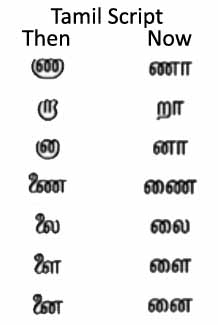
Viduthalai was started in 1935 by Periyar as a magazine. It grew into a daily newspaper by 1937. The newspaper aimed to create a rational, secular and democratic society, and also to fight superstition. The script used in the publication was in keeping with the need to cope with the developing printing technology. Periyar thought that it was sensible to change a few letters, reduce the number of letters, and alter a few signs. He further explained that the older and the more divine a language and its letters were said to be, the more they needed reform.

MVS8

Soon after MG Ramachandran (MGR) became the Chief Minister of Thamizh Nadu in 1978, all ideas of Periyar on the changes and modification of Thamizh alphabets were accepted. An act was passed in the Thamizh Nadu Assembly in 1978, bringing the changes into effect. These modifications have made Thamizh as the first Indian language to be adapted for computerisation, obviously, due to the reduced number of alphabets.

After the act was passed and the ‘Viduthalai’ font became the standard Thamizh font, we had an open house forum at our school to discuss its implications. The forum was an open discussion, led by Mr Somasundaram and moderated by Squadron Leader Manickavasagam, our then Headmaster. The students in attendance were from Grades 9 to 11. During the discussion, Mr Somasundaram made a scathing attack on Hindu religion. He said that when State Bank of India opened its branch in Amaravathinagar, only our school Principal, Colonel AC Thamburaj and the school band were in attendance for the inauguration, whereas, when a branch of the Ganapathy Temple was inaugurated in the bus-stand, the public were dancing. He cited this as a reason for the country not achieving the desired progress.

Some teachers in the audience objected to Mr Somasundaram’s statement and wanted him to withdraw it, but he stood firm. Our Headmaster retrieved the situation by saying that everyone in the audience were mature enough to draw their conclusions and there was nothing objectionable in the statement. I thought that Mr Somasundaram was right and the situation and the public’s attitudes have not changed ever since.

Periyar came into national prominence with the Vaikom Sathyagraha, a nonviolent protest movement to secure temple entry rights and access to temple roads for people of all castes in Vaikom, a small principality of the then princely state of Travancore (now in Kerala). Periyar came to Vaikom in April 1924 and was arrested by the Travancore Police, but he was unrelenting and the satyagraha movement gained strength. Mahatma Gandhi, on an invitation from Rajaji, went to Vaikom and began talks with the Queen of Travancore where it was agreed that the police pickets would be removed. The styagraha resulted in Sree Chithira Thirunal, the Travancore ruler, signing the Temple Entry Proclamation in 1936, allowing everyone entry into the temples.

Periyar created Dravidar Kazhagam (DK) in 1944 from the Justice Party. DK became a non-political socio-cultural movement, which it remains till date, though comparatively inactive. The members were asked to give up the posts, positions and titles conferred by the British rulers. They were also required to drop the caste suffix of their names.

Periyar declared that 15 August 1947, when India became politically free, was a day of mourning because the event marked, in his opinion, only a transfer of power from the British to the upper castes. Though he had basic differences with Mahatma Gandhi, Periyar was terribly grieved when Gandhi fell a victim to an assassin’s bullets on January 30, 1948. He even suggested on the occasion that India should be renamed as Gandhi Nadu.

Annadurai, Karunanidhi and MGR, who were with Periyar in the DK movement, had political aspirations and wanted a share in running the government. They were looking for an opportunity to part ways with Periyar. At the ripe old age of 70, in 1948, Periyar married 30 year old Maniammai. Many led by Annadurai quit DK stating that Periyar had set a bad example by marrying a woman much younger to him in his old age. They formed the Dravida Munnetra Kazhagam (DMK) in 1949. To my mind, one can hardly fault Periyar for marrying a young woman. Perhaps, at the age of 70 he was still young at heart! He went on to live a quarter century more, continuing his social reform movement.

In 1970, UNESCO in recognition of his efforts cited him as “the Prophet of the New Age, the Socrates of South East Asia, Father of Social Reform Movement, and Arch enemy of ignorance, superstitions, meaningless customs and base manners.”