The first atheist I ever encountered in my life was Mr. M.V. Somasundaram (MVS). He was our Tamil teacher in Grade 6, taught us Social Studies in Grade 7, English in Grade 8, History in Grade 9, and Civics in Grade 10. He was as versatile as the subjects he taught, possessing a masterful grasp of them all. A remarkably soft-spoken man, he hardly ever raised his voice. His son, Aravazhi, was our classmate.

During our days at Sainik School Amaravathinagar, we always said grace before and after every meal to thank God for our food. While in Grade 7, I noticed that Mr. Somasundaram always remained seated during grace. When I asked my friend Sundar about it, he told me that MVS was an atheist. Having never heard the word before, I had to look it up in the dictionary.
Mr. Somasundaram was a rationalist fiercely opposed to the superstitions plaguing society. He believed that our day-to-day lives gave undue importance to religion. Yet, he never forced his viewpoints on anyone, nor did he try to indoctrinate his students. Needless to say, I did not become an atheist, but the seeds of rationalism were sown by him. Today, Mr. Somasundaram lives a peaceful, retired life in Coimbatore with his son Aravazhi.
MVS subscribed to Viduthalai (Freedom), a Tamil newspaper and the official mouthpiece of the Dravida Kazhagam (DK). (His son confirms that he still subscribes to it to this day.) Delivered by the postman, MVS always brought the paper to class. Once in a while, he would leave it half-open on the teacher’s table, giving me the chance to steal a few glances. The paper featured unique characters of the Tamil alphabet—especially in its title—that stood out to me. Once again, I turned to Sundar for details. Sundar explained the significance of Viduthalai and told me that the great social reformer, Periyar, was Mr. Somasundaram’s mentor and the raison d’être for his atheism.


MVS subscribed to Viduthalai (Freedom), a Tamil newspaper and the official mouthpiece of the Dravida Kazhagam (DK). (His son confirms that he still subscribes to it to this day.) Delivered by the postman, MVS always brought the paper to class. Once in a while, he would leave it half-open on the teacher’s table, giving me the chance to steal a few glances. The paper featured unique characters of the Tamil alphabet—especially in its title—that stood out to me. Once again, I turned to Sundar for details. Sundar explained the significance of Viduthalai and told me that the great social reformer, Periyar, was Mr. Somasundaram’s mentor and the raison d’être for his atheism.
The Mentor : Periyar
Erode Venkata Ramasamy (1879–1973), affectionately called Periyar by his followers, was a social activist, politician, and businessman who started the Self-Respect Movement in South India. As a rationalist, he inspired people to realize that all human beings are equal, and that liberty, equality, and fraternity are the birthrights of every individual. He propagated that religious leaders invented myths and superstitions purely to keep innocent people in the dark. A staunch atheist, he was famous for his blunt anti-theistic declaration: “He who created God was a fool, he who spreads his name is a scoundrel, and he who worships him is a barbarian.”
Periyar started Viduthalai as a magazine in 1935, and it evolved into a daily newspaper by 1937. The publication aimed to foster a rational, secular, and democratic society while combating superstition. Crucially, the script used in the publication was modified to adapt to evolving printing technology. Periyar believed it was sensible to change, simplify, and reduce the number of Tamil letters. He argued that the older and more “divine” a language was claimed to be, the more it desperately needed reform.
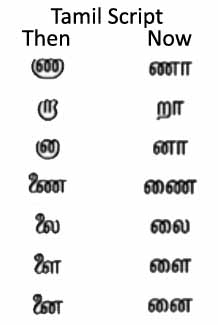
In 1978, soon after M.G. Ramachandran (MGR) became the Chief Minister of Tamil Nadu, Periyar’s ideas on script reform were officially accepted, and the Tamil Nadu Assembly passed an act bringing these changes into effect. By reducing the total number of characters, these modifications inadvertently made Tamil the first Indian language easily adapted for computerisation.
A Battle of Ideals at School
Shortly after the script reform act was passed and the Viduthalai font became the standard Tamil script, our school hosted an open house forum to discuss its implications. The discussion was led by Mr. Somasundaram and moderated by our Headmaster, Squadron Leader Manickavasagam. Students from Grades 9 to 11 were in attendance.
During the debate, Mr. Somasundaram launched a scathing critique of religious priorities. He pointed out that when the State Bank of India opened its branch in Amaravathinagar, only our school Principal, Colonel A.C. Thamburaj, and the school band attended the inauguration. In contrast, when a small branch of the Ganapathy Temple opened near the bus stand, the public celebrated by dancing in the streets. He cited this stark contrast as the exact reason why the country failed to achieve true scientific and material progress.
Some teachers in the audience took offense and demanded that Mr. Somasundaram withdraw his statement. MVS stood firm. Our Headmaster gracefully retrieved the situation, noting that the audience was mature enough to draw their own conclusions and that there was nothing objectionable in sharing an opinion. Looking back, I believe Mr. Somasundaram was entirely right—and public attitudes have changed very little since.

A Legacy of Reform
Periyar first rose to national prominence during the Vaikom Satyagraha (1924–1925), a nonviolent protest demanding temple entry rights and access to public roads for lower-caste individuals in the princely state of Travancore (now Kerala). Arriving in Vaikom in April 1924, Periyar was promptly arrested by the Travancore Police. Undeterred, his defiance energised the movement. Mahatma Gandhi later visited Vaikom to negotiate with the Queen Regent of Travancore, leading to the removal of police barricades. This historic satyagraha paved the way for the landmark Temple Entry Proclamation of 1936, signed by the Maharaja Chithira Thirunal, opening temples to all Hindus.
In 1944, Periyar transformed the Justice Party into the Dravidar Kazhagam (DK). The DK was envisioned as a non-political, socio-cultural movement—a mantle it maintains to this day. Members were asked to renounce British titles and drop caste suffixes from their surnames.When India gained independence on August 15, 1947, Periyar controversially declared it a day of mourning. In his view, the event merely marked a transfer of power from the British to upper-caste elites. Yet, despite his deep ideological differences with Mahatma Gandhi, Periyar was profoundly grieved by Gandhi’s assassination on January 30, 1948. In a tribute to the Mahatma, Periyar even suggested that India should be renamed Gandhi Nadu.
By 1949, political rifts fractured the DK. Younger leaders like C.N. Annadurai, M. Karunanidhi, and MGR harboured electoral ambitions and sought a path into governance. They found their catalyst for separation when the 70-year-old Periyar married 30-year-old Maniammai. Annadurai led a mass exit, claiming the aging leader had set a poor moral example by marrying someone so young, and subsequently founded the Dravida Munnetra Kazhagam (DMK). Personally, I find it hard to fault Periyar. At 70, he was clearly still young at heart, going on to live another quarter-century while relentlessly continuing his social crusades.
In 1970, UNESCO officially recognised his monumental impact, honouring him as “the Prophet of the New Age, the Socrates of South East Asia, Father of Social Reform Movement, and Arch enemy of ignorance, superstitions, meaningless customs and base manners.
 REJINCES