Based on my last article about Drill Instructors at the Military Academy, (please click here to read) many readers asked about the Guru-Shishya (mentor-disciple) relationship. Specifically, how does it work when a Cadet becomes a commissioned Officer, yet their former instructor remains a Subedar (Warrant Officer) or Havildar Major (Sergent Major) —technically much junior to them in the military hierarchy?
This rare phenomenon is unique to the military, spanning across India and the globe. No matter how high a Cadet rises, they hold their instructors in the highest esteem. Every officer is deeply indebted to these mentors for shaping them into leaders.
A Historic Reunion: The Chief and the Instructor
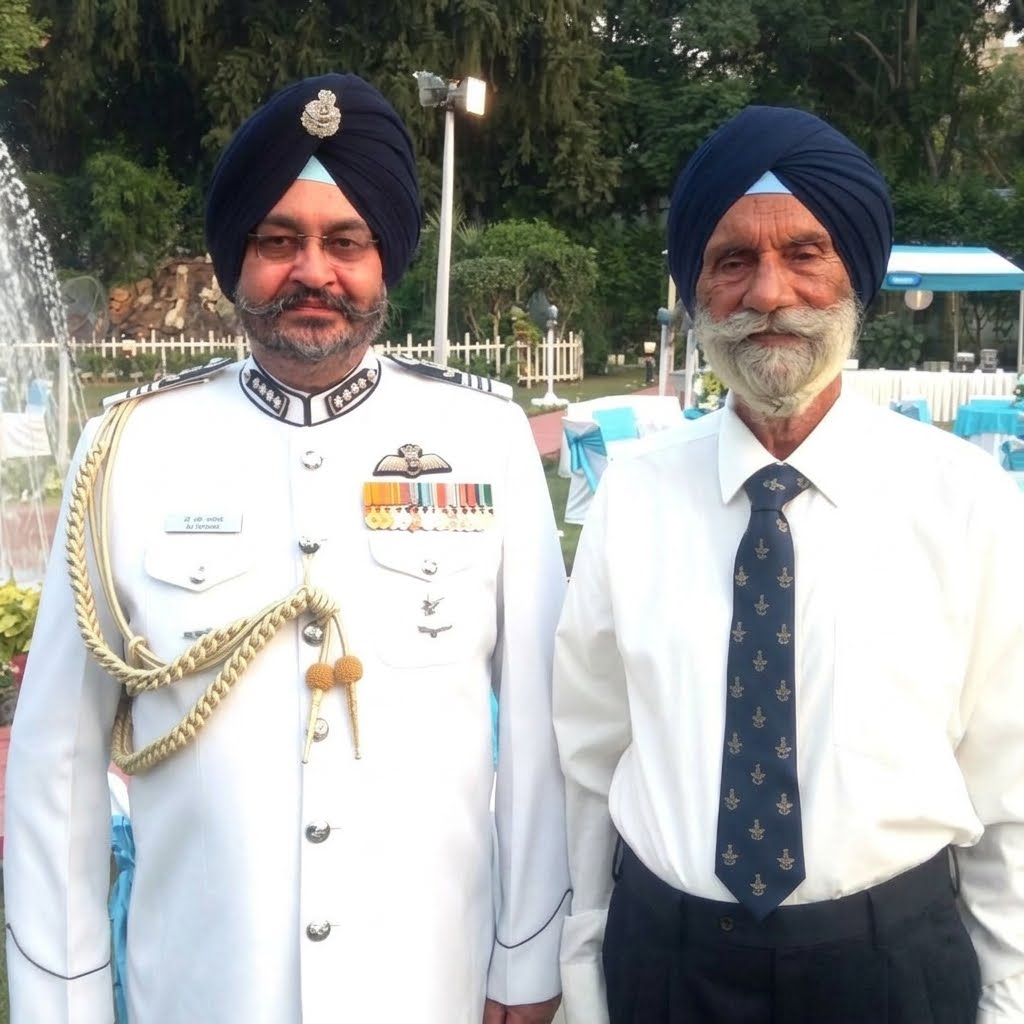
A perfect example of this bond occurred at the Indian Air Force (IAF) Day reception in October 2018. The former IAF Chief, Air Chief Marshal (ACM) BS Dhanoa, warmly reunited with his former National Defence Academy (NDA) drill instructor, Honorary Captain Faqir Singh.
Captain Faqir Singh had served as the Drill Instructor for E Squadron at the NDA before moving on promotion to become the Subedar Major of the 5 Sikh Regiment. Subedar Kalyan Chand replaced him and became our Drill Instructor thereafter.
That evening, Captain Faqir Singh was the most special guest at the Air Chief’s Akbar Road residence—a profound gesture of respect and gratitude. While Captain Singh praised ACM Dhanoa as an exceptionally disciplined cadet who excelled at drill, the Air Chief honoured his mentor by introducing him directly to Prime Minister Narendra Modi and the nation’s top military brass.
The Paradox of Rank and Authority
The relationship between an Officer Cadet and a Drill Instructor is one of the most foundational and unique dynamics in the armed forces. It is defined by a striking paradox: on paper, an Officer Cadet occupies a legal status above the enlisted ranks; in reality, the Drill Instructor holds immense institutional power, decades of experience, and absolute authority over the cadet’s daily life and training.
Drill Instructors are master tacticians, disciplinarians, and the keepers of military standards. They hold total operational authority to train, test, discipline, and evaluate. Their primary purpose is to transform a civilian into an elite leader of soldiers. They do not treat cadets as officers; they treat them as blank slates that must be forged under extreme stress. To an outsider, the interaction is characterized by flawless military bearing, strict customs, and intensive discipline.
Reel Life Mirroring Real Life: An Officer and a Gentleman
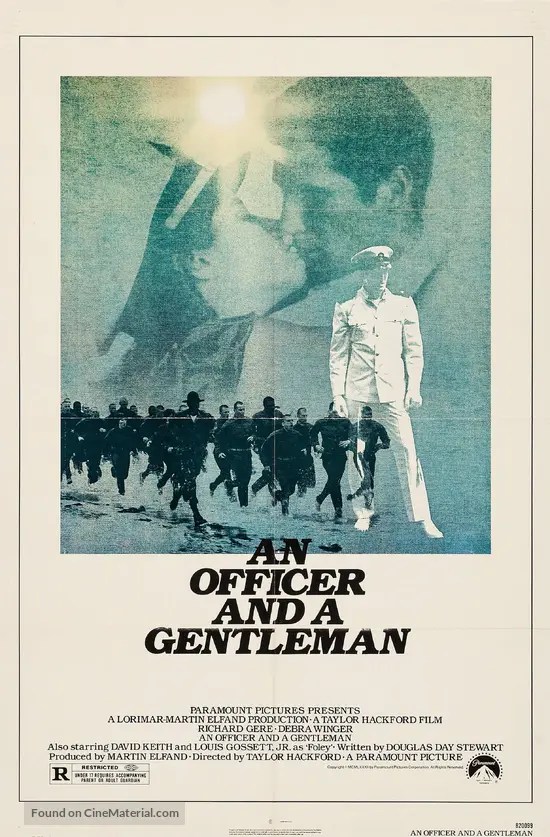
The relationship between Officer Cadet Zack Mayo (Richard Gere) and Drill Sergeant Gunnery Sergeant Emil Foley (Louis Gossett Jr.) in the 1982 movie An Officer and a Gentleman perfectly depicts this dynamic. It is a story defined by intense psychological warfare, a mutual testing of wills, and an eventual deep, unspoken respect.
Though Cadet Mayo will technically outrank Foley upon graduation, the drill sergeant holds absolute authority over him during the 13 weeks of Officer Training. Foley views Mayo as selfish, arrogant, and emotionally detached—someone using the Navy to escape a troubled background rather than possessing the integrity to lead sailors.
To expose his true character, Foley subjects Mayo to brutal physical punishment, extra chores, and constant psychological pressure. During an exhausting, weekend-long hazing session, Foley demands Mayo quit. Mayo breaks down and screams the iconic line, “I got nowhere else to go!” This vulnerability proves to Foley that Mayo genuinely needs the Navy and has the resilience to stay.
After this breakthrough, Foley shifts from trying to break Mayo to building him into a leader. He pushes Mayo to look beyond himself, which is realized when Mayo abandons his attempt to break an obstacle course record to help a struggling classmate.
The Final Silver Dollar
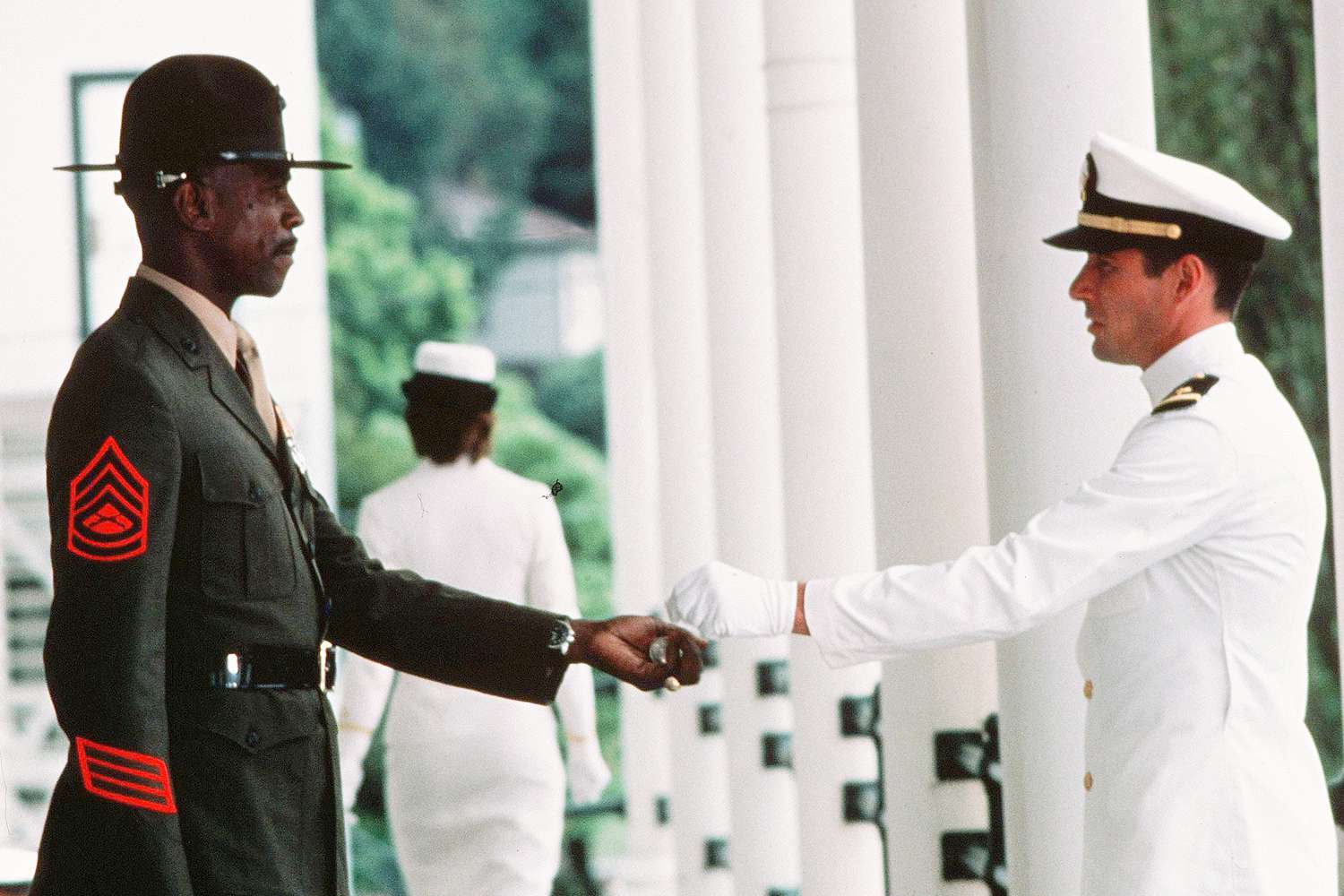
The climax of their dynamic occurs during graduation. By military tradition, a newly commissioned Officer gives a silver dollar to the first enlisted service member who salutes them.
When Mayo receives his commission, he locks eyes with Foley. Foley gives him a flawless, sharp salute and says, “Congratulations, Ensign Mayo.” Mayo hands him the silver dollar, smiles, and replies, “I’ll never forget you, Sergeant.” Foley’s gruff response—”Get out of here“—proves that beneath the harsh exterior, he succeeded in creating a capable leader.
It is this exact spirit that echoes in every academy across the world, captured perfectly in our own traditional salute: Wah Ustad Wah!

