The Art of Thinking About Thinking

Driving alone on a Canadian highway, I listened to a podcast on metacognition. Coined by psychologist John Flavell in the 1970s, metacognition is defined as the awareness and regulation of one’s own cognitive processes—simply put, thinking about your thinking. It allows a person to plan, monitor, and evaluate learning strategies to maximise their effectiveness.

As the highway stretched ahead, my mind drifted back to 1987, the year our Regiment received the computerised Bofors guns. I was tasked with training our soldiers on this new system. Most of the young recruits had only a high school education and were largely intimidated by the then-daunting world of computers.
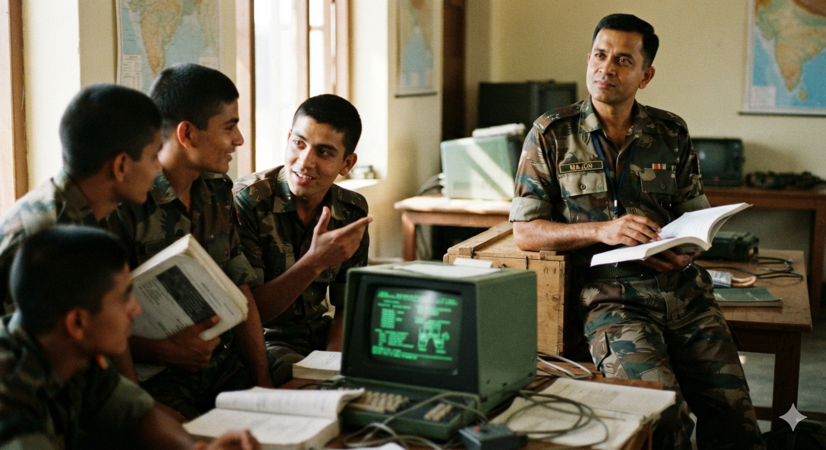
During a break, I overheard a few of them discussing my training style. “Reji Sir does not seem to read or practice much on the computers, but he is a master at it,” one remarked. Another joked that I must be sleeping with the manuals under my pillow, absorbing knowledge through divine induction. A third suggested that I merely flipped through the pages and the contents magically entered my head.

Similar traits were often attributed to me during various officers’ courses. Many of my peers lamented that I rarely studied and spent my time roaming around, yet still managed to score high marks. I often wished I actually possessed such supernatural powers. In truth, my aim was never to top the course; it was simply to learn.

Listening to the podcast, I realised that I had been unconsciously employing metacognitive techniques all along. I rarely took notes, much to the annoyance of my instructors, and I never used a notepad during military service. While some senior officers assumed I wasn’t being serious, my focus was entirely on the analysis taking place in my mind. It was never about transcribing information; it was about deeply understanding the task at hand.

Metacognition comprises two core components. The first is metacognitive knowledge—understanding yourself as a learner, the specific tasks you face, and the strategies available to tackle them.

The second is metacognitive regulation, which involves actively directing your learning through three phases:

  • Planning: Setting goals and selecting the right strategy before beginning.
  • Monitoring: Continuously checking your comprehension while reading or working.
  • Evaluating: Reviewing your performance afterward to adjust your future approach.

Crucially, this process is guided by monitoring our subjective experiences. For instance, when you suddenly realise you do not understand a concept you just read, an internal feedback loop prompts you to pause and re-read the paragraph. This loop is the heartbeat of effective learning.

Mastering this skill enables individuals to learn faster, make better decisions, and pivot when strategies fail. Over time, I have learned to notice patterns in my own thinking and recognise my biases. When analysing information, I often form an immediate interpretation. Instead of accepting that reaction at face value, I now pause and ask why I read the text that way. This simple question has led me to deeper study, greater humility, and a more honest engagement with ideas. Metacognition creates the reflective space required to challenge our assumptions.

In a military environment, the importance of collective metacognition becomes matters of life and death. Success in operations hinges on briefings, orders, and drills designed to hone quick reactions under adverse conditions. This kind of organisational awareness is never accidental; it requires trust, open communication, and a shared understanding between a leader and the team. A cohesive team helps identify gaps in logic, clarify ambiguous directions, and reveal unexamined assumptions. When leaders immerse themselves too deeply in their own execution, they often become blind to the flaws in their chain of events—a vulnerability that collective metacognitive awareness directly mitigates.

Remarkably, these modern themes of self-awareness find a profound, ancient echo in the Bhagavad Gita. The dialogue between Arjuna and Krishna represents a timeless psychological and metacognitive journey. Arjuna begins the epic in a state of deep distress and cognitive bias (Arjuna Vishada Yoga), overwhelmed by grief and rigid, all-or-nothing thinking. Through active questioning, Krishna teaches him to observe his own mind and regulate his reactions using several specific mechanisms:

  • Witness Consciousness (Sakshi Bhava): The Gita emphasises observing thoughts and emotions as temporary phenomena separate from the true self. This directly mirrors the modern psychological concept of de-centering, which prevents over-identification with fleeting mental states.
  • Cognitive Restructuring (Viveka): Krishna helps Arjuna break free from emotional reasoning and catastrophising by guiding him to use intellect and discrimination (viveka), shifting his focus from panic to rational duty.
  • Detached Action (Nishkama Karma): Performing duties with full engagement but without attachment to the psychological weight of outcomes drastically reduces cognitive load, anxiety, and rigid reactivity.
  • Mastery of the Mind (Manonigraha): The Gita acknowledges the difficulty of controlling a restless mind, proposing that cognitive mastery is achieved through persistent practice (abhyasa) and continuous refocusing.

Integrating these ancient insights with modern psychology fosters deep resilience, emotional regulation, and clearer decision-making under stress. My brief reflection on that Canadian highway—connecting a modern podcast to military memories and ancient philosophy—served as a powerful reminder: the art of thinking about thinking is not a modern trend, but a timeless and essential human endeavour


Beyond ‘How Was School?’: The Art of Asking Your Child the Right Questions

During a recent visit to a family friend in Canada—a new immigrant from India—he confessed his growing frustration. His son, a kindergartner, came home every day with the same report: “I played.”

That’s all they do?” the father said, shaking his head. “Back home, my nephews his age are already rattling out addition and multiplication tables. Here, it feels like a glorified daycare.”

I  watched his son build a tower of cushions on the floor and asked, gently, “What did you enjoy most at school today?”

“We played!” the boy beamed.

What did you play with?”

Blocks.”

And what did you make?”

His eyes widened. “A rocket. To go to the moon. It takes fourteen days to get there. You have to wear a big puffy suit so you can breathe. And when you land, you hop around like a kangaroo — because the gravity’s different, you know?”

The father stared, speechless. His son hadn’t been just playing. He had been engineering a spacecraft, mastering lunar physics, and narrating an interplanetary adventure—all in one afternoon. But the father’s routine question (“What did you do?”) had only ever unlocked a routine answer.

The Hidden Power of a Better Question

That small moment reveals a much larger truth: the way we ask shapes the way our children answer—and ultimately, the way they see their own experiences. Generic prompts like “How was school?” or “What did you learn?” are conversation dead ends. They invite one-word replies because they require little reflection and offer no emotional hook.

Psychotherapist and author Amy Morin puts it simply: if you want real connection, you have to ask real questions. Specific, open-ended questions don’t just pull out better answers—they actively train young minds to think more deeply, feel more fully, and grow more resilient.

Here are seven transformative alternatives to try:

• “What was the best part of your day?”
This simple shift trains the brain to scan for joy. Over time, it builds a habit of gratitude and optimism—even on tough days.

• “What mistake did you learn from today?”
This reframes failure as a teacher. It tells your child: It’s safe to mess up, as long as you grow from it.

• “Who were you proud of today?”
This turns attention outward, nurturing empathy and helping your child recognize kindness and effort in others.

• “What’s one thing you could have made better today?”
Asked with warmth, not judgment, this opens the door to honest self-reflection and problem-solving—without shame.

• “Who did you help today?”
Repeated daily, this question slowly rewires their default setting toward compassion. Kindness becomes less a choice and more a reflex.

• “What was the most interesting thing you learned today?”
Not what did you study—but what captivated you. This fuels curiosity for its own sake and reminds them that learning is an adventure, not a chore.

• “What’s something new you want to try?”
This gentle nudge pushes past comfort zones, encouraging creativity, courage, and a growth mindset—all without pressure.

Small Change, Big Ripple

We all want children who are empathetic, curious, and brave. But we often forget that those qualities don’t just appear—they’re cultivated, one conversation at a time. And it starts not with a curriculum, but with a question.

So, when your child walks through the door and drops their backpack, pause. Skip the script. Ask something that unlocks not just their day, but their world.

You might be surprised by what you discover—and so will they.


The Twenty-Rupee Note: A Sainik School Memory

Life Before Technology

During our years at Sainik School Amaravathinagar, the pinnacle of technology available to a cadet was a wristwatch. Only a select few possessed one – those whose parents could afford it. In my case, such luxury was out of the question. Entertainment came in limited forms: the Saturday movie and listening to film songs on the radio in the senior dorms -a device that hardly ever worked.

The Fortune of Being Seniors

We considered ourselves the luckiest batch, for we were the first to undergo the newly introduced 10+2 system of education. Previous batches had graduated after Grade 11. Consequently, we held senior status for two years – both in Grade 11 and Grade 12. The truly fortunate among us managed to join the National Defence Academy after Grade 11, escaping the final year’s academic rigours.

The Currency of Mischief

During those senior days, money became the most critical resource for my various nefarious activities. Holding cash was, of course, a serious offence. Yet whenever I returned from holidays, my eldest brother – four years my senior – slipped me twenty rupees. He managed this from the funds our father provided for agricultural expenses.

The House Master and His Quest

Late Mr. PT Cherian (Please Click Here to Read more about Him) was our House Master – a man I revere to this day, the one who laid the foundation for whatever leadership qualities I later developed. He knew well that I was perpetually up to some mischief, mostly outside the pages of textbooks, and that such pursuits required currency.

What ensued was a constant Tom & Jerry battle between us. I emerged victorious from most encounters – or at least, I liked to believe so.

His scooter announced his approach long before he arrived, its distinctive putter-putter sound echoing through the dorm. That auditory warning provided precious moments to conceal whatever needed hiding.

The Night of the Twenty-Rupee Note

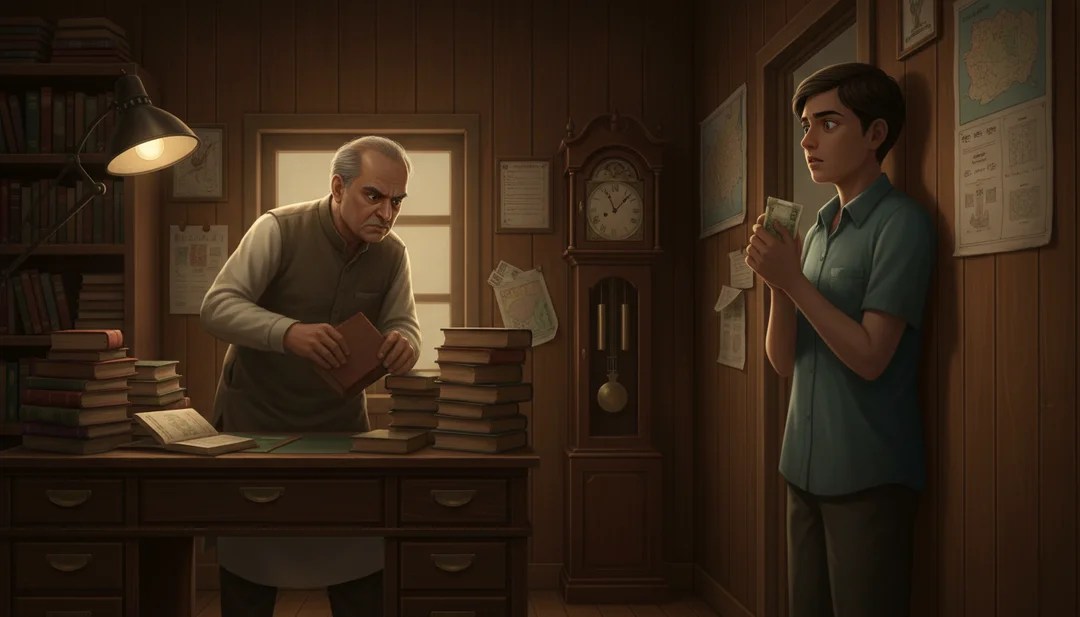
One evening after dinner, his scooter sounded as usual. But this time, he did not merely pass by. He headed straight for my cabin and commenced a thorough search-and-find operation.

Methodically, he examined every corner, every crevice. Yet he found nothing incriminating.

What he did not know was that I held the evidence – a single twenty-rupee note – clutched tightly in my palms.

Epilogue

That twenty-rupee note, crumpled and damp with nervous sweat, represented more than mere currency. It was independence, opportunity, the means to pursue the small rebellions that define adolescence. And Mr. Cherian, in his relentless pursuit, taught me a lesson far more valuable than any textbook could offer: that the battle between authority and mischief is not about winning or losing, but about the respect that endures long after both have surrendered.

A House of Crashes, Creaks, and Clash of Faiths

The Residence

In November 2002, our Regiment returned to Devlali, Maharashtra, after a ten-month deployment in Rajasthan. I was allotted a residence—a modified British barrack built in the 1940s that had been converted into officer’s quarters. It featured three bedrooms, a drawing room, and a dining room, all arranged in a single, straight line.

The ceiling loomed about twelve feet high, and the roof, constructed of Kerala tiles, stood another six feet above that. The nights were intriguing, filled with mysterious creaking sounds emanating from the attic. My only real daily challenge was the doors. At eight feet tall, engaging the latches at the top required a buddy. Perhaps the engineers of the British era assumed all soldiers would be six feet tall.

Why This House?

Why did I choose this particular building as the Commanding Officer’s residence? The answer lies in a fond memory from 1987.

While attending a training course at the School of Artillery in Devlali, I dropped by the household of Major Mathew Adipuzha on a Sunday morning. Visiting married quarters for breakfast was a sacred bachelor officer’s ritual, and it took place at this very same house.

During breakfast, Mrs. Elsy Adipuzha had a brainwave: she wanted to demonstrate her newly acquired driving skills. Major Mathew, well aware of her level of expertise, normally refused to let her behind the wheel. His condition that morning was clear: she could drive only if someone else sat in the co-driver’s seat. Suddenly, she had her volunteer—me.

We took our places in the car. She started the engine, pressed the clutch, and smoothly shifted into first gear. Everything suggested she had mastered the art of driving. Then came the horror show. The moment she released the clutch, she slammed the accelerator. The car lurched violently forward, rammed straight into a tree, and stalled. While we escaped unhurt, Major Mathew spent his entire month’s earnings getting the vehicle fixed.

Housewarming: A Clash of Faiths

The day before I officially moved into the quarters years later as the CO, Subedar Major Thangaswamy approached me. “Sir, the Pundit has said there should be a Havan at your residence tomorrow. The auspicious time he has chosen is 5:00 AM.”

No issues,” I replied. “I will shower and be ready by 4:30 AM so the Gods will be pleased with me.”

I suspect the Pundit wanted to pay me back for all the grueling soldierly tasks I had assigned him over the months, from the Battle Physical Efficiency Test (BPET) to small arms firing.

A Havan (also known as a homa or homam) is a sacred Hindu fire ritual where offerings like ghee (clarified butter), grains, and herbs are made into a consecrated fire in a Havan Kund (fire-pit) while chanting Vedic mantras.

The Sunday morning Havan went off beautifully. However, that afternoon, the Syrian Orthodox Church Priest arrived to bless the Commanding Officer’s home. He proceeded seamlessly through his rituals until he entered the third bedroom. There it stood—the Havan Kund, still smouldering, under the watchful eyes of a row of Hindu deities.

The priest stopped dead in his tracks. “Sir, if you are a true Christian, then you must follow the very first Commandment in letter and spirit.”

I looked at him calmly and replied, “All officers of the Indian Army are trained to internalise and adopt the religious customs of the soldiers they command. It is an inherent part of building trust and rapport. I believe even Jesus Christ would be perfectly fine with it.”

An Enduring Legacy

Even now, whenever we cross paths, Veteran Colonel Mathew winks at his wife and remarks, “Here comes your driving instructor!

I always smile when he says it. I remember not just the crash, but the historic house that stood witness to it—the house I chose, years later, to be my own. I didn’t select it for its grandeur, but for its stories. It serves as a beautiful reminder that sometimes the best decisions are made not by logic, but by memory—and that the finest faith is the one that opens its arms to all others.