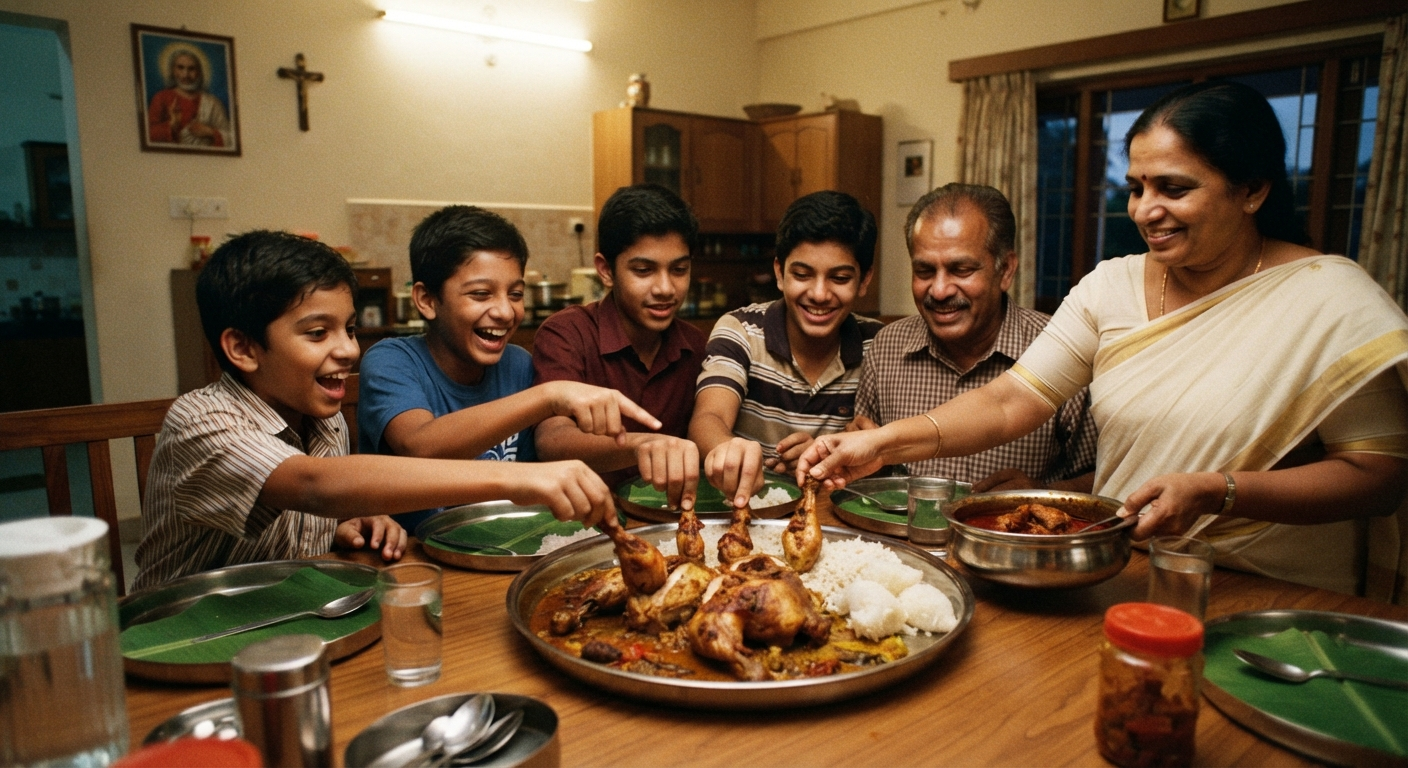
Growing up, the dinner table was a high-stakes battleground, and the ultimate prizes were the chicken legs. To keep the peace among us four brothers, Amma became a culinary surgeon. She hacked and sliced the bird with such creative geometry that, miraculously, our single chicken always ended up with four legs.
Years later, as a young Second Lieutenant in the Indian Army, I found myself at a regiment party. Our Battery Commander, the late Major Avinash Chandra—affectionately known among us junior officers as Guruji—decided to test my tactical intellect.
As a freshly minted Second Lieutenant in the Indian Army, armed with maximum enthusiasm and minimum survival instincts, I found myself at a regimental party. Our Battery Commander, the late Major Avinash Chandra, decided this casual, drink-in-hand setting was the perfect venue to rigorously test my microscopic tactical intellect.
Among us junior officers, Major Avinash was affectionately known as Guruji. He had not earned this spiritual title by preaching on a mountaintop, but rather because he possessed a magical toolkit of quick-fix solutions for every crisis we stumbled into. Whenever we manufactured a fresh disaster for our Commanding Officer to blow his top over, Guruji gracefully materialised to bail us out before court-martial became a genuine career option.
Naturally, this unofficial setup hit a speed bump during the dreaded Annual Inspection. Our Brigade Commander was not amused to hear a bunch of greenhorn lieutenants addressing a senior Major by a casual moniker. He promptly fired off his military displeasure to our Commanding Officer, who passed the disciplinary hot potato down to Major Avinash. True to his legendary status, Guruji completely missed the point of the reprimand, smiled, and calmly told the Commanding Office, “Sir, don’t worry, I really do not mind them calling me Guruji!”
Now, you must understand the strategic formatting of an Indian Army Officers’ Mess buffet. The ladies troop in first, strictly ranked by the hierarchy of their husbands, followed by the officers, sorted by seniority. As a lowly Second Lieutenant, my turn always came dead last. It was entirely in line with the Chetwoodean Credo we officers live by: Your own ease and comfort comes last, always and every time. Especially at a regimental dinner.
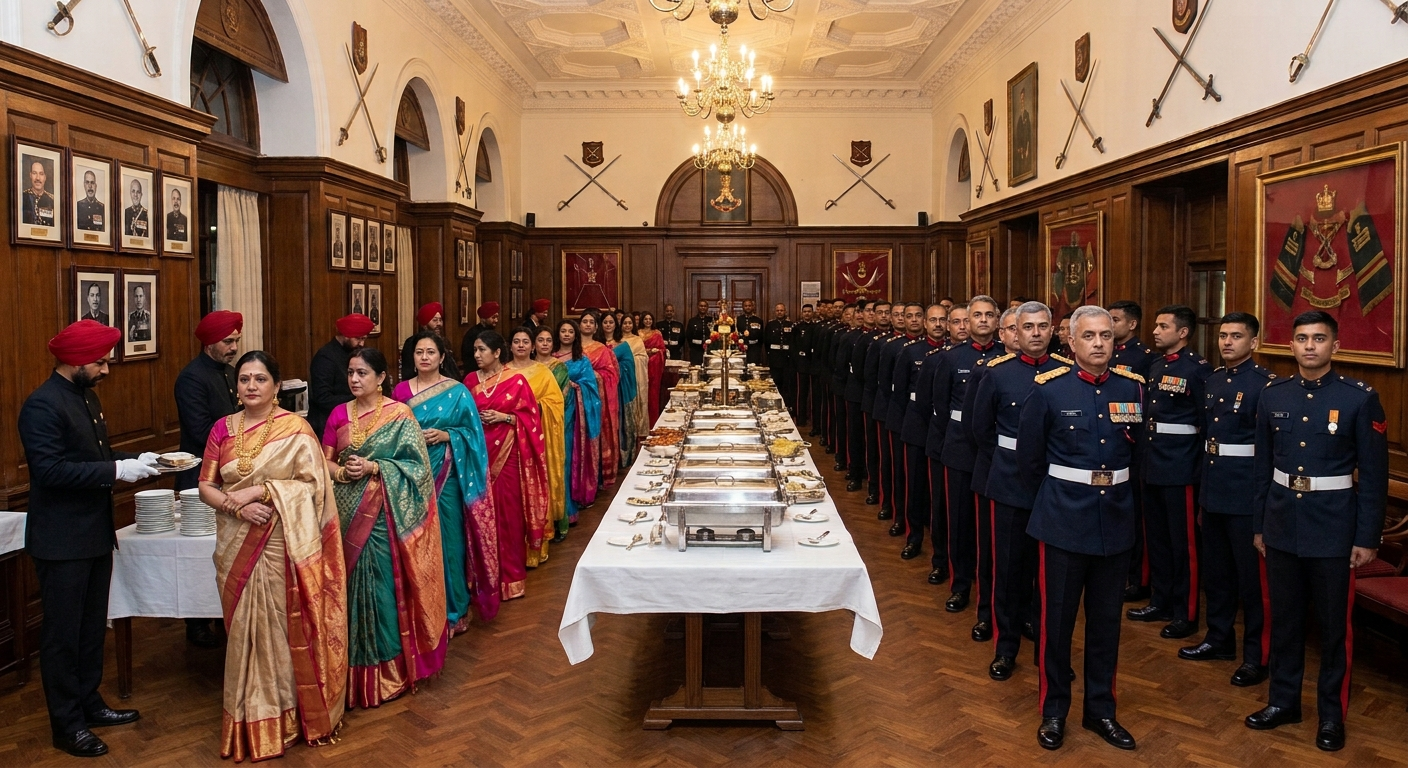
As the ladies were elegantly partaking in their dinner and we gentlemen were starving in order of rank, Guruji looked at me over his glass and asked, “Reji, how many legs does a chicken have?”
“None, Sir!” I replied without blinking.
The room burst into a hearty laugh, assuming the rookie officer had already spent too much time at the bar.
Guruji smirked. “What does it have then, wise guy?”
“Seven necks, Sir!” I shot back.
A senior officer’s wife looked at me, completely baffled. “Reji, what on earth do you mean by seven necks?”
“Ma’am, it is a matter of tactical logistics,” I explained with utmost military gravity. “By the time the senior ladies and high-ranking officers finish raiding the buffet line and my turn finally comes, seven lonely, skeletal chicken necks are the only things left floating in the gravy!”
Fast forward to my migration to Canada. Intending to live like royalty on my new Canadian dollars, I marched into the local grocery store to buy what I assumed was the ultimate luxury: chicken legs.
Here, they call them drumsticks. Back in the 1500s, musical drumsticks weren’t the sleek, straight sticks modern rock drummers use; they looked like heavy mallets with bulbous, rounded ends. Because the cooked leg looked exactly like a medieval instrument, the name stuck. More importantly, Victorian-era politeness made it vulgar to say the word leg at the dinner table, so the musical euphemism saved everyone from blushing.
Armed with this history, I braced my wallet for impact. But to my absolute shock, the drumsticks were practically being given away for free. Meanwhile, the tiny wings and bland breasts were priced like fine jewelry.
Naturally, I had to investigate this bizarre, upside-down economy. As it turns out, Canadian poultry economics are entirely dictated by sports culture.

Canadians don’t view wings as meat; they see them as edible cutlery designed for sweeping up bold sauces while screaming at a television. During the National Hockey League (NHL) & the National Basketball Association (NBA) playoffs, the Super Bowl, or any given ice-hockey night, wings become the ultimate national currency. Drumsticks, on the other hand, are viewed as a serious, sit-down dinner entree requiring a plate, a napkin, and a level of civilized dignity that simply doesn’t align with spilling beer while yelling at a referee.
Amma would be absolutely thrilled to know that in Canada, her hard-fought, four-legged chickens are a budget shopper’s dream. And as for me? I am just glad to finally live in a country where the local supermarkets have permanently shielded me from the tyranny of the seven chicken necks.

