Like many Canadian teenagers, our children went through a phase when they desperately wanted tattoos—largely because all their friends were getting them.
Whenever the topic came up, I gently discouraged them. I reminded them that we have no right to disfigure the beautiful, God-given skin we are born with. I told them to remember that their mother carried them for ten months, and together, we poured our hearts into raising them and protecting their health.
My own mother used to look at me and lament that not even an inch of my skin was left intact—courtesy of my reckless childhood pranks and my years in military service. Pointing to my own scars, I always jokingly suggested to our children, “If you want tattoos, get the natural ones, just like mine.”
To add a bit of practical deterrence, I also made it clear that I wasn’t going to foot the bill for any ink. Of course, they earned good money from their part-time jobs during high school and didn’t actually need my financial help, but the principle stood.
How can I forget my first tattoo?
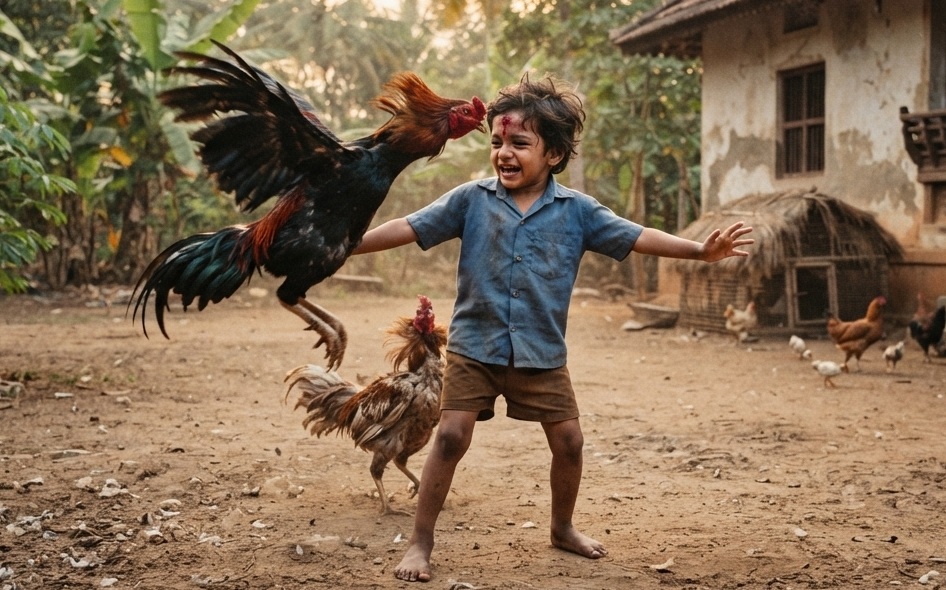
In my childhood, I was always fascinated by the brood my mother reared. The most dominant cock assumed the position of a rooster, leading the flock. There were many duels to establish supremacy, and the defeated cocks submitted to the rooster. The rooster always pushed ahead of the females to have first pickings of the food while the hens stood back. Our neighbour’s rooster was bigger and always bullied ours. In one such fight, I—then aged about four—barged between the two roosters in an attempt to protect ours. The neighbour’s rooster literally flew into a rage and pecked my forehead, leaving me bleeding and presenting me with a scar that became my identification mark. A mark of recognition! How would I be identified without the help of the neighbour’s rooster? A philosophical poser.
Today, looking back, we feel an immense sense of parental pride. Our children heeded our advice, respected our perspective, and still carry their pristine, God-gifted skin.
Tattoos and the Canadian Armed Forces (CAF)
Ironically, given my own military background and the scars that came with it, the military has evolved significantly regarding body art. For those who do choose to serve, the Canadian Armed Forces (CAF) currently permits tattoos, body art, branding, and scarification. However, they must adhere to the specific standards of dress, deportment, and non-offensive content outlined in the CAF Dress Instructions:
- Allowed Tattoos: Most tattoos on the arms, legs, and torso are fully acceptable in uniform.
- Prohibited Content: Tattoos are strictly banned if they depict nudity, are associated with criminal activities, or promote hatred, violence, discrimination, or harassment. This includes content reflecting racism, sexism, xenophobia, or sexually explicit material.
- Head and Face Restrictions: Tattoos on the face, head, and scalp are generally prohibited. Rare exceptions are made only for approved cultural, religious, or natural-looking cosmetic purposes. Furthermore, extreme body modifications—such as sclera (eyeball) tattoos—require an individual medical assessment.
In the end, whether it is the regulations of the military or the guidance of a parent, the boundaries we set are always about pride, respect, and how we choose to present ourselves to the world. And sometimes, the best tattoos are the ones life gives us—whether we ask for them or not.


A beautifully written reflection Sir. Life has a way of etching its own stories on us, and the “natural tattoos” carried from service and childhood mischief always carry the deepest meaning. The best stories aren’t painted on, they’re earned through living. Wonderful thoughts Sir!
LikeLiked by 1 person