
By Brig Azad Sameer (Retd)
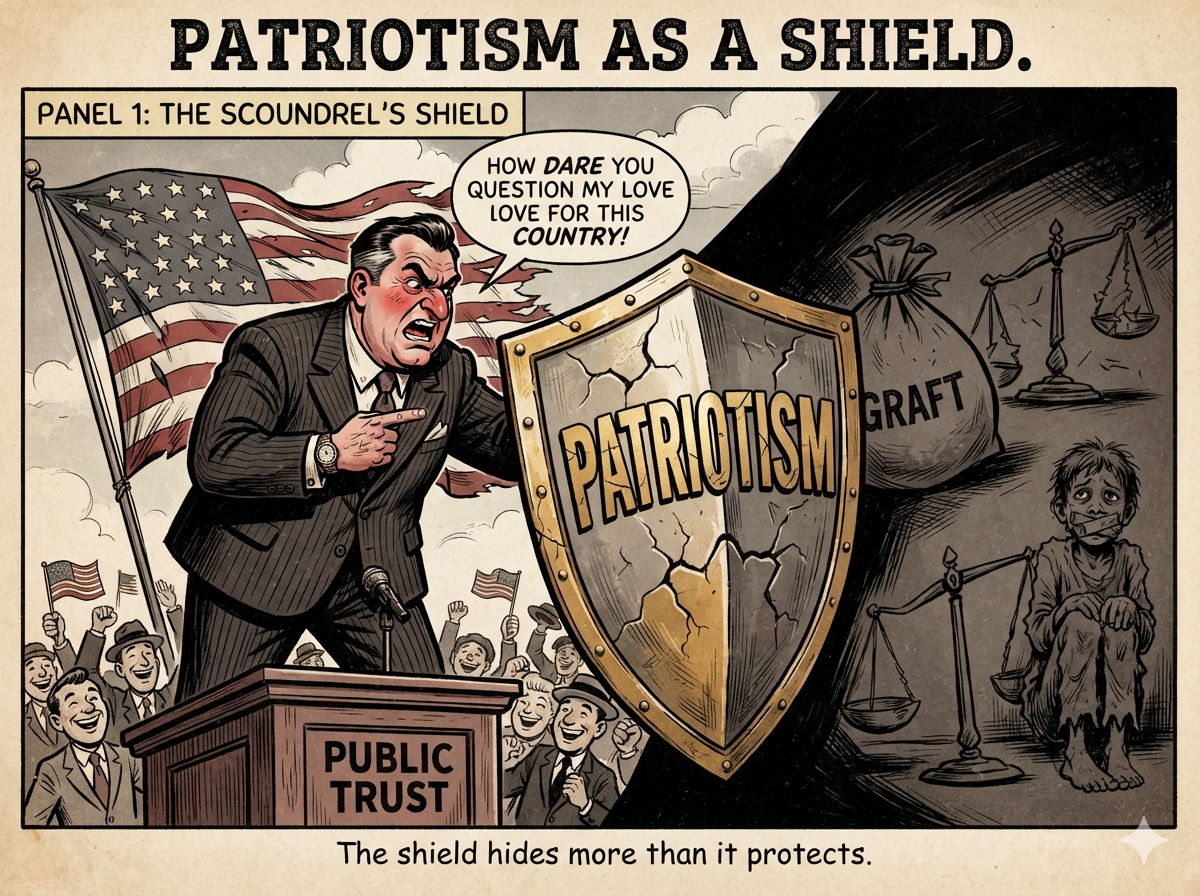
When Samuel Johnson famously declared in 1775 that “patriotism is the last refuge of the scoundrel,” he was not denouncing genuine love for one’s country or community. Instead, Johnson was targeting a specific form of political theater: the weaponisation of national identity by those seeking to shield corrupt acts, deflect accountability, or inflate their own stature. Throughout history, whenever power fails on substance, performance takes over. Flag-waving becomes a substitute for virtue, and jingoism becomes an iron shield against criticism.
History’s most destructive autocrats exemplified this dynamic by elevating state-centric nationalism into a totalising faith. Adolf Hitler transformed German patriotism into a racialised crusade, using the defense of the Vaterland to justify territorial aggression, silence domestic opposition, and execute mass murder. Benito Mussolini exploited Italian irredentism, using the glorious myth of the Roman Empire to cover the brutality of his fascist regime and mask its economic failures. In the Soviet Union, Joseph Stalin cynically recast Marxism into Socialism in One Country and rallied the nation under the banner of the Great Patriotic War – a desperate plea to traditional Russian nationalism that consolidated his totalitarian grip and cleansed his bloody purges from public accountability. In every case, intense national devotion was demanded not to serve the people, but to insulate the leader from judgment.
This dynamic is not exclusive to totalitarians; it repeatedly manifests across democratic history as well. In ancient Rome, the Senator Catiline attempted to overthrow the Republic while wrapping his conspiracy in romanticised appeals to traditional Roman liberty. During the French Revolution’s Reign of Terror, Maximilien Robespierre institutionalised state violence under the banner of republican virtue, branding any opponent a traitor to the Fatherland. Centuries later, during the American Red Scare of the 1950s, Senator Joseph McCarthy weaponised anti-communist hysteria to destroy lives and consolidate power, framing criticism of his reckless overreach as disloyalty to the flag.
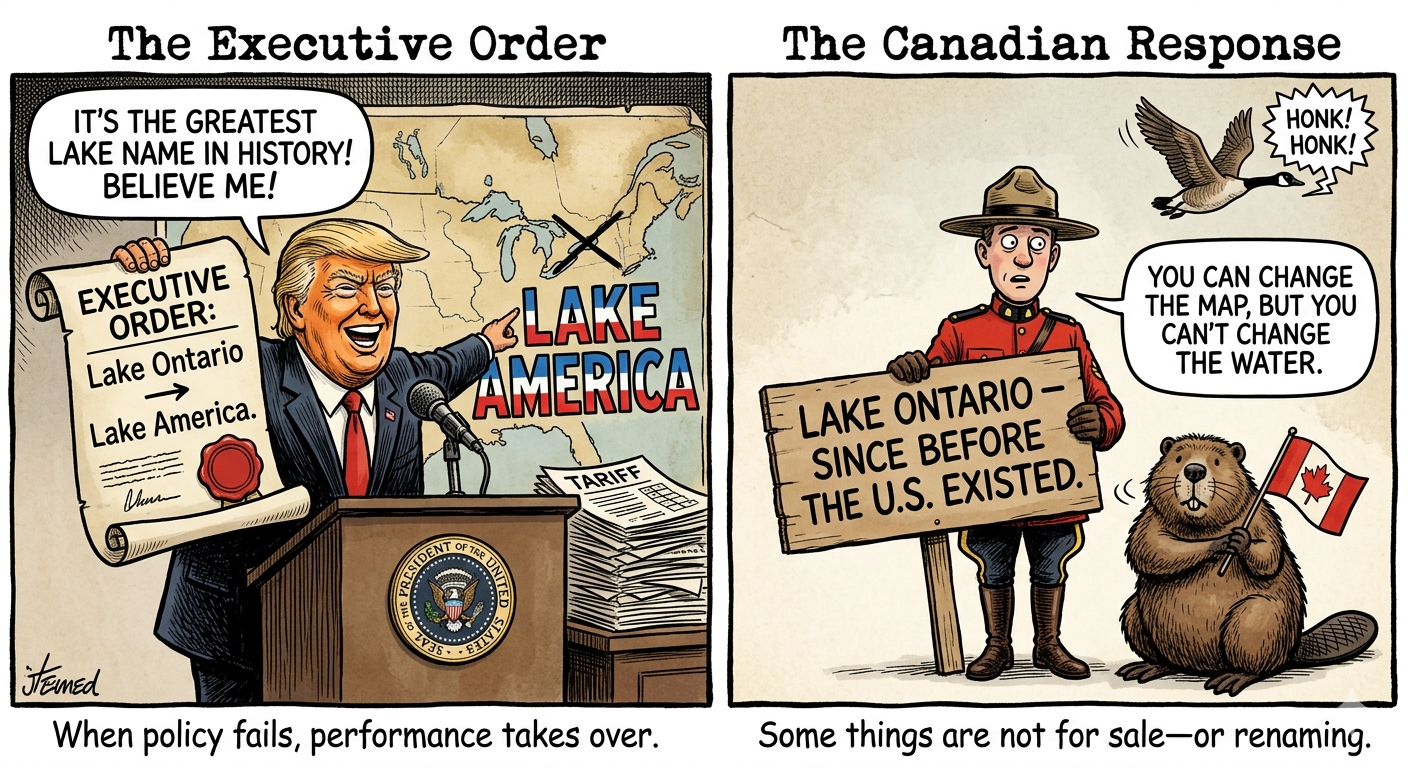
In the last 50 years or so we have seen this phenomenon coming alive in many parts of the world practiced by astute politicians who lack substance. The latest episode in this long, sordid trajectory is the geopolitical spectacle surrounding Lake America. In late August 2026, amid an escalating trade war and tariff dispute with Canada, an executive order from Washington officially declared that the US portion of Lake Ontario—a shared body of water whose Indigenous name Ontario predates both modern nations by centuries—would be renamed Lake America for federal usage.
Wrapped in rhetoric claiming to honor the contributions of visionary and patriotic Americans, the declaration offers a textbook modern example of Johnson’s thesis. Renaming a shared, historic body of water does nothing to resolve trade deficits or economic friction; it is political posturing designed to offer quick, sensational victories to a domestic audience. It uses geography as a vanity project, wrapping diplomatic failure in the safe, unassailable cloak of hyper-patriotism.
The Lake America controversy reinforces why Johnson’s warning remains vital. True patriotism builds, preserves, and reflects humility in service to a society’s highest ideals. Scoundrels, by contrast, treat national pride as cheap currency—slapping a flag on an ego, weaponising national symbols to silence critics, and demanding applause for the performance. Whenever power insists that bluster is loyalty, history tells us to look closely at what that bluster is trying to hide.

