The Lottery Paradox: Faith, Fortune, and the Kerala Dream

Driving through the lush countryside of Kerala with Anurag—a classmate of our nephew Joji from IIT Kharagpur, hailing from Bihar—I was met with a question that caught me off guard.

“Why are there lottery sellers all along the road, nearly every five hundred metre?“
The Economics of Hope

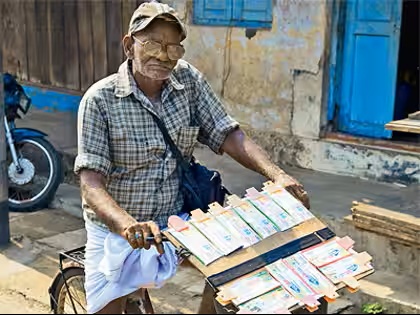
The lottery system in Kerala is government-run and meticulously regulated. It supports over 35,000 authorised agents and more than 100,000 retail sellers, whose families depend on commissions for their daily bread. In total, the Kerala Lottery provides direct and indirect employment to over 2.5 lakh people. One percent of the total turnover is set aside as a welfare fund for the benefit of lottery agents and sellers.
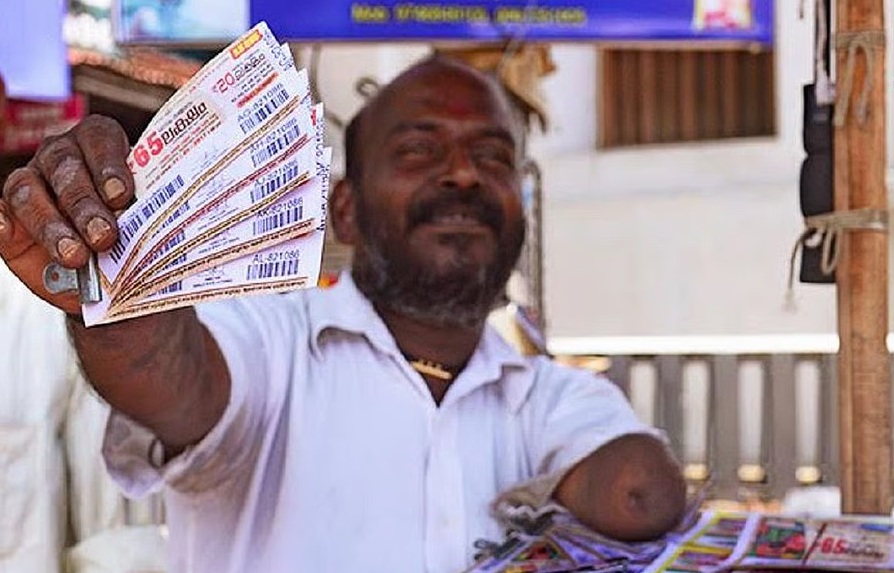
Most retail sellers—those standing under the scorching sun at traffic signals or bus stops—are financially poor, and some are differently abled. When we buy a ticket from them, we are not merely chasing fortune; we are silently supporting a family.

A Historic First

On November 1, 1967, Kerala became the first Indian state to sell a lottery ticket. That pioneering step has since evolved into a cultural phenomenon, woven into the daily fabric of Keralite life. In 2006, the Congress-led United Democratic Front government imposed a ban on all lotteries in the state. But within months, the ban was diluted—limited only to online lotteries—after widespread concern about the devastating impact on the livelihoods of thousands of sellers.

The Psychology of the Purchase

Why do people buy lottery tickets?

The answer lies in aspiration. Many buyers come from economically weaker sections of society. When conventional paths to prosperity seem blocked, when debt mounts and dreams fade, the lottery offers a sliver of hope—a chance to rewrite one’s destiny overnight. Some buy tickets regularly, even compulsively, and are often branded as addicts. Critics call it gambling. But for many, it is not a vice; it is a prayer.

The Sacred and the Secular

Anurag was not fully satisfied with my explanation. So, I continued.

Just as there is a lottery seller every five hundred metres, there is also a place of worship—a temple, a mosque, or a church—within the same distance. Devotees believe that a miracle is always possible, that one day they too might win the jackpot.
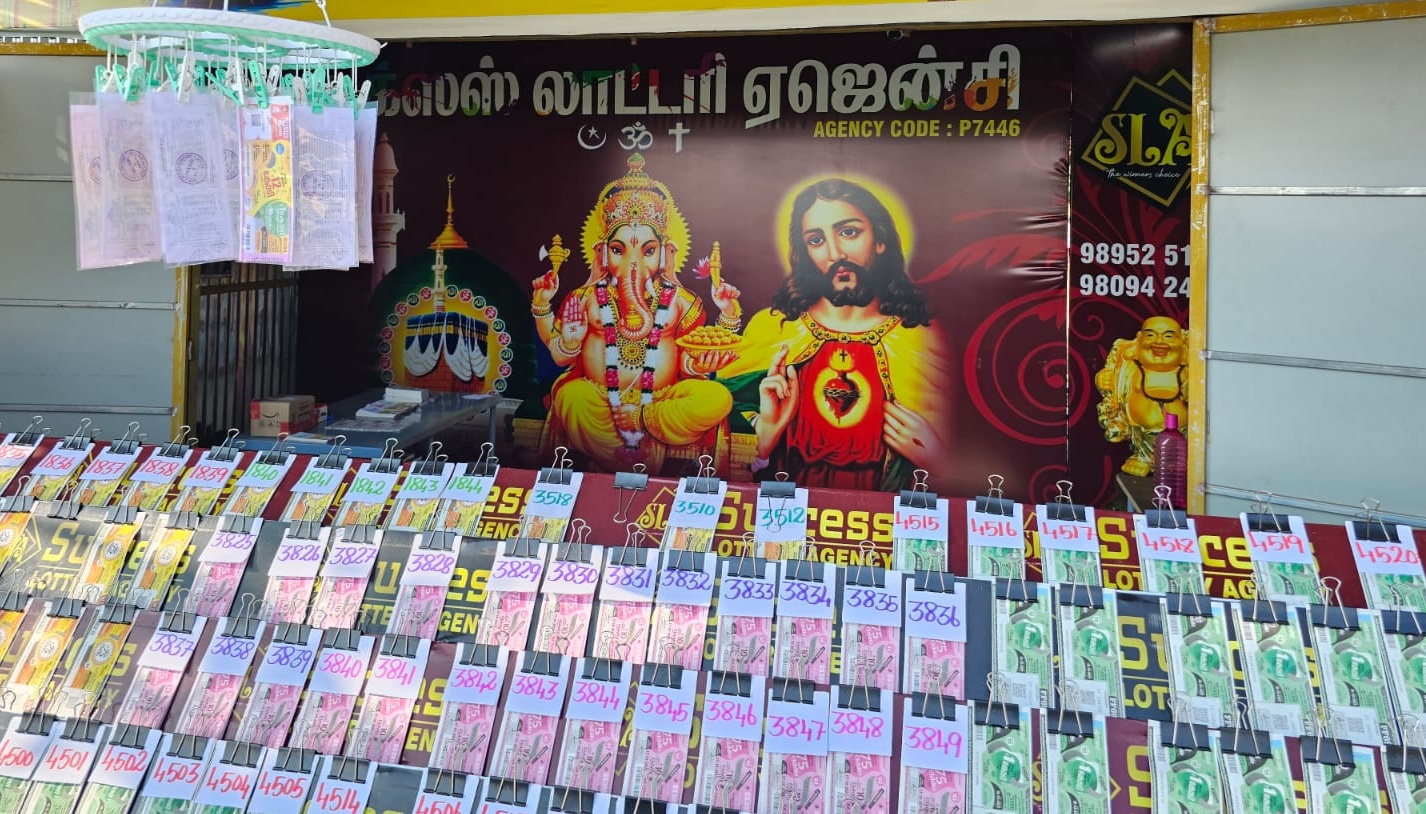
Clergy and ticket vendors alike feed into a collective narrative: that jackpot wins by daily wage earners, rickshaw drivers, and the common man are nothing less than the hand of God. The lottery stalls of Kerala prominently display images of deities from multiple religions—Hindu gods, the Virgin Mary, Islamic symbols—all in a bid to invoke good luck, build psychological trust, and align with the deep-rooted cultural belief that wealth and destiny are tied to divine grace, or bhagyam (luck).

For many buyers, the presence of such images signals that the vendor is honest and operating a legitimate business. It also minimises the subconscious guilt or stigma associated with gambling by framing the lottery as an innocent pursuit of destiny, backed by faith.

In many stalls, small altars or pictures are placed prominently. Vendors light incense sticks every morning to bless their inventory. Multi-faith representation is common, reflecting Kerala’s diverse demographic and the savvy marketing instincts of those who sell hope.

Ethics in Every Ticket

On landing at Kochi Airport, a lottery seller—a man in his sixties—approached me offering a ticket priced at Rs50. I handed him the note and said, “I don’t want the ticket. You keep the money.”

He refused, gently but firmly. “For a ticket priced at Rs50, I earn Rs6. That is enough for my expenses. I will never accept any alms.”

In that brief exchange, I learned something profound. There is ethics even in the lottery business—not in the game itself, but in the quiet dignity of those who sell it, one ticket at a time, under the sun, without complaint, without begging, without losing themselves.

The Mirage of Miracles

Shrines across religions draw massive crowds seeking divine intervention for physical and financial breakthroughs—a reflection of a society where faith and material survival are deeply intertwined.

The state government itself reframes the lottery as an act of charity. A portion of proceeds is dedicated to medical treatments for the poor, transforming the purchase into a moral good and easing the hesitation of conservative or religious buyers.

Yet the reality is more complex. Many winners report that their initial euphoria quickly turns into an overwhelming social burden. Requests for money pour in—from strangers, neighbors, relatives—for medical bills, housing, education. The dream becomes a nightmare. Religious institutions, too, stake their claim to the winnings.

The Role of Media

The media and social media further complicate the narrative. Stories of individuals who turned millionaires overnight are splashed across headlines and timelines, fueling a continued passion for lottery tickets among the masses. The dream persists, even as the odds remain staggeringly low.

A Final Thought

I concluded with a remark to Anurag: “In Canada, the only time I call upon God is when I buy a lottery ticket—because I know that my chances of winning are far slimmer than my chances of being struck by a vehicle while crossing the road to the store.“

He laughed. But I could tell the question still lingered—not about the lottery, but about the human heart, its hunger for hope, and its willingness to believe, against all odds, that a miracle is just one ticket away.

Aranmula Vallasadya: A Sacred Feast of Faith, Tradition, and Legacy

The spray of the sacred Pamba River hit my face with a shock of cold, but my arms didn’t dare slow down. It was August 14, 2026. I was accompanied by Joji – our nephew – and Anurag – his classmate from IIT Kharagpur.

Around me, dozens of oarsmen sliced the water in perfect unison, our wooden oars moving to the hypnotic, booming cadence of the vanchippattu—the traditional boat songs of praise echoing over the water. I had only twenty-four hours to immerse myself in this ancient world, and every second counted.

I was aboard a Palliyodam, a massive snake boat handcrafted from local wild jack wood (anjili). This wasn’t a standard race vessel; it is revered as the divine vessel of Lord Sree Krishna Himself. Legend says the Lord designed it to mirror Sheshanaga, the multi-headed serpent of cosmic rest, giving it a uniquely elevated stern that lets it glide through the water like a striking arrow.

Palliyodams—majestic snake boats measuring 100 to 140 feet— we rowed two kilometers toward the temple while singing vanchippattu, lyrical verses praising Lord Krishna. The vessel carried roughly 70 oarsmen, 6 helmsmen steering the stern, 10 singers, and 4 rhythm-men striking the platforms with poles to maintain perfect synchronisation.

Standing at the high prow, you feel the weight of centuries. Historically, these sharp bows rammed enemy warships to defend our shores. Today, navigating these sacred giants demands absolute precision. One hair-raising near-miss with a passing vessel sent adrenaline spiking through my veins—a sharp, sudden reminder that the river grants no margin for error.

Our destination? The historic Sree Parthasarathy Temple at Aranmula, a structure raised twenty feet high to defy the seasonal monsoons. Some say the warrior-sage Parasurama built it; others whisper that a guilt-ridden Arjuna established it after the Kurukshetra war to wash away the sin of killing his brother, Karna. Inside stands the six-foot cosmic form of Krishna as Parthasarathy, the divine charioteer, holding the Sudarshana Chakra.

The name Aranmula itself is steeped in myth, derived from a legend that Lord Krishna arrived on the shores of the Pamba River on a raft made of six bamboos. Over time, this heritage village became known as Aranmula, meaning Six Bamboos.

But on this single day, the deity wasn’t just in the sanctum. Tradition tells us he walks among us at the Aranmula Vallasadya—the undisputed King of Sadyas.

The tradition of Vallasadya is linked to Mangattu Bhattathiri, who was divinely instructed to bring feast ingredients by boat to the Aranmula temple. When enemy forces attacked the vessel during its voyage, Palliyodams from nearby villages rushed to its defense. This heroic rescue gave rise to the annual spectacle, paying homage to the oarsmen—the original soldiers of the river—who fought that day.

Originating from a legendary rescue, this annual feast spans over sixty days from July to September. It is a spectacle of ultimate hospitality where the line between the divine and the human blurs.

After the noon prayers, we were welcomed like royalty. The air filled with the scent of burning oil lamps, tobacco, and betel leaves. We presented the nirapara—a cylindrical wooden vessel overflowing with rice and crowned with a coconut flower—before marching to the feast halls.

What followed was a culinary masterpiece: sixty-four traditional vegetarian dishes meticulously laid out on a vibrant plantain leaf. But at a Vallasadya, you don’t just sit and wait to be served. You sing for your food.

Following an ancient game of theatrical demand, oarsmen belt out verses of Vanchippattu, playfully demanding specific curries. The songs trace the lifecycle of the food, from the soil to the pot. Because it is believed that Krishna himself is disguised among the rowers, the hosts must grant every playful demand, ensuring that totality and completeness are served to all.

Before my day in this heritage village came to an end, I held an Aranmula Kannadi. Unlike any mirror you have ever looked into, this is a marvel of ancient metallurgical wizardry. Hand-cast from a highly guarded, secret alloy—not glass—its reflections form directly on the front surface. There are no secondary reflections, no distortions. It is a flawless window of absolute truth, protected by a Geographical Indication (GI) tag since 2004 and celebrated worldwide, even finding a home in the British Museum.

As the echoes of the oarsmen’s songs faded into the dusk, I realised something profound. In a world deeply fractured between believers and non-believers, places like Aranmula offer a different kind of anchor. You don’t need to be religious to be moved by this. My single day on the Pamba River was a brief flash in time, but it proved that our roots secretly shape our lives, anchoring our identity and grounding our sense of belonging. Knowing where we come from is the only way to understand where our future is growing.

Map Wars : Is the Indian Ocean Next?

Geography class just got a lot more complicated.

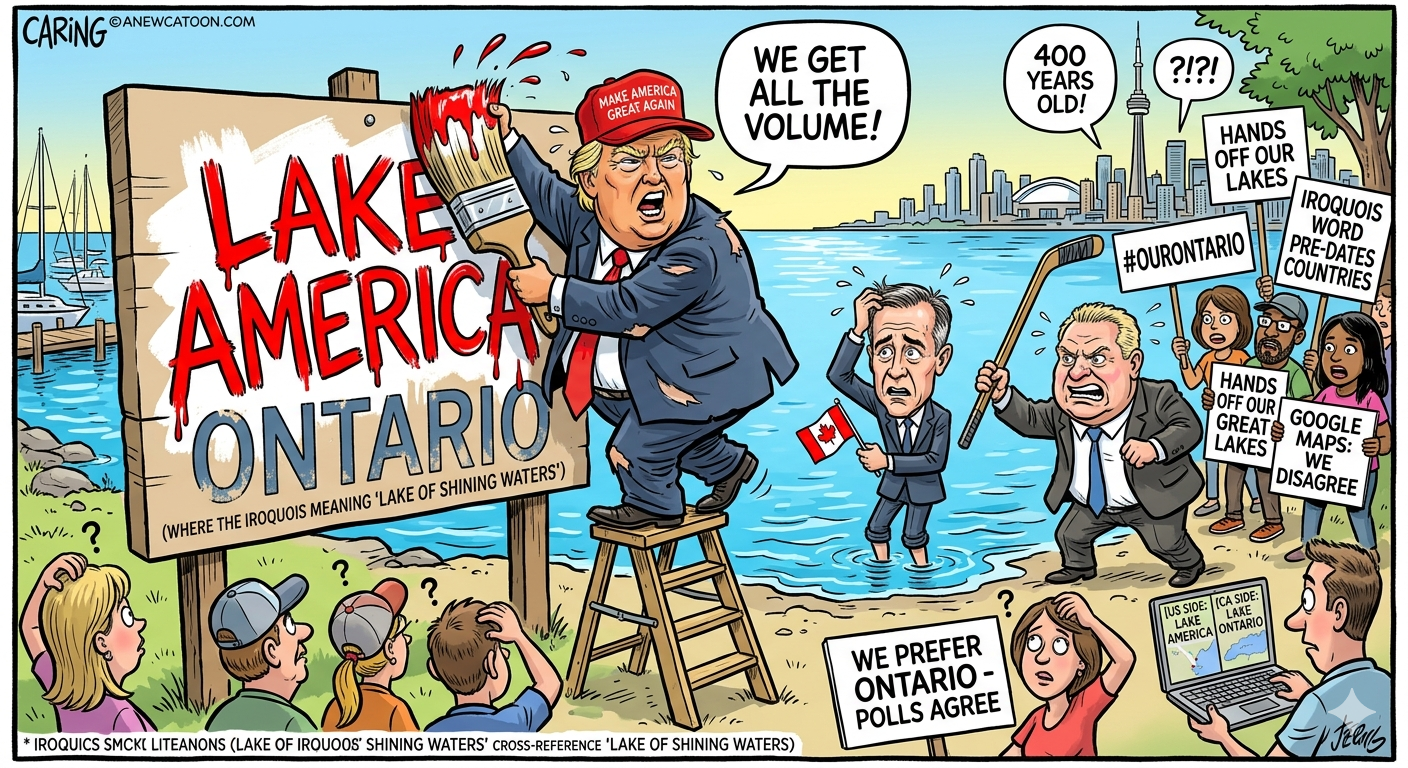
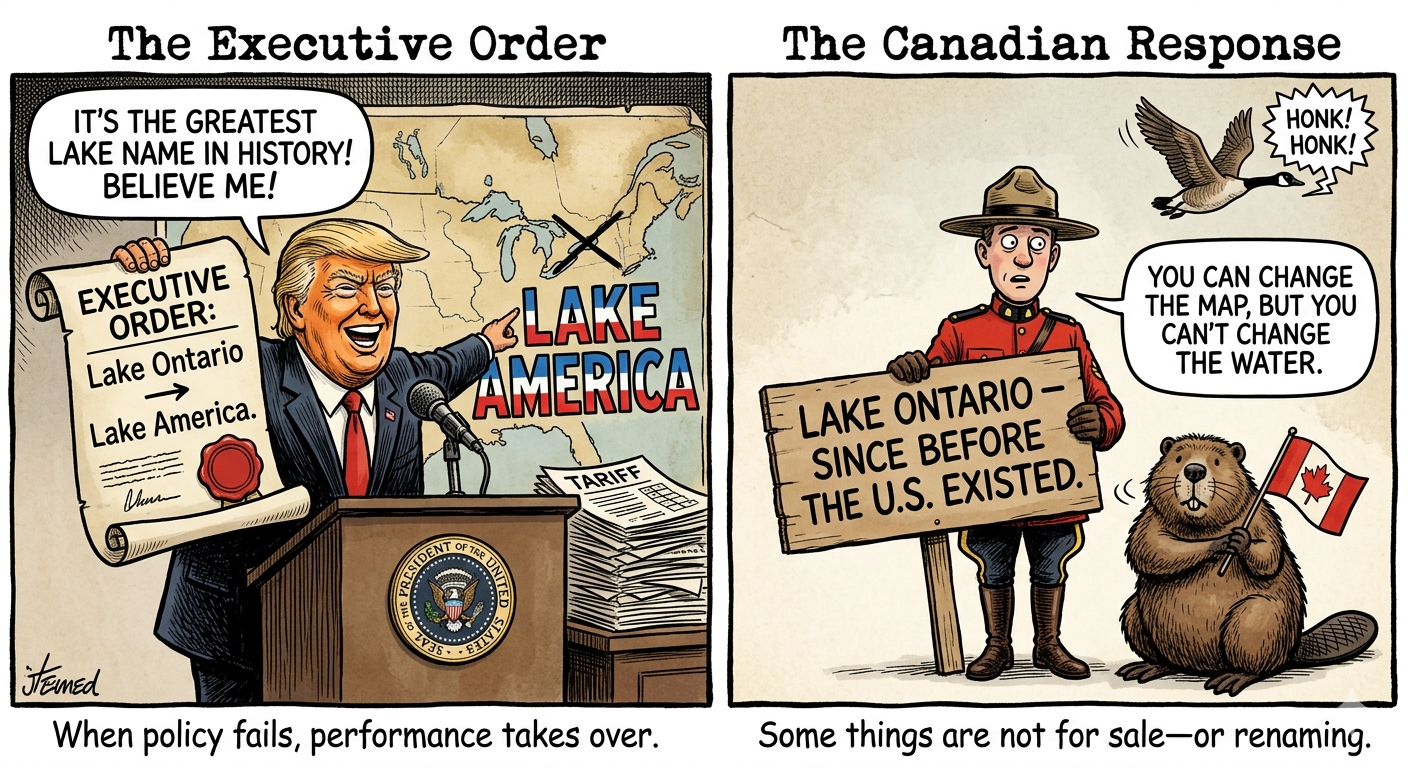
On August 27, 2026, U.S. President Donald Trump signed a striking executive order: the American portion of Lake Ontario is officially being rebranded as Lake America. Trump directed Interior Secretary Doug Burgum to update the domestic Geographic Names Information System (GNIS), justifying the change by claiming that the deepest channels and most of the lake’s water volume physically sit inside U.S. borders.

If this sounds familiar, it is because it is part of a pattern. The move mirrors a 2025 executive order that attempted to rename the Gulf of Mexico to the Gulf of America—an effort that mostly resulted in international blank stares.

Silicon Valley Picks Sides

The executive order has instantly fractured our digital maps. Tech giants Google and Apple quickly rolled out geo-fenced updates. If you open Google Maps inside the U.S., you will see Lake America. But if you log in from Canada or anywhere else in the world, it still reads Lake Ontario.

Not everyone is playing along, though. Legacy mapping services like MapQuest have publicly refused to implement the change, choosing to stand by the traditional name across all versions of their software.

The Backlash from Canada

The diplomatic response from Canada was swift and blistering. Canadian Prime Minister Mark Carney and Ontario Premier Doug Ford slammed the rebrand. They pointed out that the name Lake Ontario is over 400 years old, originating from the Iroquois word Ontarí’io (lake of shining waters)—a piece of history that predates the existence of both modern nations.

The resistance is not just international; it is domestic too. In the U.S. House of Representatives, bipartisan lawmakers have already introduced the Hands Off Our Great Lakes Act to starve the renaming project of federal funding. Early polls show that a solid majority of everyday Americans are also pushing back against the change.

Hormuz Strait

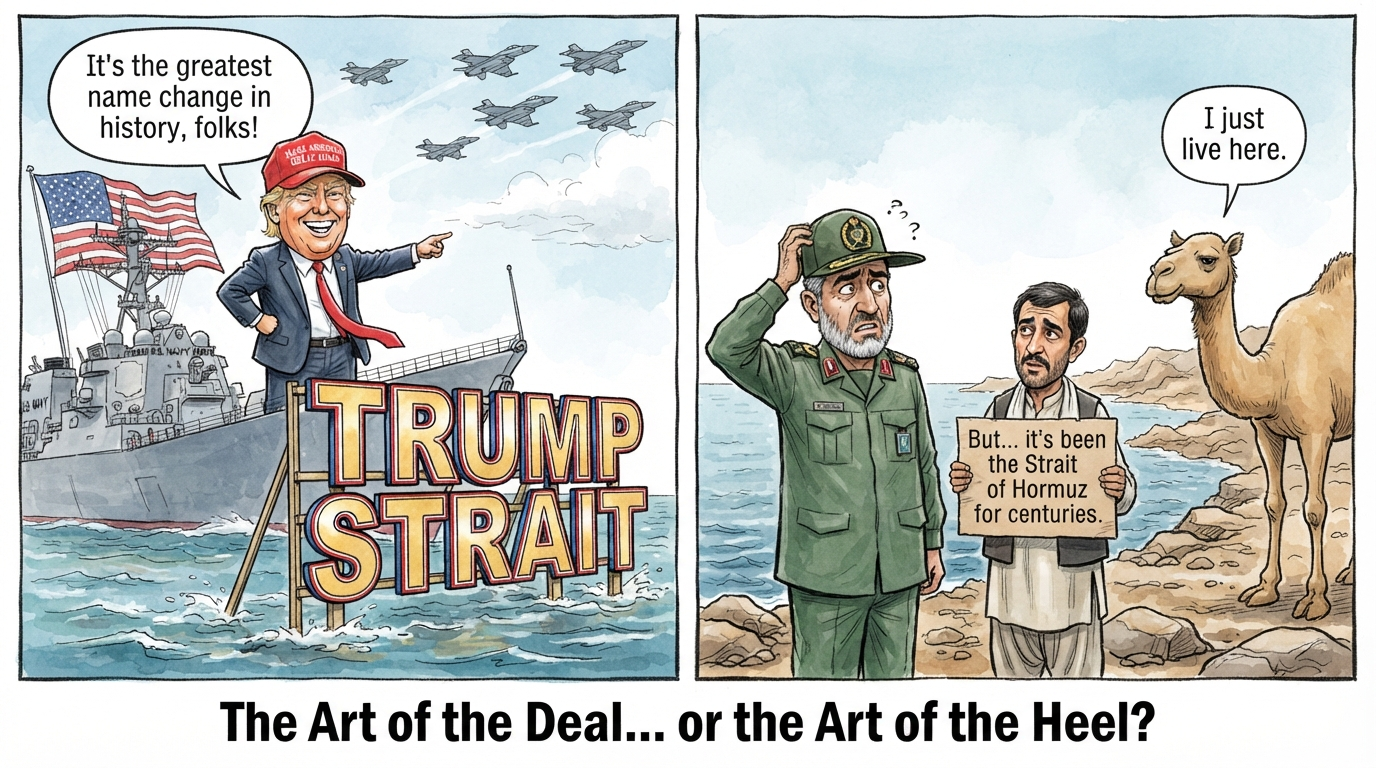
On September 2, Trump went a step further in that he proposed renaming the Strait of Hormuz to the Trump Strait in the midst of an ongoing military conflict with Iran. In a post on Truth Social, he wrote, “Now that we have it under U.S.A. control, should we change the name Hormuz Strait to TRUMP STRAIT???” Despite active clashes and ongoing attacks in the region, Trump asserted that the U.S. military now controls this vital oil shipping route—a claim as audacious as the proposal itself.

Could the Indian Ocean Be Next?

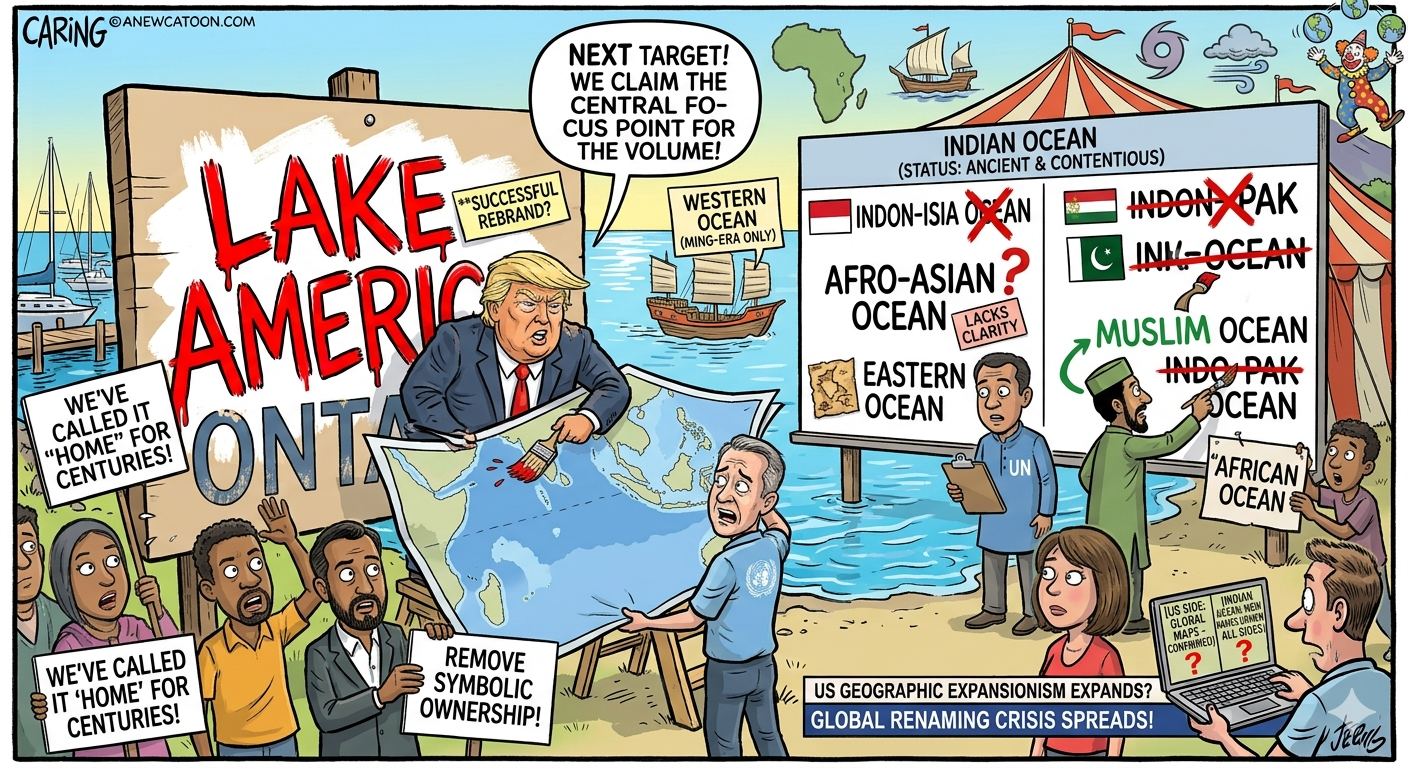
With nationalistic rebrands hitting the headlines, a bigger geopolitical question is floating around the internet: Is the Indian Ocean on the renaming anvil?

The Indian Ocean holds a unique title: it is the only global ocean named after a modern country. The name stems from the Indian subcontinent, which juts dramatically into the water to form the structural and cultural anchor of the northern basin.

Ancient Greek and Roman geographers officially locked in Oceanus Indicus (Latin for Indian Ocean) by the 2nd century BCE because India centrally dictated the trade routes, cultural exchanges, and vital monsoon patterns linking East Africa, the Middle East, and Southeast Asia.

No Modern Rebrand in Sight

Despite internet rumors and trending social media debates, there is no official plan or international agreement to rename the Indian Ocean. Unilateral domestic decrees do not carry weight on global high seas, which are governed strictly by international maritime consensus under UNCLOS.

However, looking back through the history books, neighbouring regional powers have tried to pitch alternative names to challenge India’s symbolic monopoly over the ocean:

  • Indonesian Ocean: In 1963, Indonesian President Sukarno ordered his navy to use this term to project post-colonial pride and assert naval dominance.
  • Afro-Asian Ocean: Proposed by scholar Latif Ahmed Sherwani at a 1971 seminar to more equitably represent the two massive continents framing the water.
  • Indo-Pak / Muslim Ocean: Historical alternatives floated by Pakistani strategists who argued that naming shared regional waters after a single country was inherently unfair.
  • African Ocean: Periodically suggested by researchers to highlight the deep, distinct historical and economic ties of the western maritime zone to the African coast.
  • Western Ocean: The term used heavily in Chinese literature, poetry, and navigation charts during the Ming Dynasty—most notably during the epic voyages of Admiral Zheng He.

The Psychology of Map Wars: Why Leaders Rename Landmarks

The psychology behind seemingly superficial geographic name changes is rooted in much more than mere whimsy. These acts are driven by dominance, symbolic projection, and the deliberate weaponisation of identity. While renaming a landmark may appear trivial on the surface, the underlying mental drivers are deeply embedded in human behavioural science.

The Leader’s Mindset : The Illusion of Absolute Control: Leaders who engage in political toponymy—the renaming of geographic features—are often propelled by a potent blend of hyper-nationalism and an urgent need for immediate gratification. Real policy is slow, complex, and frustrating. Changing a map provides an instant, low-effort illusion of absolute power and ownership. It satisfies a primal psychological need to mark territory and secure a legacy. It also offers a cognitive shortcut: a way to appear decisive without actually solving deep-seated, material issues.

The Populace : Tribal Belonging and Dopamine Hits: For citizens who support such initiatives, the mental state is fuelled by in-group bias and the comforting embrace of oversimplified narratives. During times of economic friction or trade disputes, a bold identity claim acts as a stabilising psychological anchor. Redrawing a boundary triggers a collective dopamine hit—a surge of patriotism that reinforces tribal belonging.

Strategic Othering: These gestures also provide a visible mechanism to other an adversary—asserting psychological dominance over a neighbour or rival. It feeds followers a sense of defensive superiority and tribal safety, reinforcing the idea that their identity is under threat and must be defended at all costs.

The Strategy : Weaponised Outrage and Media Control

Ultimately, these actions function as intentional political rage-baiting, carefully engineered to exploit the cognitive biases of both allies and rivals. By forcing tech platforms to redraw digital maps, the instigator provokes predictable outrage from opponents. This outrage cycle creates a powerful psychological feedback loop:

  • Opponents mock or protest the change.
  • Supporters interpret the outrage as proof that the move successfully disrupted the status quo.
  • The Outcome – a purely symbolic gesture is transformed into a highly effective tool for media control, hijacking the public’s collective attention span.

Renaming landmarks is never just about names. It is about power, identity, and the manipulation of public perception. In an age of information overload and political polarisation, the map becomes a battlefield—and the victor is not the one who controls the land, but the one who controls the narrative.

The Takeaway

While maps of the Great Lakes are currently divided by IP addresses and political boundaries, the Indian Ocean remains secure. For now, centuries of maritime history and strict international hydrographic standards are keeping the world’s third-largest body of water insulated from political rebrands.

The Cloak of the Scoundrel: How Loud Loyalty Masks Petty Motives

By Brig Azad Sameer (Retd)

When Samuel Johnson famously declared in 1775 that “patriotism is the last refuge of the scoundrel,” he was not denouncing genuine love for one’s country or community. Instead, Johnson was targeting a specific form of political theater: the weaponisation of national identity by those seeking to shield corrupt acts, deflect accountability, or inflate their own stature. Throughout history, whenever power fails on substance, performance takes over. Flag-waving becomes a substitute for virtue, and jingoism becomes an iron shield against criticism.

History’s most destructive autocrats exemplified this dynamic by elevating state-centric nationalism into a totalising faith. Adolf Hitler transformed German patriotism into a racialised crusade, using the defense of the Vaterland to justify territorial aggression, silence domestic opposition, and execute mass murder. Benito Mussolini exploited Italian irredentism, using the glorious myth of the Roman Empire to cover the brutality of his fascist regime and mask its economic failures. In the Soviet Union, Joseph Stalin cynically recast Marxism into Socialism in One Country and rallied the nation under the banner of the Great Patriotic War – a desperate plea to traditional Russian nationalism that consolidated his totalitarian grip and cleansed his bloody purges from public accountability. In every case, intense national devotion was demanded not to serve the people, but to insulate the leader from judgment.

This dynamic is not exclusive to totalitarians; it repeatedly manifests across democratic history as well. In ancient Rome, the Senator Catiline attempted to overthrow the Republic while wrapping his conspiracy in romanticised appeals to traditional Roman liberty. During the French Revolution’s Reign of Terror, Maximilien Robespierre institutionalised state violence under the banner of republican virtue, branding any opponent a traitor to the Fatherland. Centuries later, during the American Red Scare of the 1950s, Senator Joseph McCarthy weaponised anti-communist hysteria to destroy lives and consolidate power, framing criticism of his reckless overreach as disloyalty to the flag.

In the last 50 years or so we have seen this phenomenon coming alive in many parts of the world practiced by astute politicians who lack substance. The latest episode in this long, sordid trajectory is the geopolitical spectacle surrounding Lake America. In late August 2026, amid an escalating trade war and tariff dispute with Canada, an executive order from Washington officially declared that the US portion of Lake Ontario—a shared body of water whose Indigenous name Ontario predates both modern nations by centuries—would be renamed Lake America for federal usage.

Wrapped in rhetoric claiming to honor the contributions of visionary and patriotic Americans, the declaration offers a textbook modern example of Johnson’s thesis. Renaming a shared, historic body of water does nothing to resolve trade deficits or economic friction; it is political posturing designed to offer quick, sensational victories to a domestic audience. It uses geography as a vanity project, wrapping diplomatic failure in the safe, unassailable cloak of hyper-patriotism.

The Lake America controversy reinforces why Johnson’s warning remains vital. True patriotism builds, preserves, and reflects humility in service to a society’s highest ideals. Scoundrels, by contrast, treat national pride as cheap currency—slapping a flag on an ego, weaponising national symbols to silence critics, and demanding applause for the performance. Whenever power insists that bluster is loyalty, history tells us to look closely at what that bluster is trying to hide.