We Stay Late and How to Stop It
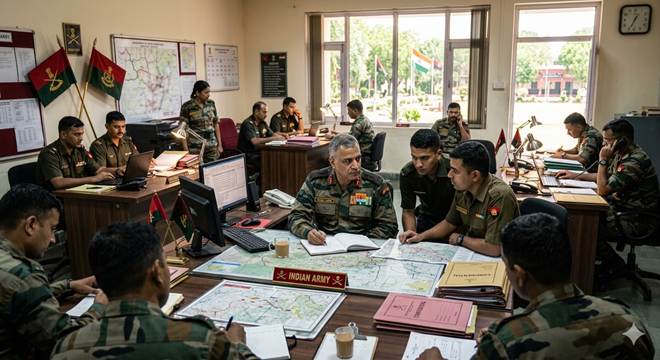
People often continue working in the office long after official hours to finish tasks without daytime interruptions, avoid immediate new assignments, or meet intense competitive pressures. In many corporate cultures, face time has become a proxy for productivity.
Why Employees Stay Late
Fewer Distractions: The office becomes quiet after hours, making it easier to focus without the constant barrage of daytime interruptions.
The Penalty for Efficiency: Finishing work quickly often leads managers to assign extra tasks rather than rewarding employees with an early departure. This deeply disincentivises efficiency.
Career Advancement & Perception: Employees work extra hours to stand out, hit ambitious goals, or simply to show the boss they are putting in the time.
The Boss Stays, I Stay Precedent: A toxic culture exists in many offices where subordinates feel obligated to remain at their desks as long as their manager is in the building.
Always-On Culture: Constant connectivity through mobile devices makes it increasingly difficult to disconnect once the formal workday ends.
Commute Timing: Some stay late simply to let rush-hour traffic clear before heading home.
Leading by Example: An Army Perspective
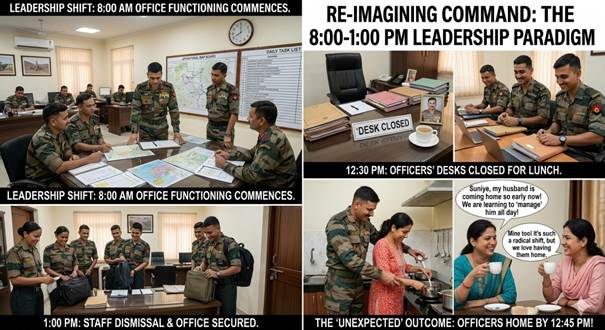
Breaking this cycle requires a deliberate shift in leadership. While commanding our Regiment, I insisted that office functioning commence strictly at 8:00 AM and that officers close their desks by 12:30 PM. This facilitated the office staff closing by 1:00 PM for lunch.
This was a radical shift from the norm. Historically, it appeared most Indian Army officers took their most critical decisions after 1:00 PM, dragging the workday into the evening. Our new schedule was so out-of-the-box that even the subordinate officers’ wives jokingly complained—their husbands were suddenly coming home by 12:30 PM, leaving the wives to manage them for the rest of the day!
Results Over Presence
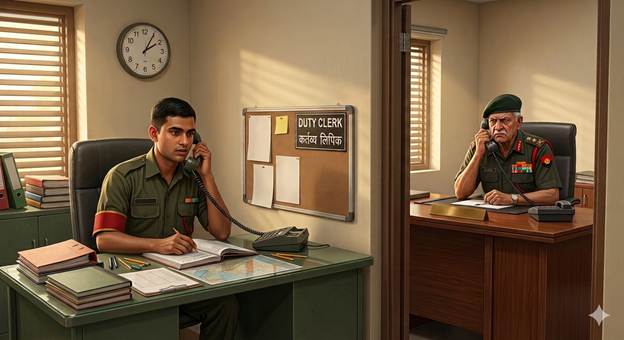
Predictably, this boundary-setting faced resistance from the traditional hierarchy. One afternoon, I received a call from a very senior Staff Officer—a Brigadier at the Headquarters—who was unhappy that a Duty Clerk, rather than an officer, had attended his call at 1:30 PM.
I asked him directly: “Was your order received correctly, and were the necessary actions executed to your satisfaction?“
He replied in the affirmative but reiterated that he wanted to speak to an officer, if not the Commanding Officer himself.
To this, I replied: “Our officers leave by 12:30 PM and the office closes by 1:00 PM. You spoke to the Duty Clerk, and he took down your orders without question. Had it been any of our officers, they would have raised queries and debated the issues. Had I been there, I might have even refused to undertake the task, as you understand our Regiment is already over-committed.“
The Power of Respect
True capability speaks louder than late-night desk-sitting. Two months after that conversation, our Adjutant, a young Captain, visited this same Staff Officer at the Headquarters. The Brigadier made our Adjutant sit down and personally offered him a cup of tea.
Upon returning to the Regiment, the Adjutant came to me, pleasantly surprised: “Sir, he made me sit in his office while many officers senior to me who came in were left standing. He even gave me a cup of tea.“
I told him: “As far as he is concerned, you are commanding the Regiment, and he needs to get work out of you. He knows very well that our Regiment will execute all his critical tasks—night or day, at a moment’s notice—most effectively. Because of our competence, he knows he must keep you on his right side.”
Efficiency isn’t about how many hours you log under the office lights. It is about building a well-oiled machine that delivers flawless results on time, allowing its people the freedom to rest, recharge, and return sharper the next morning.

