
Driving through the lush countryside of Kerala with Anurag—a classmate of our nephew Joji from IIT Kharagpur, hailing from Bihar—I was met with a question that caught me off guard.
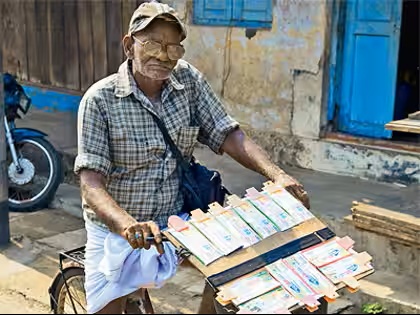
“Why are there lottery sellers all along the road, nearly every five hundred metre?“
The Economics of Hope
The lottery system in Kerala is government-run and meticulously regulated. It supports over 35,000 authorised agents and more than 100,000 retail sellers, whose families depend on commissions for their daily bread. In total, the Kerala Lottery provides direct and indirect employment to over 2.5 lakh people. One percent of the total turnover is set aside as a welfare fund for the benefit of lottery agents and sellers.
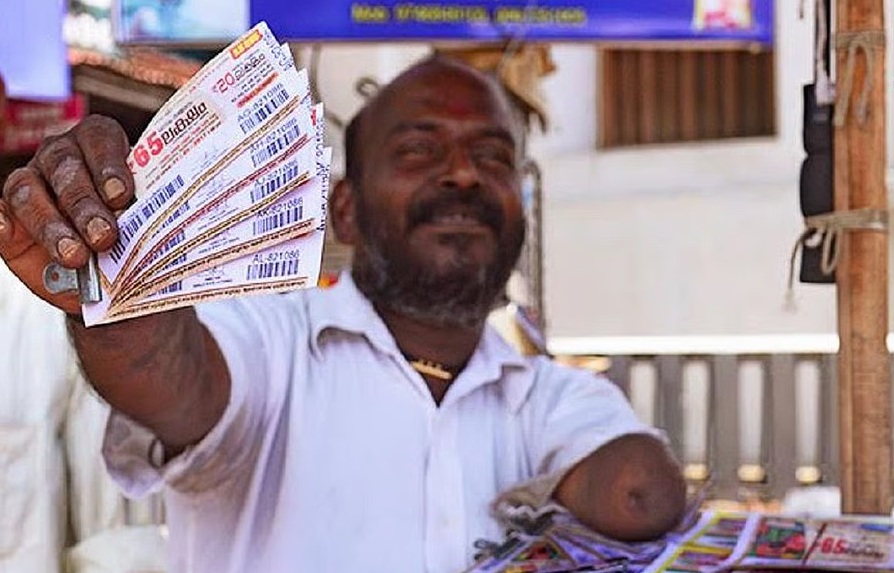
Most retail sellers—those standing under the scorching sun at traffic signals or bus stops—are financially poor, and some are differently abled. When we buy a ticket from them, we are not merely chasing fortune; we are silently supporting a family.
A Historic First
On November 1, 1967, Kerala became the first Indian state to sell a lottery ticket. That pioneering step has since evolved into a cultural phenomenon, woven into the daily fabric of Keralite life. In 2006, the Congress-led United Democratic Front government imposed a ban on all lotteries in the state. But within months, the ban was diluted—limited only to online lotteries—after widespread concern about the devastating impact on the livelihoods of thousands of sellers.
The Psychology of the Purchase
Why do people buy lottery tickets?
The answer lies in aspiration. Many buyers come from economically weaker sections of society. When conventional paths to prosperity seem blocked, when debt mounts and dreams fade, the lottery offers a sliver of hope—a chance to rewrite one’s destiny overnight. Some buy tickets regularly, even compulsively, and are often branded as addicts. Critics call it gambling. But for many, it is not a vice; it is a prayer.
The Sacred and the Secular
Anurag was not fully satisfied with my explanation. So, I continued.
Just as there is a lottery seller every five hundred metres, there is also a place of worship—a temple, a mosque, or a church—within the same distance. Devotees believe that a miracle is always possible, that one day they too might win the jackpot.
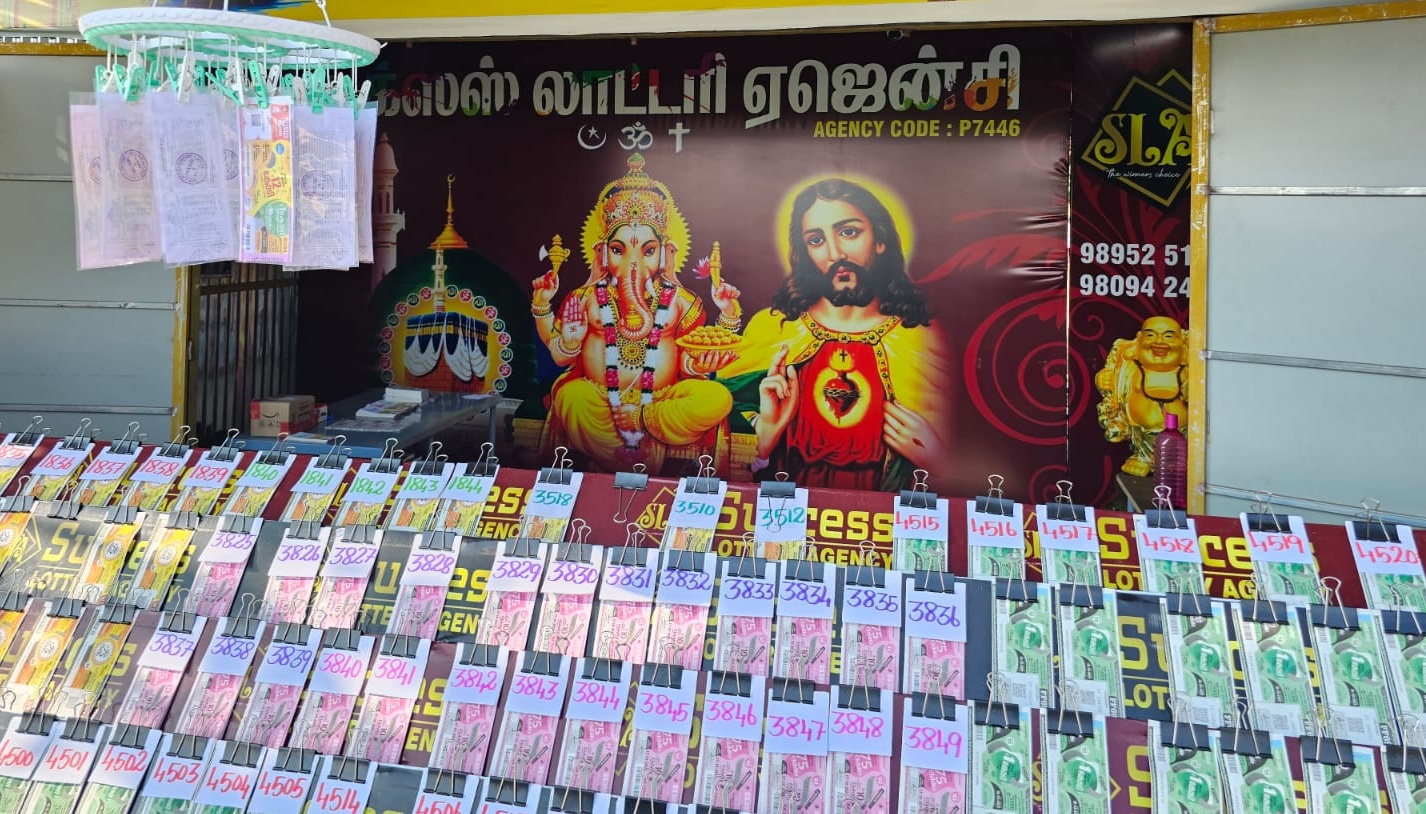
Clergy and ticket vendors alike feed into a collective narrative: that jackpot wins by daily wage earners, rickshaw drivers, and the common man are nothing less than the hand of God. The lottery stalls of Kerala prominently display images of deities from multiple religions—Hindu gods, the Virgin Mary, Islamic symbols—all in a bid to invoke good luck, build psychological trust, and align with the deep-rooted cultural belief that wealth and destiny are tied to divine grace, or bhagyam (luck).
For many buyers, the presence of such images signals that the vendor is honest and operating a legitimate business. It also minimises the subconscious guilt or stigma associated with gambling by framing the lottery as an innocent pursuit of destiny, backed by faith.
In many stalls, small altars or pictures are placed prominently. Vendors light incense sticks every morning to bless their inventory. Multi-faith representation is common, reflecting Kerala’s diverse demographic and the savvy marketing instincts of those who sell hope.
Ethics in Every Ticket
On landing at Kochi Airport, a lottery seller—a man in his sixties—approached me offering a ticket priced at Rs50. I handed him the note and said, “I don’t want the ticket. You keep the money.”
He refused, gently but firmly. “For a ticket priced at Rs50, I earn Rs6. That is enough for my expenses. I will never accept any alms.”
In that brief exchange, I learned something profound. There is ethics even in the lottery business—not in the game itself, but in the quiet dignity of those who sell it, one ticket at a time, under the sun, without complaint, without begging, without losing themselves.
The Mirage of Miracles
Shrines across religions draw massive crowds seeking divine intervention for physical and financial breakthroughs—a reflection of a society where faith and material survival are deeply intertwined.
The state government itself reframes the lottery as an act of charity. A portion of proceeds is dedicated to medical treatments for the poor, transforming the purchase into a moral good and easing the hesitation of conservative or religious buyers.
Yet the reality is more complex. Many winners report that their initial euphoria quickly turns into an overwhelming social burden. Requests for money pour in—from strangers, neighbors, relatives—for medical bills, housing, education. The dream becomes a nightmare. Religious institutions, too, stake their claim to the winnings.
The Role of Media
The media and social media further complicate the narrative. Stories of individuals who turned millionaires overnight are splashed across headlines and timelines, fueling a continued passion for lottery tickets among the masses. The dream persists, even as the odds remain staggeringly low.
A Final Thought
I concluded with a remark to Anurag: “In Canada, the only time I call upon God is when I buy a lottery ticket—because I know that my chances of winning are far slimmer than my chances of being struck by a vehicle while crossing the road to the store.“
He laughed. But I could tell the question still lingered—not about the lottery, but about the human heart, its hunger for hope, and its willingness to believe, against all odds, that a miracle is just one ticket away.


BG 10.36: I am the gambling of the cheats and the splendor of the splendid. I am the victory of the victorious, the resolve of the resolute, and the virtue of the virtuous.
LikeLiked by 1 person