
Driving alone on a Canadian highway, I listened to a podcast on metacognition. Coined by psychologist John Flavell in the 1970s, metacognition is defined as the awareness and regulation of one’s own cognitive processes—simply put, thinking about your thinking. It allows a person to plan, monitor, and evaluate learning strategies to maximise their effectiveness.
As the highway stretched ahead, my mind drifted back to 1987, the year our Regiment received the computerised Bofors guns. I was tasked with training our soldiers on this new system. Most of the young recruits had only a high school education and were largely intimidated by the then-daunting world of computers.
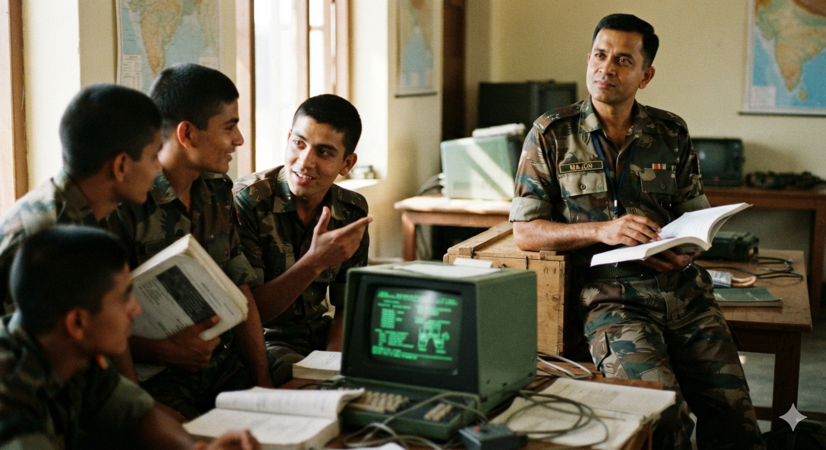
During a break, I overheard a few of them discussing my training style. “Reji Sir does not seem to read or practice much on the computers, but he is a master at it,” one remarked. Another joked that I must be sleeping with the manuals under my pillow, absorbing knowledge through divine induction. A third suggested that I merely flipped through the pages and the contents magically entered my head.
Similar traits were often attributed to me during various officers’ courses. Many of my peers lamented that I rarely studied and spent my time roaming around, yet still managed to score high marks. I often wished I actually possessed such supernatural powers. In truth, my aim was never to top the course; it was simply to learn.
Listening to the podcast, I realised that I had been unconsciously employing metacognitive techniques all along. I rarely took notes, much to the annoyance of my instructors, and I never used a notepad during military service. While some senior officers assumed I wasn’t being serious, my focus was entirely on the analysis taking place in my mind. It was never about transcribing information; it was about deeply understanding the task at hand.
Metacognition comprises two core components. The first is metacognitive knowledge—understanding yourself as a learner, the specific tasks you face, and the strategies available to tackle them.
The second is metacognitive regulation, which involves actively directing your learning through three phases:
- Planning: Setting goals and selecting the right strategy before beginning.
- Monitoring: Continuously checking your comprehension while reading or working.
- Evaluating: Reviewing your performance afterward to adjust your future approach.
Crucially, this process is guided by monitoring our subjective experiences. For instance, when you suddenly realise you do not understand a concept you just read, an internal feedback loop prompts you to pause and re-read the paragraph. This loop is the heartbeat of effective learning.
Mastering this skill enables individuals to learn faster, make better decisions, and pivot when strategies fail. Over time, I have learned to notice patterns in my own thinking and recognise my biases. When analysing information, I often form an immediate interpretation. Instead of accepting that reaction at face value, I now pause and ask why I read the text that way. This simple question has led me to deeper study, greater humility, and a more honest engagement with ideas. Metacognition creates the reflective space required to challenge our assumptions.
In a military environment, the importance of collective metacognition becomes matters of life and death. Success in operations hinges on briefings, orders, and drills designed to hone quick reactions under adverse conditions. This kind of organisational awareness is never accidental; it requires trust, open communication, and a shared understanding between a leader and the team. A cohesive team helps identify gaps in logic, clarify ambiguous directions, and reveal unexamined assumptions. When leaders immerse themselves too deeply in their own execution, they often become blind to the flaws in their chain of events—a vulnerability that collective metacognitive awareness directly mitigates.
Remarkably, these modern themes of self-awareness find a profound, ancient echo in the Bhagavad Gita. The dialogue between Arjuna and Krishna represents a timeless psychological and metacognitive journey. Arjuna begins the epic in a state of deep distress and cognitive bias (Arjuna Vishada Yoga), overwhelmed by grief and rigid, all-or-nothing thinking. Through active questioning, Krishna teaches him to observe his own mind and regulate his reactions using several specific mechanisms:
- Witness Consciousness (Sakshi Bhava): The Gita emphasises observing thoughts and emotions as temporary phenomena separate from the true self. This directly mirrors the modern psychological concept of de-centering, which prevents over-identification with fleeting mental states.
- Cognitive Restructuring (Viveka): Krishna helps Arjuna break free from emotional reasoning and catastrophising by guiding him to use intellect and discrimination (viveka), shifting his focus from panic to rational duty.
- Detached Action (Nishkama Karma): Performing duties with full engagement but without attachment to the psychological weight of outcomes drastically reduces cognitive load, anxiety, and rigid reactivity.
- Mastery of the Mind (Manonigraha): The Gita acknowledges the difficulty of controlling a restless mind, proposing that cognitive mastery is achieved through persistent practice (abhyasa) and continuous refocusing.
Integrating these ancient insights with modern psychology fosters deep resilience, emotional regulation, and clearer decision-making under stress. My brief reflection on that Canadian highway—connecting a modern podcast to military memories and ancient philosophy—served as a powerful reminder: the art of thinking about thinking is not a modern trend, but a timeless and essential human endeavour


very true. but then overthinking is also a pitfall ; constantly thinking if I am thinking correctly !
LikeLike
Wonderfully written article Sir
LikeLiked by 1 person