
By Brig Azad Sameer (Retd)
In 1991, as a young and relatively innocent Major, I was posted to the Army HQ Military Secretary’s (MS) Branch. Our section in South Block dealt with the Promotion Boards for Majors and Lt Colonels. Essentially, our job was to retrieve Confidential Report Dossiers (CRDs) from the sections that filed and held them—curiously referred to as Libraries, though they contained more dust than literature—and perform the secretarial alchemy required for selection boards.
In the MS Branch, the hierarchy of the CRD is sacred: the Officer signs for it, but the Clerk holds it. It is a beautiful system of plausible deniability that works perfectly—until the music stops and you’re the one left holding the baby.
One morning, the music stopped. A CRD had vanished and I had signed for it!!
Now, in MS Branch lore, a CRD is never lost. To suggest such a thing is heresy, punishable by professional excommunication. It is merely misplaced – much like the Holy Grail, the city of Atlantis, or a politician’s sense of ethics. But as weeks turned into months, my misplaced file began to look suspiciously like a permanent disappearance. It had simply evaporated into the thick, bureaucratic ether of the Army HQ.
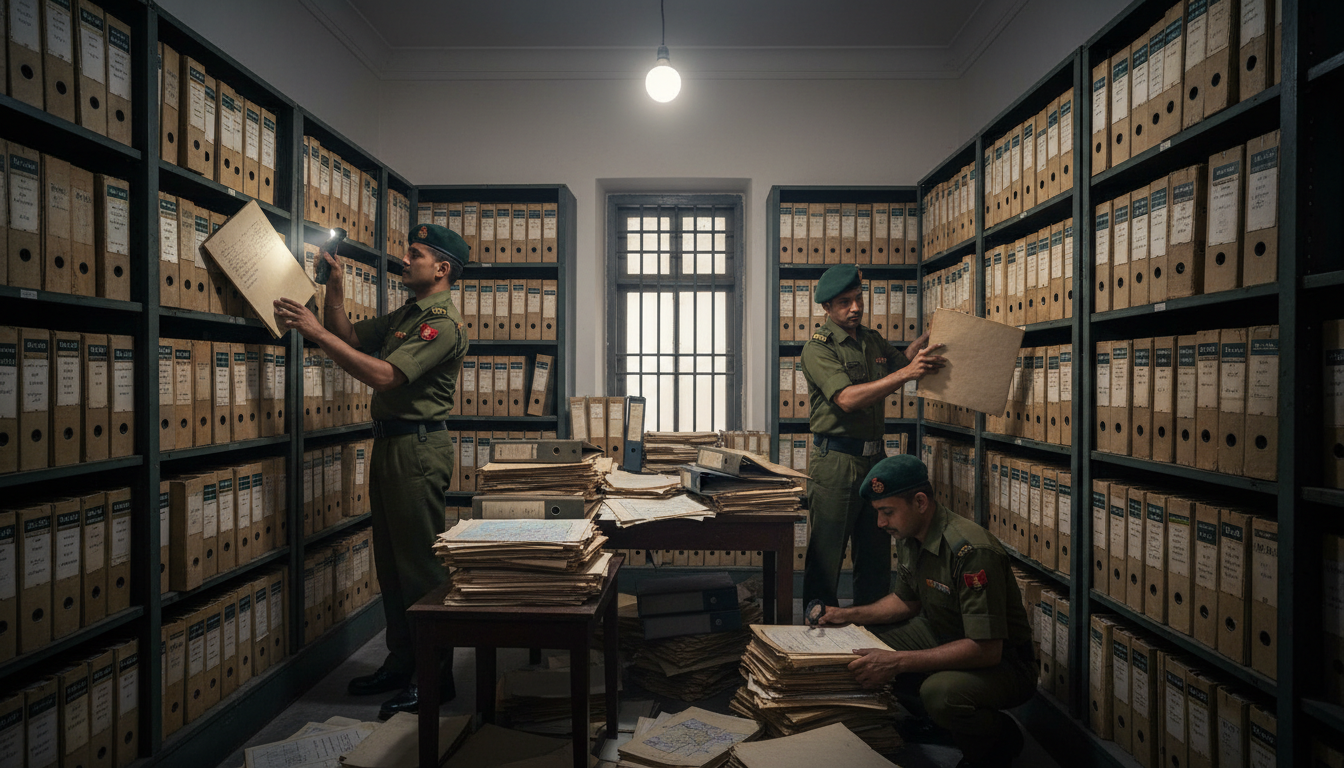
Over the next few months, our section – four officers and half a dozen clerks – transformed into high-stakes archaeological explorers. Long before COVID-19 made N95 masks a fashion statement, we were pioneers of the lifestyle. Clad in masks to survive generations of silt and the ancient plague bugs that had merrily colonised the dossiers, we swung into unenviable action.
In those days, the Indian Army was still suspicious of futuristic gadgets like vacuum cleaners. Instead, mask clad, we spent our afternoons bent double, scouring the dark crevices behind steel almirahs. We searched places so obscure I’m fairly certain we discovered a lost platoon from the ’71 war, but of the CRD, there was no sign. The drill continued indefinitely, a slow-motion descent into madness.
Six months in, the Additional MS – the Big Boss – decided he’d had enough of our archeological adventures. A Court of Inquiry (C of I) was being drafted. In the Army, a C of I is usually a formal invitation to your own professional funeral.
Just as the gallows were being readied, a colleague leaned over his desk, looking like a man pushing contraband. “Go to Green Park,” he hissed. “There’s a Baba. He’s occult. He sees things. He specialises in exactly this kind of disaster.”
Now Azad Sameer the irreverent, did not believe in mystics. But when your career is flashing before your eyes, you don’t ask for a peer-reviewed second opinion. So it was the proverbial straw. The next day, with the unofficial (and slightly embarrassed) blessings of my superiors, I slipped into civvies and headed to Green Park.
The waiting room was packed with people whose lives had also apparently fallen behind a steel cupboard. There were even a few souls looking for relatives lost at the Kumbh Mela, Bollywood-style. Finally, I was ushered into a dimly lit room where a fragile old man sat in a lotus position atop a chair. He looked as though he hadn’t seen direct sunlight since the British Raj.
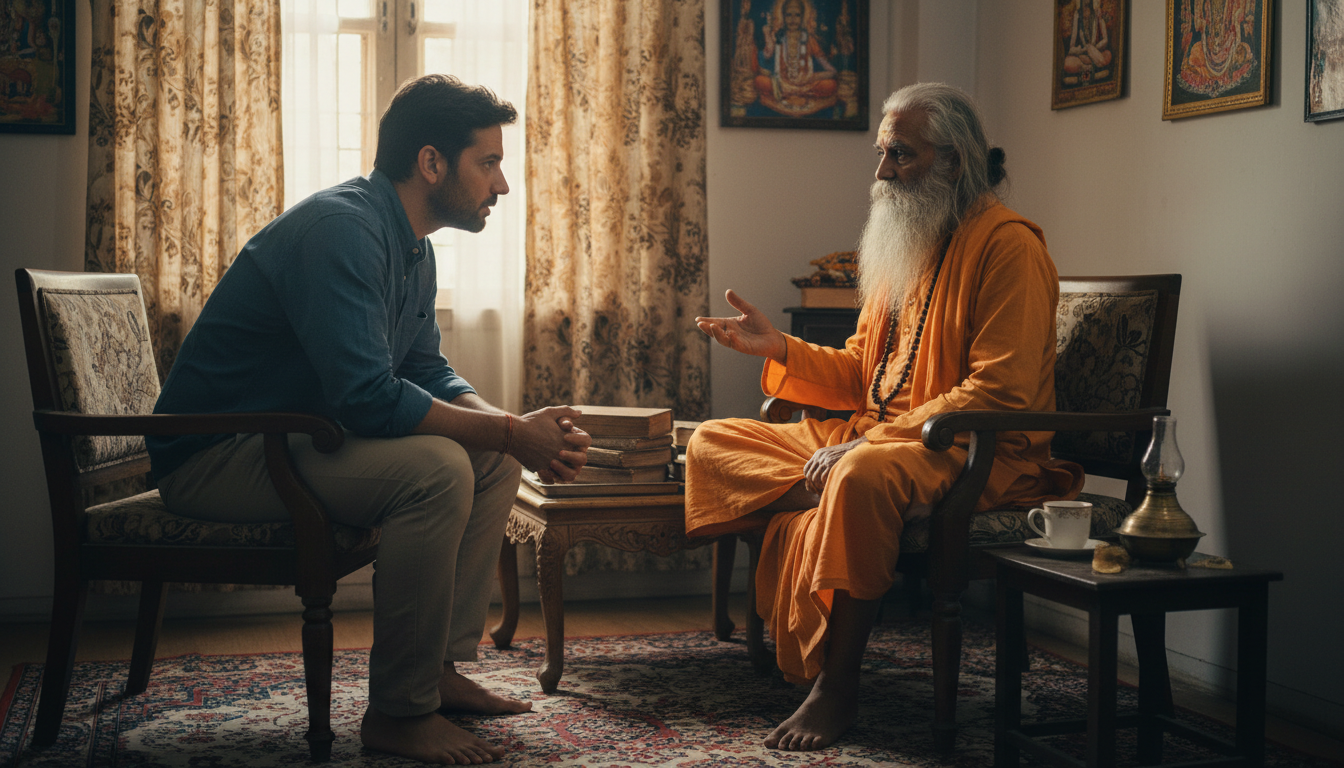
He didn’t even open his eyes. “Fauji ho?” (Are you a soldier?)
I looked at my posture – ramrod straight – and my haircut, which was a 0.5mm tribute to one of our commanding officers, a man who viewed any hair longer than a mustard seed as a personal insult. It wasn’t exactly a Sherlock Holmes-level deduction. “Yes,” I croaked.
“Document ka pata chahiye?” (Looking for a document?)
I nearly fell over. This was better than any Intelligence Bureau brief I’d ever read. He proceeded to describe the folder with the terrifying precision of a man who had personally filed it. He knew the shape, the size, and the exact shade of Bureaucratic Buff on the cover.
Then came the invoice. “One hundred rupees,” he whispered.
At 1991 prices, this wasn’t pocket change, but I’d have paid in gold bars to get that albatross off my neck. He took the note, vanished into a back room to consult the celestial archives, and returned with the most frustratingly vague SITREP in military history: “Don’t worry. It will be found very soon. Come back and tell me when you find it.”
I walked out feeling like I’d been pickpocketed by the divine. “Very soon?” I wanted GPS coordinates! I wanted a room number in South Block or Sena Bhavan! I returned to South Block, mentally rehearsing my minimum damage statement before the C of I. Alas! There was no way out.
But as I neared the office, I saw my colleague – the one who had suggested the Baba – performing a frantic, one-man bhangra in the corridor.
“Mil gaya! Mil gaya! CRD mil gaya!” (We got the CRD)
The document had been found. Accidentally. That very morning, in the basement of South Block, at the bottom of a stack of old covers destined for reuse. We had searched that exact pile five times in three months. Logic had no seat at this table.
Before I could process the miracle, I was summoned by the Deputy MS, a man who rarely smiled and possessed a naturally sinister aura. I walked in, spine stiff, ready for the Even though it’s found, you’re a liability lecture. The room was silent. On his vast, polished desk sat the missing CRD. Beside it sat a beautiful, amber-filled bottle of Peter Scott whisky. He looked at the file, then at me, then back at the bottle. He didn’t ask about the Baba. He didn’t ask about the search. He simply pushed the bottle toward the edge of the desk.
“Go get drunk,” he growled.
I didn’t need a second order. I took the bottle and beat a hasty retreat, realising that in the Indian Army, some things are governed by the MS Branch, some by the Gods, and the very best things are governed by a well-timed bottle of whisky.
 REJINCES