Selections @ Devlali

Those were the days when Selections ruled the roost at School of Artillery Devlali.  It was skimming at the highest level of the Regiment of Artillery.

When we passed out of Indian Military Academy in 1982, we were forced to return our Blue Patrols for mere Rs 100 – all because the Artillery version had a red stripe on the trousers’ side which was half an inch thicker than what was provided by Kapoor & Co at the Indian Military Academy, Dehradun. While officers commissioned to all other arms/ services retained their Blue Patrols, we the Gunners had to return them to Kapoor & Co.

On joining Young Officers Course at School of Artillery, Devlali, every student officer had to get a new pair of Blue Patrol and winter ceremonial uniform or Service Dress (SD) stitched – costing over a thousand rupees those days – only from Selections.  The reasons – obvious. A Second Lieutenant’s pay was much less than a thousand rupees a month then. Free rations was not entitled then and monthly mess bill ate into over half a month’s salary.

Service Dress is the style of khaki serge dress uniform introduced by the British Army for use in the field from the early 1902, following the experiences of a number of imperial wars and conflicts, including the Second Boer War. The uniform was originally issued as a field uniform, later designated as SD. Variant of this uniform continues to be worn today, although only in a formal role, as No. 2 Pattern dress by the British and the Commonwealth Armies. Indian Army too continued with a similar winter SD for the officers until 1990s. Today the Indian Army officers wear a similar uniform designated as Dress No. 5SD.

No. 1 Dress , sometimes referred to as ‘blues’ or ‘blue patrol,’ is a universal ceremonial uniform which is almost consistent throughout the Commonwealth Armies. For most regiments and corps, this No. 1 dress consists of dark blue tunic and trousers. Different units are distinguished by the colouring of the cap, piping on the tunic and of the welts or stripes on the trousers, as well as badges and in certain Cavalry Regiments by the colour of the collar.

Indian Army Blue Patrol consists of a ‘bandgala’ tunic and a trouser. The shoulder pips are embroidered along with ranks on the coat except for Armoured Corps officers who wear a chain mail along with their ranks on the shoulders.
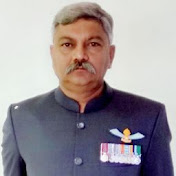
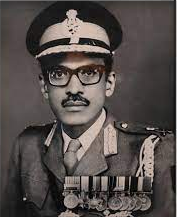
Veteran Colonel SP Mudholkar. He now leads a retired life at Pune

It was not until 1981 when Second Lieutenant SP Mudholkar issued a show-cause notice and raised the issue with the School of Artillery against the order of getting the SD and Blue Patrl stitched only from Selections, inclusion of a private firm in the Offices’ Mess Bills for recovery .  In those days, Mess Bills of various messes at School of Artillery had a serial dedicated to Selections.  You can well imagine as to the patronage Selections enjoyed from the highest levels of the Regiment of Artillery – mostly occupied by officers belonging to the Khlan.

By the time we went to Devlali to attend our Young Officers’ Course in 1983, Blue Patrol and SD procurement was done away with – thanks to Second Lieutenant SP Mudholkar – else I too would have succumbed to the pressure from the Chief/ Senior Instructor.  In those good-old days, any Young Officer refusing to procure their SD and Blue Patrol were marched up to the Chief/ Senior Instructor until they relented. Another tactic was to blackmail the Young Officer with a poor grading, though most ended up with a C grading. The Great Good-Old Days!!! Who wants to begin their military career on the wrong foot?

Selections appeared on the Mess Bills during our course- luckily for us it remained at zero value.

Three years later, Lieutenant General Sood, Commandant, School of Artillery, was appointed the Director General of Artillery – and away went Selections.  The ‘baby‘ of the erstwhile higher-ups of Regiment of Artillery was thrown out with the tub, water, soap, and loofah to land in Devlali market. 
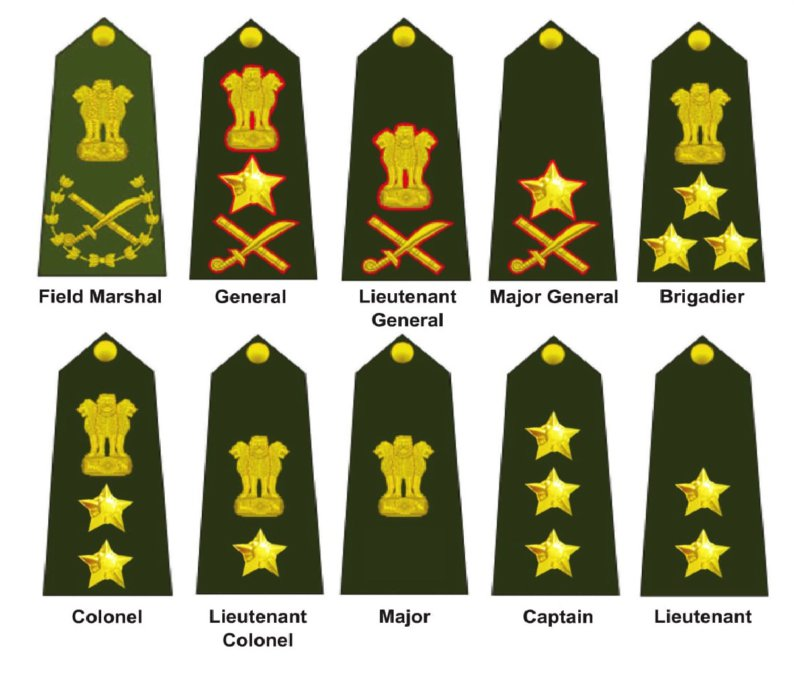
Second Lieutenant – The Extinct Species

The Unguided Missile

We were commissioned as Second Lieutenants from the academies and joined our Regiments—eager to go, like unguided nuclear-tipped missiles, primed for detonation but uncertain of trajectory.

Years later, when I commanded our unit, our young officers often remarked on a peculiar aspect of my leadership. No matter how serious their mistake, my response was invariably the same: “That’s all. Don’t worry. I’ll handle it from here.”

They wanted an explanation. Why no rebuke? Why no fault-finding mission?

One day, in a lighter moment, I obliged.

When I was a Second Lieutenant, I messed up more than all of you combined.”

They clamoured for details. Dil Mange More. And so I delivered.

The Gurgaon Incident

I joined our Regiment in 1983 at Gurgaon. During a battery deployment exercise, our 130mm gun, towed by a Kraz vehicle, needed to cross the Delhi-Jaipur Highway. In those days, the highway was narrow and followed a different alignment. Traffic was halted for the military convoy.

Enter the Superintendent of Police of Gurgaon, who demanded passage and was refused. The refusal escalated. Words were exchanged. Then fists. Whatever transpired—and the details remain mercifully hazy—I ended up facing a criminal charge of attempted murder using lethal weapons, alongside a Court of Inquiry.

I escaped both. Thanks to our Commanding Officer, Colonel Mahaveer Singh.

Teen Murti Bhavan: Three Days That Defined a Second Lieutenant

On 31 October 1984, Prime Minister Indira Gandhi was assassinated. By evening that day, our Battery received orders to assume security at Teen Murti Bhavan, where her mortal remains would lie in state.

Our Battery Commander resided in Delhi, so I marched the Battery forward and reported to General K. Balaram, the Adjutant General, who was in overall command. Those who served in that era will recall General Balaram’s formidable reputation—the first, and perhaps only, AG to be granted Vice Chief status.

Late Lieutenant General K Balaram, PVSM

Our Battery Commander, then a student when General Balaram commanded at Wellington, warned me profusely. He narrated countless incidents of the General’s exacting standards—how he rode his own scooter after office hours, never touching his staff car. I braced myself for the worst.

Instead, I found an unexpected camaraderie. General Balaram and I smoked Capstan cigarettes together. In the chaos following the assassination, all cigarette shops in Delhi had shuttered. Naik Paul, my driver, inexplicably maintained a steady supply—to this day, I do not know how.

Whenever work pressure mounted, General Balaram summoned me to the Operations Room we had established inside Teen Murti Bhavan. He craved a deep inhale of smoke and a cup of tea—specifically, the tea brewed in steel glasses by our soldiers. Thus, every summons meant either the situation at the gate had spiralled, or the General simply needed a break.

The Gatekeeper’s Trials

We were responsible for the VIP entrance, through which every head of state passed. Whenever things went awry, General Balaram’s voice thundered across the compound: “Get that Second Lieutenant! Only he can solve this chaos.”

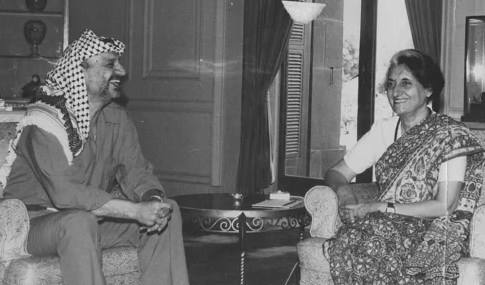
Enter Yasser Arafat, flanked by four bodyguards armed to their teeth. I refused them entry. “Our boys will ensure his security,” I declared. Arafat gave me a long, penetrating glance, then ordered his bodyguards to stay put with me. Even the Chairman of the Palestine Liberation Organisation thought better than challenging a Second Lieutenant.

Next came the Japanese delegation, led by Prime Minister Yasuhiro Nakasone. Over a hundred press personnel accompanied them—journalists, reporters, photographers. I informed their liaison officer that only five could enter with the Prime Minister. The officer pleaded helplessness. I solved the problem my way.

I assembled the entire press corps outside the entrance. When the Prime Minister arrived, I randomly called out five individuals and sent them inside. Chaos erupted. “My photographer is inside, but I’m the reporter!” “My reporter is inside, but I’m the photographer!” I announced calmly that whoever had entered would emerge with material for everyone to share.

Then came a man claiming to be the Commissioner of Police, Delhi. Denied entry through the VIP Gate, he exploded. “Who are you to stop me? What are you doing here?”

“If you had done your duty,” I replied evenly, “I wouldn’t need to be here.”

These were but a few highlights from those three unforgettable days.

With Veteran Colonel Mahaveer Singh during Golden Jubilee celebrations of 75 Medium Regiment in 2018

The Pattern Repeats

A few weeks later came another altercation with a senior Delhi police officer. Again, a Court of Inquiry. Again, our Commanding Officer saved me.

That was life as a Second Lieutenant.

The Extinct Species

When I assumed command in 2002, I realised something remarkable: the species of Second Lieutenant I had embodied—the unguided missile, the chaos magnet, the perpetual disciplinary problem—had apparently become extinct.

Or perhaps, like me, they had simply found Commanding Officers who remembered their own youth.

Now, when our young officers messed up, I saw not failures, but reflections. I heard not excuses, but echoes. And I understood that leadership is not about catching mistakes, but about catching people before they fall. “That’s all. Don’t worry. I’ll handle it from here.”

Because someone once handled it for me.

Learning and Studying

Two words – studying and learning – have always been interchangeable for me until I joined the Indian Army as a Second Lieutenant in 1982.  That was when I commenced applying the knowledge I had gained – especially in trigonometry and physics – while calculating various ballistic parameters for the long range guns.

Studying was the formal education I received at school and at the Academy where I gained knowledge – the basics – which stood as the foundation for all my learning.  Learning was all about applying the knowledge in many situations and there were many  errors, mistakes, commissions and omissions. I learned more with every passing experience.  While learning, there was always a chance of failure – I won some and lost many.

Let us examine the definitions of the two words:-

  • To Learn – to gain knowledge or skill by studying, practicing, being taught, or experiencing something. Learning is absorbing the information, testing its validity to the point of being able to understand the information.
  • To Study – to read, memorise facts, attend school, etc, in order to learn about a subject.  Studying is the act of gathering the information and poring over it, deciding what is relevant and what is not.

One studies to learn.  Many a times one studies a lot, but learns hardly anything.  One tends to forget what one studied, especially when the aim was only to score a few marks in an examination.  Here there is neither any addition to one’s knowledge nor development of any skills.

Studying is pushing and learning is pulling. The content is pushed to the students and learners pull the content what they want to learn.  In order to increase one’s English vocabulary, reading the dictionary alone will not suffice.  It is mere studying. Reading a book and referring to a dictionary is the ideal way as one learns more from the context the word is used than from its dictionary meaning. One may study English grammar for days, but without getting into real communication – both speaking and writing – it’s hardly of any use and one is learning neither the language nor the grammar. We learn the alphabets of a language by-heart, we learn to associate these alphabets to form words to read and write. We learn grammar, but study literature.

In mathematics there are only two digits – 0 and 1 – the rest are all combinations of these. There is only one mathematical operation – addition – subtraction is addition of a negative number, multiplication is continuous addition and division is addition of fractions. If a child learns this basic fact, rest will follow.

Doctors while at medical school memorise all Latin medical terms, and by constant usage familiarise with these terms. They apply their knowledge and learn to diagnose and also carryout a procedure or a surgery.

To be successful in any profession today, studying and earning a degree is not enough. A bachelor’s degree is the minimum educational requirement to become a Lieutenant  in the Army, but  the selection criteria is more about leadership qualities, empathy, problem solving ability, etc.  In today’s digital world with machine learning, artificial intelligence (AI) and automation, these skills are more important than the marks scored and degrees earned.

For many, studying is associated with reading.  It may be true as one grows into an adult, acquiring knowledge and understanding various concepts. Babies are constantly learning, but are neither studying nor reading. Learning occurs at random too – with one’s observations and correlating the same with the knowledge already gained. Listening to someone well experienced in the field, one learns a lot.  It can be from a new experience, or from what one reads, analyses and perceives.

Studying at school (including home schooling) is vital because it teaches students essential life values. More than studying or learning, it is more about developing social skills and being a team player. Many students realised it during the pandemic.  

School gives the students  the basics –  alphabets, numbers, sounds, arithmetic skills and social skills. It develops problem-solving skills in students.  Expertise of the teacher helps  students understand and gain knowledge. Schools also help develop many hidden talents in students. It guides and motivates students to bring the best out of them. It is also an avenue to interact with other people. It is a place to meet new friends and colleagues. School enhances social skills with students  dealing with different kinds of people.

Owl, Reading, Book, Bird, Study, Animal, Line Art

Learning never exhausts the mind – Leonardo da Vinci

For the things we have to learn before we can do them, we learn by doing them – Aristotle

The beautiful thing about learning is that nobody can take it away from you -B.B. King

Learning is a treasure that will follow its owner everywhere – A Chinese Proverb

Light Machine Gun (LMG)

Upon completion of the Artillery Young Officers Course we, the Second Lieutenants, were appointed as the Gun Position Officers (GPO) in our Regiments. The GPO is the commander of the gun group and is responsible for the reconnaissance  and deployment of the six guns of the battery in a gun position.  With the help of his Technical Assistants at the Command Post, he is responsible for calculating and passing the technical parameters of bearing and elevation for the guns to engage targets miles away.

Deployment of a battery of six guns to engage targets in depth commences by reconnaissance (recce)   of the allotted Gun Area.  The map coordinates of the Gun Area is passed to the GPO with any restrictions on movement or administration.

On reaching the allotted Gun Area, the GPO recces the area on his vehicle to find a place suitable to deploy his six guns. When the GPO finds a suitable area, he alights from his vehicle to carry out detailed recce on foot to mark the placement of each of the six guns and the Command Post.

The moment the GPO alights from his vehicle, the driver drives the vehicle to an area which offers maximum cover, to avoid detection from air.  The LMG detachment – a Gunner and his assistant – appear in front of the GPO and the GPO deploys the LMG for protection of the Recce Party – both from air and ground attack.

The LMG detachment travels in the Battery Havildar (Sergeant) Major’s (BHM) vehicle. BHM is an appointment given to one of the senior Havildars of the Battery. He is responsible for all aspects of duty and discipline of the NCOs and soldiers in that Battery. During the deployment of the Battery, he assists the GPO.

The LMG Gunner is generally the ‘Detail Master’ of the Battery. He is the understudy to the BHM and is the soldier with good handwriting and skill at mental maths. He provides all secretarial help to the BHM and his most important task is to prepare the Parade State of the Battery the evening before, to be handed over to the Regimental Havildar Major, who compiles the Regimental Parade State after receiving the same from all Batteries.

The assistant LMG Gunner is a tradesman – the Tailor or the Janitor – who does not have any specific combat duties.

After the deployment of the LMG detachment, the GPO carries out his recce, decides on the platforms for his six guns and the Command Post and gives out orders to his party.  The Gunners now prepare their gun platforms and the Technical Assistants prepare the technical parameters.  During all these actions, everyone is expected to run and walking or slouching is a taboo, until the guns arrive and deploy.

After the guns are deployed and when the GPO confirms that the guns are correctly positioned and all technical parameters are correctly set on the guns, he gives a ‘Ready Report’ indicating that his guns are ready to engage targets.

Immediately on giving the Ready Report, there appeared Gunner Mathukutty, our LMG Gunner, with a steaming cup of tea.  That tea was the one I earned by my sweat.  By the end of the deployment, with all the running around – especially in the Rajasthan deserts, I was drenched in sweat.  The tea tasted too good to describe and it always enthused me and removed any tiredness.

During our training exercises, we had many such deployments, at times about eight in a day.  Every time the Ready Report was given, Gunner Mathukutty served me the very same tasty cup of tea.  I wanted to know as to how Gunner Mathukutty prepared the tea when he was the LMG Gunner.

During one of the deployments, I kept a close watch on Gunner Mathukutty.  He jumped out of the BHM’s vehicle with the LMG, followed by his assistant who had the stove and kettle.  After I showed him the position of the LMG, they deployed the LMG there.  While I recced the gun platforms, they both recced for a covered position to prepare the magical tea. 

After a fortnight of training, we had our final exercise which in artillery parlance is called the Practise Camp.  This exercise involves many tactical deployments of the battery culminating into a final deployment in the firing ranges.  After the final deployment is live firing to engage target as per the tactical settings.

On the final day of our exercise, the General Officer Commanding (GOC) of our Division visited us in our Gun Area.  I briefed him in detail about the deployment and the tactical scenario.  He appeared satisfied by my briefing, but wasn’t all too happy about my LMG.  True Infantry General that he was, he said “Your LMG is not deployed correctly.  It needs to move 20 meter to the left.”

Captain Raj Mehta, our Tactics Instructor at the National Defence Academy (now a Veteran Major General) had taught us all the nuances of section tactics, especially the deployment of LMG.  He had drilled it in us to such details that all of us will deploy the LMG at its apt position even in our sleep.

‘I deployed it in less than ten seconds,’ I thought.  It could well be that the General did not realise that the LMG was deployed  for both air and ground attack.  I still do not know as to how Gunner Mathukutty could have identified any aircraft flying overhead to be hostile.  In case he sighted any aircraft in our vicinity, friend or foe, he might have ended up emptying the entire magazine of his LMG by firing at the aircraft.