Selections @ Devlali

Those were the days when Selections ruled the roost at School of Artillery Devlali.  It was skimming at the highest level of the Regiment of Artillery.

When we passed out of Indian Military Academy in 1982, we were forced to return our Blue Patrols for mere Rs 100 – all because the Artillery version had a red stripe on the trousers’ side which was half an inch thicker than what was provided by Kapoor & Co at the Indian Military Academy, Dehradun. While officers commissioned to all other arms/ services retained their Blue Patrols, we the Gunners had to return them to Kapoor & Co.

On joining Young Officers Course at School of Artillery, Devlali, every student officer had to get a new pair of Blue Patrol and winter ceremonial uniform or Service Dress (SD) stitched – costing over a thousand rupees those days – only from Selections.  The reasons – obvious. A Second Lieutenant’s pay was much less than a thousand rupees a month then. Free rations was not entitled then and monthly mess bill ate into over half a month’s salary.

Service Dress is the style of khaki serge dress uniform introduced by the British Army for use in the field from the early 1902, following the experiences of a number of imperial wars and conflicts, including the Second Boer War. The uniform was originally issued as a field uniform, later designated as SD. Variant of this uniform continues to be worn today, although only in a formal role, as No. 2 Pattern dress by the British and the Commonwealth Armies. Indian Army too continued with a similar winter SD for the officers until 1990s. Today the Indian Army officers wear a similar uniform designated as Dress No. 5SD.

No. 1 Dress , sometimes referred to as ‘blues’ or ‘blue patrol,’ is a universal ceremonial uniform which is almost consistent throughout the Commonwealth Armies. For most regiments and corps, this No. 1 dress consists of dark blue tunic and trousers. Different units are distinguished by the colouring of the cap, piping on the tunic and of the welts or stripes on the trousers, as well as badges and in certain Cavalry Regiments by the colour of the collar.

Indian Army Blue Patrol consists of a ‘bandgala’ tunic and a trouser. The shoulder pips are embroidered along with ranks on the coat except for Armoured Corps officers who wear a chain mail along with their ranks on the shoulders.

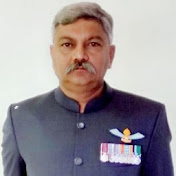
Veteran Colonel SP Mudholkar. He now leads a retired life at Pune

It was not until 1981 when Second Lieutenant SP Mudholkar issued a show-cause notice and raised the issue with the School of Artillery against the order of getting the SD and Blue Patrl stitched only from Selections, inclusion of a private firm in the Offices’ Mess Bills for recovery .  In those days, Mess Bills of various messes at School of Artillery had a serial dedicated to Selections.  You can well imagine as to the patronage Selections enjoyed from the highest levels of the Regiment of Artillery – mostly occupied by officers belonging to the Khlan.

By the time we went to Devlali to attend our Young Officers’ Course in 1983, Blue Patrol and SD procurement was done away with – thanks to Second Lieutenant SP Mudholkar – else I too would have succumbed to the pressure from the Chief/ Senior Instructor.  In those good-old days, any Young Officer refusing to procure their SD and Blue Patrol were marched up to the Chief/ Senior Instructor until they relented. Another tactic was to blackmail the Young Officer with a poor grading, though most ended up with a C grading. The Great Good-Old Days!!! Who wants to begin their military career on the wrong foot?

Selections appeared on the Mess Bills during our course- luckily for us it remained at zero value.

Three years later, Lieutenant General Sood, Commandant, School of Artillery, was appointed the Director General of Artillery – and away went Selections.  The ‘baby‘ of the erstwhile higher-ups of Regiment of Artillery was thrown out with the tub, water, soap, and loofah to land in Devlali market. 

Lieutenant General Devraj Anbu – An Ever Smiling Soldier

Lieutenant General Devraj Anbu, PVSM, UYSM, AVSM, YSM, SM, ADC, Vice Chief of Army Staff, hangs his boots today. Do not get carried away by his smile; he is a rare combination of professional competence, inspiring leadership, humility and chivalry. A quote by John F Kennedy came to my mind “As we express our gratitude, we must never forget that the highest appreciation is not to utter words, but to live by them.” There is no better person than General Anbu for whom the above quote applies as he hardly uttered any words, but always lived by them – for over five decades of life in a military uniform.

It began when he was all of ten years old, as a cadet at Sainik School Amaravathi Nagar (Thamizh Nadu) in June 1970. As a cadet, two years our senior, he was identifiable by his cheerful smile, his omniscient trademark insignia. He often walked away with a lion’s share of medals in most sporting activities at school – athletics, swimming, boxing, football, hockey and so on. He was adjudged the most technical boxer while at school and his gymnastics skills were invariably on display during our School Day Pageants.

He graduated from school in 1976 to join the 56th Course at the National Defence Academy (NDA). In his final year at school (1976), he was Chera House Captain – Cadets were divided into four houses – Chera, Chozha, Pandya and Pallava- named after the great ancient Thamizh Kingdoms, which somehow paled into insignificance in the History of India as devised by the British. It may be a coincidence that the present Vice Chief of the Indian Navy, Vice Admiral G Ashok Kumar, AVSM, VSM from our batch too was the Chera House Captain in 1978.

His smiling, soft spoken demeanour concealed a firm, no nonsense attitude – no wonder he was appointed the Cadet Sergeant Major (CSM) at the NDA as well as at the Indian Military Academy (IMA). He was awarded BLUE in Athletics and Physical Training and Merit Card in Basketball – an envious record for any NDA Cadet. As a young officer he continued to excel in sports and competed with the soldiers at the highest level.

General Anbu was commissioned into 14 Sikh Light Infantry in June 1980. He served in all operational environments – Siachen Glacier; Counter-Insurgency Operations in Kashmir and Manipur; Operation Pawan in Sri Lanka, United Nations Peace Keeping in Namibia, etc. He was awarded the Sena Medal for a very daring operation, showing exemplary leadership and gallantry during operations in the Siachen Glacier.

During my visit to Hyderabad in 2001, he organised an impromptu get-together of all our school mates that evening. There I met Mrs Gowry Anbu – a down-to-earth and compassionate lady who mirrors the very same qualities of her husband.

He was in command of his battalion during operational deployment in Rajasthan deserts and that is where I met him in 2002, when I was commanding a Surveillance and Target Acquisition Regiment in the same Division.

One day I walked into Colonel Anbu’s battalion and was received by Subedar Major Swaraj Singh, a smiling smart confident soldier. The way the Subedar Major interacted with me was indicative of how the character of a Commanding Officer flows down the chain of command to all ranks of the Battalion.

As we waited for Colonel Anbu to get free, I asked the Subedar Major something that had intrigued me about the soldiers in Sikh Light Infantry: How does Colonel Anbu, with his quiet and pleasing manners, command the fierce Sikh Light Infantry soldiers so well?

That was when I got a significant military lesson from Subedar Major Swaraj Singh:

“It is a myth in the Indian Army that Sikh Light Infantry soldiers need tough handling in a language filled with profanity. They are just as sensitive as other soldiers and their sensitivity needs to be respected. Our Commanding Officer from his Lieutenant days (1980) believed in respecting the soldiers under his command and we all respect him immensely for that. The performance of the Battalion under his command amply proves the equation.”

Subedar Major Swaraj Singh also said that his Commanding Officer neither drank alcohol nor smoked in his life – busting another Indian Army myth!

I must relate an interesting story about Brigadier Devraj Anbu when he was posted on deputation as the Commandant of the Assam Rifles Training Centre (ARTC) at Dimapur, Nagaland – a first-hand account narrated by another colleague of mine.

At that time he was on the upward trajectory of a very impressive career graph. This posting was his first exposure to the Assam Rifles and prudence dictated that he swim with the tide. Right from his first day in office, all ranks got a feel of his sincerity of purpose, steely determination, no nonsense attitude and genuine concern for the welfare of his Officers and Soldiers. One soon learnt not to mistake his self effacing modesty and courteous demeanour for weakness.

Like most Indian Army Regiments, the Assam Rifles too has very strong traditions rooted in their rich heritage, the foundations of which were laid by Gorkha Troops who formed the nucleus of the Force. One such tradition was the conduct of animal sacrifice on the Vana Devta Pooja celebrations to propitiate the Gods of the forest.

Over the years, many General Officers, Commanding Officers and Religious Teachers had done their best to sensitize the soldiers about the regressive nature of this tradition, quoting examples from the scriptures, but none issued orders prohibiting this practice as it was felt that such an order would cause deep resentment among the rank and file. As all Army Officers were posted to the Assam Rifles on deputation, most were not keen on risking their careers by ‘rocking the boat’.

He was barely few months in the saddle when it was time for the pooja. A traditional havan (where oblations are offered into the sacred flame) was conducted by the Priest and the principal participants were Brigadier Anbu, his deputy, a nominated officer, the Subedar Major and some selected representatives of the soldiers in the presence of all personnel of the organisation except those on essential duties. The ritual was to conclude with the sacrifice of a goat with a single stroke of the khukri (a Gokha’s machete), wielded by a chosen soldier.

The Priest used the ashes of the havan to anoint the sacrificial goat, the selected soldier, and the sacrificial khukri. The soldier then positioned himself near the head of the sacrificial animal with his khukri ready and formally requested Brigadier Anbu for permission to carry out the sacrifice.

In a steady clear tone, Brigadier Anbu replied “Nahin Hai” (permission denied). For the benefit of those unrelated to the uniform, this needs elaboration. In the army when permission for conduct of a troop related religious act is ceremoniously sought, it is simply expected to be ceremoniously granted. If not, it is deemed to a serious attack on troop sensitivity and could culminate in loads of trouble.

Everyone was stunned and the Priest, assuming that he had heard incorrectly, repeated the formal request only to get the same reply from the Commandant. Jaws dropped in astonishment and emotions could have flared at the perceived sacrilege. However, Brigadier Anbu remained unmoved despite gentle hints from his Deputy (who was his senior at SainikSchool) to reconsider his decision.

Without batting an eyelid, Subedar Major Arjun Thapa, a Gorkha from Nepal where ritual sacrifices are held sacred, supported his Commandant’s decision and ordered that the goat be set free. A lauki (bottle gourd) was produced and ritually chopped in two by the Khukri in its place. Not one dissenting murmur was heard from any quarter!

That’s obviously a classy example of what is meant by courage of conviction. It is a testimony to the immense respect and affection earned by Brigadier Anbu across the organisational spectrum, that too within a few of months.

Brigadier Anbu’s brief tenure at the ARTC is still remembered for the immense progress made in training, administration, and welfare at the premier establishment of the Assam Rifles.

In April 2017, the 79ers, my batchmates from Sainik School Amaravathi Nagar had our annual meet in Srinagar, J&K. I reached Srinagar three days ahead to spend time with soldiers who had served with me. I travelled to a remote locality to be with the boys and that evening I called up Lieutenant General Anbu, the Army Commander Northern Command over the military telephone circuit. Typical of the Corps of Signals’ way of doing things, the duty officer at every successive military exchange came on line and fussed around for ever as the call was being directed to the Army Commander. He finally came on line and spoke to me for over thirty minutes, bantering about the good old days and expressing his inability to fly down to meet his school mates at Srinagar as he had to attend the Army Commanders’ Conference at New Delhi next day.

It is said that a soldier has no holiday in life; but retirement makes every day one for him. Knowing General Anbu, I am sure that he will make the rest of his days more rewarding and entertaining as he is a man of great versatility. He is bound to enrich the life of those around him in a meaningful manner.

Great soldiers do not retire, they just fade away – surely he too will fade away and be rarely be in television spotlight, as is the wont of so many retired senior defence officers these days! Perhaps he will pen down his thoughts covering a momentous half century in uniform.
Academy Drill Instructors

Drill is the bedrock of discipline and the Drill square is often compared to a potter’s yard, wherein clay of various hues and textures are shaped into commendable works of art; each piece unique in itself and yet part of a whole. Passing the Drill Square Test (DST) entitles every cadet to the two ‘Ls’ he craves for; the Lanyard and Liberty. Here the Liberty is a pass to go out of the Academy on a Sunday.

DI11

Every Defence Service Officer would always remember their Drill Instructors – the Havildar Majors (Sergeant Majors) and Subedars (Warrant Officers) – who taught them the basics of drill. These Drill Instructors have to constantly maintain a high standard of military bearing and a super intense level of performance while they are training Officer Cadets. They are always under the microscopic eye of the Cadets.  They are in a competitive environment against other Drill Instructors of other Squadrons/ Companies to ensure that their Squadron/ Company emerge as champions at drill in the Academy competitions.

Above all, they take on a huge challenge to accomplish, making soldiers out of raw teenagers, coming from different parts of the country, speaking different languages (I could hardly understand Hindi when I joined the Academy,) from different family/educational backgrounds.

There is a lot of prestige associated with being a Drill Instructor at the Academy. The training to become a Drill Instructor is tough and the job has long hours and can be extremely demanding. These Instructors, mostly from the Infantry Battalions, are real go-getters and are always looking for opportunities to push themselves. It is one of the highest honours a Non-Commissioned Officer (NCO) of the Indian Army can get. Only the most qualified NCOs are chosen to attend Drill Instructor Course and from them the cream is selected to be appointed at the Academies.

The Drill Instructors train the Cadets under the watchful eyes of the Drill Subedar Major (Master Warrant Officer) and the Adjutant of the Academy has the overall responsibility for the Drill Training.

DI22

Our course-mates stationed at Mumbai organised a get together on 26 February 2016, to honour our Drill Subedar Major (SM,) now Honorary Captain Ghuman Sinh. He was the first Drill SM when we joined the Academy and he was the best Drill SM I have come across in life. As a cadet both at the National Defence Academy (NDA) and at the Indian Military Academy (IMA,) I had seen a few more, but he was easily the best. He had a roaring thunderous voice at the Drill-Square, but had the softest tone elsewhere. He had mesmerisingly penetrating blood-shot eyes at the Drill-Square, which metamorphosed into large pools of kindness when outside the square. He was surely a soldier to the hilt, perfect with his drill and above all a great Guru.

SM Ghuman Sinh never believed in punishments. At times we got late for the Drill class by virtue of previous class getting delayed and our drill instructors got into the act of punishing us for being late. SM Ghuman Sinh would reprimand these drill instructors saying “These Cadets do not deserve punishments as they are not responsible for the delay. Treat them like your sons and teach them Drill.”

DI22a

One Sunday morning, cycling my way to the Church, (the route was through the Drill Instructors’ Quarters,) I met a soft-spoken, humane person, dressed in his civvies, waiting with the NDA cycle near the church. He inquired as to where I was off all alone in a hurry. I said I was off to the church and the mass was to commence in about ten minutes. This person I knew from his bearing and being with the NDA cycle was a Drill Instructor and he spoke to me with a lot of compassion, care and love (for NDA Cadets, it’s a rare experience.) At the end of the conversation, I bid goodbye to him and assuming that he might be a recently posted Drill Instructor, my last question  was – “By the way who are you?” The man said “I am your Drill SM Ghuman Sinh.” I just could not believe my ears and eyes, as the man in the civvies was really humane and I had seen him only in his military uniform until then.

At the NDA, in Echo Squadron, we had Subedar Kalyan Chand from the Dogra Regiment as the chief Drill Instructor with Regimental Havildar Major Karnail Singh Chauhan from the Para Commandos as his deputy. They were really good at their job, thoroughly professional and real hard-task masters.

Two years after my Academy Training, as a Lieutenant, I was leading the Artillery Brigade Athletic team for a competition at Dehradun. On reaching the ground for the march-past, I realised that a button was about to come off my blazer and I needed a needle and thread to fasten it. I looked around and saw SM Kalyan Chand there. He, a roaring salute, me, a bear hug! I then requested him for the much needed needle and thread. The service came in no time, but SM Kalyan Chand insisted on fixing the button himself. He said that it would be a matter of honour for him to do the favours for his cadet. I was pleasantly taken aback by his kind gesture.

In 1990, our Regiment moved to Udhampur and was co-located with a Para Commando Battalion. An officer from the battalion was my neighbour and while conversing with him he said that their SM was Karnail Singh Chauhan. Next day I walked into the SM’s office and he could immediately recognise me. He introduced me to all the Havildar Majors of his battalion who had assembled there as “My Cadet at the NDA, now a Major in the neighbouring Artillery Regiment.” After that the two units developed such a great rapport that they would help each other with troops, vehicles and other resources whenever needed.

Our classmates’ from the 1979 batch of Sainik School Amaravathinagar had a reunion at the NDA on 22 December 2015.  It  commenced with the wreath laying ceremony at the Hut of Remembrance, to pay homage to the martyred officers, who had passed out of NDA. The solemn ceremony was an acknowledgement of the courage, valour and sacrifice of those who served the country. The ceremony had a patriotic impact on everyone present, especially the children.

DI33

The Drill Instructors (Havildar Majors) provided an excellent ceremonial guard for the occasion. At the end of the ceremony, I thanked them and spoke to them to say that the Drill Instructors at the Academies are the most blessed lot of Gurus as they are the only ones to see their wards placed above them on completion of training under them. Hence, they are doing the most divine job and must always strive to impart the best Drill education to the cadets.

The Faithful Banian: A Soldier’s Second Skin or a Wife Beater

One day, our teenage son Nikhil walked up to me and asked if he could borrow my wife-beater.

I completely lost my composure. Shocked, I immediately told him that I had never beaten his mother, nor did I ever intend to do so! (I stopped short of admitting that while the idea had sprouted in my mind once or twice during a few heated moments, good sense had always prevailed over impulse).

Seeing my utter predicament, our son burst out laughing and explained the terminology. He just wanted the sleeveless white vest I used to wear back in India. You hardly see anyone wearing them here in Canada—likely due to the colder weather and significantly lower perspiration levels.

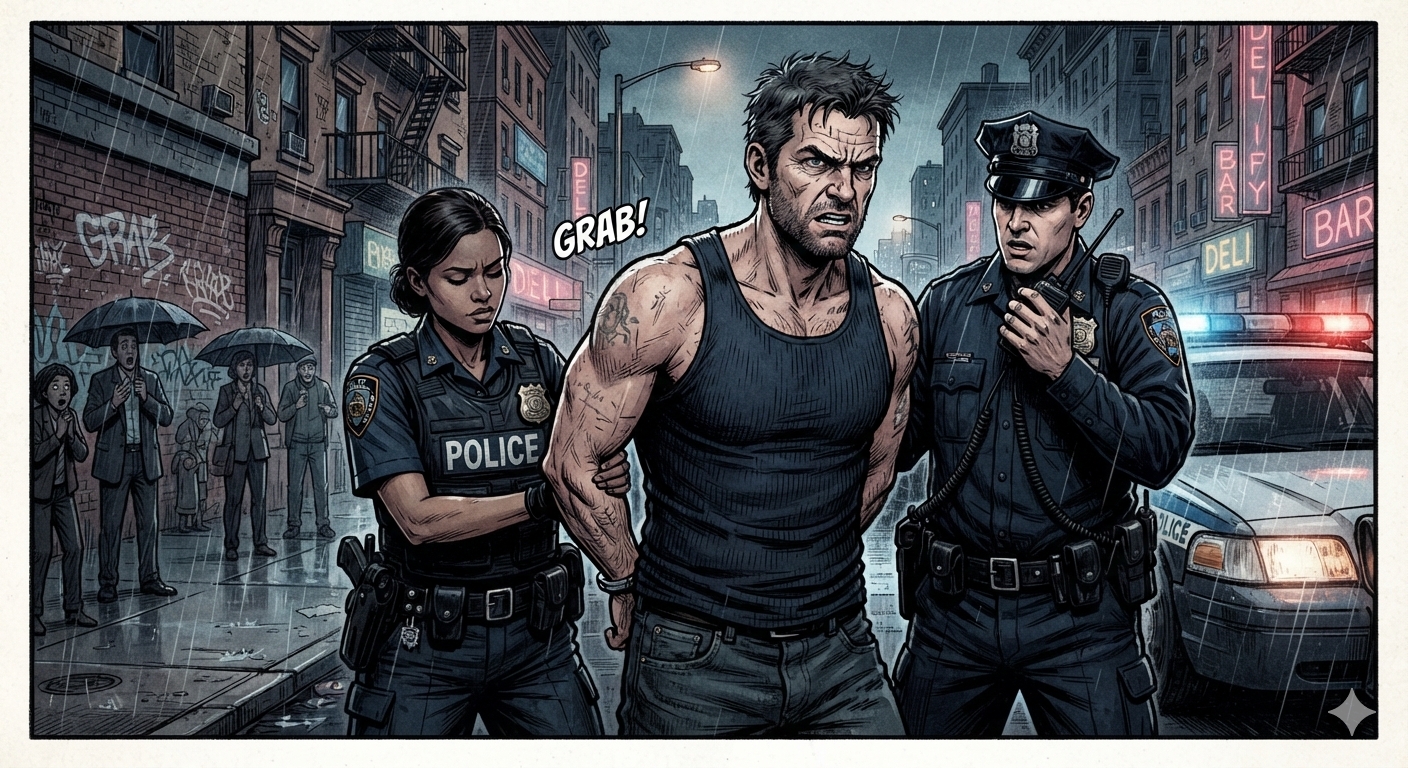
He explained that the American TV show COPS had a lot to do with popularising the term. Every time the show featured a man being arrested for domestic violence, he seemed to be wearing that exact style of sleeveless vest.

This image has an empty alt attribute; its file name is ban05.jpg

As the story goes, the term traces back to 1947 in Detroit, Michigan. A local man named James Hartford Jr was arrested for beating his wife to death. The media aired his mugshot for months—showing him in a sleeveless undershirt—constantly branding him the wife-beater. The name, unfortunately, stuck to the garment.

To me, however, that simple white sleeveless vest—the humble banian—was a marvel of utility. I always admired it for the immense service it rendered. It never cared where it ended up, even after its owner had exploited it to the hilt and thrown it out. In an Indian household, a retired banian achieves a second life, usually reincarnating as a shoe-shining cloth, a mop, or a kitchen duster. After all, why discard such high-quality, pure white cotton?

I never understood why people in hot climates wore more layers than absolutely necessary, but the banian proved its worth by absorbing sweat. Sure, it got wet and felt momentarily uncomfortable, but it acted as an impregnable barrier. It stopped sweat from seeping through to the outer layer of my Olive Green (OG) uniform. Leaving white salt stains on a uniform shirt after the sweat dried was considered highly un-soldierly. Moreover, my skin hated the scratchy texture of the heavy OG fabric; the faithful banian maintained a comfortable buffer between the uniform and my skin.

Some of my army friends preferred banians with sleeves, but I always stuck to the sleeveless version to avoid the dreaded Sunday is longer than Monday syndrome. This happens when the sleeves of your undershirt creep out from underneath the shorter sleeves of your uniform or T-shirt—a terrible look for a soldier.

This image has an empty alt attribute; its file name is vest2.jpg

My relationship with the garment started early. When I joined Sainik School Amaravathinagar in Tamil Nadu at the tender age of nine, my trunk packed by my parents contained a dozen banians. We had to wear them for morning Physical Training (PT) so the instructors could monitor our physical growth and check for skin infections. This strict PT dress code followed me through the National Defence Academy (NDA) and the Indian Military Academy (IMA). It was only when I was commissioned as an officer that I transitioned to wearing a white T-shirt for PT, while the jawans continued training in their faithful banians. Even so, I loved the feel of the banian clinging to my skin and wore one under my clothes at all times.

When I joined my regiment, my Buddy (helper) was Sepoy Hukum Chand. He served me with the utmost dedication, love, and care. Hukum Chand was my accountant, personal assistant, bodyguard, radio operator, and buddy rolled into one. He managed my entire life: waking me up, preparing my morning tea, keeping my cigarettes stocked, and prepping my uniform, room, wardrobe, and evening attire.

This seamless arrangement lasted for seven years—until the seven-year itch erupted. I got married.

Suddenly, Hukum Chand’s authority over my wardrobe was challenged. One evening, my wife Marina flatly disapproved of the suit Hukum Chand had laid out for a party, noting that it clashed with her saree. A silent battle of wills ensued. My wife won, Hukum Chand lost, and the dynamic of my wardrobe changed forever.

During our bachelordom years, Hukum Chand had closely observed my habit of wearing a banian at all times. Every six months, he purchased a fresh dozen from the regimental canteen. Since he was my accountant, he paid for them using my money, leaving me completely oblivious to the expense.

When I finally asked why on earth we needed new banians every six months, he explained his logic. The brackish water used by the washerman turned the white fabric yellow after repeated washes. Instead of throwing them out, Hukum Chand snipped off the shoulder straps, cut open the torso, and repurpose them into polishing rags.

He used them to shine my leather boots, Sam Browne belt, and brass rank badges. He pointed out that the standard yellow polishing cloth sold at the canteen left lint all over my black boots and OG uniform, requiring double the effort to clean up. A well-washed, soft white banian was superior in every way, and best of all, it didn’t cost a penny extra. He used the thinner, worn-out sections for the leather and the thicker seams for the brass. It was a masterclass in military budgeting: a costly saving!

Years later, after completing various staff postings and long courses, I returned to the regiment in Sikkim as a Battery Commander. This time, Sepoy Sri Chand was assigned as my Buddy, while Hukum Chand had climbed the ranks to become a Havildar.

A few days after my arrival, while I was taking an afternoon siesta in my bunker, I overheard Havildar Hukum Chand marching in. He began fiercely admonishing young Sri Chand for not maintaining the Saheb’s bunker up to standard. Hukum Chand proceeded to lecture him on my exact likes and dislikes—my tea preferences, my food, my clothes, and my cigarettes.

He concluded his lecture with authority: “Saheb likes wearing a banian at all times, even when he is sleeping.”

Glancing down, I realised I was indeed napping in my favorite lungi-banian combination. Hukum Chand added one more detail: “He prefers the thick banians under his uniform and the thin ones under his civil clothes.”

That was news to me. It was a preference I didn’t even know I had! In reality, it was a habit completely engineered by Hukum Chand years prior, ensuring he always had a steady, rotating supply of thick and thin cotton cloths to keep my brass and leather gleaming.

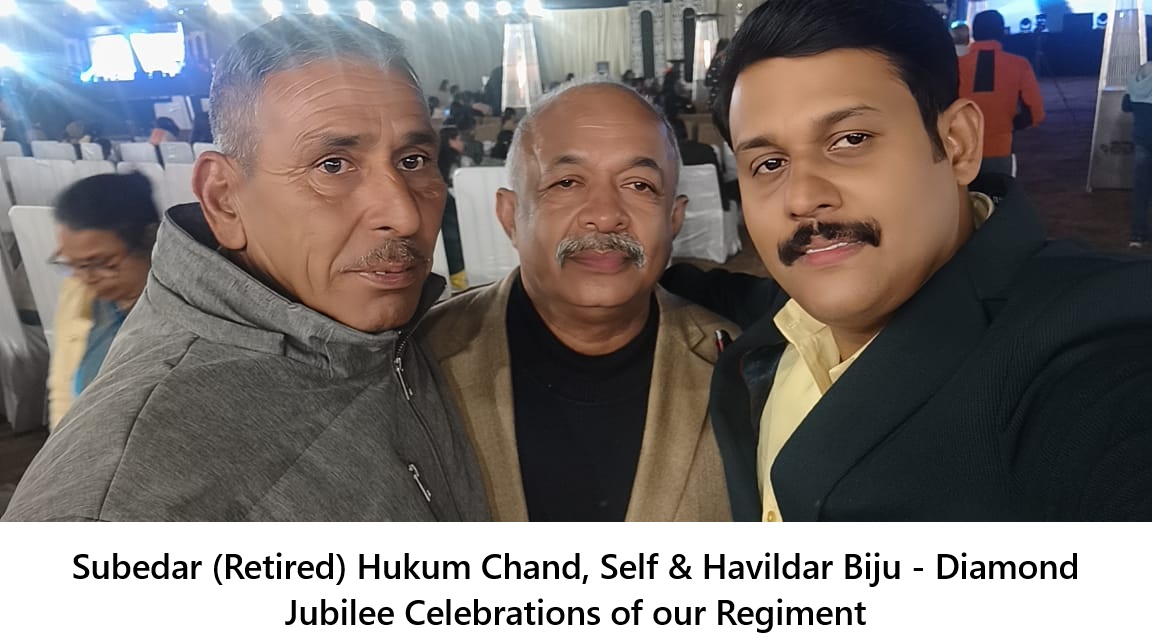
Today, Hukum Chand is a retired Subedar enjoying his well-deserved post-military life, while both of his children work as IT professionals. We recently crossed paths in December 2025 during our regiment’s Diamond Jubilee celebrations, sharing a laugh over old times.

It made me realise that many of our deeply ingrained habits and preferences are not self-developed at all. They are quietly thrust upon us by our environment—and sometimes, by a very clever Buddy.