What Do I Do Now?

This is the question everyone asks me when I call-up anyone back home in India. When I say I am enjoying my retired life, the immediate reaction has been “You just cannot sit idle and must be up to something.” Hence I decided to pen down all the activities I indulge in throughout the day.

rk

Saying good-bye to the army was very difficult, especially since one enjoyed the best of times and it’s the Army which has made you what you are this day. One could not have asked for anything better from God and the system – otherwise from being a primary school teacher’s son, I would not have retired as a Colonel. All what I am today is the result of the education of Sainik School, NDA, IMA and various Military Institutions. In sheer physical terms – from a 22 kg nine year old boy to a 78 kg 42 year old – all credit must belong to the Indian Army. So it was a painful good-bye to the arms.

Looking back, thirteen years since I hung my boots, I have no regrets or complaints. God and the Army Headquarters (MS Branch) was always kind to me that I served 10 years in Delhi (even though I had no interest in Delhi;) five years on various courses and to top it, had only two years of High-Altitude postings. Again nothing to complain.

The army made me a computer aware man despite being a BA. It made me a leader and a man. I never ended up working in the Army – as I enjoyed every part of it. Thanks to God, all my colleagues, my superiors and mainly to the men who really made me feel proud.

The journey out of the uniform had been different to what many of you experienced as I took the evening flight to Canada, the day I handed over command. I jettisoned into a new and unknown world, where my wife and children were waiting.  As promised, my wife had a nice, big home and a car waiting for me and as she was earning a good salary as a pharmacist. I had no pressures at all. My first step was to amalgamate with the Canadian society.

To my dismay, I found that all my perceptions of the Western world were totally misplaced. No racism, no shunning being a brown skin, and a very friendly lot of people who valued human aspects of life. I spent my first six months learning to speak English the way Canadians do and I found all the people whom I spoke to at the malls or coffee-shops or in the bus, very patient and friendly trying to make out what I was trying to communicate. These communications helped a lot and also corrections from our children got me into speaking Canadian-English.

After six months, I landed up with a job as a supervisor at a call-center and I enjoyed that too for a two year period until our children demanded that I be home when they were there.  They did not want to live in an empty home.   That’s it! I quit my job, to be a house husband. My wife who was doing a four-day week took to a five-day week as her 10 hours of extra work made up much more than what I earned in my 40 hour week and expenditure came down as I did not have to drive to work.

Having taken over as the house-husband, I felt I was busier than any time before as I woke up first, made tea for all, cooked breakfast, packed lunch and fresh-fruit-juice and dropped off the children to school and saw-off my wife to work. Then were the chores – washing dishes, laundry, vacuum cleaning the house, walking the dog (a very difficult aspect in Canada- especially in winters), preparing lunch, gardening, grocery and the list goes on. By afternoon, I picked up the children from school; some days in the evening  when they had any after school activities like drama club, environmental club, debating club etc. Then was dropping them off to their extra-curricular activities by 5 PM – for swimming, tennis, golf, music, dance, or voluntary service at the community old-age home. Got everyone back to home by 6 or 7 PM and helped them with their assignments and study and then cooked dinner and we waited for Marina to return to enjoy a family dinner at 9 PM.

Now with both our children moving out of home to stay in Downtown Toronto, pursuing their job and university, my busy schedule came to a near end.  That was when I found time to read more and write more.  I took to photography as a new hobby as I realised I needed quality images for my blogs.  I now get busy only on the weekends when children come home, normally preceded with a text message listing out all the groceries and other stuff they need.

The life has kept me busy and hence I presume in good health too. I never carried any baggage in my life. I never carried a brief-case to office as I did not believe in carrying office to home or vice-versa.  I recall a conversation with an NCO who met me while on vacation last year who said “You are the only Commanding Officer I’ve seen coming to command a unit with four boxes and leaving with only two.

Air-Canada only allows two pieces of baggage,” I replied.

Remembrance Day

pp

Remembrance Day is observed in Canada and most of the Commonwealth nations, (barring some countries like India), on 11 Nov (11/11).  At 11 minutes past 11 o’clock, all the buses and trains will stop, the fire engines will sound their sirens for a minute as a mark of respect to all the fallen soldiers.   Remembrance Day (also known as Red Poppy Day,) is a memorial day observed since the end of World War I to remember the members of the armed forces who have died in the line of duty.

In India we remember our soldiers only at the time of war and forget them soon after. Our governments over the time have been unfair to the Armed forces and have brought down the status of the Army Chief after every war fought by the Indian Army – . After the 1947-1948 war, the service chiefs were made junior to the Judges of the Supreme Court. They were made junior to the Cabinet Secretary after the 1962 war and junior to the Attorney-General after the 1965 war. After the 1971 war, they were made junior to the Comptroller and Auditor-General.

The red poppy has become the emblem of Remembrance Day due to the poem In Flanders Fields by Lieutenant Colonel John McCrae, a doctor of the Canadian Army during World War I.   During the war, he was treating injured men – Canadians, British, Indians, French, and .Germans. The poem was written to vent the agony felt by McCrae after he had performed the funeral ceremony in the absence of the chaplain, for his young friend and former student, Lieutenant. Alexis Helmer caused by a bomb.

In the poem McCrae describes about the poppies that bloomed across some of the worst battlefields of Flanders in World War I, their brilliant red colour an appropriate symbol for the blood spilled in the war. The poem speaks of Flanders fields, but the subject is universal – the fear of the ones who sacrificed their ‘today’ for our ‘tomorrow’, that they will be forgotten, that their death would have been in vain. Remembrance, as symbolized by the Red Poppy, is our eternal answer which belies that fear.

An American teacher, Moina Michael, in November 1918, read McCrae’s poem “In Flanders Fields”. She immediately made a personal pledge to keep the faith and vowed always to wear a red poppy of Flanders Fields as a sign of remembrance and as an emblem for keeping the faith with all who died.

Two years later in 1920, during a visit to the United States, a French woman, Madame Guerin, learned of the custom. On her return to France, she decided to use handmade Poppies to raise money for the destitute children in war-torn areas of the country.  Following the example of Madame Guerin, The Royal Canadian Legion officially adopted the Poppy as its Flower of Remembrance.

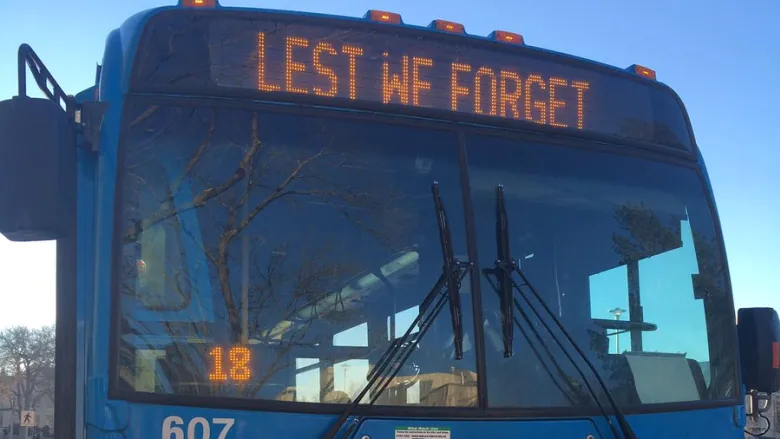
Thanks to the millions of Canadians who wear the Legion’s lapel Poppy each November, in memory of thousands of their countrymen who died in battles (except many who emigrated from the Indian sub-continent). During the Remembrance week, all the flags fly at half-mast; all the buses have “Lest We Forget” signboards, most of the shops, restaurants and malls display banners and posters to honour the soldiers and veterans.

On the Sunday of the Remembrance Week I attended the Holy Mass at the Canadian Catholic Church and the Orthodox Syrian Christian Church.  In the Catholic Church anyone and everyone including the clergy, all were wearing the Red Poppy, whereas in the Syrian Christian Church none were wearing.  You all can guess the reasons.

Mississauga, the city we reside, a notification at the Municipal Transport (MiWay) on Remembrance Day read as follows “The City of Mississauga’s MiWay Transit is offering free service for Canadian Forces veterans and a companion on Remembrance Day, Friday, November 11. To obtain a free ride on Remembrance Day veterans must wear their uniforms, medals or other items that clearly identify them as veterans to our transit operators. Veterans are respectfully asked to identify their companion to the transit operator so that he or she may also ride free. All MiWay buses will observe a minute of silence at 11 a.m. on November 11 to recognize the sacrifice made by our veterans. Transit operators will stop their buses during this tribute.”

One always passes by the veterans and cadets selling the Red Poppy in the malls, bus terminals, subway/railway stations, during the Remembrance Week.   The money collected is used for veterans’ welfare by the government. The public support for the event is always overwhelming where ever they have Remembrance Day ceremonies. People turn up in large numbers. The media support is also tremendous. All news presenters, anchors, all wear the Red Poppy for the entire week. Have you seen any Indian news presenters or any media person ever wearing the Flag on the Flag Day (Indian equivalent of Red Poppy Day)?

Canadian Prime Minister and the entire cabinet, appear on any media, wearing the Red Poppy. In India, on the Flag Day, children pin the flags on our President and the Prime Minister and Chief Minister, and for the next event you see them without the flags on their chests.

So, next time you see someone selling the Red Poppies or Flags, please pause and buy one and pin it with pride on your chest, to pay respect to those fallen soldiers all over the world who ensured your honour and safety and made sure that you live a life full of dignity.

University Vs College

In North America, the Universities offer you graduation/ post-graduation programmes, whereas colleges offer you diplomas. In order to attract Indian students, the names of these diplomas are really impressive, but their value in many cases may not even be worth the paper on which the diploma certificate is printed.

Universities in Canada are independent, though they receive government funding. Each university is self-governing and regulates its own programmes, admissions and faculty. In these universities, tuition fees for international students are generally three to five times compared to domestic students. University of Toronto charges $15,900 in the first year for the domestic students for a Bachelor’s Degree in Commerce/Business Administration, whereas an international student got to pay $68,750.

Majority of Indian students on Student Visa to Canada study in the colleges. Many have sprung up recently to entice Indian students. In January 2022, three Montreal colleges were blacklisted and shut down abruptly, leaving around 2000 Indian students in the dark. Later reports uncovered severe financial irregularities and other illegal activities which led the Canadian government to revoke these schools’ licences. Canada has a long list of blacklisted educational institutions which students must avoid.

uc

Do not Get Carried Away by the Agents.  Most sensible advice, but least taken by anyone immigrating to North America. The agents operating in India are there to make money and will promise you the moon. They force the students to go for College Diplomas in Canada as the colleges offer them huge commissions. Canadian Universities do not offer such commissions as they are oversubscribed. Please do not be carried away by their guarantees for a sure shot job – Biden or Trudeau cannot guarantee it – so how can an agent in India.

First Semester – Use it to Settle Down and Learn to Communicate.   Indian students are not familiar with the social, cultural and education system of North America. Use the first year to settle down and learn to live and talk the way the locals do. “When in Rome, do what Romans do”. Second semester onward, you can take up part time work.

Sufficient Funds.    To avoid working in the first semester and to amalgamate with the society, $75,000 for the first year is recommended for university students. This includes $50,000 for the tuition fee and the rest for living expenses.

Equip Well.  Get your entire wardrobe based on the fashions prevalent in North America. In case you wear clothes the Indian way, you may get branded as a Fresh Off the Boat (FOB.) Make sure that you develop the habit of using perfumes and deodorants – your body odour is much worse than what you perceive it to be. Heard many complaining that the person sitting next to them walked away – it’s not because of any racial bias, but because of your body odour.

English is not Your Mother Tongue.   Many (including I,) prior to immigration presumed that one’s standard of English is pretty high and one had a very impressive communication technique. In North America, written and spoken English has its own format and methodology. Letter writing follows a different format (refer to it on internet).

Communication Skills.   Written and oral communication skills are given lot of importance in the Canadian high school curriculum, compared to that of India. Most of the subjects are taught with application aspects in mind and is not cramming. An Indian student needs to compete with the local students (majority are much smarter than what you think you are.) To make a test, write a letter to the editor or a small column or a snippet and try and get it published in any newspaper or magazine. In case you fail to do it, your written English needs improvement. Try your hand at a PowerPoint presentation for five minutes and see how much you can impress your friends. The course you are going to undertake will involve a lot of written and oral presentations.

Be Punctual.   You got to be on time for the class, for your submissions etc; otherwise, you are sure to lose marks. Ensure on-time submission, even if the work may be incomplete and may not be of the standard you wished – this will fetch you some marks than getting none. Students here are trained in this aspect from high school.

Be Prepared for the Classes.    Unlike in India, the first class does not begin with introduction, but with the first chapter. Prepare and research based on the training programme given.

Master Statistics. MS Word, PowerPoint and Excel. In case one can master these, you will have a smoother learning. Improve your keyboarding skills to at least 50 words per minute.

Take all Tests.   Most universities want foreign applicants to demonstrate proficiency in English language by taking some test, such as IELTS, TOEFL, comply with the conditions. Some universities may ask for GRE, GMAT, or LSAT tests. Ensure that you qualify in them prior to leaving India – else it’s going to be pretty expensive in both time and money. These tests are an excellent opportunity for students to get a taste of the foreign universities. By demonstrating proficiency in these tests, applicants can have their candidacy established more firmly because the university will have more confidence in your abilities after learning about your good scores in these tests.

Getting Documentation Done.  Get all documentations done prior to leaving India (else you will lose time and money). Most admission committees have not heard of the university from where you have graduated. Even if one is the top student in one’s graduating class, the admission committees have no way of finding an equivalence of your performance. Most universities want the university from where you studied to send them the transcripts of your marks and sometimes the syllabus followed. You can imagine how difficult this can be (I had a tough time getting my wife’s transcripts sent.)

Personal Essays. Almost every standard university application requires the applicants to submit a personal essay of around 650 words. The essays are where you illuminate your character in words and ideas, rather than in numbers and percentages. It is your chance to show universities who you are, what makes you tick, and why you stand out from the crowd. Your essay must cover how your background relates to your university’s programme and your goals. It must provide insights as to why you are applying to that university and that programme.

Remember, Bachelors is 16 years of Education.   In North America, Europe, and Australia, a Bachelors’ degree is awarded after 16-years of formal education. You may be better off completing graduation in India (16 years of formal education) before applying for a post-graduate degree abroad.

Know the Deadlines.   Most graduate programs abroad begin in September. Often admission deadlines for foreign students are in March or April. Applicants should ensure that complete applications with reference personal essays, letters, transcripts, and other supporting materials reach the university well before the deadline. Applying sooner always increases one’s chances for admissions.

Search for the University that wants You.    While you as an aspiring student are nervously applying to universities abroad, administrators at many universities are also nervously waiting for applications to arrive. Remember not every department in every foreign university is fortunate to have thousands of applications. Sometimes some departments in very well-known universities are struggling to attract graduate students and hence are keen to greet all applicants with interest. The challenge for the applicant is to try to determine what departments or universities are eager to have additional students. Avoid applying to Ivy League universities, such as Stanford, Harvard, and other similar universities, which attract applications from the top talent in not just the United States, but from all over the world. There is no shortage of decent, not necessarily top-quality universities in the Western world. In the United States alone there are roughly 5,500 universities or institutes of higher learning where approximately 14 million students are currently enrolled. As a smart aspiring student, you should be able to use the Internet effectively to develop a list of second-tier universities that offer specialisations in your interest. From that list of prospects, you should initiate a dialogue with admission officers to determine information about acceptance rates. If the department of your interest accepts only 5% of the applicants, you may want to expand your search to other institutions where your odds have to be much higher than mere 5%.

Know whom to Contact at the University.          Never send the same letter of interest to every professor in the same department. If you send an email to every listed faculty member on the department’s website expressing your keenness to join their research team, you are most likely not to get a response at all. You should do research to determine who is the right person to receive your inquiry instead of sending mass emails.

Wishing all the aspirants of a North American Degree all the best.

ALCOHOL KERALA

ml

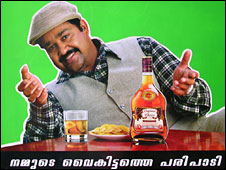
Every year after the Onam, the media in Kerala comes up with an area-wise score card – not of marks scored in exams by the students but is of the money raked in by the Beverages Corporation.   Kerala has overtaken traditionally hard-drinking states like Punjab and Haryana and we boast of the highest per capita consumption in India – over eight litres per person a year. Also, in a strange twist of taste, brandy is the preferred drink in Kerala in a country where brandy outsells every other liquor.   This comes from a stupid notion that the doctors prescribe brandy and is good for health. May be in little quantity it may help you, but not in the volumes Malayalees drink.

A Malayalee, whether in Canada or back home, on hearing that I retired from the Indian Army, is more interested to know about the quota (of liquor) I get, rather than appreciating me for the two decades I served the nation in the most inhospitable terrains and in the most risky situations.

The judgements by various courts and the closure of many bars by the state government has added to the chaos in Kerala.  It got further complicated with many an allegations of bribes and scandals associated with various political leaders of the state.

This has again proved that the legislature and executive never rise to the occasion to ensure that necessary laws are passed and are implemented.   Will the public cooperate with the government to ensure that alcoholism does not become a menace, not that it already has become a menace?

Let us study a few alcohol related cases and laws as applied in Canada.

  • In the case of Lum v. McLintock (1997 B.C. Supreme Court), a patron spent an afternoon at the bar of a golf club where he was a regular customer. He became very intoxicated. The server knew the patron, knew that he was driving, knew that he was intoxicated and even walked him out to his car. The patron drove off and hit a cyclist causing serious injuries. The conduct of the server was found to have been exceptionally negligent and the licensee was apportioned 30% of the blame (with the 60% to the patron and 10% to the plaintiff cyclist).
  • In the case of Francescucci v. Gilker (1996, Ontario Court of Appeal), a patron had become extremely intoxicated at a restaurant. Staff members picked him up, carried him out to his car, put him in it, and threw the keys on his lap. He drove away a short while later and injured someone in an accident. At trial, the jury apportioned 78% of the blame to the restaurant and 22% to the patron. The Court found that the restaurants conduct was deliberate and reckless.

The lesson to take from these cases is that the poorer the job a licensee does of living up to its duty to prevent harm resulting from over-service, the greater the percentage of fault that will be assigned to the licensee in the event someone is injured.

In Ontario, the province I reside, it’s a law that If you plan to work in the industry as a Bartender, Server, Manager, you must be certified by law and undergo a training program designed to educate servers, bartenders, managers and other staff members as to what their responsibilities and obligations are under the law, as well as recognize the signs of intoxication and implement intervention strategies for aggressive customers..

Most people know that it’s not wise to serve alcohol to someone who is obviously drunk. But many aren’t aware that they may be sued and held liable. Even at parties at your home and if you serve alcohol, its imperative of you to ensure that your guests who had alcohol beyond the permissible limit are seen off in a cab or the designated driver has had no alcohol. Never permit your guest to carry their drinks off for the road.

The laws regarding conveying liquor in vehicle is that no person shall drive or have the care or control of a motor vehicle, whether it is in motion or not, if it is carrying any liquor that is readily available to any person in the vehicle, even if the liquor  is packed in baggage that is fastened closed or otherwise.

It’s a proven fact that more North-Americans have died as a result of accidents caused by drunk drivers than in the First World War, Second World War, Korean War and Vietnam War combined. The case in Kerala or in India can’t be any different.

Though the Kerala government is committed to introduce prohibition in the state step by step, the liquor industry says the step would make their business nonviable, the tourism industry feels that it will drive away tourists from the state.

The government is also concerned about its loss of revenue. Liquor is contributing a major share of its tax revenue as the government has been increasing the tax on the booze as part of its policy to curb the consumption. Alcohol helps in giving Kerala’s economy a good high – shockingly, more than 40% of revenues for its annual budget come from booze.

Toddy, the traditional beverage of Malayali that even played a role in promoting tourism in Alappuzha district, has of late courted trouble. The Kerala High Court wondered why the state should not ban it, considering the complaints regarding it being mixed with intoxicants. While no one can dispute the intention behind the ruling, can a ban on toddy really halt the rising alcoholism among people in the state?

Considering this, it is absurd to expect a ban on toddy to make any significant impact on the drinking habits of Keralites, say those fighting to save the traditional occupation of the toddy tappers. It is not the tapper who adds illicit spirit to the toddy, but the contractor who operates hand in glove with the excise department.

The Kerala Agricultural University has developed a technology to extract non-alcoholic ‘Neera’ from coconut trees. The coconut inflorescence sap in its purest form is not alcoholic and contains several ingredients that are good for health, but as it quickly ferments and turns alcohol.  The method is to arrest the fermentation using organic methods. Tapping Neera could also fetch farmer bigger returns than toddy and a farmer can earn up to Rs 1500 in place of Rs 250 for every coconut tree used for toddy tapping.

The religions unknowingly also plays a part in this chaos. The gospel readings in church masses of how Jesus converted water to wine are given as a justification for many like me to consume alcohol. May be, it was the first miracle of Jesus as recorded in the Bible; it may be worthwhile to remove it from the gospel reading. The Hindu mythology speaks of Som Ras believed to have been created Lord Brahma. May be that Islam bans use of alcohol.

Recent Malayalam movies have shown the super-star heroes drinking on any occasion – sad, happy or otherwise and then they come out with a statutory warning about the dangers of alcohol. In comparison, I have hardly seen an English movie depicting the hero in an intoxicated state.

Strict enforcement and stricter punishments are only the way out. Unlike in North America, where many are afraid to take on to the wheel after a drink, mainly because of the fear of a police ticket, the fines and likely suspension of license. Life without a driving license is the most difficult for the North American barring the people who live in the metros. Further, the moment you get charged, the vehicle insurance premiums shoot up, where as in India, it remains the same even in case you are held liable for a death on the roads caused due to driving under the influence of alcohol.

Body Odour

An Indian Army colleague had opined that the Westerner may sound helpful when brown skin is alone in open, but they detest even one occupying a table next to them in a posh hotel and socially too. Well placed whites do not prefer a brownie at their residences; probably that is how we get the taste of Indian caste system universally. Another friend found no one occupying the vacant seat next to him in the bus and the Westerners were standing and traveling. It was not that every one in the bus was racial, may be a few were.

bo

Many of us fail to realise that it is our body odour that drives the Westerners away – an idea many Indian friends will never accept. Many call me a half-white for this or Whitewashed. You need to call a spade a spade. In case one takes it in a positive spirit, then read on.

It will be incorrect to say that all Indians emanate a bad body odour.   In case anyone has a body odour, then the reasons could be as given below. If you are travelling abroad or meeting with foreigners, it is prudent to take some actions as given in the tips, even if you feel that you do not have any body odour.

  • Biological Reasons.   India is a very hot country. Due to its hot climate, Indian people have been biologically evolved to have more densely concentrated sweat glands. This allows them to sweat more in order to cool down their body temperature in the midst of very hot weather. In addition, many Indians also have longer body hair, which helps to retain the sweat to help cool down their body. Typically, sweats do not have any smell. They produces odour only upon reaction with bacteria growing on the body. Essentially, the body odour is the smell of the bacteria growing on a body and the bacteria multiplies rapidly in the presence of sweat. Due to more densely concentrated sweat glands as compared to other people, Indians have a higher tendency to produce more densely concentrated sweats, which in turn causes the reaction with bacteria to increase. This increase in multiplication of bacteria causes Indians to have a higher tendency to produce a particular body odour.
  • Hygiene Reasons.   Compared to developed nations, India generally has a poorer standard of hygiene and practice. This caused bacteria to populate and multiply easily around and to grow easily in the body of many Indians. Thus, the tendency for bacteria to react with sweat increases causing many Indians to produce a particular body odour.
  • Diet Reasons.   Many Indians eat curry, many other spices, onions, salted fish etc as part of their diet . These diet practice can influence the sweat samples and its reaction with bacteria, causing the body to radiate the odour.

Home Cures and Suggestions

  • Maintain high levels of personal hygiene, to have baths more frequently using a scrubber and anti-bacterial soap to clean the skin.
  • Dry yourself well after baths and use antibacterial and anti-fungal powder.
  • Wearing clean clothes and making sure they are washed well to get rid of the odour. Never repeat unwashed clothes.
  • Use deodorants and antiperspirants but they may cause skin irritation
  • Store your clothes – especially winter clothes – in a closed closet so that they do not adsorb what the kitchen emanates.

A blind spot for smells.   Strange as it may seem, many people with bad body odour are unaware that they smell. Scientific research has shown that some people cannot detect certain molecules. Their nostrils may be able to register the smell of garlic or curry, but not the smell emanating from their armpits.

How to reduce body odour?

  • Wash with soap daily, particularly your armpits, groin and feet where there are many sweat producing glands. Washing removes sweat and reduces the numbers of bacteria that act upon it.
  • Some people have more sweat and oil producing glands than others. If you sweat a lot, you may need to shower two or three times a day.
  • The use of antiperspirants and deodorants should be routine. It’s worth trying a few because they have different active ingredients, and you’ll find some work better than others.
  • Deodorants work by masking the smell of sweat with fragrance, while antiperspirants reduce the amount of sweat your body produces. Roll-ons tend to be more effective for heavy sweating.
  • Another useful trick is to shave your armpits. Armpit hair provides a greater surface area for sweat to adhere to and gives the bacteria a fertile breeding ground.
  • It is also essential to wash clothes thoroughly, particularly clothing that comes into contact with sweaty areas such as socks, underwear and shirts.
  • Never wear previous day’s clothes. However clean your body is, the clothes will retain the smell of yesterday’s sweat.
  • Ensure that your clothes are stored well in a closet and will not adsorb the smell of masala from the kitchen.
  • Ensure that you have a separate set of clothing to be worn while cooking. Never wear these clothes outside.

How to deal with an employee or friend with body odour.   An employee, who recently migrated, joined the pharmacy and he had a severe body odour and the other staff embers (many of Indian origin) could not stand the smell. The tips I gave to the Pharmacy Manager to deal with the situation are:

  • The best approach is to think about how you’d want it handled it if it were you and have a short, to-the-point conversation with each of them (separately,) likely at the end of the day so they don’t need to sit there feeling self-conscious for hours afterward.
  • Be honest, direct, and as kind as possible. You can even admit that you’re nervous about bringing it up. Start by mentioning that their work has been good and then say something like, “I want to discuss something that’s awkward, and I hope I don’t offend you. You’ve had a noticeable body odour lately. It might be a need to use a deodorant or an antiperspirant or a perfume . This is the kind of thing that people often don’t realise about themselves, so I wanted to bring it to your attention.”
  • Likely, the employee will be embarrassed. But he is combative, explain that he needs to come to work clean because of the impact on the pharmacy. You might also suggest a visit to a doctor to find out if there might be a medical reason.
  • Be direct, be straight, be as concise as you can without sounding awkward. Most people try to add as much verbal padding as possible when they are trying to tell delivers bad news. Get to the point, make the moment only as long as it needs to be.

Importance of Music in School Curriculum

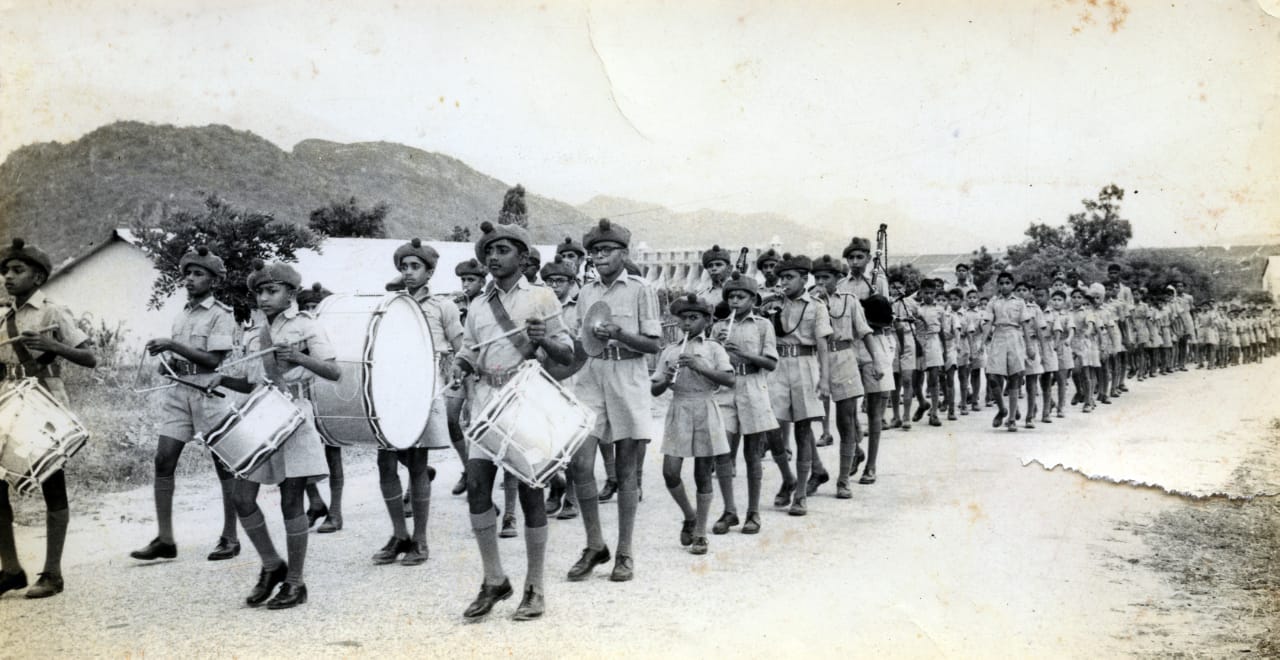
On the social media there was a post with a video of a school band performing during the interval of a basketball match. The caption said “When will we have such performances from our school bands in India”. It took my memories back to school days when we thought that music was not our cup of tea and joining the school band was a sheer waste of time as it did not provide any extra marks and did cut into one’s free time.  Mr Guddu Sahib, our Band Master tried his level best to teach me the notes of music, but they all looked to me like a few designs all coming to eat me up.  That was it, I gave up not to even look back at it.  Having realised my school folly as one grew up; it was too late to learn music at that belated stage.   Now the only option available was to ensure that our children learned music at their young age.

Why the school bands in India do not have such good standards and such good performances when compared to those in North America? The main reason could be attributed to our notion that it does not bring in marks. In North American schools, band or music is part of the curriculum and it brings marks with it.

As band/music is part of the North American school curriculum, the music teachers are graduates in music and some are post-graduates. Our son’s music teacher in Grade 10 was a post graduate in English and music and that year he taught Nikhil both the subjects. During a meeting with him I asked him as to how he got into the two.  He said music was his passion and English was his interest and hence studied both. In India, the band is trained by an ex-bandmaster from the Army or from the police and has no formal qualification in music. The qualification of music teachers back home leaves a lot desired, even though plenty of talent with graduate and post-graduate qualifications in music are available. Music does not form part of the School Board Exams and is limited to performances in Youth Festivals in most schools in India. The reality TV competitions have encouraged parents to impart music training to their children.

Unlike in North America, where the time spent for rehearsing and performing a band routine is counted towards community service hours required for graduation, in India no such advantages is accrued by the children. The most they get for a performance in India may be a T-shirt or a meal.

music

Music helps to bring out the best in young people. It nourishes self-esteem and keeps them engaged. Promoting music in schools provides students with interests that take up considerable time and energy outside the academic activities. Students become involved in extracurricular activities and by being busy with music-related activities helps to keep students away from getting involved in the kinds of negative activities that lead to serious problems, such as drugs and alcohol.

Musical training has a profound impact on other skills including speech and language, memory and attention, and even the ability to convey emotions vocally. Children who have had music lessons tend to have a larger vocabulary and better reading ability than those who haven’t had any musical training.

Music education helps in a child’s overall development intellectually, socially and emotionally. Music offers creative challenges and aesthetic appreciation as well as self-expression and self-discovery opportunities.   Music education fosters emotional maturity, as students learn to set and achieve personal goals. Time management, self-assessment, the ability to accept criticism and performance skills are all important attributes students learn through music education.

Music education plays a big part leading to personal development, such as self-discipline, dedication, teamwork, self-confidence and practice. All these values and the behaviours that demonstrate them are necessary to be a well-rounded person in all realms of life. Although these values are taught through other disciplines in various ways, the importance of learning them through music education in schools is that they translate into other disciplines so naturally. Students who enjoy music can easily transfer the habits learned to pursue their music to academic subjects.

Scientists have also discovered that learning to read music or play a musical instrument develops higher thinking skills. This means that children who learn music in schools are better problem-solvers and are better at analysis and overall critical thinking, because studying or playing music uses the same part of the brain that is used in mathematical thinking.  Music education can help promote better math students.

The importance of music in schools is that it fosters the kind of discipline that contributes to the development of personality traits and characteristics that bring one success in all of life’s endeavors. Music education helps develop overall intelligence, which translates to success in academic subjects in school. Music education also opens doors socially and culturally.  All these factors lead to success in life.

Paying Homage to A Fallen Soldier

AJ

During the Democratic National convention for the US Presidential Election of 2012, Elaine Brye, a “Military Mom” introduced the American First Lady Michelle Obama. Elaine is a “Military Mom” as of her five kids, one each is serving in the Army, the Navy, the Air Force and the Marines.. Will this ever happen in India in the near future? Many a times the President of India remains seated while the widow/parent of a posthumous recipient of Paravam Vir Chakra is standing while her husband’s/ son’s citation is read prior to presenting the award,   No secret that America is the world leader.

A few years back, after an attack on NATO troops in Afghanistan, all the national flags in Canada and US were observed flying at half-mast, paying respect to the fallen soldiers. There were announcements on the media to fly the flags at half-mast and all citizens did it out of sheer respect for that unknown fallen soldier.

Some may claim that death is part of the job in the armed forces and there is no need to go into mourning every time for a fallen soldier. Please remember what French Nobel laureate Albert Camus said “Martyrs, my friend, have to choose between being forgotten, mocked or used. As for being understood: never”.The least we can all do is to pay our respect to the fallen soldier and what better way than flying our Tri-Colour at half-mast. It does not cost anything, but surely enhance our national esteem and pride.

Field Marshal Sam Manekshaw, the General who lead the Indian Army during the 1971 Indo-Pak conflict, and a hero of the young of that time, died at Ootty in June 2008. Only the Minister of State for Defence represented the Central Government at the funeral. The reason given – Field Marshal being a new appointment created after 1971 war – did not find a place in the warrant of precedence. While Manekshaw was in the hospital in Apr 2007, the Defence Secretary handed him over a cheque of Rs11.6 million in back wages from the time he assumed the rank of Field Marshal in 1973. Even though on his death bed, Manekshaw in his usual humorous way asked the Defence Secretary whether he would have to pay taxes on this. Manekshaw being a true soldier, never made any claims to his unpaid salaries and never came on the media to make it into any issue. What a shame – this can happen only in India.

One always wondered as to why we did not see the Tri-colour on Indian streets, atop homes, in the shopping malls etc like the Red Maple Leaf flag in Canada or the Stars and Stripes in the US. Our constitution was amended to cater for flying of the National Tri-Colour by one and all – (Courtesy Sushmita Sen and Sachin Tendulkar and Naveen Jundal). Have you ever seen the Indian Tri-Color fluttering in the schools, government offices, or at homes in India? Its pertinent to point out that the Indian Army units and Indian Naval Ships always fly the Tri-Colour, all Indian Air Force aircrafts have the Tri-Colour painted on them. It is sad to note that our national carrier has the Tri-Color painted very insignificantly, compared to the logo. If we do not fly the Tri-Colour, then there is no need to fly it at half mast for the fallen soldier.

May be the Common Man is still not aware of this aspect of flying the Tri-Colour, may be schools are not educating the students about the importance of flying the Tri-Colour, may be that out text books have not been amended. The reasons may be many, but the solution is simple – educate the common man, make him aware and teach him to develop national pride.

Recently I attended a Dolphin show at Los Angeles, and behold, the show begun by paying homage to all NATO fallen soldiers. Further they made all serving soldiers and veterans and their family members to rise in their stands, so that the crowds could pay their respects. The crowd spontaneously rose on their feet with a loud applause.

Why can’t we have such acts? I am sure that the Indian common man is much more patriotic and emotionally charged towards any national issues than anyone around the world. This aspect has been demonstrated time and again by the common man– during any aggression on our borders, national calamities and during the cricket matches.

Someone needs to tap this potential of the common man. Who else other than the visual, audio and print media who can do a better job? Even if ten percent of media time and newsprint wasted to discuss the issue of the political murders could have been used to highlight the sacrifices of our soldiers; we would have achieved wonders.

Nowadays many veterans are carrying out presentations, shows and talks across the country – from corporate boardrooms to educational institutions. It’s high time at least the veterans begin by paying respect to our fallen heroes and soldiers, like the presenter at the Los Angeles Dolphin show. May be for all you know, this presenter may also be a US veteran.

The cinema industry has contributed enormously towards educating the masses about various national, social and political issues. Some movies did justice in bringing forth the sacrifices and services rendered by our soldiers.

I conclude with the patriotic song from the movie Hakeekat करचलेहमफ़िदाजान-ओ-तनसाथियों,अबतुम्हारेहवालेवतनसाथियों (Kar chale hum fida jaan-o-tan sathiyon, ab tumhare hawale watan sathiyon) (Thus did we set off friends, having sacrificed life & limb, The freedom now, of this land, Is but within your hands).

After the Argentina – Netherlands Semi-Final – FIFA World Cup 2014

Penalty shoot out decided the finalist after two hours of play that day and it was past 6 PM here in Toronto. Our dog Maximus was getting restless as this evening walk was getting delayed.  I took out a plastic bag, leashed Maximus and off we went on our regular walking trail to the city center.

The city center of Mississauga (Canada) has Celebration Square in front of the City Hall (Office of the Mayor,) where many community events like musical shows, yoga classes, aerobics, demonstration of city’s upcoming projects like the light rail etc are held in summer evenings.  All FIFA World Cup matches were projected on two huge screens on either sides of the stage and being vacation time for schools, many parents and children congregated there to enjoy the matches (stadium effect.)  In winter it gets converted into a skating rink.  The Celebration Square is about five minutes walk from our home.

I expected that the crowd must have vanished by the time we reached the Celebration Square as it was fifteen minutes after it was decided that Argentina will meet Germany in the final.  To my surprise I found a gathering of about 250 people of all ages in front of the stage.  The Sergeant from the City’s Paramedics was conducting a lecture cum demonstration on Cardiopulmonary Resuscitation (CPR).  We stood there to watch the proceedings.

mk

There were school kids and adults practicing CPR on manikins (one shared between two or three) provided by the St John’s Ambulance team.  The staff and volunteers from the St John’s Ambulance were assisting the participants to practice CPR on their manikins. There were many little kids who might have had no interest in CPR, gathered around Maximus and started petting him and playing around with him while their parents and siblings practised CPR.

My mind went back to my days as a Team Leader in the call center I worked after landing in Canada.  All team leaders are required to be certified in CPR and First Aid as per the company policy and I also had to attend the class.  I presumed I had some knowledge about it, but after the class I felt ashamed about my shallow knowledge of CPR was (after commanding a unit of the Indian Army) and that I did not know the use of a defibrillator, which are placed at all public places in the city like offices, malls, movie halls, swimming pools, etc.

Our children have undergone training on CPR and First Aid while at school.  Our son Nikhil, working as a life guard and swimming instructor with the city had to qualify the third level of CPR and First Aid.  My wife Marina, being a Pharmacist also had to qualify in CPR and First Aid.  They have to re-qualify every two years to maintain the validity of their certification.

The final match of any Regimental or Formation level tournament is attended by all ranks, their wives and children.  After the prize distribution we generally hold a High Tea.  It would be good idea to have a fifteen minute class on such subjects after the game.

Human life is very precious and a very small action or effort can save a life provided you have knowledge of how to administer CPR and First Aid.

Pet Emergency

mxMaintaining a pet in Canada/USA is a serious matter and needs lot of effort and care by the pet owners.  The Municipal laws requires that all dogs and cats owned must be licensed and wearing a tag.  Licensing helps prevent against rabies outbreaks by requiring a certificate of vaccination for all dogs over the age of 4 months.  All the animals must be neutered/spayed prior to licensing in order to ensure population control.  By licensing your dog or cat, Animal Services will make every effort to reunite you with your pet if it gets lost.   There is a normally a limit laid down for the maximum numbers of pets that you can own.

The laws also specify that while on any private or public property, you got to pick up after your pet and the dog must be kept on a leash no more than two metre long and you must be holding onto the leash.   The owner of a dog is liable for a bite on another person or animal.   If your dog is continuously barking or whining and disturbing your neighbours, you can be fined under the Noise Bylaw.

There are many veterinary clinics dotting the city and there is a pet emergency hospital providing services 24 hours.  The Canadian government provides medical cover for all the citizens, but not for your pets and hence every visit to the veterinarian will ease a few hundred dollars.

The veterinary clinics will maintain all health records of the pets and the pharmacy will maintain all the medications dispensed.  To facilitate searching the database for the pet’s record, it is practice to give the pet also a last name, which is your family name.  Hence our dog is named Maximus Koduvath.  In case the pharmacy pulls up records of Koduvaths, the dog’s name will also popup.  Why not? He is also a member of the family.

Once Maximus ingested some poison and had to be taken to the pet emergency hospital.  We called up the hospital and the moment we reached there with Maximus, there were two attendants waiting with a stretcher to roll him in.  They carried out a stomach wash and the entire event made me poorer by $400.

While waiting for Maximus at the hospital, there was an elderly couple also sitting there.  I got into a conversation with them and they told me that their ten year dog had developed some kidney complications and is being operated upon.  I casually asked them about the cost of the procedure and behold – they were expecting anything to the tune of $6000 upwards.

Due to constant pestering by the children for a dog (we got Maximus because of the same), a friend of ours settled the deal with the children for a cat, being less costly and easy to maintain.  It takes much less effort to maintain a cat as unlike a dog, one does not have to take the cat for a walk in the morning and evening (a pretty difficult task during the freezing Canadian winter).  One day a car ran over the cat, and the car driver called the Animal Services and they immediately dispatched a blue-cross ambulance, which picked up the injured cat and moved it to the pet emergency.  The Animal Services called up the owner (based on the information retrieved using the license tag) and informed him about the condition of the animal and the hospital where it was.

The owner rushed to the hospital and he was informed that the cat needed urgent life saving surgery which would cost a minimum of $3000.  The owner thought if it was back home he would have buried the cat by now and would never cost him a penny.  He did not want to part with $3000, that too for a cat.  He wanted a cheaper option and the hospital offered to carryout euthanasia and would cost him $500.  He immediately settled for the second option and made the payment and drove back home.

Say Thank You

tuDuring my visit to India in 2012, I traveled from Thiruanathapuram to Kollam in Kerala on the State Transport bus.  The ticket was for Rs 9 and I handed over a Rs 10 currency note to the conductor.  I requested the conductor to drop me off at a particular stop and when the bus reached my stop, the conductor stopped the bus and nodded me to get off.  I went to the conductor, and he put his hand into to his bag, may be to return Re 1 which he owed me.  I said “Thank You” for his service of dropping me off at the correct stop.  The conductor gave a flabbergasted look – Is it that he never expected someone to thank him for a such service?

After landing in Canada, one day I asked our son to make me a cup of coffee, which he did immediately.  He brought it to my table, and I took a sip, continuing to read the book I was immersed in.  Our son waited for a few seconds and said “Welcome”.  It really knocked me down.  Then our son said – “What does it cost you to say THANK YOU?

I learnt this value from the Canadian society, as they always express their gratitude for any little service or help one does for someone else, even if it may not be from the bottom of one’s heart. Canadians are well known for their courteous behaviour.  Modern Canadian children are usually permitted to be relatively outspoken and independent from a young age.  They may speak to adults, even teachers or parents, in the same casual style they use for friends. The same is mostly true for employer-employee relations, and maintaining a friendly workplace where everyone acts as if they are on the same level.

I for one hardly ever thanked anyone during my days working in India; mainly subordinates for any help they rendered.  I hardly appreciated anyone for any work done by them.  We are very poor at appreciating our children and subordinates – may be thinking that it will spoil them.  It does not cost anything; but may make a day for the person who gets appreciated.  Everyone wants to be appreciated.

When our son graduated from Grade 8 (Middle School, they have a graduation ceremony – to instill in the students that they are going to High School next and got to be more serious about it and that the fun time is over.  He was the valedictorian and after he gave his valedictory address all the Canadian parents stood up and gave a standing ovation and all parents from our sub-continent kept slitting.  We even ration appreciation for a small kid.

This ‘rationing’ approach to appreciation for our children, I feel has come from the society back home.  Recently my wife confessed that she realised how incorrect she was in bringing up our daughter when back home; how she used to castigate our daughter for the 8% marks she lost in her test, rather than appreciating her for the 92% she scored.  This may be the result of my wife’s upbringing back home that one must get 100% in all tests, whether the child has interest in that subject or the child is capable of achieving it.

Many children had to hide their interests in non-academic activities like poem writing, story writing, arts, sports etc because the parents never encouraged any distractions from their academic goals.  Any inclination to a non-academic activity was severely condemned and brutally nipped in the bud.  Had the parents and children followed the academic model in North America, we would have surely produced many a great in all fields of life.

The major impediment back home is the way the marks of all tests are announced publicly in the class and to make the situation worse, the teachers tend to pass unwarranted comments along with it.  This is further complicated by the boastful parents who announce to the world as to how their child scored high marks and what the scores of other children were.  In the Canadian schools, test results are never displayed or announced and are kept confidential.

Attending the Parent-Teacher interviews used to be very scary back home as one often heard only complaints about our wards and hardly any words of appreciation.  The Parent-Teacher interviews in Canada, one experienced the opposite.  It was more of a celebration of the hard work and achievement of the child, and it always begun with “Your son is doing really well ...”

The Canadians are stereotyped as being excessively, or even absurdly polite, even if not entirely warranted.  They never miss an opportunity to appreciate or compliment while Canadians deal with one another.  Mrs Lalita George, wife of Late Colonel Raju George, while on her visit to Niagara, was really taken aback when a girl at a ticket counter appreciated the handbag she was carrying.  The girl asked her about the source and when informed that it was from India, she expressed her dream of visiting India after her graduation.

On receiving the progress report of our son, I (may be because of my upbringing back home), enquired from our son as to how others in their class had performed.  He said that it was indecent to ask others in the class what their grades were and in case I had to see the class performance, the mean and median for each subject is given in the report card.  That was when I realised the application of those statistical terms we were taught in school.

Every year for Christmas, I fly to India to spend a few days with my mother.  On arrival in India, the first person one mostly deals with is the immigration authority at the counter.  Almost all the countries I have been, these immigration authorities are mostly pleasant and very courteous.  The interaction with them generally culminates with “Welcome to (their country)”.  Anyone who has ever passed through the Indian Immigration counters will always have the opposite story to narrate.  I often felt that the Ministry of External Affairs has imparted special training to all those who man the immigration counters, to be putting up with such morose faces and least courteous conversation.  The final look they give you while returning the documents almost conveys ‘Why the hell are you back?’

So please think it over and make small efforts at your level – it may make a difference to someone, and it does not cost you anything.

Garbage Disposal 

It was heartening to see the Japanese fans, after witnessing their team lose to Greece in the FIFA World Cup Match in Brazil on 19 June 2014, and also in Russia 2018, set an example of true sportsmanship by cleaning up the stadium of all the garbage left there.  This habit of correct disposal of garbage got to be nurtured at home – a habit that needs to be inculcated in all the citizens – irrespective of age.  In India, you keep your home clean, but throw the garbage in the street or in any vacant area and the cities do not have a garbage collection policy or methodology.

gbg

In Canada and USA, this habit begins at home (some exceptions –especially from the immigrants from the sub-continent), and is further firmed up at the school.  This is where the children are made aware of their responsibility to ensure a clean environment and also respect the mother nature.  The children are taught the correct procedures for sorting and disposing garbage.

Garbage collection in Canada is the municipal responsibility and is collected on a weekly basis.  The limits are laid down by the city.  In our city the limits per home are two bags (each not more than 20 kg) of general unsorted garbage, recyclables – unlimited (Blue Box), compostable (Green Box)- unlimited and yard waste (Brown Paper Bag) – unlimited, but collected on seasonal basis.  Only catch is that one got to segregate the garbage according to the above classes and put them in separate special bins provided by the city.  Do not worry, nothing comes free in North America (there is no “raddiwala” who will ever pay for your garbage). We pay a heavy house tax to the municipality for these services.  Any hazardous goods, or any heavy garbage is to be taken to the recycling centre and they charge you for accepting your garbage.

Studies in the City of Mississauga, where we live,  indicate that the average household generates 567 kg/year of waste, of which 34 percent is garbage, 13 percent is recyclable  and 45 percent is organics.

The general garbage is incinerated and the heat produced runs a steam turbine and electricity is generated.  Some cities use landfills too.  The recyclables are recycled and the compost is sold to the residents at a minimal cost, after due decomposition.

At every school, mall, park, bus shelter, restaurant etc, where ever garbage may be generated, you will always see garbage bins – with different buckets for waste and recyclables.  Anyone depositing garbage are expected to do so in the specific bins (here again people from the sub-continent are the culprits).

Only problem of applying the same in India is that the general garbage and the compostable will have to be picked up on a daily basis as the day temperatures are much higher when compared to Canada.  It may also put some raddiwalas out of business too.

Goodwill Stores.    Reducing the amount of waste we generate by reusing and recycling items instead of discarding them helps save natural resources, conserves energy and decreases the need for landfill.  Any household items that are gently used and in working condition, consider giving them a new home instead of throwing them in the garbage.  We drop off our reusable old clothes, books, toys, household appliances and furniture at a store run by the city or at the Recycling Centers.  They clean them and in case found fit for reuse, will sell them at a very cheap price to the needy – and the name of the store is “GOODWILL”.  When we landed in Canada we stayed in the basement apartment of a house and all our furniture came from the same “GOODWILL” store. It was a real GOODWILL.

The 5Rs Waste Hierarchy.

  • RETHINK – your waste and adopt environmentally-friendly practices!
  • REDUCE – the amount of waste you produce.
  • REUSE – materials repeatedly.
  • RECYCLE – materials through the Blue Box or Green Bin Programs or donate them to a Community Recycling Centre so that others can create new uses for them.
  • RECOVER – refers to generating energy-from-waste (e.g. through landfill gas-to-energy).

Organics Recycling.    Organic material includes such things as food waste and used tissues or paper towels.   Organics recycling diverts this material from landfill by converting it into a useful end product – compost.  In 2012 the city diverted almost 51 per cent of waste through the first 4Rs and recovered an additional 25 per cent by converting waste to energy.

About two-thirds of the solid waste collected in Mississauga is incinerated at the Algonquin Power Energy-from-Waste facility  – a 15 Acre complex located within the city limits.  A clean and efficient operation that not only gets rid of the waste but also generates 9 megaWatt of electricity, enough  to provide power for up to 6,000 homes. At temperatures in excess of 1,000ºC, most of the waste is vaporized but, just like burning wood in a fireplace.  There is always some ash created in the combustion process. Not too much of a problem for a wood burning stove but a considerable problem when you are incinerating 18,000 truckloads of waste a year.   The by-products include 40,000 ton bottom ash and 3,000 ton fly ash.  Bottom ash is a non-hazardous by-product of combustion, a glassy, sand like material of melted sand and lime, with smaller amounts of oxides.   It is disposed in the local landfill or used as an aggregate in hot mix asphalt or is blended with other aggregates, but is usually less durable than conventional aggregates.

The exhaust gas leaving the boilers is directed to two parallel air pollution trains which are designed to absorb 90 per cent of the acid gases by the injection of hydrate lime and to remove 99.9 per cent of all particulate using fabric filter bag houses.  Continuous emission monitors are utilized both for control and monitoring of the flue gases. These units are calibrated automatically each day and quarterly audits and annual relative accuracy tests are conducted.

Poor Banian or a Wife Beater

One day our teenaged son came up to me and asked me if he could borrow my ‘Wife Beater.’ I lost all my balance and composure and I told him that I neither ever had beaten their mother nor ever intend to do so. I stopped short of telling him that the idea did sprout in my mind a few times, but good senses always prevailed over my impulse. Our son understood my predicament and explained that he wanted the sleeveless white vest I used to wear while in India. Hardly seen anyone wearing it in Canada; could be something to do with the weather and reduced perspiration level.

Our son explained that in the TV show ‘COPS‘ had a lot do with the creation of this word. Every time they showed a guy getting arrested for beating his wife, he was shown wearing one of those sleeveless vests.

Some say that in 1947 in Detroit, Michigan, when police arrested a local man (James Hartford, Jr.) for beating his wife to death, the local news stations aired the arrest and elements of the case for months after, constantly showing a picture of Hartford, Jr, when he was arrested, wearing a vest and constantly referring to him as ‘the wife beater.

I always marveled the simple in design white sleeveless vest for all the services it rendered. It never even cared where it ended up after its owner threw it out after clinging to his skin and exploiting it to the hilt. They mostly ended up as a shoe-shining cloth, a mop, a duster, etc. Why should someone discard such good quality pure white cotton cloth?

I never understood why any more layers than absolutely necessary are worn in a hot climate, but I always felt that it absorbed the sweat. It absorbed the sweat, got wet, making me feel a bit uncomfortable at times, but it always stopped the passage of the sweat to the outer layer of the Olive Green (OG) Uniform. The white salt left on the shirt after the sweat dried up was rather un-soldierly. My skin never felt comfortable touching the thick clothed OG shirt. The poor banian maintained an impregnable gap between my skin and the thick shirt.

Some of my friends in the Army wore a banian with sleeves. I always preferred the sleeveless version to avoid ‘Sunday is longer than Monday‘ syndrome. This happens when you wear a short sleeved shirt or T shirt, under which you have worn a sleeved banian and the sleeve of the banian creeps out of the shirt sleeve.

On joining Sainik School Amaravathinagar (TN) at the age of nine, my box had a dozen banians. We had to wear the banian for the morning Physical Training (PT). The aim was to observe the physical development of the body and to ensure that there were no skin infections. This practice of wearing the banian for PT continued on to the National Defence Academy (NDA) and the Indian Military Academy (IMA), till I was commissioned as an officer, after which I started wearing the white T-shirt as was the practice for all officers. The men still wore the faithful banian for PT. I still enjoyed the banian clinging to my skin and ensured that I had it on at all times.

My sahayak (helper) in the regiment was Sepoy Hukum Chand, who served me with at most dedication, love and care. He was my accountant, my personnel assistant, my bodyguard, my radio operator, my buddy in all aspects. He ensured everything for me – from when I got up, my morning tea, my cigarettes, my uniform, my room, my wardrobe, my outfit for the evening party etc. This continued for long seven years until seven year itch erupted – I got married and Hukum Chand refused to be dictated to as to what dress I wore for the evening party. My wife did not approve the suit Hukum Chand had chosen for me to wear that evening as it did not match her saree. My wife won and Hukum Chand lost.

Sepoy Hukum Chand had observed my keenness to wear the banian at all times and every six months he bought a dozen of them from the regimental canteen (he paid for it with my money as he was my accountant and I had no clue about the expenses). On enquiring as to why he bought new banians every six months, he told me that they become yellow on washing repeatedly in brackish water used by the washerman. He used to snip off the shoulder straps and cut open the trunk and it became a shining cloth for him to polish the leather boots and the belt and also the brass badges of rank. He said that the yellow shining-cloth available at the regimental canteen left yellow lint on the OG uniform and the black boots and looked awesome and he had to put in extra effort to clean-up after polishing. Used and many-time washed white banian was best suited for it and one did not have to pay to buy the shining-cloth – What a costly saving?  He had the thin cloth for the leather boots and belt and the thicker ones for the brass.

After five years of postings on staff and various long courses, I returned to the regiment at Sikkim as a Battery Commander. Sepoy Sri Chand was this time assigned as my Sahayak and Hukum Chand was by then promoted to the rank of a Havildar. A few days after I rejoined the unit, Havildar Hukum Chand came to my bunker while I was having my afternoon siesta and started admonishing Sepoy Sri Chand as he had not maintained the Saheb’s bunker as per standard. Hukum Chand started advising Sri Chand about my likes and dislikes, my preference of tea, food, clothes, cigarette, etc. At the end he said “Saheb likes wearing a banian at all times, even while he is sleeping.” That was the time I observed that I was sleeping in my favourite lungi-banian. He added that I preferred wearing the thick banian under the uniform and the thin ones under the civil dress. A preference I never had and may have been cultivated by Hukum Chand to ensure that he had a constant supply of thin and thick cloth for polishing the leather and the brass.

Many a times your preferences and habits are not self-developed, but thrust upon you by the environment.